A Message That Works

Dirty hands

1 Thessalonians 1:2-5 “We always thank God for all of you, mentioning you in our prayers. We continually remember before our God and Father your work produced by faith, your labor prompted by love, and your endurance inspired by hope in our Lord Jesus Christ. For we know, brothers loved by God, that he has chosen you, because our gospel came to you not simply with words, but also with power, with the Holy Spirit and with deep conviction.”

Why did Paul offer such thanksgiving and prayer when he thought about these Christians in Thessalonica? He was moved by three evidences that the gospel was working in their lives. First, we hear a whir of activity. “We continually remember before our God and Father your work produced by faith.” Good works may not belong to the equation of salvation. But they are still an indispensable evidence that saving faith is genuine. This is not that restless, driven kind of religious busyness produced by feelings of guilt, or fear of the law, or insecurity about what God or others think about me. These flow from faith like water from a spring. These grow on faith like fruit on a tree.

The next thing we hear is a sigh of weariness. “We remember…your labor prompted by love.” Labor here is not exactly the same thing as work. Labor refers to the kind of hard and tiring activity that sometimes is full of frustration and disappointment. You know what I am talking about? We toil away at some church program only to see it flop. We make sacrifices to help others only to find that we are being taken advantage of. We suffer through personality conflicts, poor decision making, and inept, uninspired service because we are trying to get God’s work done.

Genuine Christian service is not always “fun,” or necessarily even “fulfilling.” Sometimes it may hurt. That does not mean it is not valuable. That certainly should not be used as excuse to bail out or sit on the sidelines. Paul simply offers a realistic view of service in God’s kingdom. Sometimes it’s hard. Sometimes we’re guilty of making it hard for others.

Who wants to volunteer for that? What could move us to subject ourselves to that kind of experience? This, Paul says, is “labor prompted by love.” We must keep someone else in mind when we get our hands dirty and faces sweaty in the hard labor of God’s kingdom. Love for the Lord who so loves us, love for the lost souls around us, and love for the dear children of God with whom we serve prompt us to labor on.

Paul’s third evidence even exposes us to groans of suffering. “We remember…your endurance inspired by hope in our Lord Jesus Christ.” Some promote the idea that Christianity makes everything in your life suddenly wonderful. The Thessalonians knew that it gave you just as much need for patient endurance. The plain teachings of Scripture invite rejection, even persecution, from the people around us. It can cost us friends. It can cost us respect. It can put us in danger. It can make us the targets of attack.

But we don’t endure all this for nothing. We are inspired by hope in our Lord Jesus Christ. Have you ever seen news stories of people camped out in front of the ticket office when some popular show or sporting event is coming to town? Reporters go through the line and interview people about how long they have been camped out and how hard it has been to endure the elements to keep their place. But you don’t ever hear of anyone going through the ordeal without expecting something at the end. People don’t wait in that line in the cold just for the experience. They hope to hold a ticket in their hands at the end.

When our convictions lead us to endure insults, accusations, and maybe even physical abuse for our Lord Jesus, we don’t do so for nothing. We have hope. We have certainty that we will be holding something in our hands at the end: the ticket to get us through the gates of heaven, the deed to our own heavenly home.

Where, then, does such conviction come from? Listen to Paul again, “For we know, brothers loved by God, that he has chosen you, because our gospel came to you not simply with words, but also with power, with the Holy Spirit, and with deep conviction.” Do you hear the strains of love? The gospel is not just a collection of nice-sounding, religious words. It is more than information about the way to heaven. It is the powerful, creative message by which the Holy Spirit works a miracle change in our hearts. Through it he convinces us the things Paul says about us here are true.

We are loved by God. How could it be any other way if he still wants us as his own, fully aware of all our sins? How could it be any other way if he was willing to sacrifice his only Son to remove our sins and purify us for himself?

He has chosen you. Do you hear the welcome of an adoptive family? Our place in God’s family is not due to natural forces beyond his control. He specifically sought us and chose us. He directed all of human history to make sure that your sins were paid for, and you heard the gospel, and you were brought to faith, and you could be certain that God had made you his own and surrounded you with a loving family of brothers and sisters.

That’s the powerful gospel we have believed. That’s the powerful difference it makes.
It Starts With Being Loved

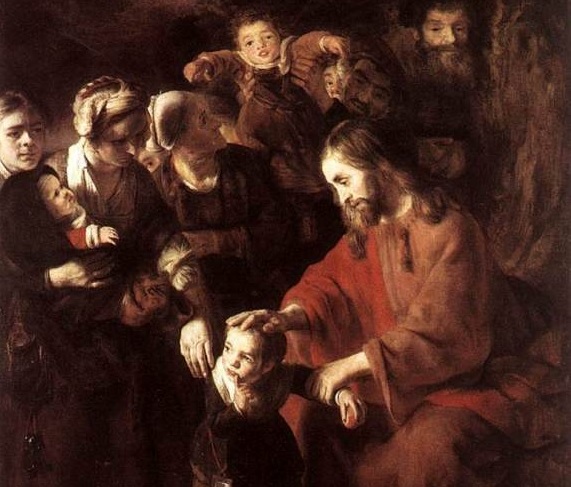
Jesus blesses children

1 John 4:19 “We love, because he first loved us.”

When  children get into a fight of some sort, they often defend their actions by objecting, “He started it.” Somehow, we have the idea as children that this makes our actions defensible. Of course, that way of thinking doesn’t disappear when we become adults, does it. When others treat us badly, that motivates us to respond in kind.

“We love, because he first loved us” is more than a holier and godlier version of “he started it.” God’s love for us doesn’t get us to love purely by winning our appreciation and good will. It is more than “he was nice to me, so I’ll be nice to him.”

Nor does God’s love lay it on thick with a guilt trip or a sense of obligation. God is not like Danny Kaye in the movie White Christmas. Are you familiar with my analogy? Every time Danny Kaye wanted to get Bing Crosby to do something in the movie, he would rub his arm. That was a reminder of how he once risked his life and injured himself to save Bing Crosby’s life when they were soldiers in World War II. It was a classic guilt trip. That’s not how God gets us to love. He doesn’t show us the cross, or Jesus’ wounded body, to make us feel guilty and manipulate a response.

No, God’s love works more by transformation. When we are at home in the grace and forgiveness of God, and the gospel saturates our lives, then that love begins working wonderful changes inside of us. By faith we become more loving people. God and his love actually take up residence in our hearts. They start expressing themselves through our mouths and through our hands. As the Apostle Paul told the Philippians, “It is God who works in you to will and to act according to his good purpose” (2:13). That’s the kind of love that would not be possible for us if God had not first loved us at Jesus’ manger, his cross, his empty tomb, and now his heavenly throne.

That love not only leads us to love God. It leads us to love the other members of his family. It’s not so easy to show your love directly to someone you can’t see or touch. There are only so many things we can do. God doesn’t need anything from us. After we worship him and pray to him, after he has first place in our hearts, our options for showing him our love are limited.

But there are all kinds of ways we can show love to the people he has put around us. They are the ones who really need our love. In the last verse of this chapter John urges, “Whoever loves God must also love his brother.” This is how God wants us to love him: by finding a person who really needs our love and taking care of what he needs. Tell him about his Savior. Help her with her bills. Volunteer for the relief efforts that will clean up their storm-ravaged neighborhood. Give them a hand with the things they can’t do for themselves.

That means the really difficult people, too. God loves the world. While we were still sinners, Christ died for us. If God loves difficult people like you and me (and he does), that love won’t work any differently when it is working through you and me. So long as his love is finding a place in our hearts, it will lead us to love them all.


Plan A Evangelism

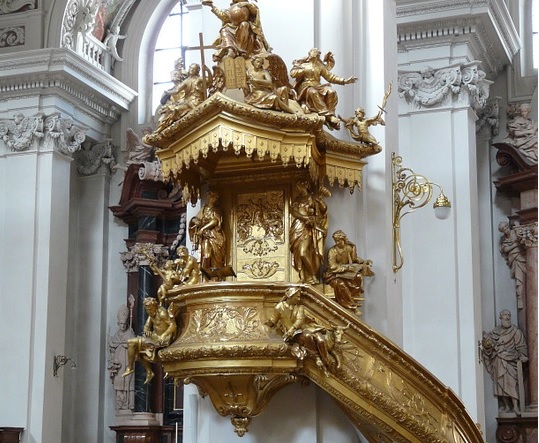
Pulpit

What would you consider “Plan A” in God’s plan to build his kingdom and call hearts to faith? That’s an easy one. All of us would look to the great commission, and we would say something like, “Preach the Word,” or “Preach the Gospel.”

What would you consider “Plan B”? Again, that’s an easy one. We would say something like “there is no ‘Plan B’” or “‘Plan B’ is to go back to ‘Plan A.’” Only God’s word can create and sustain faith. Only God’s word can give people life.

But we have all thought of some “Plan B’s” at some time or other, and there are hundreds of them out there to try. If “Plan A” doesn’t seem to be working, it’s awfully tempting to develop a “plan B.” Maybe we could develop more interesting activities and outings to lure them back in. Maybe we could provide them with more opportunities for meaningful service. Maybe we could give them modern music to sing or a gymnasium to play in.

There is certainly nothing wrong with interesting activities, and meaningful service, and modern music, and church gymnasiums. All of these can be a legitimate part of a church’s ministry. But if Jesus was telling the truth when he said, “If they do not listen to Moses and the Prophets, they will not be convinced even if someone rises from the dead” (Luke 16:31), then we certainly can’t rely on activities, music, or buildings– all far less impressive than a resurrection– to create or sustain their faith. These things have value only if they incorporate “Plan A” and don’t stand alone as a “Plan B.”

Isn’t that what Jesus is saying when he says, “The Spirit gives life, the flesh counts for nothing”? Appeals to the flesh may be attractive, but they don’t give life. Perhaps a clearer way of translating “counts for nothing” would be something like, “it contributes nothing whatsoever,” or “it is of no benefit or help at all.” This is not the sinful flesh, the power of original sin within us. Jesus would hardly have had to say that that has nothing at all to contribute to spiritual life. This is the flesh that makes up our visible, tangible body–the senses and sensations we experience because we are physical beings. However, appeals to the flesh become appeals to the sinful flesh, and they do not create or sustain faith. “Plan B” jeopardizes souls and exposes our lack of trust in God.

“Plan A” isn’t just a command or a method. It’s a promise. The Spirit gives life. The words Jesus has spoken to us are Spirit, and they are life. This is where God has met each one of us and given us life. The Spirit came to us in word connected with water and washed our sins away. The Spirit comes to us in words that promise us forgiveness and mercy and peace and security and new life and eternal life and he sustains the faith he has given us. The older I get, the more I hear or read the bare words of Scripture that tell the same old stories I learned in Sunday school of God delivering his people or Jesus showing mercy, I don’t find them becoming dull or stale. I find them ever more moving and compelling. I find Spirit and life. Why should we assume it will be any different for others who hear those words?

Not everyone will believe. Even Jesus’ audiences turned away from him. Charles Spurgeon once commented on this fact, “I do not hear him (Jesus) say, ‘Run after these people, Peter, and tell them we will have a different style of service tomorrow, something short and attractive with little preaching. We will have a pleasant evening for the people. Tell them they will be sure to enjoy it. Be quick, Peter, we must get the people somehow.’ Jesus pitied sinners, sighed and wept over them, but never sought to amuse them.”

On the other hand, all those who do believe will believe for the same reason. The Spirit gave them life, the Spirit and life that came to them in Jesus’ words. May sharing that word always be our plan.


A New Creation

Hands heart

Galatians 6:15-16 “Neither circumcision nor uncircumcision means anything. What counts is a new creation. Peace and mercy to all who follow this rule, even to the Israel of God.”

Just what is the Christian life all about? It’s not about my body. That was the mistake of the people Paul was writing against here. It was not about whether you had had a procedure to remove a little skin. Paul had been circumcised, just like his opponents. Most of the members of the congregations in Galatia had not been. Neither way made a bit of difference to God. Neither way made a bit of difference for their salvation. It didn’t mean anything.

It’s not about my body. That’s the world’s way of thinking. It’s not about denying my body in fasting, or beating it to try to make amends for my sins. It’s not about caring for my body with just the right balance of diet and exercise to make it as healthy as could possibly be. You can follow the book “The Jesus Diet,” but that’s not the part of his life Jesus has called you to follow, and even the Jesus diet ends with a dead body, just like every other diet ever invented. It’s not about how you cover the body, so long as you are wearing enough cloth to keep someone else from falling into sin. But it is not about your taste in fashion, or lack thereof, because you can be saved in cut-off shorts and sandals as well as a thousand-dollar business suit with gold cuff links and a silk tie. Clothes may make the man, but they don’t make a Christian. It doesn’t mean anything.

It’s about the faith God gave me. “What counts is a new creation,” the one on the inside. The “new” about the Christian is his faith. The good news about Christ communicates such grace, such love, such promise, such hope, that it changes us and makes us entirely new and different sort of people. It changes us from God’s skeptics and doubters, his critics and deniers, his opponents and accusers, into people who trust his every word, who accept his every decision, who appreciate even the strange twists and painful disappointments he allows into our lives. A new creation doesn’t torture itself with great questions like “Why does God let bad things happen to good people?” “Why does God allow evil and suffering?” “Why does God save some and not others?” A new creation marvels at just one question: “Why did God have mercy on a sinner like me, and sacrifice the only Son he had to make me his own?”  Only one thing can change us like that and create a new me: the preaching of Christ’s cross that gives us faith.

Living as Christians is about our gifts as God’s new creations. Paul concludes, “Peace and mercy to all who follow this rule, even to the Israel of God.” A new creation, a new me who trusts God, has peace. It is the normal condition of the person who knows that the Lord does not have anything against us. He cherishes us like a son or daughter, and not because we have stopped sinning, but because he keeps on forgiving. If that is the case, then what could possibly be wrong or go wrong?

A new creation is confident of God’s mercy. Sparing us from sin and relieving us in our misery isn’t just a duty our Lord performs so that he can check it off his task list. It’s not an incidental part of the “Higher Power” job description. He forgives us and he delivers us because he genuinely cares. It’s not our worthiness, but our misery and helplessness, that receives such mercy. We are confident because the mercy isn’t produced by us. It lives in him.

“Creations,” whether new or old, don’t produce themselves. They are made. Thank God for his grace that went to work and produced the new creation in you and me.