
Foundation for Faith

Luke 1:76 “And you, my child, will be called a prophet of the Most High; for you will go on before the Lord to prepare the way for him, to give his people the knowledge of salvation through the forgiveness of their sins.”

When actress Sally Field received her second Oscar in 1984 for her work in the movie Places in the Heart, she told the audience it led her to the conclusion, “You like me. You really like me!” Forgiveness leads us to an even dearer conclusion with God: “You love me. You really love me.” Forgiveness provides the true foundation for our faith in God.

There were many kinds of salvation people hoped that Jesus would bring. Most of their ideas are still spooking around. Perhaps more than any other misplaced hope, Jews of Jesus’ day hoped that he was the Messiah coming to be a political Savior. He would make their nation great and free again. Attempts to mix Jesus and politics in our time are still common. They still lead to questionable results at best. He didn’t come to be that kind of Savior.

After he fed the 5000, some people saw him as their economic Savior. They even tried to make him king by force. His many miracles of healing led others to crown him their health-care Savior. But while they embraced him as a doctor for their bodies, they were lukewarm to the idea of making him the physician of their souls.

If you preach Jesus this way today–the Savior of your finances or your health– you can build a religious empire, complete with your own television show and best-selling books. But you will have something less, not more, than Jesus came to bring.

All of these things are a “salvation” of sorts. They involve rescue from a kind of danger–political, economic, or health threats. They involve a rescue to safety of the same sort. But none of this involves the salvation Jesus came to bring.

What people really need is “knowledge of salvation through the forgiveness of their sins.” What does it take to draw a sinner back to God again? Sin makes us afraid of him, like Adam and Eve were after the fall. They hid from God in the Garden of Eden, because a just God punishes sin. Anyone who says he loves God, but doesn’t believe in the forgiveness of sins, is either a liar or an idolater. He may be a liar, because you can’t, you won’t love the God who is going to punish all your sins. You are terrified of him. Or he is an idolater who has created a make-believe god, one who doesn’t take sin so seriously as it really is.

Only those who know the God who forgives sin can love and trust God, because only they know he has already punished every sin in the death of Jesus Christ. Forgiveness rescues us from the danger of God’s judgment. Forgiveness makes it safe to come close to him, confident he no longer has anything against us. The “knowledge of salvation through the forgiveness of their sins” is the foundation for our faith–it enables and empowers us to be near God once again.

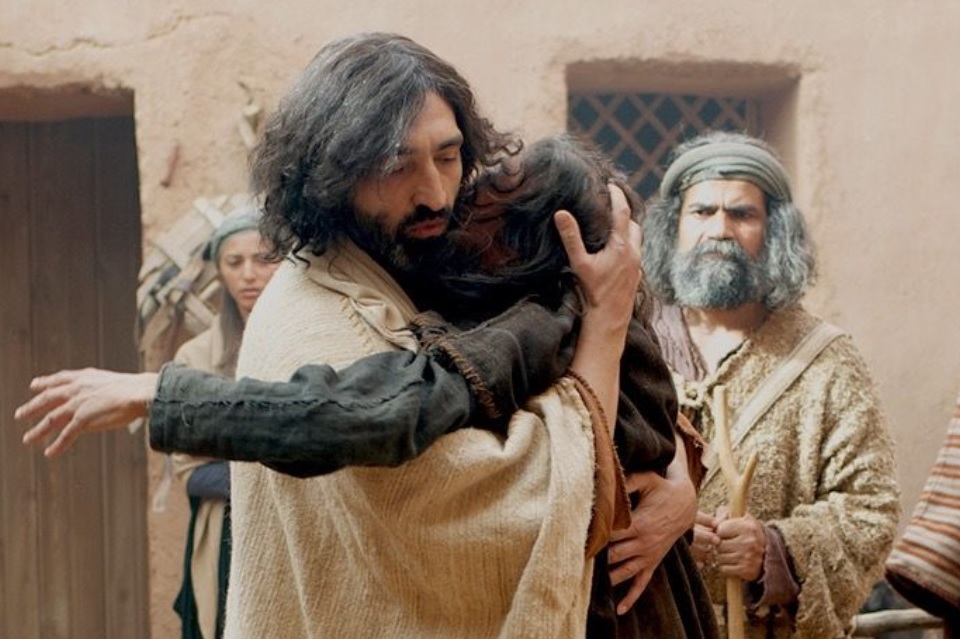
Don’t Resist the Cure

Luke 1:76 “And you, my child, will be called a prophet of the Most High; for you will go on before the Lord to prepare the way for him, to give his people the knowledge of salvation through the forgiveness of their sins.”

Why do people resist going to the doctor when they don’t feel well? Why do they tolerate the pain as it grows worse, hoping that it is going to go away? The excuse might be, “The doctor is expensive.” Perhaps. More often the real reason is this: They fear the diagnosis, that something is seriously wrong with them. And because they fear the diagnosis, they fear the cure as well.

It is similar with forgiveness. People fear the diagnosis for which forgiveness is the cure. If I have to be forgiven, that means something is wrong with me. I have actually known people who became angry when they were told, “I forgive you.” “You forgive me? You are saying that I am the one at fault, that I have done something wrong? How dare you judge me that way!” “Don’t judge me,” is a very, very popular sentiment. To receive forgiveness is to agree with the judge, to accept his judgment. I am humbled, maybe even feel humiliated, when I have to admit that I have failed, and there is something wrong with me that needs to be forgiven.

Forgiveness can be hard to accept for another reason. With God, it doesn’t come cheap. God is still a just God, and someone had to pay the price. In the book of Hebrews we read, “Without the shedding of blood, there is no forgiveness” (Hebrews 9:22). God impressed this on his Old Testament people with all the blood that was spilled in the animal sacrifices that took place in the temple. John the Baptist was the first to make the connection between Jesus and those sacrifices: “Look, the Lamb of God who takes away the sin of the world.” Jesus’ blood, shed at the cross, paid the price God’s justice demanded for our sins.

We would feel better about ourselves if we could offer a milder solution of our own. But this is the true way of salvation. Zechariah says in this passage that his son John would “give his people the knowledge of salvation through the forgiveness of their sins.” Forgiveness does not mean that God excuses our sin. He never says, “That’s okay,” because it isn’t. It is hurtful. It is deadly. Real forgiveness fully recognizes this. And yet, God does not hold our sins against us anyway.

Forgiveness is not merely a kind sentiment on God’s part. It’s not that he lets his affection for us get the better of him and overrule his good sense. He is not an overly indulgent parent coddling his naughty child. Forgiveness is based on a historical event, and it results in God’s decisive action. The historical event, as we just mentioned, is the crucifixion of God’s own Son Jesus Christ.

As a result, God has taken decisive action with our sins. He forgives them all. In the Old Testament he gave his people beautiful pictures of forgiveness. He inspired David to write, “As far as the east is from the west, so far has he removed our transgressions from us.” He sent Micah to preach, “You will tread our sins underfoot and hurl all our iniquities into the depths of the sea.” He spoke through the prophet Isaiah, “I am he who blots out your transgressions, for my own sake, and remembers your sins no more.” When even God can no longer remember our sins, we truly have a reason to be happy.

In the New Testament we have the greater beauty of Jesus speaking a word of forgiveness so freely, so liberally, it almost seems too good to be true. To a paralytic who didn’t ask for it he says, “Son, be of good cheer. Your sins are forgiven.” To the woman with the bad-girl reputation (well-earned it seems), crying over his feet at the house of Simon the Pharisee he promises, “Your sins are forgiven.” About the soldiers, fastening his arms and legs to the cross, driving nails through them, doing so with no apology, he prays, “Father, forgive them, for they do not know what they are doing.” Even in our lowest, wickedest moments he has left us the promise, “If we confess our sins, he is faithful and just to forgive us our sins and purify us from all unrighteousness.”

It makes no more sense to resist forgiveness than to reject the doctor’s medicine. It is the one cure our sin-sick souls truly need.

A Place in His Heart

Daniel 9:18 “We do not make requests of you because we are righteous, but because of your great mercy.”

Not all the help we receive means we mean a lot to the helper. I had trouble installing new software on my computer awhile back, so I contacted customer support. After a few emails back and forth, a nice man named Jonah was able to pinpoint my problem. He got me up and running. He was a big help, and I greatly appreciate it, but I don’t think he’s going to start sending me Christmas and birthday cards now, or showing up at important family celebrations. I don’t mean anything to him. I was just case number 01551537, and that’s all I expected.

I once visited someone in the hospital who was struggling with great pain. One of the nurses in particular was gifted at helping this patient get relief. When my friend thanked the nurse for caring so much, the nurse made a rather startling confession. “I don’t care about you or your pain. I care about my job. That’s the reason why I work so hard at this.”

Sometimes we help because we care so deeply about someone, but not always. Sometimes our mercy, if you can call it that, comes because we have been made to feel guilty. So it comes with a grudge. If we can advertise the help we give a little, like the Pharisees in Jesus’ day whom Jesus accused of making a public spectacle of their charitable gifts (complete with a Jewish version of the mariachi band playing in the background), we might like what it does for our pride. Maybe, like my software support friend, it’s just our job. At times, it may be nothing more than a matter of necessity: the stalled car ahead is blocking the road, and you aren’t going to get through until someone pushes it off to the side, so you get out to help.

Sometimes we might suspect even God’s help comes for less than sympathetic reasons. Does he assist because he has created these great cosmic principles by which everything is supposed to work, and he doesn’t want to break his own rules? Is the help I get today nothing more than a piece in a puzzle that all fits into some far grander scheme, and it is just my good fortune that my need fit into that plan? Many religions have gods who work mostly out of self-interest. Eastern religions don’t even have personal gods, just an impersonal “force” of some sort, and how can an impersonal force care about me at all?

But “mercy” means more than God’s help. And mercy is what Daniel pleads. Mercy means that when God looks at our misery he is genuinely moved by what he sees. He is filled with compassion. Crying children stir something inside of us that makes us want to help, to relieve their suffering, even if the children are complete strangers. It’s a matter of the heart as much as it is the hands.

We see God’s mercy so often in Jesus’ ministry. He came to preach to a people who were spiritually starving, whose souls were being fed the spiritual equivalent of sawdust–no grace, just rules. Matthew tells us that when Jesus saw these crowds, “he had compassion on them, because they were harassed and helpless, like sheep without a shepherd.” When he later feeds the 5000, he had originally intended to get away for a little vacation. But a large crowd tracks him down, and when Jesus sees them he has compassion on them and heals their sick, and teaches them, and feeds them. When Jesus goes to comfort his friends Mary and Martha at the death of their brother Lazarus, and he sees them crying, he is so moved by their grief that he starts to cry himself. Then, of course, he follows with the mercy of bringing Lazarus back to life.

Do you see what this means for you and me? Because Jesus is full of mercy, we have more than God’s help. We have a place in his heart. Our misery genuinely moves him, and it moves him to help. Even when help seems a long time in coming, and our prayers don’t seem to be answered, that doesn’t mean he doesn’t care. Sometimes God’s mercies involve things that pain him to see us suffer, but the pain is necessary to help and save us. He lets it continue until we are safe. Ultimately, mercy led him to give his life to rescue us from our own sins against him. Those sins are the root of our misery.

His relationship with us is never a cold, impersonal, professional relationship. Mercy means that we have a place in his heart.

“A Good Person”

Romans 3:21 “But now a righteousness from God, apart from law, has been made known, to which the Law and the Prophets testify.”

            In order to appreciate “a righteousness from God,” we need to realize it is something we lack. What I am about to say is intended to keep you and me from saying the really foolish thing people say that keeps us from seeing our need for righteousness. That is the statement, “I am a good person.” If all we mean by this is, “I am not a habitual criminal,” then perhaps we can let it pass. But you know that even the family and friends of convicted criminals are inclined to say, “But he is really a good person.” I once knew a woman whose husband had multiple affairs and finally divorced her for no other reason than he was tired of her. Still, she insisted, “But he is still a good person.” Our contemporary culture is so uncomfortable with the truth about us, that even in the most obvious cases, we find it difficult to say, “He is not a good person. In fact, he is bad.”

            What does Jesus have to say about all this? You may remember the rich young man who came to Jesus to learn what he had to do to inherit eternal life. The first words out of his mouth were, “Good teacher…” And Jesus couldn’t let his greeting pass. “Why do you call me good? Jesus answered. No one is good–except God alone” (Luke 18:19). No one is good, except God alone. Jesus wasn’t denying that Jesus was good. But he wanted the man to think some more about the person to whom he was talking, and he was already starting to confront some of the false ideas this man had about the man’s own goodness.

            This isn’t said to drive us into depression. It is meant to help us confront the truth. It helps us get past our rationalizations about our own behavior. We can become very comfortable thinking that we are good because, in our opinion, we are mostly good. We are mostly pure and chaste. We are mostly generous. We are mostly obedient. We are mostly content. We are mostly free of anxiety and worry. We think we are “mostly good.” But that isn’t the same thing as righteous. I believe that I have developed a reputation for patience. Ask my wife, however, how patient I am in the middle of a home improvement project that isn’t going right. So it turns out I am “mostly patient.” And that isn’t the same thing as being good.

            Even if we were to shape up 100 percent today (something that no one ever does), we would still have a sinful past keeping us from being righteous–100 percent in conformity with God’s law. Righteousness would still be something we lack. Since we can’t become righteous ourselves, Jesus comes to bring it as God’s gift. This brings us to the righteousness Paul means, “a righteousness from God, apart from law.”

            Jesus brings us righteousness from God. The gift wasn’t a repair project, as though our bodies and souls had a few bad parts that needed to be replaced, and then we would work properly. He didn’t tweak our spiritual diet and exercise to improve our performance, like athletes in training. Nothing but a full replacement was going to do if we were going to be righteous.

             So that’s what Jesus did. He gave us a full identity swap. He became us so that we could be him. He traded our sinful past for his life of perfect love and obedience. On God’s books, if the Lord were now to do a background check on us based on his own records, the article on your life story or mine reads like the story of a man born in Bethlehem over 2000 years ago. He was raised in Galilee. He traveled Israel as a courageous preacher and teacher, a friend of the poor and the outcast, and a worker of miracles of mercy. There simply isn’t any fault to be found here.

            That sinful past we traded to him, together with our sinful present and our sinful future, eventually landed Jesus in man’s court, where he was condemned as a criminal, and in God’s court, where he was condemned as every sinner who ever lived. From the cross, Jesus life-blood flowed across God’s record book of our sins, erasing every entry as it went, leaving behind nothing but pages fresh with the story of his own love. Now our life’s story, from beginning to end, reads like perfect conformity to God’s law.

            This righteousness isn’t a gift Jesus found somewhere, purchased one for us, boxed it up, gave it to us, and then stood back while he watched us open it. In giving us righteousness, Jesus is giving us his very self. He is our substitute in life and in death. His righteousness is legitimate. His righteousness works. He is “a good person,” and now in God’s eyes, so are we.