Mighty God

Isaiah 9:6 “For to us a child is born, to us a son is given, and the government will be on his shoulders. And he will be called…Mighty God…”

Do you know what Isaiah is really saying about Jesus when he calls him our MIGHTY God? He is saying that Jesus is our hero!

The prophet does not mean that Jesus is merely someone for whom we have a great deal of respect, like our favorite celebrity, president, or sports star. This kind of hero was a mighty man and deliverer such as Samson, whom God used as a one-man army; or David, who killed the giant Goliath. From time to time God gave his Old Testament people such “mighty men,” warrior heroes. They did the work of many soldiers. They inspired entire armies to fight to victory. The Lord used them to protect his chosen people from their enemies. That is what Isaiah means when he calls the coming Christ “Mighty.”

If Jesus is such a mighty warrior for us, such a hero, that suggests something about us, too. We would not need him to be so mighty, if we were not so weak. That isn’t something we like to admit. We prefer to picture ourselves as strong, independent, self-sufficient types. We may teach our children to sing Jesus Loves Me This I Know, and the humble self-description it confesses: “Little ones to him belong, they are weak, but he is strong.” That doesn’t mean we like to think of ourselves that way.

However, that confession is just as true of us as it is of our children. Spiritually, we are all little ones. We are weak-willed when it comes to temptation. We give in to it often and easily.

Our love for God is weak. We have trouble maintaining our zeal and excitement for his work. It is not uncommon to feel as though the Lord, his word, and his work are getting in the way of what we really love: taking care of ourselves and indulging our personal pleasures.

Truth be told, left alone against the devil and his tricks, we are little more than his playthings. When he tires of playing with us, he may devour us whole, like the cat who finished playing with the mouse he caught and now is ready for dinner.

What we need is a hero, a mighty warrior, a great champion who will fight our battles and win. That is exactly what Jesus came to be. That is what he did. With his perfect life, he resisted temptation. He took Satan’s best shot and he didn’t even flinch. When he gave up his life in death, it wasn’t a defeat. His death crushed the enemy, set us free from sin and death, and destroyed the devil’s power. With Jesus on our side, they don’t push us around anymore.

Do you know what is even more encouraging? Our Hero is not just a mighty man. He is the Mighty God. Psalm 146 warns us, “Do not put your trust in princes, in mortal men who cannot save…Blessed is he whose help is the God of Jacob, whose hope is in the Lord his God.” That is exactly the help and hope God gives in the child and son of Isaiah’s prophecy. He is the Mighty God, and that makes us confident he is the Hero who can help and deliver us.
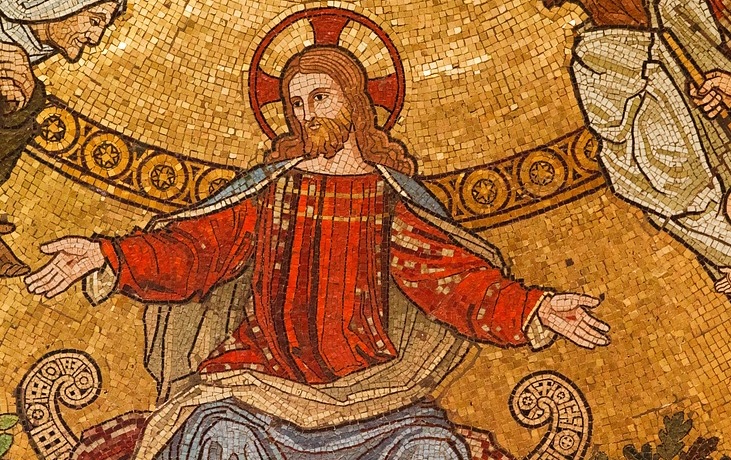
Wonderful Counselor

Isaiah 9:6 “For to us a child is born, to us a son is given, and the government will be on his shoulders. And he will be called Wonderful Counselor…”

When Jesus speaks to us, his words are “wonderful.” By “wonderful” the prophet means more than “very good,” or “great,” or even “nice.” He means that Jesus and his words are actually “full of wonder.” When Jesus speaks to us, his words fill us with amazement. We can hardly believe what he is saying–our eyes open wide, our jaws hit the floor–so astounding are the things he has to say.

Think of how people reacted to him during his earthly ministry. The crowds were amazed at his teaching, because he taught like one who had authority, and not as the teachers of the law. Jesus’ enemies were amazed at his words when he escaped the traps they had set for him. His own disciples were amazed when he told them how hard it is for the rich to enter heaven, or when he showed them that he knew more about catching fish than they did.

Are we amazed by Jesus’ words? Even much of the Christian church seems set on softening God’s law, toning down his perfectly holy standards so that we can justify ourselves. We want to consider ourselves “good people.” Are we amazed when Jesus reveals to us that even the most secret and momentary lusts or resentments are damning sin? On the other hand, does it fill us with wonder–just knock our socks off–when he has a promise of God’s love, a word of forgiveness, an assurance of God’s continuing grace for wicked rascals like me and you, as he did for the prostitutes, the cheats, and the thieves, after he has led us to repentance?

This is what it means that Jesus is our “Wonderful Counselor:” his words are so unique, so perfectly true, so deeply caring and gracious that they simply overwhelm us with the wonder of what they tell us.

And note that the prophet does not call Jesus our teacher, our preacher, or our prophet here (though he certainly is all these things). Isaiah specifically identifies him as our Counselor. A Counselor is someone whom we have come to trust, someone in whom we know we can confide. A Counselor is someone who has taken a personal and individual interest in us, and his words are meant to apply to our unique and individual situation.

So it is with Jesus. He assures us, “My sheep hear my voice, and I know them, and they follow me.” While his words have something to say to everyone, he wants us to be sure he intends every one of his words to be believed, treasured, and followed just by you. Our Savior has no ordinary name. He is our Wonderful Counselor. Perhaps we will want to hear what he has to say.

Dressed and Ready

Romans 13:12b-14 “So let us put aside the deeds of darkness and put on the armor of light. Let us behave decently, as in the daytime, not in orgies and drunkenness, not in sexual immorality and debauchery, not in dissension and jealousy. Rather, clothe yourselves with the Lord Jesus Christ, and do not think about how to gratify the desires of the sinful nature.”

When we get dressed, one thing has to come off before another goes on. Paul first describes the kind of life Christians shed as they strive to live a life of faith. Generally, it involves the “deeds of darkness.” Even our world recognizes certain behavior as so shameful it doesn’t belong in public. Crime takes place under the cover of night. So do many sexual sins.

But Paul is not addressing these words to the world around us. He is addressing them to Christians. He encourages us to behave decently. He knows that we are tempted, like anyone else, to indulge in the sins he lists. He starts with orgies and drunkenness. God does not forbid all use of alcoholic beverages. But Christians who understand this may be tempted to overlook drunkenness, or redefine what it means to be drunk. That leads to abusing Christian liberty. God calls us to wake up, to repent of such behavior as sin, to be prepared for Jesus’ return.

Next Paul warns of sexual immorality and debauchery (the word “orgies” in the previous pair actually comes from a Greek word suggesting abuse of alcohol more than misuse of sex). Many professing Christians no longer accept that sexual activity is limited to heterosexual marriage. Many more have become calloused to watching simulated sex on TV or in movies.  Does the screen somehow make it acceptable? Would we approve if the next door neighbors invited us over to watch?

To these sins the apostle adds dissensions and jealousy. Perhaps those seem like less serious offenses? We can become so accustomed to hurt, angry, or resentful feelings that we may begin to think of these as a normal and ordinary part of life. We don’t expect to be able to get along with everyone. We dismiss our own resentments as the natural result of incompatibilities.

But does that mean this is how it should be? Isn’t this still evidence of sin within us? And doesn’t all sin need to be dealt with in the same way–repentance, confession, and forgiveness? These “deeds of darkness” need to come off, too, if we want to be ready when Christ returns.

In their place, Paul urges us to wear the “armor of light.” This isn’t frilly or fancy clothing. We aren’t dressing up for an elegant party. We are at war. This is not the time to get comfortable. We need the armor our God provides.

Nothing can better protect us than to be wrapped in Christ himself. “Rather, clothe yourselves with the Lord Jesus Christ, and do not think about how to gratify the desires of the sinful nature.” How do we clothe ourselves with Jesus Christ? We are putting him on every time we put our faith in his gracious promises. He applies them to us in word or sacrament. “You are all sons of God through faith in Christ Jesus,” Paul writes the Galatians. “For all of you who have been baptized into Christ have been clothed with Christ.”

And when I am clothed in him, then it is God who works in me both to will and to act according to his good pleasure. Then I have been crucified with Christ, and I no longer live, but Christ lives in me. The life I live in the body, I live by faith in the Son of God, who loved me, and gave himself for me.

God’s promises produce true faith. Faith will produce a true Christian life. Clothed like this, we are dressed and ready when our Lord Jesus returns.

Time to Wake Up!

Romans 13:11-12 “And do this, understanding the present time. The hour has come for you to wake up from your slumber, because our salvation is nearer now than when we first believed. The night is nearly over; the day is almost here. So let us put aside the deeds of darkness and put on the armor of light.”

You and I are living at an exciting time, if we would only wake up to realize it. Paul is bending over our sleepy souls and shaking our shoulders. Our salvation is near. To understand what Paul means by this, we need to understand that the Bible uses the term salvation in more than one way.

The apostle is not suggesting there was something incomplete about the saving work Jesus did when he came the first time. There is no secret stash of sins somewhere yet to be paid. There are no atoning sacrifices for us to perform. The words of John 3 still stand, “Whoever believes in the Son has eternal life…” In the life and death of Jesus Christ, our salvation–our rescue from sin and death and hell– has been accomplished. By faith we already hold the deed to our own piece of heavenly real estate.

But it’s no secret that death still pursues us. Every flaw in our health, every pain in our bodies, reminds us that it is just a matter of time. Our lives aren’t models of heavenly perfection. A rich stew of sin simmers and boils just under the surface. We are still waiting for final deliverance from the world in which we now live.

This salvation is coming closer every day. What a night and day difference its arrival will make! Paul reminds us, “The night is nearly over; the day is almost here.” Now we live in the night. Sin darkens our vision. So many things we consider real, and important, are passing dreams and fantasies. The institutions we rely on, the enemies with whom we battle, this created world which seems so solid and permanent–all of it will suddenly disappear when Jesus’ coming brings the dawn of a new day.

That day will make everything good and clear. Every trouble will end. God’s ways will be vindicated. Our Christian faith will prove itself the one thing we have of lasting value. The hard days of carrying our heavy burdens will be over. The everlasting holidays will begin. You and I have never experienced a bigger day in our lives.

Since the sky is already reddening in the east, now is the time to wake up and prepare. Paul encourages us to understand the present time. The signs of Jesus’ return are all visible for us to see. Upheaval plagues current events. The gospel is spreading far and near. Paul himself witnessed so much fulfillment of the signs Jesus gave that he believed his return was imminent almost 2000 years ago.

This is why “the hour has come for you to wake up from your slumber, because our salvation is nearer now than when we first believed.” We wouldn’t need the encouragement if many Christians weren’t spiritually drowsy. Take his warning to heart! Many believers resemble a person nodding off, barely awake, head bobbing as eyes flutter open and closed. Satan sings his spiritual lullaby to soothe us into the sleep of unbelief. He might croon the tune of earthly cares, desires, goals, pleasures, or worries. They all draw our attention from our spiritual needs. Faith begins to slip. The eternal sleep of unbelief follows.

The stress, distraction, and materialism which so surround Christmas can have the same sleepy effect on the soul. “Be careful,” Jesus warned, “or your hearts will be weighed down with dissipation, drunkenness, and the anxieties of life, and that day will close on you unexpectedly like a trap.”

Jesus’ return is an occasion that demands we be properly prepared. It’s time to wake up!