Who’s Coming for Christmas?

John 1:29 “The next day John saw Jesus coming toward him and said, ‘Look, the Lamb of God, who takes away the sin of the world!’”

Travel and Christmas have gone together for hundreds of years. From “Over the River and Through the Woods to Grandmother’s House We Go” of the mid-1800’s to the Home Alone movies, families traveling at Christmas are something of a tradition. Many of you will be traveling this season. Commercials capitalize on the warm and sentimental feelings we feel about traveling to see family.

Our current season of Advent means coming. It celebrates the coming of the original Christmas guest. But who is he, really? John the Baptist urge us to take a closer look at who is coming for Christmas, for Jesus is the Lamb of God.

In our day, Jesus is well known, or at least his name is. But what people make of him varies widely, even inside Christian churches. One popular version of Jesus today is the therapeutic Jesus. This is the Jesus who has come to help you feel good about yourself. He would never judge you, confront you, or make a fuss about your sins. He has come to give you a shoulder to cry on. He helps you to reach your full potential. He tells you to believe in yourself. He is consistently leading you toward the great goal of life, which is to be happy.

Then there is advice-columnist Jesus. The practical hints he can distribute know no end. He can improve your relationships, move your career forward, or show you how to raise your children. Some days he will even delve into what kind of car to drive, what sort of investments to make, or what kinds of food to eat.

Whether you have been tempted to follow any of these versions of Jesus or another that I haven’t mentioned, they illustrate a problem. We want to mold and shape our Savior to fit our needs as we define them. The Jews of his day had their own version: National military hero Jesus. It’s why they couldn’t recognize the real thing when he came.

We want to mold and shape Jesus this way because we don’t want to accept God’s diagnosis of our problem, his evaluation of our need. If we did, we would see that our problem is not a matter of psychology, relationships, or ignorance. Our main problem is that we are sinners who have offended a holy God. We have not loved God nor our neighbor as we should. We have set ourselves on a path toward hell. The more we redefine Jesus, the more we are sinking into a subtle idolatry that takes us farther away from the help we truly need.

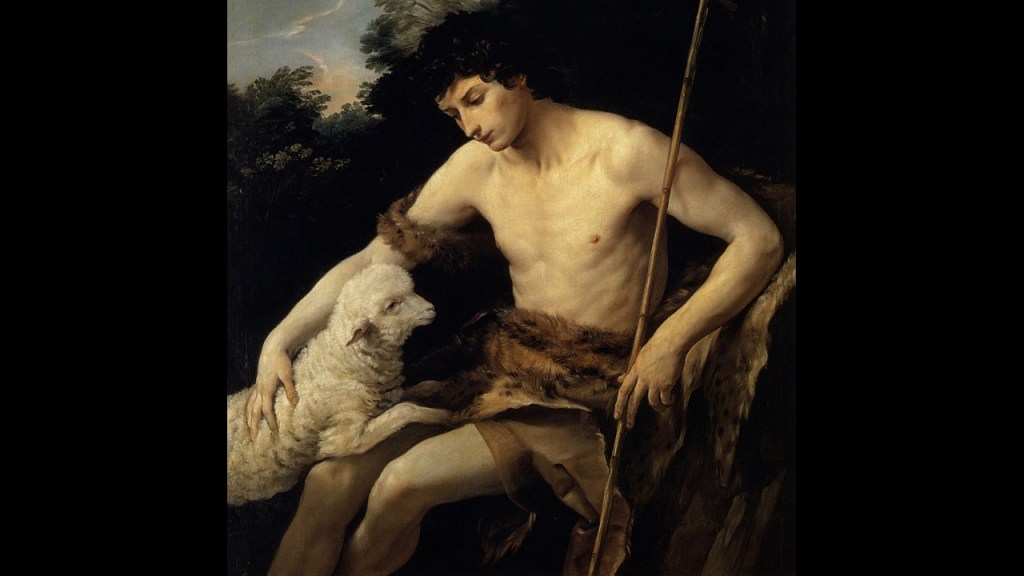
But who is coming for Christmas? “Look, the Lamb of God, who takes away the sin of the world!” “Lamb of God” Jesus is coming. He is more than a cute, cuddly, gentle being. Jesus came to be a sacrifice, just like the Passover lambs offered every year. His mission was to give up his life for us.

By dying, he takes away the sin of the world. God’s solution for sin is not to try to overlook it or ignore it. Sin is far too serious for that. It creates one misery after another for God’s children. It is always fatal in those who have it. It condemns souls to hell. It cries out for God’s attention and practically begs him to do something about it.

Nor can God simply excuse it. If he were to do so, he would cease to be holy and just. There can be no truce, no acceptance, no peace between God and sin.

Instead, he sends the Lamb of God to take it away. He bears it as though every sin ever committed were his fault. His body absorbs all the guilt ever produced. He carries it to the cross where he gives up his life. In that sacrifice on the cross our sin is not only taken away, it is fully and finally disposed of. We have been completely freed of the burden.

Do you see who’s coming for Christmas? The Jesus we need is not just a great preacher, though every Christian likes good preaching. He is far more than a therapist, a love interest, or a self-help guru. What we need this Christmas is a Lamb, a sacrifice, who will take away our sins, make peace between us and God, and give us life that never ends. Jesus is that Lamb of God who takes away the sins of the world.
Lifestyle Christianity

Mark 1:6 “John wore clothing made of camel’s hair, with a leather belt around his waist, and he ate locusts and wild honey.”

John the Baptist’s lifestyle underlined his message. First there was his clothing. His camel’s hair garment was simple, inexpensive, and likely not so comfortable. It may not have been the latest in fashion, but it was tough and functional. It seems this camel’s hair garment was his only clothing.

It was also the way in which Old Testament prophets dressed. This wasn’t intended to draw attention to these men, though it did serve as a recognizable sign of their office. More like the robes pastors wear today, it was intended to dress them down and draw attention away from the man, to his message. The sameness of wearing one thing all the time kept people from focusing on the messenger’s taste in fashion. It directed their attention to the word instead.

Next, consider John’s diet. Locusts and wild honey hardly qualify as a gourmet feast. It calls to mind the line about eating bugs from the movie The Lion King, “slimy, yet satisfying.” There is some truth to that statement here, at least the “satisfying” part. Maybe you and I wouldn’t choose to eat this way, but John the Baptist received his daily bread. His food was simple, but it was enough. Even with such a humble diet, we might even say because of it, John was able to devote his full time to serving the Lord.

Do you think that John felt like he had enough? We don’t know whether he might have complained about his support in weaker moments, but the gospels give us no indication he did. We do know that God does not require us to live such an austere life. No one receives extra credit for it if we do. Jesus also lived humbly, but not like John the Baptist.

The value John the Baptist’s life for us is the message it delivers. His example calls us away from the love of this world. So many of the things we enjoy become obsessions, even false gods. John’s life shows that we can resist materialism. There are many things we can live without. God took care of John. John could serve the Lord and be happy in that service, though he didn’t have an impressive income, wife and children, fancy food or fashionable clothes. None of these things are necessary to know God’s love. None of these things are necessary to serve Christ faithfully.

John’s life also teaches faith. God can be trusted, not because he gives us what we want, but because he takes care of our needs. John the Baptist simply served the way the Lord asked, and he trusted that God would provide something to eat. His faith was not misplaced.

We can be certain that, when the Lord has called us into life’s deserts, he will provide for us as well. If he gave us his Son, he will certainly give us something to eat and something to wear. With such faith in God’s care, setting aside our love for worldly things, we look to Jesus as our greatest treasure, and we wait patiently for him to appear.

Prepared By Baptism

Mark 1:4-5 “And so John came, baptizing in the desert region and preaching a baptism of repentance for the forgiveness of sins. The whole Judean countryside and all the people of Jerusalem went out to him. Confessing their sins, they were baptized by him in the Jordan River.”

Does it sound strange to hear that John was preaching a “baptism?” Isn’t baptism an activity, a rite, a ceremony? It is those things, too, but it is one in which the Lord is delivering a very clear and very striking message.

The Baptism which John preached was, first of all, a “baptism of repentance.” It wasn’t just a nice little gesture. It marked these people as sinners undergoing a deep and all-encompassing spiritual change. This baptism was connected with their repentance, and repentance is never merely a slight change of course, a minor adjustment in the direction we were traveling. Repenting of our sins means a 180 degree turn away from our sins.

This repentance is a violent experience because it always involves a death inside. When we come to see our sinful past as God sees it, when we come to see the sins we’ve enjoyed as the horrible things they are, it kills us. We die. We begin to look at that part of ourselves as the old self, the dead self, the self we want nothing to do with. John’s preaching and his baptism led them to see things this way.

At the same time, John’s baptism meant life for these people. This was a “baptism of repentance for the forgiveness of sins.” Those who went out to John were not left to despair about the horror and ugliness of their sin. In baptism God promises to wash sins away. Baptism was not something they did to pay for their sins. It was not a good work to make up for their failures. That payment would be made in full when Jesus later gave his life for them on the cross.

Rather, this baptism was God’s tangible way of saying, “I forgive you.” In it he assured them his promises of forgiveness and love were not only for others. They belonged to them, too. Through the water pouring over their bodies, the Lord was saying, “All my promises are yours. You need never doubt my love. I have claimed you as one of my own dear children.”

The power of that promise connected with John’s Baptism inspired their faith. It moved them to take a hold of the promise and make it their very own. The message his baptism proclaimed–sins repented, and sins forgiven– was making them ready for Christ.

That message in Baptism still makes us ready for Christ. But weren’t we baptized years ago? What does it have to do with being ready today? Maybe the ceremony took place in your distant past, but the changes it began, and the promises it made, are still going on today. Even if you fall away and come back to the Lord, God’s baptismal promises to you don’t change. His promises can never change or fail. As Paul reminded Timothy, “if we are faithless, he is faithful, for he cannot disown himself.” How does this make us ready?

What makes us truly ready for Christ is faith. We trust he is coming not to be our Judge, but our Savior. And everything about Baptism leads us in exactly that direction. In every way God is saying to us in it, “Trust me! Trust me!” He is giving us that very trust, and that makes us ready for Christ.

God With Us

Isaiah 7:14 “The virgin will be with child and will give birth to a son, and will call him Immanuel.”

In Hebrew, the name Immanuel means “God with us.” It fits Jesus perfectly. In one sense, “God with us” was nothing new. At creation he spent time with Adam and Eve in the evening. He appeared to Noah, Abraham and the patriarchs, Moses, and took an interest in their lives. He delivered them from trouble at appropriate times. He traveled with his people Israel in the pillar of cloud and the pillar of fire on their way through the desert to the promised land.

Yet, if this was all we knew of his being with his people, we might get the idea he remained a little distant. He kept himself above it all. He was interested in the lives of his people. He cared for them. But the things that happened in their lives didn’t affect him directly, or so we might think.

But then we look at this birth. In Jesus we see just how intimately God is with us. In Jesus, God himself was on earth, living like we live, experiencing what we experience, suffering what we suffer. Do you know that for every temptation which we have faced, Jesus can say, “I’ve been there before. I know what you are going through, and I can help you”? For every grief, every heartache we experience Jesus can say with all honesty, “I know just how you feel. I felt that way once, too. You can lean on me to get you through it.”

It’s not just that Jesus was with us when he walked the streets of Jerusalem, Nazareth, and Capernaum. Some of his last words before he ascended into heaven were, “Surely I am with you always.” By his Spirit, and by faith, he even lives in us. He makes our own hearts his earthly home. How could he be any closer than that: living inside of us in every situation, every moment of every day?

That is a comfort. Isn’t that the kind of God you want–one who is not just there for you, but there with you no matter what you have to face? For those who have come to know who Jesus is and where he comes from–the Son of God from heaven, born of the virgin Mary–this is what Christmas celebrates. There is no need for us to “save” Christmas, as so many holiday specials suggest. Through Christmas, God is saving us. This faith, this confidence, gives us comfort, as God comes to live with us and sets in motion the events by which he redeems us from sin. 

December offers much to celebrate: gifts, families, bonuses, and the beauty of the season. My family adds a half dozen birthdays. These are all blessings to enjoy, but none so worthy of our attention or celebration as God coming to live with his people—as one of them.

Uniquely Qualified as Savior

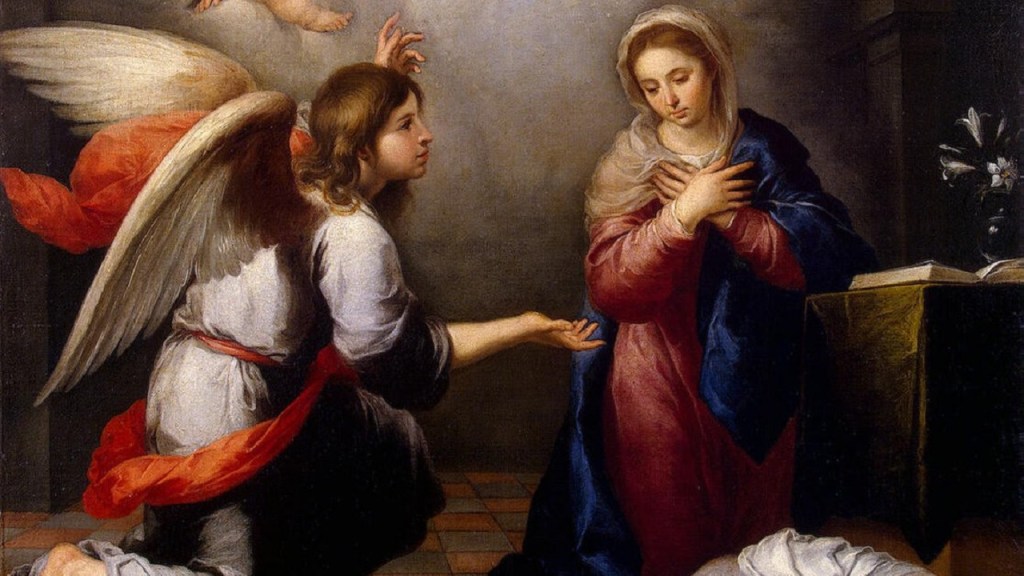
The Angel Gabriel Announces the Conception of Jesus to Mary

Isaiah 7:14 “The virgin will be with child and will give birth to a son…”

It’s no secret that a virgin birth is not an ordinary one. The very idea has been an object of ridicule. Some feminists have ridiculed the idea as the product of men suffering from deep-seated sexual hang-ups. Some liberal church-men have felt so embarrassed by it that they felt it necessary to interpret it away. “It is nothing more than a symbol, a myth, intended to give Jesus special honor,” they say. That way they can’t be accused of believing in some “freakish intervention in the course of nature.”

Early Christians, on the other hand, recognized the virgin birth of Jesus as a truth so precious, so dear, so important, that when they summarized his life in the Apostle’s and Nicene Creeds, they felt it necessary to include this. It rose far above so many truths which could have been stated about Jesus.

Why is it so important?  Think of what it promises us! What kind of a Savior do you need? One who is sinless, perfectly loving, and whose life has infinite value. This means he is qualified to serve as a substitute and sacrifice for all people. At the same time, he has to be mortal and subject to the law of God. More than merely human, he must be a part of this family of mankind God placed on this earth. Only such a man can serve in our place to satisfy God’s demands of us.

Where could such a Savior be found? How could the chain of original sin, passed from every parent to every child through history, be broken? Where could such a perfect person be located? How could a human life ever have such infinite value that it could stand in the place, not just of some people, but all of them? How could God do all of this without some kind of miracle?

In the virgin birth our Lord pulls back the curtain to let us see his saving plans and fulfillments more clearly. He lets us see the miracle. Perhaps there is some other way that he could have done it. But here he shows us how he actually did. With God as his only Father, and a virgin woman of our own human family as his real mother, Jesus is just the kind of Savior that we need: in every way human, one of us; yet in every way God, and able to what is impossible for us. In his virgin birth we discover that Jesus is uniquely qualified to serve as our Savior from sin.