Claimed

Mark 1:11 “And a voice came from heaven: ‘You are my Son, whom I love; with you I am well pleased.’”

In case we couldn’t figure it out from all that we see Jesus do during his ministry, here the heavenly Father comes right out and says it: “You are my Son.” Jesus is the very Son of God. But this also tells us more. God is claiming Jesus as his very own here.

When we claim something as our own, when we say, “This one’s mine,” that can have a selfish connotation. It can mean we are unwilling to share.

But it can also mean that something, or someone, is dear to us. It means so much to us we would never let it go. Remember this scene out of the movie “Toy Story”? Woody the cowboy, and Buzz Lightyear the astronaut, are Andy’s favorite toys. To show this, Andy has written his name on the bottom of their feet. Woody and Buzz belong to him, and he treasures them like no other toys he owns.

When Jesus was baptized, and God called down from heaven, “You are my Son…” he was claiming him as his own. Wrapped up in that claim was already a heaping helping of the words that followed, “whom I love; with you I am well pleased.” The Father had every reason to claim and to love this Son of his. Jesus, and only Jesus, perfectly pleased our Father in heaven with everything he did. He followed God’s will uncomplaining through a life with few comforts, a life filled with persecution, leading to an excruciating death on a cross. All this he did just so that he could give that love, that perfection, and that payment for sin away to you and me. As Jesus sets out on his earthly ministry, God professes his love for him. He proclaims Jesus’ own perfection, for all of us to hear. So, we can see and know him as our Savior sent from heaven.

Then, how can we not notice something else God is saying about our baptisms? We may not hear heavenly voices, but if we could, we would hear God claiming us as his own, professing his love for you and me. We may not be sons in the same way that Jesus was and is, but in our baptisms he adopts us as his children by faith. He is perfectly pleased with us as Jesus purifies us from every sin.

And so, heaven has opened to us, not only to show us our Savior, but to show us what a difference the simple application of water in God’s name has made in our lives. Now heaven is truly open, not only to show us, but to receive us.

Lessons from Jesus’ Baptism

Mark 1:10 “As Jesus was coming up out of the water, he saw heaven being torn open and the Spirit descending on him like a dove.”

When we are baptized, it is usually a relatively quiet affair. Sometimes a baby may cry through the ceremony, as they tell me I did when I was baptized. The heavens aren’t torn open for us to see God’s glory. There are usually no visible displays of God’s presence and power.

But if God would enable us to see through the veil of this physical world into the workings of his spiritual kingdom, then we would see a scene something like the one described at Jesus’ baptism. Here God did pull back the veil for Jesus, and for John the Baptist, and for any other onlookers to see. The Holy Ghost raced down from heaven and settled upon Jesus in special way. In showing us this, there are two messages he is sharing with us today.

First, he is positively identifying Jesus as our Savior. The Bible refers to this event as God’s way of anointing Jesus for the office of Christ. Peter says in Acts chapter 10, “You know what has happened throughout Judea, beginning in Galilee after the baptism that John preached–how God anointed Jesus of Nazareth with the Holy Spirit and power…” Jesus was already our Savior, but this baptism served as a kind of formal inauguration. God was formally and publicly announcing that Jesus is our prophet, priest, and king. He had a special commission to preach the good news, die for our sins, and win our battle with the devil.

It’s as if the Father were saying, “Hey, Christians! Sit up and pay attention! This is your Messiah! This man is the difference between heaven and hell for you! He holds eternity in his hands. You need to pay attention to what he says and what he does if you want the gifts he came to bring. You can be sure that he is the one I sent to save you from your sins.”

The other thing we learn is that Jesus was empowered to serve as our Savior by the Holy Spirit. The verses immediately following this account tell us that the Spirit sent him into the desert to be tempted. After that the Gospels tell us that Jesus returned to Galilee “in the power of the Spirit.” When Jesus gets back to the synagogue in Nazareth, he applies the words of the prophet Isaiah to himself. “The Spirit of the Lord is on me, because he has anointed me to preach good news to the poor.” Jesus served us by the power of God’s Spirit.

That leads to the question, “why?” Jesus was already God. Why did he need the Holy Spirit’s power for his work as our Savior? Here we see that when he became like us, he became like us in every way. The almighty Son of God so humbled himself that he placed himself under human limitations. He lived and served like other believing human beings–with the power of God’s Spirit.

Can we help noting what this says about our own baptisms and Christian service? Baptism is special, if for no other reason, because in it God sends us his Holy Spirit. If we are not receiving the Spirit for the first time, then he comes with an additional promise of God’s grace and power.

If Jesus, who was God in the flesh, would live his life relying upon the Holy Spirit’s power, can mere mortals expect to be able to serve God any other way? Our natural abilities alone will fail us. But in Baptism the Lord has connected us with the grace that saves us. He has also connected us with the Spirit’s power that fills us with whatever we need to serve him with our lives.

Our True Treasure

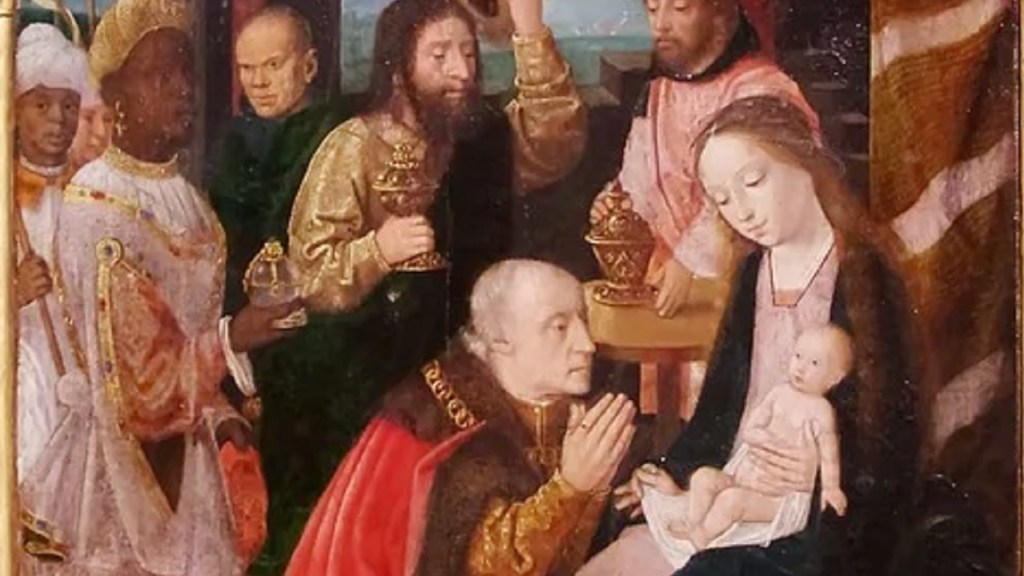
Matthew 2:9-12 “After they had heard the king, they went on their way, and the star they had seen in the east went ahead of them until it stopped over the place where the child was. When they saw the star, they were overjoyed. On coming to the house, they saw the child with his mother Mary, and they bowed down and worshiped him. Then they opened their treasures and presented him with gifts of gold and of incense and of myrrh. And having been warned in a dream not to go back to Herod, they returned to their country by another route.”

It is difficult to express in English the degree of joy the Magi experienced. Our translators simply tell us they were “overjoyed.” This was the most joyful of times for them, and not just because they saw the star. It was not the star, after all, that they came to see. They rejoiced in the prospect of meeting the Christ child. Jesus was their joy.

This joy wasn’t due to Jesus making their lives fantastically easier. They still had a very long journey ahead of them. They had an angry, dangerous king to avoid. They didn’t rejoice because Jesus had suddenly showered them with earthly wealth. In just a short time this same child was going to relieve them of some expensive gifts. Their joy wasn’t rooted in what they had in this world, but what they had in their hearts. They were on the verge of seeing their Savior and their King. He was their joy, the treasure on which they had set their hearts.

Isn’t that still the source of genuine Christian joy? Jesus may give us the joy of having some of the things we want. He may help solve some of our problems and smooth some of our difficulties. But isn’t Jesus himself the real joy? He has given us himself, his love, and his life. These things will never grow less. They can never be taken away. When Jesus is our true treasure, having him by faith gives us joy.

That is what leads the Magi, these truly wise men, to the next step: “…they bowed down and worshiped him.” We aren’t used to seeing the kind worship the Magi offered here. Their entire bodies expressed the great value they placed on this child. These bows were not the polite half-bend used to greet people in some Asian cultures. They got down on their knees and put their faces on the floor. They were saying, “You are great and worthy. We are small and low.”

We don’t have to imitate their body language to worship Christ as they did. When we worship in a spirit of humility and brokenness, when we humbly confess our sins, when we keep our focus on Jesus and his works of love, then we will know his true value, too. He is our Savior from sin. Such worship is an uplifting experience, even if, in spirit, we are down on our knees.

The treasures the Magi gave to Jesus were further evidence that they valued him deeply. But perhaps an even greater proof is found after their visit was complete. “And having been warned in a dream not to go back to Herod, they returned to their country by another route.” More than God wanted their offerings, he wanted hearts that obeyed him. Do you remember the words of Samuel to Saul? “To obey is better than sacrifice, and to heed is better than the fat of rams” (1 Sam. 15:22). The Magi avoided Herod as God had told them. This showed the place Christ held in their hearts.

Those who treasure Jesus still live lives that obey him carefully. He rules their hearts, because they know he has made them rich.

The Name of Jesus

Luke 2:21 “On the eighth day, when it was time to circumcise him, he was named Jesus, the name the angel had given him before he had been conceived.”

Circumcision was part of God’s Old Testament law. If you were a male, and you wanted to be one of God’s chosen people, you had to be circumcised. Circumcision was a vivid reminder that God had made a covenant, a promise, to these people, and that God had claimed them as his own.

Circumcision was also a vivid reminder that sin begins at the very source of our life–it is passed from parent to child from the very time of our conception. Thus, it must be cut away at its source. Even this original, inherited sin must be removed, before we are acceptable to God.

Jesus had no personal need of circumcision. He already belonged to God. He was already chosen by him in a way which far surpassed that of any other human being. Jesus needed no reminders of our sinful flesh and the need for its removal. He was sinless, because God was his only Father and he was born of a virgin.

But Jesus came to be our Savior. That’s what his name means. With his circumcision, Jesus was saving us. He was keeping this law for us. Here he began his perfect fulfillment of all God’s commandments. Here he began to offer to his heavenly Father the perfect obedience to the law that we owed, in our place–as our substitute.

As we begin our year in Jesus’ name, draw on this comfort: Jesus lived as your substitute. We have the comfort that Jesus was our Savior not just at his circumcision, nor only at his cross and empty tomb. Jesus was our Savior every single day he lived. He still is. Everything he did–every breath, every movement–he did as our Savior.

As you listen to the gospel lessons read in church, as you read them for yourself at home, take comfort! Jesus is doing all these things to save you. He is teaching the pure word of God, performing miracles of mercy, loving people, glorifying his heavenly Father, and perfectly keeping the law, to make up for our failure to do so.

Do you understand what peace will be yours if you begin, and live, your year in Jesus’ name, always aware that he is your Savior? We will still be sorry when we sin, but we need not try to hide or deny them in fear. Jesus’ blood washes every sin away. Jesus’ holy life replaces our disobedient and rebellious lives. Jesus is our Savior, and his holy life and his innocent death for us is all that the Father sees anymore. We don’t have to be afraid.

If Jesus is our Savior, does this not assure us that we can trust God? Can’t we conclude with the Apostle Paul, “He who did not spare his own Son, but gave him up for us all, how will he not also, along with him, graciously give us all things?” We can be sure that everything our Savior tells us, whether he is identifying our sins, giving us his promises, or instructing us on how to live, he tells us only because he loves us. We can be sure that everything that happens, every obstacle in front of us, happens for our good, because Jesus is our Savior. It’s promised in his name.