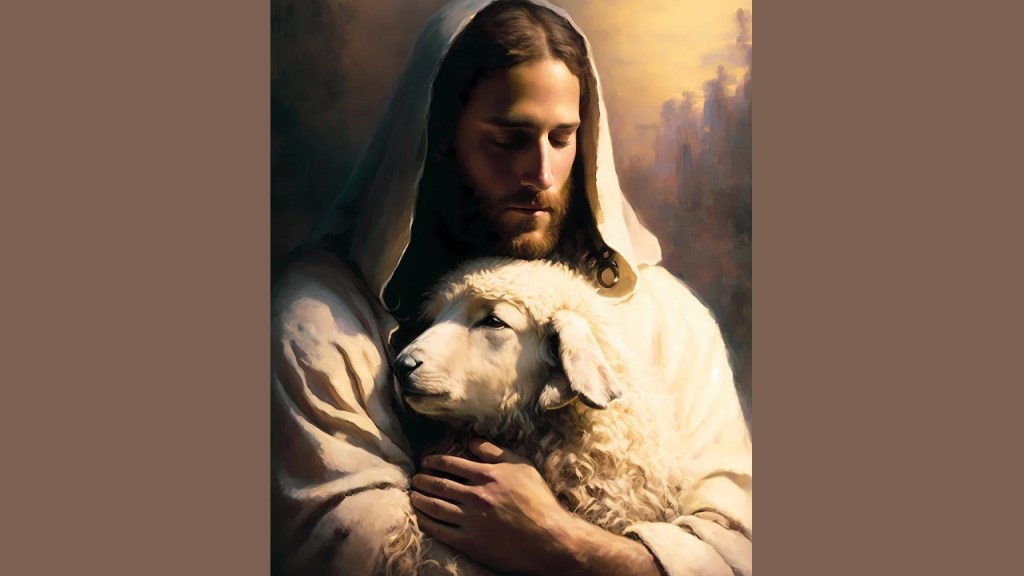
Heaven’s Greatest Joy

Luke 15:3-7 “Suppose one of you has a hundred sheep and loses one of them. Does he not leave the ninety-nine in the open country and go after the lost sheep until he finds it? And when he finds it, he joyfully puts it on his shoulders and goes home. Then he calls his friends and neighbors together and says, ‘Rejoice with me; I have found my lost sheep.’ I tell you that in the same way there will be more rejoicing in heaven over one sinner who repents than over ninety-nine righteous persons who do not need to repent.”

The open sinners were gathering around Jesus to hear his word. The Pharisees and teachers of the law, who lived outwardly moral lives, had only criticism for him. Which group contained candidates to become part of Heaven’s Greatest Joy?

I like it when people do things right the first time. I am satisfied if the waiter brings me the wrong order but quickly corrects it after we discover the mistake. I probably give a bigger tip and may even put in a good review of the place if everything is right from the start. I am satisfied when my mechanic owns up to the mistake he made repairing my vehicle and fixes it at no extra charge. I compliment his work, recommend him to others, and keep bringing my car back if he is consistently getting the diagnosis and repair right on the first try. I was satisfied when my children apologized for their bad behavior. It gave me a sense of pride when they chose to do the right thing all along.

We may tend to focus on things like behavior, results, success. Our Lord likes good behavior, too. But he is focused more on the people themselves. It gives him joy simply to have them, to have them back with him safe and sound.

Maybe that’s not so hard to understand. I took great pride in my children when they made the honor roll, or walked the stage at their graduations, or were commended for their work as lifeguards in a special ceremony. But that was nothing like the joy I felt on the day we learned my wife was expecting, or the day they were born. Then, before this little person could do anything, when all he or she did was exist, there was joy just to have them, joy that they had made it into our world and into our family safe.

Our repentance is like our spiritual birthday, one that happens over and over again. It is the day that we die to sin and live to God. It is the day that doubt and fear, resistance and contradiction, give way to faith and trust and love. It is the day Jesus’ love wins us for his side, however shaky and weak that new allegiance may be at first. Then he can say, “This one belongs to me now, and if the devil wants him back he will have to fight me for him.”

Repentance is the change of mind and heart that make us belong to God, a new birth into a new life. With every sin confessed and promise of grace grasped, that new birth keeps producing new life. When he finds us, our Lord claims all of us for himself all at once. But at the same time his love and forgiveness keep winning more and more of ourselves for him. His ownership grows with each new conquest.

Having us, owning us, making us his very own–that’s what gives our Lord his greatest joy. That’s not something that happens with the spiritually self-satisfied who think that they have made it on their own. They still belong to themselves. They always will. That’s something God does only with sinners: not too proud to admit their sins, ready to let Jesus carry them home. That’s the circumstance no one would have expected if Jesus did not reveal it as heaven’s greatest joy.

May we never be too good, or too proud, to be the sinners Jesus seeks, Jesus finds, and Jesus rejoices to call his own.


Secret Things

1 Corinthians 2:6-13 “We do, however, speak a message of wisdom among the mature, but not the wisdom of this age or of the rulers of this age, who are coming to nothing. No, we speak of God’s secret wisdom, a wisdom that has been hidden and that God destined for our glory before time began.”

The earth is flat and the moon is made of green cheese. Autumn leaves turn colors because little fairies come out at night and paint them orange and yellow while we are sleeping. Breaking a mirror will give you seven years of bad luck. If I told you that I believe all these things, you would probably think that I was making a joke. If I insisted, you might think that I had finally cracked. If everything else about me seemed normal, you might consider me a fool.

I don’t believe that the earth is flat, the moon is made of green cheese, fairies paint the leaves, or breaking mirrors negatively affects your future. But I know that some of the Bible truths we believe sound just about as strange to much of the world around us. Christian faith leads some to wonder if we have taken leave of our senses.

God’s wisdom and the world’s wisdom often part ways with each other because God’s wisdom is hidden from this age in which we now live. The difference between these two kinds of “wisdom” is not a simple matter of two alternative paths. Jesus Christ–the Way, the Truth, and the Life, the narrow door and the narrow path–is the only way to the Father and eternal life. That is God’s wisdom. The general equality of all world religions is the world’s wisdom, or worse, the generic, empty “spirituality” more and more people are adopting. These lead neither to God nor to life. To quote Paul’s words here, “they are coming to nothing.”

But they are packaged and marketed to you and me in a way that make them hard to resist. They keep wearing away at our resistance. The spin is that if you adopt the world’s wisdom, you will be more popular, you will have more fun, you must be more intelligent, you are more just or fair. If you reject the world’s wisdom in favor of God’s, you are an extremist, intolerant, someone who thinks you are better than others, or just plain ignorant. It’s a great marketing campaign, maybe the best that ever was. You feel its tug, don’t you.

In contrast, Paul’s “message of wisdom” is talking about the gospel, God’s “secret wisdom.” The Lord of glory was crucified for us. Look at the facts of Jesus’ life. If God didn’t intervene in human history, who would have known about this person named Jesus who lived and died in the obscurity of Roman occupied Israel? When Jesus was born, who would have known unless God sent angels to tell the shepherds, “Today in the city of David a Savior has been born to you. He is Christ the Lord.” When Jesus died on the cross, who really believed they were crucifying the “Lord of glory”? Even his disciples seemed to have given up on the idea. When Jesus rose again, it took the intervention of angels again to convince the women that the body was alive, not stolen. And the disciples didn’t believe until Jesus began appearing to them himself. Without God’s own intervention, this all would have remained God’s little secret.

More than these historical facts, God’s secret wisdom includes the meaning of Jesus’ life, death and resurrection. His secret wisdom is the thing God was doing for us. God entered our world as one of us, paid for all our sins by his own death, freely forgave every sin and set us free from them, made life and immortality our own as his gift. Who would have guessed that? Grace is the operative word for our relationship with God. It is our confidence of his love, our hope that we will live with him. It is not “obedience,” or “purpose,” or “effort,” or “sincerity,” or “passion.” It is grace, God’s gift-love, that has been hidden from the ages, including our own.

One commentator has noted, “No heathen people ever conceived a god who would actually take care of those who placed their reliance on him.” They live in fear, not faith. They have to work their magic and pay their dues to keep their gods happy and themselves safe. A God who freely loves them as a Father, and freely forgives? That’s our message, Paul says. That’s God’s wisdom. By giving us the gospel and leading you to faith, God has let you in on this secret.

It’s not a secret that he wants us to keep.

A Miracle in a Message

2 Peter 1:19“And we have the word of the prophets made more certain, and you will do well to pay attention to it, as to a light shining in a dark place, until the day dawns and the morning star rises in your hearts.”

Someone once asked me whether or not I believed the age of miracles was over. In the Bible, accounts of miracles tend to be bunched together around a few historical characters: Moses, Elijah, Jesus, and the Apostles. But I don’t know if there ever was an “age of miracles.” God’s power has always been at work in the lives of his people. From time to time he still works in our world in ways that can’t be explained naturally.

The miraculous is an indispensable part of Christianity. Just think about how much of the Christmas account describes things miraculous, or what would be left of it without them. But our faith does not depend on being eye witnesses of miracles. We have something better in the word. We have “the word of the prophets made more certain.” All by itself, God’s word has always been 100 percent reliable. There has never been a problem with God’s word.

But there has been a problem with me. You and I might not be like those who consider the Bible a collection of myths. We don’t dismiss miraculous events as fantasies. But we still have subtle ways of showing our lack of trust. Even Christians mistrust God’s law. The Bible clearly forbids sex outside of marriage. That didn’t prevent unmarried Christians I know from claiming they prayed to God about it, and insisting that in their case God was making an exception. Jesus equates hatred with murder. Yet many Christians try to justify hateful feelings because they believe their situation is somehow unique or exceptional. I have heard adult Christians propose that “he started it” was a valid reason to treat someone else unkindly.

Sometimes we just don’t think God’s word is sufficient for our faith, or enough to convert someone else, and we yearn for a visible demonstration of God’s power. But what does Jesus say about that sort of thing? “A wicked and adulterous generation asks for a sign.” In such ways we demonstrate our own lack of trust in God’s word.

Peter shores up our flagging faith when he promises, “We have the word of the prophets made more certain.” Is it just a coincidence that the events surrounding Jesus’ birth, and life, and death, and resurrection fulfill so many prophecies made hundreds and even thousands of years before he lived? We read the prophecies of Moses, or David, or Isaiah. We find that these are not vague generalities like your horoscope that might fit the lives of dozens of people you know. They describe exactly the specific places and events and circumstances in Jesus’ life. They demonstrate a reliability which has never failed.

It’s no wonder that Peter encourages, “…you will do well to pay attention to it, as to a light shining in a dark place, until the day dawns and the morning star rises in your hearts.” Why listen to the Word’s witness? The words of Scripture are so much more than just “God’s Little Instruction Book” or “Chicken Soup for the Soul.” A simple message like, “Jesus so loves you that he died for your every sin. Dear Child of God, your sins are all forgiven,” are filled with the miraculous power of God. When people hear them, a little miracle takes place in human hearts. A bright beacon of faith, and hope, and love begins to shine where there was only uncertainty, and despair, and loneliness before.

We don’t need to see the events of the first Christmas, or Jesus’ death and resurrection, or his shining in all his glory on the mountain (the event Peter is referencing in this context). When we listen to the Word’s witness, Jesus himself lives and shines in our hearts. By faith he is closer to us than he ever was to those who saw his physical body but never put their faith in him. His word makes me so sure that he loves me, so sure that he forgives me, so sure that now I belong just to him, that my hearts is filled with faith.

That is all the miracle we will ever need.

Justified, But Not By Law

Galatians 2:15-16 “We who are Jews by birth and not ‘Gentile sinners’ know that a man is not justified by observing the law, but by faith in Jesus Christ.”

Peter had come to visit Paul and Barnabas in the city of Antioch. This was the first city where the Gospel was reaching not only Jews, but also Gentiles, and in large numbers. When Peter first arrived, everything was fine. He associated with the Gentile members freely. He even ate their food, some of which had been considered unclean in the law of Moses.

That was no small matter for a Jew. Not only had they learned to regard such food as sinful, they often saw such foods as simply distasteful. You might compare their reaction to the revulsion most of us would have to eating live caterpillars. Nonetheless, Peter practiced his Gospel freedom in Christ. The ceremonial law no longer applied since Jesus fulfilled it. Peter was well aware, and he ate with his Gentile friends.

Then other Jews visited from Jerusalem. All Peter’s Gospel freedom flew out the window. He was afraid of what they might think of him, so he stopped eating with the Gentiles. He shunned their food, even shunned their company.

Peter’s actions were wrong for a couple of reasons. First, what he did was motivated by fear, not love. When fear is our motivation, we are falling back on work-righteous ideas. God’s punishment or man’s disapproval drive our actions. When fear of consequences governs what we do, we are being legalistic and self-righteous.

Second, Peter was putting the gospel message in jeopardy. His behavior was affecting everyone around him. He was leading both Jews and Gentiles to believe that faith in Jesus was not enough. This threatened the eternal salvation of souls.

Sometimes we act out of fear, too. We want others to consider us good, but we are not acting out of love. We may not have hang-ups with Old Testament ceremonial law anymore, but something similar is going on when we apply the word “must” to some long-held “tradition.” This can be true whether we are insisting the tradition continue or end. Either way, we are adding to the gospel.

Even godly morals can become a device for denying the sufficiency of God’s grace. Fear or hope of reward deny that Jesus’ death on the cross was enough. We may not say that we are trying to pay for our own sins out loud, but any action that comes from fear instead of love comes from the same legalistic root.

God’s law is not the answer for our sins. It exposes them. Paul tells us that through the law we become conscious of sin. But it can’t provide a solution, and it is powerless to give us the faith which can. “The law brings wrath,” Paul says in Romans. It even makes sin spring to life. It cannot give us spiritual life.

Instead, we are justified by faith in Jesus Christ. He lived the life the law demanded as our substitute. He died the death the law demands for our sins. For that reason, God declares that we are not guilty. He forgives us.

When we hear this, the point is not: “God says I am not guilty, but I really am.” This is the same God who said, “Let there be light” and light appeared. When he says something, it is real and true. If he says I am not guilty, then I am not.

This answer for sin is ours by faith. It is not a one-time experience from the past. It forms an ongoing relationship of trust and confidence established by God himself. By this same faith he applies forgiveness to us every day. If Jesus’ life and death are ours, we are not guilty. Ever.