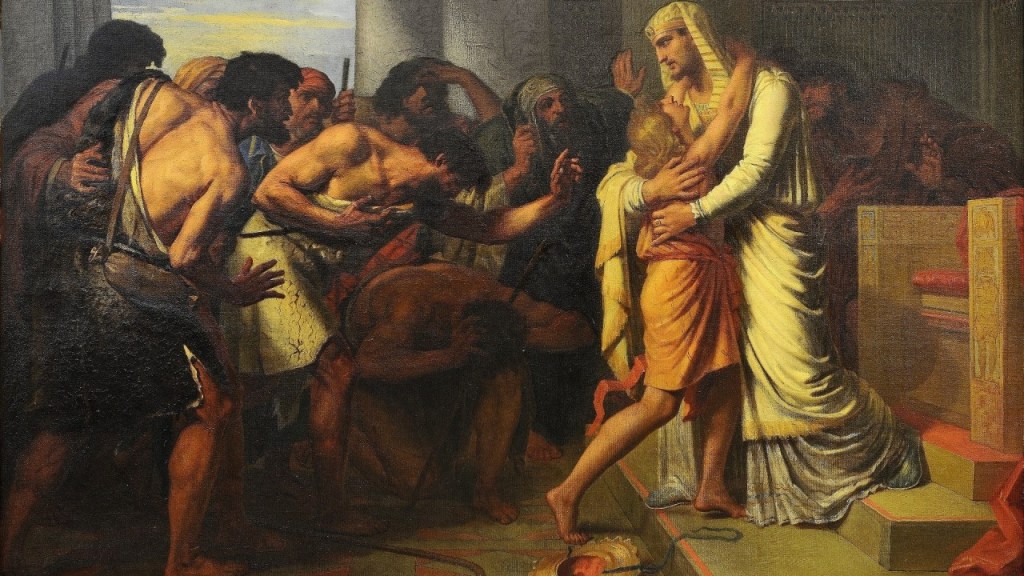
Genesis 50:15-17 “When Joseph’s brothers realized that their father was dead, they said, ‘What if Joseph holds a grudge against us and pays us back for all the wrongs we did to him?’ So they sent word to Joseph, saying, ‘Your father left these instructions before he died: This is what you are to say to Joseph: I ask you to forgive your brothers the sins and the wrongs they committed in treating you so badly. Now please forgive the sins of the servants of the God of your father.’”
You can’t say that Joseph’s ten half-brothers had had an easy life. They herded sheep for a living. That meant chasing animals around in the hot, hilly Middle East. This is the kind of work TV host Mike Rowe might include on his show Dirty Jobs. They lived in tents their whole lives. They and their families survived a seven-year famine. Now they lived in a foreign land where they were considered uncultured, unwashed, unrefined hillbillies. They were all part of one of the Bible’s most dysfunctional families full of jealousies, playing favorites, and political games.
Perhaps nothing was harder than the guilt they carried around for almost forty years. They sold their own brother into slavery. They lied to their father, claiming that a wild animal had killed him. Twenty-two years later they were reunited. They then learned that their brother’s thirteen years of slavery had also involved several years as in inmate in the king’s prison. For seventeen years following their reunion, their brother Joseph had treated them well, but the guilt always nagged, and they feared he had treated them well only out of respect for their father.
Now their father was dead. Their guilt and fear haunted them again. Brother Joseph had lived as a slave and a prisoner for thirteen years. Apparently his ten brothers had lived in a kind of prison or slavery of their own. “Serves them right,” we might be tempted to think. “They did this to themselves. They had it coming for doing such a horrible thing to their brother.”
It is true, they did this to themselves. They carried their guilt and fear around for decades in spite of the fact that Joseph had made every effort to show them grace. He had hugged and kissed them, given them gifts, and provided for their families these many years.
Now, what good could come of these ten men tiptoeing around Joseph in fear, thinking he held a grudge and would pay them back? Who would be served by that? It did nothing for Joseph. It didn’t change the years he had lost or make his experience easier. It only made him more alone, isolated from the people who should be his family.
It didn’t serve them to live in the misery. They weren’t paying off any debt or serving any justice. It wasn’t turning them into better people. It was far more likely to make them worse–moodier, short-tempered, self-absorbed, fault-finding, impatient with the people around them. It made them more alone, isolated from the people who should be their family.
It doesn’t serve us when past wrongs hang out unresolved, either. No good comes from it. I know of marriages destroyed this way. I know of parents who died in loneliness and poverty because of this. I have counseled brothers or sisters who had no one when they needed help because of situations like this. It only makes us more alone, isolated from the people who should be our family, or like one, to us.
Isn’t that why God has forgiven all of our sins? When we lived in fear of what he was going to do because of the way we treated his goodness to us, no good came of it. We searched for ways to appease him with some kind of magic. We tiptoed around him and tried to avoid him so that we wouldn’t have to deal with it. Maybe we tried to make it up to him by doing him some half-hearted favors. Or maybe, like these brothers a little later in the story, we throw ourselves down in fear and cry, “We are your slaves.”
But the one thing we don’t do is get close to him. There is no love, no trust, where there is fear. It only makes us alone, isolated from the one who should be the Father of our family.
So he introduced us to Jesus to take away our fears. He showed us forgiveness at the cross. He sent his Spirit to impress it on our hearts. He washed us in it at our baptisms. He fed it to us in his Holy Supper. And God’s forgiveness bore its fruit. It relieved us of our fears.
That’s what grace, that’s what forgiveness, does. It relieves our fears. It has already relieved our fear of God. It has the same power, it produces the same fruit, when God’s children forgive one another.
 Bits of Bread