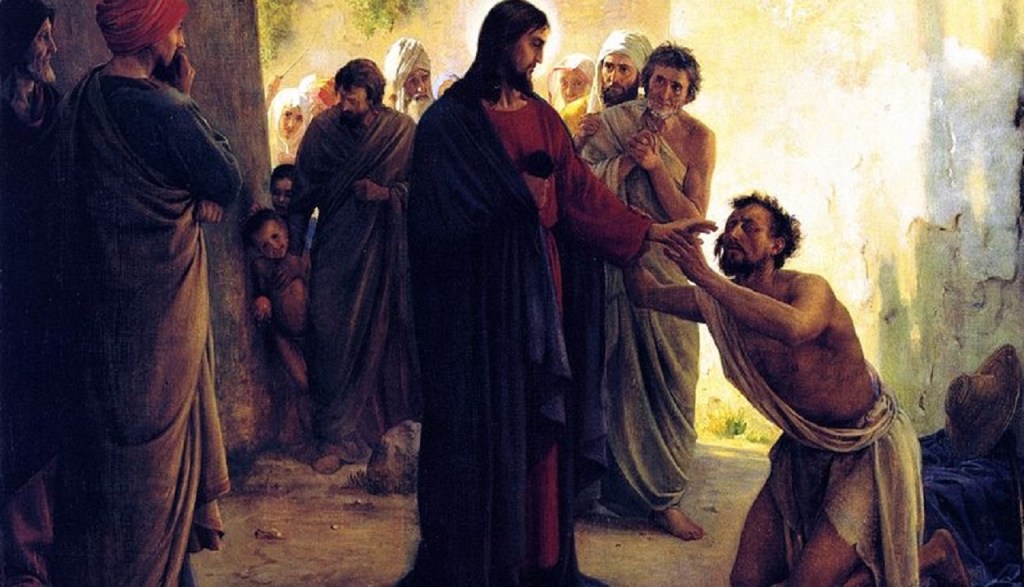
John 9:1-2 “As he went along, he saw a man blind from birth. His disciples asked him, ‘Rabbi, who sinned, this man or his parents, that he was born blind?’
For Jesus’ disciples, the idea that this man was born blind because someone sinned was not a question. It was an assumption. There only question was, “Who was responsible?” Their first suggestion was the man himself. His blindness made sense to them if he was being punished for something.
Sometimes it works this way. Sometimes people suffer some curse, some burden, because of a specific sin. In the Bible God curses the first murderer, Cain, by making him a “restless wanderer on earth.” After David commits adultery with Bathsheba, God takes the life of the child born to them in its first week.
In our own time, we know some sins have negative consequences that affect the rest of a person’s life: maiming injuries, or incurable diseases that are the direct result of certain kinds of behavior. Jesus’ disciples weren’t completely off base in the question that they asked him.
But there are two important points to note. One is that before we draw any conclusions linking a particular sin to some particular setback in some particular person’s life, we need to be able to draw a clear and indisputable line between these things. If that connection comes as a direct revelation from God, as with Cain or David, then we have a valid conclusion. If that connection is clear as a natural consequence, like an injury suffered in an accident while driving drunk, then we have a valid conclusion, too.
The second thing to note is the difference between punishment and discipline. When sin leads to suffering in an unbeliever’s life, that may be nothing more than a matter of justice. They did the crime. Now they have to do the time.
But when God allows his believing children to suffer setbacks connected to their sins, this is always loving discipline. He isn’t trying to make them pay. He is trying to make them better, helping them to grow spiritually. He is teaching and molding them to believe and live and act more like his own sons and daughters. He wants to draw his people close to offer forgiveness and renew their faith.
Most of the time there is no direct connection between a particular sin and the painful setbacks we suffer. Failing to realize this can lead us into sins of our own. When we are looking at someone else’s problems it leads us to judge them falsely. I can find many people less fortunate than me. They can’t walk, they can’t see, they can’t hear. They daily deal with pain I can’t imagine. If I assume that they suffer as the result of some personal fault, then I become guilty of exactly the kind of loveless judging Jesus condemns.
If we view our own pain or setbacks this way, it leads to a different kind of sin. We may agonize over some moral failing in our lives that simply doesn’t exist. We may wonder which of our past sins made God so angry with us. This leads us to conclude God is the great punisher, not the great forgiver. Instead of trust we feel dread. We base our relationship on performance instead of grace. This destroys our faith.
Paul reminds us we are all in the same boat when it comes to sin: “There is no difference, for all have sinned and fall short of the glory of God” (Romans 3:22-23). He also promises that we share the same forgiving grace: “…and are justified freely by his grace through the redemption that came by Christ Jesus” (Romans 3:24). Jesus did not come to condemn this blind man. He did not come to condemn you or me. He came to open our eyes to God’s saving love.
 Bits of Bread