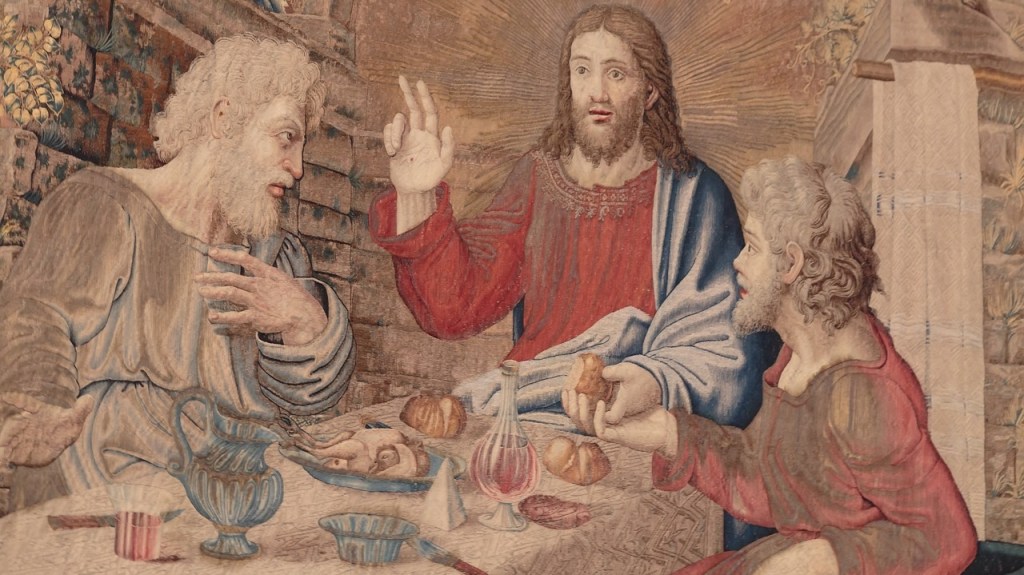
Luke 24:25-26 “How foolish you are, and slow of heart to believe all that the prophets have spoken! Did not the Christ have to suffer these things and then enter his glory?”
Foolish, slow–these aren’t compliments or terms of endearment. The Greek behind the first term, “Foolish,” suggests mostly empty space between their ears. “Hello! Any brain cells in there?” It is a little different than the fool described in other parts of the Bible. He has a moral issue as much as an intelligence issue. Jesus is suggesting that they suffer from a lack of knowledge. He had given them plenty of instruction. They had real experience with his teaching and life. “Why don’t you guys get it?”
Is Jesus’ being unreasonable in expecting them to know better? Is his way of addressing them mean? No, sometimes you have to let a person see his fault in plain words, without pulling any punches. You can’t worry about wounding their fragile self-esteem. Admittedly, some people don’t understand because they just haven’t been taught, or a concept is too difficult to grasp. These two disciples, however, were underachieving. They were capable of grasping more.
As exhibit A, Jesus exposes the blind eye they were turning to all the prophets had written about his sufferings and resurrection. For three years he often referred to these prophecies himself. Why hadn’t they paid attention?
As exhibit B were the many times he told them directly he would suffer, die, and rise. He gave them pictures: he would destroy and rebuild the temple in three days; he would be like Jonah in the belly of the great fish for three days.
His enemies got it. They asked for a guard at his tomb because they remembered him saying he would rise in three days. Was it asking too much for the men who loved and trusted him to take his words seriously?
Sometimes we don’t see, because we don’t want to. If we see what we don’t want to see, we will have to change our beliefs or behavior. During my college years I sometimes tutored high school students in Algebra and Latin. I believe that some didn’t understand because they didn’t want to. Algebra and Latin can be hard, I know. But not everything is hard to get. For some of them, “getting” the concepts would mean doing the work themselves going forward. They would have to do the assignments without someone walking them through it. As long as they could say, “I don’t get it,” they could lean on someone else to do the thinking for them.
Jesus’ disciples didn’t get that the Christ first had to suffer, and then enter his glory, in part, because they didn’t want to. This made him a different kind of Savior than the one they were hoping for. The grand future of success, riches, and power they were planning for themselves wasn’t going to happen. To follow Jesus means to go where he goes: first suffering, then glory. I am sorry if that is a disappointing conclusion, but it is why we need the risen Lord to overcome our foolish hearts, so slow to believe.
Sometimes we come to a passage in the Bible, and we say that it is hard to understand, because we don’t want to believe it. The words are simple. A five-year-old could tell you what they are saying. But if we believe them, then we are going to have to change. We are going to have to give up some behavior. We are going to have to sacrifice some grand plan. We are going to have to admit something unpleasant.
So we say these words don’t make sense to us. Or we say that that is just someone’s interpretation. We would like to keep our eyes closed, as though somehow it will hurt us if we see the truth about ourselves and our God. It is why we need Jesus to open our eyes, so that we can see there is nothing greater than the grace that led him to suffer for our sins, and rise to glory for our assurance.
 Bits of Bread