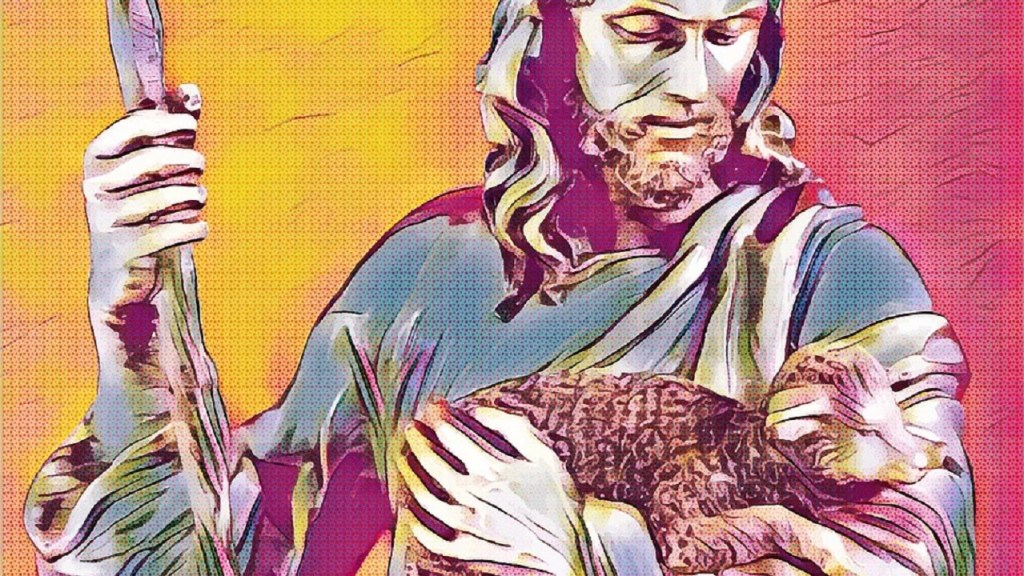
Not as Orphans

John 14: 18-19 “I will not leave you as orphans; I will come to you. Before long the world will not see me anymore, but you will see me. Because I live, you also will live.”

An orphan is someone who has lost both parents to death. It is an irreversible situation. Obviously, the parents are never coming back. Jesus did not say he was not leaving the disciples. He said he wasn’t leaving them as orphans. It’s true he was going to die, but he wasn’t going to stay dead. “I will come to you.”

Orphans have always been a picture of the weakest, poorest, most vulnerable people in the world. They are mistreated, neglected, abused. Think of the orphans from literature and the movies: Cosette in Les Miserables, Oliver Twist, Little Orphan Annie and the other children who shared her orphanage, Hugo Cabret (from the movie Hugo), Cinderella, Harry Potter, Mowgli, Tarzan, even the young Bruce Wayne who becomes Batman. Little children deprived of their natural protectors and providers will struggle to survive.

Have you ever felt like that as a Christian, when you had to take the lonely stand for what is right; or when your faith has been mocked? All but one of these men in the room with Jesus were going to die for their faith, and tens of thousands of people a year still do around the world according to the organization Voice of the Martyrs. While we wait for Jesus to return, we can look alone and abandoned.

But we aren’t orphaned, because Jesus will come. More than that, “Before long, the world will not see me anymore, but you will see me. Because I live, you also will live.” Note that Jesus doesn’t say, “Because I rise, you also will rise,” although that is true, and it is part of what he is promising here. Jesus’ resurrection from the dead is a promise and guarantee of our resurrection from the dead.

But beyond the resurrection there is life, life worth living, life lived in the full experience of God’s love, life lived in the full realization of our potential, life lived in the full glory of what each of us was individually made to be. Even now, by faith we live under his love in the comfort of his grace and the hope of his return. He hasn’t left us as orphans. He has left us as heirs of glory and owners of life that never ends.

Another Counselor

John 14:16-17 “And I will ask the Father, and he will give you another Counselor to be with you forever–the Spirit of truth. The world cannot accept him, because it neither sees him nor knows him. But you know him, for he lives with you and will be in you.”

The very fact that we believe in Jesus is evidence that he has kept this promise. “No one can say, ‘Jesus is Lord,’ except by the Holy Spirit,” Paul later wrote to the Corinthians. We have the Spirit, and we believe in Jesus, but that is the one thing the world cannot do.

Jesus doesn’t want us to be surprised that the whole world doesn’t embrace our Savior and his teachings. It neither accepts, nor knows, nor sees the Spirit who would make that possible. Remember how the Pharaoh of Egypt reacted when Moses brought the miraculous plagues? When his own sorcerers were not able to imitate some of them, they told the Pharaoh, “This is the hand of God.” But he would not see the power of God working right in front of his nose.

Remember how the Pharisees reacted to Jesus during his ministry? They heard the same good teaching that everyone else heard. They saw his many miracles. They had to admit that some of them were no trick, and nothing a mere man could do, like healing a man born blind or raising Lazarus to life four days after he died. But they would not hear and they would not see what everyone else did. It was all so clear, so undeniable, that Jesus warned them that they were toying with sinning against the Holy Spirit, who was tugging at their hearts through Jesus’ ministry.

Sometimes I hear Christians today speak as though they are befuddled by the world in which we live. How is it possible for people to reject common decency in so many areas of life? Why do more and more people abandon Biblical beliefs accepted by nearly everyone for thousands of years? How do some people believe such outlandish things about Jesus, rejecting his virgin birth, or claiming he was sinful, or denying his body came back to life and left his tomb? Remember, they lack the Holy Spirit. “The world cannot accept him, because it neither sees him nor knows him.”

But you do. “But you know him, for he lives with you and will be in you.” The Holy Spirit lives with us. We are exposed to him constantly. He inhabits the room whenever we are gathered around God’s word and sacraments. He lives in our Bible studies, the Christian books and magazines we read, the Christian music we listen to. He has set up shop in our hearts. They may be dilapidated old fixer-uppers that should have been condemned by the building inspectors long ago, but the Holy Spirit has moved in anyway. He went right to work setting things straight in there. He opens the Scriptures to us, if not so that we can fully understand them, then at least so that we can accept that what they say is true and is God speaking to us. He maintains our faith.

The Spirit continues to do for us the kinds of things Jesus was doing for his disciples when he was with them, which is why it is good that we have him with us while Jesus is away.

Love Keeps Jesus’ Commands

John 14:15 “If you love me, you will obey what I command.”

Keeping Jesus’ commands reflects the very nature of our relationship with him. “If you love me, you will do this,” he says. He is not trying to manipulate or pressure us, like the young man who wants to have his way with a young woman, and calls her love into question if she doesn’t give in. “If you love me, you will let me do this with you.” Jesus is simply describing a fact of our relationship. Love changes the way we behave.

You see, we love him because we trust him. We trust him, because he so loved us. He gave up everything in order to save us. He suffered pain we cannot imagine, not because there was any advantage to himself, but because it served us. He took the rap for our sins and let us go scot-free.

If he loved us enough to do that, then we know that he has only our good in mind. We can trust whatever he says. More than that, we are genuinely grateful, and our hearts come to love him. Love never wants to be a secret thing hidden in the heart. It wants some way to show itself. What can I do, what can I give, to return the love that has been given to me?

For the believer, then, keeping Jesus’ commands is never a matter of obligation. These aren’t things we do because we feel pressured, or have been threatened. Nor are we just checking items off a list because they have to be done. They are expressions of love. If we do them, it is because we love him. If we do not do them, it is because we do not love him, or we love someone else even more.

It should go without saying that “obeying what I command” does not include “ignoring what I command,” or “altering what I command,” or “re-writing what I command.” It means doing these things, because we love him. That is in spite of the fact that sometimes we may find his commands hard to understand. Why should I give something up? Why should I control my desires? Why should I love those who don’t love me?

When I was five years old my parents bought our first pet, a dog. They told me, “Don’t try to play with the dog while it is eating.” But I was excited to have a new dog, and I wanted to play with it, and I didn’t see what the harm would be in giving it some love and attention while it was eating. So I did, and it bit me. My parents knew better.

When Jesus says, “Do this,” or “Don’t do this,” perhaps we can give the all-knowing, all-powerful Lord and God who made us credit for knowing a little more than we do. Perhaps we can trust that he loves us. Perhaps we can love him enough to do what he commands.

Sometimes that can even mean doing things that are unpleasant, or even painful. If we love him, we will obey his commands. Have you seen the movie Unbroken? It is the story of Louie Zamperini, an American soldier in World War II, and his harsh treatment in a Japanese prison camp. At one point the Japanese offer him the opportunity to leave the camp and live in a plush hotel if he will read propaganda statements for them over the radio. Refusing means going back to the camp and facing even harsher treatment. He chooses the camp and its tortures. Why? Love for his country, love for the family and people he was fighting for. It did nothing positive for him.

Because we love Jesus, we keep his commands, whether we think we are getting anything out of it or not. (The truth is, we are). That is what love does.

The Only Way

John 14:4-6 “You know the way to the place where I am going.” Thomas said to him, “Lord, we don’t know the where you are going, so how can we know the way?” Jesus answered, “I am the way and the truth and the life. No one comes to the Father except through me.”

No one comes to the Father except through Jesus. Many people criticize Christians for saying that Jesus is the only way. But it’s not our idea. Isn’t that what Jesus’ words say? Christians who take Jesus’ words as they read are accused of being narrow-minded and better than thou. They are suspected of wanting certain people to be lost, of wishing that some people don’t make it to heaven. I know of a pastor who made his congregation cover up the words of this verse painted on the wall in the front of his church. “Would God really condemn a person just because he’s Buddhist?” he once asked them in a Bible class.

The problem is that people don’t understand the nature of our human problem. They misdiagnose the human condition. They look at the standards of right and wrong in Christianity and other world religions, they note that the morals are similar if not altogether the same, and they wonder how Christians think they are better.

But we don’t believe we are better. The issue isn’t getting the right set of rules and keeping them well enough to satisfy God. No one lives good enough for God, not even Christians. That’s the problem. All of us should be lost. No one should make it home. No one–not a Christian, a Jew, a Buddhist, a Hindu, a Muslim, an Atheist, a Rastafarian, the member of some flying saucer cult–none of them can pay for their sins themselves. None of them can live and love so perfectly that God would say, “Okay, good enough. You’re in.”

It’s not that we are better than everyone else. It’s that we know that everyone else is just as bad as us. All have sinned and fall short of the glory of God. No one is righteous, not even one. What we need is not someone to show us what to do. What we need is someone to rescue us himself. What we need is a Savior who will pick us up in his arms and carry us home.

So that is what Jesus does. He doesn’t tell Thomas here, “I will show you the way. Watch me and see how it’s done.” He says, “I AM the way.” Jesus is as much the car as he is the road. He isn’t a swim instructor giving lessons to drowning people. He is a lifeguard pulling them to safety. He is the way that gets us home, he is the truth of our rescue from sin and hell. He is our life in all that he has done to save our souls. No other prophet in any other faith even claims to do this. They are all guides, teachers, examples. Only Jesus is a Savior, a Rescuer, a Deliverer who does the work for us. That makes him the exclusive route for getting home.

Isn’t this what he was inviting the disciples to believe earlier? “I am going to prepare a place for you.” He isn’t telling them that he is in housekeeping at the hotel, making the beds and putting out clean towels. He isn’t telling them that he has a construction or decorating project to do.

Jesus is in accounting. This is the night before the cross. In the next 24 hours Jesus went and paid our bill in full. He died the death our sins deserved. He satisfied God’s every demand, settled every account. It all secures our place in our Father’s house and guarantees our reservation there.

My Father’s House

John 14:1-3 “Do not let your hearts be troubled. Trust in God; trust also in me. In my Father’s house are many rooms; if it were not so, I would have told you. I am going there to prepare a place for you. And if I go and prepare a place for you, I will come back and take you to be with me that you also may be where I am.”

Jesus has prepared a place for us in the house of his Father. Some of you may remember the King James Bible saying, “In my Father’s house are many mansions.” From this verse the phrase “mansions in the sky” has even worked its way into pop songs of the past. I know people who don’t like the translation “rooms.” It seems such a huge step down from having a whole mansion to yourself. They were dreaming of having their own estate in heaven, with all the luxuries and comforts we associate with multi-million dollar homes.

But rooms, places to stay, in our Father’s house (not a separate place a few miles down the road) are a more accurate way of translating what Jesus says in the Greek. And the idea itself is just better. There are many rooms, which is to say that our great, extended family of faith will all be together. A big, empty mansion down the road would be cold and lonely. A place with others in the greatest, most luxurious home there will ever be is the ultimate destination, a place we can feel at home in every way.

Jesus promises there’s a place for you. He has prepared a place for you. Your place in your Father’s house is going to fit. I have lived in six houses in my life, three apartments, and almost ten dorm rooms. Two of the houses, and two of the apartments, I had a say in choosing. The hunt can be sort of exciting, but there are always compromises you have to make–layout, style, number and size of rooms. Even billionaires have limits to their budgets and what’s possible.

But your home in your Father’s house is a perfect fit. It has been prepared for you. We don’t know all the details. What we think we want now changes with time and age. The heaven I envisioned in my childhood is outfitted quite differently than the heaven I imagine in my head today. This much we can say for certain: if you need it in heaven to be happy, you will have it there.

This much we know we will have: a place with Jesus. “And if I go and prepare a place for you, I will come back and take you to be with me that you also may be where I am.” Are you the kind of person who gets excited to meet famous people? If you shook hands with your hero or idol, would you decide not to wash it for a week? An old friend of mine has an uncanny ability to get his picture taken with celebrities. His house is littered with pictures of him and rock stars, athletes, and politicians. Another friend collects autographs. Though most of them come from face to face meetings with the signature’s owner, sometimes he will purchase a rare one. Both of these men practically collect encounters with famous people.

Meeting famous people is one thing. There is not a remote chance my friends will ever be invited to dinner at the homes of the famous people they have met. However, with the most influential person in all of world history, the man whose birth determines how we number our years, the founder of the biggest religion in the world, the Creator of the universe and Savior of mankind, we get more than an invitation to dinner. “You also may be where I am.”

He is taking us home. He is moving us in. “Mi casa es su casa.” Jesus is our way home to the ultimate destination, the house where he and his Father will live with us, face to face, forever and ever.