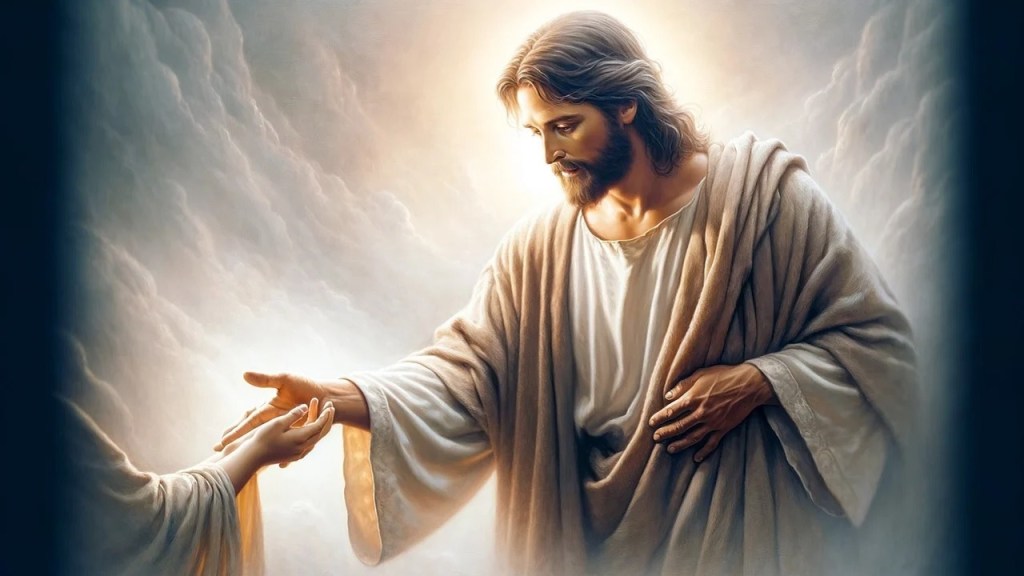
Matthew 9:9 “As Jesus went on from there, he saw a man named Matthew sitting at the tax collector’s booth. ‘Follow me,’ he told him, and Matthew got up and followed him.”
Take a few minutes and put yourself in Matthew’s place. You are sitting at your desk, attending to customers, or working on some project. A man approaches. You recognize him because you have heard him speak before. You liked what he had to say, but you know that he is a controversial figure. The “establishment” is generally critical of him. He comes up to you and pauses. He looks you straight in the eye and says two words: “Follow me.” He means right now. He doesn’t ask you to put in your two-week notice. Put down your pen, or your tools. Leave the computer behind. Right here, right now, get up and follow Jesus.
Sound hard? This is the invitation Matthew faced. Here, in the middle of the business day, Jesus tells him to leave it all and follow him. So Matthew goes.
Jesus still invites us: “Follow me.” It doesn’t necessarily mean leaving your work behind. He looks us in the heart, not in the eye, when he calls. But the invitation is still right here, right now, in this moment, every moment, of our lives.
There are big implications to Jesus’ invitation. One is a call for trust. Look at what Matthew was leaving. He had carved out a lucrative career and luxurious lifestyle for himself. There were negative things about being a tax collector. Not only did they take your money, but they also cooperated with a foreign enemy who was trespassing on your land. Matthew was collecting taxes for Rome, not Jerusalem. His neighbors probably thought of him as a traitor.
People like Matthew traded popularity and acceptance for wealth. He had money. Now Jesus was calling him to leave the big money behind. And there was no promise of public popularity and acceptance to show for it. The respectable people like the Pharisees didn’t like Matthew even a little bit more for following Jesus. Matthew had to trust that there were good reasons to follow Jesus that didn’t have to do with a higher standard of living or more enjoyable life in the short run.
It’s still that way. The invitation to follow Jesus is always a call to repent. He wants us to leave certain things about our former lifestyle behind. It could involve money, if there was something less than godly about the way we were getting it before. If we have it, following Jesus will mean a willingness to give more of it away and spend less of it on ourselves. It could involve the kinds of words we use and the way we talk to and about people we don’t particularly like. “Love your enemies” is a big part of where Jesus leads.
This all calls for trust, because there is no promise our lives will be filled with fantastic new wholesome versions of the things we enjoy in place of our old vices in the short term. Keep in mind Jesus’ warning, “If the world hates you, keep in mind that it hated me first” (John 15:18). The invitation “Follow Me” implies a heaping helping of repentance and trust when we consider that we are leaving behind some things that we really liked.
So what do we get instead? Why is the trade worth it? Jesus is offering front row seats to the greatest love there has ever been. I once heard a pastor at a mission festival tell a congregation that there is a little two-or-three-feet-square patch of ground that is the most blessed little patch of earth in the world. It is the little patch of ground right behind Jesus when you are following him. From that patch Matthew stood and watched him give blind people their sight back, deaf people their hearing back, lame people the ability to walk again, dead people the ability to live and breathe again. He saw Jesus reach out to social outcasts. He heard him telling prostitutes the parable of the lost sheep and the lost son. When Jesus got up in the morning, his life was all love. When he went to bed at night his life was all love.
Not only does Jesus loves others that way. He loved Matthew like that. He loves us like that. He makes his love a substitute for our own, providing the love God demands of us but we have always lacked. That is because we, too, are the objects of his love. It is the love in which we live when we follow him.
 Bits of Bread