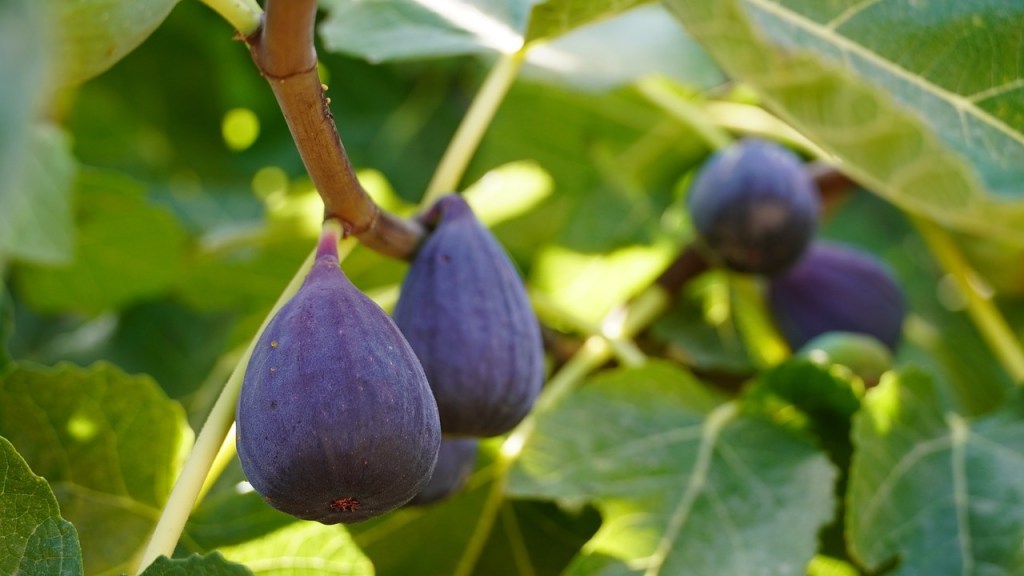
Luke 13:6-7 “A man had a fig tree, planted in his vineyard, and he went to look for fruit on it, but did not find any. So he said to the man who took care of the vineyard, ‘For three years now I’ve been coming to look for fruit on this fig tree and haven’t found any. Cut it down! Why should it use up the soil?’”
It helps to know the context in which Jesus told this parable. Some people had come to him after an incident of police brutality in Jerusalem. The Romans rulers had killed several Jewish people from Galilee right in the middle of their worship at the temple. The question naturally arises, “Why would God let an injustice like this happen?”
So Jesus asked those who reported the news to him, “Do you think these Galileans were worse sinners than all the other Galileans because they suffered this way?” That’s the way people sometimes think. I remember some Christians suggesting that Haiti was struck by a devastating earthquake because of the devil worship in that country. Obviously we are against devil worship, but is that how we explain the devastation around the globe each year? Are Californians worse sinners when wildfires rage across their state? Are Texans, Floridians, and Puerto Ricans worse sinners when hurricanes take life and property? Are the many shooting victims each year worse sinners because they died in an attack?
Jesus’ answer is short and to the point: “No!” Then he reminds us that death, by whatever means, is always an urgent call to repent. “But unless you repent, you too will all perish.” Our own day is coming soon. The real tragedy is not to die, but to die without repenting of our sins.
Now for the fig tree. Repentance involves real change. It is not giving theoretical approval to certain pious opinions because that makes my Christian parents, friends, or pastor happy. Politicians can get away with telling the public what it wants to hear about some policy, whether or not they believe it themselves. Christians can’t. Unless we truly change our minds, and embrace Jesus’ forgiveness, there is no true repentance.
When we do repent, that produces fruit. The fruit is how we know something has changed on the inside. Like the owner of the fig tree, God expects to find fruit, new behaviors, when he comes to see us.
Certainly that means giving up sinful habits and selfish behaviors. Forgiveness is not permission. Forgiveness may get us off the hook for bad things we have done. It is not a license to keep doing them. And real repentance doesn’t try to use it that way. We may slip and need to be forgiven again. But that is not because we have decided to be comfortable and okay with our sinful habits.
More than giving things up, fruits of repentance mean new positive actions in our lives. The essence of God’s will for our lives is love. Love is not a vacuum in which we find nothing. It is filled with serving others. It is not occupied with making myself feel good. About romantic love the saying so often holds true, “There is no one more selfish than a lover.” Love that grows as a fruit of repentance, however, accepts that serving others will involve discomfort, inconvenience, sacrifice, sometimes even pain.
So here you and I are at the end of another year, like the fig trees in Jesus’ parable. God comes looking for fruit, a changed life, and what does he see? Have we again arranged our schedules, spent our money, used our time, and expended our energy in our own self-interest? I once knew a woman who professed to be a Christian. She lived without pursuing any obvious vices. She didn’t drink or smoke, sleep around, curse or swear. But the more you got to know her, the more it became evident that the theme of her life was, “It is all about me.” She lived her life as though she was the conductor, and everyone else was just a player in her orchestra–often unwilling musicians at that. She spent all day trying to create her own little universe over which she ruled as God and Lord.
Have you ever known someone like that? The better question might be, “How much is this a description of ourselves?” Is our life crowded with fruits of love? The Lord has spared us for one more year. He is patient with us. That itself is evidence of his grace. Let our lives respond with the love he seeks.
 Bits of Bread