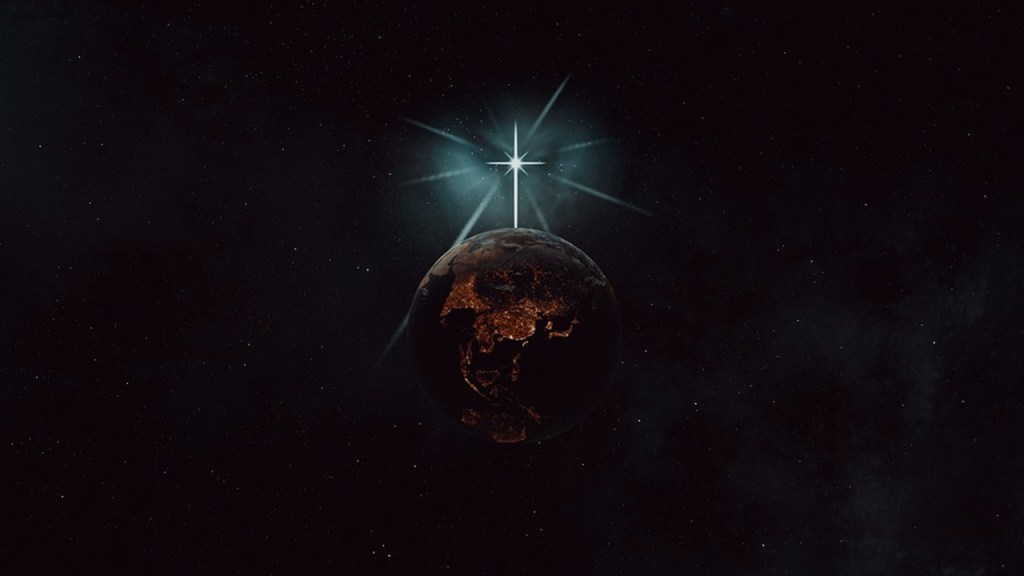
Isaiah 9:2 The people walking in darkness have seen a great light. On those living in the land of the shadow of death a light has dawned.”
Twice in my life I have toured a cave, the kind of cave that is large enough to be a tourist destination. Each time along the tour, the guides took us to a part of the cave where no natural light can get in. Then they turned out the lights, to demonstrate what total darkness looks like. In effect, you become totally blind, and no matter how long you sit there, it doesn’t become any better. Your eyes may try to adjust. But there is no light, so there is nothing you can see, not even a finger held just an inch from your eye. Darkness like that is disorienting. You can’t make out any direction. You have no idea what obstacles might be lying in the dark. It would be frightening if you had to try to make your way back to the outside through a darkness like that.
The lights in the cave were only out for a minute or two. Miners trapped in a collapsed mine, and subjects of scientific experiments, have sometimes had to endure days, and even months, in total darkness. The darkness changes you. In a relatively short time the eyes lose their ability to adjust and function in the light, and it takes some time to get it back again. The darkness skews your perception of reality. People may sleep for thirty hours and feel as though they have taken a short nap. One researcher who spent 126 days in a dark cave thought that he had been there only 66 days. Hallucinations can set in after only 48 hours. Emotions become hard to control. Short term memory disappears. Depression and suicidal thoughts set in. Over time too much darkness weakens our bones and raises our blood pressure. Jesus sometimes described hell as “the outer darkness.” Don’t imagine that’s a more appealing feature of the place than the other descriptions we hear.
The prophet Isaiah describes the people who lived where knowledge of God and his promises had been lost this way: “The people walking in darkness…those living in the land of the shadow of death.” Darkness is not a surprising metaphor for our lost spiritual condition. It begins with your inability to see your way. In that darkness we don’t know what direction to go to get back to God. The disorientation prevents us from seeing which way is right, and which way is wrong, what is good and what is bad. We have no idea of the obstacles in our way. As the saying goes, “You don’t know what you don’t know.” It is such a darkness, that only if someone came and took us by the hand to guide us out, only if someone picks us up in his arms and carries us out, can we escape.
But the darkness is worse than that. It changes us. It makes the light of truth painful to look at. We fear being blinded by it. It causes us to look away. We rage against the truth until that painful light stops shining. We don’t want to see.
The spiritual darkness skews our perception of reality. We imagine that we don’t have to get out. Maybe God lives here with us in the darkness. Maybe God is the object of my sensual desires. Maybe I am God. There can be no more ghastly hallucination than that. We become comfortable with the darkness. It wraps us like a warm blanket, even while it is literally sucking the very life out of us. “Those living in the land of the shadow of death” is Isaiah’s colorful way of describing it.
Then God comes wading into that darkness and introduces the Light. “On those living in the land of the shadow of death a light has dawned.” Christmas, the birth of Jesus Christ, is that dawn.
The Lord of heaven and earth, who measures out the moments of time, who is daily, hourly composing the story we live, arranged the events of Jesus’ birth to be filled with images of light. In the midnight darkness over the fields of Bethlehem, to simple shepherds, an angel appeared, and “…the glory of the Lord shone around them, and they were terrified.” For wisemen living further away in the darkness, mysterious eastern “holy men,” the magi, a shining new star appears and lights their way to the child-king for the better part of two years.
The aged prophet Simeon, who took the forty-day old baby Jesus in his arms in the temple, declared him “…a light to lighten the Gentiles, and the glory of your people Israel.” Jesus himself later laid claim on that description: “I am the light of the world. Whoever follows me will never walk in darkness, but will have the light of life.”
Whoever follows him will never walk in darkness. In Jesus, the truth finally becomes clear. Martin Luther once observed that the theology of earthly glory, the kind that concerns itself with the most pleasant world we can create for ourselves now, “calls evil good and good evil.” This is more than a matter of turning sins into pleasures. Discipline is hard. It also turns me in the right direction and blesses me with strength. Suffering is, well, suffering. But it is often the only reason I have any real sympathy for others, the only dose of reality reminding me that the world in which we live is broken beyond repair and dying fast. The theology of earthly glory is actually darkness, because it can’t see the good.
But the theology that sees the world through Jesus, and especially the brilliant light of his cross, “calls the thing what it actually is.” Here we have truth. It sees God’s hand in our most difficult times, and trusts God’s love in our most painful moments, even if we can’t fully understand what he is doing. The death of God’s Son on a cross is not a horrible miscarriage of justice (or at least not that only). It is not terrible tragedy for an innocent man. It is the salvation of the world. It is the forgiveness of every sin. It is our one and only path out of the darkness back to God. Jesus’ life and teaching shed such light on our way.
But it is more than this. It gives us “the light of life.” Like darkness, literal light changes our bodies. We produce more vitamin D in it. We heal faster from injury. Our blood pressure is better regulated. Our bodies release the hormone melatonin on a more regular cycle and we sleep better. Our eyes not only retain the ability to adjust to various light levels. Regular exposure to natural light reduces the incidence and severity of nearsightedness. It makes us healthier people.
All of these are relatively minor changes compared to effects of the Light of the World on the human soul. He gives us a new heart. He rips into our chests, as the prophet Jeremiah once said, and he replaces hearts of stone with hearts of flesh. These new hearts beat with faith and love. They don’t stop beating, ever. They will support our new life in God’s light beyond the end of time. With Jesus we live and walk “in the light of life.”
Then we reflect that light to the rest of our world. “You are the light of the world,” Jesus announced in the Sermon on the Mount. Our lips speak God’s grace and forgiveness in the darkness of our world. Our hands show God’s love to people smothering in the darkness. Jesus continues to bring light to the world through our witness of faith and love.
Tonight we find our light where Isaiah prophesied we would. “For to us a child is born, to us a son is given, and the government will be upon his shoulders. And he will be called Wonderful Counselor, Mighty God, Everlasting Father, the Prince of Peace.” That’s the baby, born in the darkness of this night, born in the darkness of a cave used to shelter animals, lighting the lamp of God’s love in our world. Congratulations! You have found your way out of the darkness into the light of God’s new day.
 Bits of Bread