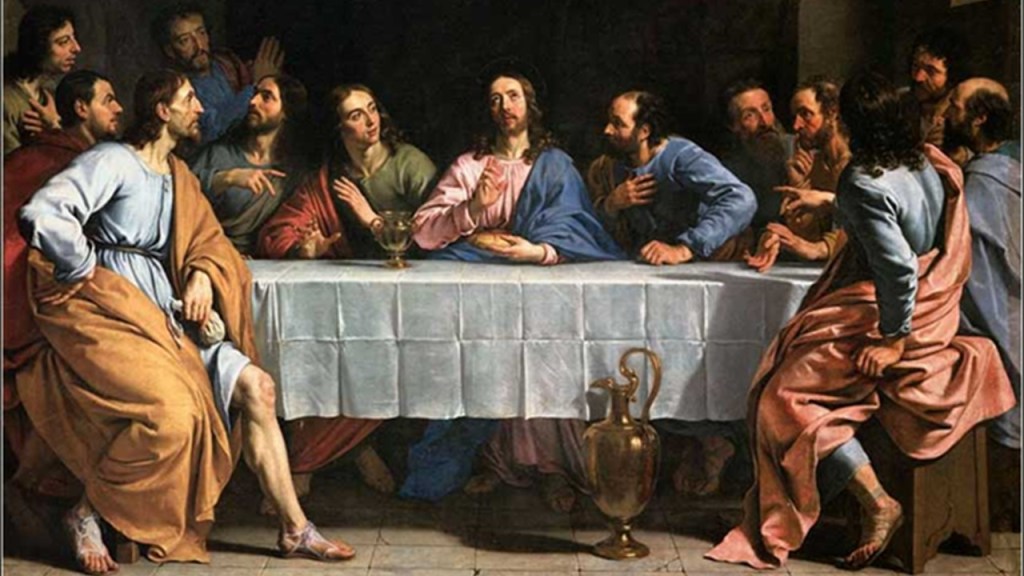
Matthew 26:26-27 “While they were eating, Jesus took bread, gave thanks and broke it, and gave it to his disciples, saying, ‘Take and eat; this is my body.’ Then he took the cup, gave thanks and offered it to them, saying, ‘Drink from it, all of you. This is my blood of the new covenant, which is poured out for many for the forgiveness of sins.”
Let’s not pass over the context in which this happens. “While they were eating,” Matthew writes. They were eating the Passover meal. That meal commemorated Israel’s deliverance from Egypt 1400 years earlier. It wasn’t like your anniversary dinner or birthday lunch–random food choices that change every year, because they are really incidental, secondary, to what you are celebrating. This was the marriage of feast and worship. Every item on the menu was ripe with meaning, chosen by God for the message it delivered. The conversation at the meal was scripted. Even the guests were carefully chosen.
You see, citizens of Cairo, Athens, or Rome didn’t observe the Passover, not unless they were also Jews. They could come, but only if they would be circumcised if they were males. In other words, they first had to join the Jewish people and embrace the Jewish faith. This table fellowship was more than a casual meal. It meant something. At the very first Passover, God was saying to Israel, “You are my special, my chosen people. I have redeemed you from Egypt as my very own.” At every Passover afterward he was making the same claim. These were the people he desired as his very own.
Meals and tables have a way of saying that sort of thing, don’t they? If you are sitting at the diner, then who knows who might take the stool next to you at the lunch counter. But if you are at a table with family or friends, you enjoy a special relationship with each other. It would be odd, wouldn’t it, if a stranger came and took a seat with you, at least in most settings? Nothing against the person, but there is something about breaking bread together that says, “We already share something.” It is intimate. It reflects and it nurtures a relationship. Those who eat together have sought out each other’s presence.
Jesus integrated this same intimacy, this same personal claim, into his own supper. At the beginning of the meal, Luke tells us, he said to the disciples, “ I have eagerly desired to eat this Passover with you before I suffer.” And when it came time to create his own new rite of eating and drinking out of the elements of the Passover, it was this intimate circle of his disciples with whom he shared it. “Jesus took bread, gave thanks and broke it, and gave it to his disciples…” It wasn’t the five thousand seated on the hillside to whom he fed the loaves and fishes. It wasn’t the masses of people who welcomed him into Jerusalem. It wasn’t the crowds to whom he preached. It was these twelve men who understood and knew him best, the ones he called “friends” and “brothers.” Others would be invited later, too, after they came to know Jesus better. But on this night, this was the family whose presence he desired.
When we commune, Jesus eagerly desires to share this meal with us as well. You are his disciples by faith, not casual acquaintances but the men and women he has called by name and now claims as brothers and sisters in his family. He gives you a seat at his table. Take what he is offering: his own body and blood “for the forgiveness of your sins.”
 Bits of Bread