Victims?

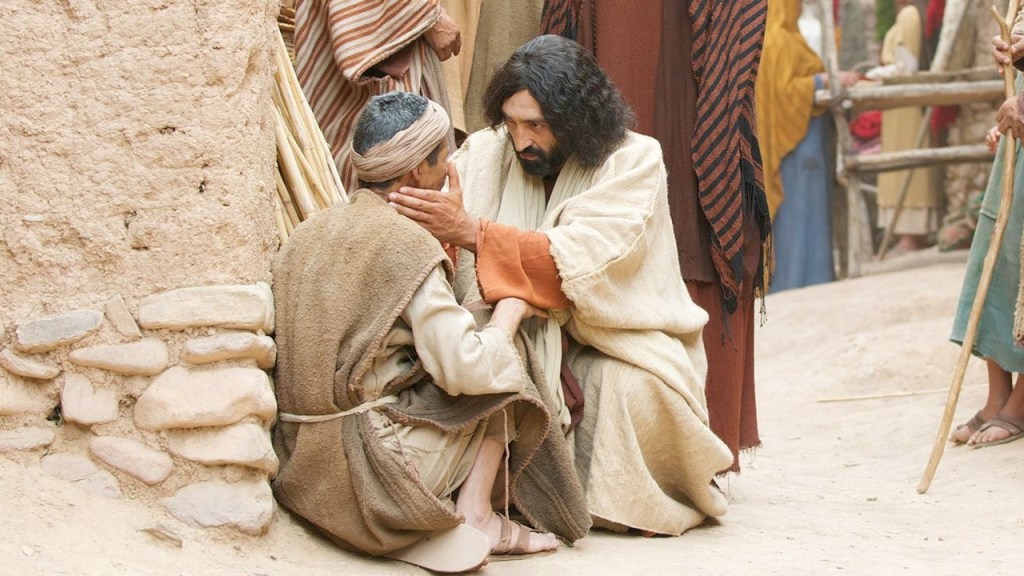
John 9:2-3 “’Who sinned, this man or his parents, that he was born blind?’ ‘Neither this man nor his parents sinned,’ Jesus said, ‘but his happened so that the work of God might be displayed in his life.’”

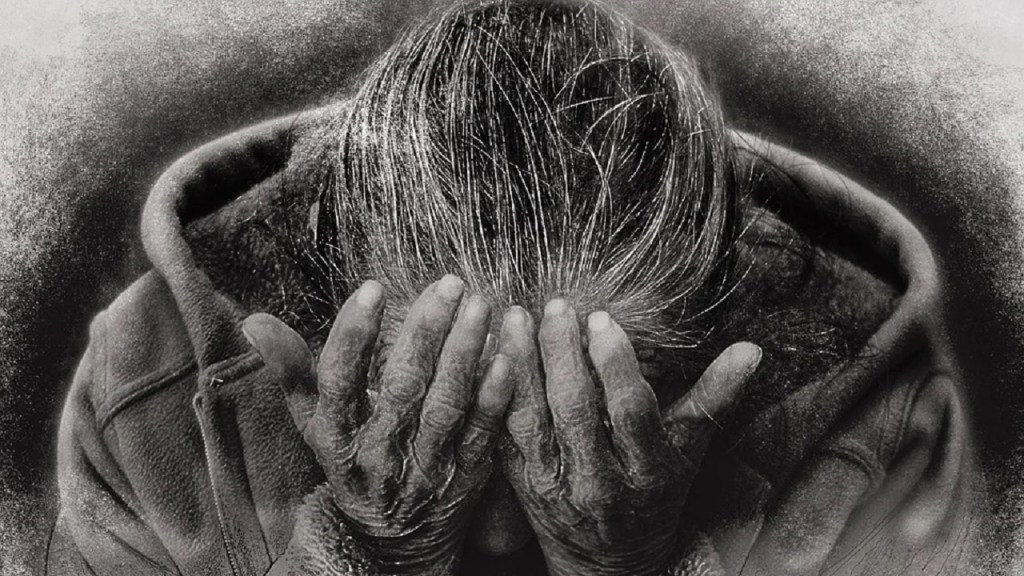
Sometimes people suffer because they are victims. Maybe the blind man the disciples noticed was a victim. It was all mom and dad’s fault. Apparently it’s not just a modern tendency to think, “It’s my parents’ fault I turned out this way.”

There are legitimate cases of children being victimized by their parents’ bad behavior, (though maybe not so much as a matter of God’s supernatural intervention as the disciples proposed here). Fetal alcohol syndrome, cocaine babies, and various psychological traumas caused by bad parenting are all real things.

Shall we be careful, however, about needing to make every tragedy someone’s fault? If we do find ourselves a victim, how much do we want to dwell on that? We live in a broken world run by broken people. There are victims in all directions. Feeling sorry for ourselves, throwing a pity party and inviting everyone to come, doesn’t serve a positive purpose. This grows out of the sinful flesh, not the new man of faith. Jesus wants to help us get past the problems and see our circumstances his way.

Here, that meant considering this man’s blindness may have been intended by God to serve a spiritual purpose. “This happened so that the work of God might be displayed in his life.”

Is that possible? Could God have actually willed and caused this man’s blindness for his own purposes? That is what Jesus is saying. This blindness happened for a purpose, and that purpose was so that God could do his work.

Does that comfort or scare you? I once counseled with a couple in which the husband had had a heart attack. Years of heart-health problems followed. They always resisted the idea that this setback in life could have come from God. It felt to them as though that would be accusing him of doing evil. No, the heart attack had to come from the devil.

What they failed to consider were all the good things that had happened in their relationship, their family, and their life of witness to neighbors and medical workers as a result of the health issues. Yes, he suffered as a result of the experience. But God used it to draw husband and wife closer in faith. He used it as a platform from which these godly people could talk about the gospel.

That’s God’s work, his saving work. It fits his gracious promise: “In all things God works for the good of those who love him” (Romans 8:28).
Sin and Suffering

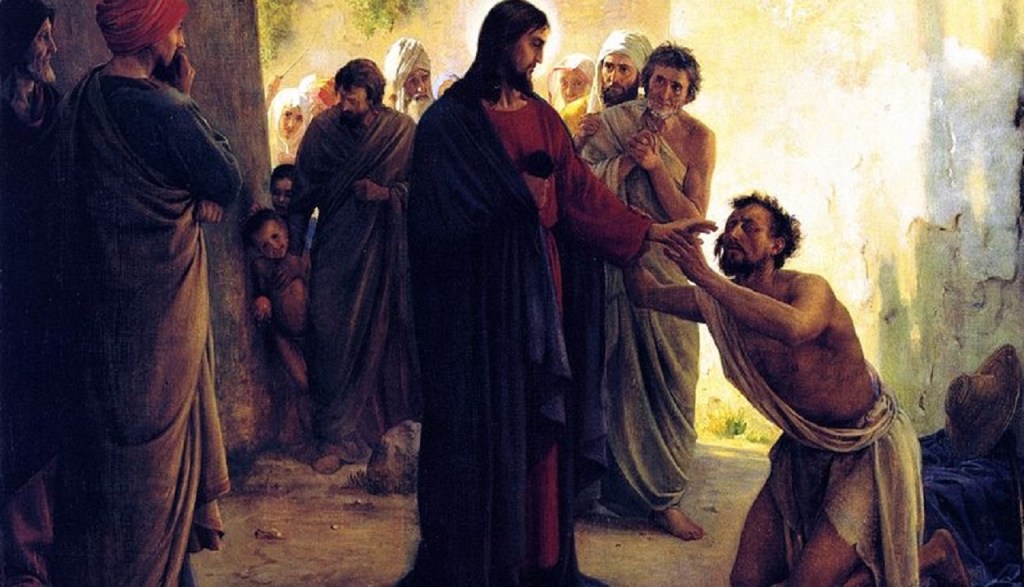
John 9:1-2 “As he went along, he saw a man blind from birth. His disciples asked him, ‘Rabbi, who sinned, this man or his parents, that he was born blind?’

For Jesus’ disciples, the idea that this man was born blind because someone sinned was not a question. It was an assumption. There only question was, “Who was responsible?” Their first suggestion was the man himself. His blindness made sense to them if he was being punished for something.

Sometimes it works this way. Sometimes people suffer some curse, some burden, because of a specific sin. In the Bible God curses the first murderer, Cain, by making him a “restless wanderer on earth.” After David commits adultery with Bathsheba, God takes the life of the child born to them in its first week.

In our own time, we know some sins have negative consequences that affect the rest of a person’s life: maiming injuries, or incurable diseases that are the direct result of certain kinds of behavior. Jesus’ disciples weren’t completely off base in the question that they asked him.

But there are two important points to note. One is that before we draw any conclusions linking a particular sin to some particular setback in some particular person’s life, we need to be able to draw a clear and indisputable line between these things. If that connection comes as a direct revelation from God, as with Cain or David, then we have a valid conclusion. If that connection is clear as a natural consequence, like an injury suffered in an accident while driving drunk, then we have a valid conclusion, too.

The second thing to note is the difference between punishment and discipline. When sin leads to suffering in an unbeliever’s life, that may be nothing more than a matter of justice. They did the crime. Now they have to do the time.

But when God allows his believing children to suffer setbacks connected to their sins, this is always loving discipline. He isn’t trying to make them pay. He is trying to make them better, helping them to grow spiritually. He is teaching and molding them to believe and live and act more like his own sons and daughters. He wants to draw his people close to offer forgiveness and renew their faith.

Most of the time there is no direct connection between a particular sin and the painful setbacks we suffer. Failing to realize this can lead us into sins of our own. When we are looking at someone else’s problems it leads us to judge them falsely. I can find many people less fortunate than me. They can’t walk, they can’t see, they can’t hear.  They daily deal with pain I can’t imagine. If I assume that they suffer as the result of some personal fault, then I become guilty of exactly the kind of loveless judging Jesus condemns.

If we view our own pain or setbacks this way, it leads to a different kind of sin. We may agonize over some moral failing in our lives that simply doesn’t exist. We may wonder which of our past sins made God so angry with us. This leads us to conclude God is the great punisher, not the great forgiver. Instead of trust we feel dread. We base our relationship on performance instead of grace. This destroys our faith.

Paul reminds us we are all in the same boat when it comes to sin: “There is no difference, for all have sinned and fall short of the glory of God” (Romans 3:22-23). He also promises that we share the same forgiving grace: “…and are justified freely by his grace through the redemption that came by Christ Jesus” (Romans 3:24). Jesus did not come to condemn this blind man. He did not come to condemn you or me. He came to open our eyes to God’s saving love.

Two Views of Jesus’ Death

Luke 23:39-43 “One of the criminals who hung there hurled insults at him: ‘Aren’t you the Christ? Save yourself and us!’ But the other criminal rebuked him. ‘Don’t you fear God,’ he said, ‘since you are under the same sentence? We are punished justly, for we are getting what our deeds deserve. But this man has done nothing wrong.’ Then he said, ‘Jesus, remember me when you come into your kingdom.’ Jesus answered him, ‘I tell you the truth, today you will be with me in paradise.’”

Sometimes punishment can change us, soften us. My parents’ discipline sometimes transformed my defiance into remorse. But one man hanging on a cross next to Jesus was hardened. He offers no hint of remorse. He only rages against the sentence he serves.

There is an even darker side to his words. Sometimes, when faced with our own shame, we belittle others. There was no sincerity in the man’s plea, “Save yourself and us.” It dripped with sarcasm. It came with the sneer of insult. A fine Messiah and Savior Jesus was going to make…when he was dead!”

The man hanging on the other cross couldn’t be more different. On the outside, he was a carbon copy of the criminal mocking Jesus. He lived the same cut-throat life. He paid the same excruciating penalty.

His question, however, unveils a different heart. “Don’t you fear God?” The question implies that this second criminal did. And we have no reason to doubt his sincerity. This is no jailhouse conversion meant to impress the parole board. It is too late to escape the death sentence. The governor is not going to be issuing a stay of execution. He confesses his guilt and accepts his fate. “We are getting what our deeds deserve.”

But most striking is the faith he places in the one who hangs on the middle cross. Does Jesus look very helpful, or royal, at this moment? Still, this second criminal prays to him, not to be spared from this terrible execution, but for mercy after his death. He recognizes that the next step for Jesus after the cross isn’t just a grave. It is a throne.

Isn’t that an astounding faith in the face of the visible evidence to the contrary? No one ever looked less powerful, less divine, yet this man is trusting Jesus with his eternity.

How many others could see what he saw on this day? The priests, the scribal scholars, the Pharisees all gathered around to see the Savior die, but they mocked him for it. The religious establishment of their day had no faith.

There were twelve men in Jerusalem who had followed Jesus for three years. They knew him like no one else. Ten were hiding. Only one had the courage to show up at the cross. All of them had their faith shattered.

What about us? When does our faith falter when our lives look far less dark than this dying criminal’s? It takes less than a crucifixion to make us doubt.

Jesus’ reply promises salvation to be believing criminal, and they do so immediately. Maybe Jesus never uses the word “forgive”, but there is nothing but forgiveness in his words. This grace comes immediately. “Today you will be with me…” There will be no wait. Hispast is not going to be held against him. There is no purgatory he has to suffer. Paradise starts today.

Jesus promises, “You will be with me in Paradise.” He doesn’t promise the criminal a cold, hard cell in heaven’s dungeon. He doesn’t offer a third class cabin, a middle seat in economy, a one-star room in a one-star hotel. He will be with the King, in the throne room, standing with the saints and angels, under the emerald rainbow, on the sea of glass, holding a golden crown.

He will be with Jesus, in Paradise, and so will we. Jesus’ words promise it. His death makes it real.

We Rejoice in Our Sufferings

Romans 5:3-4 “Not only so, but we also rejoice in our sufferings, because we know that suffering produces perseverance; perseverance, character; and character, hope.”

Many things about the Christian life and experience are an acquired taste. Getting up and going to church may not have the same appeal as sleeping in or playing golf at first. Singing in heaven’s choir someday, and seeing God face to face, may not sound like a great way to spend all eternity.

Enjoying pain is not a Christian virtue, and it is not an acquired taste of Christian faith and life. But notice that Paul does not say, “we enjoy our sufferings.” He says, “We rejoice in our sufferings.” There is a difference.

Whether it’s physical pain, agonizing failures, dashed dreams, broken relationships, or heartbreaking losses, we Christians feel the same trauma unbelievers do. Faith doesn’t take that part of it away. It does promise us a good outcome in the end.

When I was in high school I ran the mile and the two mile in track. Training consisted either in running much further than my races, say five or even ten miles, to build endurance; or in running much shorter “sprints,” a series of six or eight quarter mile races against other team members, to build speed. Neither one was pleasant. My lungs burned. My joints and muscles ached. My stomach turned. Sometimes I wanted to puke. Even after I got into shape, and the work was easier, I cannot say that I ever enjoyed either approach to training.

But when the day of a track meet rolled around, and I shaved ten seconds off my previous best time, or I even managed to place or win a race, I rejoiced in the results of my suffering. I earned points for my team. I came closer to qualifying for a school letter. I could impress my girlfriend who competed on the girls’ team.

Even non-Christians can see that sometimes their pain ends in good things. Faith in Jesus simply promises that the good things coming from suffering are certain, whether we can see them or not. Paul walks us quickly through this journey of personal growth. A lot like my track experience, suffering produces perseverance, endurance. Each painful episode of life makes us spiritually stronger, and able to hold out longer.

Perseverance, in turn, produces character. Maybe while I am in the middle of suffering and enduring, I am scared out of my wits. Maybe I cry like a baby. Maybe I am anything but a model of manliness and maturity. But when it is all over, I have passed the test. My faith in God has survived, and its value has been made clear. He stuck with me all the way. The next time I will be a little less whiney, a little less scared. Perseverance has built character.

And character teaches me hope. I may not be at the end of my life story yet. There are hard things up ahead, painful stops along the way. But they will not cut my journey short of its goal. I know how this story ends. It doesn’t end in darkness and nothingness. It doesn’t end in fire and torments. It ends in my Father’s house. It ends at a great homecoming feast attended by some of my dearest friends and family, and by countless others who traveled this same road of faith. It ends in the arms of my Savior, whose hands perhaps still show the scars that prove his love.

We aren’t making the journey alone. “And hope does not disappoint us, because God has poured out his love into our hearts by the Holy Spirit, whom he has given us.” All along the way, Faith lives with God’s love for us filling our hearts. He doesn’t give us a little sip here or there. He doesn’t tease us with a little drip on our tongue. He pours our hearts full of his love in making us, redeeming us, winning us, keeping us safe and getting us home. He doesn’t dump this love on us and then leave us to navigate the long, difficult journey home. Through the Holy Spirit, God himself lives in us all the time. And if God is living in us by his Spirit, how can we possibly fail to reach the end?

So we don’t enjoy our sufferings, but we do rejoice in them, because we know how God is using them, and where they are taking us. Only good things are waiting for us in the end.

Peace with God

Romans 5:1 “Therefore, since we have been justified through faith, we have peace with God through our Lord Jesus Christ.”

Jesus gives us peace with God, our Judge. In court, just because the judge pounds his gavel and declares, “not guilty,” that doesn’t mean that he likes you. He probably isn’t going to have you over for dinner on Friday night. After all that’s been said in the courtroom, he might still regard you as scum.

With Jesus Christ, a “not guilty” verdict does mean that the Judge likes you. In fact, he loves you. He isn’t going to stop at a dinner date. He is going to make you a member of his own family. He isn’t just going to have you over for an evening. He is going to move you into his own home. Jesus has removed all the hostility. We are no longer objects of wrath, inmates on death row. Now we have peace in every way. The Judge has become our new best friend. Our life with God has been transformed in profound ways.

We can say even more about this peace. Peace in the biblical sense involves more than the relationship, more than the end to the hostilities. It embraces all of life. It is living with the peace of mind that everything, everything is “divinely normal.” It is living with the confidence that “God’s got this,” he is in control, even when all our experience seems to say just the opposite. Paul will flesh out what this means for us even more in the second half of these verses.

Because the not guilty verdict means that the Judge is our new best friend, we have access: “through whom (through Jesus) we have gained access by faith into this grace in which we now stand” (Romans 5:2). With the right person, people will pay a lot of money for access. It’s why people give thousands to political candidates and millions to “political action committees.” If the person they support gets elected, they want access. They want an open door that allows them to come and ask for favors from the leader they supported.

Our access, however, comes for free. It’s another bonus of the faith. It is another feature of a transformed life with God. Our access is to God’s grace, the love that lays no conditions on us, that love that forgives us without counting how many times we have fallen or how many times we have needed it.

Our open door is infinitely better than the political supporter’s. For him it may be an occasional thing. It’s a kind of back-up plan or insurance policy. He will use his access if he needs it, but if all goes well, he may never step through that open door.

 Our open door leads to “this grace in which we now stand.” We have all gone through the door, and we never leave. “Grace” becomes our new reality. It’s where we are. It’s where we live.

Maybe you have thought to yourself, “I hope that when I die, I am not in the middle of some sin,” or “When Jesus returns, I hope that I am not in the middle of some sin.” That misunderstands both sin and grace. Sin isn’t just an action. Sin is a condition. It infects everything we do, even after we come to faith. We are sorry for it. We don’t defend or excuse it. But it’s always there. I can guarantee you that we will be in the middle of sin when we breath our last or Jesus appears.

But having faith means that you will also be in the middle of grace. We don’t just come and get some on Sunday mornings. We live in it all week. It’s the spiritual atmosphere we breathe. We go to work in it. We play in it. We sleep in it. Grace is a permanent attitude God takes toward us. Forgiveness is a constant state in which we live.

So enjoy God’s peace, because faith brings us more than a not guilty verdict. It transforms our life with God.

Trust the Professional

Romans 3:22 “This righteousness from God comes through faith in Jesus Christ to all who believe.”

Everything interests me. When I was a little kid, put me in a room with a set of World Book Encyclopedias, and I would be entertained for hours. I tried collecting everything from rocks to coins to beer cans. I like sports. I played on football, baseball, basketball and track teams. I took lessons for tennis and dabbled in golf. But I also wanted to play music–I took piano lessons and sang in choirs– and I liked having parts in school plays. My dad was handy–my grandpa always said he should have been a carpenter– and I liked to build stuff in his workshop, and watch him fix cars.

The only classes I didn’t care for so much in school were math classes, and that was mostly because of the endless repetitions of solving equations after you’ve got the concept. I mean, once you have memorized the quadratic equation, why do you have to work twenty-five examples? It’s just the same thing with different numbers.

Everything interests me. But talent? That’s another matter. There are very good reasons that I am not earning a living as a musician or pro athlete. I probably shouldn’t even be allowed on a golf course. Sometimes I still try to do my own car repairs or home improvement projects, and sometimes it turns out okay. It’s hard to mess up an oil change, and painting isn’t rocket science. But what do you do when you have torn half way through an engine, and then you get stuck, especially when your wife is gone with the other car? Or what do you do when you put it all back together, and you have parts left over? Some things are best left to a professional.

Salvation is one of those things. Everyone is gifted at something, but no one is gifted at dealing with sin and its consequences. Paul spends chapters of his letter to the Romans trying to talk us out of making this a do-it-yourself project. “There is no one righteous, not even one,” he writes. No one has the qualifications. “Therefore no one will be declared righteous in his (God’s) sight by observing the law.” Try as hard as you might, trying to be good enough for God to be satisfied never, ever goes well.

Righteousness, you see, isn’t a relative term. It’s like computer code, either a one or a zero, either the switch is on or its off. Either you are, or you aren’t. Misspell what you are searching for on a web page or computer document, and you will never, ever find it, even if it’s just one letter. Commit just one sin, and the whole save-yourself project crashes and comes tumbling down. “There is no difference, for all have sinned and fall short of the glory of God.” After thousands of years of history with no exceptions, neither you nor I are going to be the exception.

So God turns us to the “professional.” There is someone who can fix the sin problem. He can repair the damage it has done, restore us to a right standing with God and spare us from death and hell. “This righteousness from God comes through faith in Jesus Christ to all who believe.”

Righteousness, you see, is God’s not guilty verdict. Just because we can’t live life so well that we deserve it doesn’t mean that God can’t still give it away. Jesus Christ is the source, the “professional” if you will. Faith is the channel through which he gives us our not guilty verdict, our restored relationship with God. He doesn’t ask us to do something. He simply invites us to trust him.

Why trust Jesus? “He was delivered over to death for our sins, and was raised to life for our justification,” Paul writes at the end of Romans 4. He paid for our guilt so that God could declare us not guilty.             Trust the professional. Trust Jesus Christ. He alone can make people righteous who have been broken by their sin.

Don’t Be Surprised

John 3:8 “You should not be surprised at my saying, ‘You must be born again.’ The wind blows wherever it pleases. You hear its sound, but you cannot tell where it comes from or where it is going. So it is with everyone born of the Spirit.”

If you watch the weather report any given evening, it may seem that the weatherman is telling you where the wind is coming from and where it is going. You see the fronts on the weather map. You may know that the wind flows clockwise around high pressure systems, and counter clockwise around low pressure systems. That is not the picture Jesus has in mind.

Think of an individual gust of wind on a particular day. Just where did that particular column of air start to move? Where does it die? These are the things you can’t see, and no weatherman can tell you. But you know that the gust of wind was real. You felt it on your face. You heard it rustling through the trees or whistling past your ears. It’s real thing, a real phenomenon, but it’s unseen.

That, Jesus says, is like the people who have been born again. Line up a bunch of randomly selected people, and then tell me which ones are the Christians just by looking at them. You can’t do it. Even if you followed them around for a while you might have difficulty telling them apart, because Christians don’t always act like Christians, and sometimes unbelievers seem to act more Christian than the Christians.

But this new birth, this spiritual life, this relationship with God, this trust in the grace and forgiveness of your King, is a real thing. “You know you’ve changed,” Jesus seems to be telling Nicodemus. “You don’t regard me like the other Pharisees. You hear my words, and it stirs you deep within. It moves you in ways you don’t even understand. Exactly when I became more than just a curiosity to you, and you started to trust me, maybe you can’t even say. But you know that you have changed. You are starting to talk differently. You are starting to think differently about things. You feel guilty about things that never bothered you before. But most of all, you are finding a peace you didn’t have before, because you have found a King who loves you, who will protect you, who will give his life to save you.”

Sound familiar? I could tell you about many modern day Nicodemuses, surprised by their own new birth of faith. Nabeel Qureshi came to the United States from Pakistan to study to be a doctor. For years he dismantled the Christian beliefs of his poorly trained Christian classmates. Then he met a Christian student who knew a thing or two about the Bible. After several years of debate, study, and friendship Nabeel came to the conviction that Jesus is the saving God he claims to be. Before he died of cancer, he became a speaker for a ministry that reaches out to Muslims. Something changed.

You don’t need stories about other people. You have your own. Whether early in life or late, whether by baptism or the word, the Holy Spirit found his way into your heart. Everything changed. You’ve had a new birth. You’ve got a new life. Because of Jesus, that’s no surprise.

Spirit Birth

John 3:6 “Flesh gives birth to flesh, but the Spirit gives birth to spirit.”

There are no natural born citizens of this Kingdom. The fact that your mother conceived you and gave birth to you gets you one thing: existence. Now you have life as a human being. That’s what we expect, right? Dogs have puppies. Cats have kittens. Humans have baby humans. If it ever worked differently, it would be all over the news. But it never works differently.

Humans don’t give birth to prepackaged children of God who naturally know and trust him, at least not since the fall into sin. Physical life cannot produce spiritual life. The human birth process does not fill a person with the Holy Spirit, does not create a heart beating with faith, does not create a soul that knows it’s true Maker, Savior, and King. I know of no stories of missionaries who have come upon some tribe previously cut off from all Christian contact and discovered that some were already believers in Jesus.

I do know examples of nominally Christian parents who for one reason or another never brought their children to church, never led them to Jesus, and predictably their children remained unbelievers, non-citizens of God’s kingdom. “Flesh gives birth to flesh,” period.

“But the Spirit gives birth to spirit.” God has a way. This new birth, this second birth, is not a do it yourself project, any more than your first birth was. Birth is something that happens to you. It’s a gift. Did any of you schedule your own birth? Could you have chosen to cancel it? Of course not. All you could do is show up when the time came.

God’s Spirit is your spiritual mother in this case. And Jesus hints strongly at where the Spirit shows up to give us birth into God’s kingdom: “No one can enter the kingdom of God unless he is born of water and the Spirit.” The Spirit shows up at our baptisms, like he did at Jesus’ baptism, like Peter promised the 3000 baptized on Pentecost day he would, like he has at every baptism ever since. At the same time the Spirit shows up whenever God’s word is present, like Jesus says to his disciples in John 6, “The words that I have spoken to you are Spirit and they are life,” like Peter wrote in his first letter, “You were born again of the living and enduring word of God.”

The need for a new birth is no surprise. It’s necessary, because it does what our natural birth can’t do: get us into the kingdom of God.

Citizens in God’s Kingdom

John 3:5-6 “Jesus answered, “I tell you the truth, no one can enter the kingdom of heaven unless he is born of water and the Spirit. Flesh gives birth to flesh, but the Spirit gives birth to spirit.”

The Jewish leader Nicodemus was drawn to Jesus’ and his teaching. He saw the miracles, he saw the love, and he was convinced that Jesus had been sent from God. But some of the things that Jesus taught weren’t clear to him. Nicodemus was part of a movement in the Jewish faith that believed a good relationship with God was based on two things: the right family heritage, and the right way of life. If you could trace your family tree back to Abraham, and if you worked very hard at being good, then God accepted you. Jesus turned this idea on its head.           

Jesus wasn’t saying there was anything wrong with having Jewish blood running through your veins. He himself was certainly Jewish. But all that did was give you citizenship in Israel. Jesus wasn’t saying that there was anything wrong with trying to be good. It certainly beats the alternative. But the kingdom of God isn’t a Jewish state, nor is it a moral reform society. It’s the kingdom of God. Let’s explore that concept a little.

You can’t equate the kingdom of God with an earthly nation, not Israel of the past, nor America of the present, nor any other country in the future. There may have been Christians involved in founding our nation, but America never was, nor will it ever be, God’s kingdom. It would be better if we put the idea of a territory or real estate out of our heads altogether.

A kingdom is what a king rules, and a king doesn’t rule dirt or grass, or roads and buildings. He rules people. There is a relationship here. Sometimes the Kingdom of God has what we call “heaven” primarily in view. Even then, we should think less of the clouds, or the pearly gates, or some lavish visions of extreme luxury. We should think of the special situation where God rules unopposed over angels and people who live in perfect obedience. The relationship of ruler to citizen is the thing.

In heaven God may rule unopposed. But here on earth there are more candidates for king than candidates running for president. Not everyone lives under the God of the Bible. They may live under the idol gods, the false gods, of other world religions with names like Allah, Vishnu, the Great Spirit, Mother Earth, or the Universal Consciousness, to name a few.

Others live under the “Spirit of the Age,” sort of a universally agreed upon set of standards for society that often flatly contradict what God has to say about life.

Still others may declare themselves king, like the poet William Ernest Henley does in his poem Invictus. He declares, “I am the master of my fate. I am the captain of my soul.”

Then there are those who have surrendered control of their lives to some vice, or substance, that robs them of their dignity and makes them hate themselves. They have lost control, and they can’t get back the reins. They lose more of themselves every day.

But all of these kings are “front men.” Behind them all is a dark and sinister Power, the Prince of this world, pulling the strings on his puppets and keeping people from entering the kingdom of God and becoming its citizens.

The difference between these two sets of citizens isn’t just a matter of behavior. Often their behavior is hard to tell apart. Those who have entered the kingdom of God often show themselves to be unsteady, imperfect citizens guilty of various crimes and misdemeanors.

Still, God is their King, they are his people, and the relationship remains. It has always been a relationship based on grace and forgiveness, anyway. Those on the outside, in the other kingdom, often come to see the benefit in things like modesty, self-control, faithfulness, generosity, kindness. With God or without him, it’s just a better way of life. But they have no interest in the God who should be their rightful ruler, or the Jesus that he sent. They have no life with the King, because they have not been born again.

Members of God’s kingdom live under his gracious rule, enjoying his gracious blessings. This citizenship itself is a gift to be cherished, a part of the “good news” Jesus came to proclaim.