Where Good and Moral Begin

Matthew 22:35-38 One of them, an expert in the law, tested him with this question: ‘Teacher, which is the greatest commandment in the Law?’ Jesus replied: ‘Love the Lord your God with all your heart and with all your soul and with all your mind. This is the first and greatest commandment.’”

Popular atheists like Richard Dawkins, Christopher Hitchens and Sam Harris insist that people can be good without God. You don’t have to believe in God to be moral. If by “good” and “moral” they mean “live as decent citizens and good neighbors,” we don’t have to argue with them. Not every atheist is a criminal, not even most of them.

But if God exists (and we know he does), you aren’t being good by denying the existence of the One who gave you your life and everything else. Would I be a good child if I denied the existence of the mother who gave me birth, or the father who provided for me all the years I was growing up? Everything we are and have starts with God. Everything good and right starts with him as well.

That doesn’t mean it is enough to acknowledge he exists, or to give him a few moments of our time now and then. “Love the Lord your God with all your heart and with all your soul and with all your mind,” Jesus says. He underscores the idea that God is our first and ultimate concern. Beginning with our heart, the center of all our desires and affections; spreading to the soul, the source of our life and self-consciousness; and including the mind, our entire thinking and reasoning, God wants our love for him to permeate our entire selves. There is no part we get to hold back for ourselves or someone else.

Jesus is actually quoting Moses’ farewell speech in Deuteronomy. In it Moses gives a few practical examples of how this works. Such love for God is the first thing we want to impress upon our children. It is infinitely more important than getting them into a good school, taking them to music lessons, or involving them in sports.

When we get up in the morning, or when we go to bed at night, this is what we should be thinking about, so this is what we should be talking about. The same goes for when we are hanging out at home, or when we are traveling someplace else.

Because we love God so much we wouldn’t think of holding a private opinion that contradicts his. Instead, we might paste his words in front of our eyes to keep our thoughts in line. We might tie them on our hands so that we can’t use them without thinking of him. We might even decorate our homes with reminders of what he says.

How are we doing, by Jesus’ standards? Do we love him above all? Be honest. We can go hours, even days, hardly conscious he exists.

Whose “word” means the most to us–some politician, a friend, a so-called “expert in the field,” our own? Be honest. Do we want what he wants, no matter what we have to sacrifice, no matter what the cost? Or do we keep a reserve cellar in our heart’s basement filled with vintage vices? We may not be enjoying them at the moment, but we have no intention of dumping them out, either. Be honest.

This may be the greatest commandment in the law, but that doesn’t mean we come anywhere near keeping it. Failure to admit we fall short only compounds our failure. We are like sin addicts living in denial. We resist treatment. We fear the demands of recovery.

That is why Jesus was sitting there on that day. His love, and his love alone, passes the test. He was just three days away from the cross when he answered this question. He was in Jerusalem not so much to show us how to distinguish right from wrong, as he was to rescue us from the wrongs we have committed. He came to make us right with God.

Jesus’ dying love forgives our sins and removes our guilt. We may not love God above all, but he has loved us as though we were first and dearest to him. We have no greater reason to love him.

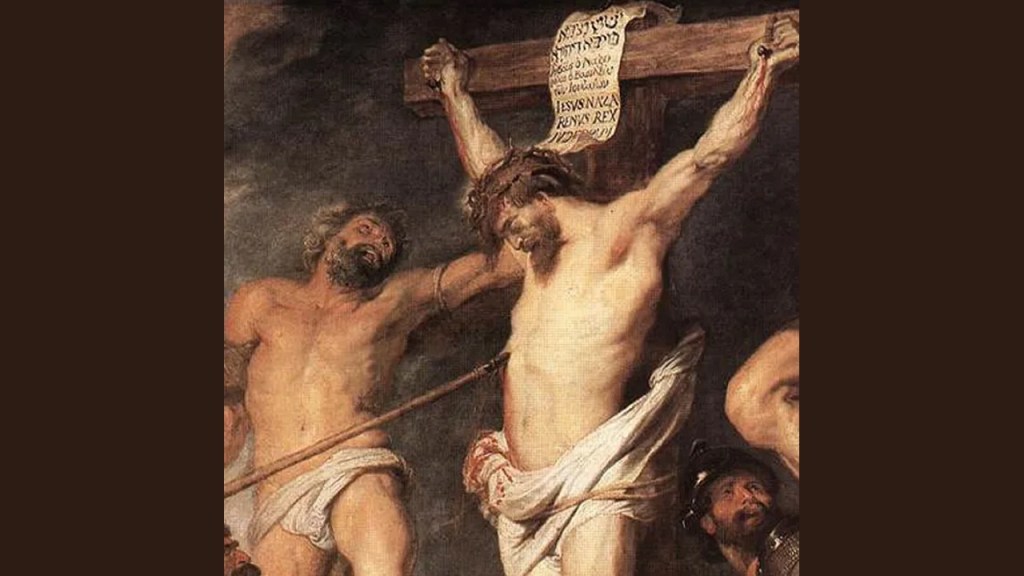
Certain Restoration

1 Peter 5:8 “And the God of all grace, who called you to his eternal glory in Christ, after you have suffered a little while, will himself restore you and make you strong, firm, and steadfast.”

Do you see the strength of the promise God gives? There are no conditions attached. There are no words that allow him to wiggle out of this. He doesn’t say he might do this, or he could do this. He says he will.

The Christians to whom Peter wrote lived under persecution. They were slandered by their neighbors. They were considered unpatriotic, un-Roman, because they didn’t offer sacrifices to the emperor or the traditional gods. Their leaders were imprisoned, beaten, and sometimes even killed. We face one set of worries when living in a society in which it seems the criminals are out to get you. It is more discomforting when the government is worse. These people suffered.

We don’t face persecution on the same level as those early Christians. Perhaps some of us look at our lives and don’t see much trouble. We are comfortable, healthy, and optimistic.

But many have the feeling we are living in the worst times ever. We see America’s moral fabric unraveling. We see our country polarized, our economy teetering, wars around the world that threaten to pull us into the conflict.

At some time or other, we all suffer through a personal crisis. Health or money or family problems make us lose sleep at night. They haunt our thoughts during the day. We find it hard to imagine anyone has suffered more trouble than we have.

Jesus warned that only through much trouble would we enter the Kingdom of God. Peter reminds us a few verses later that “brothers throughout the world are undergoing the same kind of sufferings.”

But the Lord never asks us to deal with this all by ourselves. He promises a future in which he has restored us. He will take care of the work of putting things in their proper place in our lives. Through it all, he will support us so that our faith remains strong, firm, and steadfast. It’s a future he promises.

Is there a clue about how he intends to do this when Peter tells us he has “called you to his eternal glory in Christ”? That eternal glory already belongs to each one of us by faith, though we don’t full enjoy it in this life.

Death, on the other hand, may seem like one more of life’s troubles to suffer. Perhaps someone suffering chronic pain or terminally ill can see it as a deliverance from trouble. We may struggle see it that way when we are still strong and healthy.

But we who know how Jesus rose and promised return remember that death is God’s final deliverance. It is the only way to the eternal glory to which we have been called in Christ. There is no fuller restoration than the one we will find on the other side of the grave. There is nowhere we can be stronger, firmer, or more steadfast than our home with him in heaven.

So we take our suffering in stride, and we trust God’s grace to make his promise sure, and our future glorious.

“I Will Praise You”

Psalm 22:22-25 “I will declare your name to my brothers; in the congregation I will praise you. 23 You who fear the LORD, praise him! All you descendants of Jacob, honor him! Revere him, all you descendants of Israel! 24 For he has not despised or disdained the suffering of the afflicted one; he has not hidden his face from him but has listened to his cry for help. 25 From you comes the theme of my praise in the great assembly; before those who fear you will I fulfill my vows.”

Our heavenly Father does not need our words or praise to know how wonderful he is. Talk show host Phil Donahue was right when he said, “Somewhere along the way I concluded that God is not an egomaniac who constantly needs to be adored.” He was wrong to use this as an excuse not to worship.

Our Lord is delighted to hear our words of praise. It is a natural part of any relationship. We praise our children for their successes, our friends, spouses, or coworkers for a job well-done. If we truly come to know who God is and what he has done for us, praise will simply flow. We won’t be able to help ourselves. Failure to praise is a tacit admission that we don’t believe God has done anything worthy of praise.

After all that Jesus had suffered on the cross, that was not his position. These words of Psalm 22 are Messianic. They express the thoughts and experiences of Jesus on the cross by way of prophecy. All that God was accomplishing by this sacrifice produced in him this response of praise.

The inspiration for such praise becomes clearer in his retelling of God’s goodness. “For he has not despised or disdained the suffering of the afflicted one; he has not hidden his face from him…”

Does someone’s suffering ever make you turn away? Why? Sometimes it’s too hard to look. We have seen what happened, and we can almost feel the pain. Twice I have seen pro football players get hit in part of the leg that should not bend, but the bone gave way as though there were a joint there. It made me wince. I didn’t want to watch the reruns.

Sometimes we look away because we don’t want to sympathize. We don’t feel sorry for the one who suffers. Make eye-contact, and we will have to acknowledge that they are human and worthy of at least some pity. Maybe we were angry with them. We believe they deserve what they are getting.

Didn’t Jesus’ heavenly Father look away from his suffering? Didn’t he despise him, hide his face in those agonizing moments when Jesus called out, “Why have you forsaken me?” How the Father could forsake his own Son is something we cannot understand. But why he did so is less difficult to see. The sight of the crucified Jesus writhing in the horrors of hell would be difficult for anyone to watch. But the countless sins of mankind he carried to the cross filled God with the holy anger that made him turn away.

How, then, could Jesus say, “…he has not despised or disdained the suffering of the afflicted one; he has not hidden his face from him…”? Though for a little while the Father had to turn his face away, he had not forgotten his Son. At the end Jesus found his Father’s approval. “The reason my Father loves me,” Jesus had said, “is that I lay my life down.”

And so, he must tell us of God’s goodness, too. He “listened to his cry for help.” The Father heard Jesus’ plea to receive his spirit, to let him die and put an end to the work of paying for our sin. At last he found his relief!  He did not let his body see decay, but kept it safe in the earth for the day of Jesus’ resurrection. At last he found the reward and recognition that were rightfully his! The Father did not desert him. He delivered him.

We are the ones who stand to gain. The Father may be pleased to receive such praise, but he doesn’t need it. Jesus himself is not changed by these words. But when Messiah prays to his Father, who did not desert him, this is a blessing for God’s people. “From you comes the theme of my praise in the great assembly; before those who fear you I will fulfill my vows.”

If Jesus was smeared in the filth of all our sins, if he suffered all that they deserved, if the Father even abandoned him to hell so that justice could be served; if after all that Father did not desert him, but heard his cry for help, delivered him from his anguish, received his soul into heaven, raised him from the dead and glorified his body, do we have reason to fear for ourselves? There is nothing left of sin, punishment, death, or hell. There is only a smiling Father who does not desert his children but listens to their cries for help. There is only blessing for God’s people, who hear their Messiah praise his Father.

Meaningless No More

Ecclesiastes 2:18-19 “I hated all the things I had toiled for under the sun, because I must leave them to the one who comes after me. And who knows whether he will be a wise man or a fool? Yet he will have control over all the work into which I have poured my effort and skill under the sun. This too is meaningless.”

Hate is a strong word. It is a dangerous attitude when directed in the wrong directions: “Whoever hates his brother is a murderer, and you know that no murderer has eternal life in him.” It’s okay when directed at the things God hates. “Hate what is evil; hold onto what is good.”

In this case the writer hates the very things he had worked so hard to get. That might be easy to understand if there were something defective about them. Anyone who has ever sunk money into a car that was a lemon knows how fast the initial glow of owning the vehicle you had set your heart on can give way to anger, frustration, and even hate. The same goes for other gadgets and devices and possessions that don’t work right.

The author of Ecclesiastes, however, makes no complaints about the defective spokes on his chariot wheels that the chariot dealership can’t seem to get right. He isn’t griping about the new oil lamp that is costing him a mint because it burns through the oil too fast. Why does he hate them?

“Because I must leave them to the one who comes after me.” He has come to understand the truth that there is no U-Haul behind the hearse. Ancient Pharaohs may have been buried with their royal treasures, even food for the next life. When I visited Norway, I learned that Vikings were buried in their ships with their weapons. You may be buried in your best dress or favorite suit. But all these things must still be left behind. The same goes for all the things that don’t make it into the tomb. No matter how expensive, how useful, or how enjoyable they are, we don’t get to keep the things we worked so hard to get forever.

Worse yet, we can’t even depend on them to give us a lasting legacy when we are gone. “Because I must leave them to the one who comes after me. And who knows whether he will be a wise man or a fool? Yet he will have control over all the work into which I have poured my effort and skill under the sun.” Some people look for their “immortality” in the legacy they leave behind. Maybe it’s a family fortune big enough to provide for generations that follow. Maybe it’s a business, a company, or even a charity that can keep the family name alive. If I can’t take it with me, maybe I can live on through my life’s work. I can be somebody, a person of significance, even after I die.

But who knows whether the person who takes over our legacy will have the wisdom to know what to do with it? Names like DuPont, Rockefeller, Ford, Disney, have survived for generations now. But whoever talks about Rob Barnaby? As recently as 1985, his WordStar software was the most popular word processing software in the world. His name should be remembered with Steve Jobs or Bill Gates. Today, no one uses his work. Many young adults have never even heard of it. Many other products and companies have suffered similar fates. How many family fortunes haven’t been drunk, snorted, injected, or partied down to nothing?

If we have poured ourselves into work as though we could enjoy the things it brings us forever; if we have counted on it to keep our name and fame alive after we are gone, then God needs to show us its true meaning. Hard work is a good thing, but it is not the meaning of all life. When we let it climb too high on our priority lists, it can even hurt us. It may damage families, who suffer from neglect.

Worse yet, the person who hopes his work will satisfy the longings suggested by these verses is looking for it to provide something only God can: a source of enjoyment that never ends, a sense of significance even after we die. That turns work and wealth into false gods.

The biblical writer is inviting us to despair so that we can discover true satisfaction in the work that Christ has done. His saving work endures forever. His life and death offer real and lasting peace. His redemption gives our lives genuine value. His resurrection provides hope beyond the grave. His call and claim on us lead to a different kind of legacy measured by faith, and love, and gospel witness. This can bless us and the people with whom we share it for eternal ages to come.

Labor for God’s glory and your neighbor’s salvation. These will retain their value, and make your work meaningful.

Unity and Peace

Ephesians 4:3 “Make every effort to keep the unity of the Spirit through the bond of peace.”

            Imagine the challenge of the charge Paul has just given us. Take a group in which each person is naturally inclined to look out for himself. Every member is sinful by birth, and therefore intrinsically selfish. Because they are all individuals, not little robots rolling off an assembly line, each person comes with his own set of ideas, his own tastes and preferences, his own way of doing things.

            Now remember that your task is impossibly bigger than the cute bumper sticker telling religious people we are supposed to “coexist.” It is not enough if we simply tolerate fellow believers–more or less grit our teeth and put up with them. It would be a miracle of Biblical proportions if we merely managed to love the other members of this spiritual family, but the call is bigger still. “Keep the unity.” Become and remain as one. Live and work together as though you were a single body.

            This is harder than herding cats. Only one force in all the Universe can bring real unity and keep it with a fallen race like ourselves: “…keep the unity of the Spirit through the bond of peace.” God made peace between us and him through the gospel that forgives our sins. Instead of sin driving us away, forgiveness draws us close. Instead of judgment, God made peace, the peace he proclaimed from one end of Jesus’ ministry to another. It was peace the angels sang to the shepherds the first Christmas Eve. “Peace” was Jesus’ first word to his disciples on the first Easter evening. Peace is what people find with God when God has forgiven our sins.

            So God has connected our forgiveness of each other to his own. “Forgive us our trespasses as we forgive those who trespass against us” we pray. Forgiving those who trespass against us creates the bond of peace and keeps the unity of the Spirit. Forgiven people forgive each other–that’s just how Christianity works. That preserves the unity. That is how Christians can maintain peace with each other.

            “We are all Americans,” a Facebook post once complained about the divisions in our country. “Let’s start acting like it.” “You are a leader,” a Forbes magazine article once reminded the business men and women who read it. “Start acting like it.” We are Christians, sinners God has forgiven and made his very own children by faith. Start acting like it, by living in unity and peace.

A Life That Fits

Ephesians 4:2 “Be completely humble and gentle; be patient, bearing with one another in love.”

I know a man who ran for elected office and won. It changed him. He wasn’t elected to a national office. But even winning a local campaign made him feel important. He had power. The majority had chosen him. It started to go to his head. He didn’t treat people who served or waited on him with the same dignity. They were more like inferiors to command than equals to appreciate.

Another acquaintance of mine started his own business. For a time it was quite successful. He was making a lot of money. He rubbed shoulders with other wealthy people. He wanted to live in a house and drive a car that were worthy of his new status and success. You could tell that he didn’t regard people with less money, or people who hadn’t accomplished so much in their careers, as his equals.

Money, status, and power have a way of changing people–usually not for the better. We start to believe our own propaganda. We forget where we came from. We congratulate ourselves for our ingenuity, praise our own hard work, and take full credit for our success story. We are just a little better than most others, you see.

You or I could be elected President of the United States. We could start the next Apple or Google. But we still wouldn’t have as exceptional and privileged as we are to be believing Christians. Jesus, the Savior of mankind, regards you as his dear brother or sister. The Chairman of the Board of all the Universe recruited you for his team. He made you royalty in his worldwide organization. There is no “up” from your calling as a Christian.

That is no reason to congratulate and praise ourselves, as though we could take full credit for this spiritual success story. Paul urges us to be humble. If we remember where we came from, do we have reason for anything else? We were so lost, our sins were such a mountain of messed up choices and ideas, that only the death of God could save us from ourselves. In Jesus, God did die and save us. But that is no reason for us to get a big head. This calls for humility, because we know where we came from. We know how incredibly generous and forgiving God was to make us what we are today.

This also calls for us to be gentle with other people, not brash and abusive. “Be patient, bearing with one another in love.” It’s true, people do dumb things, even fellow Christians. Sometimes they do something mean. Sometimes they are self-indulgent, unthinking, or show a lack of concern for anybody else. All too often, I have to pay. Their bad behavior costs me. When this happens, like the rest of the world in which I live, I would like to let loose with my mouth and unload on the morons whose problems I now have to try to fix.

But nothing anyone has done to me, no problem anyone has ever created, begins to compare to the trouble my sins caused for my Savior. It took thirty-three years of love and a cross to fix it. Yet far too often, I am still committing the same sins. Jesus has been gentle, and patient, and he bears with me.

The better I know my own place, the more I will treat others with gentleness and patience in return. That’s only fitting in light of the gentleness and patience with which my Lord deals with me.

Live a Life Worthy of Your Calling

Ephesians 4:1 “As a prisoner for the Lord, then, I urge you to live a life worthy of the calling you have received.”

Perhaps you notice an irony in Paul’s encouragement. His words suggest that your calling to be a believer in Jesus is this high privilege. It is a great gift, one of our dearest and most important possessions. He writes this as a prisoner for the Lord. In other words, it is this same calling that has landed him in jail. Apparently we live in a world that strongly disagrees with Paul’s evaluation of faith in Jesus and membership in his church.

Maybe we are tempted to sympathize with the world’s view here. It’s not that we think Christianity is terrible. We wouldn’t be here if we did. We are free to leave any time we want.

But our values, our priorities, our way of life all suggest we don’t see Christian faith as such a high calling. How do you measure how important something is to someone? You answer questions like, “How much are they willing to spend on it? How much time are they willing to give to it? How much work are they willing to put into it?”

As Christians, we live in New Testament freedom. We haven’t been handed a set of rules, like Old Testament believers. No law says, “If you want to be a Christian, you have to give this much money. You have to spend this much time at church. You have to volunteer for this many activities.” Jesus teaches us that giving, and learning, and serving–like faith–have to come from the heart to be any good.

But if Christian faith means anything to us, why would we want to do less than God’s Old Testament people? Individual circumstances will vary. But the typical Christian today gives 8% less than his Old Testament counterpart. Attendance across most denominations has dropped below 20% per week. In general American Christian churches suffer from a crisis of volunteers. Again, individual circumstances will vary. But the statistics suggest we don’t regard our calling to follow Christ as this high and holy privilege to be valued above all else. On average we spend twice as much money, and fifteen times as much time, on recreation and entertainment as we do on our faith. Are football, Yellowstone, and America’s Got Talent really worth so much?

What makes our Christian calling so valuable that we aspire to live a life worthy of it? To start with, our Maker sacrificed the life of his own Son just to make it possible. How often don’t we hear about the sacrifices our soldiers and veterans have made to secure our freedoms and defend our country? It is something exceptional to live in this country. But the very Son of God sacrificed his life to secure our citizenship in heaven. It is a citizenship, a privilege, that will never end. It continues for all eternity. Our calling as Christians means we live every day as the objects of God’s love, free from the guilt and punishment of all our sins. Our calling as Christians is better than the best health care plan money could buy, because even after we die our Lord promises to these bodies back together, perfectly healed and restored, never to die again.

Out of all the people in the world, the Lord came and found you. He called you to know Jesus, his sacrifice, and his gifts. He planted the seed of faith in your heart. He claimed you as a child and family member, and he is proud to have you as his own. Paul understood that such a calling was worth risking prison, even death, to have. So did the other apostles. Now he urges us to understand its value, and live a life worthy of our calling.

The Power of God’s Mercy

1 Kings 17:22-24 “The Lord heard Elijah’s cry, and the boy’s life returned to him, and he lived. Elijah picked up the child and carried him down from the room into the house. He gave him to his mother and said, ‘Look, your son is alive!’ Then the woman said to Elijah, ‘Now I know that you are a man of God and that the word of the Lord from your mouth is the truth.’”

There are two resurrections in these brief sentences. There is the obvious resurrection of the boy’s body to life. Then there is the resurrection of his mother’s faith, her renewed trust in the God Elijah served, whose word Elijah spoke.

The second resurrection may well be the greater of the two. A little boy can die, and God is still the God of mercy, if only we will see what he is doing. We have had a cancer diagnosis at my house, a little boy who might not have lived so long. Before we knew which way our fight with cancer was going to go, and what the outcome of the treatments was going to be, I thought about, “How do you explain this? What would you even preach at a funeral?”

Then I stumbled upon the opening words of Isaiah chapter 57: “The righteous perish, and no one ponders it in his heart; devout men are taken away, and no one understands that the righteous are taken away to be spared from evil. Those who walk uprightly enter into peace; they find rest as they lie in death.” Spared from future evil, entering peace, finding rest–these are all expressions of God’s mercy, even if they are applied to a little boy who is barely ten years old.

Maybe Elijah could have preached this to the poor widow, and she would have understood. Her son was truly home, safe from sin and evil, forever kept in heaven until the day she joined him there. But that is not the path God’s mercy took that day. She had already buried one man dear to her heart. The Lord chose to give her little boy back to her in his mercy. She did not have to finish her earthly journey alone. Her faith revived. She knew God’s word was true, because that is the power of God’s mercy on human hearts.

God’s mercy is never absent in our lives. But we don’t always choose to see it. We pray little, timid prayers, not big, bold prayers like Elijah prayed, because we don’t fully grasp the extent of God’s love and grace. We sometimes fight the very circumstances the Lord is using to stretch our faith, or bring us blessing, because at the time it is hard, or it hurts.

But God is big in mercy, so he gives us more than we ask, and he does not deny us the crosses or burdens that serve our souls. The first thing we need to remember is that he is love, even in the worst of times, even in the face of death. Then we will recognize his mercy, and know its power on our hearts.

Daring Prayers

1 Kings 17:19-21 “‘Give me your son,’ Elijah replied. He took him from her arms, carried him to the upper room where he was staying, and laid him on his bed. Then he cried out to the Lord, ‘O Lord my God, have you brought tragedy also upon this widow I am staying with, by causing her son to die?’ Then he stretched himself out on the boy three times and cried to the Lord, “O Lord my God, let this boy’s life return to him!’”

Elijah knew the God he preached and worshiped. He knew that he was a God of mercy. And that inspired in the prophet a bold prayer for help. It is bold because he acknowledges the Lord’s hand in the situation, his responsibility for what has happened so far: “Have you brought tragedy…?”

Sometimes people don’t want to acknowledge God’s role in the painful things we suffer, as though the Lord were only a passive observer with his hands tied to prevent him from doing anything about it. Elijah prays to the God he knows to be in control of all things, including the death of this little boy. If the Lord isn’t in control, then what is the use of praying to him?

We may not understand why his running of our world calls for catastrophic hurricanes, deadly wildfires, crushing inflation, or fighting in Ukraine that could turn into World War III. We may not understand why illness, injury, or death has to touch our lives when it does. But let’s not think that our Lord has been asleep at the wheel. He is not helpless to keep these things from happening. That would be far worse than suffering our tragedies in the first place. Elijah can admit God’s role and still pray for help because he still has faith in God’s mercy.

Elijah’s prayer is a bold prayer because he dares to disagree with the circumstances as the Lord has currently worked them out. His question, his word choices, suggest that it is not good for the widow to suffer this tragedy and for her son to die. There is some hint of that in all our prayers for help, isn’t there–some note of “I object” to things as they currently stand, “I disagree” with the way the Lord has been directing current affairs? Where do we get the gall to question the Almighty on the way he is running our world and offer him our opinion?

Truth is, the Lord has revealed that he is a God of grace and mercy, hasn’t he? Over and over again in the Old Testament he described himself as the “gracious and compassionate God.” In doing so he has practically invited us to come and speak our mind when current circumstances don’t seem compatible with his claims of compassion. We believe he really is merciful, and that inspires our prayers.