Kill Them With Kindness

Romans 12:20 “If your enemy hungers, feed him; if he thirsts, give him something to drink. In doing this you will heap burning coals on his head.”

Even the secular world can advise you to deal with difficult people by “killing them with kindness.” My wife works for Pizza Hut. Occasionally the customer complaints are legitimate. Often they are outrageous:

 “My pizza had too much sauce. I want a refund.”

“But you ordered it with extra sauce.”

“I don’t care. It was too much.”

“My pizza was delivered two minutes late. I want credit for another one.”

“But we are in the middle of an ice storm, and we told you that our deliveries were running a little late.”

“That’s not my problem. You should have had it here on time.”

But a happy customer is often a repeat customer, and the best kind of advertising. Company policy is generally to do all you can to accommodate the customer, even if he is being completely unreasonable and more than a little rude. Sometimes he even gets a free pizza out of the deal.

So Paul quotes the proverb here about feeding your enemy and giving him something to drink. Isn’t this consistent with the way that God has treated each of us? “Oh,” we might think, “but I was never God’s enemy. I might not be perfect. I might be a sinner. But I love the Lord!”

Don’t we still have our complaints about how God runs our world and runs our lives? Don’t we maintain our lists of where we disagree with him–those things we think we are going to lecture him about when we get to heaven? Each time we commit a sin, aren’t we functionally opposed to his will and acting like those who are on the other side? Didn’t our sins still put Jesus on the cross? If our sins helped to kill God’s Son, can we still think we haven’t acted like his enemies?

Still, that never stopped the Lord from showing us kindness, even before we came to faith. Earlier in this letter Paul reminds us, “You see, at just the right time, when we were still powerless, Christ died for the ungodly. Very rarely will anyone die for a righteous man, though for a good man someone might possible dare to die. But God demonstrates his own love for us in this: While we were still sinners, Christ died for us…. if, when we were God’s enemies, we were reconciled to him through the death of his Son, how much more, having been reconciled, shall we saved through his life!” (5:6-10). Our Lord killed us with his kindness. He fed us when we were hungry. He gave us something to drink when we were thirsty. And doing so turned us from God’s enemies into his children and friends.

That’s why this is also a key for us to live at peace with everyone. No, it won’t change everyone. Some will still stubbornly dislike us even when we show kindness to them. But we don’t know ahead of time who will or who won’t. We don’t know if today is the day our kindness finally breaks through and softens their heart.

Room for God’s Justice

Romans 12:19 “Do not take revenge, my friends, but leave room for God’s justice, for it is written: ‘It is mine to avenge; I will repay,’ says the Lord.”

We don’t take revenge for ourselves. We are called to live at peace with everyone. That serves God’s purposes better. That kind of example makes us the kind of people who can better communicate God’s grace and forgiveness. We become living demonstrations of grace. Imagine sitting on someone who hurt you, smashing them in the face for something they did to you, and trying to tell them, “Jesus forgives all your sins. He died on the cross to save you. Repent and believe the good news.” Not a very effective method of evangelism, I think.

But the day of God’s vengeance will come. His vengeance isn’t merely mean. When possible, the Lord desires to convert his enemies, to save them, to make them his friends, as he did with Paul. You can’t be a much bigger enemy of God than Paul was. He was an anti-Christian army of one, a one-man church-wrecking machine. He made it his purpose to destroy Christianity, to crush the church and stop its spread.

And he was doing a pretty good job of it until God knocked him off his horse on the way to Damascus to put more believers in jail. The Lord forgave Paul for his murders and persecution, and that grace turned him into the most dedicated promoter of Jesus the world has ever known.

But what if people will not and do not repent? In Moses’ Day, the Pharaoh of Egypt also tried to drive God’s people into extinction. God sent him Moses and Aaron to tell him to stop. When that didn’t work the Lord got tough with him. Ten plagues, ten catastrophes ending in the death of Pharaoh’s son, warned him that God wasn’t kidding. It was time to stop resisting.

Pharaoh wavered only for a moment. He kept defying God and pursuing his plans against Israel until he ended up drowned at the bottom of the Red Sea. God had his vengeance. So did his people. And what other fate would have been appropriate for a man like that? God couldn’t just let the Pharaoh win. He can’t let his enemies succeed.

The enemies of God’s people are the enemies of God himself. Whether now or on Judgment Day, if they won’t convert, if they won’t change sides, then they will face God’s justice. Until that time we try to live at peace with them, on our part, in the hope that God will save them, content that God will bring justice at the proper time.

Let Revenge Go

Romans 12:17-18 “Do not repay anyone evil for evil. Be careful to do what is right in the eyes of everybody. If it is possible, as far as it depends on you, live at peace with everyone.”

It doesn’t take much to push us into revenge mode. A man in my neighborhood didn’t like the neighbor dog constantly barking at him from the other side of the privacy fence. Then one day the dog turned up dead. It was poisoned. I will let you draw your own conclusions.

We think that little children are petty and immature when they slug a playmate for some perceived offense and then plead, “Well, he started it.” Apparently it’s a reaction people are slow to outgrow.

The Christians in Rome to whom Paul was writing had bigger reasons than barking dogs or playground feuds to feel injured and offended. Some of them had been expelled from the city for a time, forced to leave their homes and businesses because of their faith. They were generally regarded as dim-witted, uncultured, and even a threat to Roman civilization. Worse things were on the horizon. Within 10 years the emperor would begin rounding Christians up, feeding them to dogs or burning them alive as living torches.

To these people Paul writes, “Do not repay anyone evil for evil. Be careful to do what is right in the eyes of everybody. If it is possible, as far as it depends on you, live at peace with everyone.” Living at peace with everyone doesn’t mean agreeing with things God’s word identifies to be false or evil. God calls us to stand up for the truth.

But the big truths are “Grace” and “Love.” You know “grace,” the teaching in which God forgives people instead of making them pay for their sins. You know “love,” the teaching in which God rescues the very people who rebelled against him, and provides and cares for a world that does not care for him. “If you love those who love you, what credit is that to you?” Jesus once asked his students. “Even ‘sinners’ love those who love them” (Luke 6:32). Taking revenge isn’t compatible. It isn’t acceptable. “Do not repay evil with evil.”

By all means, stick up for others. Enforce applicable laws. None of this is a commentary on whether criminals should be apprehended and prosecuted. But remember, you have not committed any sin when you are wronged, and you respond with mercy instead of justice.

Jesus carried out our salvation that way, didn’t he? He didn’t compromise any truths. He at times questioned those who abused him. But all the time he kept a cap on his anger, and controlled his tongue–no obscenities or insults from his mouth. He let them lead him all the way to torture and death.

In his first letter, the Apostle Peter specifically tells us that Christ “suffered for you, leaving you an example, that you should follow in his footsteps.” He isn’t saying that Jesus’ sacrifice was primarily an example. A few verses later Peter tells us that “he himself bore our sins in his body on the tree.” This is the payment for sin, the sacrifice that saves us. But when Jesus tells us, “Don’t take revenge,” he knows a little about the subject personally.

Happy Clothes

Isaiah 61:2b-3 “He has sent me…to comfort all who mourn, and provide for those who grieve in Zion–to bestow on them a crown of beauty instead of ashes, the oil of gladness instead of mourning, and a garment of praise instead of a spirit of despair. They will be called oaks of righteousness, a planting of the Lord for the display of his splendor.”

For almost as long as people have been wearing clothes, they have been using them to say something about how they are feeling. If you are “putting on your dancing shoes,” you aren’t going to a funeral. You are going to celebrate and have fun. If your fashion style is “goth,” you aren’t generally bright and cheery. Words like “dark,” “morbid,” maybe even “depressed” might better describe the mood.

Jesus’ good news has the power to adjust our attitude, “to comfort those who mourn.” His message not only addresses our sadness. It not only invites us to feel better. It replaces our negativity and pessimism. He dresses us in the clothing of joy and optimism, a “crown of beauty,” “the oil of gladness,” and “a garment of praise.” This is the native costume, the natural wardrobe, for people who believe the gospel.

Sometimes our surroundings make us forget. We look at the condition of our economy, or the environment, or the state of politics, or the decline of good morals, or our own sin and weakness, and we lose hope. We get depressed.

The good news Jesus brings makes no promises about economy, environment, or politics. It may well be that they are all headed for catastrophe. Our world may remain a moral cesspool, and we may still struggle with sin.

But none of that changes God’s love for us. “Neither death nor life, neither angels nor demons, neither the present nor the future nor any powers, neither height nor depth nor anything else in all creation can separate us from the love of God that is in Christ Jesus our Lord.” That’s his promise. This world may be messed up. The one to come isn’t even slightly affected by it all. Because of the gospel, you can wear your happy tie and party pants every day.

Our True Jubilee

Isaiah 61:2 “(He has sent me) to proclaim the year of the Lord’s favor and the day of vengeance of our God…”

            “The Year of the Lord’s Favor” is a reference to the Old Testament “Year of Jubilee.” Once every seven years the nation of Israel didn’t plant crops. That was called a Sabbath year. They gave their fields a rest, and lived off of their flocks and orchards and vineyards, and whatever plants happened to come up in their fields.

Once every 50 years was the “Year of Jubilee.” For a second year in a row God told the people to take a year off their regular farming and trust him to provide. All land was returned to its original owners. All slaves were set free. The poor were offered special care from their countrymen.

In order for such an arrangement to work, the people had to trust the Lord to take care of them. More than that, in order for this to work, God himself had to intervene to make the harvest of the 48th year feed the people for almost three years until the next harvest. That was his promise. In doing so, he was teaching his people that he is the God on whom they could depend for everything–the God who fed them, and gave them rest, and set them free.

We don’t know if one of these “Years of Jubilee,” these years when the people lived under God’s special favor and care, took place during the thirty-three years of Jesus’ life with us. But through the prophet the Lord is telling us that Jesus’ ministry was the real “Year of Jubilee.” Now God intervened in the life his people to care for their needs, give them rest, and set them free.

In his miracle-working ministry of mercy Jesus fed and healed Israel. By his sacrifice at the cross he gave us all rest from the burden of the law. We no longer have to labor under its demands for perfection if we want to be loved and accepted by God. By his resurrection from the dead he set us free from our slavery to the power of sin to control us, and the power of death to destroy us, and the power of the devil to own us as his own.

Jesus’ ministry was and is the “year of the Lord’s favor.” It is a time of divine intervention in our world and in our future. That is truly good news.

Jesus Has the News We Need to Hear

Isaiah 61:1  “The Spirit of the Sovereign Lord is on me, because the Lord has anointed me to preach good news to the poor. He has sent me to bind up the broken hearted, to proclaim freedom for the captives and release from darkness for the prisoners.”

These words are recorded deep within our Old Testaments, but in Luke Jesus claims them as a description of himself and his ministry. He is the one on whom the Spirit of the Lord has come. He is the one anointed to preach good news. That all happened at his baptism. That verifies and validates his words.

Understand that the prophet speaks in metaphors. “The poor” aren’t limited to people living below the threshold of poverty, though it certainly does not exclude them. If he meant financially poor, then we would have to assume these words are not meant for us. You may have heard the statistics that reveal Americans living in our social safety net of welfare and social security still enjoy a standard of living better than 95 percent of the rest of the world.

No, the “poor” are the spiritually poor, the “poor in spirit” he blesses in his Sermon on the Mount, and that includes every sincere believer. It says something about how we regard ourselves and our condition. We are broke and bankrupt, spiritually speaking. We don’t claim good things for ourselves. We know that our sin (“my own sin, my own grievous sin,” as we confess in one of the evening services) has ruined everything. Any dollar bills we try to pull out of our pockets are counterfeit. Any diamonds we want to show off are actually glass.

The other terms for the people to whom he is sent all describe the same people. The “brokenhearted” aren’t people with atherosclerosis, angina, or a leaky valve. This isn’t Dr. Jesus Christ, M.D. They aren’t people with failed romances. Jesus isn’t Dr. Phil, or eHarmony’s Dr. Neil Warren. Their hearts break because they are genuinely appalled by their own sins, and it grieves them.

The “captives” and the “prisoners” aren’t limited to the wards of the justice system. Following Jesus Christ may be just as likely to land a person in prison as it is to break him out of it. Jesus never began a campaign to empty the jails, but plenty of his disciples ended up there. No, the captives and prisoners can’t escape their own taste for violence, perversion, greed, fear, worry, or hypocrisy, and so they lack the ability to escape God’s just judgment on the paths they have chosen to follow. They are trapped in a cage that is locked from the inside.

In the Forward to his book The Ragamuffin Gospel evangelist Brennan Manning once gave this colorful description of the kind of people the prophet has in mind. They are “the wobbly and weak-kneed who know they don’t have it altogether…unsteady disciples whose cheese is falling off their cracker…poor, weak, sinful men and women with hereditary faults and limited talents…earthen vessels who shuffle along on feet of clay…the bent and bruised who feel their lives are a grave disappointment to God…smart people who know they are stupid and honest disciples who admit they are scalawags” (p.14).

It is for people like this that Jesus comes along with his saving solutions: bandaging, freedom, and release. So that my heart will not despair of God’s love, he comes along with the good news that God so loved the world that he gave his one and only Son, that whoever believes in him will not perish but have everlasting life. As much as we live in a world in which it seems every statement is laced with profanity, Jesus spoke with a gentleness and love in which it seemed every word was laced with grace. A paralyzed man is set in front of Jesus by his friends. “Take heart, son; your sins are forgiven.” Those words didn’t cure the man’s paralysis, but I know that they bandaged his heart. A woman “caught-in-the-act” is dragged before Jesus to be stoned. Jesus exposes the hypocrisy of her accusers and shames them into leaving. “Neither do I condemn you,” he says to her. Jesus didn’t approve the behavior of the woman caught in adultery. His very next words told her, “Leave your life of sin.” But they certainly set her free from a lifetime of self-loathing and fearing the judgment of God.

 It’s all good news, soul-saving solutions for people who know they have run out of options, and all they have left is God’s grace.

Reason to Believe

John 2:11 “This, the first of his miraculous signs, Jesus performed in Cana of Galilee. He thus revealed his glory, and his disciples put their faith in him.” 

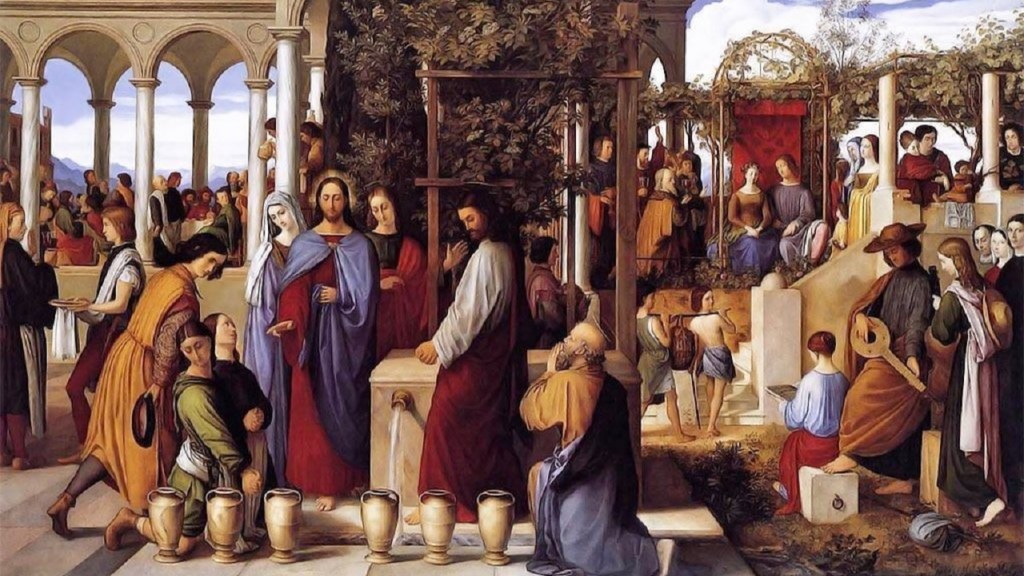
Turning water into wine was more than a miracle. It was a sign. It spoke a message to those who knew who did it. Perhaps Jesus didn’t do this miracle with the dramatic flair which would have made everyone at the wedding feast stop and stare at him. But for those who knew he did it, the miracle was intended to attract their attention. 

This simple act of love and power helped his disciples see more than Jesus the man. It gave them a glimpse of his divinity. “He thus revealed his glory,” we are told. What are we looking at when the Prophet from Nazareth transforms H2O into high-quality fermented grape juice full of sugars, red pigments, and alcohol? This miracle worker is more than a clever magician, even more than a caring friend. He is the Son of God, who came to live with men, share their lives, and be their Savior. 

“And his disciples put their faith in him.” That was important for these men. On this day, perhaps, Jesus was providing only a simple earthly need with his quiet power. On another day, this same man would love them so much that he would lay his power aside, lay down his own life for their sins, and so provide forgiveness, freedom, and life that never ends.

On another day this same Jesus would rise from the dead in glorious power, proclaiming to them and us that sin and death are defeated and have no power to condemn us, no power to control us, ever again. His disciples put their faith in him, and so do we. That is his saving purpose.

Why would anyone want to follow our Jesus? Maybe people need someone to help them see his power working through generosity and love, so that they can see that Jesus is the source of every blessing.

Quiet Power

John 2:6-10 “Nearby stood six stone water jars, the kind used by the Jews for ceremonial washing, each holding from twenty to thirty gallons. Jesus said to the servants, ‘Fill the jars with water;’ so they filled them to the brim. Then he told them, ‘Now draw some out and take it to the master of the banquet.’ They did so, and the master of the banquet tasted the water that had been turned into wine. He did not realize where it had come from, though the servants who had drawn the water knew. Then he called the bridegroom aside and said, ‘Everyone brings out the choice wine first, and then brings out the cheaper wine after the guests have had too much to drink; but you have saved the best till now.” 

We see Jesus’ love in the quiet manner in which he performed his miracle. He didn’t put on a big show.  In love for the bride and groom he did his miracle discreetly. On this big day in their lives, he didn’t steal the attention, deserving of that attention as Jesus may have been. Information about the true source of this wine was on a “need to know” basis. 

To focus on the miracle would be to focus on the wrong thing, anyway. When Jesus turned the water into wine, he didn’t want everyone to start clapping and yelling, “Encore! Encore!” as he took a big bow. He didn’t come to provide the entertainment for the wedding. He wasn’t substituting for the band. The miracle was meant to turn the attention of those who knew somewhere else. The power he used to bring this blessing worked behind the scenes.

God’s power often works that way. It does its work in a quiet, gentle way. Many of Jesus’ other miracles were done without many more words or gestures than this one. The power God uses to sustain our lives each day is something we hardly notice. The power and miracle of God’s word taking hold of a person’s heart often operates with subtlety.

Sometimes we human beings want the spectacular instead. Not patient enough for God’s love to change people and hearts, we want something that will “wow” the masses. “Come on, Jesus, do us a trick!”

But God’s power works for us in love. That means that it usually works in quiet and subtle ways. 

Even if Jesus’ power works quietly, that doesn’t make it less real or less miraculous. Look at how richly he blesses this couple! His gift to bride and groom measured about one hundred and twenty gallons of wine (certainly more than he intended the guests to consume at the wedding feast). This gift would last the newlyweds into the coming weeks and months. 

Look at the quality of his blessing as well. According to the master of the banquet, Jesus’ provided the best wine, the choice wine, for this occasion. His blessing was perfect in every way. 

That our Savior blesses us just as richly is a truth easily lost on us in our day-to-day experience. More blessings surround us than we can count. Many of the spiritual blessings are not even possible for us to perceive as he gives them. Yet, how many troubles does it take to hide all these blessings from us?  Isn’t it true that a single problem can make us feel as if we have no blessings at all?  We can be living in a treasure trove of God’s goodness, but one or two problems take up all our attention.

No matter the crisis of the moment, our Savior’s quiet power is still providing all we truly need.

Our Comprehensive Savior

John 2:1-5 “On the third day a wedding took place at Cana in Galilee. Jesus’ mother was there, and Jesus and his disciples had also been invited to the wedding. When the wine was gone, Jesus’ mother said to him, ‘They have no more wine.’  ‘Dear woman, why do you involve me?’ Jesus replied, ‘My time has not yet come.’ His mother said to the servants, ‘Do whatever he tells you.” 

Jesus was attending a wedding, and this little bit of background information is worth taking a minute to consider. What do we see about Jesus here? We see that he takes an interest in our everyday lives. The same Jesus who had recently been baptized by John the Baptist, anointed as God’s own Messiah and the rightful Ruler and Savior over Israel; the same Jesus who had done battle with the devil himself in the wilderness and defeated every tempting attack the devil made; this same Jesus now took time to help a couple of ordinary people celebrate the start of their married lives together. Jesus came to be a part of the everyday, normal lives the people around him lived. He knew that he was serving his heavenly Father just as well when he was doing very ordinary things as he was when he was off battling the devil or preaching sermons. 

Do we try too hard to divide our lives into secular activities and spiritual activities? We don’t have to be teaching a Bible class, making a mission call, or attending a worship service to be doing God’s work. (Though I certainly don’t want to discourage any of that). Doing God’s work may mean pushing a pencil or the keys on a computer. Doing God’s work may mean raising our children if we have them. Doing the Lord’s work might involve a little recreation now and then.  If we aren’t serving the Lord with these very “earthy” activities, whom does that leave?  Ourselves?  The Devil?  Anything that doesn’t serve God is sin.

Jesus understood. He knew he was serving the Father even when he was enjoying himself at a wedding. This wedding gave him a chance to do more than take an interest in our everyday lives. He also takes an interest in our everyday problems.  “When the wine was gone, Jesus’ mother said to him, ‘They have no more wine.’  ‘Dear woman, why do you involve me?’ Jesus replied, ‘My time has not yet come.’ His mother said to the servants, ‘Do whatever he tells you.'”  Mary turned to the right place for help. Jesus is the source of every blessing. Even in this simple, earthy need, Jesus was the one to ask. 

As we often have to wait for an answer to our prayers, Mary had to wait for Jesus to answer her request.  His reply to Mary wasn’t intended to be impolite. He was firmly reminding her that he was not her little boy anymore. He wasn’t telling Mary he wouldn’t help.  He simply said, “Not yet.”  He was waiting for the time that was just right, when his miracle would accomplish everything he wanted it to do.

Jesus’s words to Mary comfort us in a couple of ways. First, they assure us when our prayers seem to go unanswered. The Lord may not do everything we ask immediately. That doesn’t mean he is never going to do it. He knows what we need better than we know it ourselves. He knows the best time to step in and help. Because he loves us, he only does what is most helpful. When we wait for answers, God’s love is at work for us. We have even more reason to pray to him boldly and confidently, knowing that he won’t let our requests or our impatience get in the way of our true need.

Second, we can be sure that no situation is too “earthly” or too “secular” to ask Jesus to help. It is not hard to imagine the sinking feeling the bride and groom felt when running out of wine ruined their perfect day.  All that planning and preparation to have THIS happen.  And yet, it wasn’t a problem that would have made much difference in the great cosmic scheme of things. The fate of the nation did not in the balance. No lives were at stake.

Still, we see that Jesus is the source of every blessing even in our simple needs. Jesus love for us extends to every part of our lives.