Lifestyle Christianity

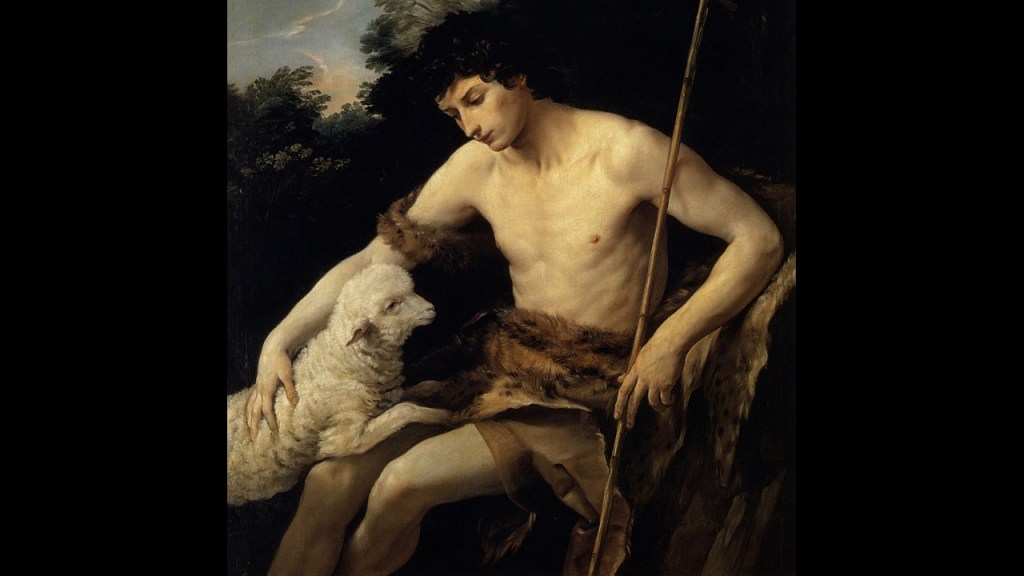
Mark 1:6 “John wore clothing made of camel’s hair, with a leather belt around his waist, and he ate locusts and wild honey.”

John the Baptist’s lifestyle underlined his message. First there was his clothing. His camel’s hair garment was simple, inexpensive, and likely not so comfortable. It may not have been the latest in fashion, but it was tough and functional. It seems this camel’s hair garment was his only clothing.

It was also the way in which Old Testament prophets dressed. This wasn’t intended to draw attention to these men, though it did serve as a recognizable sign of their office. More like the robes pastors wear today, it was intended to dress them down and draw attention away from the man, to his message. The sameness of wearing one thing all the time kept people from focusing on the messenger’s taste in fashion. It directed their attention to the word instead.

Next, consider John’s diet. Locusts and wild honey hardly qualify as a gourmet feast. It calls to mind the line about eating bugs from the movie The Lion King, “slimy, yet satisfying.” There is some truth to that statement here, at least the “satisfying” part. Maybe you and I wouldn’t choose to eat this way, but John the Baptist received his daily bread. His food was simple, but it was enough. Even with such a humble diet, we might even say because of it, John was able to devote his full time to serving the Lord.

Do you think that John felt like he had enough? We don’t know whether he might have complained about his support in weaker moments, but the gospels give us no indication he did. We do know that God does not require us to live such an austere life. No one receives extra credit for it if we do. Jesus also lived humbly, but not like John the Baptist.

The value John the Baptist’s life for us is the message it delivers. His example calls us away from the love of this world. So many of the things we enjoy become obsessions, even false gods. John’s life shows that we can resist materialism. There are many things we can live without. God took care of John. John could serve the Lord and be happy in that service, though he didn’t have an impressive income, wife and children, fancy food or fashionable clothes. None of these things are necessary to know God’s love. None of these things are necessary to serve Christ faithfully.

John’s life also teaches faith. God can be trusted, not because he gives us what we want, but because he takes care of our needs. John the Baptist simply served the way the Lord asked, and he trusted that God would provide something to eat. His faith was not misplaced.

We can be certain that, when the Lord has called us into life’s deserts, he will provide for us as well. If he gave us his Son, he will certainly give us something to eat and something to wear. With such faith in God’s care, setting aside our love for worldly things, we look to Jesus as our greatest treasure, and we wait patiently for him to appear.

Prepared By Baptism

Mark 1:4-5 “And so John came, baptizing in the desert region and preaching a baptism of repentance for the forgiveness of sins. The whole Judean countryside and all the people of Jerusalem went out to him. Confessing their sins, they were baptized by him in the Jordan River.”

Does it sound strange to hear that John was preaching a “baptism?” Isn’t baptism an activity, a rite, a ceremony? It is those things, too, but it is one in which the Lord is delivering a very clear and very striking message.

The Baptism which John preached was, first of all, a “baptism of repentance.” It wasn’t just a nice little gesture. It marked these people as sinners undergoing a deep and all-encompassing spiritual change. This baptism was connected with their repentance, and repentance is never merely a slight change of course, a minor adjustment in the direction we were traveling. Repenting of our sins means a 180 degree turn away from our sins.

This repentance is a violent experience because it always involves a death inside. When we come to see our sinful past as God sees it, when we come to see the sins we’ve enjoyed as the horrible things they are, it kills us. We die. We begin to look at that part of ourselves as the old self, the dead self, the self we want nothing to do with. John’s preaching and his baptism led them to see things this way.

At the same time, John’s baptism meant life for these people. This was a “baptism of repentance for the forgiveness of sins.” Those who went out to John were not left to despair about the horror and ugliness of their sin. In baptism God promises to wash sins away. Baptism was not something they did to pay for their sins. It was not a good work to make up for their failures. That payment would be made in full when Jesus later gave his life for them on the cross.

Rather, this baptism was God’s tangible way of saying, “I forgive you.” In it he assured them his promises of forgiveness and love were not only for others. They belonged to them, too. Through the water pouring over their bodies, the Lord was saying, “All my promises are yours. You need never doubt my love. I have claimed you as one of my own dear children.”

The power of that promise connected with John’s Baptism inspired their faith. It moved them to take a hold of the promise and make it their very own. The message his baptism proclaimed–sins repented, and sins forgiven– was making them ready for Christ.

That message in Baptism still makes us ready for Christ. But weren’t we baptized years ago? What does it have to do with being ready today? Maybe the ceremony took place in your distant past, but the changes it began, and the promises it made, are still going on today. Even if you fall away and come back to the Lord, God’s baptismal promises to you don’t change. His promises can never change or fail. As Paul reminded Timothy, “if we are faithless, he is faithful, for he cannot disown himself.” How does this make us ready?

What makes us truly ready for Christ is faith. We trust he is coming not to be our Judge, but our Savior. And everything about Baptism leads us in exactly that direction. In every way God is saying to us in it, “Trust me! Trust me!” He is giving us that very trust, and that makes us ready for Christ.

God With Us

Isaiah 7:14 “The virgin will be with child and will give birth to a son, and will call him Immanuel.”

In Hebrew, the name Immanuel means “God with us.” It fits Jesus perfectly. In one sense, “God with us” was nothing new. At creation he spent time with Adam and Eve in the evening. He appeared to Noah, Abraham and the patriarchs, Moses, and took an interest in their lives. He delivered them from trouble at appropriate times. He traveled with his people Israel in the pillar of cloud and the pillar of fire on their way through the desert to the promised land.

Yet, if this was all we knew of his being with his people, we might get the idea he remained a little distant. He kept himself above it all. He was interested in the lives of his people. He cared for them. But the things that happened in their lives didn’t affect him directly, or so we might think.

But then we look at this birth. In Jesus we see just how intimately God is with us. In Jesus, God himself was on earth, living like we live, experiencing what we experience, suffering what we suffer. Do you know that for every temptation which we have faced, Jesus can say, “I’ve been there before. I know what you are going through, and I can help you”? For every grief, every heartache we experience Jesus can say with all honesty, “I know just how you feel. I felt that way once, too. You can lean on me to get you through it.”

It’s not just that Jesus was with us when he walked the streets of Jerusalem, Nazareth, and Capernaum. Some of his last words before he ascended into heaven were, “Surely I am with you always.” By his Spirit, and by faith, he even lives in us. He makes our own hearts his earthly home. How could he be any closer than that: living inside of us in every situation, every moment of every day?

That is a comfort. Isn’t that the kind of God you want–one who is not just there for you, but there with you no matter what you have to face? For those who have come to know who Jesus is and where he comes from–the Son of God from heaven, born of the virgin Mary–this is what Christmas celebrates. There is no need for us to “save” Christmas, as so many holiday specials suggest. Through Christmas, God is saving us. This faith, this confidence, gives us comfort, as God comes to live with us and sets in motion the events by which he redeems us from sin. 

December offers much to celebrate: gifts, families, bonuses, and the beauty of the season. My family adds a half dozen birthdays. These are all blessings to enjoy, but none so worthy of our attention or celebration as God coming to live with his people—as one of them.

Uniquely Qualified as Savior

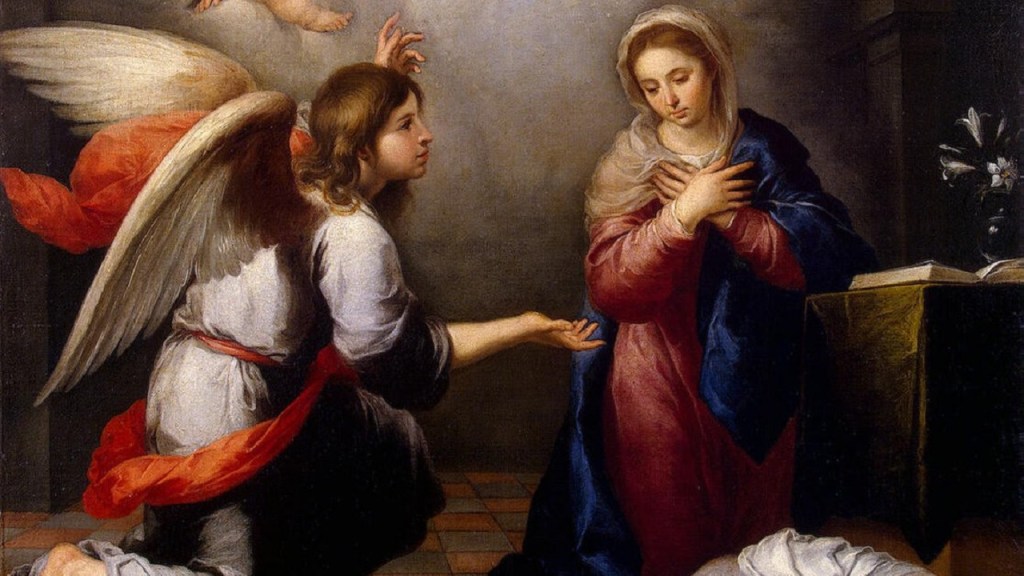
The Angel Gabriel Announces the Conception of Jesus to Mary

Isaiah 7:14 “The virgin will be with child and will give birth to a son…”

It’s no secret that a virgin birth is not an ordinary one. The very idea has been an object of ridicule. Some feminists have ridiculed the idea as the product of men suffering from deep-seated sexual hang-ups. Some liberal church-men have felt so embarrassed by it that they felt it necessary to interpret it away. “It is nothing more than a symbol, a myth, intended to give Jesus special honor,” they say. That way they can’t be accused of believing in some “freakish intervention in the course of nature.”

Early Christians, on the other hand, recognized the virgin birth of Jesus as a truth so precious, so dear, so important, that when they summarized his life in the Apostle’s and Nicene Creeds, they felt it necessary to include this. It rose far above so many truths which could have been stated about Jesus.

Why is it so important?  Think of what it promises us! What kind of a Savior do you need? One who is sinless, perfectly loving, and whose life has infinite value. This means he is qualified to serve as a substitute and sacrifice for all people. At the same time, he has to be mortal and subject to the law of God. More than merely human, he must be a part of this family of mankind God placed on this earth. Only such a man can serve in our place to satisfy God’s demands of us.

Where could such a Savior be found? How could the chain of original sin, passed from every parent to every child through history, be broken? Where could such a perfect person be located? How could a human life ever have such infinite value that it could stand in the place, not just of some people, but all of them? How could God do all of this without some kind of miracle?

In the virgin birth our Lord pulls back the curtain to let us see his saving plans and fulfillments more clearly. He lets us see the miracle. Perhaps there is some other way that he could have done it. But here he shows us how he actually did. With God as his only Father, and a virgin woman of our own human family as his real mother, Jesus is just the kind of Savior that we need: in every way human, one of us; yet in every way God, and able to what is impossible for us. In his virgin birth we discover that Jesus is uniquely qualified to serve as our Savior from sin.

Still A Sign

Isaiah 7:14 “Therefore the Lord himself will give you a sign: The virgin will be with child and will give birth to a son, and will call him Immanuel.”

Jesus’ birth is a sign. That means that there is more to it than meets the eye. As true as it is that a baby was born, and born into humility and poverty, there is something more beneath the surface. Jesus’ birth means something.

Interestingly, God sent Isaiah to give this sign to an unbeliever! Ahaz was the king of God’s chosen people, a king in David’s royal family. But King Ahaz didn’t want God to give him any signs. That may seem hard for us to understand. People are begging for a spectacular sign. They want spectacular proof that God exists, and that he cares. But Ahaz was firm–he didn’t want any signs.

You see, Ahaz had already made up his mind that he didn’t want to follow the God of his fathers. He enjoyed worshiping the gods he had chosen instead. Maybe there really was only one God who exists, but Ahaz didn’t want to be confused by the facts. He didn’t want a sign.

Even when Ahaz was in deep trouble, he didn’t want a sign. Ahaz was afraid for his life, because two neighboring kings named Pekah and Rezin had made an alliance and decided to remove him from the throne in Jerusalem. They were going to put an end to the dynasty of David, and install their own man as king of Judah instead.

Though Ahaz was an unbeliever, the Lord could not let the family line of David be destroyed. That would be the end to the promise of a Savior. So the Lord sent Isaiah to Ahaz with a promise that the Lord would take care of Ahaz and his kingdom. As proof that his word was good, the Lord even offered to let Ahaz ask for a sign, any miraculous sign he wanted. But Ahaz realized that if he asked for a sign and got it, he would have to admit the power and truth of the Lord and his word. Ahaz refused to ask for a sign.

“Therefore the Lord himself will give you a sign,” Isaiah insisted. God is faithful. His promises can be trusted. He wants this to be known. If Ahaz wouldn’t ask for a sign, the Lord would provide one of his own making. Then, at least, others could be certain of his promises. That sign is contained in the birth of our Savior and the events surrounding Christmas.

Do you see a warning for us in Ahaz’s refusal? Perhaps we aren’t tempted to worship other gods–at least not the kind that are made of wood and stone and sit in pagan temples. But we daily set our hearts on things God forbids in his word. We daily desire to do things our own way rather than trust God and his ways. That desire is strong. We simply want what we want. Like Ahaz, we don’t want to be confused by the facts!

But God’s word hasn’t changed. He is faithful to his word and promises. Jesus’ birth is a sign which has proven this. So we must conclude that we ignore or defy God’s word at our peril.

But “everything that was written in the past was written to teach us, so that through endurance and the encouragement of the Scriptures, we might have hope.” As God’s believing children, we find the greatest assurances in the sign of Jesus’ birth. God has sent a Savior to redeem us from our sin! God has fulfilled his greatest, most difficult, most painful, and most needed promises in Jesus’ life and death.

If he has done this, can’t we be sure that his angels camp all around us–as he has promised? Can’t we be sure that he will give us our food at the proper time, that he will satisfy the desires of every living thing–as he has promised? Can’t we be certain that he will come again, and take us to be with him–just as he has promised? Our Savior has no ordinary birth. It is a sign that we can trust all of his other promises, too.

How Can I Thank the Lord?

Psalm 116:12 “How can I repay the Lord for all his goodness to me? I will lift up the cup of salvation and call on the name of the Lord.” 

The cup of the salvation was a term used to describe one of the cups of wine passed around at the Passover meal. That cup was lifted for everyone to see. It reminded the people of how the Lord had delivered them from slavery in Egypt and brought them to the land of Promise.

We may lift a glass to give a toast at our holidays, but our customs don’t match the picture in this psalm. That doesn’t stop us from doing something similar with our mouths. We still hold up God’s salvation for all to see as we tell them about our salvation. The Passover, after all, was a foreshadowing of how the Lord would deliver us from our slavery to sin. Through Jesus’ death on the cross and resurrection from the dead we have been set free from the chains of death and brought to the promised land of eternal life. It is our privilege to put this salvation on a pedestal. We lift up our Savior and his work by sharing them with everyone who needs to know.

And isn’t telling someone else one of the sincerest forms of thanksgiving? Isn’t it a genuine way to express our appreciation? Everyone appreciates a thank-you card, or even a simple thank you in words. Perhaps that gratitude is even easier to see when those who receive our gifts can’t wait to tell everyone else what they have been given. 

Your children thank you for the new sweater, but you know their appreciation for the gaming console is genuine when they run to tell all their friends about it. The psalmist says something similar here. How can we repay the Lord for all his goodness? It’s one thing to pray words of thanksgiving for giving us his Son and all his other gifts. Perhaps that thanksgiving is better expressed when we run to our friends and say, “Just look at what the Lord has done for me!”  

Lifting up a cup perhaps brings another picture to our mind. When we lift up a cup, it is generally to drink from it. We wouldn’t survive long without something to drink. In the same way, we want to drink regularly from the Lord’s cup of salvation. Our lives and words have not been never-ending expressions of thanksgiving for God’s goodness. We regularly need forgiveness. We regularly need of assurance of God’s love. We regularly need the strength the gospel message provides. We drink in the comfort and strength the Lord shares when we hear and use the word of God. Its life-giving message brings us face to face with the Savior who was willing to drink from another cup, a bitter one, in which he suffered the punishment for our sins. With such love he opened heaven’s gates to you and me.

We are the ones who stand to benefit by drinking from the cup of salvation. But drinking also expresses our thanks. We don’t let gifts we love sit in the closet collecting dust. We put them to use. We tell others what we have been given. Thank the Lord for all his goodness by telling others about his salvation, and by taking a good drink of it yourself.

Glory to the One Who Makes Us Kings and Priests

Revelation 1:5-6 “To him who loves us, and has freed us from our sins by his blood, and has made us to be a kingdom and priests to serve his God and Father—to him be glory and power forever and ever! Amen.”

Are you proud to be an American? Maybe you take exception to some decision or other our leaders make. For the most part, though, we like being part of this nation. We are proud to live in the most powerful nation on earth. This is a nation that strives to stand for what is good in this world. It provides its citizens with the one of the highest standards of living. Our country has expended its resources and made great sacrifices to bring freedom and a better life to others. A sense of privilege goes along with being a citizen of the United States. Look how many citizens of other countries are trying to get in!

The citizenship Jesus has given us in his kingdom is a far higher one. Here we are all royalty. Even now you are a “blue blood,” a member heavenly nobility. The Apostle Peter echoes these same words in his first letter when he calls us a “royal priesthood.”

Because of our exalted position in Jesus’ kingdom, everything serves us now. God has promised that in all things he works for our good. The entire universe and everything that happens in it submits to us.

Are you fascinated by your family history? Have you traced your family tree or taken DNA tests to know who you are? By faith we are part of a royal family that traces its roots through Adam and Abraham, David and Daniel, Peter and Paul, and especially our dear brother Jesus. That’s our lineage, our heritage, our ancestry by faith. Jesus has ennobled you and me by making us part of his kingdom.

In that kingdom we all serve God as his priests. Before that is task or responsibility, it is a privilege. It means we have direct access to God. Sometimes people come to me as pastor and want me to pray for them. They believe I have some kind of “in” with God as a member of the clergy. They suspect I have God’s ear, that I have access in a way other people don’t. Don’t get me wrong. I’m happy to pray for anyone. But for Christians, pastors have the same special access Jesus has given everyone else. John doesn’t say Jesus made a few of us priests. He made a whole kingdom full of priests. We all enjoy this direct, individual, personal relationship with God. When you come to God he’s not going to say, “Who sent you? What are you doing here?” He welcomes you as one of the priests Jesus has called by faith.

Our priesthood is also a privilege because now God has entrusted his sacrifices into our hands. We don’t offer blood sacrifice anymore. Jesus made the sacrifice for sin once for all. But God has entrusted us with sacrifices of praise. We offer our bodies, not in a bloody way, but in an unbloody way. “Living sacrifices” Paul calls us in Romans. We make these offerings by sharing our faith with others. We serve by letting our hands and feet become God’s tools for loving those he has placed in our path. This is our sacrifice of praise, and we will continue to offer it long after we have left God’s kingdom of faith here to join him in his kingdom above.

America has no king and Americans don’t want one! We may be fascinated by the melodramatic lives of the monarchies in Europe, particularly the British royal family, but we aren’t eager to have the same scenes played out here. Ever since George Washington turned down the opportunity to be king with the words, “I didn’t fight George III to become George I,” we have been happy to be a nation without a king.

Jesus, however, doesn’t rule us by fear or intimidation. He didn’t force us to follow him at the edge of a sword or end of a gun. He won us to his kingdom by his love and made us its royalty by grace. We are proud to take our place in that kingdom, and give glory to the King we serve.

Glory for Our Freedom

Revelation 1:5-6 “To him who loves us and has freed us from our sins by his blood, and has made us to be a kingdom and priests to serve his God and Father—to him be glory and power forever and ever! Amen.”

            Almost twenty years ago I watched the video from a Houston courtroom in which multi-millionaire Robert Durst was acquitted of murdering his neighbor, Morris Black. Mr. Durst claimed that he killed Mr. Black in self-defense. After killing him he cut up the body and threw it into Galveston Bay. He did not deny disposing of the body this way. The courtroom camera caught Mr. Durst’s reaction as the not guilty verdict was read. I wish I could show you a picture. You could see the tension escaping his body as his shoulders suddenly relaxed. His head tilted back, he closed his eyes, and he let out a visible sigh. I suspect he was not expecting a not guilty verdict. I am certain he was utterly relieved to be out from under the threat of punishment.

In the Lutheran Sunday service, you hear week after week that you are on the receiving end of a not-guilty verdict. Together we confess our sins. The pastor announces God’s mercy and forgiveness for the sake Jesus’ atoning sacrifice. We are free to go. We are out from under the threat of a punishment that would make death by any means look inviting. Do you feel relieved? Whether or not you have the same sense of relief as Robert Durst, the fact remains that Jesus has set us free from the anger of God our sins deserved.

What makes that freedom truly special is the price the King paid to set his subjects free. He gave his own blood, his own life. When someone asks us merely to lend them something– not to take it, just to borrow it– do you sometimes feel some inner hesitation, especially if it is something you hold dear? Will it be damaged? Will it be broken? Will it ever be returned? Will we be inconvenienced while it is gone?

Jesus didn’t merely risk his life for us. He didn’t temporarily lend us his body. He knew that it would be damaged, and broken, and taken away from him. He gave his life up to free us from our sins. “No greater love has anyone than this, that he lay down his life for his friends.”

We give those who have given their lives to ensure our political freedoms and personal liberties a special place in our hearts for the sacrifices they have made. But none of them died for their natural enemies like Jesus died for us. None of them were punished in our place. None of them suffered the hell Jesus suffered for us. This was the price for our freedom, and we give Jesus glory because he has freed us from our sins by his blood.

To Him Be Glory for His Love

Revelation 1:5-6 “To him who loves us and has freed us from our sins by his blood, and has made us to be a kingdom and priests to serve his God and Father—to him be glory and power forever and ever! Amen.”

I want you to notice something about the word “love” right away. It is in the present tense. John says, “To him who loves us,” as in “right now.” He does not say, “To him who loved us,” as in “thousands of years ago when he was still alive.” Jesus is not merely a great hero from the past we study as a part of history. Jesus is just as alive as your living friends and family members today, only he loves you more. Even though we have never seen him with our eyes, he is someone we know and love personally, only he loves us more. Jesus rose from the dead, body and soul. He is very much alive and well at this very moment, loving you more than anyone else ever has or can.

You knew this already, at least you knew it in your head. But we need to take a little closer look. I think you know why. When the Apostle John first wrote these words over 1900 years ago, he was writing to people who might have wondered whether they were really true. The Church was going through terrible times. The Roman Empire was rounding up Christian leaders in some parts of the empire and executing them. John himself had been exiled to the island of Patmos.

Under such conditions it would have been easy for Christians to wonder whether Jesus was genuinely alive and in control. If he was, did he really love them anymore? They needed to hear that Jesus’ love wasn’t a past phenomenon. They needed to hear, “Jesus loves you right now.”

What about you? Each of us could come up with evidence contradicting his love without too much thought. I once received a phone call from a man who asked me, “Where can I find a gracious God?” “Jesus shows us God is gracious,” I told him. “But where can I find him”? he questioned. He was convinced God did not love him. God’s promises must apply only to other people who had happier lives. In a single year his wife had left him and taken the children. He lost his home and his job, and he was left with nothing. It was hard to believe Jesus loved him anymore.

This is why your pastors come calling when you are in the hospital or there has been a death in the family. We need to hear that Jesus loves us right now when he has decided to take a child from us in death, or a husband, wife, friend, or family member we always leaned on. Jesus still loves you, right now, even when the doctor tells you that the pain isn’t going to go away. It’s likely to get worse. Your chances of survival are less than 50 percent.

How about after you or I have committed the “Big One”? Or how about the stream of ordinary sins we churn out like a factory running at full capacity? Our assembly line steadily turns them out, each one an unimaginative copy of the other. Once again this week I deserved to go hell. Most of the sin looks a lot like last week’s. Shouldn’t God get tired of it? Don’t we make ourselves impossible to love?

But there is one thing steadier than my sin. That is Jesus’ love for me. More than anything else it is that love– the same love with which he loved me yesterday, the same love with which he loves me today, and the same love with which he will love me when I have passed from time into eternity– it is that love which invaded my heart and conquered it for his kingdom. We give Jesus glory because he loves us, today and always.