The Ends of the Earth

Acts 13:47 “For this is what the Lord has commanded us: ‘I have made you a light for the Gentiles, that you may bring salvation to the ends of the earth.’”

Just where are the ends of the earth? This is no Bible claim for a flat earth. Actually, there are passages in Isaiah and Job that hint at a spherical understanding of our planet, much like the Greeks understood from before the time of Christ.

Paul and Barnabas may not have known there were whole new continents beyond the Atlantic Ocean. But if they did, they would have concluded that those, too, were part of the “ends of the earth.” Anywhere there were lands and people, the Lord wanted them to take the gospel light, until they ran out of both.

Although this is an Old Testament passage, it was a different way of thinking than Paul and Barnabas grew up with. They were accustomed to the idea that only Jewish people would believe in the God who reveals himself in the Bible. You might interest a stray non-Jew here and there, but for the most part talking about religion to them was a waste of breath.

Now, right here in the very Gentile city of Antioch in Pisidia, in central modern Turkey, Jews were rejecting God’s word about a Messiah and salvation by grace through faith, and Gentiles, non-Jews, were embracing it. The “ends of the earth” didn’t end at the city of Antioch. But on this day they started there.

Today we can see that the “ends of the earth” involves far more geography and population than Paul or Barnabas could have dreamed of. They were aware of three continents. We know seven. Their world population was less than 200 million. We have surpassed 8 billion. The distance and the numbers look daunting. We may fear there is too much to cover. Our time, our reach, our resources are limited.

It’s true, you or I or our little church can’t reach everyone ourselves. But the gospel light is seeing exciting growth in places like China, Pakistan, Nepal, Vietnam, Thailand, sub-Saharan Africa, all over Latin America. You and I are part of it through our offerings and our prayers.

And though the “ends of the earth” don’t end in your hometown, that is where they begin. Let’s not make the mistake of thinking the gospel is only for one particular kind of people: only people who already look and think a lot like us are going to believe it. My current hometown prides itself on its diversity. “Building an inclusive community” has become the city’s motto. The university here attracts people from all around the world. They may not be looking for Jesus now, but then, when have people who don’t know him ever been looking for him? Certainly not when Paul and Barnabas preached.

God has made you and me a light or the nations, starting where we live today. Let’s not be diverted from that mission by any artificial limits we perceive.

Some Will Prefer the Darkness

Acts 13:45-47 “When the Jews saw the crowds, they were filled with jealousy and talked abusively against what Paul was saying. Then Paul and Barnabas answered them boldly: ‘We had to speak the word of God to you first. Since you reject it and do not consider yourselves worthy of eternal life, we now turn to the Gentiles. For this is what the Lord has commanded us: ‘I have made you a light for the Gentiles…’”

Light isn’t always welcome. Sometimes the reasons are innocent enough. You are tired and want to sleep. You work odd shifts and have to sleep during the day, so you install black out curtains on your windows.

Sometimes the reasons are more sinister. People indulge their vices in the dark. “Nothing good happens after midnight,” the saying goes. Thieves operate at night. Maybe they even cut the power or remove light bulbs to cover their work. They want to keep it dark.

Paul ran into people like that on his missionary journeys. Spiritually, they preferred the darkness. They weren’t criminals for the most part. They weren’t living what most would consider grossly immoral lives. Many, like the Jewish members of the synagogue he was debating here, seemed quite virtuous. They worked hard at keeping God’s laws. They attended worship and Bible study every week.

But in shining the light of Jesus on them, with his faith based on grace and forgiveness, Paul was exposing more subtle sins tucked back in the dark recesses of their hearts. These people had become graceless. They were legalists. Their own pride told them that they had made it, morally. But they did not want to reckon with sins of the mind and the heart: their contempt for other people, their selfishness, their lusts, their love affair with themselves. It’s not just that they didn’t want other people to see their faults. They didn’t want to see them themselves.

So they pushed back against the light. They tried to cut the power, and remove the bulbs Paul and Barnabas were lighting. The apostles gave them what they wanted. “Since you reject it and do not consider yourselves worthy of eternal life, we now turn to the Gentiles.”

There are two warnings for us here. One has to do with how we react when the light shines on our own lives. The religion of Jesus emphasizes the grace and forgiveness of God. But that means God’s word will expose the things in our lives that need his grace and forgiveness. It isn’t pretty to look at, but it is the way it has to work. Sin is like a cancer that has metastasized. Maybe repentance and forgiveness has removed the life threatening tumor in one place. But hidden deep within the tissues on the other side of the body another tumor grows, perhaps tiny at first, of a different shape, producing no symptoms, imperceptible at the time. When it finally comes to light, you can’t ignore it. You certainly don’t want to protect it or feed it. It has to go under the knife of repentance and forgiveness. All sin, like cancer, is life threatening. In the balance are heaven or hell.

The other warning has to do with our own words of witness. You are a Christian. God has made you a light to our world. That is true no matter the reception you receive. People like the darkness. They have grown comfortable with it. We have felt comfortable with it. So don’t be surprised when friends, family, neighbors, coworkers, or casual acquaintances aren’t interested in what Jesus is giving away. Don’t let it dim your light.

Sometimes we read about the explosive growth of the early church in Acts and wonder why we don’t see successes like that. Remember that everywhere Paul went far more, far more, people rejected his gospel, often violently. Don’t be surprised today if the gospel’s reception is a little chilly more often than not. Not everyone wants to come into the light.

Pure Spiritual Milk

1 Peter 2:2-3 “Like newborn babies, crave pure spiritual milk, so that by it you may grow up in your salvation, now that you have tasted that the Lord is good.”

When Peter compares us to newborn babies here, he is not criticizing our lack of spiritual maturity. The term is used that way other places in Scripture, but here he puts a positive spin on the idea. Nor is he opposing growth and maturity, as though we should remain spiritual infants forever. He specifically tells us that he wants us to grow up in our salvation. More about that in just a moment.

His one point of comparison between us and newborns is this: There is only one food appropriate for newborn babies (at least, before the development of infant formula). That is their mother’s milk. It is the only thing the baby wants. It is the only thing the baby’s body can handle. Variety may be the spice of life, but variety is no good when it comes to feeding infants. They need nothing but their mother’s milk.

In the same way we who are God’s newborns by faith need only one thing on which to feed– the pure, spiritual milk of the Word. It is the only thing our faith wants. It is the only thing our faith can handle. Any variety mixed in from human philosophy, false theology, or human speculation threatens to make us sick. It could even be fatal.

In order for that spiritual milk to be truly nourishing for our souls, it must contain God’s word of Gospel, his good news in Jesus Christ. Do you ever shop at Christian bookstores? There you will find some shelves with Bibles, and Bible commentaries, and books on church history and various world religions. But what fills row after row and shelf after shelf are books on Christian living, books dedicated to telling you how to live your life. I’m not going to say that those books don’t contain any useful information. Maybe you could find helpful hints for dealing with some issue that comes up in your life.

But without the gospel of God’s love for you in Jesus, such books cannot grow you up in your salvation. Without God’s promises of what he is doing for you, there is no food for your soul, no nourishment for your faith, no matter how helpful the words may be otherwise. You don’t grow closer to God when he is telling you what to do. Your trust in him doesn’t deepen and become more secure when you are concentrating on how your life matches up with his commands. Your heart’s intent to do things his way, your willpower to avoid sin and pursue love, doesn’t come from doing what God demands.

God is drawing you closer, and making you stronger, and driving faith deeper, when the words on which our faith is feeding are about the things that he does for us. That good news is not a limited subject to fit into a few paragraphs or a chapter in a book. I can’t do it full justice in a single sermon or a lifetime of sermons. It spans all the love that God has had for you from electing you to be his own even before he created the word, to directing the course of human history to prepare the way for Jesus, to the whole loving life of Jesus, to the events of Jesus’ trial-cross-and empty tomb that we know so well, to Jesus’ running the world for us from heaven, to his promise to return to take us there. It is expressed in his promise to forgive our sins, declare us not guilty of them, reconcile us to himself, come to us in word and sacrament, give us his Holy Spirit, and ultimately raise us from the dead.

The Gospel of God’s love for you is a gem with many, many facets. There are far too few books whose expressed purpose is to help us mine the Bible’s riches in exploring each one. But if we want to grow up in our faith and salvation, let’s crave and consume this pure spiritual milk. It is just the milk our spirit needs.

Repentant Resolutions

1 Peter 2:1-2 “Therefore, rid yourselves of all malice and all deceit, hypocrisy, envy, and slander of every kind. Like newborn babies, crave pure spiritual milk.”

Newborns are not so innocent as they look. We were all born in original sin. Sin is a condition, an inescapable orientation. It thoroughly corrupts our hearts, minds, and wills from the first moment of our existence. Those babies may not be actively pursuing a life of crime. They lack the physical maturity to do so. In terms of how they treat the people around them, they are relatively innocent.

When God gave us our spiritual birth by bringing us to faith, whether by baptism or the preaching of his word, we did not suddenly cease all sinful activity. But God did forgive all our sins. He applied Jesus’ payment for our sins on the cross to each of us personally. Now our Lord pronounces us sinless, regards us as sinless, and deals with us as though we were sinless. We don’t just look innocent, like those newborn babies. As God’s spiritual newborns, in his eyes we actually are innocent.

The same faith through which we know and receive God’s grace and forgiveness also sets us free from our slavery to sin. That doesn’t mean we have stopped sinning altogether. But in faith we want to. And God’s own power working in us gives us the ability to resist sin and pursue love. We can strive to live as innocent as God in his grace says we look. We live as God’s newborns, repenting and ridding ourselves of evil deeds like those Peter lists here.

“Therefore, rid yourselves of all malice…” This vice encompasses everything that follows. Malice is the opposite of love. Perhaps you can be angry with someone you love. But malice and love cannot coexist toward the same person. When we are full of malice, we want only to hurt them.

We may not become close friends with everyone we meet. Different values, beliefs, and priorities may be valid reasons for keeping our distance from some. When we know someone poses a danger to others, we might even have to take steps that lead to their suffering: turning in a criminal, or using physical force to prevent them from hurting someone else. None of this is malice. But when we start to find satisfaction in their pain or misfortune, whether or not we were the cause, we have crossed the line. We have given malice a foothold in our lives.

Does that seem relatively rare among us? Or could you think of the name of a person right now– perhaps a political figure or entertainer, some loudmouth at work, an obnoxious neighbor, someone who has hurt you–that you would like to “stick it to”? Their misfortune would bring you some hint of happiness. Peter calls on us to repent and rid ourselves of malice, so that we can live as spiritual newborns this new year.

Next, Peter urges us to unload our “deceit.” Why would God’s children want to lie to each other? Isn’t there a hefty dose of disrespect we display to those we deceive? When a lie is exposed, are we ever better off than if we had simply owned up to the sin in the first place? Deceit is another evil deed to unload this New Year.

“Hypocrisy” may seem strange to find on Peter’s list. Can a person have the new birth of faith and be a hypocrite all at the same time? Isn’t a hypocrite a “false Christian”? Aren’t these two things mutually exclusive? How could Peter address this to believers?

Understand that there is more than one kind of hypocrisy. The word “hypocrite” was originally the Greek word for an “actor” on the stage. Actors pretend to be people they are not. Since Bible times the term has been applied to those who pretend that they are Christians.

Sometimes true believers also do some pretending. Though they have faith in their hearts, they fall into treating certain people one way to their face, another behind their backs. They may butter a person up to get some advantage out of them. They may hide their disrespect and disdain. Whatever the reason, this is a kind of hypocrisy. Someone is putting on an act.

Peter urges us to be straight with each other. That is not permission to be rude or impolite. He is not excusing us from genuine Christian love. But he does want us to deal with each other in an honest way. If we have problems with others, we ought to deal with them openly and lovingly. If we are putting on a front to hide our dislike, it is the attitude, not the behavior, that has to change.

“Envy” is another strange sin for God’s children. Why should it bother us when someone else does well? Why can’t we simply find joy when they are successful? God has chosen not to distribute his material blessings in different amounts to each individual. But the most important blessings are the same for us all. We share the same forgiveness, faith, Savior, heaven, and eternal life. God promises that he has custom tailored our individual earthly lives to fit our individual earthly needs. Envy makes no sense for those who live under God’s blessing.

Finally, Peter urges us to rid ourselves of “slander of every kind.” The Greek term for slander is wide enough to embrace any kind of negative speech about someone, even criticisms that are true. You know how easy it is to start talking about a person who is not present. Someone thinks of a funny story about that person. Someone else points out a negative trait of the individual. Soon, without intending to do so, we are enjoying ourselves at the expense of their reputation. No matter how the conversation came to this point, this isn’t love. It may be true, but like the other practices on Peter’s list, it is not compatible with Christian living.

With the New Year, many will be making resolutions for self-improvement. Often we aim them at health and physical well-being. Why not make resolutions with a spiritual emphasis, like addressing the vices Peter has identified for us? Let’s be the innocent children God has made us.

Exposed

Luke 2:34-35 “This child is destined to cause the falling and rising of many in Israel, and to be a sign that will be spoken against, so that the thoughts of many hearts will be revealed.”

Before Jesus arrived, the religious scene in Israel was rather tame. You had various Jewish sects like the Pharisees or the Sadducees competing for a following among the people. They were little more than variations on the same theme, different shades of the same color. They were slightly different flavors of the religion of “save yourself.”

But when Jesus appeared, he introduced a radically different way of looking at the human dilemma and God’s solution. He offered a radically different way of looking at God and man themselves. Actually, he represented a return to the God of their fathers, the God of the prophets, so passionate in the demands of his law that no one could actually keep them, so passionate in the promises of his grace and mercy that not a single soul was beneath them.

It was Jesus’ unrelenting and uncompromising preaching of this God, especially his grace and forgiveness that extended to even the lowliest of sinners, that could not be ignored by the religious establishment of his time. They had to declare themselves either for or against– and most of them chose against. Jesus’ preaching of grace cut them open and exposed their hearts.

The Jesus of Scripture has the same effect on people today. I’m not talking about the sanitized, politically correct version of Jesus, one whose message has been watered down to an anemic, “Can’t we all just get along?” I’m talking about the Jesus who didn’t mince words about sins like divorce, lust, worry, or greed; who could publicly judge and condemn the prayers and the charity of the hypocrites; who could call his enemies blind guides and whitewashed tombs, and even call one of his own disciples Satan.

I’m talking about the Jesus who wrapped himself in our skin. He “learned how to walk, stumbled and fell, cried for his milk, sweated blood in the night, was lashed with a whip and showered with spit, was fixed to a cross and died whispering forgiveness on us all” (Brennan Manning, The Ragamuffin Gospel).

You can’t be neutral about that Jesus. His message and person are like a swinging sword that cuts us open and exposes our hearts. That is the Jesus, and that is the God, that Thomas Jefferson once denounced as “a monster, and not a God.”  

But that is also the Jesus, and the God, that once led a man in Bible class to announce that he and his family were looking for another church after studying the story of God calling Abraham to sacrifice Isaac on Mt. Moriah. In response to questions of “Why?” the man said, “Because when I look at that God, the God of Abraham, I feel like I’m near a real God, not the sort of dignified, businesslike, Rotary Club God we chatter about here on Sunday…. I want to know that God” (Manning, The Ragamuffin Gospel).

When Jesus words expose our hearts, may they reveal the same sort of passion for knowing him that he had for saving us.

The Falling and Rising of Many

Luke 2:34 “Then Simeon blessed them and said to Mary, his mother: ‘This child is destined to cause the falling and rising of many in Israel, and to be a sign that will be spoken against…’”

The genuine way to God is uniquely humbling. Jesus came to empty us of all our delusions that somehow God owes us. We don’t live as his peers. We don’t endear ourselves to him by the way we live. He isn’t impressed by who we are. This is why Jesus could make shocking statements like these to the “church” people of his day: “The prostitutes are entering the kingdom of God ahead of you.” He isn’t referring to those who defiantly defended their “trade,” but to those who repented. These ladies weren’t filled with pride. They knew they had messed up. They didn’t have to be told to be humble. They just were. It was obvious they weren’t going to impress God into accepting them.

The other camp is the way of human pride. The Pharisees were the poster boys for this cause in Jesus’ day. “Be good” was their basic approach to God. And there is nothing wrong with being good. God wants us to be. The problem was that the Pharisees had convinced themselves that they were, or at least that they were on a steady course of personal improvement that would get them there. They took great pride in how hard they tried.

Another way to look at this division is the difference between those who are saved and those who are struggling. Jesus did not come to be the great Trainer. He did not come to be the great Helper. He came to be the great Savior. By his life and death, by the forgiveness of sins, he pulls to safety those who had no way of rescuing themselves.

But many, like the Pharisees, prefer to struggle on themselves. Have you ever tried to help a little child who was struggling to do something, and instead you were rebuffed with: “I can do it myself!”? How often God must shake his head at us when he offers to save us but people reply, “I can do it myself!” Unfortunately, we are like a 3-year-old trying to solve a problem in advanced calculus, or trying to assemble a car from nothing but parts, or trying to swim 500 miles to shore. It just isn’t going to happen.

The result of this division into two camps, these two approaches to God, is, as Simeon said, “the falling and rising of many in Israel.” The irony is that those who looked like they were so low had actually been raised, and those who looked like they were so high had actually fallen. Take the Apostle Paul, for example. When he converted to the religion of grace from the religion of works and pride, he gave up a career path that promised to make him a prominent and respected rabbi in Israel, maybe even a member of their ruling council, the Sanhedrin. In its place he received a life of persecution and prison chains, and eventually execution as a criminal. It looked like Paul had fallen.

But from God’s point of view, Paul was raised to the heights: the heights of being intensely loved by Jesus, the heights of perfection– not of his own doing but of having his sins wiped away and receiving credit for Jesus’ perfect life, ultimately, the heights of heaven itself. It was those who insisted on coming to God on their own terms who were on a steady downward course away from God.

Here is an application to take to heart. Even Christians in name can end up in the wrong camp. Here is a direct quote from a sermon preached in a “Christian” church almost fifty years ago: “Jesus is an example, a prototype of what I and all men can become. He is not a sacrifice, a substitute, that saves me from all pain and sorrow, no matter how strong my faith may be. If it is necessary to believe in that kind of fiction in order to be saved, then I greatly fear that ‘when the roll is called up yonder,’ I shall not be there.” Sadly, we must confirm this man’s conclusion about his fate because his is the graceless religion of pride, struggling, and works, not Jesus’ religion of salvation.

There are other people who can recite the formula of salvation by grace– Jesus died on the cross to take all my sins away– but who do so something like a trained parrot. It is little more than a theory which they repeat, but not their trust and confidence. In their hearts they are still convinced they are basically good. They feel no great need for Jesus to forgive their sins.

Follow Jesus to become a saved person, not because you think you are a better person.

Let His Light Shine

Isaiah 49:7 “This is what the Lord says–the Redeemer and Holy One of Israel– to him who was despised and abhorred by the nation, to the servant of rulers:  ‘Kings will see you and arise, princes will see and bow down, because of the Lord, who is faithful, the Holy One of Israel, who has chosen you.’”

I believe my neighborhood is a safer place this time of year.  Most of the year the sidewalks are fairly dark–there aren’t many street lights along the streets.  But now the whole place is lit up with colored lights and flashing lights and even flood lights.  Unfortunately, many of my neighbors may not know why they are putting up all these lights, other than the fact that Christmas is coming.  Lights are just the way that people celebrate Christmas.  They don’t realize that the lights are pointing us to Jesus, the Light of the World.

Serving as the Light of the World was intimately connected to Jesus’ great work. He has attracted people of every kind back to God. Not everything that he went through to be the light to the nations was pleasant, as the prophet’s words imply.  Isaiah describes him as one who was despised and abhorred by his own nation.  Throughout his life Jesus was hounded and challenged and despised by every ruling group there was in Israel: the self-righteous Pharisees, the liberal Sadducees, the Sanhedrin, the priests.  Even the purely political supporters of Herod known as the Herodians hated him. 

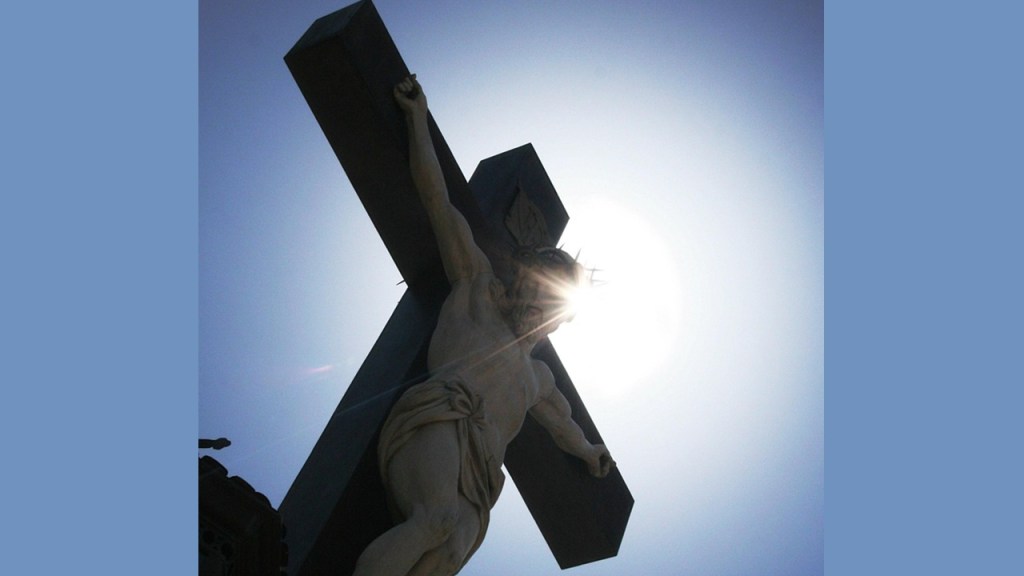
By the time Good Friday came, it seemed as if the whole nation had turned against him.  His twelve best friends had betrayed or denied or deserted him.  Common criminals mocked and insulted him.  Even God turned away from the pitiful sight of Jesus hanging on a cross, and hated him for the sins he was made to carry.  Jesus was made guilty of everyone’s sin and suffered everyone’s damnation.  His death was not a pleasant sight.  It was something to be “despised and abhorred.”

But as the last little flame of life in him flickered and failed, at just that moment the light of the world was blazing away, finally making it clear just how God would save all people.  His death may have been very humble, but it shows all the world the glory of God’s love.  It lights the only way back to the Father, the only way to heaven. 

Jesus’ humiliation–his humble birth, life, and death–light God’s way of salvation.  But that light goes out to the ends of the earth because of his exaltation.  The crucified Messiah is also a resurrected Messiah, and a triumphant Messiah.  Today he is lifted up for the whole world to see and worship.  Isaiah predicted this when he said, “Kings will see you and arise, princes will see and bow down.”  Isaiah’s words remind us of the wisemen coming to worship the Christ child.  But they include more. From the Roman Emperor Constantine in the 300’s to the Christian heads of state today, Kings and princes and rulers have been submitting themselves to this humble figure.  The whole story of Christian mission work has been one of our Savior conquering entire nations with the light of the Gospel.  The Apostle Paul explains, “Therefore God exalted him to the highest place and gave him a name that is above every name, that at the name of Jesus every knee should bow, in heaven and on earth and under the earth, and every tongue confess that Jesus Christ is Lord to the glory of God the Father.”

Isn’t that what we want to do with our Christmas celebration?   We lift Jesus up as high as we can, and bow down ourselves, so that the whole world can see his light.  Jesus himself may be the light for the Gentiles, but we have also been given a role in reflecting that light around the world.  He has given us the responsibility to send pastors and evangelists and missionaries.  He has made all of his witnesses to reflect his light into every nook and cranny of our lives.  At Christmas we have a prime opportunity to do just that in the way that we celebrate his birth.

Light In The Darkness

Isaiah 9:2 The people walking in darkness have seen a great light. On those living in the land of the shadow of death a light has dawned.”

Twice in my life I have toured a cave, the kind of cave that is large enough to be a tourist destination. Each time along the tour, the guides took us to a part of the cave where no natural light can get in. Then they turned out the lights, to demonstrate what total darkness looks like. In effect, you become totally blind, and no matter how long you sit there, it doesn’t become any better. Your eyes may try to adjust. But there is no light, so there is nothing you can see, not even a finger held just an inch from your eye. Darkness like that is disorienting. You can’t make out any direction. You have no idea what obstacles might be lying in the dark. It would be frightening if you had to try to make your way back to the outside through a darkness like that.

The lights in the cave were only out for a minute or two. Miners trapped in a collapsed mine, and subjects of scientific experiments, have sometimes had to endure days, and even months, in total darkness. The darkness changes you. In a relatively short time the eyes lose their ability to adjust and function in the light, and it takes some time to get it back again. The darkness skews your perception of reality. People may sleep for thirty hours and feel as though they have taken a short nap. One researcher who spent 126 days in a dark cave thought that he had been there only 66 days. Hallucinations can set in after only 48 hours. Emotions become hard to control. Short term memory disappears. Depression and suicidal thoughts set in. Over time too much darkness weakens our bones and raises our blood pressure. Jesus sometimes described hell as “the outer darkness.” Don’t imagine that’s a more appealing feature of the place than the other descriptions we hear.

The prophet Isaiah describes the people who lived where knowledge of God and his promises had been lost this way: “The people walking in darkness…those living in the land of the shadow of death.” Darkness is not a surprising metaphor for our lost spiritual condition. It begins with your inability to see your way. In that darkness we don’t know what direction to go to get back to God. The disorientation prevents us from seeing which way is right, and which way is wrong, what is good and what is bad. We have no idea of the obstacles in our way. As the saying goes, “You don’t know what you don’t know.” It is such a darkness, that only if someone came and took us by the hand to guide us out, only if someone picks us up in his arms and carries us out, can we escape.

But the darkness is worse than that. It changes us. It makes the light of truth painful to look at. We fear being blinded by it. It causes us to look away. We rage against the truth until that painful light stops shining. We don’t want to see.

The spiritual darkness skews our perception of reality. We imagine that we don’t have to get out. Maybe God lives here with us in the darkness. Maybe God is the object of my sensual desires. Maybe I am God. There can be no more ghastly hallucination than that. We become comfortable with the darkness. It wraps us like a warm blanket, even while it is literally sucking the very life out of us. “Those living in the land of the shadow of death” is Isaiah’s colorful way of describing it.

Then God comes wading into that darkness and introduces the Light. “On those living in the land of the shadow of death a light has dawned.” Christmas, the birth of Jesus Christ, is that dawn.

The Lord of heaven and earth, who measures out the moments of time, who is daily, hourly composing the story we live, arranged the events of Jesus’ birth to be filled with images of light. In the midnight darkness over the fields of Bethlehem, to simple shepherds, an angel appeared, and “…the glory of the Lord shone around them, and they were terrified.” For wisemen living further away in the darkness, mysterious eastern “holy men,” the magi, a shining new star appears and lights their way to the child-king for the better part of two years.

The aged prophet Simeon, who took the forty-day old baby Jesus in his arms in the temple, declared him “…a light to lighten the Gentiles, and the glory of your people Israel.” Jesus himself later laid claim on that description: “I am the light of the world. Whoever follows me will never walk in darkness, but will have the light of life.”

Whoever follows him will never walk in darkness. In Jesus, the truth finally becomes clear. Martin Luther once observed that the theology of earthly glory, the kind that concerns itself with the most pleasant world we can create for ourselves now, “calls evil good and good evil.” This is more than a matter of turning sins into pleasures. Discipline is hard. It also turns me in the right direction and blesses me with strength. Suffering is, well, suffering. But it is often the only reason I have any real sympathy for others, the only dose of reality reminding me that the world in which we live is broken beyond repair and dying fast. The theology of earthly glory is actually darkness, because it can’t see the good.

But the theology that sees the world through Jesus, and especially the brilliant light of his cross, “calls the thing what it actually is.” Here we have truth. It sees God’s hand in our most difficult times, and trusts God’s love in our most painful moments, even if we can’t fully understand what he is doing. The death of God’s Son on a cross is not a horrible miscarriage of justice (or at least not that only). It is not terrible tragedy for an innocent man. It is the salvation of the world. It is the forgiveness of every sin. It is our one and only path out of the darkness back to God. Jesus’ life and teaching shed such light on our way.

But it is more than this. It gives us “the light of life.” Like darkness, literal light changes our bodies. We produce more vitamin D in it. We heal faster from injury. Our blood pressure is better regulated. Our bodies release the hormone melatonin on a more regular cycle and we sleep better. Our eyes not only retain the ability to adjust to various light levels. Regular exposure to natural light reduces the incidence and severity of nearsightedness. It makes us healthier people.

All of these are relatively minor changes compared to effects of the Light of the World on the human soul. He gives us a new heart. He rips into our chests, as the prophet Jeremiah once said, and he replaces hearts of stone with hearts of flesh. These new hearts beat with faith and love. They don’t stop beating, ever. They will support our new life in God’s light beyond the end of time. With Jesus we live and walk “in the light of life.”

Then we reflect that light to the rest of our world. “You are the light of the world,” Jesus announced in the Sermon on the Mount. Our lips speak God’s grace and forgiveness in the darkness of our world. Our hands show God’s love to people smothering in the darkness. Jesus continues to bring light to the world through our witness of faith and love.

Tonight we find our light where Isaiah prophesied we would. “For to us a child is born, to us a son is given, and the government will be upon his shoulders. And he will be called Wonderful Counselor, Mighty God, Everlasting Father, the Prince of Peace.” That’s the baby, born in the darkness of this night, born in the darkness of a cave used to shelter animals, lighting the lamp of God’s love in our world. Congratulations! You have found your way out of the darkness into the light of God’s new day.

Extreme Patience

Micah 5:3 “Therefore Israel will be abandoned until the time when she who is in labor gives birth and the rest of his brothers return to join the Israelites.”

Some people read the Old Testament and believe that they see a particularly cruel and vengeful God there. Sodom and Gomorrah are destroyed by fire and brimstone. Pharaoh’s army is drowned in the Red Sea. Canaanite nations cease to exist as separate peoples after the Lord wages war on them through Israel. Of course, to take this point of view, you have to lay the justice of God aside entirely and expect that sin on a mass scale should never have any consequences. It isn’t a fair or reasonable way to interpret the story.

It makes far more sense to read the Old Testament as an account of extended divine patience that stretches the bounds of belief. Every one of the patriarchs–Abraham, Isaac, and Jacob– and their successors like Moses and David gave the Lord multiple reasons to say, “That’s it; I’m done with these people” over the course of thousands of years.

And they were the good and faithful ones, by and large! As a nation Israel complained about God’s care on their march through the wilderness to their new home, abandoned him for other gods when they got there, and sunk further and further into rebellion, materialism, and perversion with each passing year. They experienced some short-lived revivals along the way. But for something like 1400 years the Lord continued to work with them, continued to forgive them, continued to give them second chances, continued to intervene and confront and reconcile with them.

Micah prophesied at a time when the Lord’s patience with them as a whole was about to run out. He would always be faithful to the believing and obedient remnant among his people. But as a whole nation, his patience with Israel was done. He removed the special protections he had given them. First, they suffered a long exile. Then came waves of foreign invasions, and subjection to heathen empires, first the Greeks, then the Romans. For almost 600 years, more than double the age of our own nation, the Lord abandoned the nation as a political entity to the other nations around them.

“…until the time when she who is in labor gives birth and the rest of his brothers return to join the Israelites.” The birth of Jesus marks yet another example of God’s great patience and faithfulness, another dramatic attempt to win this people for himself. Jesus’ ministry was all seeking love. “O Jerusalem, Jerusalem, you who kill the prophets and stone those sent to you, how often I have longed to gather your children together, as a hen gathers her chicks under her wings, but you were not willing” (Matthew 23:37). It turned some minority of the Jews back to their Lord. It marked the beginning of “brothers” who were not Jewish, people of many different races all around the world, returning to the God of the Bible. It demonstrated God’s grace in coming to Israel again, this unlikely King coming from a people he had long ago abandoned with good reason.

I suppose there are two lessons for us to draw from the prophecy at this point. It is never safe to impose on God’s patience. He is incredibly patient and forgiving, but if we choose to harden ourselves against him, we shouldn’t be surprised if his patience ends. If the words “Israel will be abandoned” don’t strike you as frightening, you aren’t listening.

At the same time God’s patience to Israel itself is powerful encouragement to seek his grace. Neither the size of our sins, their repetition, nor their duration is any obstacle for his forgiveness. Without saying that he excuses our sin or lowers his perfect standards, it is not so much our obedience he desires as our genuine repentance and faith. He wants to forgive us like nothing else.