
Scripture Simply Says: Baptism Saves

1 Peter 3:20-21 “In it (Noah’s ark) only a few people, eight in all, were saved through water, and this water symbolizes baptism that now saves you also–not the removal of dirt from the body, but the pledge of a good conscience toward God.”

Baptism saves you, just like the great flood saved Noah and his family in the ark. Peter’s words may sound strange to many Christians in a couple of ways.

First of all, the flood probably seems more like an act of judgment than an act of salvation. Almost everything that breathes died in the flood. Just two of some kinds of animals made it, just eight people. But those eight people were saved from something far worse by the flood. They were saved from the unbelief of their godless neighbors. They were saved from becoming spirits locked in an eternal prison, like the rest of the souls among whom they lived. They were saved from a world that was trying to murder their faith.

Think of the flood as a great antibiotic for the world of that time. An antibiotic like penicillin is a killer. It works by killing what’s killing you. The bacteria must die if you are going to continue to live. The antibiotic deals death and judgment to the cells that have invaded your body, just like the flood dealt death and judgment to the unbelief that had invaded the ancient world. Then it is possible for the good cells, like God’s people, to live. Both of them save by killing.

That’s why “this water symbolizes baptism that now saves you also…” Here is the second surprise for many Christians: Baptism saves you, too. It saves by killing. It deals death to the sin that was destroying our souls. But some might object, “I thought that Jesus saved me. I thought that he saved me when he died on the cross and rose again from the dead.”

And so he did. Baptism is not an alternative. Baptism is one way that God makes Jesus’ saving gifts, like forgiveness and grace, your very own. It’s power and promise pours these things into your heart and soul where they become yours by faith. Peter is making that connection when he says that baptism is “not the removal of dirt from the body, but the pledge (God’s pledge! God’s promise!) of a good conscience toward God.” God’s forgiveness promises you a good conscience–freedom from your guilt and sin! Disconnected from Jesus? No, “it saves you by the resurrection of Jesus Christ.”

You see, it’s not the way we usually think of it, but this grace, this forgiveness God pours out in baptism, is a killer, just like the flood, just like the antibiotics. Forgiveness deals death to the power of sin to condemn us. It wipes that sin out–takes it all away. Forgiveness deals death to the sinful nature inside of us. Our desire for sin dies and loses control the more the promise of forgiveness fills us with faith in God’s love. It gives new life to a new heart within.

That is the promise of my baptism: Christ has saved me by dealing death to my sins and the sinful nature that produced them.

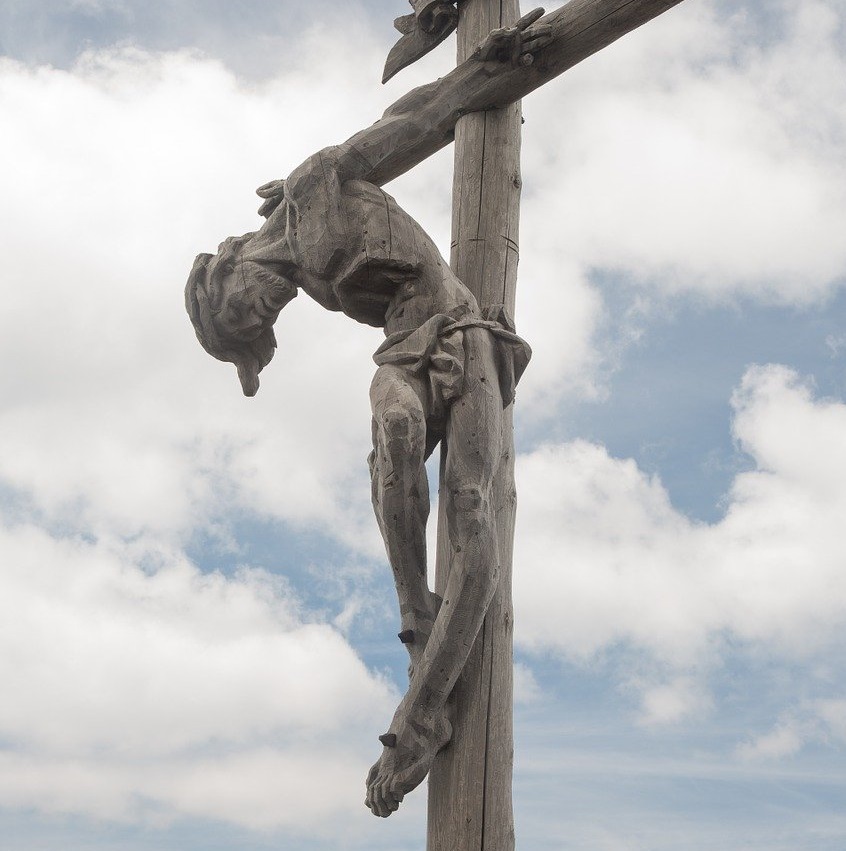
When Hell Involves Comfort

1 Peter 3:18-20 “He (Jesus) was put to death in the body, but made alive by the Spirit, through whom also he went and preached to the spirits in prison who disobeyed long ago when God waited patiently in the days of Noah while the ark was being built.”

“Spirits in prison” can’t mean anything other than “spirits in hell” in the context in which Peter is writing. In his next letter Peter writes about God putting the angels who sinned “into gloomy dungeons to be held for the judgment.” But these aren’t angels here in 1 Peter. They are the spirits of people like those “who disobeyed long ago when God waited patiently in the days of Noah while the ark was being built.”

Those aren’t the only spirits involved on this trip to hell that Jesus took. Peter mentions them specifically because they were so much like the persecutors of the Christians to whom he was writing. Just like Noah, the Christians who received Peter’s letter were surrounded by unbelievers. They ridiculed and attacked their faith at a time when God’s promised judgment was getting closer. It is just a matter of time before people like that wind up in the prison cells of hell.

A trip to hell sounds like even more suffering for Jesus, but Jesus didn’t descend to hell to suffer. He came to preach. In this case he wasn’t fishing for converts. He was announcing his victory. Preaching, you may know, is not the same thing as teaching. Teaching aims primarily at increasing your knowledge. Preaching is more like announcing the news. It aims primarily at certainty. The only thing Jesus expected these spirits in prison to “believe” is that the rebellion against God’s kingdom had failed, and God and his people had won. That wouldn’t be anything like saving faith. It would be like the faith of the demons James writes about in his letter. They believe that there is one God and shudder at the thought.

So where is the good thing in all of this for Christians patiently enduring persecution? Are God’s people bloodthirsty, and does this satisfy their desire for revenge? No, those who know what it is like to receive unmerited and unlimited forgiveness, who have come to share God’s great heart of love for the world, prefer the conversion and salvation of their enemies. They prefer it infinitely where possible. Hell brings no happiness to anyone, whether you are on the inside or on the outside.

But where people will not convert, we cannot wish for the success of God’s enemies. We don’t want evil to win. Christ’s descent into hell is further proof that he has conquered hell and everyone on its side. It is further comfort for those who wait for the day when Christ’s victory will be visibly and unquestionably demonstrated to those who live, as well as to those who have died.

Jesus Suffered, Too

1 Peter 3:18 “For Christ died for sins once for all, the righteous for the unrighteous, to bring you to God.”

If you think it is hard for us to wait for relief, think of the poor people to whom Peter was writing. They were suffering for their faith. From Peter’s letter we glean that they were mocked and ridiculed for their morals and values. This was more than a disagreement about ideas. Many of their unbelieving neighbors considered their godly behavior evil. Physical persecution was waiting just around the corner for them. Such is life in the waiting period between Christ’s first and second coming.

But they weren’t the only ones who suffered. The temptation when we suffer is to blame God for treating us unfairly. We think that our better than average behavior should be rewarded with some extra protections, or some additional successes, or a little bit more of life’s good things. At the very least we should be on the same plane as everyone else. Why should I hurt for doing good?

For starters, it is far better than hurting for doing evil, Peter reminds us in the previous verse. And then he points to Christ. He suffered, too. Jesus died for sins, literally Peter says he “suffered” for them in the original, but not sins he had committed. Christ suffered as “the righteous for the unrighteous.” He was the good man taking the heat for the wicked. He was the fall guy for everyone else’s crimes, as though he had been framed, except that both he and our heavenly Father fully knew what was going on as Jesus’ trials, beatings, and crucifixion unfolded. They had planned it all themselves.

Right away, then, we can count at least two good things that have come to those who suffer while they wait because Christ has suffered, too. Christ’s suffering means our forgiveness. We may blame God (unjustly) for our suffering, which ultimately is not his fault. But he does not turn around and blame us for sins which really ARE our fault. Christ died, he suffered, for sins once for all. All our guilt is paid for.

Secondly, we have a Savior who can sympathize with us in our suffering. He’s been there. He understands. He is like the best possible member of your support group. People don’t go to support groups because the other members necessarily have all the answers. Often, they don’t. But as people who share the same problem, they understand what it is like in a way that many others can’t.

Jesus actually does have all the answers we need. Even more, as a fellow sufferer, he assures us we have a God who understands us at the level of heart and experience. He gets the whole picture. We can trust him for a whole solution.

Living Examples of God’s Mercy

Romans 11:31 “So they (the Jews) too have now become disobedient in order that they may now receive mercy as a result of God’s mercy to you.”

            “Disobedience” here is not just sin. It is the complete rejection of God in unbelief. Who, we might wonder, wouldn’t want the mercy of God that we find in having Jesus as our Savior? Who wouldn’t find free forgiveness and guaranteed heaven appealing? Who wouldn’t want to live every moment of every day confident that God is on your side in good circumstances and in bad, making sure that all of it ends with you at his side forever?

            Plenty of people, it seems. The Jewish people had a long history of running away from God in favor of something else. Sometimes the idol-religions of their neighbors looked more appealing. Sometimes they just wanted a prosperous life now. In Jesus’ day they didn’t want the shame and humiliation of admitting their sin and their need for a Savior. They wanted the pride of being able to say that they had conquered sin and laid their claim on heaven all on their own. Though once they had been the particular people to whom the Lord had revealed his mercy, by Paul’s time they had become a people who don’t have it anymore.

            And their example serves as a warning to people like you and me who have God’s mercy now. It is so easy for us to look down on people who have lost their way, or maybe never got on the right path in the first place. It’s so easy for our tongues to start wagging in self-righteous condemnation of their ungodly points of view and their self-indulgent lifestyles.

            It’s so easy to be lulled into forgetting that we are what we are, and have what we have, only because God has shown us his mercy. Certainly we don’t stand in praise of unbelief and ungodliness. But our sins are no less in need of God’s grace. Our future is no less dependent on his sacrifice. Our faith is only the result of his mercy. And to forget that is to stand in danger of losing his mercy ourselves.

            Their example also reminds us of one more reason that God has revealed his mercy to us now: “…that they too may now receive mercy as a result of God’s mercy to you.” Like the Roman Gentiles in Paul’s day, you and I serve two great purposes in God’s plan to show mercy to those who don’t have it now, whether Jews or others. We are the keepers of God’s mercy, the preservers and protectors of the saving gospel which alone can bring people relief from the misery of their sin. As people who know and believe that message ourselves, we are keeping hope alive for those who still need to hear it.

            And we are the sharers of God’s mercy, the only ones God can expect and rely on to introduce Jesus to someone else. The other world religions aren’t going to do it. It isn’t the government’s job to spread the good news. Business and industry are interested in something else. Only those who know God’s mercy are equipped to share it with a world that may not be dying to hear it, but that will certainly die without it.

Be someone’s introduction to God’s mercy today!

Now God’s Mercy

Romans 11:30 “Just as you (the Gentiles) who were at one time disobedient to God have now received mercy as a result of their (the Jews) disobedience…”

Heart disease has been called “the silent killer.” The first symptom some people ever experience is death. They have no chest pains, no nausea, no shortness of breath. The disease quietly progresses until one day its victim has a massive heart attack and dies.

Sin and unbelief can also act like silent killers. People think they are getting along because they make enough money, they have a reasonably happy family life, they are having a lot of fun. Sometimes they have masked the pain themselves behind hard drinking, drug abuse, promiscuous sex, or some other distraction.

Still, the wages of sin is death. The soul that sins is the one that will die. Whether we recognize the symptoms of sin in earthly misery or not, the disease is still there, still progressing, still robbing us of our lives.

God’s response to our condition is described in different ways in Scripture. In Romans 11, the Apostle Paul talks about God’s mercy. Mercy is the term that tells us God looks at our misery, and it genuinely moves him to compassion.

What led Paul to write about God’s mercy? For the last three chapters he had been discussing the mystery of God’s election. God chose Israel as his chosen people. With few exceptions, he revealed his grace and mercy exclusively to them for a millennium and a half. He acted in their history. He delivered them from their enemies. He revealed himself to them in his word and gave them the promise of the Savior.

During that time the Gentile peoples, anyone who wasn’t a Jew, were more or less ignorant of God’s mercy. They didn’t have it.

Instead, they lived disobedient to God, disobedient in the sense that they lived as unbelievers. There was no repentance, no admissions of guilt, often not even a realization that they were guilty of doing something wrong. Even when they did good things, they weren’t trying to do what God says. It was only a coincidence that their actions and God’s will happened to line up with each other.

As a result, there was no end to the misery they suffered, whether they recognized it or not. Paul was writing to Romans. In the city of Rome at this time as much as one-third of the population were slaves. By far the majority of the free citizens lived in slum-like conditions. The average life-expectancy was only about 25 years.

But even worse was the complete absence of hope their pagan religion provided after their short lives. There was no real heaven to look forward to, no God who loved you, no certainty of even mildly better conditions in the life to come.

For those who became Christians, that began to change. “You who were at one time disobedient have now received mercy…” God had compassion on them. The slaves didn’t all go free, at least not yet. The standard of living didn’t suddenly rise, and people didn’t start living longer all at once.

But through Paul and other missionaries, the Lord brought them the gospel, and the gospel brought them hope. Their after-life was no longer a terrifying uncertainty. There was a God who loved them so much that he became one of them. He suffered with them in this world. He died as a young man on a cross to give them an after-life they could count on, a heaven worth living in forever, a new world of unending pleasure in the presence of God and his love. Now they could live life knowing they were loved, without the constant fear of guilt and judgment. Suddenly, they were in possession of God’s mercy, something they didn’t have and didn’t know before.

In one way or another, this also the story of how you and I came to know God’s mercy. Most of us are Gentiles. Maybe your parents shared the gospel with you, and the line of believing families in your family tree traces back through your grandparents, and great grandparents, and as far back in history as anyone can research or remember. But at some point in the past, it was the spread of the gospel to your ancient Gentile ancestors that set in motion the chain of events that led to your contact with God’s mercy today.

Or maybe it is some more recent twists and turns in life that God used to make his mercy part of your faith and life. God is still in the process of showing it to those who didn’t have it before. May we all be certain it is ours.

Trials and the Future

James 1:12 “Blessed is the man who perseveres under trial, because when he has stood the test, he will receive the crown of life that God has promised to those who love him.”

            More than one person I have known has described the trial of the moment as “hell on earth.” Some have even suggested that, since they have suffered hell here, heaven must be waiting for them when life ends. They see their trials as some kind of cruel payment plan God has concocted for purchasing a place in paradise.

            Our earthly trials don’t accrue as credit in our spiritual accounts. They won’t pay for eternal life. Jesus took care of that on the cross. He suffered literal hell there, not virtual hell. He did so in place of you and me. Nothing we suffer now can equal or add to the payment he has already made. The children’s song “God loves me dearly,” has it right in the second verse: “Jesus my Savior himself did offer. Jesus my Savior paid all I owed. Therefore I’ll say again, God loves me dearly. God loves me dearly, loves even me.”

This is why James can talk about “the crown of life that God has promised to those who love him.” There is still a connection between our trials and the crown of life God has promised. Since our trials are a tool God uses to build our faith’s perseverance, they help to ensure we have what we need to receive God’s promise at the end. They aren’t the cash that pays for our crown, nor even the hand that receives it. But they are the exercise that makes sure the hand of faith is still reaching, and still open, when God is ready to give the gift he promised.

            Since the gift is the crown of life, doesn’t that help us to see our trials as blessing? Perhaps you know that the ancient Greeks and Romans had two kinds of crowns. One was the jeweled and golden crown of the king, the diadem. It symbolized his power and authority. It said to the people, “I am the king. You are not. Bow before me and do what I tell you to do.”

            The other one, the kind James mentions, was the crown of victory, the stephanos, (from which we get our name Stephen). It was a crown made of branches from an olive or laurel tree. Sometimes the kings and emperors wore this crown, too on return from battle as the conquering general. Sometimes it was worn by athletes who had just won a race, much as we give out medals and trophies.

            At the end, God gives us the victor’s crown of life. It acknowledges our life here has been a bloody battle, a grueling race, an exhausting competition. He doesn’t sugar-coat it. Life for his people is hard. It always has been. But we have survived it all and win the prize! You will be the one on the victory stand. You will be the one for whom heaven is throwing the ticker-tape parade. You will be the one who isn’t wearing just some twigs around your head. You will be dressed in life, eternal life, life the way it was originally supposed to be–without the trials and the pain that may be useful now, but never pleasant. If they make even the tiniest contribution to ensuring that blessing becomes our own, that is reason enough to persevere under them.

            Bill was a member of a church I once served. If you asked Bill how he was doing, his stock answer was always the same: “It’s a beautiful day.” It was a beautiful day, even if it was pouring rain and the tornado sirens were going off. It was a beautiful day even if it was bone-chilling cold and the heat wasn’t keeping up. It was a beautiful day even if he was going into the hospital for some uncomfortable and unpleasant procedure.

I don’t know if Bill had James’ words in mind, but his life certainly reflected them. Don’t let your trials rob you of your joy now, or the life to come.

Trials and Maturity

James 1:4 “Perseverance must finish its work so that you may be mature and complete, not lacking anything.”

When James writes about us becoming mature and complete, he is not saying that we stop sinning in this life. Only one thing is perfect in our lives. That is God’s work of forgiving our sins. That was perfectly accomplished by Jesus’ life and crucifixion. He completed it for each of us personally, and applied it to us individually when God called us to faith. It is true that we are perfect and sinless in God’s eyes, but not because of anything we have done. It is solely because of God’s gracious work.

Becoming mature and complete in the way James describes here is never perfect. It is always a process. It doesn’t mean we become the kind of person who has no weaknesses or failures. It means we become the kind of person whose weaknesses and failures are exposed by life’s trials, the kind of person who is willing to admit them instead of covering them up. Then our trials drive us back to the foot of the cross. There Jesus forgives our sinful failings. Then our trials drive us back to God’s promises. These provide the power we lack. Then our trials lead us to put our faith in him, not in ourselves.

I have always found the temptation to lie about my mistakes and shortcomings a powerful one. That temptation was never stronger than when I got my first job as a young teen. This city boy made a lot of mistakes working on a farm, suddenly working with livestock and all kinds of machinery. In a single moment, I could make the kind of mistakes that cost more than all the money I would make that summer.

But until we start admitting our mistakes, whether careless, lazy, or ignorant, we can’t work on correcting them and getting the help we need. Taking responsibility and admitting our mistakes is the first and most important part of being mature and complete.

In a similar way, when life’s trials expose our weaknesses and sin, they empty us of the idea that we will get along on our own. Then we have to admit we need help. We are driven back to God for his help and grace. We discover that this is the way to get through all of life. So we see that we must live life, all of it, by faith in God, not in ourselves.

Let the trials come, then. What do I care? I have my Lord and Savior to get me through! That is perseverance. That is maturity. That is the kind of complete Christian person who doesn’t live in constant fear of his trials. Maybe they aren’t enjoyable, but there is no denying the blessings they bring us now.

Trials of Pure Joy

James 1:2-3 “Consider it pure joy, my brothers, whenever you face trials of many kinds, because you know that the testing of your faith develops perseverance.”

 Let’s say you call me some afternoon to tell me that you are in the hospital, and that your doctor has given you some bad news. Can I come right away? When I arrive at your room a little later, you tell me that you have an aggressive, malignant cancer. It may not be terminal, but treatment involves a very long, very painful course of radiation and chemotherapy. I reply with something like, “I am so happy for you! What a blessing this is. We should thank God right now for his mercy.”

 Or suppose you show up at my office some morning and tell me that your car has just been repossessed, your utilities have been cut off, or you have just been evicted and you are homeless. My reply is: “How wonderful! I have been praying for something like this for you! Thanks for remembering me and taking the time to share your good fortune.”

About this time you are thinking: A) I am the cruelest man who ever lived, or B) I have completely lost my marbles. I assure you, I am not so insensitive or so clueless that I would respond to your crisis like that.

But maybe you should! What does that mean? The Apostle James urges us not to miss the good things God is doing in our bad circumstances. He even urges us to adopt a positive reaction. He tells us, “Consider it pure joy…whenever you face trials of man kinds” He’s not crazy. Let me explain.

Mark Twain once wrote a story called The Man Who Corrupted Hadleyburg. Hadleyburg had a reputation for being the most honest and upright town in all the region. One day a man came along and decided to put that reputation to the test. “There is nothing weaker than an untested virtue,” he said. Sure enough, he concocted a little temptation that exposed the greed and dishonesty in every leading citizen of the town.

Have you ever wanted a stronger faith? “There is nothing weaker than an untested virtue.” “The testing of your faith,” James says, “develops perseverance.” It gives our faith endurance, the ability to keep clinging to Christ to the very ends of our lives. The Christian race we are running is less of a sprint, more of a marathon. There is only one way to prepare for running long distances. It requires the constant repetition of running long distances. Too much rest, too much time away from testing and pushing the body results in lost endurance, lost strength and extra to work to build it up again.

In the context of his own times, the trials James had in mind may have been the persecution Christians suffered. Between 50 and 300 A.D., the persecution was not non-stop, but it did flare up over and over again. Rather than destroying the church, it tended to make it stronger. It produced the kind of Christian who was fully devoted to his faith and Savior. It didn’t prevent new people from joining the church, either.

When we think of our own trials, we start with tragedies and catastrophes like the pandemic through which we are suffering, or the civil and racial unrest that has seized our country.

But the stream of trials that come into our lives is more constant than that. They don’t always get described with words like “tragedy” or “catastrophe.” They often consist of the little irritations that pile up on top each other: A bruise, bump, cut, or pulled muscle that makes simple tasks painful; a workload that suddenly exceeds the hours in our work day; a coworker’s incompetence or a manager’s unrealistic expectations; someone’s irritating habits that become harder and harder to ignore.

Our days are full of these things. Individually and together these trials test our faith. We can react in one of two ways. We can set faith aside and let our sinful nature take the reins. We become whiney complainers, always criticizing, always pessimists, always fishing for pity. We act like we have no God and we have no faith, and we are well on the way to losing both.

Or we can face our trials and let them do their work. We can turn to our Lord for help. We can remember his grace and forgiveness and let them change us. We can get through them with prayer and patience. We can trust God’s promises. We can respond with love and godly action. We can be stronger Christians at the end of the day.

We can consider our trials pure joy, because the testing of your faith produces perseverance.

Never Empty

Isaiah 55:10-11 “As the rain and the snow come down from heaven, and do not return to it without watering the earth and making it bud and flourish, so that it yields seed for the sower and bread for the eater, so is my word that goes out from my mouth: It will not return to me empty, but will accomplish what I desire and achieve the purpose for which I sent it.”

We may have reason to wonder about “It does not return to me empty.” We have tried God’s Word on brothers or sisters who have strayed from the faith, children who’ve stopped coming to church, or friends we have been trying to evangelize. The rolled eyes, the look of disinterest on their face, say, “Oh no, not this again.” “Really,” we think to ourselves, “God’s word never comes up empty? Then what do I make of this?”

When I was riding a train across Denmark ten years ago, a man took a seat facing mine. Then he did a very un-Scandinavian thing: he started a conversation with me. His name was Amir, and he was immigrant from Saudi Arabia. He was very eager to tell me about his Muslim faith. It was hard for me to get a word in edge-wise. He told me about his respect for Jesus as a prophet, the many things he learned about personal hygiene from the Koran, his belief in fantastical creatures in the Koran like monsters that eat rocks and boulders. At the moment I found him more than a little naive, and some of the teachings of the Koran more than a little silly.

Later I thought, “Maybe that’s how some people look at my beliefs from the Bible–the miracle stories, the spiritual world we cannot see. And if other people look at me the way I was looking at Amir, then how can I expect to reach them with the Word? How can I expect that God’s word will not end up empty?

The problem is never with the power of God’s word. It is with the sinners who hear and use it. Who are we to deny God’s promise, or just as bad, consider it boring or irrelevant? No one hears God’s word and remains unchanged. It is always working on people for salvation or for judgment. Appearances can deceive. Experiences can be misinterpreted. But God does not lie. Where his word is present, it is never just an empty letter.

Isaiah reinforces the promise in a positive way: “It (the word) will not return to me empty, but will accomplish what I desire and achieve the purpose for which I sent it.

I said a moment ago that God’s word is always working on people either for salvation or for judgment. But the emphasis of Isaiah 55 is salvation. These words of promise are part of a comparison with the life-giving power of snow and rain. No doubt Isaiah and the people of Judah had often seen their dry, thirsty country suddenly burst into life when God sent rain. Even a desert blossoms and turns green when the rain falls on it. It works every time.

“So is my word that goes out from my mouth.” God has given us a Word of Life, Good News perfectly composed to give him what he wants: souls that seek him, hearts that trust him, and lives that are lived for him. He speaks to us like a young man in love, trying to win a woman’s heart. More than that, he speaks to us like an utterly devoted and committed man trying to win an unfaithful woman’s heart. “You left me for another yesterday? I honestly don’t remember it. I forgive you for the way you have turned against me, each and every time. I will always be here for you, always be waiting for you, no matter what the future brings.”

You won’t find this Word in my friend Amir’s Koran. His god would rather scare you into submission. You wouldn’t think of it left to your own thoughts and ideas. Only this Word tells you God loves you so much that he gave up his own Son to save you and make you his own. Only this word brings with it faith and the Holy Spirit. Only this word changes God’s enemies into friends, slaves into Sons, and spiritual corpses into living and breathing children of God.            

So don’t give up on God’s Word. Maybe your life isn’t easy. Temptation still gets to you. Sometimes your soul feels like a very dry, very dusty spiritual desert. God’s Word is just the Water of Life we need. Trust that in it God still accomplishes what he desires, and achieves the purpose for which he sent it.