Never Alone

Jail Cell

2 Timothy 4:16-17 “At my first defense, no one came to my support, but everyone deserted me. May it not be held against them. But the Lord stood at my side and gave me strength, so that through me the message might be fully proclaimed and all the Gentiles might hear it.”

Paul was no stranger to jail cells: Philippi, Jerusalem, Caesarea, Rome. This time was different. The Christian faith was no longer hiding under the protection of its Jewish roots. It was recognizably different, and it was illegal to spread it. This jail cell was the end of the line for Paul.

His Roman citizenship still afforded him a public hearing in a court of law. He tells Timothy they had already held his first defense. Paul used it as an opportunity to preach the gospel. That was his calling. But humanly speaking, it had left him all alone.

Paul wasn’t saying he had lost every friend in the world. Earlier he notes that Luke was still with him. He fully expects Timothy to come and bring Mark along. But not just anyone could speak in your support at a Roman defense hearing. Your defender needed to be a citizen, and he needed to be a certain kind of prominent citizen to do you any good. Apparently everyone who could have helped had deserted him.

I think we understand the temptations that being left all alone presented to Paul. They still confront us today. There is the temptation to cave in, to change our line, to sing a different tune.

Even the dread of being relatively alone, of becoming an unpopular little minority rejected by most, is a powerful motivator to rob us of the courage of our convictions. If it doesn’t get us to change our message, maybe we try to hide it. We play it safe by keeping our mouths shut. We don’t feel so much like telling others what we believe.

In the face of such temptations, Paul still counted on God’s presence. “But the Lord stood at my side and gave me strength.” His experience of the Lord’s support was no different than ours. Paul’s eyes were not opened to see something no one else in the courtroom could see, as Elisha’s servant once saw the angel armies in the form of horses and chariots of fire surrounding Elisha’s house.

Paul found the Lord standing by his side and giving him strength where every Christian does: in the words and promises of God. Do you remember the little autobiographical testimony Paul had given toward the beginning of his first letter to Timothy? “Here is a trustworthy saying that deserves full acceptance: Christ Jesus came into the world to save sinners–of whom I am the worst. But for that very reason I was shown mercy, so that in me, the worst of sinners, Christ Jesus might display his unlimited patience as an example for those who would believe on him and receive eternal life.” The Grand Canyon sized contrast between Paul’s sin and Christ’s forgiving grace left no doubt in Paul’s mind that the Lord was on his side, and by his side.

Isn’t this a theme, a connection, that runs all through Paul’s life and work? His thoughts are never far from God’s grace at the cross when it comes to the way he lived his life. To the Corinthians: “Christ’s love compels us, for we are convinced that one died for all, and therefore all died. And he died for all that those who live should no longer live for themselves but for him who died for them and was raised again” (5:14). To the Galatians: “I have been crucified with Christ, and I no longer live, but Christ lives in me. The life I live in the body I live by faith in the Son of God who loved me and gave himself for me.” Again and again it is Christ’s love, his cross, his death, his sacrifice, his grace that occupies Paul’s thoughts and captivates Paul’s heart, so that he lives and serves and endures as though God himself were working through him–which, of course, he was.

It works no differently for us. If we want to know that the Lord is standing by our side, if we want to find his strength, if we want to be sure we are never alone, run to the gospel. Run to God’s grace. Run to the promises. Don’t stand and wait to be hit by a bolt of spiritual lightning out of nowhere. Don’t shrink and shrivel in the face of a world majority that thinks the Gospel is stupid at best and evil at worst. Christ Jesus loves you so much that he died to save you. Christ Jesus loves you so much that he has driven world history to make sure that, out of all the citizens of this planet, you would have parents or friends or pastors or teachers who brought you the gospel and led you to faith. You don’t think he stands by you, then? No, you are never alone as you carry out Christ’s calling.

Seeing God

Manoah

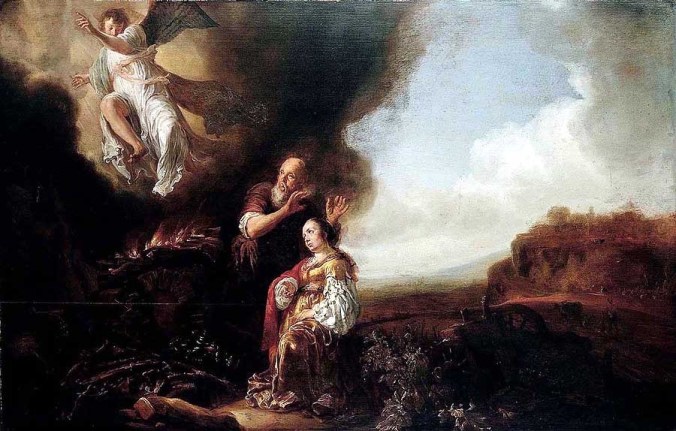
Judges 13:21-23 “When the angel of the Lord did not show himself again to Manoah and his wife, Manoah realized that it was the angel of the Lord. ‘We are doomed to die!’ he said to his wife. ‘We have seen God.’ But his wife answered, ‘If the Lord had meant to kill us, he would not have accepted a burnt offering and grain offering from our hands, nor shown us all these things or now told us this.’”

Manoah and his wife experienced special evidence of God’s presence and blessing in their lives, even though they weren’t aware of it at first. When the Old Testament speaks of the angel of the Lord, many times it is not referring to a created angel. It is referring to the Lord himself, more specifically the Son of God before he became a man. That is who was talking to this couple here. The Son of God was present in their lives, bringing them God’s promises, providing special blessings in the gift of a child, and one who would be a leader and deliverer for God’s people. They received all this before they even understood the identity of their mystery guest.

Then they experienced a rare and powerful demonstration of God’s presence in their lives. They both witnessed the Lord ascend into heaven in the flames of the sacrifice they were offering. It was an experience that literally brought Manoah and wife to their knees in awe and worship.

As the couple considered what they had just experienced, each of them had special insights into what had happened. Manoah thinks that they are doomed to die. Maybe we are tempted to say that Manoah is over-reacting. He is being melodramatic. But Manoah understood something far too many people fail to get. This was not merely an overreaction.

Remember what God said to Moses after the golden calf incident, when Moses wanted to see God face to face? God told Moses that he would make all of his glory pass by, and Moses could see his backside. But Moses could not see God’s face, “For no man may see me and live.” Remember how Isaiah reacted when God appeared to him in a vision to call him to his service? The Lord was seated high on his throne, and the train of his robe filled the temple, and smoke filled the temple, and angels were crying out “Holy, Holy, Holy is the Lord God of Hosts. The whole earth is full of his glory.” What was Isaiah’s response? “Woe to me–I am ruined! For I am a man of unclean lips, and I live among a people of unclean lips, and my eyes have seen the King, the Lord Almighty!”

These men all understood that it is a dreadful, terrifying thing for sinners to stand in the presence of the Holy God. Our world is all too free and easy about where we stand with God. We could stand to take God more seriously. We can use a healthy dose of awe, reverence, and dread, especially when we consider the damning nature of our sins.

But that’s only half the story. Manoah’s wife had a special insight, too. She not only looked at the great power and considered that they had been standing in the presence of the Holy God. She had listened. She heard God’s promises and the blessing they were being given. God said he was sending his people a deliverer, a savior, and he was using this family to do so. Far from meaning to kill them, God had promised to save them.

God still wants you to listen to what he says, especially when he tells you that he has sent you a Deliverer, a Savior, who has come to spare your life. God wants you to hear the promise that he has taken your sins away and filled the void with Jesus’ love and his Spirit’s power. God wants you to be sure that his plans for you don’t end soon, because they don’t end here. Because of his grace and promise, his plans for you will mean life that never ends in heaven.

Then our evidence of God’s blessing will encompass far more than brief encounters. Our vision of God will be constant, and so will our life in his presence.

Special

Dash

Jeremiah 1:5 “Before I formed you, I knew you, before you were born I set you apart;”

The Lord specially formed Jeremiah…and each one of us. This word “formed” is the same word God used of “forming” Adam out of the dust of the ground at creation. It is also the word the Bible uses for a potter working at the pottery wheel, forming his bowls and pitchers, cups and plates, and other kitchen ware. Today the raw material comes from our parents instead of the dirt, but our Lord is still intimately involved in the process, carefully, purposefully, artistically forming and shaping us to fit his plans for us.

Even more impressive, he knew us before he made us. Once a child is conceived today, a sonogram may be able to tell you the gender before its birth. It can let you know whether the child is developing normally. But even with this ability to see into the womb, the child we get is still a stranger to us, and there may be some surprises when it is born.

God knew us before our birth. God knew us before our conception. He knew us personally, as his own. He knew that we would need Jesus to save us from sin, just like everyone else. But he also knew our gifts. He knew our strengths and weaknesses. He knew how we were going to fit into his plans, and he knew that we would be just right for the purpose for which he made us.

He more than knew us: “Before you were born I set you apart.” Before we existed he determined that he would save us from our sins. He gave us parents who brought us to church and baptism. Or he sent a friend to tell us about Jesus’ sacrifice on the cross. He sent his Spirit into our hearts to make us his own by faith. He set us apart to serve him with our lives.

Even more than this–before we even existed, he so loved us that he had decided to do so. He gave us our special purpose already then. Have you seen the movie The Incredibles? The superhero parents won’t let their superhero children make use of their incredible superhero powers. They are trying to remain anonymous and blend in. Superhero son Dash wonders why he has to hide the fact that he is special. “Everyone is special,” his mother chides him. “Which is just another way of saying no one is special,” Dash complains.

But for those who belong to God by faith, every one of them truly is special. He set us apart for his unique purposes even before he formed our bodies to meet those purposes. From these promises we can be certain that God has made each of us a special–and will display it in ways consistent with our purpose.

Truly Home

Soldier kids

2 Corinthians 5:6-8 “Therefore we are always confident and know that as long as we are at home in the body we are away from the Lord. We live by faith, not by sight. We are confident, I say, and would prefer to be away from the body and at home with the Lord.”

When Paul speaks of being “at home” in this verse, he is not thinking of a place. The Greek word speaks about being “with our people.” And that is really home, isn’t it? I grew up on southern Minnesota. I will admit that there are things about the geography, the culture, and sometimes even the climate of that place that fill me with a sentimental longing. It still feels very comfortable when I go back there. There is something about it that just fits.

But home is not a place as much as it is the people. My own family is with me in Oklahoma, and that makes this place home. And if my parents or relatives visit, or if we meet up with them at some other place around the country for vacation, there is a great sense of being home then, too.

That’s where we are right now, Paul says. We are at home, with our people, in the body. And it is right for us to cherish those relationships and appreciate the time we spend with our dear ones here. Those people themselves are a great gift from God.

But those people themselves don’t stay with us forever. They move all over the country. As they age, they eventually move on to our home above. Even now they often bring pain into our lives with the way they treat us. And so long as we are here with them, we are away from the Lord.

That is why we are longing to take the last step to our home above, where we will find ourselves in better company. “We are confident, I say, and would prefer to be away from the body and at home with the Lord.” It is better to be at home, “with our people,” with the Lord. My grandparents are already there, and some of my uncles. Many years ago my wife and I thought we might be sending a child on ahead of us. Some of you may have. These people are already there in all the perfection heaven promises.

But better still is the company we will keep with the Lord himself, finally face to face. Sometimes it is hard to appreciate what that will mean for us before we get there. It’s supposed to be the greatest thing about heaven, yet sometimes we may feel a little like the child whose parents excitedly tell him he is going to meet a great aunt he never met. And the child thinks, “Woo-hoo. Another old person with whom I have little in common.” We may not be convinced that seeing God holds that much appeal.

Or maybe it’s all we ever really wanted. Although we can’t fully realize it now, it is the answer to a host of inexpressible longings we can never seem to satisfy while we are here. We try to fill the emptiness with people or things or experiences, but none of them will do, because like Paul, we are longing to take the last step to a better home. There we will find ourselves in better company–in the presence of God himself.

God’s Favorites, Too

Multicultural

Acts 10:34-35 “Then Peter began to speak: ‘I now realize how true it is that God does not show favoritism but accepts men from every nation who fear him and do what is right.'”

Does it seem strange to you that Peter says, “I now realize how true it is that God does not show favoritism”? Maybe we take that for granted. How could a man who had spent three years with Jesus and been called as a missionary say, “Oh, now I get it. Now I understand. God treats everyone the same”?

As a Jew, Peter had grown up learning to avoid anyone who wasn’t a Jew. God had chosen the Jews to serve as guardians of his promises. That is why the Lord warned them not to associate too closely with the other nations and adopt their ways.

That did not mean God did not care about the rest of the world. The Jewish nation was to serve as a witness to them of his goodness. When the Jews lived and worshiped as God’s children, that was meant to draw those nations back to the Lord. Unfortunately, some felt they were better just because they were descendants of Abraham. They believed God’s promises were meant for them alone. It seems that Peter had been infected with some of this kind of thinking.

Before we criticize Peter too harshly, let’s take a look at ourselves. Many of us claim a Christian heritage in our families that stretches back more generations than we can trace. Thank God for that heritage! But we don’t get to pat ourselves on the back for it. We can gripe or worry about how evil the world is becoming. But if we do nothing except make them the enemy, that’s little more than self-righteousness. An inflated opinion of ourselves is just as dangerous to our souls as the perversions we condemn, maybe even more so.

Maybe we are tempted to favoritism. God isn’t. That’s why we can be a part of his family. “God does not show favoritism but accepts men from every nation who fear him and do what is right.” Look at some of the people the Lord accepted into is family:  Rahab the prostitute of Jericho; Ruth, the Moabitess; Naaman, the leprous enemy general from Syria.

Here, however, with Peter taking the gospel to Cornelius, a Roman, God was making a major policy change in the way he does business with the non-Jews. Until this time the message of the Savior was isolated from the rest of the world. It could be found in Israel, but there wasn’t a concerted evangelism campaign to spread the gospel to the other nations. Now the Lord was giving Peter and the church the command to go the Gentiles, to pursue them with God’s grace.

Do you see how you have been blessed?  If I trace my ancestry, I have to trace it back through at least five different nationalities–German, English, Scotch, Irish, Swedish, and maybe even French. My children can add Spanish and American Indian. In Old Testament times, none of those peoples knew anything about the Gospel. Chances are my family and I would have been lost.

Most who are reading these words have also descended from Gentile families. That’s why Peter’s words are particularly good news for us. God accepts people from every nation into his family. He seeks them for himself. That’s why we were called to repentance, and forgiveness was preached to you and me. The Lord loves each of us as much as he has ever loved anyone else.

Maybe, like Peter, we can pass that love along.

Our Fathers Have Told Us

Soldiers Fight

Psalm 44:1-3 “We have heard with our ears, O God; our fathers have told us what you did in their days, in days long ago. With your hand you drove out the nations and planted our fathers; you crushed the peoples and made our fathers flourish. It was not by their sword that they won the land, nor did their arm bring them victory; it was your right hand, your arm, and the light of your face, for you loved them.

Of course, the psalmist isn’t thinking of the United States in Psalm 44. He is thinking of the people of Israel, whom God led through the desert, and to whom he gave possession of their own land when he drove out the Canaanites who lived there before them.

We are not God’s ancient people Israel. But that same God is still the God of all history. He oversees the rise and fall of every nation on earth. We are largely a nation of immigrants. He brought our fathers, not through a desert, but across an ocean and planted them in this place. He brought them from places all around the globe. In the United States of America he made them flourish. He has defended us and made it possible for us to continue to flourish here today in part because of the service and sacrifice offered by the men and women who have served in our military—the people we honor on Memorial Day.

How? How was it possible for men and women to win the wars that keep us free? The same way ancient Israel did: “It was not by their sword that they won the land, nor did their arm bring them victory; it was your right hand, your arm, and the light of your face, for you loved them.” Weapons are a necessary part of war. It is foolish to go into battle without them. But weapons aren’t the Christian soldier’s ultimate trust. He has something better.

“It was your right hand, your arm.” What is the power of guns, and bombs, and tanks and missiles, compared to the power of the Almighty God? “He lifts his voice,” we hear in Psalm 46, “the earth melts.” Veterans of our armed forces can tell you about the sounds, the sights, and the smells of battle. They can tell you about the lessons of military discipline, the camaraderie that develops between those who serve and fight together. That you can read about in the books, too. But what you won’t find quite so much in the books is the role of God’s power and God’s help in helping a young man or woman grow as a person and a soldier, in strengthening them for the rigors of military life, in sparing their lives in battle, and in blessing their battles with success. That “we have heard with our ears, O God; our fathers have told us what you did in their days.”

Even God’s power is only part of the story. It was “the light of your face, for you loved them.” Armies and wars are a reminder to all of us that we live in a fallen world. Sin has turned person against person and nation against nation. Even past presidents of this nation have called for national days of prayer and repentance in the face of war, because they recognized God’s call to repentance in those wars. They recognized the call to repentance not because they were prophets, but because they knew that the wages of sin is death (Romans 6:23).

Still, God has loved his fallen world, and he sent his own Son to redeem it. By his death Jesus won the war over sin and death. His victory brings forgiveness and eternal life to all who believe in him. This faith has sustained countless soldiers, who believed that even if their lifeless body extended the row of little white crosses at some cemetery a few feet further, the final victory of life in heaven still belonged to them.

On Memorial Day we have the opportunity to remember, not just lessons from the life of a soldier, but living examples of God’s power and love in the service our soldiers have offered to our country. God bless them for their service and sacrifice. God bless us all as our ears hear the great things God has done for them and for us.

Gifted for the Common Good

Help

1 Corinthians 12:7 “Now to each one the manifestation of the Spirit is given for the common good.”

People are attracted to things that have power. Like most little boys, I turned just about any branch or stick into a gun when I was playing with my friends. I didn’t actually want to kill anyone. When I go hunting with friends today, I have to think to myself, “Do I really want to mess with cleaning and field dressing this animal if I shoot it?” But there is something fascinating about a device that has so much power. Cars, power tools, electronic devices, kitchen appliances–if it offers some sort of superhuman ability, people will be interested.

The Christians to whom Paul wrote in Corinth were attracted to power. Supernatural language skills, miraculous healing abilities, prophetic knowledge of the future–these and other gifts often came along with faith in Jesus for first generation Christians. The new believers in Corinth were eager to have such powers, and they were not shy about putting their gifts on display when they had them.

Like any powerful tool, there are dangers involved in handling spiritual gifts. That danger is diffused when we understand the purpose for which God gave them: to serve others.

This isn’t hard to understand. Our own spiritual gifts are a blessing to each of us, it is true. But God has given them to us “for the common good.” They are like a carpenter’s tools. The carpenter may appreciate the way his tools make his work easier. He genuinely enjoys working with them, and it gives him pleasure to create things with them. From time to time he may even build something for himself. But the reason he has the tools is so that he can serve the people who seek his services. The cabinet he builds stands in someone else’s home housing their good china. Another man sits on the bench he put together. The tools are his, and he takes them home at the end of each day. But the people they serve are spread across all the homes and businesses where the carpenter has practiced his trade.

Serving the Lord with our gifts is satisfying to those who use them. I like preaching. I would be lying to you if I said I didn’t. But God didn’t give me my gift, humble as it is, primarily for me. I could still be his child, and share his grace, and one-day praise him in heaven without it. Whatever gifts I have been given to preach and teach God’s word are for the sake of the people who hear me. And whatever gifts God’s Spirit has given to you are meant to serve others as well.

When we think about our spiritual gifts this way–tools for serving others–the whole fascination with power sort of fades away, and we are filled with humble appreciation for yet another evidence of God’s love and grace in our lives.

Blessedly Different

Faces

1 Corinthians 12:4-6 “There are different kinds of gifts, but the same Spirit. There are different kinds of service, but the same Lord. There are different kinds of working, but the same God works all of them in all men.”

Paul looks at our spiritual gifts in three different ways to help us understand why God doesn’t give us all exactly the same thing. First, “There are different kinds of gifts.” The word gifts here is a Greek word, charismata, from which we get our word “charismatic.” It emphasizes that the gift is something God gives us for free. Maybe that seems a little simple. Any gift that is truly a gift is free. But that reminds me that I really have nothing to complain about if my gift is different than someone else’s, or if their gift somehow seems more appealing. Also I have nothing to brag about if my gift seems better. They’re gifts, right? None of us earned them. We didn’t have them coming. We all have the big gift, which is Jesus. Anything beyond that is shear generosity and goodness on God’s part, and better than nothing at all. Would we really want to complain because God gave us something more?

All of his gifts serve a purpose. They accomplish a task. They get something done. So Paul continues, “There are different kinds of service.” The Lord set up his world, and his church, to need many different things to get done. It makes sense then, doesn’t it, that he would distribute many different abilities to many different people? We can’t all be doing the same one thing all the time. Imagine a world with no garbage collectors. Imagine a church with no cleaners. Eew! Who would want to be a part of that? So the Lord gives gifts that line up with all these many tasks that have to get done. Maybe like the Corinthians we would like to have some of the showier ones, the ones that seem more powerful or supernatural. But Paul tells them later that the Spirit’s power is just as much involved in making some people good teachers, administrators or simple helpers as he is involved in the miraculous ability to heal.

Finally, the Lord himself is active in all these gifts. “There are different kinds of working, but the same God works all of them in all men.” The word behind “working” and “works” is the word from which we get “energy.” Paul is saying that the Lord himself energizes his people to do all these different things. He is the one moving hearts and minds, and hands and mouths and feet. If God himself enters people, and then uses them to perform all these different functions, what is left for us but to accept that our gifts are different as the Lord himself sees fit to give them.

In doing it this way, perhaps we could say that God is giving us another gift: the gift to be individuals, the gift to be me. He hasn’t created an army of clones that came rolling off an assembly line and all look and think and function the same. I am unique, and so are you. He redeemed us from our sins all the same. He loves us as his children all the same. But because he loves us, we aren’t all the same. Our gifts are different. That’s important for us to know if we are going to properly appreciate spiritual gifts.

Spiritual People

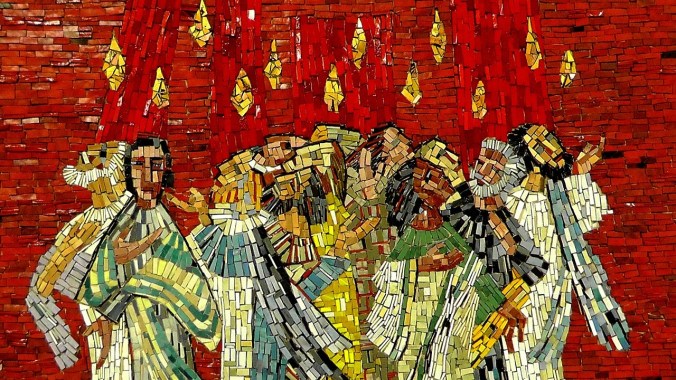
Pentecost Mosaic

1 Corinthians 12:1-3 “You know that when you were pagans, somehow or other you were influenced and led astray to mute idols. Therefore I tell you that no one who is speaking by the Spirit of God says, ‘Jesus be cursed,’ and no one can say, ‘Jesus is Lord,’ except by the Holy Spirit.”

In 1 Corinthians 12, the Apostle Paul wants to teach us about spiritual gifts. But before he gets to the gifts, he explains what it means to be spiritual. It is not a term that applies to unbelievers, at least not properly speaking. The majority of the Christians in Corinth were converts to the Christian faith. They had been pagans. They followed “mute idols.” There was nothing real there, no spiritual energy or power–at least nothing positive. People weren’t repenting. They weren’t turning from fear to faith. They didn’t know God and his love, because they didn’t know Jesus.

Here is Paul’s takeaway: Spiritual gifts aren’t mere matters of good morals or natural abilities. You can find both of those in the pagan religions. In most categories, perhaps, the most decorated athletes, the most creative artists, the savviest entrepreneurs and businessmen, the cleverest inventors are not Christians. These people may all be “gifted.” But theirs are not spiritual gifts.

Spiritual gifts are possessed only by people who have the Spirit of the true God. There is one sure-fire test of this: “…no one can say, ‘Jesus is Lord,’ except by the Holy Spirit.” Paul is not talking about the ability to form these sounds with your mouth, the ability to pronounce the words “Jesus” and “is” and “Lord.” Any verbal person can do that. He is talking about people who say these words and sincerely mean them for themselves. If a person can’t or doesn’t do that, then the Holy Spirit is not present, and the individual has no spiritual gifts.

“Jesus is Lord” is a pregnant statement of faith. People hear the word “Lord,” and many minds think first of obedience. It is true that those who recognize Jesus as their Lord intend to live under him and follow his rules. But it is more than that.

A Lord is a person with authority, someone who has power and control. With Jesus, this is true of our entire life experience. It applies to everything about our relationship with him. “Jesus is Lord” means that Jesus is my Rescuer. I did not have the power or resources to deal with my sins myself. I couldn’t keep myself from committing them. I had nothing with which I could pay for them, no way to make amends for my guilt. So my Lord Jesus came to the rescue. My King fought his way to my side. He endured the elements of a hostile world to get to me. He took the brunt of the attacks evil villains and enemies of my soul launched at him on the way. And when he reached me, he died in my place to spare my life and set me free. He brought forgiveness for my sins and healing for my heart. He did it, not helpless me, because Jesus is my Lord, and he had the power to rescue me when I was powerless to help myself.

“Jesus is Lord” means that Jesus cares and provides for me. We are inclined to think about government and rulers as people who take money away from us. Complaints about taxes go all the way back to the “Robin Hood” legend. Farther than that, they go all the way back to ancient times, and even play a part in the story of Jesus and the people who surrounded him so many centuries ago.

But Jesus turns this all around. He is a different kind of Lord, a Ruler and King who gives his wealth away. He uses it to feed and clothe and care for the people he has claimed as his very own. Those who confess, “Jesus is Lord,” acknowledge this at every dinner prayer, as they bow their heads and ask Jesus to bless their food and thank him for giving it to them. “Jesus is Lord,” then, is the grateful appreciation of rescued people who are blessed by their gracious Master’s generosity every day. It is an understanding of Jesus that can only be worked by the Holy Spirit. And it is fundamental to the understanding of our spiritual gifts.