It Works

Desert flowers

Isaiah 55:10-11 “As the rain and snow come down from heaven and do not return to it without watering the earth and making it bud and flourish, so that it yields seed for the sower and bread for the eater, so is my word that goes out from my mouth: It will not return to me empty, but will accomplish what I desire and achieve the purpose for which I sent it.”

Water is a fascinating substance. It is one of only a handful of substances that expand when frozen. This means that ice floats when a lake or river freezes, insulating the waters below it and keeping them liquid. If it sank it would destroy all the living things below. Those same expansive properties are the reason water seeping into cracks and freezing can split the concrete in our roads, bridges, and buildings. Water has also been called the universal solvent. It dissolves more substances than any other liquid, making it the best of all cleaners. And wherever water goes, whether through the ground or through our bodies, it carries valuable minerals chemicals, and nutrients (see: http://water.usgs.gov/edu/qa-solvent.html).

This is why, when we were in grade school, you could grow a bean in plastic cup with nothing more than a paper towel and some water to moisten it. It is why the Bermuda grass in my lawn has managed to establish itself on the hard rubber expansion joints in my sidewalk, and even, apparently, on the concrete in a corner of my driveway–two places you might not expect to be capable of supporting any life at all. It is why those who are looking for life in other corners of our solar system are so hopeful that they will discover water where they search.

The Lord uses the power of simple, humble water as a picture of the power of his word. Even in the desert it has the power to bring life where apparently none existed before. If water can establish life there, don’t be surprised at the power of God’s word to establish life in the hardest of human hearts.

God’s word is a powerful tool, then. Sometimes you have to be careful with what your tools can do. The sculptor’s chisel makes it possible for him to break off pieces of stone to create something beautiful. But if he isn’t careful, the chisel may remove more stone than he wants, or crack the block on which he is working. Maybe the entire block will have to be thrown away. The carpenter’s saw may cut the board to short, and his hammer may bend the nail and split the board instead of fastening it.

But the power of God’s word is not like that. It does not fail. “It accomplishes what I desire and achieves the purpose for which I sent it.” We don’t always see it. Sometimes it looks like God’s word was a flop, a failure. But you know what we don’t see? We often don’t see the effect it may have on a person years after they first heard it. I personally know people on whom it worked its magic decades later. We often don’t see the collateral effects. Maybe it didn’t convert a person today. But maybe it moved them in directions that were important for someone else to hear and believe. Maybe there were others listening we didn’t realize were listening, and faith came to life in their hearts.

Even when it’s just you or I telling God’s word to another person, don’t forget that there are two people hearing the word. Many an evangelist can tell you they got far more out of sharing God’s word with someone than the person listening to them. God’s word is powerful. We have experienced its power to work on our own hearts. We can trust its power to bring life to others.

God’s Ways

Tornado Damage

Isaiah 55:8-9 “For my thoughts are not your thoughts, neither are your ways my ways,” declares the Lord. “As the heavens are higher than the earth, so are my ways higher than your ways and my thoughts than your thoughts.”

I’ve noticed what the Lord is saying here. I’ll bet that you have, too. If God thought and acted the way that I would if I were God, he would have made me a couple of inches taller, a lot more athletic, and with a better memory than I have now. I wouldn’t need glasses. I wouldn’t have occasional pain in my back and my knees. In fact, I wouldn’t be aging at all. I would be young in body and mature in mind.

That’s a rather self-centered way of looking at things. We can do better than that. If God thought and acted more like us, then scores of people would not have died in mass shootings in Texas and Las Vegas these past weeks. We wouldn’t have all this racial tension in our country. We wouldn’t be so divided politically, economically, and morally. As a species, we would all get along.

If God’s thoughts and ways were like ours, then hurricanes would not have slammed Texas and Florida and destroyed millions of dollars in property; wild fires would not have raged across California’s Napa Valley, killing forty-two; little children would not go to bed hungry in any part of the world for any reason. If God’s thoughts were our thoughts…

Now here’s the problem with all that thinking. We are putting the blame on the wrong set of thoughts and ways. This is the world we humans have refashioned for ourselves against God’s thoughts and ways. He planned a perfect paradise for us to enjoy. We spoiled it with our fall into sin. We keep making it worse with our selfishness. It’s true that if we had our way we wouldn’t have to suffer the consequences of the mess we have made. But what good would that do? That would only teach us to be content to be separated and estranged from him in this poor counterfeit paradise we try to construct for ourselves. That would only encourage us to continue on the path of rebellion. The way that we think apart from God ruins everything now, even when we think we are making progress. Eventually it leads to death and hell.

Because God is a good Father, he doesn’t go with our ideas. He has better ones. His idea is to let us feel the consequences of our sinful mess. “As the heavens are higher than the earth, so are my ways higher than your ways and my thoughts than your thoughts.” I should probably visit the doctor or the dentist on a regular basis, whether I am feeling well or not, just to get a check-up. More often, I don’t go until I am feeling some kind of symptoms. There is a pain somewhere that tells me something isn’t right.

People tend not to seek the Lord until they feel some kind of discomfort–an uneasy conscience, a broken relationship, a nagging illness, a personal tragedy. Author C.S. Lewis explained that, “Pain is God’s megaphone.” It makes us aware of sin, a broken relationship with God, and leads us toward repentance. That’s not necessarily because the pain is the result of some specific sin in our lives, though sometimes it might be. Rather, it wakes us up to our brokenness. It alerts us to our neediness. It sends us looking for God until we hear him speaking in his word.

But here is the real reason his thoughts, his ways, are better: He is the God who saves. The whole context of this chapter of Isaiah is God’s invitation to the feast of salvation. First he pictures the gourmet banquet the Lord has laid out for his people, the finest food and drink. He offers it “without money and without cost.” He promises that if we listen to him, “your soul will live.” Then he explains the picture. Even if we have been wicked and are guilty of evil, he invites us to turn to the Lord “and he will have mercy,” and “he will freely pardon.” Mercy, pardon, forgiveness freely given: This is the promise God makes when we listen to his word.

This is how our Lord thinks: He is looking for whom to forgive, not whom to blame or who should pay. He has already blamed his Son, and Jesus paid everything for everyone with his death on the cross. God wants to reconcile with us, not punish us. He wants to be our friend, not our Accuser and Judge. He has made receiving his grace effortless and free. That’s not how we think. That’s not our way. But it’s better, higher than the heavens are above the earth. It’s an invitation to trust, to trust the God whose ways are full of such grace.

Faithful Soldiers

Soldier

Luke 3:14 Then some soldiers asked him, “And what should we do?” He replied, “Don’t extort money and don’t accuse people falsely–be content with your pay.”

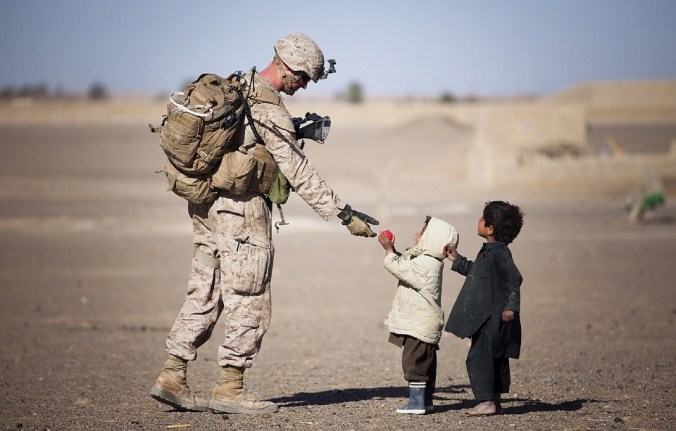
Some might find it strange for Christians to honor veterans, former soldiers, men and women who have been called upon to wage war, people who may have been involved in the death of others. Isn’t the Christian faith supposed to favor peace? Does God really approve of those who serve as soldiers?

In a perfect world there would be no need to raise an army, train people to fight, arm them with weapons. We wouldn’t have soldiers, or veterans. But our world has become far from perfect. Sin has infected all people and made them evil. Neighbor has turned against neighbor. Nation has turned against nation. Worst of all, humanity has turned against its God.

Because he still loves us, God sent his only Son into the world to reconcile us to himself. Jesus fought the devil who led us into sin and defeated him. Jesus laid his own life down at the cross to pay the penalty for our sins. As a result, we have full forgiveness for our rebellion against God. Jesus has established peace between heaven and earth. Those who have faith in Jesus have been made citizens of heaven. They have been received into God’s own family once again. That war is over.

Unfortunately, evil still infects the people of this world, and many will not receive the grace that Jesus freely gives us. Men who are thirsty for power, people who envy and covet the rightful possessions of other people, still turn to violence to take what does not belong to them. We still suffer crime and war as a result.

What if no one was willing to stand up and fight against injustice and oppression? Then evil would become stronger. Its power would grow, and our world would become more dangerous place, not just for ourselves, but for our neighbor as well. It would become more difficult for us to spread the gospel and share the knowledge of God’s mercy and love. That is why the Apostle Paul urges us to pray for rulers and government in his first letter to Timothy, chapter 2. In general, this is why the Scriptures urge us Christians to obey and respect the earthly governments that rule and protect us.

That is also why John the Baptist spoke to the soldiers who came to him the way he did. John the Baptist preached a message of repentance and forgiveness to the people of his day. He called them to turn away from their sins and turn to the Savior who followed him. He called those who received God’s grace and forgiveness to live a new life, filled with the fruits of repentance.

When some soldiers came to John and asked him, “What should we do?” John did not tell them to desert their posts, resign their commissions, or find some other way to end their military careers. He did not suggest that there was anything wrong with the service they offered as soldiers.

Instead, he urged them not to abuse the power with which they had been entrusted. “Don’t extort money and don’t accuse people falsely–be content with your pay.” As defenders and protectors of their neighbors, as servants of their government, these men had a useful and honorable calling. They could continue to serve as soldiers and know that in doing so they were serving both God and their neighbor. God asked them only to be faithful soldiers as they carried out the responsibility they had been given.

That is true of the men and women we honor on Veterans Day. They risked their own lives to protect us, and our country, and our freedoms. As faithful soldiers they filled an honorable and God-pleasing calling that has served us all. We thank God for the sacrifices they have made to protect us and to enrich our lives.

May God enable each of us to live as faithful citizens who make good and godly use of the peace and freedom we have been given.

Bought

Cash

1 Corinthians 6:20 “You are not your own; you were bought at a price. Therefore honor God with your body.”

We live in a so-called “free” country. There are many things our government gives people the freedom to do, whether or not God approves of such behavior. Even Christians can begin to think that if the USA gives me the freedom, then I have the right to live my life and behave myself any way I want.

At the same time, God doesn’t force everyone to do his will at all times with an act of raw power. Thus it seems that people get away with many sins, including sexual immorality, with no divine intervention. They even become puffed up with a prideful sense of self-importance, defying God and and his commands like the author of the poem Invictus, “I am the master of my fate; I am the captain of my soul.”

Really? God does not give us an absolute right to do whatever we want, and thinking that way is still rebellion against him. We don’t belong to ourselves. We belong to him. We didn’t make ourselves. He made us. Even after we rebelled and ran away from our Creator to join the enemy side, he didn’t leave us there. He bought us back. He executed his own Son to lay his claim on us again, and to set us free.

“You are not your own. You were bought at a price” is a warning for us. It’s a warning not to challenge God’s right to determine how we live our lives, nor to despise the price he paid to make us his own again.

But these are especially words of promise and comfort. You were bought at a price. Guilt over our own sexual sins may make us feel worthless and undesirable. If our sins were the end of the story, that is what we would be.

But by his grace, our Lord has given us another value. The price which he placed on us is the life of his own Son Jesus Christ. God the Father has decided that you are worth as much as Jesus to him. That value defies any comparison, any illustration. There is nothing dearer to the Lord in all this world than just you yourself. You became infinitely valuable, and infinitely desirable, when Jesus gave his life to make you holy and forgive your sins.

Therefore, live like the priceless, holy child God now says you are. Honor God with your body.

Youth: The Church’s Present

David-Goliath

1 Timothy 4:12″Don’t let anyone look down on you because you are young.”

Having reached my fifties, I am well beyond the age at which I can find solace or encouragement for myself in the words quoted above. If someone looks down on me now, it is probably because I have done something genuinely foolish.

Young people are an important part of the Church’s life and ministry. When their presence or service is missing, the body suffers no less than in the absence of those more seasoned.

We sometimes mistakenly say, “The young people are the church’s future.” I have been guilty of saying this, too. I pray we still have the young people around in the future. But I know that they are here now. The youth are the Church’s present. Like the rest of us, they need to be growing and serving in grace today.

Are we tempted to overlook their gifts because they are in grade school, high school, or college? Is that biblical? The author of Ecclesiastes reminds us, “Better a poor but wise youth than an old but foolish king who no longer knows how to take warning” (4:13).

Look at the way wise young people served the Lord in the Scriptures. How old was David when he was the only man in Israel with enough faith in God’s promises to go out and face the giant Goliath? Maybe 16? What does David say to Goliath as he marches out to meet him? “You come against me with sword and spear and javelin, but I come against you in the name of the Lord Almighty, the God of the armies of Israel, whom you have defied. This day the Lord will hand you over to me, and I’ll strike you down and cut off your head.…All those gathered here will know that it is not by sword or spear that the Lord saves; for the battle is the Lord’s, and he will give all of you into our hands” (1 Samuel 17:45-47). Did David lack the maturity to serve just because he was a teenager?

How old were Daniel, Hananiah (Shadrach), Mishael (Meshach), and Azariah (Abednego) when Nebuchadnezzar took them into his service? They were almost certainly still in their teens (70 years pass between Daniel 1:1 and Daniel 10:1). This pagan king recognized talent and utilized it when he saw it. And did these young men lack the spiritual maturity to make tough decisions or give a clear witness? They answered the king of the world’s threat to kill them for refusing to commit idolatry: “If we are thrown into the blazing furnace, the God we serve is able to save us from it, and he will rescue us from your hand, O king. But even if he does not, we want you to know, O king, that we will not serve your gods or worship the image of gold you have set up” (Daniel 3:17-18).

How old was Mary, the mother of Jesus, when God called her to bear the Savior of the World? 13? 15? Look up Luke 1:46-55 and read again Mary’s poetic response to her cousin Elizabeth’s greeting. These theological gems come from the mouth of a girl who would still be in junior high school today. She was well qualified for the task to which she was called: Bearing, raising, and teaching God’s own Son, the Savior of the World. Jesus may have been a first-grader before Mary was even out of her teens.

I am not proposing that we elect teenagers to our church council (though God has given some teens far greater responsibilities). But can we neglect to train and incorporate them into the regular life and mission of our congregations? I don’t know how much the youths listed above would have been interested in a trip to a water park or an all-night lock-in (not that there is anything wrong with those things). But it is apparent they were interested in studying God’s word, especially his saving promises. And they were not afraid to serve their Lord in a way that could mean great personal sacrifice–even death!

Sometimes old people say, “Energy is wasted on the youth.” Maybe that’s because we haven’t channeled it in God’s direction. The Lord will forgive us for poor stewardship of our children’s gifts. May he also open our eyes to better see their place in the Body of Christ.

Our Hearts Overflow

heart flame

Luke 6:45 “Out of the overflow of his heart, his mouth speaks.”

Jesus’ word here is a statement of spiritual truth, but it also reflects a principle we see active in everyday life.

Listen to the conversation of your friends for a while. What do they believe is life-changing? Are they overwhelmed by the possibilities of some new high tech gadgetry? Were they deeply moved by the latest best-seller or box office smash? How do you know? What they believe in their hearts and minds eventually finds its way to their mouths. They just have to tell you.

Some companies rely on it for survival. Almost 30 years ago my wife worked for Electrolux Corporation for one year. At the time you never saw a commercial for the company’s products. They depended on customers to recommend their vacuum cleaners to friends and family. You haven’t seen commercials for Krispy Kreme donuts, Rolls-Royce cars, Jiffy muffin mix, or Costco stores. They are all examples of the few companies so confident of their product’s ability to impress that they rely entirely on word of mouth advertising to sell their product.

Don’t we believers all share a common product of infinitely greater importance? The gospel of Jesus Christ–the good news that God forgives sins, and even suffered death for us to make such forgiveness possible–is more than a reliable product, a moving message, a life-changing tool. It is the one and only source of eternal life. It is our only escape from hell and our only admission to heaven. It is the only way to be sure that God loves you.

Faith that this is true opens our mouths. Speaking about this doesn’t make us half-crazy religious fanatics any more than talking up the gas-mileage and safety features of our new vehicles somehow makes us driving fanatics. We seek converts without shame.

But potential converts are not the only people to whom our faith drives us to speak. Consider Aquila and Priscilla. After Paul had converted these two devout Jews to faith in Jesus, they in turn helped him in sharing the message with others.

One of the others whom they met was Apollos. Now Apollos was no stranger to Scripture, nor to God’s promises of a Savior. He already believed all of this. He was even familiar with the baptism of John the Baptist. In fact, Apollos’s faith had already moved him to speak openly about what he believed. That is how Aquila and Priscilla came to know him.

After hearing Apollos confess his faith, Aquila and Priscilla couldn’t restrain themselves from filling Apollos in on the rest of the story. In Acts 18 we read, “When Priscilla and Aquila heard him, they invited him to their home and explained to him the way of God more adequately.”

Apollos may not have been required to come to a formal set of classes. The only class room seems to have been the humble home of this Christian husband and wife. There was simply someone who needed to hear more of God’s word, and someone in possession of that word willing to teach it to him.

Not all of us may become missionaries and evangelists. Not all of us are called to be pastors or teachers. But if we have faith, and if we have God’s word (and we do), then we have all we need to speak the truth to others, whether they are hearing it for the first time, or the fiftieth. Let your heart and mouth overflow!

We Will Awake

Graves

Daniel 12:2 “Multitudes who sleep in the dust of the earth will awake: some to everlasting life, others to shame and everlasting contempt.”

Death is a topic with which we don’t feel comfortable by nature. Death forces us to live with painful separation from people we love. Even when we know that God will raise us again, the prospect of our own death can fill us with frightful uncertainties: Will the experience hurt? Will those we leave behind be taken care of? Death is still the wages of sin.

But death also has a way of sobering us up and restoring a proper perspective on what is important. Samuel Johnson once said, “I know of no thought that so wonderfully clarifies the mind as the thought that I shall hang tomorrow morning.” When we come face to face with our own mortality,  wisdom comes flooding in. We stop filling our consciousness with trivia from TV. Suddenly tiny things like economics, and technology, and politics don’t loom so large. Enormous things like God and religion don’t seem so thin and far away. Nothing impresses the need for God on us like the fact that we are sinners who are going to die.

More importantly, death is the getaway car God uses to speed our souls away from this world to everlasting life. Daniel says that the multitudes who sleep in the dust of the earth will awake. Death isn’t the end of all things. It is a transition. Those of us who believe Jesus has made us holy in God’s eyes by his life and death, and promised us life by his resurrection, will wake up to a new morning of eternal life.

This is what we will escape to: eternal life. Do you find that hard to appreciate? We carry the symptoms of death around with us at all times– physical illness, unhappy relationships, broken dreams. These things make it hard to look forward to a life that goes on forever. Sometimes we want nothing more than an end to it all.

But the phrase “eternal life” does not stress only duration–life that goes on forever. It also stresses quality–this is life beyond death with all of its symptoms. This is life truly worthy of the name. From our side of eternity it is easiest to say what eternal life is not. It knows no pain or sadness. It is never spoiled by boredom or monotony. It excludes all worry or anxiety. It never sees frustration or anger. It suffers neither danger nor injury, failure nor fatigue.

Why should the owners of mansions consume themselves with thinking about how to decorate the hotel room they will check out of tomorrow? Why should citizens of heaven be consumed with their temporary accommodations on earth? God promises to wake us from our long night’s sleep in the grave. Better things are waiting for us in eternity’s new day.

Uncompromising Faith

Luther 2

“What do righteousness and wickedness have in common? Or what fellowship can light have with darkness?” (2 Corinthians 6:14).

Up until the 20th Century, the Russian language had no word for the concept of “compromise.” The idea of two sides each giving in a little and coming together in the middle never occurred to them. Instead, there was a winner and there was a loser. Today the Russian language has simply borrowed the English word for its own. But the absence of the idea in Russian language and culture for so long helps to explain why it was so difficult to deal with the Soviet Union back in the days of the Cold War. Arms races, communist expansion, individual liberties—progress on these issues was difficult in a large part because of Soviet unwillingness to compromise.

Compromise is important for many areas of life, especially politics. Doing the most good for the most people depends on two sides being willing to give a little away to get what they need. Without compromise much of business and government would grind to a halt.

But we also recognize there are times and issues for which compromise is the wrong path. Compromise with Hitler prior to World War II only strengthened his position and made him bold to invade more countries. We generally don’t compromise with terrorists or hostage takers lest we encourage them to more acts of violence.

God’s people recognize that compromise is inappropriate on issues settled by God’s Word. We can give in on matters of personal taste. Certain cultural practices are open for change. But compromise on faith or morals only gets God’s people into trouble. It is not enough to follow most of what God wants. We see it in the Bible again and again: it is the one thing in which someone departs from God’s way that leads to disaster.

In 1 Samuel 13, God commands Saul to wait for Samuel to come and offer a sacrifice before he goes to war against the Philistines. When Samuel was late in coming, Saul offered the sacrifice himself and went to battle. It wasn’t exactly what God said, but it hardly seems like serious contradiction of the whole faith. It’s just a little matter of who and when. How did the Lord respond? “Now your kingdom will not endure; the Lord has sought out a man after his own heart and appointed him leader of his people, because you have not kept the Lord’s command” (1 Sam. 13:14).

The Christians in Galatia believed that Jesus had died to save them from their sins. But they were also beginning to accept the idea that they needed to be circumcised in addition to Jesus’ work to be saved. They weren’t denying that Jesus’ work was important, even necessary. No one was saying, “Jesus did not die for your sins.” There was a departure from the full truth of the gospel, but much of the gospel still appeared to be there. What did Paul tell them? “Mark my words! I, Paul, tell you that if you let yourselves be circumcised, Christ will be of no value to you at all….You who are trying to be justified by law have been alienated from Christ; you have fallen away from grace” (Galatians 5:2,4).

On the other hand, refusal to compromise often wins us the disapproval of the world around us. John the Baptist was not willing to compromise his faith and let King Herod’s adulterous relationship with his brother’s wife go on without public comment. What did he get? “When John rebuked Herod the tetrarch because of Herodias, his brother’s wife, and all the other evil things he had done, Herod added this to them all: He locked John up in prison” (Luke 3:20).

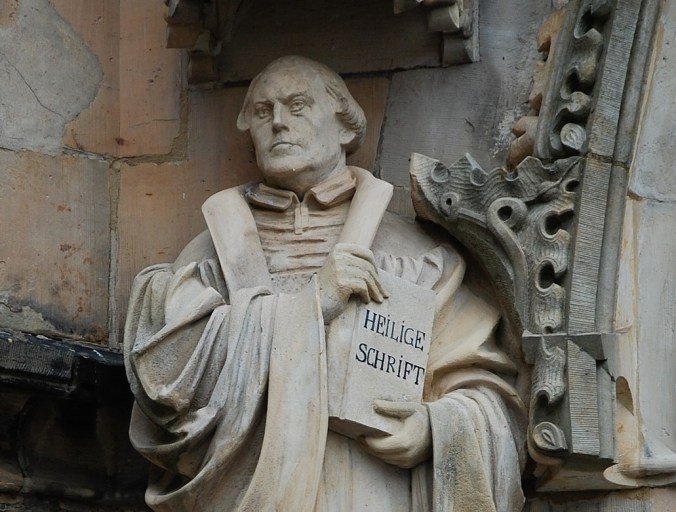
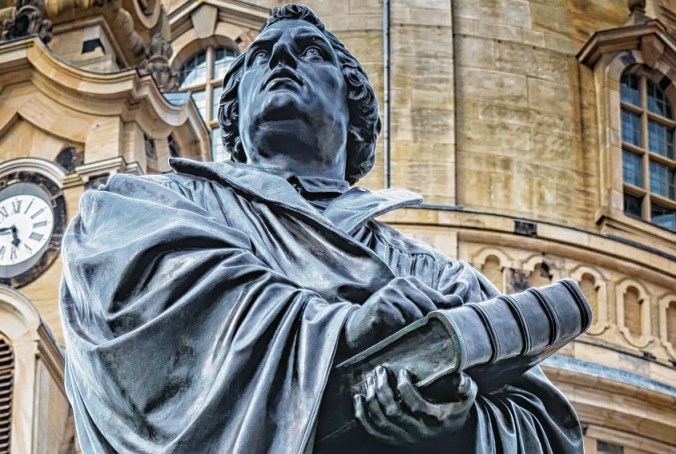
As we celebrate the 500th Anniversary of the Reformation of the Church, we appreciate Martin Luther’s uncompromising stand on the truth. “They tell us that one is not to quarrel so violently over one article and disrupt Christian love because of it. Nor should we consign one another to the devil because of it. But, they say, one might well yield and surrender a bit and keep up fraternal and Christian unity and fellowship with those who err in an unimportant point—as long as one agrees with them otherwise. No, my good man, for me none of that peace and unity one gains by the loss of God’s Word! For in that case eternal life and everything else would already be lost. In this matter we dare not budge or concede anything to please you or any man; but all things must yield to the Word, be they friendly or hostile.”

It takes courage and integrity to refuse to compromise God’s Word in a world that believes the only truth is that there is no absolute truth. More than anything else, it requires a sincere love for the gospel. May God preserve the preaching of that gospel, without compromise, among us.

The Bible Tells Me So

Luther

1 Timothy 3:14-15 “But as for you, continue in what you have learned and have become convinced of, because you know those from whom you have learned it, and how from infancy you have known the Holy Scriptures, which are able to make you wise for salvation through faith in Christ Jesus.”

People who are new to the idea of celebrating the Reformation have sometimes gotten the idea that it is “Lutherans are better than everybody else” Sunday. No doubt we have been guilty of giving that impression. But the Reformation is not for patting ourselves on the back. Members of our church will be saved by grace alone, just like everybody else.

No, the Reformation grew out of a much more important concern. We remember the Reformation to make sure that we never give up that concern. Do you believe that Jesus loves you? Are you sure he loves you? Martin Luther grew up unable to answer with an unqualified “yes” from what he had learned in his church. He learned to answer with a resounding “yes” from the words of Holy Scripture.

Paul’s young friend Timothy shared this same conviction gained from the same place. Paul points out that Timothy did not merely learn the Scriptures. To him this book and what it teaches were more than answers for a test, or information about people from a faraway time and place.

Timothy had become convinced of these things. He had certainty. He knew that there is such a thing as objective truth, that this truth can be known, and that this truth was known to Timothy himself.

This was not because Timothy was arrogant. Some today believe that all certainty is proud presumption. With all the competing ideas about what is true, no one can be sure of anything. Because we don’t want to be thought of as proud or arrogant, we may be tempted to believe it would be better if we were not too sure of what we believe, either.

But what comfort can a person find in something that has no certainty? What peace can be had from what is unclear or unknown? Aren’t we often filled with more fear by the things which are unknown? Isn’t it true, at least very often, that people would rather know that they have a disease than live in uncertainty about what is wrong with them? How much more necessary it is to be certain when it comes to our salvation and eternal life! “Faith,” the author of Hebrews tells us, “is being sure of what we hope for…” Doubt and uncertainty are the opposite of faith. If, like Timothy, we are going to continue in our Bible-based beliefs, we need to be convinced they are true.

Those Scriptures do the convincing through the saving promises they make. “…how from infancy you have known the Holy Scriptures which are able to make you wise for salvation through faith in Christ Jesus.” Holy Scriptures make us wise for salvation through faith in Christ Jesus. They assure me Jesus can be trusted. They tell me not only that someone has to die to pay for my sins. They tell me that in Jesus God died to pay for them. They tell me not only that I cannot save myself with all my good works, sincere intentions, or tear-filled prayers. They tell me Jesus lived the sincere life of good works which does. They promise that God connects me with Jesus life and death in Baptism. They assure me Jesus still shares and distributes the benefits of his saving work in his Holy Supper.

These are not just doctrines I am told I must fight to defend. They are beautiful truths, life-giving truths, comforting truths, empowering truths I want to believe. They assure me that, yes, Jesus loves me. And in doing so they fill me with saving faith. I am convinced, because the Bible tells me so.