So Much Power, and Yet…

Creation

John 18:4-6 “Jesus, knowing all that was going to happen to him, went out and asked them, ‘Who is it you want?’ ‘Jesus of Nazareth,’ they replied. ‘I am he,’ Jesus said. (And Judas the traitor was standing there with them.) When Jesus said, ‘I am he,’ they drew back and fell to the ground.”

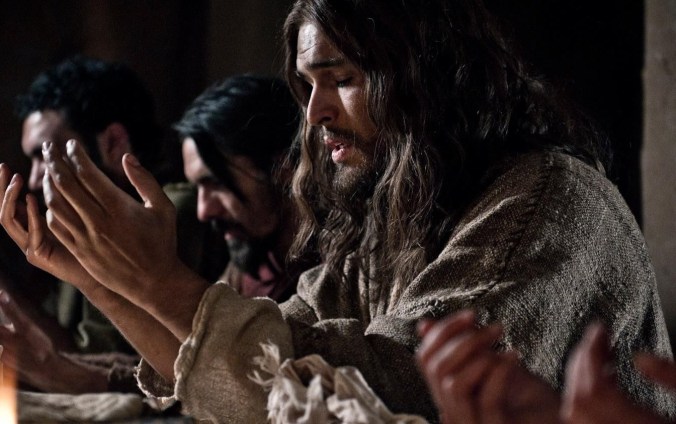
Imagine the power Jesus had at his disposal to prevent his arrest. Just three little innocent sounding words come out of his mouth and the entire armed mob in front of him is knocked to the ground. But some impressive words those were. In English, we add the word “he,” to the translation, because that is how we would identify ourselves. In the Greek Jesus simply says, “I am.” The last time he said that about himself, back in John chapter 8, the mob picked up stones to stone him. They recognized that he was identifying himself with the “I Am” God who spoke to Moses from the burning bush on Mt. Sinai. If the brute squad sent to arrest him didn’t recognize Jesus’ divinity from the meaning of the words, the force that knocked them all to the ground should have made them think.

Maybe they could have remembered Isaiah’s description of the Messiah as the Branch in chapter 11: “He will strike the earth with the rod of his mouth; with the breath of his lips he will slay the wicked.” Maybe they could have recalled the words of Psalm 46: “He lifts his voice, the earth melts.”

The point is, Jesus was not surrendering because he was faced with a superior force. In Matthew he reminds his disciples that twelve legions of angels stood by ready to defend him if necessary. But what was even their power compared to his own words? Jesus had the power to stop this any time he chose. He chose to let us see it. He chose not to use it.

So what leads Jesus to put away his own sword, so to speak? He accepts his cross, because he is moved by his love. “Again he asked them, ‘Who is it you want?’ And they said, ‘Jesus of Nazareth.’ ‘I told you that I am he,’ Jesus answered. ‘If you are looking for me, then let these men go.’ This happened so that the words he had spoken would be fulfilled: ‘I have not lost one of those you gave me’” (John 18:7-8). Already, the brief demonstration of his power was an act of love for his enemies. It was a warning to them. “Think about what you are doing. Take note of the one you are dealing with. It’s not too late for you to change.”

Jesus accepts this path to his cross alone out of love for his disciples. The day will come when they can risk their lives for him, but not with a show of force and violence. This night he spares them, he arranges for their escape. He hands himself over before there is any mistake about which one he is, or before a real fight can break out.

Jesus put away his sword and accepted his cross out of love for us and the world he came to redeem. In one way this may seem sensible to us, almost expected. The captain of a sinking ship directs the evacuation and goes down with ship. As I am writing this a story of heroism is coming out of a tragic mass shooting in Florida. A football coach used his own body as a shield to protect students under his care from flying bullets. We have come to expect a leader to put his own life on the line to spare those under his care.

But don’t forget that Jesus wasn’t merely risking death. “Jesus, knowing all that was going to happen to him…” gave himself up. He was guaranteed unspeakable tortures and hell’s darkest agony! And for what, for whom? The ship on which Jesus was sailing was not filled with innocent passengers, but guilty criminals. Their crimes were not mere misdemeanors and traffic violations. The people for whom Jesus accepted the cross were rebels, traitors, murderers who had taken sides against God without exception. That reference isn’t limited to the mob who arrested him. When we were in that condition he loved us. When we were in that condition he set his power aside and accepted the cross to take our guilt away and set us free.

Yes, Jesus has almighty power. But that takes second place to his love.

God’s Kind of Payday

Check

Romans 4:4 “Now when a man works, his wages are not credited to him as a gift, but as an obligation.”

Leave church for a moment. Go to your workplace. See how things work there. Whether you punch a clock and work with your hands, or sit behind a desk and push paper, or travel around trying to push a product, what happens every week or two? You get a paycheck. You expect that paycheck. You demand that paycheck, because you earned it. Your employer isn’t doing you any favor by paying you. He owes you. If he were to put on some big display every time he payed you, as though he was going beyond the call of duty by giving you this money, you would think he was being absurd. He has an obligation to pay you for your work.

If our own good works made us righteous in God’s eyes, if we earned heaven by the way we served him, wouldn’t the same be true? God would owe us. Giving us eternal life would be an obligation. He wouldn’t use words like grace, or gift, or free. He would fork over the goods and be quiet about it. He would tell us what a fine job we had done and leave it at that.

It appeals to our pride to try to save ourselves this way. We might even wonder why we shouldn’t go this route. If you go back and read the whole context of the book of Romans up to this point, you will see how impossible Paul makes this to be. In the book of Revelation the Apostle John warns people who are confident about themselves, “You say, ‘I am rich; I have acquired wealth and do not need a thing.’ But you do not realize that you are wretched, pitiful, poor, blind and naked.” We’re not just a little behind when it comes to giving God what he demands. Spiritually, we are flat broke. We aren’t just a little weak. We are crippled, and blind, and even dead.

The attitude that wants to work out our own way to God, our own way to perfection, our own way to heaven only drives us farther away. No one ever gets closer to God by trusting more in himself. No one ever loves God more by believing he has received less from him. The work for your wages method deadens faith.

Then we see the other side of Paul’s illustration. “However, to the man who does not work but trusts God who justifies the wicked, his faith is credited as righteousness.” If we don’t work for our place in God’s heart and in God’s home, there is only one other way to get it. It has to come to us as a gift. We simply trust that God will give it to us.

The God who became a man and died on a cross even “justifies the wicked.” The gift goes to those who have been working for the competition. The Lord credited righteousness to drunks like Noah, murderers like Moses, adulterers like David, cowards like Peter, skeptics like Thomas, and persecutors like Paul. No matter what our great failings may be, he invites us to trust him and be confident that he will credit us as righteous people, just like them.

With the God of grace, everyday is payday. By faith, you and I are on his payroll, too.

Regarded Righteous

Abraham Isaac

Romans 4:2-3 “If, in fact, Abraham was justified by works, he had something to boast about—but not before God. What does the Scripture say? ‘Abraham believed God, and it was credited to him as righteousness.’”

Some spiritual people indulge in hero-worship as a way of holding out hope for salvation by personal goodness. A friend once told me he thinks Gandhi lived such a good life that God will have to take him to heaven, even if he wasn’t a Christian. In the middle ages some churchmen found the writings of pagan Greek philosophers so moral, so profound, they were convinced these men would be saved. I suspect something similar is going on in a movie like Disney’s Pocohontas. Grandmother Willow looks deeply into John Smith’s eyes and declares, “Oh! He has a good soul!” If we can convince ourselves “good people” like these were good enough to pass muster with God, then maybe there is hope I can be good enough, too. Then I can hold onto the belief that I am a good person. I can avoid the painful and humbling realities of repentance and confession.

Abraham was the Father of the Jewish people. Because the idea had become so ingrained that God saves those who are good and keep his law, the rabbis developed a set of legends around Abraham to emphasize the point. Abraham was said to have passed through ten trials successfully. Because he so faithfully obeyed God through all ten, God accepted him as good and righteous. Abraham’s merits were so great that he had done more than he needed for himself. This “extra-credit” could even be shared with his descendants.

“But wait a minute,” Paul says, “What does the Scripture say? ‘Abraham believed God, and it was credited to him as righteousness.’” The legends about Abraham may have been interesting, but they did not agree with the evidence from his life. For all the good things that could be said about Abraham, he was still a sinner. He was capable of rather astounding lapses into immorality. Twice he passed his wife Sarah off as his sister to save his own skin. He committed adultery with a servant girl to have a son. God could have condemned Abraham for any or all of these.

Instead, God claimed Abraham for himself and declared him righteous. But not because Abraham had been so good. “Abraham believed God, and it was credited to him as righteousness.” Abraham trusted God’s promises. Through that faith he received God’s grace and love. The Lord gave him credit as though he had lived a righteous life. Abraham’s purity and holiness before God was a divine regard he received by faith.

We may be tempted to find Paul’s conclusion about Abraham disappointing. It spells the end for our hopes to win God’s approval for our own attempts at righteous living. But being regarded by God as righteous as a matter of credit instead of actual performance is better. I am inclined to slip and fall. My record is full of examples from the past. I can be certain more of them lie in my future.

But the Lord doesn’t change. His grace is a constant where my behavior is unsteady. His promise is dependable where my commitment is uncertain. This is salvation we can count on. Receiving righteousness Abraham’s way may not make us heroes. But it makes us children—children of Abraham and of the God who declared him just.

Intended to Give Us Rest

Sleep

Mark 2:27-28 “The Sabbath was made for man, not man for the Sabbath. So the Son of Man is Lord even of the Sabbath.”

You have been working 16 hour days, 7 days a week, for several months until you finally collapse in sickness and exhaustion. You go to the doctor. He takes one look at you and says, “My friend, what you need is some rest! Just look at you. And if you are going to sleep properly, you are going to have to get some more exercise. It’s no wonder you haven’t been sleeping. Your body is all out of shape. You are also going to have to eat more carefully. No more Doritos and Coke for meals or pizzas delivered to the office so that you can eat while you are working. You need to take time for three square meals a day. You’ll also rest better if you take some more time to be with your family. A hobby of some sort wouldn’t hurt, either. It helps you reduce your stress. Then you can get some sleep.”

The doctor’s observations may all be good advice. But how much help will they be if the 16-hour work days continue? Then the doctor has added hours of work to an already overburdened schedule. The result will be less rest, not more.

Even in the perfection of Eden, our Lord never designed us to work without end. We need rest. So he prescribed the Sabbath Day, a day to put work aside so that God himself could serve our souls with his grace and love.

The Pharisees of Jesus’ day messed around with God’s prescription in ways similar to the doctor’s well-meaning advice. They added long lists of rules for the Sabbath to make sure people “rested.” But the more people focused on rules to keep, the less rest people got. Even worse, the less they were able to see the Savior to whom the Sabbath points.

God did not create the Sabbath so that we had a rule to keep. He gave this law so that it might keep us. On the Sabbath he led people to hear him speaking to them in his word. They responded with their prayers and praise. He gave their burdened souls rest from guilt and sin. His word of forgiving love kept them close to him in faith. They found God’s Sabbath Rest not by what they did to keep it, but by what the Lord himself did for them when they stopped all their doing, and all their busyness, and he himself had the opportunity to serve them.

Today we know we find our full Sabbath in the person of Jesus. He supplies us with rest from our sins and rest for our souls. The Sabbath Day was the long shadow of Jesus cast across centuries of promises (Colossians 2:16-17). It directed God’s people to the full and final rest which Jesus’ life and death in payment for our sins would provide. We no longer have to set aside all work on Saturday or consider it our holy day. The Apostle Paul tells us not to let anyone judge you in regard to keeping the Sabbath.

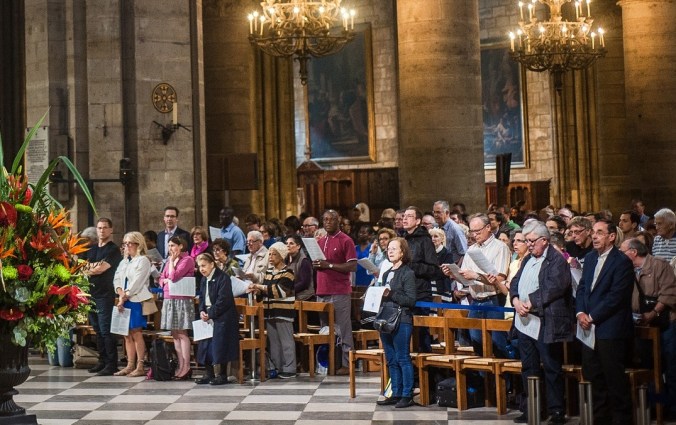
But we can still hear echoes of God’s will for us in that law. When we set aside our work to hear about his love, he still keeps us today. It is still God’s will for us to gather with other believers, and do so often. We don’t do it to save ourselves by keeping a rule. We encourage and edify each other with the word. The Lord speaks to us and saves us through that word. “Let us not give up meeting together (Greek, literally “synagoging”), as some are in the habit of doing, but let us encourage one another,” he urges in Hebrews 10. Let us find our Sabbath rest gathered with others for worship. There we still find Jesus, and he will give us rest for our souls.

Jesus Knows

Good Shepherd

John 10:14 “I am the Good Shepherd; I know my sheep and my sheep know me.”

Jesus is the Good Shepherd. The word he uses for “good” does not emphasize his goodness in the moral sense. Certainly Jesus is morally good, too. But Jesus is the Good Shepherd because he is capable, he is competent: he cares for his sheep the way it is supposed to be done.

That’s because Jesus knows his knows his sheep. When I worked on my uncle’s dairy farm, he knew about cows. He attended the University of Minnesota where he earned a Bachelor of Science degree in animal husbandry–the science of taking care of animals. He subscribed to the leading professional magazines and journals for dairy farmers. He attended trade shows to stay on top of the latest technology and research. My uncle knew cows.

But more than that, he knew his cows. Instead of numbers, he gave them names. When I started working for him, they all looked the same to me. But he knew his own by sight, whether they were standing in the stall or grazing in the pasture. He knew their age and how much they were producing. He had a specially developed diet for each one. He could describe to you the differences in their personalities. My uncle knew his cows, you might say, personally.

That’s how Jesus knows his sheep, his people like you and me. He knows all about sheep, of course, because he invented us and designed us himself. But more than that, he knows us as his sheep–personally, by sight, by name. He knows our strengths, weaknesses, and special needs. As a result, he is constantly adjusting his care to fit our life and circumstances individually.

So something goes wrong in your life (and something is always going wrong, isn’t it?). We pour out our hearts in prayer to our Good Shepherd to help us, and he listens. He knows us and our need, but that is not the first he heard of it. Whether we think to pray or not, Jesus knows his own. He knows things about our situation we don’t even know ourselves. He knows how it will affect us. He knows what we can stand.

Then he goes to work caring for our souls just the way we need, because the Good Shepherd knows his sheep.

Holy People

Woman in Wash

Ephesians 5:3 “But among you there must not be even a hint of sexual immorality, or of any kind of impurity, or of greed, because these are improper for God’s holy people.”

You are not animals. Hopefully that’s not news to you. But you probably know that the majority of this country’s scientific establishment would like to convince you and your children that you are nothing more than highly developed animals. Then you are no more important, no more valuable, no more meaningful than the pets that live in your house, or the pests that live in your house. But you are not animals. As human beings, God made you something more.

As a Christian, you are not mere human being. When Paul wrote to the Christians in the city of Corinth about their quarreling and jealousy, he asked them, “Are you not acting like mere men?” (1 Cor. 3:3). The question implies that we are more than mere men. We are something more, and our behavior ought to reflect that.

Paul shares a similar concern when he writes to the church in Ephesus. “But among you there must not be even a hint of sexual immorality, or of any kind of impurity, or of greed, because these are improper for God’s holy people.” “Don’t do those things,” Paul is saying, “Because that is not who you are.” God’s holy people are not some super class of Christians. Paul isn’t writing to the church council, the board of elders, the officers of the women’s group, or the members of the choir. He isn’t addressing people who never sinned in the past, or who will never sin in the future. He’s talking to people like you and me. We are holy people.

There are basically two ways a person can be clean: don’t get dirty in the first place, or get a good bath. God’s people are holy because God has given them a good bath. We have “washed our robes and made them white in the blood of the Lamb.” “The blood of Jesus Christ, his Son, purifies us from all sin.”

Being holy means that God has set us apart from the rest of the world. He has claimed us as his very own. He picked us up, and brought us home, and cleaned us off because he had an idea about how he could use us. God’s holy people have purpose.

Let that sink in a little. Have you ever rescued an item from the curb–maybe a piece of furniture or a small appliance? Over the years my family has brought a number of things like that home–a TV stand, a dresser, some patio furniture. All of that stuff was just hours away from spending the rest of its earthly existence at the dump. But we took it home, and cleaned it up, and gave it a new life and a new purpose. Isn’t that a picture of God’s holy people? Destined for the dump, we were rescued, and cleaned, and God gave us a new life and a new purpose.

We are God’s holy people. We will live a new life if we will simply be who we are.

An Unchanging Word

Oldsmobile

Psalm 119:89-90  “Your word, O LORD, is eternal; it stands firm in the heavens. Your faithfulness continues through all generations; you established the earth, and it endures.

Back in 1998 Oldsmobile came up with the idea of trying to reach a new generation of consumers with the slogan, “This is not your father’s Oldsmobile.” Unfortunately, their advertising campaign backfired. In the minds of younger car buyers, it solidified the idea that Oldsmobiles were for older people. At the same time it suggested to the generation that had been buying their cars that there was something wrong with them and their choice. In 2004 the last Oldsmobile rolled off the assembly line in Lansing Michigan.

Unaware of the potential pitfalls, some churches seem to advertise, “This is not your grandfather’s church.” Now of course, there are always things that are changing about churches. Programs come and go. Every 30 to 40 years there’s a new hymnal with some new songs. More and more hymnals are being replaced by screens. Buildings change. People change.

But in the essentials–the message that is taught, the Word that is preached– there needs to be a wholesome sameness. There are no new promises God has given to sustain the faith of his people other than the same ones that got Abraham, Moses, David, Peter, and Paul through life. You can no more earn your way to heaven today than you could 5000 years ago. The number of sins that God forgives for Jesus’ sake has remained constant across the millennia: All of them.

People may think that the challenges facing our generation are new and different. They may believe that the temptations we fight have never been seen before. Not so. Solomon promised us nearly 3000 years ago, “There is nothing new under the sun.”

That is why we need to turn back to the changeless word of God for our help and strength. It provides so much more than a dependable standard of morals, an unwavering distinction between right and wrong. It brings to us the love and grace of God that saves us and preserves our lives.

Grace: Pure Gift

Gift Rows

2 Timothy 1:8-9 “Join with me in suffering for the gospel, by the power of God, who has saved us and called us to a holy life—not because of anything we have done but because of his own purpose and grace. This grace was given us in Christ Jesus before the beginning of time…”

God saved us and called us because of his grace. The true and full value of grace is seen in its nature as a gift. Referring to God’s work of saving us, Paul says, “This grace was given us in Christ Jesus before the beginning of time…” Do we really understand what a gift is? Don’t our selfish natures always confuse and tarnish the concept? I have never “sold” a gift to anyone. But I can’t think of many people to whom I have given gifts who didn’t “deserve” it in some way or another. In most cases they had spent years, maybe even a lifetime, paying for my favor, earning the trust and love that made we want to “give” them something. You could say that they purchased my gift on a lay away program, investing kindnesses and friendship instead of money. At the very least they demonstrated that they were good people who would not abuse my charity.

You may remember a grassroots campaign some years ago urging “Random Acts of Kindness.” One of the things that made that campaign so striking, so fresh and exciting, is that a random act of kindness, giving things to people who have had no chance to do anything for us, is so rare. It still is.

On the backside of our giving, our gifts so often come with strings attached. We expect (demand?) some kind of response. Haven’t you felt awkward receiving a gift from someone because you wondered what he wanted from you? Or maybe you have received a gift and felt guilty, because you hadn’t gotten anything for the gift’s giver. Now you felt like you should go out and get him something. We live in this world of “what’s in it for me” or “what’s it going to cost me” because our selfish nature can’t see the sense, or even the possibility, of anything being truly “free.” That’s a serious problem, because in eternity there are only two places that we can go, and only one of them has an admission price (that we must pay), and that place isn’t heaven.

But the undeserved love of God is truly a gift. He laid down no conditions before he gave us this grace. Indeed, we gave him no reason to want to make this gift to us. We weren’t able. His gift of grace is truly free. And once we have received it, he does not demand a response, as though grace were charged to our Visa, and we were going to pay it off over time. Grace does not demand a response, but it does invite one. We can even say that it inspires a response, it compels a response, because the free gift of grace changes all who receive it. It fills them with love that freely gives, just as we have received. We would willingly suffer for the one who gave us such grace, or suffer to share it with others, as Paul invites us to do.

Perhaps the gift nature of God’s grace is clearer to see when Paul says, “This grace was given us in Christ Jesus before the beginning of time.” Don’t misunderstand Paul’s words. He is not saying that God’s grace was given to us at some point before creation. There were not millions or billions of years before creation, and then one day God woke up and decided, “I’m going to create me a world, and when it goes wrong, I’m going to redeem it. And when I do, I’m going to save Joe.”

No, in eternity there is no time, no progressing from one moment to the next in the same way we think of it. God always was. And as long as there has been God, his grace has been given to you. There was no “day before” grace. God’s grace–to you personally– is eternal, just like God himself is eternal. It is unchangeable as God himself. You can’t get anything less demanding of something in you, anything more “free,” than that.

Can you put a value on such a gift? The old Motown song sings, “Money can’t buy you love.” And when it comes to God’s love, neither can good works, personal sacrifice, or anything else we can think to give. God has always loved you just because he chooses to love you. You cannot turn this love off, you cannot make it stop, at any cost, no matter what you do. Paul’s reminder that such grace is a gift helps us appreciate its full value.

We Want to See Jesus

Eye Jesus

John 12:20-21 “Now there were some Greeks among those who went up to worship at the Feast. They came to Philip, who was from Bethsaida in Galilee, with a request. ‘Sir,’ they said, ‘we would like to see Jesus.’”

Apparently these Gentile converts to the Jewish faith were devout. Although they were not natural born Jews, they had traveled nearly a thousand miles by sea, or nearly two thousand miles by land, to be in Jerusalem for the Feast of the Passover. Both the seas and the roads were dangerous compared to our modern travel. They took their adopted faith seriously.

How had they heard of Jesus? Why they wanted to see him we are not specifically told. They simply make the request. Were they curiosity seekers? Jesus’ entry into Jerusalem on Palm Sunday created quite a stir. Did they witness the royal welcome the crowds gave him? Maybe they had heard reports of Jesus’ miracle working and hoped to see one themselves.

Were they seekers of a more spiritual sort? Perhaps they wanted an audience with Jesus to ask him sincere questions about God and religion. They were on a quest to find certainty for their faith. Were they seeking salvation?

We aren’t told specifically. We don’t even know whether Jesus granted their request. We do know we share their desire. We want to see Jesus. Isn’t that why we read his words and think about what they mean? We are trying to find him in all this. Why is this still our wish a couple of thousand years later?

May it not be for a warm, cozy feeling with no real, lasting impact on my heart or life. It is possible to seek him without pondering my depravity–desiring no encounter with God in the face of Jesus, enjoying no sweet taste of his grace. Then we have come to see Jesus not so much to worship him as to use him as a pleasant diversion. He becomes an interesting pastime. Jesus as a pleasant distraction, a curiosity, is a subtle example of what God had in mind when he commanded, “You shall not take the name of the Lord your God in vain.” It is a vain, useless, and evil thing to reduce the Savior of the World to little more than a good feeling or a happy way to pass the time.

But what if we want to see him because of a deeper, more desperate need that haunts our souls and troubles our consciences? Maybe we manage to hide our mean, twisted selves from the mutual admiration society we have gathered around us. But we haven’t been able to hide it from ourselves. And we haven’t been able to hide it from God. When we consider what God knows–every curse whispered under our breaths, every hateful urge we have choked back, every lustful glance, every perverted daydream– we know our situation is critical. Our sin-sickness is terminal. We want to see more than an entertaining sideshow, then. We want to see a gracious Savior, a heroic and self-sacrificing Champion, who can bring forgiveness where there is sin, life where there is death, and heaven where there is hell. There is no deeper reason for our desire to see Jesus.

That is why the Jesus we see is such a find. Do you know how he responded when he heard the request? “The hour has come for the Son of Man to be glorified.” Does that seem like a strange response? What is Jesus saying?

This was Passover week, the last Passover of Jesus earthly life. In just a few days he was going to give his life on the cross in the greatest demonstration of God’s love. This is his great glory. Seeing Jesus there, you see God himself loving you all the way to dying for you. Even more, he carries your sin for you. He suffers your hell for you. “Having loved his own who were in the world, he now showed them the full extent of his love.” When this is how we see Jesus, then we understand why he is such a find.

Garrison Keillor tells the story of gathering around a long dinner table to celebrate Thanksgiving with his extended family. “Then the hostess made the mistake of calling on Uncle John to pray. Everybody in the family knew that Uncle John couldn’t pray without talking about the cross and crying. And if there is one thing that makes people nervous, it’s listening to a grown man cry. Sure enough, Uncle John prayed, talked about the cross, and cried. Meanwhile the rest of us shifted nervously from one foot to the other and longed for the prayer to end.” Keillor ends his story observing: “All of us knew that Jesus died on the cross for us, but Uncle John had never gotten over it.”

Nor have we when what draws us to see Jesus in Sunday’s sermons, or our personal Bible reading, is the Jesus who loved us to death on a cross and saves us from our sins.

Enjoy the view.