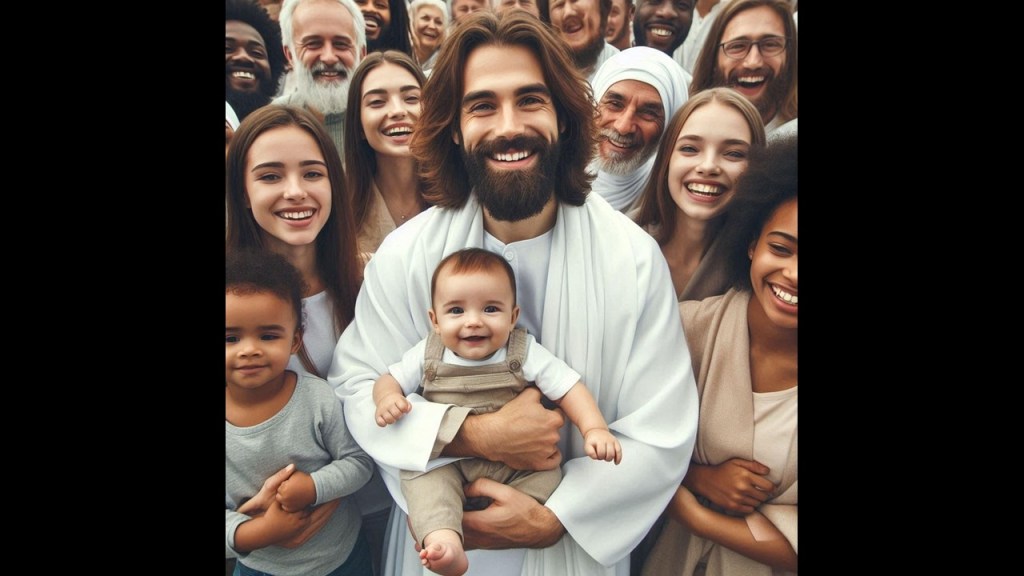
Satan Chained

Revelation 20:1-3 “And I saw an angel coming down out of heaven, having the key to the Abyss and holding in his hand a great chain. He seized the dragon, that ancient serpent, who is the devil, or Satan, and bound him for a thousand years. He threw him into the Abyss, and locked and sealed it over him, to keep him from deceiving the nations anymore until the thousand years were ended.”

Does it ever seem to you like the devil is winning? We know that God is supposed to be the most powerful being of all. We know that Jesus is supposed to have everything under control. But it doesn’t always look like that. In America, Christianity is shrinking. Among evangelical Christians in their twenties, 700 leave the faith every day. The rates of decline are worse for many other Christian groups.

We could cite other indications the devil is winning: laws that reject biblical morality, less and less tolerance for Christians to practice their beliefs, a society that seems to be unraveling on many levels. You see the news.

For the people to whom John wrote these words, it was active government persecution against Christians. John himself was writing in exile on a barren little Mediterranean island. Other church leaders were being executed. The church at that time wasn’t really shrinking, but it was in a battle for its life.

John’s vision lets us see behind the realities that trouble our faith. What he sees isn’t the future. It’s actually the past and present. It is a picture of what began with Jesus’ earthly ministry. Jesus is the angel in the picture. He is often referred to as the Angel of the Lord in the Old Testament. He isn’t a created angel, but God’s “messenger” (the literal meaning of “angel”), the bringer of God’s word.

The devil is a spirit. He is not literally a dragon or serpent. That’s a picture to teach us he is dangerous. He has no physical body or form. As a spirit he can’t be bound by literal chains. Forge the biggest, thickest chain you can make, like the chains that attach anchors to ocean liners. Make it out of the hardest titanium alloy. It makes no difference to the devil. He is a spirit and can’t be bound by chain or rope.

So what does this “chaining” mean? We have a clue in the purpose John gives, “to keep him from deceiving the nations anymore…” Until Jesus came, practically the entire world rejected the true God. They preferred gods they spun out of their own imaginations, gods they could manipulate and control. Only one tiny nation on the eastern end of the Mediterranean Sea followed the real God, and even the Jews didn’t like their God that much. They were constantly dabbling in the idols and religions of their neighbors.

Then Jesus came, and people heard and saw God’s love like never before. He came with power no man had ever shown–not Moses, not Elijah, not any of the other prophets. He loved rich and poor alike. He invited them all to follow him. He broke bread with public sinners and hypocritical holy men. He helped and healed until he had gone days without food or sleep and his own family thought he had lost his mind.

Then he did the unthinkable. He gave his life as a ransom–those were his words. He let his enemies arrest him, torture him, and nail him to a cross to die. He let his heavenly Father abandon him and leave him on that cross with no help, no love, and no hope. He suffered the hell sinners deserve as their substitute, so that they would not have to. Three days later he took his life back again as evidence that death itself had been emptied of its power to keep people in its grasp. “This is love,” the Apostle John wrote 70 years later, “not that we loved God, but that he loved us and sent his Son as an atoning sacrifice for our sins.”

This message was unleashed on the world, and suddenly Satan was all tied up. The devil had no answer for this gospel, this story of incomparable love and hope. He could tempt people into thinking they wanted some sin or another. He still does. But he had nothing better to offer than the love that gave everything and died on a cross to save us. People embraced it by the thousands, and then by the millions, and then by the billions. Satan was chained, and faith in Jesus grew.

It still does. The people who first read about John’s visions in this book of Revelation needed the reminder that they may be persecuted, but they weren’t losing. Their faith was spreading even as their leaders were being assassinated. We need the reminder that America is not the whole world. We may or may not lose thousands or millions of members in the years to come. But each year the gospel reaches millions more in places like communist China, Latin America, or Sub-Saharan Africa. Jesus still delivers people from Satan’s deceptions.

Delivered to Rest

Deuteronomy 5:15 “Remember that you were slaves in Egypt and that the Lord your God brought you out of there with a mighty hand and an outstretched arm. Therefore the Lord your God has commanded you to observe the Sabbath day.”

The evangelical nature (in the sense of gospel-centered, not a reference to a modern movement in Christianity) of God’s claim on our time and concern for our rest, even in the Old Testament, is clear from his final comments to his people about the reason he gave the Sabbath. This opportunity for rest was provided by his personal intervention.

“Remember that you were slaves in Egypt.” Not much rest there. Is there any condition that more nearly approaches the opposite of rest than slavery? Not only did Pharaoh take away their freedom and force them into hard labor. Not only did he continue to make their work harder and add to their work when Moses asked him to let Israel go. He refused to allow them even to go worship God in the desert and come back. The very kinds of rest God intended to provide with the Sabbath–for body and soul–Pharaoh denied God’s people.

So the Lord intervened personally. He delivered them. He brought them out of Egypt and brought them to their own land. And he gave them a day on which to remember the kind of loving and saving God they had. Do you know what day God established the Passover, and sent the angel of death through Egypt, and set them free? It was the fourteenth day, the second Saturday, the Sabbath. In a sense, every Sabbath was a little celebration, a little remembrance, of the Lord leading them from slavery to rest.

It is for similar reasons we Christians rest from our work and gather on Sundays when we can. No rule forces us to use this day. But God personally intervened to set our souls free from sin and death when Jesus died and then rose again on the first day of the week, on Sunday. It is a day to remember the kind of loving and saving God we have–a little celebration or remembrance of the Lord leading us from slavery to rest.

You and I are New Testament Christians. We aren’t bound to a particular day of the week. But that doesn’t mean God has given up his claim on our time. We have plenty of time to work. Don’t let it come between you and God’s gift of rest.

Rest for All

Deuteronomy 5:14 “On it (the Sabbath) you shall not do any work, neither you, nor your son or daughter, nor your manservant or maidservant, nor your ox, your donkey, or any of your animals, nor the alien within your gates, so that your manservant and maidservant may rest, as you do.”

It doesn’t come out in the English like it comes out in the Hebrew, but the Lord lays this command on his people’s hearts, “You really need to do this” (or not do this, as the case may be). You need to lay aside your work. You need to rest.” He is making “mothering noises” at you and me.

And can we argue with him? We may overwork our bodies. We may skip church or miss Bible class. But we know we are doing ourselves no favors. We feel the effects in our bodies. Through the week we struggle to trust, to believe, to hope and to love.

And it is such an appealing order, almost more of an invitation. “Set down the heavy load and let me carry it for you. Stop all your busyness, pull up a chair, and just listen for a while. Have I told you, lately, how much you mean to me? Do you remember what I did to rescue you? Let me tell you again, before you get back to the grind that eats up all your strength.”

This claim on your time doesn’t stop with you and me. It extends to our families, “your son or daughter.” So God’s concern for rest is also a concern for Christian education. Don’t forget about the children. Certainly don’t exclude the children. Church is as much for them as it is for anyone else.

This claim on our time extends to all classes, all elements of society. He didn’t intend it to be a middle or upper class thing. Your servants are included, “so that your manservant and maidservant may rest as you do.” I am not in favor of blue laws, generally speaking, especially in a pluralistic society. And we Christians live in a New Testament freedom regarding the Sabbath day. But when Christian companies like Hobby Lobby or Chick-Fil-A exercise their freedom by closing their doors on Sunday, I think it gives a good witness. It reflects the spirit of God’s command, because people from all walks of life should have the chance to get their rest.

This claim God made on his people’s time to give them rest even had a mission emphasis. It applied to “the alien within your gates.” The needs of body and soul don’t change just because a person hasn’t come to faith yet. We force no one to believe. But we want the opportunity given to everyone. God made this clear by including the foreigner, the Gentile, in his Sabbath law.

We understand instinctively that morals generally apply to everyone the same. Right doesn’t stop being right because an individual is powerful or wealthy, or because he is weak or poor. God’s concern for individual well-being also remains the same for all. He loves the world. He wants all to be saved. His comments on the Sabbath commandment reflect his universal concern to give people rest.

Embracing the Rest God Gives

Deuteronomy 5:13-14 “Six days you shall labor and do all your work, but the seventh day is a Sabbath to the Lord your God.”

In his Ten Commandments the Lord laid his claim on practically every feature of his people’s lives. He claimed their tongues, their families, their possessions, their bodies, their hearts, and their worship and praise. With this commandment he made it clear, “God has also claimed your time, and God’s Claim On Your Time Includes Rest.”

His original plan was for his people to rest on the seventh day, Saturday. There is a certain logic to that, I believe. It follows the week of work. First work, then rest. If a different day had been chosen, say Wednesday, people would likely have begun to see that as a kind of seventh day after six days of work. I find people today who think that the first day of the week is Monday, because that is when work begins for us, and the seventh day is Sunday. Even some calendars are set up that way. But God originally chose Saturday as the day for his people to rest.

Which day wasn’t optional for God’s Old Testament people, but which day of the week was never the main thing. Taking a day of rest was. Even the name God gave the day emphasized the main point. We call it “Saturday,” a holdover from the Latin influence on our language, which named the day in honor of the god Saturn. The Germans called it “Sonnabend,” the evening before Sunday. The Scandinavians named it “lordag,” which means “bath day.” The Polynesians call it “rahoroi” or “washing day.” But God named it “Shabbat,” “Sabbath,” the Hebrew word for rest, because that is what his original plan was all about.

In spelling out the seventh day, God was treating his people like minor children. When I was a child, my parents dictated when I ate my meals, and when I went to bed. When I entered high school, this all became much more free. I might not eat supper with the family, and bed time could be later, so long as I got enough sleep. By the time I entered college, it was pretty much up to me when I ate or slept. My parents expected me to understand I needed them both.

After 1400 years and the sending of Jesus, God stopped worrying about whether his people got their rest on the seventh day. He expected them to get it because they understood they needed it. That was especially true in view of the kind of rest Jesus brought us. His death on the cross, his resurrection from the dead, brings us rest for our souls. It lifts the heavy burden of sin and guilt off of our shoulders. It frees us from our fear of death. It relieves us of the tension and anxiety that God is angry at me, that he wants to stick it to me and make me pay, or that he has just decided to abandon me and forget about me because he is disgusted with me.

All of that is replaced with the peace of knowing he forgives me without limits, and he loves me without conditions. Through faith in Jesus’ sacrifice and promise my soul finds rest from thinking I have to earn my way back into God’s good graces. I can rest in Jesus’ finished work. That is why Paul could write in our second lesson this morning from Colossians not to let anyone judge you about keeping a Sabbath day. God’s claim on our time still includes rest, but our real rest isn’t found on a calendar. “The reality, however, is found in Christ.”

That concern for spiritual rest wasn’t missing from God’s original plan, either. It was the main thing. This was more than a day to stop working. “The seventh day is a Sabbath to the Lord your God.” Israel set down their tools and closed their shops to pay attention to God. And even then he was the God who delivers his people and forgives their sins.

And God Created Rest

Deuteronomy 5:12 “Observe the Sabbath day by keeping it holy, as the Lord your God has commanded you.”

According to a survey several years ago, Americans aren’t very good at taking their time off. Only about half of us will take a vacation in a given year. For one in four, it is because they don’t think they can afford it. One in eight will not use even a single vacation day their employers offer.

We may complain that Americans are losing their work ethic. But we lack a proper rest ethic as well. My friend Frank was recruited to work for a government agency. They offered him two weeks of paid vacation at first. He told them that was unacceptable. He needed at least four. “I can get my work done in eleven months,” he said. “I can’t get it done in twelve.” Frank remembered something that many people forget. Without a proper amount of time off, without a proper amount of rest, we become less efficient. We lose our creativity. We make more mistakes. We just don’t operate as well. Fortunately for Frank, his skills were in such high demand that they gave in and granted him four weeks of vacation.

It’s not just our work that suffers when we fail to get our rest. It is hard on our relationships, both because we rob them of time, and because tired people are grumpy people. Our health suffers. The list of conditions caused or made worse by sleep deprivation is a long one: heart disease, high blood pressure, diabetes, depression, and obesity to name a few. Some say that failure to get enough sleep is one of the most serious health epidemics in our country.

Sometimes our failure to take time off for rest is unavoidable. We are called to address an urgent need at home or at work. Tonight is not the night to be in bed by nine. This is not the week to disappear for the next fourteen days.

But there are plenty of less noble reasons we cheat on our rest. Greed, a failure to be content with our current standard of living, drives us to sacrifice sleep and days off so that we can chase the dollar bills we desire. We miss the irony that our extra hours at work prevent us from having time to enjoy the things we can now afford.

Pride is another contributing factor. We put in the extra hours because we want our work to look the best, because we don’t want to be the weak one who has to ask for help, because we covet the respect that comes with the reputation for being a hard worker. And there is nothing wrong with work well done, getting it done yourself, and a work-ethic that commands the respect of our peers. But when we do it all for the cult of self to the glory of me, this isn’t a godly life. It is sinful ambition, a counterfeit of the self-sacrifice Jesus urges on those who follow him.

From the beginning, God recognized our need for rest. He built it in to his creation. From the very first day he turned the lights off for half the day, making it harder to keep on working and easier to go to sleep. He divided time into weeks of seven days, but the last day of that first week he put down his tools and stopped making things, though he himself needed no rest. Even the Almighty took a day to stop and enjoy the fruit of his work.

Then, in case his people didn’t get the hint, he included rest in his Ten Commandments. “Observe the Sabbath day by keeping it holy, as the Lord your God has commanded you.” Although these words belong to his commandments, they really reflect his love for us. We are the ones who benefit from time to rest. It is healthy for our bodies. If we use the time to worship God and hear his word, it is even healthier for our souls.

Lifted Up

John 3:14-15 “Just as Moses lifted up the snake in the desert, so the Son of Man must be lifted up, that everyone who believes in him may have eternal life.”

Let me describe a man for you. He is filthy. He hasn’t bathed or showered in days. He doesn’t smell very good. His rather dull and unfashionable clothes are torn. He is loud. He is rough. He pays little attention to good manners. If he gets a chance to eat, he wolfs the food down as fast as he can.

He is a dangerous man. He is aggressive. He carries a gun and has even killed a few people with it. At other times he has roughed up people who threatened him.

What have I described? Perhaps you picture a street criminal, a gang member, a person for whom you would have little or no respect and avoid if at all possible.

What if I told you he was an American soldier in the midst of combat, a hero fighting to defend our country and protect your freedoms?

In order to understand this man’s actions and behavior, it helps to know who he is.

“The Son of Man must be lifted up.” This is the first time in his ministry Jesus spoke of his crucifixion, so far as we know. You probably know that not just anyone was crucified. The Roman writer Cicero, about a hundred years before Jesus, said that crucifixion was such a horrible thing that no Roman should ever have to witness it. And no Roman citizen could ever be sentenced to a cross. That may be why Paul, a legal citizen of the empire, was beheaded, but Peter, a Jew, was crucified.

Crucifixion was reserved for the worst and most dangerous. They were the criminals and enemies of the state. The Republic wanted to make examples of them. Spartacus, the famous gladiator, was crucified after he led a rebellion because officials were afraid he might inspire more slaves and gladiators to revolt.

Crucifixion slowly robbed you of your life. It was hard to breath if you didn’t pull yourself up by your arms impailed to the crossbar and push yourself up by your feet impaled to the pole. But that was painful, and eventually your muscles would cramp, forcing you to hang limp again until you were desperate for air and pulled yourself up again to breath. This went on, for days in some cases, until your heart gave out or you died of asphyxiation.

Jesus was lifted up on a cross. But not as a criminal. He was lifted up as the object of our faith, because here God himself took our place and died for our sins, the debt we could not pay ourselves. This is how it works in God’s Kingdom, different than any other kingdom, or any other religion in the world. The King’s Son dies for the crimes of his people. Believe that, see his work, and you are entering God’s Kingdom as you do.

The Giver

John 3:14-17 “Just as Moses lifted up the snake in the desert, so the Son of Man must be lifted up, that everyone who believes in him may have eternal life. For God so loved the world that he gave his one and only Son, that whoever believes in him shall not perish but have eternal life. For God did not send his Son into the world to condemn the world, but to save the world through him.”

Here Jesus introduces us to the Father’s role in our salvation: the Lover of the world, the Giver and Sender of the saving sacrifice. This is all rather astounding in light of the world he professes to love and intends to save. This is the world that in the last century killed between 300 million and 1 billion of its fellow citizens by war, crime, and genocide, depending on whose estimates you follow. This is the world in which 5.5 billion of its 8.2 billion people live in daily open defiance of his very first commandment, which says, “No other Gods.” This is the world in which at least half the Christians are Christians in name only, and every one of them maintains a foot in both God and the devil’s camps.

This is the world that killed God’s Son when he sent him. So we can lay aside any ideas that the world had charmed God into loving it or in any way earned and deserved his affection. No reasonable human would have worked to save a relationship with another person who treated them the way we had treated God. There would be talk of toxic relationships and maintaining proper boundaries and a safe distance.

God the Father so loved the world that he gave his one and only Son. He sent him into the world to save it. This not only went against the treatment he had received from the people he had made. It went against every normal instinct of a parent who cares for his child, a father who loves his son.

Fathers are protectors. In January 2018, a Rhode Island father died trying to rescue his son from a burning home. In March of 2025, an Oklahoma father carried his son to safety through wildfires that swept through large portions of the state, but the father himself died from burns he suffered in the process. Over the Memorial Day weekend this year, a father in Denison, TX drowned while rescuing his son who fell out of the boat from which they were fishing. Headlines like this are not hard to find. You may have stories of men you knew personally who did heroic things to save their sons.

In God’s kingdom, the Father loves us so much that he makes his Son a gift. He sends him into our world, fully aware of what that world will do to him. When we come to believe in the Father’s great gift of love like this, we receive eternal life from him. We become the sons and daughters he has rescued. The price he was willing to pay is proof of his love.

Spirit-Birth

John 3:1-6 “Now there was a man of the Pharisees named Nicodemus, a member of the Jewish ruling council. He came to Jesus at night and said, ‘Rabbi, we know you are a teacher who has come from God. For no one could perform the miraculous signs you are doing if God were not with him.’ In reply Jesus declared, ‘I tell you the truth, no one can see the kingdom of God unless he is born again.’ ‘How can a man be born again when he is old?’ Nicodemus asked. ‘Surely he cannot enter a second time into his mother’s womb to be born!’ Jesus answered, ‘I tell you the truth, no one can enter the kingdom of God unless he is born of water and the Spirit. Flesh gives birth to flesh, but the Spirit gives birth to spirit.’”

“You think you know who I am, Nicodemus.” Jesus is saying. “Do you really want to know who I am? You are not going to figure it out on your own just by watching me. Something needs to change inside of you. A new kind of life, with a new kind of mind and will, and a new way of thinking, has to be born in you. Then you will be able to see who I really am. Then you will be able to see what God’s kingdom is and enter it.”

Jesus wasn’t telling Nicodemus to go find this new life, with its new mind and will, himself. It has to be born in you. The Spirit has to give it birth. That’s a pregnant picture, pun intended. Birth is one of the most passive things that ever happens to us. You and I had no say in who our mother would be, or our Father for that matter. What’s the old saying? “You can choose your friends, but you can’t choose your family.” We had no role in determining when we would be born, and when the day came there was nothing we could do to stop it. At that point, there is little anyone else can do as well. My wife went into labor with our last child about three weeks early. The doctor gave her medications to try to stop the big event from happening, but to no avail. A few hours later our son appeared, alive and healthy, whether he wanted to be with us yet or not.

This is how we get our spiritual life, Jesus says, the one that allows us to see him and his kingdom. It is a kind of birth, a Spirit-birth. It happens to us. That’s not to say that we don’t understand the processes that make it happen, at least in part. The Spirit delivers this life. He mentions “water and the Spirit.” In this part of John’s gospel, baptism is a very central theme. So we believe that in baptism the Spirit is delivering new life in people. Years later the Apostle Peter also wrote about being “born again of the living and enduring word of God.” So we believe that by preaching, and teaching, and giving people Scripture to read, the Spirit is also delivering new life in people. They are born spiritually. But this happens to them. There is nothing “do-it-yourself” about the process.

Just in case Nicodemus missed the point, Jesus reaches for a second illustration. “You should not be surprised at my saying, ‘You must be born again.’ The wind blows wherever it pleases. You hear its sound, but you cannot tell where it comes from or where it is going. So it is with everyone born of the Spirit.” Ever try to control a tornado? Every try to stop a hurricane? Not much that you can do about them, is there. The weathermen can talk for hours, and the storm trackers can run around and look. With all our technology and radar we can follow and guess. But the wind blows wherever it pleases, and so does God’s Spirit. We can see where he is at work, in baptism and God’s word. But we have no control over his work. The Spirit-birth is the Spirit’s work from start to finish.

Jesus is leading us to repent of all our ideas about faith and salvation being some kind of spiritual do-it-yourself project. Maybe you have run into the gifted artist who could draw almost photographic reproductions of things from the time he first picked up a pencil, or the gifted musician who could play any piece of music she ever heard without taking lessons; or the gifted student who never had to study, but his brain just seemed to absorb and save everything he ever saw or heard–and these people were all full of themselves and their ability. They are kind of pathetic, because they act like they invented their bodies and gave birth to their talents, when it was all just a gift.

Don’t be the pathetic Christian who acts and talks as though he is somehow superior to everyone else because of a faith that was the Spirit’s gift. It’s a great thing, to be sure, but not something we have done. It is all the result of the Spirit-birth.

Pentecost with a Purpose

Acts 2:14-17, 19-21 “Fellow Jews, and all of you who live in Jerusalem, let me explain this to you; listen carefully to what I say. These men are not drunk, as you suppose. It’s only nine in the morning! No, this is what was spoken by the prophet Joel: ‘In the last days, God says, I will pour out my Spirit on all people. Your sons and daughters will prophesy, your young men will see visions, your old men will dream dreams… I will show wonders in the heaven above and signs on the earth below, blood and fire and billows of smoke. The sun will be turned to darkness and the moon to blood before the coming of the great and glorious day of the Lord. And everyone who calls on the name of the Lord will be saved.”

Purpose one for God sending his Spirit: He wanted his people to know. Before the completion of the Bible, he gave prophesies, visions, and dreams through his Spirit. The religion of grace isn’t something you figure out by logical deduction. We don’t instinctively believe that the way back to God is through grace, that the way past our sins is only his forgiveness, that the way to be saved is purely the gift of his Son. God’s Spirit reveals it.

Even with a completed Bible, it is the Spirit who lets us understand. I have heard the testimonies of so many Christians who will tell you they weren’t “reasoned” into Christian faith. Something happened through repeated exposure to the word. It is like a light bulb went on, and suddenly they just realized that these things they had been reading and hearing about Jesus were true. That is the Spirit’s power at work, teaching us what we need to know.

Purpose two for God sending his Spirit: He wants his people to speak. “Even on my servants, both men and women, I will pour out my Spirit in those days, and they will prophesy.” They will prophesy. That doesn’t have to refer to predicting the future. It describes any preaching of God’s message. And it isn’t limited to professional clergy. It is included in the job description of your pastor. But God has poured his Spirit “on my servants, both men and women.” You may be afraid to speak about your faith. “I’m not very good at talking,” you say. So did Moses, you may remember. And God told him, “Hey Moses, I made your mouth, remember? I can make it work just fine.” And he says to us, “Hey Christian, I gave you my Spirit, remember? He will give you the words you need to say.”

Purpose three for God sending his Spirit: He wants people to be saved. Peter uses the Prophet Joel to walk us right through the New Testament era and the rest of history to the last day. Then, “everyone who calls on the name of the Lord will be saved.” This is what Pentecost Day is all about. This is why God sent his Spirit on us with power. It’s not about giving us the ability to create some utopia here, a heaven on earth. It is not about giving us the ability to do neat little supernatural things to impress our friends and acquaintances. It is about fortifying our own faith and equipping us to share it with others, so that people can call on Jesus’ name in faith and be saved.