Time for True Riches

worshipers

Amos 8:4 “Hear this, you who trample the needy and do away with the poor of the land, saying, ‘When will the New Moon be over that we may sell grain, and the Sabbath be ended that we may market wheat?'”

Out of love for his people, God made sure they had a day to rejuvenate their bodies and continue to grow spiritually.  That was the Sabbath. The New Moon festivals were another day the Israelites took off voluntarily.  Once a month it gave them rest and time in God’s word.

Amos was talking to people whose priorities were out of line.  They weren’t so concerned about whether they were growing spiritually.  They didn’t care whether their faith got any stronger.  They didn’t care whom they ran over in their headlong rush to make a buck. They went through the motions of keeping the Sabbath, but their heart wasn’t in it.  All they cared about was making money.  These days off started to look like a nuisance.  “When will they be over?” they asked.  They sound like Ebenezer Scrooge in A Christmas Carol complaining about how much money he was losing by giving Bob Cratchit Christmas Day off with pay and closing the shop.

We are not so different from the people in Amos’s day.  We live in Christian freedom about the specific time we choose to rest our bodies and souls. But money is a concern each of us has. No matter how much of it we have, it is hard to convince ourselves it’s enough.  It’s easy to let money concerns crowd God’s word out of our lives, too.

The issue isn’t just “going to church.” It is being concerned about our spiritual growth.  Do we cheat ourselves out of daily time in God’s word because we are too busy making money?  Do we pass up opportunities to study God’s word in Bible classes because we are too busy making money?  Do we refuse to offer the Lord time to serve him because we are too busy making money?  Not everyone has to be at every worship service or Bible class offered.  But God wants a stronger and deeper faith to be more important than a stronger and deeper pocketbook.

This overdeveloped urge to make money has plagued believers through the ages.  In the sermon on the mount Jesus warned against worrying about “What shall we eat? or What shall we drink? or What shall we wear?”  Martin Luther once overheard a member of his church say after the service, “What do we care about heaven?  What we need is flour!”  To such concerns Jesus replies, “A man’s life does not consist in the abundance of his possessions.”

Rather than focusing life on making money, look at the spiritual wealth and riches we already have. Having the kingdom of heaven is like finding a treasure, or a priceless pearl, Jesus says.  Can you put a value on a soul?  The Bible says the cost of a soul exceeds all human payment.  Yet Jesus purchased each of our souls by his blood. Then he gave them back to us forever.  Paul regards this a treasure, “the grace of our Lord Jesus Christ, that though he was rich, yet for your sake became poor, that you, through his poverty might become rich.”  Our riches are all the wealth of eternal life and heaven.

And God is giving it all away in the next Bible class, the next Sunday service, the next quiet time you have with a Bible or devotional book. Make plans now to attend.

The Way Up

kneeling

Proverbs 25:6-7 “Do not exalt yourself in the king’s presence, and do not claim a place among great men. It is better for him to say to you, ‘Come up here,’ than for him to humiliate you before a nobleman.”

You know how little kids play a game of “one-upmanship.”  “I’m taller than you.”  “I’m faster than you.”  “I have more toys.”  “My toys are more expensive.”  You know how it goes.  Adults aren’t immune to this, either.  Listen closely to people at a dinner party talk about their jobs, or parents brag about their children, or men reminisce about their past athletic achievements.

We are all very insecure creatures by nature.  We want the respect and consideration of everyone around us, but we aren’t so sure that we deserve it.  Boasting, “exalting” ourselves as Solomon says, is just one way we have of trying to find some reason for others to like us, to respect us.

People will grasp at almost anything to feel good about themselves. God’s people can find security in the love that God and fellow Christians have for us. But exalting ourselves to get over our insecurities only sets us up for a fall.

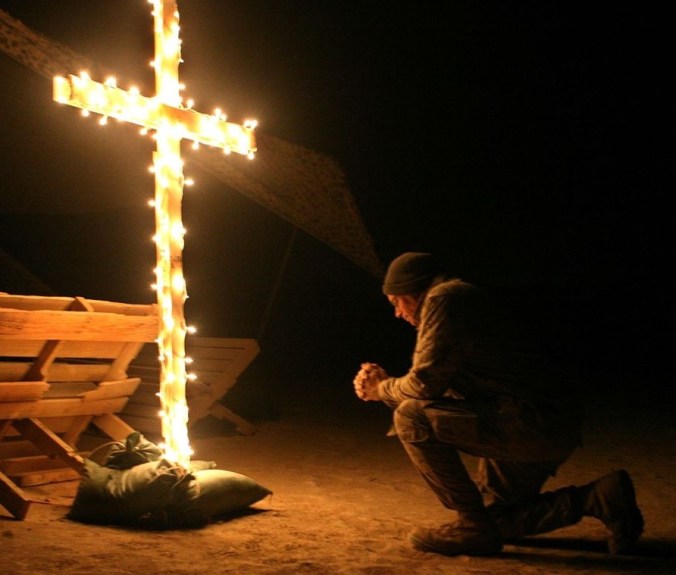
Exalting ourselves doesn’t just affect how people look at us.  The greater problem is with how God looks at us.  Boasting and self-righteousness go hand in hand. God’s plan of salvation, on the other hand, works with the humble and the penitent.  While we are holding ourselves up to God and telling him what good people we are, we are not allowing him to be our Savior.  The solution is for the Lord to crush us with his law, shatter our false pretensions, and drive us to our knees in humility.

Then the Lord has something he can work with.

It is greater to hear our king, our Savior say to us, “Come up here.”  He can exalt the humble. When we come to him with empty hands, then he can fill them.  When we admit that we are unrighteous, then he can fill us with righteousness.  When we admit that we are spiritually poor, he can make us spiritually rich.  When we come to him as slaves to sin, then he can set us free.

Jesus lifts us out of our sin and guilt by carrying the load for us.  He makes us righteous and holy by giving us his righteousness and his holiness.  Jesus invites us to “come up here” beside him, as he raises us to a new status in God’s eyes.  He makes us members of God’s family and sets us alongside himself as brothers and sisters–innocent children God loves as his very own.

We don’t have to run around looking for a way to exalt ourselves.  We don’t have to worry about ourselves at all.  Let Jesus lift you up with his love and grace.  Then get on with the work of humbly serving with the confidence and joy that God gives.

Love for Evil?


undefined

Luke 6:35 “But love your enemies, do good to them, and lend to them without expecting to get anything back.  Then your reward will be great, and you will be sons of the Most High, because he is kind to the ungrateful and the wicked.”

Why return love for evil?  Isn’t that the way the Lord has been dealing with us since the dawn of time?  He has been returning love for evil.  God had warned our first parents nothing less than death was waiting if they ate of the tree of the knowledge of good and evil.  What Adam and Eve deserved was the same fate that Satan and his angels received for their rebellion.  That is exactly what each of us deserves for the sin that we commit, too.  But the Lord does not treat us as our sins deserve.  In fact, he has just the opposite in mind.  Jesus reminds us that the one who made us his sons and daughters “is kind to the ungrateful and the wicked.”

As Christians, we know God’s love.  That love promises our “reward will be great.”  That reward, Jesus has told us, is worth more than all the wealth and power in this world.  It never rusts or wears out or fades.  It never goes out of style.  It won’t get monotonous or boring.  This great reward is something into which God has poured his very self.  He will surround us with his presence, and in his presence we will always feel his love and his power.

That reward includes our status as “sons of the Most High.”  He considers us his own family.  When you look at statistics about families today, it is painful to see how families are torn apart by child abuse, domestic violence, and even darker sins.  Even the most stable Christian homes can’t provide all the love and nurture we need.  But as Christians, we know God’s love because he has made us “sons of the Most High.” He has made us members of his own family.  What we as parents can’t always provide for our children, and what our parents couldn’t always provide for us, our heavenly Father can provide.  His care gives us a perfect haven to which we can escape, to which we can run from the pressure and betrayal and hatred our world throws at us.  Our heavenly Father’s guidance is always right on the mark.  As sons of the Most High we know that our Father will give us just the support, and sometimes just the discipline, we need.  As his sons, we are also heirs, heirs of the great reward he has promised.

Why return love for evil?  Because we know God’s love and mercy to us.  Jesus says, “Be merciful, just as your Father is merciful.”  He never demanded that we prove our love to him first.  We never offered him anything to suggest that we might be worth saving.  And yet he sympathized with our plight.  He showed compassion and mercy and sacrificed the only Son he had so that wicked and ungrateful people could be his children, too.  Our merciful Father doesn’t pay back our sins with vengeance of his own.  He paid for those sins with the blood of his one and only Son, the Son whom he loved.  He returned love for our evil.

As members of his family, let’s follow in our Father’s footsteps.

Photo By zoocreative, CC BY-SA 2.0, https://commons.wikimedia.org/w/index.php?curid=12997074

By Faith

justice

Habakkuk 2:4 “The righteous will live by his faith.”

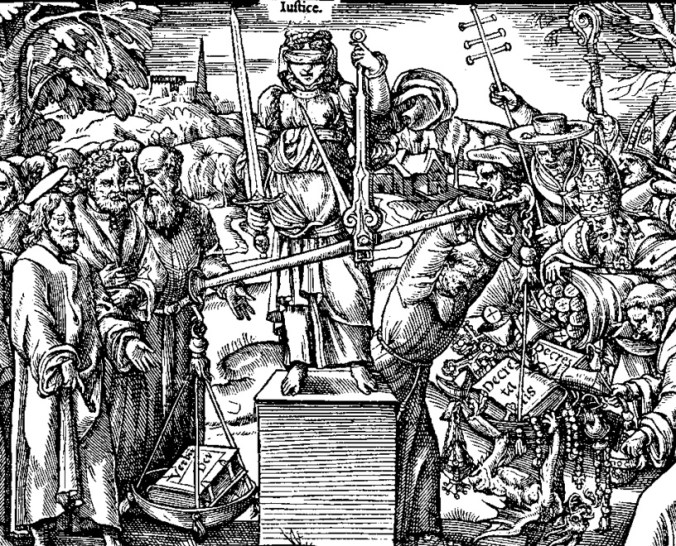
The book of Habakkuk gives us a conversation, a dialogue, between the prophet and the Lord.  In his part of the conversation, Habakkuk had some complaints about the adversity he sees in his life and among his people.  “How long, O Lord, must I call for help, but you do not listen?  Or cry out to you, ‘Violence!’ but you do not save?  Why do you make me look at injustice?  Why do you tolerate wrong?  Destruction and violence are before me; there is strife, and conflict abounds.”  Habakkuk saw that it was hard for people to get justice.  In fact, unjust things were happening all around.  There was violent crime, but nothing was done about it.  There were strife and conflict in the courts, but no guarantee that justice would prevail.

As concerned as he was about what was happening, his complaint was even more about what was not happening.  When he cried out to the Lord about the violence, it seemed as if the Lord did not save.  He had to ask the Lord, “Why do you tolerate wrong?”  Habakkuk prayed, but he got no answer.

When he finally did get an answer, it was the wrong one.  The Lord’s first answer to Habakkuk just didn’t make any sense.  God told him he was going to send the Babylonians to take care of the violence and injustice in Judah. Habakkuk could only respond, “O Lord, you have appointed THEM to execute judgement!?”  The Babylonians were more immoral, more violent, more ungodly than the Jewish people ever were even at their worst.  What God was proposing just didn’t make sense.

For Habakkuk to live with the injustice, and to live with what the Lord had told him, he needed to live by faith.  The same is true of us.  Like Habakkuk, we see violence going on around us all the time.  So often we feel like real justice is never done. We feel helpless to stop it.

What concerns us about this state of affairs even more is this:  It is no longer a matter of people doing what is wrong.  We are concerned because, in so many areas of life, what God has clearly labelled as wrong is now called right, and what God has clearly labelled as right is now called wrong.  The whole thing has been turned upside down.  People are told they should feel ashamed for simply defending what God has always considered good and moral.  We may worry that our children or grandchildren will be taken in, that they will believe the lie.  Like Habakkuk, we may have a hard time understanding why God seemingly tolerates all this.

For Habakkuk, living by faith meant this: God knew what the Babylonians were like.  But he promised that after he had used the Babylonians to carry out justice in Israel, he would also see to it that justice was done to the Babylonians. In the meantime, God said, “the righteous will live by his faith.”

God has made a promise to us that “the righteous will live by faith” that far outshines the promises he made to Habakkuk.  In the books of Romans (1:17) and Galatians (3:11) Paul quotes Habakkuk’s phrase to show how God gives us real life–eternal life.  We live, we have eternal life as our possession right now, because God has made us righteous by faith.  God’s promise to us centers in all that Jesus has done for us.  God promises Jesus Christ lived a righteous life for us.  God promises Jesus died on a cross to take away our sins.  God promises that Jesus can now present us to God as perfectly righteous, pure, and sinless creatures.  You and I can’t go back and prove any of this.  The cross and the empty tomb are past history.  The resurrection and life in heaven are waiting in the future.  All that we have now are God’s promises–clear and certain promises that make us righteous, give us faith, and give us life.

That same confidence that God has made us righteous and gives us eternal life allows us to step out in faith and live right now.  Maybe we can’t understand why God deals with our world the way he does.  Maybe we don’t have the answer to all the questions we would like to ask.  But we do know how much he loves us.  We know what he has prepared for our future.  God has brought us to real life by faith.  By that same faith we can daily put our lives in his hands and watch what he can do.

Godly Prosperity

shopping

“The Lord will again delight in you and make you prosperous, just as he delighted in your fathers, if you obey the Lord your God and keep his commands and decrees that are written in this book of the Law and turn to the Lord your God with all your heart and with all your soul.” (Deuteronomy 30:9-10)

Keeping the commandments impacts our prosperity. We have a clue to how this works in the fourth commandment.  “Honor your Father and your Mother, that it may go well with you and that you may enjoy long life on the earth.”  Want to live a longer life?  Do what your parents tell you when they warn you not to play with matches, or to look both ways before you cross the street.  Want to live a life free from deadly disease and broken relationships?  Don’t commit adultery, keep yourself pure until you are married, and follow God’s commands governing your sexuality.  Want to feel content and secure with the things you own?  Don’t steal from others or covet what they have.  The Lord knows his commands make our lives healthier, happier, more prosperous.

There is just one problem: Sin.  Look at the people to whom Moses wrote.  The Lord freed Israel from slavery in Egypt. He led them to the promised land, flowing with milk and honey.  Yet their whole history was a never ending litany of turning their backs on their Lord and embracing sin. In response he disciplined them by letting their enemies overrun them for awhile.  The farther they wandered from the Lord, the less prosperous they became.

Look at us.  We all choose the path of sin instead of the path of God.  What do we get for it? Don’t we rob ourselves of peace and joy?  Don’t we lie to cover our tracks?  Don’t we become defensive and oversensitive? It shouldn’t surprise us if one way the Lord deals with sin is by taking away our prosperity. At the very least, he takes away our ability to enjoy it.  We deal with our children the same way.  If they defy the rules of the house, we don’t let that go.  We take away their privileges.  We apply some pain to their backsides.  We take away their “prosperity” to shape them up.  If the Lord does the same for us, be thankful. Beyond discipline lie death and hell.

Let’s not misunderstand Moses. He wasn’t a preacher of the modern day “prosperity gospel.” He isn’t saying every downturn in our earthly well-being can be linked to one single sin.  He isn’t suggesting that we can line up the members of our congregation from richest to poorest and conclude the richest are the most godly, and the poorest are the most sinful.  He does mean that God disciplines people for sin, all sin, even sin in general (Hebrews 12:4ff).  The prosperity I lack is one of the many curses I suffer because I am sinful.

There is only one solution to sin, and that is our Savior.  That is why Moses urges, “…turn to the Lord your God with all your heart and with all your soul.”  Moses taught his nation about “the Lord, the gracious and compassionate God, slow to anger, abounding in love and faithfulness, maintaining love to thousands, and forgiving wickedness, rebellion and sin” (Exodus 34:6-7). We know this Lord as Jesus. His death on the cross is the answer to sin and everything about it.  It takes away all our guilt.  There isn’t one spot of sin left.  It takes away the curse.  Since Jesus’ sacrifice restored peace between God and man, the Lord no longer has any reason to be angry with us.  The curse of sin is gone, and we can prosper.

God measures prosperity differently than we do. Martin Luther once said, “Earthly riches are the smallest gift God can give to a man.” Don’t overlook the real treasure God has given. Forgiveness is our possession now.  Peace with God is our possession now.  A mansion in heaven is our possession now.  No matter what our lot in life, we have prosperity because our treasure is in heaven.

We don’t keep the commandments to manipulate God into blessing us.  Even if they had no impact on our prosperity, gratefulness for our salvation is reason enough to obey. No matter how much or little we have in the bank, in God’s saving work we prosper.

Photo By Sammyday - Own work, CC BY-SA 3.0, https://commons.wikimedia.org/w/index.php?curid=18604145

Where to Go

sign-post

“‘You do not want to leave too, do you?’ Jesus asked the Twelve. ‘Simon Peter answered him, ‘Lord, to whom shall we go? You have the words of eternal life. We believe and know that you are the Holy One of God.'” (John 6:67-68)

“Where do you go…?”  That is a question Robin and I ask over and over after we have just moved.  “Where do you go for groceries?”  “Where do you go for an evening out?”  “Where do you go to get your license plates changed?”  “Where do you go?”  Peter asked a similar question.  “Lord, to whom shall we go?”  He asked because others had decided to stop going to Jesus.  “On hearing it, many of his disciples said, “This is a hard teaching.  Who can accept it?…From this time many of his disciples turned back and no longer followed him” (John 6:60,66).

When these disciples called Jesus’ teaching hard, they didn’t mean that it took a lot of work to understand. They understood what Jesus was saying only too well. They were in the same camp as Mark Twain centuries later: “It ain’t those parts of the Bible that I can’t understand that bother me, it is the parts that I do understand.” That was the problem.

By hard they meant the opposite of soft.  It was hard, and rough, and unpleasant.  This teaching had no give to it, there was no room for compromise.  Jesus was too dogmatic in the way he presented his ideas, too unyielding as far as they were concerned.

You see, sometimes we want to find a little room in our faith for some contribution we can make to our own salvation.  When Jesus teaches about the law, that is fine.  That is something we can do. But don’t tell me I have nothing to contribute. At other times we would like some room to pick and choose from the things Jesus taught.  That we should put our faith in Jesus only, that we must accept him in total, that is a “hard teaching.” For many it is a deal-breaker. They “no longer followed him.”

Not for Peter: “Lord, to whom shall we go?  You have the words of eternal life.  We believe and know that you are the Holy One of God.”

Peter realized you can find the word of life in no one but Jesus.  That’s not merely a message Jesus possesses. It is the story of his own life, and work, and meaning. The Bible is God’s account of how the whole history of the entire world revolves around Jesus of Nazareth, the “Holy One of God.”  It introduces us to the God-man who paid for our sins.  We believe it, not as a possibility, but with the conviction that Jesus is both Lord and Savior.  We know him, not just as we know the other famous figures of history. We have met Jesus in this word, and he has become a personal friend, an intimate part of our lives.

That is an astounding truth considering that Jesus Christ is the promised Messiah, the one God set apart to obey the laws we can’t keep, pay the penalty for sin we can’t pay, and overcome the death for which we have no other cure.  For knowing God, for having life, Jesus is where to go.

The Only Way that Works

jesus-moses

Acts 13:39 “Through him everyone who believes is justified from everything you could not be justified from by the law of Moses.”

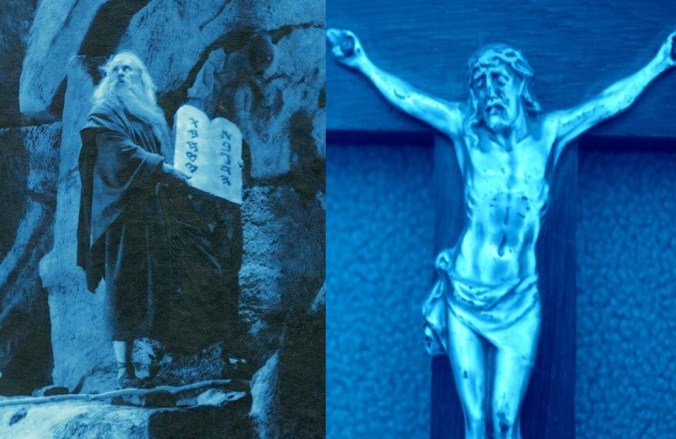
The laws God gave to Moses stretch across four books of the Bible, about 125 pages in my personal Bible. When God revealed his law to Moses, he never intended it to be some kind of self-help book. Endless lists of things that made people ceremonially unclean, and purification rights to go with them; detailed instructions about some of the most minute details of how they lived and worshiped; this was more than any reasonable person could do. It should have led them to see the futility of working your way into God’s graces. It should have led them to seek help, not to self-help. But this is just the way that Moses was misused.

Why? For the same reason we find ourselves doing the same thing today. Rather than coming to grips with sin’s hold on us, we choose to live under the illusion of personal goodness. The name on the laws we are trying to follow to a better life may not be “Moses.” But the law of Osteen, Dobson, Warren, or Lucado–or of the pastor who serves you personally, for that matter–will not be able to justify us, either. Come to your own pastor for counseling, and he may be able to apply God’s word to your situation. He may be able to tell you where you have broken God’s commands. He may help you with applications that improve your lives and make it tolerable to continue. He may have insights into what to do. It may be a good and wholesome thing for you to make those changes. But all by itself, this will not draw you closer to God. It won’t cancel your sin. It won’t justify you. I’m not saying we shouldn’t try to do our best, but we find no peace that way.

God has provided a better way. “Through him (Jesus) everyone who believes is justified.” Jesus is superior to Moses, because Jesus actually provides what Moses could only describe–a perfect life. Justification and its companion word, “righteousness,” aren’t everyday words for us, at least in the way they are used by Paul. When we use “justify,” we are defending something or making a case for it. When Jesus justifies us, he is not defending us based our good behavior. He is defending us based on his good behavior. He isn’t looking for perfect performance that isn’t there. He is getting us off the performance treadmill. He is giving us credit for his perfect performance from the stable to the cross. He pronounces us righteous, he declares us free from sin through the forgiveness he has led us to believe.

You see, what Jesus wants more than that you try harder is that you repent and give your sins to him. Lay your burdens down in front of him. Stop trying to save yourself. Jesus will do what all your efforts could never do. He will make your very real sins disappear. He will give you relief from all your guilt. He will give rest to your troubled soul. Jesus is infinitely superior to every other avenue to peace, because his way is the only way that actually works.

Forgiveness Comes First

dove-release-large

Mark 2:5 “Son, your sins are forgiven.”

For Jesus, forgiveness comes first. Paralysis, blindness, unemployment, loneliness, drought– none of these things ever damned anyone. But despair that God doesn’t love me because he holds my sins against me–that is deadly to faith. Who can trust God when you don’t think he loves you? Jesus looked at the man lying in front of him, and he saw that this man was paralyzed. But the Doctor of our souls also sees the heart, and whether this man was conscious of his greater spiritual need at this moment or not, Jesus was. Forgiveness came first. Before anything else, Jesus made this paralyzed man sure that God loved him.

Is our need any different? I know that Jesus can help me with so many things I am concerned about in life. I know that he holds the answer to every question I can think to ask. And I know that sometimes we believe that if we talk about forgiveness too much, people will take it for granted. We fear it won’t seem so special anymore. The Bible is a big book with lots of information. The forgiveness of sins is just one part of that message. Maybe we don’t believe we can take so much time to focus on one single issue.

But I also know that what I need more than anything is not more advice on how to go to school Christian, or how to work Christian, or how to date Christian, or how to raise a family Christian, or how to vote Christian, or how to diet Christian. What I need more than anything is to know that God loves me. There is nothing that my heart longs more to hear than how much he was willing to do to save me, how much he was willing to give to have me, how much he was willing to sacrifice to make me his own. Nothing so changes me as when Christ is held before me in all his grace, compassion, and forgiveness. You know, they have been telling me to stop sinning for as long as I can remember, and it hasn’t stopped me yet (not that I didn’t need to hear that!). But one thing changes my taste for sin, and fills me with the desire to live a life of love. That is hearing about Jesus and his love. And his love always begins with forgiving my sins.

Jesus’ words to this man are exactly what we need to hear: “Son, your sins are forgiven.” Jesus calls this man “son,” literally “child” in the original. Does something inside of us rebel at being referred to that way? “Child” can make us feel incompetent, dependent, and needy. “Child” makes us feel like we can’t take care of ourselves.

But that is how we need to feel. Spiritually, that is what we are like. Then we are ready to receive what God is giving. I have often thought that 4 years olds have life about as good as it gets. So little is expected and so much is received. When I was 4 my parents took care of everything. They paid the bills, put the food on the table, put the band-aids on my owies, and tucked me into bed at night. They watched me to make sure that I was safe, and carried me when I was tired, and held me when I was scared. I was the object of their affection and the center of their concern. Being 4 years old was a great gig.

Children of God, you are the objects of God’s affection and the center of his concern. As children in his family, you can be sure that he is there to take care of everything. How can you be so sure? Because forgiveness came first. Your sins are all forgiven. This same Jesus has taken every one of them with him to the cross. You enjoy your Savior’s unchanging and unlimited love because no sin stands between the two of you anymore. He loves you no matter how many hurts and heartaches lay you flat on your back in front of him. And you can be sure that in his own time and way, he is going to take care of those things, too.

Righteous in Christ

no-diy

Philippians 3:8-9 “I consider everything a loss compared to the surpassing greatness of knowing Christ Jesus my Lord, for whose sake I have lost all things. I consider them rubbish that I may gain Christ, and be found in him, not having a righteousness of my own that comes from the law, but that which is through faith in Christ–the righteousness that comes from God and is by faith.”

My father is the quintessential “do-it-yourselfer.” I remember going for a walk with him once and meeting one of our neighbors for the first time. As my father tried to describe to him who we were and where in the neighborhood we lived, the man remarked, “I know who you are. You’re that guy who always has the piles of dirt, sand, or gravel in your yard.” He was right. There was always a project going on at our house.

When it comes to home improvement, there is nothing wrong with being a “do-it-yourselfer.” If you are any good at it, you can make sure things get done the right way. The same holds true for many other areas of life. Maybe you can sew your own dresses, or grow your own food, or manage all your own investments, or fix all your own cars, and make sure it gets done the right way.

But there is one area of life for which this never works, and that is in our relationship with God. Here we are all tempted to believe that we have to do it ourselves. But as long as we are trying to do it ourselves, we will never be sure where we stand with God.

The true Christian faith is not a moral philosophy about how we must live. It is “knowing Christ Jesus my Lord.” It is not just studying about Jesus like studying about some historic figure in a book. It is actually meeting Jesus in his word, being introduced to him, and living life with him as our Savior, our friend, and our brother.

When we know Jesus, then we truly know God. When you sit down on the hillside and listen to Jesus preach his sermon on the mount, then you see how high God has set his standards for keeping his law, and how far short of his perfection we have fallen. But when you follow him down from the hillside, and you see him actually reach out and touch the unclean leper to heal him, you know the depth of his concern for your suffering, and the extent of his power to fill your needs. When you stand with Jesus at the tomb of Lazarus, and you see the tears burning down his cheeks, and you hear his voice commanding Lazarus back to life, you know the intensity with which he feels your pain, and the authority with which he controls your world. When you kneel at the foot of his cross, and the blood running from his hands and feet carries his life mingled with your sins away past your knees, and his dying breath cries out, “It is finished,” you know that in his unsurpassed love for you he has left nothing more for you to pay or do.

Do you want to be sure, really sure, that God’s love and grace are yours, that your sins are forgiven, that you will live again after you die? Then you need to be found in Jesus, wrapped in the righteousness of his holy life, cleansed in the blood of his innocent death. A righteousness of our own that comes from our own keeping of the law is only a so-called righteousness. We never live our lives completely guilt free, and as long as we are still producing sin, we aren’t righteous at all.

Then God comes and gives us a righteousness of his own making. He gives us an innocence that comes to us from the outside. He takes and he hides our sinful selves in the perfect love of Christ. He so covers over the content of our lives with Jesus’ life and death that he can no longer see us at all. We are all little Christ’s to him. Lutheran Christians celebrate this truth in the Reformation this time of year. A more well-known October celebration will see little children walking door-to-door with hidden identities, hidden behind costumes and masks. By bringing us to faith, the Lord has dressed each one of us up as Jesus, only our new identity is more than a flimsy costume, and we wear it every day for the rest of our believing lives.

This is our great find, not only to find and know Jesus, but to be found in him with the righteousness that comes from God. In Jesus we are the precious, holy, dear, innocent children of God himself.