More than rules

adoration

John 1:17 “For the law was given through Moses; grace and truth came through Jesus Christ.”

I know a young man who would read our church’s devotional magazine, Meditations, and with each devotion he tried to find the “moral of the story,” the lesson meant to change your behavior. It was something of a revelation to him that sometimes when God speaks he isn’t trying to change your behavior. He just wants to tell you something about himself. John is telling us something similar about Jesus here. He came to give you more than rules.

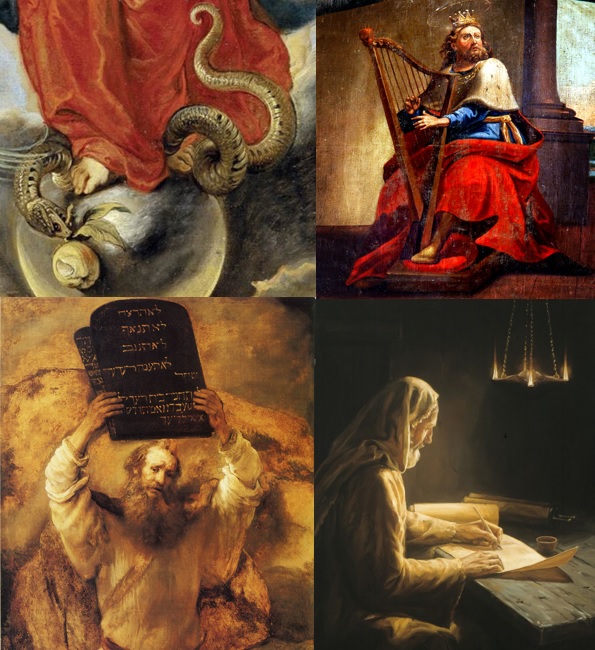
Everyone knows the name of the most famous movie about Moses, the one starring Charlton Heston: The Ten Commandments. It’s no surprise, then, when John says the law was given through Moses. If you read the first five books of the Bible, the ones written by Moses, you find that there were more than ten commands God gave Moses. There were hundreds. They covered every facet of life. There were laws that governed what you ate, what kind of clothes you wore, how you worshiped, whom you married, how you conducted business, how you farmed, how you schooled your children, how you practiced hygiene, and even where and how you used the restroom. Hardly a moment went by in the lives of Old Testament believers when they weren’t consciously carrying out some rule, some command, some instruction Moses had given them.

The world didn’t need Jesus to come and bring more rules. It had more than it needed. Jesus actually rolled back many of the rules given by Moses by fulfilling them, which is why you don’t feel even a little guilty eating Christmas ham, or sitting in church on Sunday.

But didn’t Jesus give us new commandments about love, like “Love the Lord your God with all your heart, and all your soul, and all your mind, and love your neighbor as yourself”? No that was Moses, too, Deuteronomy 6:5 and Leviticus 19:18. Jesus just brought this to people’s attention again. Didn’t Jesus give us something new when he taught us, “Love your enemies”? No, that’s also in Moses (Exodus 12:49), if you read the context of what he says about the commandments. Jesus just clarified things for a generation that had lost its way.

So why does John make a point of this? People have a tendency to think about religion, “Don’t bother me with theory and theology. Just get to the practical part. Tell me what I’m supposed to do.” But it so happens that the “theory and the theology” (which really involves no theory at all, but is all based on unchangeable facts God has revealed) is the main part. Without it, none of the practical stuff works. You can no more follow God’s rules and live a Christian life without understanding God and his love, than a doctor can perform surgery without studying anatomy, or prescribe medicines without knowing some chemistry, or a mechanic can fix your car without knowing how an internal combustion engine works, or your accountant can do your taxes without knowing a little something about math.

It’s not that Jesus is unconcerned about the rules, but he knows, better than we do, how miserably we fail to keep them. That is why he comes to give us something more than rules: “Grace and truth came through Jesus Christ.” Didn’t grace also exist before Jesus came? Didn’t the Lord describe himself this way to Moses: “The Lord, the Lord, the gracious and compassionate God, slow to anger, abounding in love, forgiving wickedness, rebellion, and sin”? Yes he did. But God never joined us in our world as a man before Jesus. God never fulfilled all the law’s demands as our substitute before Jesus. God never died in our place to pay for all our sins before Jesus. It wasn’t until Jesus came that we had the basis for our freedom from sin, and guilt, and fear, and legalism, and Satan, and death. These gifts, this grace and truth, came through Jesus Christ, and they are so much more than another set of rules.

Highly Favored

annunciation

Luke 1:28-29  “The angel went to her and said, ‘Greetings, you who are highly favored! The Lord is with you.’ Mary was greatly troubled at his words and wondered what kind of greeting this might be.”

God has given Mary an absolutely unique role among all the people who ever lived. Only one person could give birth to the Savior of the world and be his mother. This privilege is certainly a part of what the angel means when he says, “…you who are highly favored.”

But as far as God’s love and esteem for us are concerned, we have more in common with Mary than we have distinctions. “Highly favored” comes from the same Greek root which in other contexts gets translated “grace.” As with grace, there is implication here of something unmerited, undeserved, unearned. Mary was a sinner who did not deserve to have Jesus as her own son. God gave him to her as a gift. We are sinners who did not deserve to receive Jesus as our Savior. God gave him to us as a gift.

Have we lived with God’s high favor and grace for so long that we take it for granted, or worse yet, we begin to see it as an entitlement? Have we lost our sense of wonder at it because life under the grace of God is all we really remember? Maybe, like Mary, we don’t have a very interesting tale of darkness and sin to tell about in our past. We are not like David who was an adulterer and murder, or Paul who persecuted the church. We are kind of run-of-the-mill, boring sinners. We didn’t find Jesus after a life of violence, or crime, or drugs. Our teen rebellion was never much more than a bad attitude. We are guilty of irritating our spouses, not of cheating on them. We haven’t sold out our integrity in exchange for career success.

I have on my desk a book of prayers and devotions for pastors, and one of the prayers I return to from time to time asks God to trouble me. Lord, trouble me with the smallness of my work. Trouble me with my unholiness and my slowness to obey. Trouble me with the time I have wasted. Let me see my sin, even my boring, run-of-the-mill sin, for what it really is, not so that I will feel bad. Do it so that I can better appreciate the wonder of your grace and favor, that for me–even for me– you were willing to give up your only Son.

Don’t Fear the Cure

cough_medicine_two_children

Luke 1:76-77 “And you, my child, will be called a prophet of the Most High; for you will go on before the Lord to prepare the way for him, to give his people the knowledge of salvation through the forgiveness of their sins.”

People fear the diagnosis for which forgiveness is the cure. If I have to be forgiven, that means something is wrong with me. I must have sin, and guilt, and that sin and guilt have been judged. I have known people who became angry when they were told, “I forgive you.” “You forgive me? You are saying that I am the one at fault, that I have done something wrong? How dare you judge me!” We are right to condemn self-righteous, loveless judging that aims only to hurt and humiliate. But there is also a good and godly judgment necessary if we are going to be forgiven. To receive forgiveness is to agree with the judge. I am humbled when I have to admit that something is wrong with me that needs to be forgiven. Maybe I even feel humiliated

Forgiveness can be hard to accept for another reason. It doesn’t come cheap. In the book of Hebrews we read, “Without the shedding of blood, there is no forgiveness” (Hebrews 9:22). God impressed this on his Old Testament people with all the blood that was spilled in the animal sacrifices that took place in the temple. John the Baptist was the first to make the connection between Jesus and those sacrifices: “Look, the Lamb of God who takes away the sin of the world.” Jesus’ blood, shed at the cross, would pay the price God’s justice demanded for our sins.

It is hard to accept that what we have done is so bad that the price had to be so severe. We would feel better about ourselves if we could offer a milder solution than this.

But this is the true way of salvation. Forgiveness does not mean God excuses our sin. He never says, “That’s okay.” It isn’t. It is hurtful. It is deadly. Forgiveness fully recognizes this. It demands that this be acknowledged. And yet, God does not hold our sins against us.

Nor is forgiveness merely a kind sentiment on God’s part. He doesn’t let his affection for us get the better of him and overrule his good sense, as though he were an indulgent parent coddling a naughty child. Forgiveness is based on a historical event. It results in God’s decisive action. The historical event is the crucifixion of God’s own Son Jesus Christ. At the cross mankind was telling God what they thought of his gift and his grace. At the cross God was showing mankind what he thought of their rebellion and sin. But at the cross all the bitter battle between God and man was poured out on Jesus. His love was bigger than man’s hatred and sin. His tortured, dying body and soul absorbed all of God’s anger and punishment at sin until the very last of it was spent, and Jesus, crushed and broken by the force of it all, commended his spirit into his Father’s hands and breathed his last.

Thus, God can speak his decisive word of grace. We hear Jesus, God in the flesh, speaking forgiveness so freely, so liberally, it almost seems too good to be true. To a paralytic who didn’t ask for it he says, “Son, be of good cheer. Your sins are forgiven.” Again, to the woman with the bad-girl reputation, well earned it seems, crying over his feet at the house of Simon the Pharisee, “Your sins are forgiven.” To another woman caught in adultery: “Neither do I condemn you.” About the soldiers, fastening his arms and legs to the cross by driving nails through them, doing so with no apology, he prays, “Father, forgive them, for they do not know what they are doing.” He sends his disciples out with this message, “If you forgive anyone his sins, they are forgiven.” And even in our lowest, wickedest moments he has left us the promise, “If we confess our sins, he is faithful and just to forgive us our sins and purify us from all unrighteousness.”

Is that solution such a distasteful one? Does God’s medicine for our sin taste so bad–to be forgiven? When actress Sally Field received her second Oscar in 1984 for her work in the movie Places in the Heart, she told the audience, “You like me. You really like me!” Forgiveness leads us to an even dearer conclusion with God: “You love me. You really love me!” And having this, there is nothing else we really need for Christmas.

Signs and Seals of his Presence

trumpet

Joshua 6:2-4    “See, I have delivered Jericho into your hands, along with its king and its fighting men. March around the city once with all the armed men. Do this for six days. Have seven priests carry seven trumpets of rams horns in front of the ark. On the seventh day, march around the city seven times with the priests blowing the trumpets.”

If we look closely at God’s reason-defying plan for Israel to conquer the city of Jericho, we find that there is method to God’s madness. What seems strange and unusual has a beneficial purpose. He supports the faith of his faithful soldiers by supplying seals and signs of his gracious presence.

The ark of the covenant was more than a box with some religious artifacts inside. The top of it, you may remember, was called the mercy seat. It was the throne of God on earth, a reminder to his people that even though he fills the universe, yet he lived with his chosen people in a special way. They had a special promise of his love and protection. They had special access to his power and help. Here it was a reminder that he was fighting this battle, and his powerful presence was the only battering ram they would need to bring down Jericho’s walls. Maybe they couldn’t see the Lord with their eyes, but he supplied this visible reminder that he was there, he was with them, and he was on their side.

We have also been given a seal of God’s presence with us, a visible and tangible reminder that we are not alone. It doesn’t come in the form of a box with a golden throne on the top. It comes in bread and wine, where Jesus is present with his body and blood to forgive our sins and tear down the walls that separated us from God. Maybe we can’t see him with our eyes in his supper, but it is still a visible reminder that he is here, that he is with us, and that he is on our side.

That presence of God with his people was also announced by the trumpets. Trumpets announced God’s arrival on Mt. Sinai, when he came to give his law and make Israel his chosen people. At Jericho trumpets announced that God was present again, to give his people the land he had promised them, and to bring judgment on their enemies. Jesus tells us that trumpets will sound once more when he returns on the Last Day, announcing that the King has come. Then he will be present to judge our enemies and bring us into the heavenly land he has promised us after our wandering in the wilderness here below.

Do you see how these signs and seals of God’s presence serve to bolster our faith? When life throws curves at us, when it raises obstacles we can’t see over or past, when it beats us down, aren’t we tempted to think that we are all alone, that we are going to have to deal with this all by ourselves? That is especially true for our spiritual battles. German pastor Dietrich Bonhoeffer once observed, “There is no one who is more alone than the man who is alone with his sin.” Isn’t that why we stumble into worry, and even lean toward despair? Don’t we find ourselves thinking this way even when we are surrounded by family and friends?

God’s word tells us we are not alone. He promises he is with us, just as he promised Joshua he himself would deliver Jericho. But we need something we can see and touch to make us sure. And so he gives us more. He supplies us with visible and audible seals that he has not left his people alone. He is still here. That still builds the faith of his people, the people who serve as his spiritual foot soldiers today.

God Has Come

open-door

Luke 1:67-68 “His father Zechariah was filled with the Holy Spirit and prophesied: Praise be to the Lord, the God of Israel, because he has come and has redeemed his people.”

God, in the person of Jesus, has come and has redeemed his people. Jesus has come to us from heaven. We take that as a good thing, but it could have had a very different meaning. When Navy Seals visited Osama Bin Laden’s compound in Pakistan and stormed the house, you can be sure that bin Laden didn’t say to one of his wives, “Put on some coffee, Myrt. We’ve got guests.” For bin Laden it was a terrifying visit, because justice was about to be served.

In a similar way, when God the Father visited the Garden of Eden after Adam and Eve had eaten fruit from the Tree of the Knowledge of Good and Evil, Adam and Eve didn’t cry out “Daddy!” and come running like two little children whose dad just got home from work. They ran and hid from him because they were afraid. They had become sinners, and God had warned them that the day they ate of the fruit they would surely die.

So God coming to visit people didn’t have to be a happy time. “Got sin?” Then we’ve got reason to be afraid when God comes to visit. And who doesn’t have plenty of sin? But that’s not the way that Zechariah speaks of our Savior’s coming.

This more like someone coming to visit a friend or family member in the hospital. When I make hospital calls, my visits are frequently interrupted by nurses and aids coming in to take vital signs, change an IV bag, or administer medications. It’s all neat and tidy and professional. Many times a friend or family member is also in the room. As often as not they have camped out overnight, or even for several days. Their “visit” involves tending to the patient’s needs around the clock. They are refilling a cup of water, or helping their friend get positioned more comfortably, or going to the nurses station when help is needed, or just being present to help the hours pass. This isn’t a job. It’s an act of love. It’s a product of the deep value they place on the person they have come to help.

When God came to visit us in the person of Jesus, it wasn’t a job. It was an act of love. It was the product of the deep value he placed on the people he came to help. That becomes clear when we look at the thing he came to do. “He has come and has redeemed his people.” Jesus brings us redemption. He paid the price that sets us free. He didn’t come and lay down cash on the barrel head. It wasn’t dollars or euros, or drachma or shekels for that matter. The value Jesus places on us isn’t monetary.

The price wasn’t merely time and attention, either. Here the hospital illustration limps a little. It is true that Jesus showed value and dignity to the people of his day through his ministry of mercy. He sacrificed sleep and food to heal people. When they intruded on his vacation time, he didn’t gripe about people not respecting proper boundaries and giving him a little space. He taught and healed and fed them some more. No sinner was so sinful, no Pharisee was so self-righteous, no child was so young, that Jesus did not have time to stop and share an appropriate word. He valued and reached out to them all. But the price he paid was something more.

“The Son of Man did not come to be served, but to serve, and to give his life as a ransom for many,” Jesus warned his disciples weeks before his crucifixion.  He came and he died to redeem us. This was no quick and easy death. There was no bullet to the brain and instantaneous lights out. It wasn’t a lethal injection that slowly and softly slips the victim into a sleep from which he’ll never awake. Angry beatings gave way to cruel tortures that gave way to a humiliating execution–stripped of all clothing and dignity and nailed to cross like a sign nailed to a post. His Father forsook him and hell consumed him–all of it the price he was willing to pay for one reason. This is how much you mean to him, how deeply he values you. This is the price of our redemption, and it frees us from every sin.

Justice for the Poor

scales-justice

Isaiah 11:3-4 “He will not judge by what he sees with his eyes, or decide by what he hears with his ears, but with righteousness he will judge the needy, with justice he will give decisions for the poor of the earth.”

Isaiah singles out the needy and the poor, not because poverty is a virtue. Let’s face it, no one aspires to poverty. If you’re poor, you want that to change as soon as possible. Isaiah zeroes in on these people because historically they are the last people to get justice. They have no influential friends. They cannot afford good lawyers. They certainly don’t have money to work the system and bribe their way out of trouble.

But with Jesus, all justice is given on an even playing field. That picture of a level field actually lies behind the Hebrew word for “justice” in this verse. He doesn’t judge you differently because you don’t dress as well as some people. He doesn’t treat you differently if you aren’t one of the “pretty people.” He doesn’t care if your friends are popular, or if you don’t have any friends at all. Race means nothing to him. He looks at you and he sees a person, nothing more, nothing less. It’s just you, and him, and your life.

This is the measuring stick by which he judges: “…with righteousness he will judge the needy,” and everyone else, for that matter. Righteousness is absolute perfection, unwavering, unbending adherence to what is good and true. There is no acceptance of “pretty good,” no steep curve to help out the class, no extra credit points to cancel out the things we missed.

There is, however, his gift. For Jesus, righteousness is more than a standard by which to judge others. It is the way in which he lived his own life, from his first breath in the stable where he was born to the last breath he gave up on the cross. It is his obedience to every detail of his Father’s plan to save us. It is his perfect love ending in his selfless sacrifice as our substitute, in our place. Righteousness was the standard by which he lived. Now it’s the status he gives to us, not based on our performance, our behavior, but his own. Righteousness is all there is to see in us after he has removed all our sin. Righteousness is all there is to see in us after he gives us the credit for his love, and kindness, and mercy, and obedience, and selflessness, and sacrifice.

This righteousness meets his higher standard. It is ours, not because we lived it, but because we received it by faith. It belongs to poor and needy people like us, a borrowed righteousness for people not too proud to admit they have none of their own. With it we now stand confidently before our Judge.

Big Answers to Big Prayers

globe-hands

Isaiah 64:3-4 “When you did awesome things that we did not expect, you came down, and the mountains trembled before you. Since ancient times no one has heard, no ear has perceived, no eye has seen any God besides you, who acts on behalf of those who wait for him.”

The problem with our prayers is not that we ask God for too much. We shoot too low. We underestimate his generosity, his power, and his willingness to help. We might think we are asking for a lot when we ask him to let us win the lottery. That’s not a big request. It would be incredibly easy for God to do. It does not require him to suspend the laws of physics. It doesn’t change the course of history for entire nations of people. No one has to die. It seems like a big thing because we overvalue earthly riches. We don’t think about how often they do more harm than good.

Isaiah is going big with his prayer, “awesome things that we did not expect.” He could look back on a history that included a world-wide flood, the death of all Egypt’s firstborn, a sea of water splitting in two so that God’s people could go through on dry land, enough bread to feed two million people miraculously appearing on the desert floor every day for forty years. “That’s what I’m talking about, Lord. No one asked you for those things, but you did them anyway. Come down and deliver us like that! Do awesome things for us.”

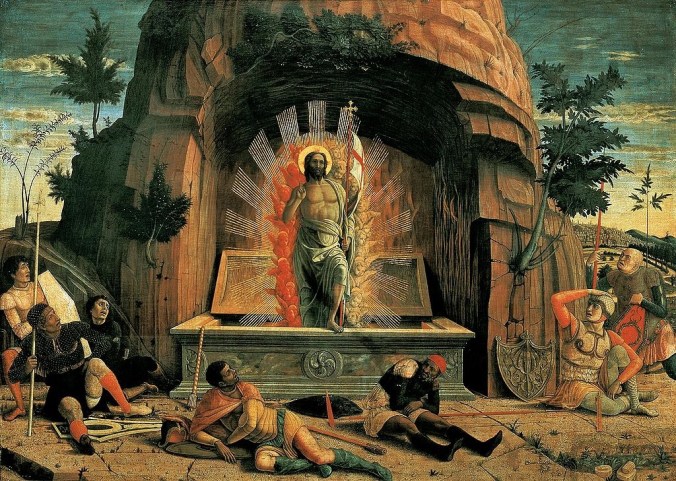
Our eternal salvation worked like that. “You came down, and the mountains trembled before you.” Remember what happened at the moment Jesus died on the cross? “The earth shook and the rocks split,” Matthew writes. “When the centurion and those with him who were guarding Jesus saw the earthquake and all that had happened, they were terrified, and exclaimed, ‘Surely he was the Son of God!’” Remember what happened when Jesus rose from the dead? “There was a violent earthquake, for an angel of the Lord came down from heaven…The guards were so afraid of him that they shook and became like dead men.” Apparently that was a tough weekend to get assigned guard duty in Jerusalem if you were a Roman soldier. Did anyone expect God to save us this way? Would anyone have dared to ask him, “Lord, I know I deserve to die for my sins, but could you sacrifice your Son in my place and raise him from the dead?” Who would have thought of such a prayer? But the Lord does awesome things we do not expect.

Generally, we may not need to ask for something so big in our day to day prayers. God doesn’t need to set off earthquakes to help us find a new job, or recover from an injury, or get help in marriage counseling. (Well, depending on how stubborn we are, maybe we need the earthquakes for the marriage counseling). But when we lift our eyes from our own little lives, and we see our lost and broken world, and a culture that is so hostile to our faith, and Christians under physical attack around the world from false religions and antagonistic governments, and the church weakened by inner scandals and betrayals, we realize that the only way to fix this is going to take God’s intervention on a Biblical scale. In the mean time we will fight the good fight of faith bravely. But our urgent prayer is still: “Come, Lord Jesus. Do awesome things for us like you did for your people in ages past.”

We worship the only God who will. “Since ancient times, no one has heard, no ear has perceived, no eye has seen any God besides you, who acts on behalf of those who wait for him.” Boston College Professor Peter Kreeft has observed that our faith is uniquely dependent on miracles. Take the miracles out of Christianity, and you have nothing. God came and intervened with a miracle to create the virgin birth, to become a man, to die in for the sins of the world and rise again, to ascend into heaven. No other God in all the religions of the world gets his hands dirty in our history to save us like that. It gives us confidence to come to him again and ask him to come, come Lord Jesus, one last time. Judge your enemies and set your people free.

Not Your Ordinary King

kings-3

Jeremiah 23:5-6 “’The days are coming,’ declares the Lord, ‘when I will raise up to David a righteous Branch, a King who will reign wisely and do what is just and right in the land.’ In his days Judah will be saved and Israel will live in safety. This is the name by which he will be called: The Lord our Righteousness.’”

If you live in England today, the word may make you think of a very rich but very dysfunctional family. If you lived in the American colonies in the 1700’s, it might bring words like “tyranny” to mind. For many Christians, applying the word to Christ makes them think first of obedience. The word I am speaking of is “King.” When the word is used in the Bible, however, the emphasis is generally a different one. As Jeremiah uses the word here, the emphasis is on the things that the King will do for you.

Israel never had another earthly king after the one who lived in Jeremiah’s time. Even after they returned from their captivity in Babylon, they were always under the control of some other nation. To this very day they have not had another king.

But Jesus came with a kingdom which is not of this world.  Jesus is a King who served. In every way he did what is just and right in the land. As a child, we are told, he was obedient to his parents. When tempted by Satan to take the easy way out, and be recognized as king without all the suffering (if only he would worship the devil), he resisted the temptation. Every time he dealt with people he treated them with love. Every time. When dealing with the hardened or the self-righteous, he exposed their sin. When dealing with the sorry, the humbled, and the despairing, he promised forgiveness and offered them mercy.

Jesus’ interest was not a claim of righteousness for himself. Jeremiah calls him, “The Lord Our Righteousness.” His whole, perfect, loving, merciful, righteous life was lived just so that he could give this life to us, as our own righteousness. Then he gave that life up for us, because ours had not been righteous. In every way our lives appear righteous to God, not because of anything we have done, but because Jesus is the Lord our Righteousness.

And so, “In his day Judah will be saved and Israel will live in safety.” Jesus has saved his people. He did not save us from heart disease or old age or domestic terrorism or a bad economy. He saved our lives. He saved our souls, and he gave his own life to do it. Today we are still saved by this King, and we know his care in the eternal safety he provides.

If you are a pop music fan, the word may make you think of Elvis. But if you are a believer in Jesus Christ, then the word reminds us of the life and sacrifice that saves us. It reminds us how hard our God works for us as our wise and righteous King.

Look Closely

nativity-close

John 12:44 “Then Jesus cried out, ‘When a man believes in me, he does not believe in me only, but in the one who sent me. When he looks at me, he sees the one who sent me.’”

God hasn’t told us everything about himself. There are questions the theologians have tried to figure out for years, but for many the best answer is to say, “God hasn’t told us.” We don’t know why God permitted the fall into sin. We don’t know why some people are saved and not others. We believe in the Trinity, but we still must admit we don’t know how God can be one God and three distinct persons all at the same time.

We do know that what can be known about God can be learned by getting to know Jesus. Jesus says that when you believe in him, you are believing in God himself. When you look at him, you are looking at your God. That makes the faith we confess unique among all the religions of the world. Islam, Buddhism, Hinduism–they all have their holy books. But none of the writers of those books claim to be God. And none of those books tell you about the life of God working and living among us.

As much as Christians need and love our holy book, God has given us more than just a holy book. He has given us a person. He has become a human person, and he lived here with us so that we could know him and what he is like. Doesn’t it make it so much warmer, to get to know a person than merely to get to know an idea? Would you rather hear and read about abstract concepts and theoretical principles, or would you rather follow the real life story of a flesh and blood person and see everything he has to say in action? It may be interesting to read someone’s comments on an artist’s work. But if I knew the artist wanted to live with me, let me read his autobiography, even send me personal letters describing himself, I would prefer this more personal and intimate connection. This is one of the blessings of believing in Jesus. We are at the same time getting to know the true God and what he is like.

Soon we will be peeking into a manger to see a baby just born. What we see is more than cute, or sad and nearly tragic. It is holy. It is divine. It is God in all his love, giving up everything to come and rescue us.