Higher

Isaiah 55:8-9 “For my thoughts are not your thoughts, neither are your ways my ways,’ declares the Lord. ‘As the heavens are higher than the earth, so are my ways higher than your ways, and my thoughts than your thoughts.”

Isn’t your own life clear evidence that your thoughts are not the same as God’s? Who of us would ever have come up with this plan? Not a single one of us would have chosen everything we have experienced and endured so far. 

But God’s thoughts are not only different. Isaiah tells us that they are higher. They are better. If we had to come up with a way to heaven on our own, we would think that you had to work your way up. You had to earn your place. That is how it works with everything else we know. There is no free lunch. When you get an email offering you some expensive item, or some great treasure, for free, you assume it must be a scam. When some store or business is offering something for “free,” you wonder “What’s the catch.” There must be strings attached. If something is worth having, you have to work for it. You certainly have to pay for it.

If God worked that way, then every funeral would truly be a sad day, because those who have died may have been dear to us, but not one could be so good or perfect to earn a place in heaven. Neither could any of us. All would be lost, and life would always end in fear and sadness.

But God’s ways are higher than our ways. He gives away the unbelievable gift. Forgiveness is free, and that means that heaven is free as well. Would you think of asking him for that? Would you even dare make the request, if he did not reveal it to us? “Lord, I know that I can’t do everything you demand, so could you just give me heaven instead? In fact, could you just crucify the only Son you have, could you let him suffer the agony of hell I can’t imagine, so that I don’t have to?”

Isn’t it better to have his heavenly gift sooner rather than later? A popular hymn at Lutheran funerals claims “…earth’s but a desert drear–heaven is my home.” That’s not to say we should depart from God’s plan for us in this “desert drear” and take it upon ourselves to try to get to heaven before he is ready to take us. Nor is it to say that God doesn’t give us some pleasant stops along our way through this desert, times filled with joy and fun, and plenty of blessings. But compared to heaven? There the hard work and the hard life are over. The holidays have begun, to borrow a phrase from C.S. Lewis. All of our existence above God describes as “rest,” not because we do nothing but sleep or sit, but because there is no such thing as hard and difficult anymore.

This same wise and gracious God has good things in mind for each of us while we are here as well. Many years ago I heard a wise old pastor describe his answers to our prayers this way: “God always gives us what we ask, or he gives us something better.” The only kind of gifts he knows how to give are good ones. That may not be easy to believe when life his hard, but God promises. Trust his grace, and trust his wisdom, and know that his “higher” thoughts and ways are better for all of us.

Mercy and Pardon

Isaiah 55:7 “Let the wicked forsake his way and the evil man his thoughts. Let him turn to the Lord, and he will have mercy on him, and to our God, for he will freely pardon.”

Words like “wicked” and “evil” are strong words that we tend to reserve for the world’s worst criminals and killers, men whose crimes against humanity bring death and suffering to thousands. Maybe it’s hard to see how they apply to the people we know personally, or to you and me.

It’s not that some of us are worse than others. It is that we are the same as all the rest. The Bible tells us: “There is no difference, for all have sinned and fall short of the glory of God.” There is no difference. Call it what you want. Sin, evil, and wickedness infect us all. They may show themselves in different ways. Some of them are subtler and can be more easily hidden. But there is no denying the problem. The day of our death proves it beyond any doubt. Sin is the reason we die–every one of us. “The wages of sin is death,” Paul wrote the Romans.

But Isaiah doesn’t leave us there stewing in our sin with no solution. “Let him turn to the Lord, and he will have mercy on him, and to our God, for he will freely pardon.” Mercy is a “heart” word. It tells us that the Lord doesn’t merely follow some unbending rules or principles in the way he treats us. He isn’t merely following a formula in the way he runs our lives. When he sees our pain or our difficulties, it moves him. He feels for us and he intends to bring us relief. He hasn’t forgotten us. He knows how hard it is, and how hard it is going to be, and he promises his mercy.

That mercy starts with his forgiveness. “He will freely pardon.” We can create a lot of sin in our lives. The sum total of the world’s sin is immeasurably bigger. But God’s pardon, his forgiveness, dwarfs it all. There is no end or limit to it. It never runs out. How could it when we consider the price God paid to make it possible?

Our God knows what it is like to have a close member of the family die. He gave up his one and only Son. He sacrificed Jesus to pay for every sin ever committed. If he loves us that much, if he has made that sacrifice to pay for our sins, he is not going to become stingy in actually applying his forgiveness to his people. If he loves us that much, he will not be stingy with any of his gifts. Remember his promise in Romans 8: “He who did not spare his own Son, but gave him up for us all, how will he not also, along with him, gracious give us all things.” God freely pardons. He freely gave up his Son to make it possible. And that means he will freely give us every good thing that we need for this life and the one to come.

This mercy and forgiveness God freely gives does not cost us a penny. This is what we commonly call his grace. Do you see how this assures us that he has only good things in mind for us, even after we sin? Mercy and pardon are waiting for us no matter what we have done.

I Want to Know the Power

Philippians 3:10 “I want to know Christ, and the power of his resurrection…”

Jesus’ resurrection involves power. Of course, there must be immeasurable power, indescribable power, unearthly power to bring a man back to life after he has been dead for three days. But the power of Jesus’ resurrection does not work only on Jesus. It works on us, too. It’s why Paul wanted to know Christ.

The power of Jesus’ resurrection is the power that makes us spiritually alive. A dead Christ inspires no faith. It can inspire fear. That’s the effect it had on Jesus’ disciples. They locked themselves behind closed doors because they were afraid they would be the next to go, the next to be arrested and executed.

A dead Christ can inspire grief, depression, hopelessness. Poor Mary Magdalene weeps alone at Jesus’ tomb. She is beside herself because not only is her Friend and Master dead. Now they have desecrated his tomb and taken his body away. She has no proper place to mourn her loss.

At most, maybe a dead Christ can inspire curiosity. I once visited Rome, and I visited the Vatican. There you can see the mummified remains of four popes on display, each one kept under a glass case inviting the stares and the photographs of millions of visitors every year. I was curious to see the centuries-old bodies, too. But my interest was like the interest a person takes in the sideshow at the circus. During their lives these were some of the wealthiest, most influential, most powerful people on earth. But their dried and shriveled remains inspired no desire to know them, to trust them, or to follow them anymore.

Without a living Christ, this is what we are left with in this world: Fear of our own death and the sin for which we have to answer ourselves; grief, depression, and hopelessness; a life filled with losses beyond our understanding or control; and the occasional curious sideshow to distract us from the misery we live today, and the misery we fear will follow.

A Christ who takes my place under God’s judgment, dies on a cross for my crimes, and then walks out of his grave alive three days later with all the power and promise of heaven–that invades my soul and takes over my heart! Here is someone who invites more than my admiration or imitation. This is a man who deserves my complete trust and utter dedication. More than deserves it, he creates it.

With his gospel the living Christ inserts faith right through my ears and eyes. He plants it deep inside my mind and heart. I want to know Christ because his resurrection has the power to make me spiritually alive. It fills me with faith, and from that faith flows a new life full of love, and hope, and joy. That’s the power I want to know!

Look Without Fear

Matthew 28:5 “The angel said to the women, ‘Do not be afraid, for I know that you are looking for Jesus, who was crucified. He is not here…’”

The first words these women who came to Jesus’ tomb heard in their Easter sermon is “Do not be afraid.” Shall we list some of the things that might have contributed to feelings of fear?

One, they were coming to a grave, and places with dead bodies like funeral homes and cemeteries have a tendency to make people feel a little uneasy to begin with.

Two, the grave was open and empty. They saw the very-dead body go in. Now it’s gone. I’ll let your own imaginations run with that one for a few moments.

Three, they are immediately confronted by a white, shiny being from another world. The first thing they see in the tomb is a spirit. That’s what an angel is. Whether a ghost or an alien, I am guessing that if you came face to face with a spirit creature from another world, you might not act exactly cool, calm, and collected at first.

There is more to that last reason for their fear. Nothing in the four Bible accounts of Jesus’ resurrection suggests these women thought they were seeing a ghost. Aliens and extra-terrestrials were a completely foreign concept to First Century Jews. But angels, spirit-messengers from God, were a part of their history and their faith. It didn’t happen often, but when God sent angels to deliver a message like this, people were afraid. God sends an angel to Mary to announce the coming birth of Jesus, and the angel has to settle her first: “Do not be afraid.” God sends an angel to shepherds near Bethlehem to announce that Jesus has been born, and the first words he says? “Fear not,” “Do not be afraid.”

Angels are the good guys. Why the fear? It’s not about them. It’s about us. Contact with angels confronts us with the “holy.” They bring us face to face with absolute sinlessness, goodness, and love. When we are standing face to face with such a creature, all our sin and failure, all of our spiritual inadequacy, suddenly become impossible to deny.

If a woman were standing next to a supermodel, she might suddenly become more self-conscious of some of the flaws in her figure or face. If a man were standing next to some finely chiseled athlete a head taller than him, someone who has lived his life in the weight room, he might lose a bit of his swagger.

How we look on the outside is superficial, practically meaningless. Who we are on the inside, sinful or holy, makes all the difference in the world if someday we want to hang out with God and his angels instead of the devil and his demons.

Our lives don’t measure up. Mine doesn’t. I know that yours don’t either. But that is exactly why we need to go looking for Jesus. That is the point. He hasn’t put together a club for people like Mary Poppins–practically perfect in every way. He has come to be the friend of sinners– not to approve of them, but to love and rescue them. He has the medicine our souls need. It’s why we celebrate this day he rose! So as you look for Jesus, look without fear in your hearts.

Not Memorial Day

Matthew 28:5-6 “You are looking for Jesus, who was crucified. He is not here; he has risen, just as he said. Come, and see the place where he lay.”

These women at Jesus’ tomb were looking for Jesus, who was crucified. In other words, they were looking for a dead body. Does your family celebrate memorial day? When I was a kid, my mom’s side of the family got together on Memorial Day for a picnic at Aunt Mabel’s house. Then we all went out to the cemetery to put flowers on Grandma Bell’s grave in the afternoon. Maybe you go to one of the parades that honor our fallen heroes, the soldiers who gave their lives to protect our country. Memorial Day honors the dead.

Easter is not Memorial Day. We don’t fly the Christian flag at half-staff . Jesus is not our dead hero. It’s true he was dead. “You are looking for Jesus, who was crucified.” His death accomplished more than the most celebrated soldiers in history. His sacrifice didn’t save a platoon, a city, or a nation. He saved the world–past, present, and future. He saved you. He saved me. Like a soldier who jumps in front of a friend and takes a bullet to spare him, Jesus jumped in front of us, and took a cross to spare us the eternal hell that was aimed at our souls. His death completely settles the score for our sins–all of them. Yes, we look for Jesus who was crucified, because his death on a cross takes away the sins of the world. That’s the reason we even have Christianity, and that cross is the main symbol of our faith.

But Jesus isn’t dead. Maybe you’ve heard this trick question from history class. “Who is buried in Grant’s tomb?” Don’t think too hard. The body of President Grant is entombed there. But some insist that no one is “buried” there, because the tomb is above ground.

Here’s another question from history. “Who is buried in Jesus’ tomb?” The answer is “nobody,” nor is anybody entombed, stored, or otherwise housed in that cave. Jesus’ tomb is empty, because Jesus is alive, which the angel reminds us is “just as he said.”

At least four times before he died Jesus promised he would rise from the dead. Even his enemies understood the claim. That is why they placed a guard around his tomb. Before Jesus gave his promise, the Prophet Isaiah promised it 700 years earlier in the fifty-third chapter of his book. Before Isaiah, Jesus’ great ancestor David promised it a thousand years earlier in Psalm 16. If you are looking for Jesus, look with his promise in mind. Then you will be looking for a living Lord, not a dead hero.

So if you were looking to read some nice words about Christianity’s dead founder at Easter, some profound insights from his life and legacy, I’m sorry, but we don’t do that around here. This isn’t a eulogy. No such dead person exists.

But if you want to find a real, live person who will love you as a friend and brother, save you from yourself, give your life meaning and purpose, and give you a brand new life and body after the one you’re using now wears out, breaks down, and dies, well, read on.

This living Lord Jesus, body and soul, rules your world from his throne in heaven. He lives in the words he has left behind for us to know his love and power. When we trust those words, he even comes and lives in our hearts. Look for him with his promise in mind and you will find him, and with him more gifts and blessings than you could have ever thought possible.

For a Coward Like Me

John 19:38-39 “Later, Joseph of Arimathea asked Pilate for the body of Jesus. Now Joseph was a disciple of Jesus, but secretly because he feared the Jews. With Pilate’s permission, he came and took the body. He was accompanied by Nicodemus, the man who earlier had visited Jesus at night.”

All four gospels tell us about Joseph of Arimathea. Here was an influential man. He was wealthy enough for Matthew to note for us that he was rich. He was also a prominent member of the Jewish ruling council, or Sanhedrin. His words were sought by others, and his opinion respected. In Jewish society, there was not much higher he could climb.

None of this made it easier for Joseph to follow Jesus. If anything, it made it even harder. Joseph recognized in Jesus’ words the very voice of God. He knew that Jesus was right. But in this, Joseph was almost alone. Almost every other member of the Council had decided that Jesus was a dangerous heretic. Openly declaring himself in favor of Jesus could have cost Joseph everything: his respect, his position on the Council, perhaps some of the partners with whom he did business and had made his wealth. As he carried the body to the grave, perhaps he thought to himself, “Could this have been me?” The hatred of Jesus had been that intense.

So Joseph kept his faith a secret, not unlike Nicodemus who was helping him. Nicodemus had also kept his opinion about Jesus a secret. Remember how he secretly visited him in the middle of the night? Both of these men fit the description the Apostle John offered earlier in chapter 12. “They would not confess their faith for fear they would be put out of the synagogue; for they loved praise from men more than praise from God.”

This was no small sin. The other members of the Council had Jesus’ blood on their hands by calling for his execution. Joseph and Nicodemus had Jesus’ blood on their hands by keeping their mouths shut. These two prominent men had done nothing to save him. Now they carried his dead body to its tomb.

Isn’t Jesus still so difficult for us to follow at times? It’s an easy thing for me to stand in this pulpit and speak warmly about him to my church. Who is going to disagree? But to risk the resentment of neighbors who belong to a non-Christian religion, or of my unchurched relatives, by telling them that they need Jesus–that wants to drive my faith underground. It’s an easy thing for us to talk about the beliefs we share with each other. All that we will find is support. But to risk being considered an intolerant bigot or idiotic half-wit by employers or co-workers, or peers or friends, for standing up for the tenets of our faith–that quickly cools our zeal.

Fear still paralyzes our witness, and ours is no small sin either, is it. Jesus himself has warned, “Whoever disowns me before men, I will disown him before my Father in heaven.” When we have closed our lips, and bit our tongue in the presence of those who needed to hear our witness, we have given God reason to require their blood of us.

And yet, there is a glimmer of light in John’s description of Joseph. He does not refer to Joseph as an admirer, or observer, or interested researcher. He calls him a disciple. For all his weakness and fear, Joseph still had a sincere faith in Jesus’ words. He still clung to Jesus’ promises. The Lord still considered him one of his very own.

For all of our weaknesses, God still wants us to cling to his promises by faith. In fact, Jesus lay lifeless here for that very purpose, that we might know him as our Savior who forgives our weaknesses and holds us close to himself in faith. As Joseph and Nicodemus lay his body to wrest, we can say with conviction and love, “Sleep well, sweet Savior, who died for a coward like me.”

A Miracle Supper

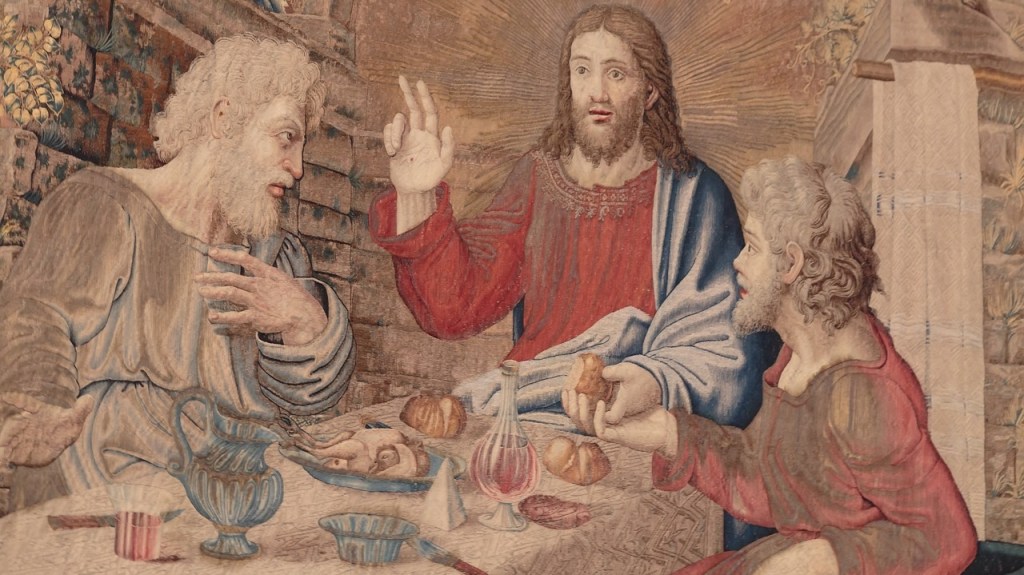
1 Corinthians 11:23-25 “For I received from the Lord what I also passed on to you: the Lord Jesus, on the night he was betrayed, took bread, and when he had given thanks, he broke it and said, ‘This is my body, which is for you; do this in remembrance of me.’ In the same way, after supper he took the cup, saying, ‘This cup is the new covenant in my blood; do this, whenever you drink it, in remembrance of me.”

“This is my body…This cup is the new covenant in my blood.” You know that Christians have debated the exact meaning of these words for over a thousand years. Call me simple, but I believe that Jesus meant exactly what his words say, just like billions of others have.

This bite of unleavened bread is at the same time the body that had the skin peeled off its back by scourges, that slowly suffocated to death over six agonizing hours one Friday afternoon, all for my sake.

This cup holds the blood of the same man whose blood ran from wounds where thorns pierced his forehead, nails pierced his hands and feet, and a spear pierced his side and punctured his motionless heart, all so that he could create a new relationship between me and the God who made me.

I have no explanation for the process, the exact nature of the change, because Jesus gave us none. But that is typical of his miracles. “Draw water,” he once told the servers at a wedding. “Now, go and serve it.” And the water was wine. Did some kind of concentrated, fermented material from grapes suddenly appear in the water and mix with it, sort of like making orange juice or lemonade from concentrate, only miraculously? Was the water instantaneously replaced by wine in the jars? Did some of the water molecules transform into organic material from grapes? And was this a Cabernet, a Merlot, or a Shiraz? I don’t know. He didn’t tell us. But his disciples knew that a miracle had happened, and they put their faith in him.

Jesus once faced a hungry crowd of 5000 men with just five little loaves of bread and a couple of small fish. So he prayed, and gave the bread to his disciples, and told them to go and serve it to the people. Somehow, the bread never ran out. The more the disciples gave away, the more bread they had. All 5000 people ate their fill. Did the loaves in the disciples’ hands somehow come to life? Did the baked cells of crushed wheat begin to reproduce themselves, something like the growing process in the field, only thousands of times faster? Did entirely new chunks of bread materialize out of nowhere as the disciples pulled pieces from each loaf? I don’t know. Jesus didn’t tell us. But at the end there was more bread than they had at the start, and the crowds were ready to make Jesus their king.

It is no great challenge for the one who turned water into wine, and fed five thousand from five loaves–more than that who created the universe and raised the dead– to put his body and blood into a little bite of bread and sip of wine to be present with us for a few moments. Admittedly, it takes a miracle. But that’s the kind of business Jesus is in.

And if he wants us to remember him, isn’t this a better way? A little bite of bread or sip of wine isn’t much of a memorial if that is all they are. What do bread and wine have to say by themselves? The Lincoln and Jefferson memorials in Washington have giant images of the presidents carved in stone. Great quotes of their wisdom are etched into the walls around them. You don’t have to wonder about whom they honor or what they are trying to say.

            But Lincoln and Jefferson themselves are never there. Jesus comes to us in his supper, with the body and blood he gave to save us, in a little miracle he has performed for his people countless times over nearly twenty centuries, so that his people can remember the love and the sacrifice that saved them.

The Lord Has Spoken

Ezekiel 37:14 “I will put my Spirit in you and you will live, and I will settle you in your own land. Then you will know that I the Lord have spoken, and I have done it, declares the Lord.”

Over and over, the Lord gives Ezekiel the same command in chapter 37 of his book: “Prophesy.” “Preach!” God’s power is in his word. It gives life. It works miracles. It changes people.

It’s been that way since the very beginning. “God said, ‘Let there be light.’ And there was light.” “Prophesy to these bones… Prophesy to the breath… Prophesy to my people,” the Lord commanded Ezekiel. Then the bones came together, and the bodies lived. Seventy years later God’s people went home. Their nation survived.

Jesus tells us his words are spirit and life. Thus they are able to give life. Paul writes that the gospel is the power of God for salvation. It creates faith where there was none before. Faith comes from hearing the message. That message is still the tool the Holy Spirit uses to make us spiritually alive.

Did you notice how certain God was that his words would restore the faith and hope of his people and bring them home? “I the Lord have spoken, and I have done it, declares the Lord.” The fulfillment of this promise lies 70 years ahead, but the Lord speaks about it in the past tense. God is like Dr. Seuss’s Horton the elephant. If he makes a promise, he always keeps it. “I meant what I said, and I said what I meant–an elephant faithful one hundred percent.” Once the word is out of his mouth, the promise is as good as done.

Looking back at history, we know that God kept his promise. Israel went home. Years later the Savior came, and the world was saved, just as the Lord had spoken.

For those who follow Jesus and know his promises, there is always hope. We have his word. “Preach the gospel,” an old professor of mine used to say. “And when that doesn’t work, preach the gospel.” There is life and help in those words, even for bones that are very dry.

No Lost Causes

Ezekiel 37:11-13 “Then he said to me: ‘Son of man, these bones are the whole house of Israel. They say our bones are dried up and our hope is gone, we are cut off. Therefore prophesy and say to them: This is what the Sovereign Lord says: O my people, I am going to open your graves and bring you up from them. I will bring you back to the land of Israel. Then you, my people, will know that I am the Lord, when I open your graves and bring you up from them.’”

Israel’s situation was grave, literally. As a nation and as a faith, these people were like dry bones in a grave. They hadn’t stopped breathing momentarily. They hadn’t just flatlined on the heart monitor. They weren’t even like a corpse with rigor mortis, waiting to be buried. They were so dead the flesh was gone, and the bones were dry. The Lord himself agreed. That’s a medical lost cause. Humanly speaking, it is hopeless.

Why should we care? Our country isn’t God’s chosen nation like Israel was–never has been, never will be. The Lord can manage his plan to save souls with our country or without it. But with Old Testament Israel, this is one of those places where God’s promise to send us a Savior appears to be a razor’s edge away from failing. Those promises were bound together with that people living on that piece of geography. If you understand what was at stake here, even for your own eternity, then there is some tension in the story here for you and me. You and I were this close to never knowing the God of our salvation.

The Christian church, as a body of people, does have more in common with ancient Israel. We are basically the same faith in the same Savior on opposite sides of his coming. We see similarities and parallels between the decline of faith among these people and the decline of Bible-believing, gospel-preaching Christianity in our own time. We know family members, friends, and neighbors who have defected from faith in Jesus. They have defected to the gods of pleasure, or do-it-my-own-way, or popular opinion, or skeptical atheism. They show no signs of life. They have become dry bones.

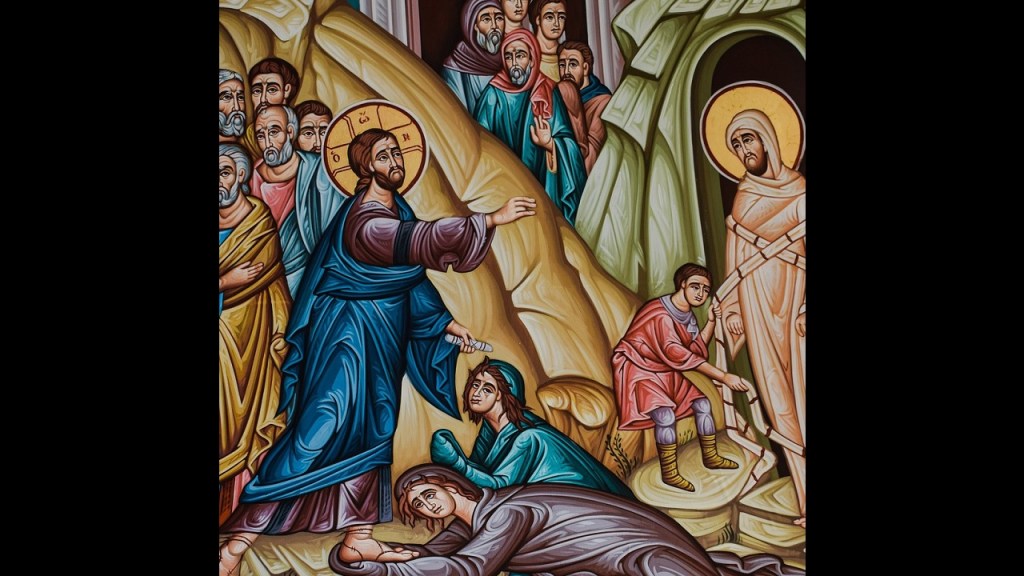
But God can raise the dead. Ezekiel’s vision was not a promise that the Lord would raise dead bodies from their graves literally. However, it is connected to that promise.

Have you been at the grave side ceremony following a funeral? Did you listen to the pastor carefully? At some point before he speaks the final blessing, he says something like this: “We now commit this body to the ground –earth to earth, ashes to ashes, dust to dust – in the sure and certain hope of the resurrection to eternal life, through our Lord Jesus Christ, who, by the power that enables him to bring everything under his control, will transform our lowly bodies so that they will be like his glorious body.”

At our funerals, we profess our faith that Jesus has the power to bring bodies back to life even after they have been reduced to nothing but dust for many years. That’s even farther gone than dry bones: nothing but powder. We have this this confidence because Jesus himself died for our sins and was buried. But he did not turn to dust. He was raised three days later. Now we worship the God who gives life to bodies dead for hundreds and even thousands of years.

It’s enough to make us rethink your definition of a “lost cause.” If God can take the skeleton hanging in your high school or college science lab, wrap it in flesh, and then make it Mr. or Mrs. Smith again, it is a small thing for him to gather people who are scattered a thousand miles from home and resettle them in their own country.

If God can take prehistoric people powder, add some water and spirit, and produce fully functional human beings again, then it is no big deal for him to put his Spirit into us who are already alive and renew our faith. No matter the size of the challenges we face, they are not too big for the God who raises the dead. There are no lost causes with him.