Romans 11:35 “For from him, and through him, and to him are all things. To him be the glory forever! Amen.”
Everything in creation comes from God. Christians who recite the creeds in church remind themselves of this every Sunday. “I believe in God the Father almighty, maker of heaven and earth,” the Apostle’s Creed begins. The Nicene creed adds, “and of all things visible and invisible.” His creating hand has been responsible for all we have and enjoy.
Then, we can say that everything in creation is “through him.” The Lord didn’t just wind the universe up and let it go. His loving hands still play a direct role in everything that happens. He not only provides the good gifts we enjoy from him. He is also the One who has brought them to us. He still delivers every possession we have, whether material or spiritual.
This means that all things are “to him.” Perhaps this phrase is the hardest of the trio to understand. What does it mean that all things are “to God”? This is a way of saying that everything finds its purpose, its reason for existing, in God. It all exists for his glory. No thing and no person will be able to escape serving his gracious purpose in the end.
Do you find some peace here? Does it give you some assurance as you grapple with life? All we have and are is the creation of this wise and loving God. He still very much involves himself in our lives. He brings us his gifts and gives us life as he directs every experience and supports the existence of all things through his power and love. We have the confidence that, whatever we may have, or be, or look like now, in some way we exist to him. We are serving his glory, a glory that shines brightest when he is saving us from sin and preparing us for heaven.
The Lord’s works and ways often leave us with the question “Why?” There is a humility that can explore the answer to that question without harm to faith or criticism of God. But there is also a time be content that he has the answer, even if he isn’t sharing it with us. His greatness far exceeds our own. And that is a good thing. “To him be the glory forever. Amen.”
Romans 11:34 “Who has known the mind of the Lord? Or who has been his counselor? Who has ever given to God, that God should repay him?”
C.S Lewis once commented about his frustration with people who asked why God had to make religion so complicated, as if the Lord were just making this all up as he went along instead of revealing quite unchangeable facts about who he is and what he has done. Sometimes people want a little god, a god they can put in a box, or one they can set limits on.
But do we really want a god like that, one so simple we understand everything about him, one so small we can control him? Why not be happy our God is so great? Isn’t it better to accept our place, and know how much greater he is?
The idea of thinking we are smarter, and giving God advice is appealing. Might we be tempted to raise our hands and volunteer if the position of “Advisor to the Lord” were actually offered? We can all look back through our lives and find some time when we tried to appoint ourselves the Lord’s counselor. We think we could do a better job of steering, and avoid the bumps along the way, if he would just give us the wheel.
We struggle to appreciate the growth in faith times like that provide for us. We forget that our questioning attitude flows from our failure to love the Lord with heart, soul, and mind.
It is not our place to tell the Lord what to do. It is his place to tell us what he has done. Who wants to complain when he tells us that he doesn’t treat us as our sins deserve? Who would have suggested that he demand nothing of us, or that he offer his Son to suffer for our sins? That is exactly what he has to say, and he assures us over and over again.
Paul’s third question also suggests something about knowing our station. “Who has ever given to God, that God should repay him?” All that we have ever given to God is grief. All that he should repay to us is death and hell. Nonetheless, he treats us as if he does owe us something.
Take a moment to consider how much of God’s work for us involves the word “give.” He gave us his Son. Today he gives us the Holy Spirit. He gives us life. He gives us heaven. He gives us our daily bread. He gives and he gives and he gives. When we understand our station, as the receiver of his gifts, our reasons to question him begin to disappear. Our reason to trust his greatness becomes so much more clear.
Romans 11:33 “Oh, the depth of the riches of the wisdom and knowledge of God! How unsearchable his judgements, and his paths beyond tracing out!”
The depth and the richness of God’s wisdom and knowledge inspired Paul’s trust. God’s knowledge includes that vast store of information that he has about everything he has created. You can take all the information mankind has gathered, double it, triple it, and he still knows more.
Scientists have identified about 800,000 different kinds of insects. They believe there are between 1 million and 10 million left to discover. They find another seven to ten thousand every year. The Lord knows not only how many kinds of insects there are, or how many insects are alive at any given moment. He personally knows each bug, where it is, and what it is doing. He not only knows the average number of hairs on a human head. He knows how many are on your head. He knows you and me, and every human being, better than we know ourselves.
“So what!” someone might say. “What good is it?” The Lord’s vast store of information wouldn’t merely make him a good contestant on Jeopardy. Along with the depth of the riches of his knowledge comes the depth of the riches of his wisdom. His wisdom is his capacity to take this knowledge, this intimate understanding of everything he has made, and put it to work for us. Whether we understand it or not, every situation he allows into our lives is tailor made for us at just that moment in time.
That wisdom accomplished our salvation. The Lord knew that sinful people would never live up to his perfect demands. He sent Jesus to become our brother and fulfill those demands in our place. He knew we had nothing to pay for our sins ourselves. What could we give him? He owns everything, even our very selves. So he took what he knows about us and devised a plan for Jesus to become our substitute. He transferred our guilt to him. He paid what we never could.
The Lord knew people would never trust his way of salvation on their own. So he sent the Holy Spirit to call us to faith. He took us by the heart and led us to trust that he is our friend. His word convinced us he every sin we commit.
Even a theologian like the Apostle Paul didn’t have all the answers to the theological questions he had. But what he did know about God let him live securely. He simply trusted in the greatness of God’s saving wisdom.
Matthew 13:44 “The kingdom of heaven is like treasure hidden in a field. When a man found it, he hid it again, and then in his joy went and sold all he had and bought that field.”
If we want to understand why this treasure is so valuable, we can start by remembering what it cost. Our way back into God’s kingdom cost him dearly. Someone once said, God’s grace is free, but it isn’t cheap. Peter’s first letter tell us how much it cost: “For you know that it was not with perishable things such as gold or silver that you were redeemed from the empty way of life handed down to you from your forefathers, but with the precious blood of Christ, a lamb without blemish or defect.”
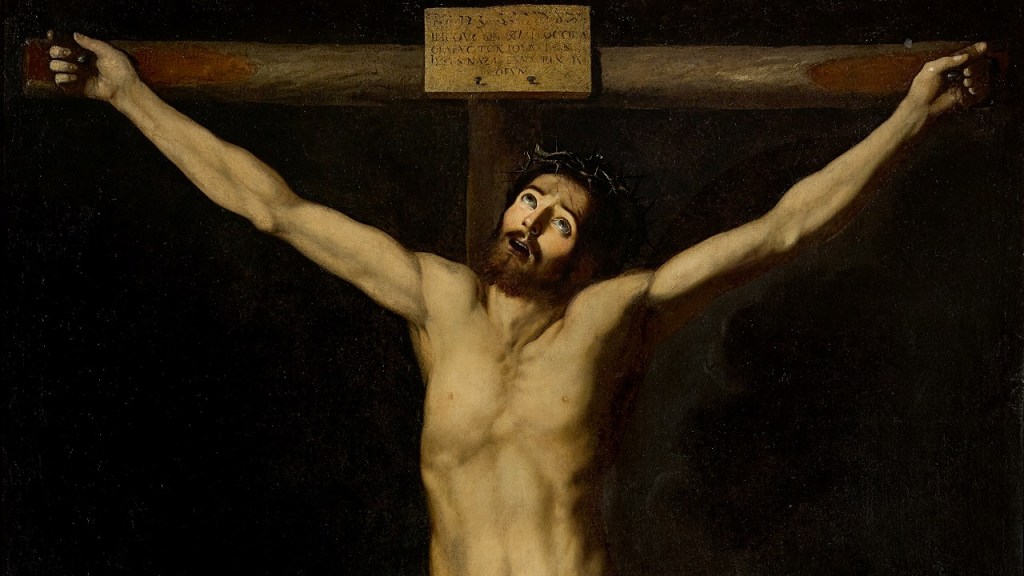
Our sins offended God in such a way that no human payment would ever be enough. Only the life blood of Jesus himself–God’s one and only Son–was valuable enough to win us a place with God. On the cross he paid by experiencing hell for us. He endured every last drop of God’s anger at sin as our substitute. He opened the way to live in God’s love once again.
What kind of price can you put on a merely human life? Most people will agree that no price can be set. This treasure God offers is worth the price of God himself, the life of his own dear Son.
The next thing that makes this treasure so valuable is the gift it gives us. What does it mean to be a part of the kingdom of God? Today it means we have this loving relationship with God. Someday it means that we will live in his presence forever. That is not just any life. It is life without all the nuisances, big or small, that plague us now.
That life to come knows no pain of rejection. Broken families are not a thing there. Marriages don’t fall apart and relationships are never strained. It’s life without hangnails, pimples, wrinkles, or pot bellies. In God’s presence forever, we will live surrounded by his love, basking in his glory.
What is a life like that worth to you? Consider what you would do just to give your children a few extra days or years of the ordinary, generic life we experience now, with all of its pain and problems. Can you see yourself mortgaging your house if you needed the money for medical treatment? Donating one of your own organs? Giving your own life? Jesus has won for us the treasure of life without end and life without any kind of suffering. Can you even place a price on that?
This isn’t just a treasure for our future. The man who found the treasure hidden in the field was filled with joy as soon as he found it. God’s kingdom has the same effect. Jesus is our joy today. We find our peace in him in this moment. We know that we live in God’s grace and love. We have the riches of his promises, promises to be with us always, to supply all our needs, to protect us from danger, to answer our prayers, to make everything that ever happens work for our good.
God has never failed to keep a single promise. Maybe we can’t always understand the promises or see their fulfilment clearly, but we can take hold of these treasures and know they will never fail. They hold their value forever, the greatest treasure we will ever own.
Genesis 15:1-6 He (the Lord) took him outside and said, ‘Look at the heavens and count the stars–if indeed you can count them.’ Then he said to him, ‘So shall your offspring be.’ Abram believed the Lord, and he credited it to him as righteousness.”
Astronomers tell us that there are over 200 billion billion stars in the universe. Not all of them are visible to the naked eye. If every living soul on earth were to count 50 billion of them, they still wouldn’t all be counted.
God’s point to Abram was clear. He had more descendants planned for Abram than he could even count. And Abram had been worried about getting just one. Sometimes God has plans to make us an oak tree when we had our sights set on becoming a radish. God’s promises assure us of his protection now, and they assure us that the care we receive is generous.
God’s promises had an interesting effect on Abram. They not only settled the situation at hand. They assured Abram of God’s love forever. “Abram believed the Lord, and he credited it to him as righteousness.”
It wasn’t natural for Abram to believe God. The visible evidence would have led him in the opposite direction. Abram was an old man, approaching 85 years old. It had been ten years since God first promised him children. TEN YEARS! But God’s promises have the power to change people. The word for “believe” here is the same word from which we get our word “Amen.” When we finish our prayers, we say “Amen,” “Yes, I believe this,” “This is the way it really is.” God’s promises change us. They give us the faith to respond, “Yes. What God says is true.”
More important than anything Abram had to say was what God had to say about Abram. God credited him with righteousness. God considered Abram a righteous man, free from sin, though Abram would still be plagued with doubts from time to time, though Abram would still be guilty of some glaring sins.
Among all the things Abram received by trusting God’s promises, the greatest is certainly that God forgave his sins. He considered him righteous. In this way he brought Abram close to himself in relationship of trust and love. This was not due to Abram’s great virtue. It was a gift Abram received because his great descendant Jesus Christ gave his life for the sins of the world.
THAT is the promise that not only assures us of God’s protection now. It assures us of his love forever. Nothing stands between us and God anymore. He accepts us as his very own. When we have problems, this promise puts it all in perspective. For Jesus’ sake God has removed all our sins. No matter what happens in this life, we will always be his own, and he will always be ours. We don’t need to be afraid. Our blessings outnumber the stars in the sky.
Genesis 15:1-2 “Do not be afraid, Abram. I am your shield, your very great reward.’ But Abram said, ‘O Sovereign Lord, what can you give me since I remain childless and the one who will inherit my estate is Eliezer of Damascus?’”
What did Abram have to fear? What sort of problems did he have? God had made him a wealthy man. He had a beautiful wife. He and his little band of servants had just returned from single-handedly defeating five kings and their armies in a battle.
But Abram’s life was not worry free: ‘O Sovereign Lord, what can you give me since I remain childless…” Perhaps we don’t fully appreciate Abram’s agony over being childless. The word Abram used for childless literally means “stripped” or “bare.” The same word can be used to describe nakedness. That was the kind of shame Abram and Sarah felt at not having children. Some problems you can hide, but not this one. You can’t pretend you have children any more than you can pretend you have clothes on. Abram had no one to carry on the family name. His wealth would pass to one of his servants.
An even bigger problem with childlessness was God’s promise of a Savior. Abram was in the Messianic line. If Abram had no children, where would the Savior come from? God had even bigger promises to keep, and Abram was having his doubts.
Each of us comes with our own fears and doubts. I don’t know what we could learn about each other’s fears if we could crawl inside each other’s heads. You know what yours are, and I know what mine are. Just like Abraham we are tempted to ask the question: “What can you give me, Lord? What can you do for me?” Does he really care? Is he really going to help?
Something in Abram’s questions shows he still knew where his help comes from: “You have given me no children” (verse 3). We may think we know where children come from. Abram knew where they really come from: God gives them. More than children, God gave him promises, promises to settle his fears. “Then the word of the Lord came to him: ‘This man will not be your heir, but a son coming from your own body will be your heir.’”
God had a simple solution for Abram. He gave him his word. He promised that Abram would have a son. In effect, he was saying, “Abram, the reality is exactly the opposite of what you think you see and feel. Having a son seems impossible to you now. You are desperate for some way to remedy things, perhaps tempted reinterpret my promises to fit what you see. But I have promised you will have a son. No matter how impossible that seems, no matter how long it takes the promise to be fulfilled, I made it and I will keep it. That is the reality.” The Lord had promised to be Abram’s shield, to keep evil away from him, even the evil of seeing the promise of children go unfulfilled.
The fulfillment of God’s promises to us can be similarly difficult for us to see. He tells us, “Call upon me in the day of trouble, I will deliver you, and you will honor me.” Jesus promise the Lord will give us everything we need: “Seek first the kingdom of God, and his righteousness, and all these things will be given to you as well.”
So often life and experience seem to contradict these words. That makes them no less true. It took 25 years, a quarter century, from the time the Lord promised Abram a son to his son Isaac’s birth. His past record of perfect faithfulness allows us to settle every fear or doubt with the certainty of his word. The Lord is our shield, too. He won’t let today’s problems hurt us in the end.
Ephesians 5:25-30 “Husbands, love your wives, just as Christ loved the church and gave himself up for her to make her holy, cleansing her by the washing with water through the word, and to present her to himself as a radiant church without stain or wrinkle or any other blemish, but holy and blameless. In this same way, husbands ought to love their wives as their own bodies. He who loves his wife loves himself. After all, no one ever hated his own body, but he feeds and cares for it, just as Christ does the church–for we are members of his body.
Love can mean many things in many different contexts. Sometimes I see videos on Facebook depicting members of the animal kingdom who ought to be natural enemies acting like family. Maybe you see the family cat snuggling up with the pet parrot. My cat loved birds. She thought they were delicious. She loves birds as much as any predator loves its prey.
That’s the way some men may seem to love women, as though they are stalking their prey for consumption. It’s all about getting what they want. I shouldn’t have to say that’s not the kind of love Paul has in mind.
“Love your wives as Christ loved the church and gave himself up for her.” You know the story. Jesus gave up heaven to come and live in this slum. He gave up the full use of his power, and the full display of his glory, to wait in lines like everybody else. He let infections invade his body. He looked so unmistakably human that it was hard for most people to believe he could be anything more. “Isn’t this the carpenter’s son? Aren’t his mother and his brothers here with us?”
Jesus gave up food and sleep to serve and teach and heal. Finally, the Inventor of Life gave up his life and died without honor on a cross. Do you want to know what love looks like? “This is love, not that we loved God, but that he loved us and sent his Son as an atoning sacrifice for our sins.”
None of this was about Jesus taking care of himself in some way. His purpose was to make you–his people, his church, his bride–holy, radiant, and blameless. It is your your salvation, your spiritual beauty that concerns him. So he washes you in your baptism. He dresses you in his own holy life of love. When he is done he presents you to himself so that he can gaze at the beauty you have become.
Is any man equal to the task of becoming such a little Jesus to his wife? Here is a picture of the man who makes his wife the lifelong object of his adoring study. He is never finished with learning what she needs and how to unlock her potential. He puts her on a pedestal and treasures her second only to the Savior himself. No person, no hobby, no career, no possession could mean as much as this woman the Lord has made his bride.
A second picture takes us further into how a Christian husband regards his wife. “In this same way, husbands ought to love their wives as their own bodies. After all, no one ever hated his own body, but he feeds and cares for it, just as Christ does the church–for we are members of his body.” We love our bodies, not in the sense that we are always satisfied with the way they look, but in the sense that we do what we can to take care of them. They don’t always work right. Sometimes they even hurt. Even then we care for them.
When my children used to hurt themselves a little–maybe a cut, a sliver in a finger, or a stubbed toe–I would joke with them, “Let’s just cut it off, and then it will be all better.” They didn’t think it was funny. The point is, even when something hurts or isn’t working, we don’t hate it. That’s when first aid comes out. When our bodies are hungry, we feed them. When they are tired, we let them sleep.
Jesus regards us in the same way. We are his own body, united to him in the marriage of faith. Obviously, we don’t always work right, spiritually speaking. We can be a source of pain or discomfort in the body of Christ. But Jesus doesn’t hate us for it. That’s when he gives us extra care. His grace rests our souls, nourishes them and heals them, because he has united us to him as a part of his body.
Husbands, that’s how we regard our wives. We don’t love them because they always make us comfortable or happy (though they often do). We love them because they have become a part of ourselves, and taking care of them is like taking care of ourselves. Doing so is just another way the Christian husband follows Christ.
Ephesians 5:21-24 “Submit to one another out of reverence for Christ. Wives, submit to your husbands as to the Lord. For the husband is the head of the wife as Christ is the head of the church, his body, of which he is the Savior. Now as the church submits to Christ, so also wives should submit to their husbands in everything.”
This is part of a great text for a wedding sermon, but in almost 25 years of ministry, only one couple I have wed chose it. I’ll bet you can guess why. Many brides, and not a few grooms, aren’t enthusiastic about that word “submit.” It sounds like something that goes against equality. That is because most people have caricature of the word’s meaning in their heads. They think it suggests there must be something inferior about a wife. But a God who loves us wouldn’t give husbands a partner who is innately inferior. What kind of gift would that be? The truth is, there are a number of ways in which the female sex surpasses men. When Paul says, “Wives, submit…” he is not suggesting there is something wrong with them.
Nor does the word mean that women become slaves in this relationship. That’s another common misconception of the Bible teaching. Paul isn’t saying that if a woman gets married she never gets to have independent thought again, or she never gets to make her own decision. Marriage doesn’t turn a woman into a glorified maid (though bad husbands have tried).
Have you ever joined something that you didn’t lead? Have you ever been a member of a team, an employee of a company, or served in a volunteer organization? In order for those relationships to work, you have to understand that you have a role which may often call for you to carry out the decisions made by others. Otherwise, you end up with chaos.
I played high school football. You might not believe it if you could see me now, but I started at center my senior year. In order for the offense to work, I had to follow the snap count and the blocking scheme for the play called by the quarterback. I and nine other guys submitted to his leadership on the field, because we were a team, and we wanted to score and win games.
Paul illustrates this even better when he says “… the husband is the head of the wife as Christ is the head of the church,” and “… as the church submits to Christ, so also wives should submit to their husbands.” The Christian couple follows Christ, right? Let’s be honest, sometimes we don’t like submitting to Christ, either. But when we refuse, that never turns out well. When we decide to overrule him, and take our lives in another direction, we cause all kinds of heartache and heartburn for ourselves and the people around us. Unrepented, we could jeopardize our eternity.
In principle, however, we are willing to submit to Christ…because he is Jesus. We trust him to lead. After all, he gave up everything to save us. There never came a point in his saving work when he was tempted to say, “Well, now, this is just too much. I like these folks a lot, but I am not going to do that for them.” He went all the way to the cross and to death. In everything he does, everything he decides, he is only looking out for us. So Paul says, “Wives, just like you can get in line with Christ, and submit to him, you can get in line with your Christian husbands, and submit to them.”
Finally, in asking wives to submit to their husbands, Paul is simply asking them to be Christians. Before he applies this principle to wives, he is speaking to every Christian in verse 21 when he says, “Submit to one another out of reverence for Christ.” All of Christian life involves being a servant. Even Jesus says that did not come to be served, but to serve, and to give his life as a ransom for many. In the family, wives have an excellent opportunity to serve when they submit to their husbands. Let the man lead. To do so is to follow Christ.
Hebrews 10:8-10 “First he said, ‘Sacrifices and offerings, burnt offerings and sin offerings you did not desire, nor were you pleased with them’ (although the law required them to be made). Then he said, ‘Here I am, I have come to do your will.’ He sets aside the first to establish the second. And by that will, we have been made holy through the sacrifice of the body of Jesus Christ once for all.”
Bulls, sheep, and pigeons were just dumb animals. Jesus was the God-man who came to do God’s will. That’s what God really wanted. He wanted someone to do what he says. He wanted someone to love unconditionally, even when people were nasty to him, just like he loves the world. He wanted someone to tell the truth, even when people don’t like it, because they need someone to stop them from destroying themselves. He wanted someone who understood that doing his will was a life of living for others and finding joy in taking care of their needs.
He wanted that someone to sacrifice his life for everyone else, not just to make a statement, not just to teach a lesson, not just to deliver a message about the horrors of sin or the richness of God’s grace and love. He wanted that someone to sacrifice his life for everyone else to make them holy, to remove their guilt, to pay for their sin.
Jesus was the God-man who came to do God’s will, “and by that will, we have been made holy through the sacrifice of the body of Jesus Christ once for all.” Jesus came to be a sacrifice. From the moment he was born, Jesus’ purpose was to die.
Because of Jesus’ sacrifice, our holiness is an accomplished fact. That is a truth we have some trouble getting used to. If I were to ask for a show of hands on how many of you believe you are perfect, I suspect most hands would stay down. You know that you still sin.
But you truly are perfect right now. You are a saint. You are holy, not because you have stopped committing sins, but because every one of those sins was forgiven when Jesus let his body become the sacrifice that satisfied God’s justice. We are God’s holy people, now, because Jesus was the sacrifice God wanted.