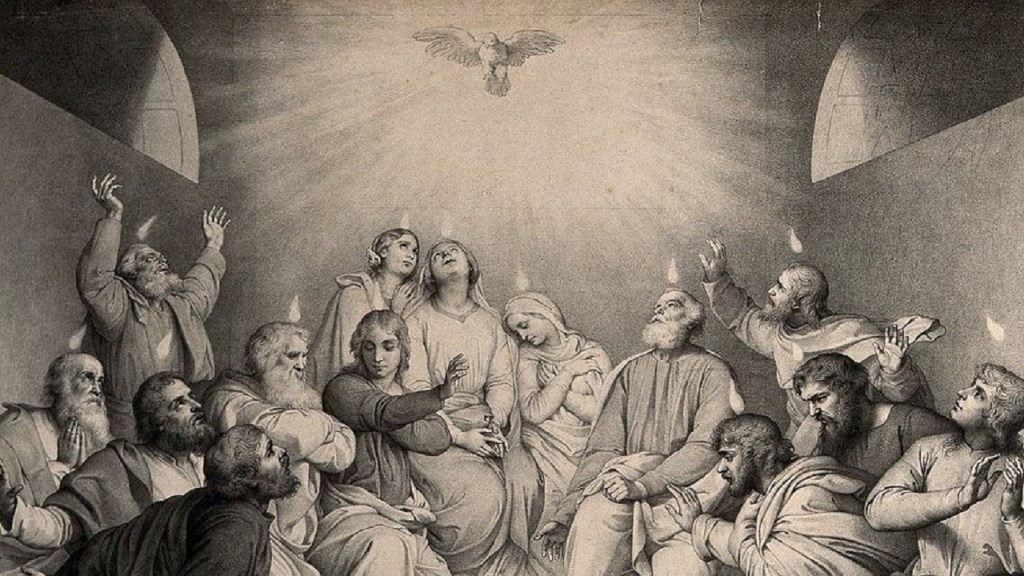
The Divider

Luke 12:51-“Do you think that I came to bring peace on earth? No, I tell you, but division. From now on there will be five in one family divided against each other, three against two and two against three. They will be divided, father against son and son against father, mother against daughter and daughter against mother, mother-in-law against daughter-in-law and daughter-in-law against mother-in-law.”

Jesus dismisses something more intimate than the dream of world peace in these words. Even our most intimate relationships, even family, can be divided by the gospel. He pictures for us a small Jewish family with a father, a mother, a son, and a daughter. The son has married, and in ancient tradition, he and his wife live in his parents’ household. His sister is unmarried and lives at home, too.

To our modern minds, married children living with their parents might sound like a recipe for division in the family. But that is not the way it was in Jesus’ day. This was a generally accepted and usually workable arrangement. In this case, however, the younger generation is divided against the older: father-son, mother-daughter, mother-in-law – daughter-in-law. The reason for the division is Jesus himself.

Does that make sense? Doesn’t our Lord promote family values? Doesn’t he teach children to obey their parents, parents to love their children, and husbands and wives to be committed to each other? Doesn’t that make families stronger?

Yes, but what happens when a new generation stops believing in him? Some of you may have suffered this sad experience. Relationships cool. Priorities, morals, and values change. Urging church attendance or talking religion is perceived as unwelcome meddling or even hostile judging. Not peace, but division.

On the other hand, what happens when a new generation is the first to know Jesus? Christian missionaries can tell you that new converts are often shunned by their parents and grandparents. They have abandoned the old gods and betrayed the family traditions. Not peace, but division.

So why does our Savior trouble us with such unpleasant possibilities? He is teaching us something about the cost of discipleship. Believing in Jesus is free. He does not charge us for forgiveness, heaven, or any other gift that comes with salvation. We are saved by this grace.

But after we follow him in faith, there is a certain price we pay by being his disciples. This is not a price we pay to him. It is not a price we pay to purchase what he has to offer. It is a price we pay in the suffering and sacrifice that come along with being on his side.

When I attend one of my children’s athletic events, there may be no admission charge involved. But there is a certain price I pay in time and exposure to the elements. Maybe I come home soaked by rain or sunburned.

Jesus does not charge admission to follow him, but doing so may expose us to any number of unpleasant experiences. These include the division of our families and friends. It may alienate our children, drive away a potential mate, offend a friend or colleague, or upset a parent. Would that price be too high for us? Does he really have first place in our hearts if it comes to a choice between him or them?
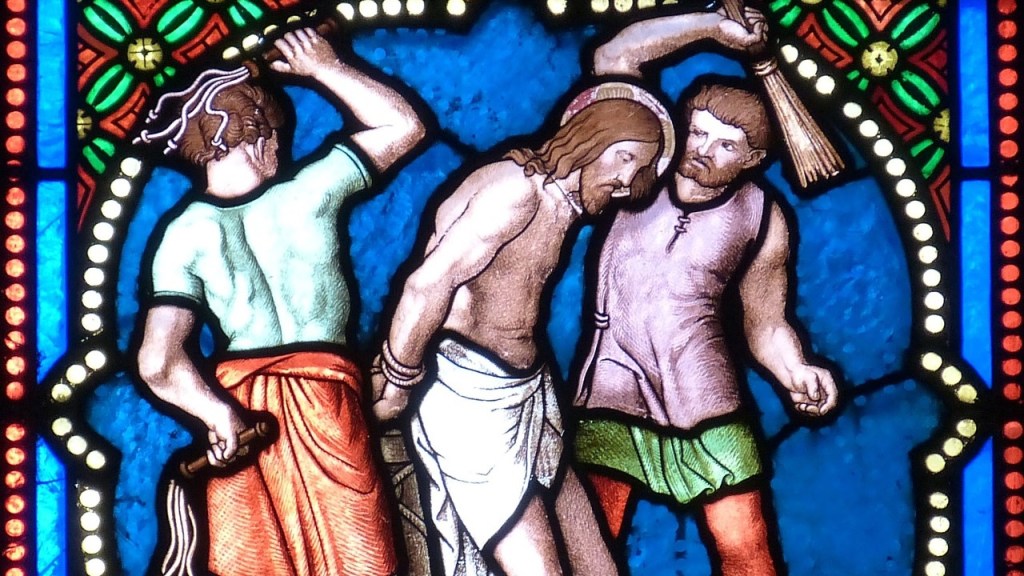

Jesus’ Other Baptism

Luke 12:50 “But I have a baptism to undergo, and how distressed I am until it is completed!”

Jesus had been baptized by John the Baptist long ago when he spoke these words. He was not referring to his baptism with water. Rather, Jesus sometimes uses the term baptism as a picture of intense suffering. Whippings, beatings, insults, and spit are going to be poured out on him. Enemies will surround him. His own blood will flow over him. Finally, death will cover him. Jesus’ words contemplate the suffering and death by which he freed us from sin and gave us the ultimate demonstration of God’s love.

Jesus’ own peace was disturbed by that contemplation: “…how distressed I am until it is completed!” Have you ever dreaded a painful experience you had to undergo– maybe a dental or medical procedure? Maybe you have contemplated the pain of hell, fire and torture that never ends, and the thought filled you with a shudder.

Of course, for you the pain of hell is just a hypothetical thing. Hell itself is real enough, but you are never going to experience it so long as you cling to Jesus. For him it was inevitable. If the torture of the cross wasn’t bad enough, he knew that he would suffer the full anguish of hell there for our sins. Every day brought him closer to this “baptism.” The anticipation was painful to think about.

But Jesus did not use his certainty of this future to avoid this baptism. He did not turn and run. He does not even wish it would never happen. He simply wishes that it were already done. Perhaps we could compare his anticipation to an expectant mother who dreads the pain of labor and delivery. Still, she so wants the child she will hold in her arms on the other side. She wishes it were already over.

You and I are the children Jesus longed to hold in his arms on the other side of his crucifixion and death. Having you makes it all worthwhile for him.

Jesus Lights His Fire

Luke 12:49“I have come to bring fire on the earth, and how I wish that it were already kindled.”

What is the fire Jesus came to bring? Jesus sets the world on fire with his gospel message. Here it is viewed from a perspective we don’t often consider. The gospel Jesus preached can’t be believed unless people are willing to be real about themselves. It is meaningless if we aren’t painfully honest about ourselves. Jesus’ gospel is the good news that he has done everything to restore our relationship with God. He has paid for our sins. He has lived the obedient and loving life that we owed. He has done one hundred percent of the work.

When we get past our pride and admit the real extent of our moral failure, that gospel is one hundred percent good news. So long as we are clinging to some illusion of personal goodness, so long as we are convinced of our own spiritual ability, either we won’t understand what Jesus did for us, or we will reject it. In fact, we will probably hate it.

            So what does a fire do? Take a fire out of a fireplace or campfire ring, and set it loose, and what does it do? A fire spreads. A friend of mine had a summer job as a fire fighter in Idaho during his college days. Fires can make some amazing turns and jumps and changes of direction. Just when you think you have them under control, they flare up all over again.

            That’s how it is with the complete forgiveness and total salvation Jesus has set loose on earth. It spreads to hearts in one place where it is preached, and suddenly flares up in hearts no one would have expected to believe it. Who can predict where it will take hold next? Jesus’ own disciples consisted of a government bureaucrat and a radical anti-government militiaman. The New Testament is filled with reports and stories of the gospel catching on in the families and courts of rulers and emperors, as well as with the slaves and prisoners. It caught on with those who made their living as religious professionals and with those who practiced the world’s oldest profession. I have seen it come to life in the hearts of people I would never have guessed might believe it. If I am honest, the most surprising place I’ve seen the flame of the gospel flare up is inside of me.

            But not everyone believes. Of course, fire not only spreads. It burns. Jesus’ message inspires great passions both for it and against it. Those who believe it will insist on spreading it. Those who don’t believe it will insist on putting it out. Only where Jesus’ message has been watered down does it fail to produce friction and heat among men.

            Do you see how Jesus is confronting us here? If you are looking for the politically correct, socially acceptable, consistently civil Rotary-Club god or religion, don’t come knocking on Jesus’ door. His message isn’t tame. It isn’t “safe.” It isn’t respectable from a worldly point of view. If we try to make it that we will only be fighting against him.

Jesus’ message is a fire on the earth. It excites. It inspires. It consumes. On the inside it even gives us peace with God. But on the outside it disturbs the peace as it sets the world on fire.

Humility Wins!

Luke 14:10 “But when you are invited, take the lowest place, so that when the host comes, he will say to you, ‘Friend, move up to a better place.’ Then you will be honored in the presence of all your fellow guests.”

Jesus is not talking about a psychological trick, a device, to get ourselves moved up in life. His purpose isn’t to make us clever about getting what we want. He is describing a person with true humility.

True humility does not have grand designs for position and prestige. When it takes the lowest place, the last place, the least desirable place, it is pretty certain it has taken the place where it belongs. It doesn’t deserve any better than this.

Such humility is not the result of childhood trauma. It is not the product of shame robbing us of the belief that we have worthwhile gifts or abilities. Godly humility is something quite different.

Godly humility realizes that God has made you and me rather impressive displays of his creative genius. There has been no one else exactly like us in all of history. Our minds and bodies possess powerful, beautiful abilities that make us creatures of glory. We are the crown of his creation. To deny this would insult him.

But you and I are not the only ones. Our gifts may be unique. But it is not unique to be gifted. Our Lord has been as good to everyone else as he has been to you and me. They possess powerful, beautiful abilities, though they may be different than our own. Godly humility understands this.

But we haven’t made such good use of the gifts we have been given. We have been unfaithful stewards, poor managers. We have turned them mostly to serve ourselves. That changes our idea about what we deserve. In the general confession of sins we admit: “For this I deserve your punishment both now and in eternity.” That’s hardly a demand for the place of honor at the feast.

What place will our Lord give to such humility? “…when your host comes, he will say to you, ‘Friend, move up to a better place.’ Then you will be honored in the presence of all your fellow guests.” God calls the humble “friend.” No one likes the prideful person, but everyone likes the humble person. Even the secular world tends to respect and trust the humble. Think of George Bailey in It’s a Wonderful Life. He passes on an extravagant honeymoon vacation, an exciting new business venture, and a place on the board of the local bank because he is not too good or too high to help even some of the poorer people in town. At the end he enjoys the love and friendship of almost everyone in Bedford Falls.

Sometimes the world recognizes the humble. But the humble are the only people with whom God can work. “God opposes the proud, but gives grace to the humble” (James 4:6). “(The Lord) crowns the humble with salvation” (Psalm 149:4). Why? Only the humble admit to their sins, which Jesus freely forgives. Only the humble have set aside their tainted honors, and have empty hands into which God can pour his love and gifts. Only the humble have a place in God’s kingdom now, and will move up to a place of honor at God’s feast in heaven.  

We hear the word “deserve” in advertising often. Commercials offer things like the house you always deserved, the job you deserve, the break from parenting your children you deserve, even the shapely figure that you deserve. I don’t know what they think we did to deserve all this. I do know we don’t want what we deserve from God. We want his grace instead. May he give us the humility to receive it.

Pride Is a Loser

Luke 14:7-9 “When someone invites you to a wedding feast, do not take the place of honor, for a person more distinguished than you may have been invited. If so, the host who invited both of you will come and say to you, ‘Give this man your seat.’ Then, humiliated, you will have to take the least important place.”

 Like a moth is drawn to the light in a bug zapper, sinful pride is drawn to anything that makes us look superior to everyone else. The end result is similar, too. It’s not enough to have something serviceable or adequate, or even excellent or outstanding. Pride isn’t satisfied unless it make’s everyone else’s look inferior. This is what Jesus saw going on at the real-life meal in front of him. It was not enough to have a good seat at a great meal. Pride wanted a seat that made self look important, at least more important than you.

As much as this is a problem for how we get along with each other, it is an even bigger problem for how we get along with God. Pride wants the top spot. It isn’t even satisfied with a place next to the Lord. It wants his place for self. It wants to push God off his throne and crown itself king.

What does pride find as it seeks a place of honor? No one likes a prideful person except the prideful person himself. Think about your friends for a moment. They all have character flaws you are willing to tolerate or overlook. One may obsess too much about money or things. Another may be quick tempered. Another is too quick with his opinion. Still, you keep them as friends and enjoy their company.

But you probably don’t keep too many people as friends who think that you aren’t as important or valuable as they are. Pride doesn’t win us a place of honor in anyone else’s heart.

As a result, pride generally doesn’t get to stretch itself too high before it gets knocked down a few inches. We see this playing out in many different areas of life. History is littered with examples of rulers and dictators whose pride cost them their kingdoms. It has cost athletes championships, businessmen their fortunes. Time after time, rather than finding a place of honor, pride ends up losing it.

Nowhere is that more true than in our relationship with God. God holds each one of us so dear that he gave up his own Son Jesus to save us from sin and for himself. Not a single human being exists for whom he did not make that sacrifice. Paul tells us in Ephesians, “There is no favoritism with him.” He elevated us to be sons and daughters in his family, members of his royal court, rulers with him over the universe. We have been given a place of honor at his heavenly feast that far surpasses a table near the bride and groom at any wedding reception.

But pride lays claim on a seat in heaven only one man can claim. Only one place in heaven has been set for a man who earned it. It belongs to Jesus Christ. “Worthy is the Lamb, who was slain,” the angels and creatures of heaven sing. All the other places God gives as gifts.

So long as pride is insisting on a place it has earned, it cannot receive the place of honor God freely gives. Our Lord cannot let pride keep the place it wants. If we won’t receive the place he wants to give, he must send us down to a lower place–outside his feast. With God, our pride can only lose. Set it aside, and receive the place he graciously gives instead.

Prophets!

Acts 2:17-18 “In the last days, God says, I will pour out my Spirit on all people. Your sons and daughters will prophesy, your young men will see visions, your old men will dream dreams. Even on my servants, both men and women, I will pour out my Spirit in those days, and they will prophesy.”

The Prophet Joel promised God’s Spirit would come with these gifts “in the last days.” The Apostle Peter asserted that this is what happened on the Day of Pentecost nearly two thousand years ago. Does it surprise you to hear him describe the events of Pentecost as “the last days”?

We often hear people talk about our own time as “the last days.” What few people realize is that the last days began with the ministry of Jesus. The Biblical last days run from the first coming of the Savior to his second coming. The last era of human history has been going on for a couple of thousand years. If the Prophet Joel promises that God will pour out his Spirit in the last days, we can still expect to receive his Spirit today.

What’s the difference? Having the Spirit makes us bold to speak. Twice these words say that people “will prophesy.” Even “seeing visions” and “dreaming dreams” has to do with a message from God to share. “Prophesying” isn’t mainly about predicting the future. Read the Old Testament prophets. You will see that most of their messages didn’t deal with the distant future. It dealt with how the people were living now, and how God was reacting to it. It is true the Lord has clued us in about the future of his plan to save the world. But he is not an other-worldly fortune teller, nor are his prophets. Rather, he has an urgent message of life for his people, and he sends his prophets to deliver it.

Who are they? “All people,” “your sons,” “your daughters,” “young men,” “old men,” “servants,” “men and women.” Your pastor serves in a prophetic role. He stands and proclaims God’s word to you. Sometimes our seminary is even referred to as a “school of the prophets.”

But the Spirit’s gift is not limited to the clergy. Notice the inclusivity. Our young people are little prophets–our sons and daughters. Sometimes they deliver the sincerest and purest gospel messages. Have you ever listened to a child tell a friend about Jesus? Have you ever heard them comfort the sick with their simple trust that Jesus loves you? When they stand in front of church and sing the gospel on Sunday morning, do you perceive doubt and disbelief on their faces? Surely our Lord is still pouring his Spirit out on these little prophets and moving them to speak.

How about the rest of you? They say that public speaking is the greatest fear, the most common phobia, from which people suffer. But you don’t have to stand in front of a crowd and preach a sermon for the Spirit to use you to prophesy.

Remember the old mission hymn? “If you cannot speak like angels, if you cannot preach like Paul, you can tell the love of Jesus, you can say he died for all.” You can teach a Sunday School lesson. You can sing your faith in the choir. You can invite a friend to church. You parents can lead your children to Jesus with home devotions.

It’s not that complicated. The Spirit is all about the message that Jesus died and rose to save sinners. We have that message, and we have that Spirit. Say something.

Bold to Speak

Acts 2:14 “Then Peter stood up with the Eleven, raised his voice and addressed the crowd.”

Peter always had a reputation for being impulsive. When Jesus asked the disciples a question, Peter was quick to answer. But that was generally in private situations. When Jesus was arrested, the disciples ran away. When he was on trial, Peter denied that he ever knew Jesus. When the disciples discovered Jesus’ empty tomb, they spent the night hiding behind locked doors–even Peter. They hardly looked like a brave band of Christian soldiers ready to turn the world on its head with their powerful preaching.

With the Spirit’s coming on the Day of Pentecost, something had changed. When Luke here tells us that these men “stood up,” the sense is not so much standing after sitting, but more like taking your stand, standing like the hymn “Stand up, stand up for Jesus!” urges us to do. The virtue isn’t in having your body erect, your knees locked, and your bottom off the cushion. It’s in making your position heard, your alliances clear, and not backing down from them. Peter and the eleven were done with fleeing, denying, and hiding. Now they were bold to stand up for what they believed–what they knew to be true.

If their body language gave some indication of where they stood, their voices left no doubt. Peter “raised his voice and addressed the crowd.” I remember classmates in high school Latin mumbling through parts of their translations because they weren’t very sure of their work. They hoped the teacher wouldn’t understand exactly what they said, that he might fill in their mumble with what he hoped to hear them say. They didn’t want to be confronted by the teacher for saying something wrong.

But there wasn’t any mumbling on Peter’s part on this day! He raised his voice. He addressed the crowd. He was never more sure of what he wanted to say. He was never less afraid of the reaction of those who heard him speak. It’s not hard to see the difference the Spirit’s coming on Pentecost Day made. They went from timid and frightened to bold.

We could still use a healthy dose of what they had on that day. My sinful nature, your sinful nature, still likes the path of least resistance. We want the easy way out in matters of faith and confession. We don’t have to publicly deny Jesus to reveal how timid we are. Sometimes we can hide our faith right out in the open. We try hard to blend in. We don’t run away and remove ourselves from society. We simply become society. We become so much like everyone else, that no one can tell there is anything different about us at all. God help us if we become so much like them that we share their eternal fate!

How, then, are we going to find the Spirit that makes us bold? Do we hunker down in a holy huddle somewhere, waiting for God to pour his Spirit down on us? Do we have to impress God into giving him to us by living an extraordinary life of kindness?

The Apostle Paul once asked the Galatians this rhetorical question: “Does God give you his Spirit and work miracles among you because you observe the law, or because you believe what you heard?” He indicates the answer when he follows, “Understand, then, that those who believe are children of Abraham.” God gives his Spirit to those who believe the Gospel they have heard. The Spirit comes to us when the story of Jesus is told–that God loved us so much he did not spare his only Son. He sent him into our world to live under the same rules we live under–but to keep them; to suffer the same miseries we suffer–but to accept them; to die the death we deserve–but for our crimes; and to rise to the unending life we will live– but as death’s first conqueror.

The Spirit comes to us when forgiveness of sins and free salvation in Jesus Christ is preached. Then the shackles of doubt and fear fall off our hearts. The doors to the prison of “you still haven’t done enough for God” fly open. In Jesus we know that we are fully and finally free! The Spirit still comes to us in the gospel, and that makes us bold to speak like Peter and the apostles so many years ago.

Backed by Jesus

Matthew 18:18-20 “I tell you the truth, whatever you bind on earth will be bound in heaven, and whatever you loose on earth will be loosed in heaven. Again, I tell you that if two of you on earth agree about anything you ask for, it will be done for you by my Father in heaven. For where two or three come together in my name, there am I with them.”

Jesus is teaching us about forgiveness in these words—not the forgiveness we receive, but the forgiveness we extend to others as individuals and as the Church. There are three things Jesus tells us to assure us that our own giving or withholding of forgiveness in love is valid.

First, he reveals that as we speak and act, God is doing the same thing in heaven. He uses a picture of forgiveness and withholding forgiveness that depicts sins like chains, ropes, or handcuffs that bind us. You and I have been deputized, and like the deputy sheriff, we may be “the law in these here parts.” We speak with authority. We can take away someone’s freedom, throw them in the clink, figuratively speaking. Or we can let them go, as we withhold and give forgiveness.

That doesn’t make us the Ultimate Authority. We must act in harmony with the law above us. Still, when we do, the Ultimate Judge and Lawman is backing us up all the way. He claims our actions and decisions as his own.

Second, God will listen to our prayers in such serious and heart-wrenching situations and grant them. “Again, I tell you that if two of you on earth agree about anything you ask for, it will be done for you by my Father in heaven.” These words are true about prayer in general. They assure us that when a group of Christians has explored God’s Word and come to agreement about his will, he will answer our requests.

But in this context, Jesus is applying them specifically to matters of church discipline. Then we are dealing with the eternal fate of precious souls for whom our Savior has shed his blood. Our pronouncements don’t create the spiritual situation for the sinner. Our withholding forgiveness does not make the person an unbeliever. Granting forgiveness does not make the person a believer. We do, however, communicate to the person under discipline where he stands with God and eternity.

And our words hold the power of the gospel to change a heart. It is hard to think that, with heaven and hell in the balance, we would not be pleading to God in our prayers for wisdom, guidance, and blessing. “Uncover the hearts of the people involved, Lord. Show us your will and lead us to do what is right.” Jesus reply? “It will be done for you by my Father in heaven.” He gives further confidence to God’s people that applying his message of forgiveness or judgment is valid and true.

Third, Jesus promises, “For where two or three come together in my name, there am I with them.” This is another passage we often apply to other situations. We are assured that Jesus is with us in a special way when we have gathered around his word to worship him. Here he wants us to know this also is true when the church meets to deal with those who are defending their sin and won’t give it up. Jesus himself is with us. He is an invisible part of our gathering. His voice stands behind all our voices. Sure of his presence, we may remove the unrepentant from the fellowship of the church or promise forgiveness and welcome the prodigal home.

In his grace Jesus makes our voices his voice, and uses them with his authority, when he calls on us to rescue our brothers and sisters from sin.

The Full Measure…

Matthew 18:15-17 “If your brother sins against you, go and show him his fault, just between the two of you. If he listens to you, you have won your brother over. But if he will not listen, take one or two others along, so that ‘every word may be established by the testimony of two or three witnesses.’ If he refuses to listen to them, tell it to the church; and if he refuses to listen even to the church, treat him as you would a pagan or tax collector.’”

Each step in this process, this practice of confronting sin, may take more than one meeting, depending on the situation. These aren’t legal procedures we have to fulfill to get rid of someone. They are works of love designed to restore and to reconcile.

One or two others provide a testimony that works in two directions. If the person who committed the sin continues to defend it, and later the whole church needs to become involved, then these witnesses help to establish the facts of the matter. They can vouch for the fact that the sin was committed, that it is being defended, and that the victim has been taking the appropriate steps to try to reconcile.

Just as important, these one or two others can testify to the guilty in defense of what the Bible has to say on this matter. This is not just a matter of “one man’s interpretation.” This is what God’s word has to say. Jesus involves more people in applying God’s word to a sinner’s heart so that it can do the work it needs to do.

If we break through to repentance, confession, and forgiveness, then a brother or sister has been won. The matter is closed and goes no further. Jesus assumes we understand that before going on to explain the next steps, in case they still are necessary. “If he refuses to listen to them, tell it to the church; and if he refuses to listen even to the church, treat him as you would a pagan or tax collector.”

Eventually we have to deal with unrepentance publicly. Keeping it private isn’t helping the person caught in sin. The whole church needs to know, not as a matter of gossip (at this point it may actually help to prevent gossip), but so that the whole body of Christ can unite in trying win this person back from the edge of unbelief.

When this fails, Jesus calls on us to put into practice the full measure of our love. “Treat him as you would a pagan or a tax collector.” No longer regard this person as a fellow Christian. No longer give him the rights of member of your Christian congregation. We might continue to hope that such people will come to church, because God’s word is the only thing that can change their hearts. Unless this happens, we no longer regard them members of the body of Christ. If they die in that condition (though only God knows their hearts with absolute certainty), we no longer hold out hope for their souls.

Not surprisingly, many people do not consider that loving. Some even question whether it is legal. But this is clearly what Jesus asks us to do. Would it be better just to watch a person destroy himself spiritually, possibly give others the impression that sin is acceptable, spreading the danger further?

Twelve step programs promote similar interventions by family and friends if someone is drinking himself to death. I have heard of lifeguards punching a drowning swimmer unconscious so that he doesn’t drown the two of them. The practice of refusing the unrepentant sinner the status of believer, and removing his membership privileges, is our last, desperate act to save him. Its goal is still to share the good news of forgiveness and the joy of restoration. Excommunication is the last full measure of our love.