Players, not Spectators

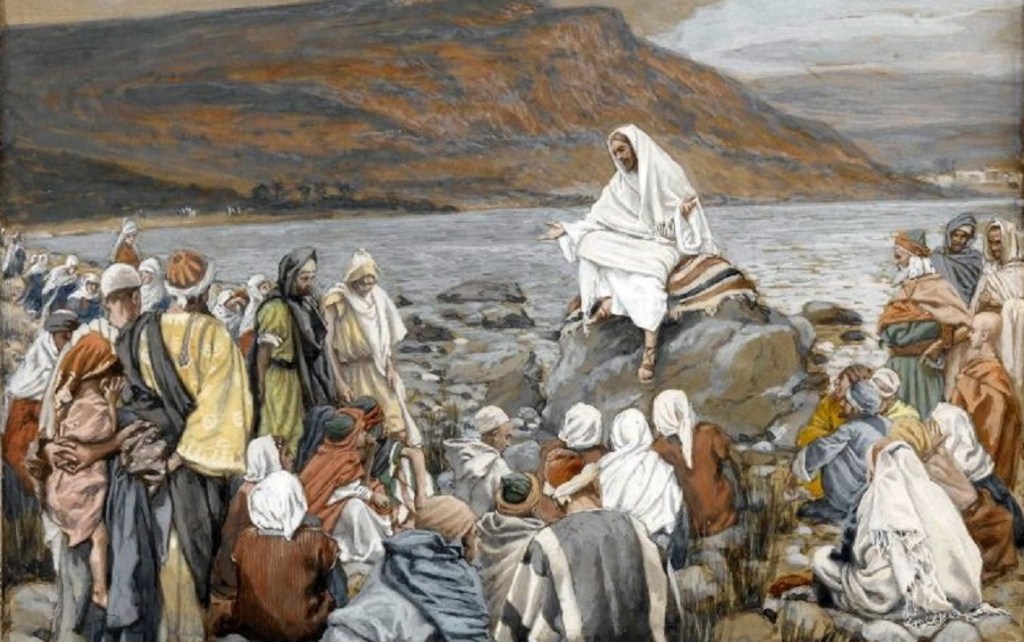
Matthew 14:15-16 “As evening approached, the disciples came to him and said, ‘This is a remote place and it’s already getting late. Send the crowds away, so they can go to the villages and buy themselves some food.’ Jesus replied, ‘They do not need to go away. You give them something to eat.’”

Jesus wants those who follow him to be more than spectators in the work of his kingdom, cheering from the sidelines. He calls us to play on the team, too. He wants to give us more than a lesson. He wants to give us an opportunity to serve.

When the disciples saw the need of these people for food, they didn’t immediately recognize this as one of those opportunities. The situation looked too big for them. There were over 5000 people here, as we later learn, so they took the situation to Jesus. However, Jesus handed it right back to them. He wanted to give them more than a lesson. He wanted to see what they would do.

“‘We have here only five loaves of bread and two fish,’ they answered. ‘Bring them to me,’ he said.” This opportunity to serve also involved a test of the disciples’ faith. Like careful stewards and conscientious planners, they got out their hand calculators and took inventory of their resources for the project. The accounting didn’t take long: just five little loaves of bread and two fish— enough to feed perhaps 10 to 20 people. The project didn’t look very realistic.

It wasn’t wrong for them to take stock of their earthly resources like this. You or I would do the same thing. But when our Lord gives us a task to do, we shouldn’t be surprised, or dismayed, if it appears that our human resources are vastly inadequate. The Lord has a way of working like that in his kingdom. Gideon’s army wasn’t ready to take on 100,000 Midianite soldiers until the Lord had whittled it down to just 300 men. Armor-less David kills mighty Goliath with a sling shot and a smooth rock. A poor widow is commanded to feed the prophet Elijah as well as her own family from just one little jug of oil and one little jar of flour. Yet that supply lasts for months and months. Israel brings down the walls of Jericho without siege machinery. One man, Jonah, brings more than 120,000 pagan Ninevites to their knees in repentance with his preaching. Our earthly resources often don’t appear up to the tasks God gives us.

But we have more than our visible, earthly supply. The one who gives us our tasks, the one who invites us to bring him our resources, if only a few loaves and fishes, is the Almighty God whose power knows no limits. His resources never end. Of course we can’t do it on our own, but Jesus doesn’t ask us to. He makes us a member of the team, not just a spectator. When we get into the game, know that Jesus is going to be holding and guiding our hands–like the father standing behind his son, reaching over his shoulders, and helping him swing the bat.

Jesus takes our resources, touches them with his power, and makes them work in ways we could never have imagined or asked. With Jesus, the disciples got more than a lesson. They got the chance to live their lives by faith. They got a chance to be living instruments of God’s power. Those are things that we can get from him, too.
More Than A Helper

Matthew 14:13-14 “When Jesus heard what had happened, he withdrew by boat privately to a solitary place. Hearing of this, the crowds followed him on foot from the towns. When Jesus landed and saw a large crowd, he had compassion on them and healed their sick.”

 The “happening” Jesus had just heard was the death of his cousin, comrade, and colleague John the Baptist. Just because Jesus was God’s Son didn’t mean that his heart was made of iron. News of John’s death moved him deeply. It may also have made thoughts of his own impending death more intense. He wanted to get away for a while. He needed some time alone in prayer.

Despite his boat trip to an uninhabited piece of lakeshore real estate, the crowds searched him out.  We might wonder whether he was irritated with them for denying him his privacy at a hard point in his life. I might be irritated with these people if I were in the Savior’s shoes. That isn’t right. Here were people who understood their need. They understood what we often find difficult to admit: Our problems are more than we can handle on our own. We don’t have it all together. Jesus isn’t just a fascinating character or a very nice man. He is the only one who can help us. He is someone we desperately need.

We don’t like to be so needy. We prefer to keep up an appearance of self-sufficiency. When I played football in college, I remember watching a teammate try to stay in the game after being injured. He tried to shake it off and look like he wasn’t in pain. But play after play he was run over. He was flattened. He was helpless. He didn’t want to admit that he needed to get off the field and let someone else take his place. But he was doing neither himself nor the team any favors by staying in.

How long can we keep up the illusion that we aren’t hurt, that we can do it, while life flattens us play after play? The pride of self-sufficiency does more than leave us alone in pain. It keeps us way from the one who can help. It cuts us off from Jesus. If that doesn’t change, the injury will be fatal.

These people understood their need, and in Jesus they found more than a helper. “When Jesus landed and saw a large crowd, he had compassion on them and healed their sick.” The crowd didn’t have to twist his arm to get him to do something. They received much more than instant medical attention. Before they said a word, Jesus had compassion.

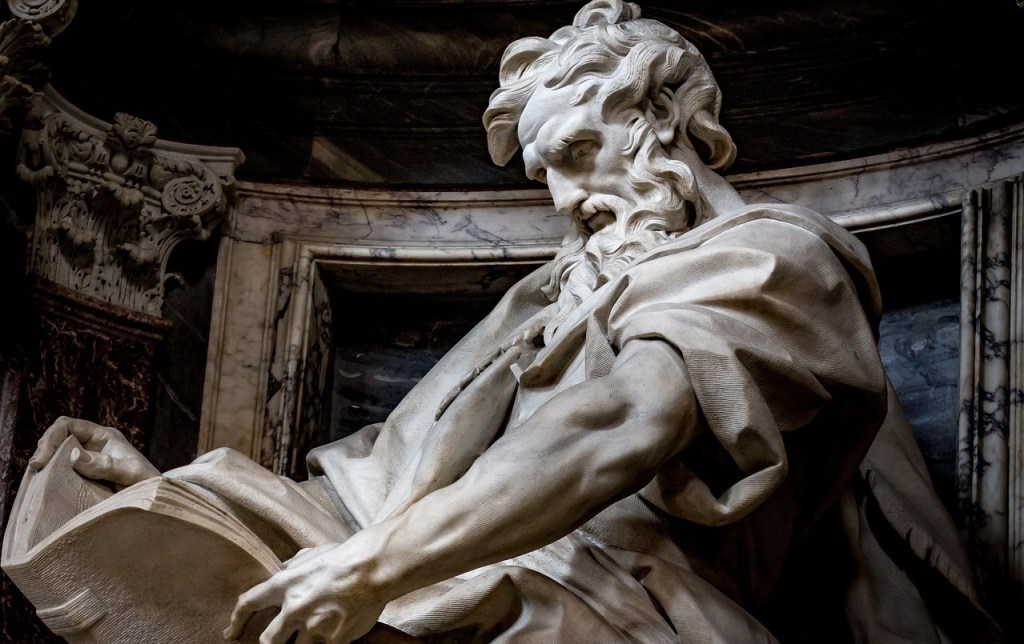
Compassion is one of those great, gospel words. It is a “good news” word that promise our God cares. Our Savior is not a marble statue God: grand and impressive in size and appearance, but cold and distant when it comes to our needs. Jesus has compassion. Our troubles genuinely touch his heart. He shares our pain. Moved by compassion, he comes to our aid.

Who should know this better than New Testament Christians who have seen his cross? You don’t die for a cause you don’t feel passionately about. You don’t give your life for people who don’t literally mean everything to you. Along with grace and love, compassion moved Jesus to die for our sins. He relieved us from the misery of our guilt and spared us from the pain of hell. We don’t have to talk him into it. We don’t have to butter him up or work him into a better mood. Long before any of us ever thought to ask, “Lord, could you forgive me?” Jesus had compassion. Long before you or I ever remembered to pray, “Lord, could you take away the pain, or help me get over this fear, or help me out with this need?” Jesus had compassion. With Jesus, we get more than a helper. He makes us the treasures of a God who deeply cares.

Relevant Preaching

2 Kings 22:13-14 “The messenger who had gone to summon Micaiah said to him, ‘Look, as one man the other prophets are predicting success for the king. Let your word agree with theirs, and speak favorably.’ But Micaiah said, ‘As surely as the LORD lives, I can tell him only what the LORD tells me.”

The Prophet Micaiah was summoned by Kings Ahab and Jehoshaphat to advise them on their prospects for going to war. Unlike the other prophets who were busy buttering them up, Micaiah understood the true source of preaching: “…only what the LORD tells me.” That is LORD spelled in all capital letters. That is the God of free and faithful grace. That is the only God who actually exists, the only God who actually has anything to say about a matter. If the message isn’t from him, it doesn’t matter if the word appears to be relevant or appealing. Nothing stands behind it except so much hot air.

It is still true that the only safe and reliable interpreter of Scripture is a man who knows the LORD himself. Many preachers earn their reputation on their speaking ability. They can grab hold of your heart strings. They make you laugh and make you cry. They can impress you with their scholarship and make you feel as though you are learning something new every time. They can mesmerize you with their eloquence. You find yourself hanging on every word, even if the sermon went on for hours.

But what good is all of that if the man doesn’t know the LORD, if he isn’t a man of personal faith? All that ability to win your heart, stimulate your mind, or hold your attention is only going to be used to deceive. Then where will we be? Do you suppose that Ahab found the message of his favorite prophets relevant, the ones telling him to go to war, when he was bleeding to death in his chariot a few days later? Is it relevant to live your life and base your heavenly hope on lies? The preacher’s first task involves knowing the Lord for whom he speaks.

Then the preacher needs to limit himself to what the LORD has said. “I can tell him only what the Lord tells me.” As little as lies fit the pulpit, speculations don’t belong there, either. The message needs to be based on words the Lord himself has spoken to us. We find those words in his Holy Scriptures.

Only that kind of preacher, the one who knows the Lord personally and preaches his word, understands the central place of the gospel. Micaiah never got that far in his message for Ahab because of the king’s hard heart. Micaiah wanted to do the king a favor, and spare him from injury and death. But Ahab was bent on defying the prophet and defying God. Thus, he never got to hear a word of grace.

For you and me, there is not a more important word than “the Lord has forgiven your sins.” There is not a more important story than the one about Jesus dying as our substitute on the cross, and rising from the dead to promise us life that never ends. There is not a more important message for us to learn than God’s grace covering all sin, including yours and mine.

The Gospel may not be trendy. It isn’t new. It has never been the opinion of the majority. It’s not even what some people want to hear. But preaching it is always the preacher’s task. And it is always relevant to the people who hear it preached.

All Things Are Yours!

1 Corinthians 3:21-23 “So then, no more boasting about men! All things are yours, whether Paul or Apollos or Cephas or the world or life or death or the present or the future– all are yours, and you are of Christ, and Christ is of God.”

            It’s no secret that our world associates great wealth with importance. Who gets their names in the magazines and the newspapers? Unless you do something criminal, it’s the wealthy. Who gets elected to positions of power? Almost every member of the United States Senate is a millionaire. Who gets asked to endorse products before a television audience? Who gets invited to spend a night at the White House? Not many poor people I can think of.

            If wealth and importance go together, then you and I must be some of the most important people on earth. As it turns out, we own everything. Paul said it twice, “All things are yours.” That doesn’t mean everything is our personal property. Rather, we are the children of the one to whom everything truly does belong. And he has promised that he makes everything in this world serve you and me. There is no object, no person, no event that fails to serve us as Christians in some way. In all we have or experience, we are enjoying God’s providence.

            To help us understand, Paul gives us a representative list, starting with Paul, Apollos, and Cephas (or Peter). The Corinthians were forming cliques around these three apostles (against the wishes of these leaders themselves). In spite of the divisions and distinctions the members of the church were creating, these teachers remained the common property of all. Though they were leaders in the church, God used them to serve the church. He is still using them to serve us today through their words preserved on the pages of the Scriptures.

            All of life, no matter how bad, how painful, or how hard it gets, is here to serve us. Even at its worst it teaches us not to cling too tightly to this world. It forces us to throw ourselves on God’s grace in faith. Death may inspire our fear. We may pay huge sums to delay it and avoid it. But even death is here to serve us. Jesus’ resurrection makes it the door to heaven. What could be a greater blessing than that?

            The passage of time may appear outside of our control. It slips away from us, running faster and faster. But in God’s providence even the uncertain future, which so often fills us with worry, lies under our domain. It has to serve us, because we ourselves are the personal property of Jesus Christ, the Son of God.

            In making us his own, God has made us like the rich and important people of this world. We have all these servants running around taking care of us. So we know that we are valuable, not because of some trumped up little boasts and wobbly pride of our own making. No, our value comes from the God who gave us to Christ and made us his own. No more boasting about anyone or anything less!

Fools for God’s Wisdom

1 Corinthians 3:18-19 “Do not deceive yourselves. If any one of you thinks he is wise by the standards of this age, he should become a “fool” so that he may become wise. For the wisdom of this world is foolishness in God’s sight.”

The message of God’s word is our common birthright as Christians. Anyone familiar with it ought to realize that God’s view of what is wise or foolish, and the world’s view of what is wise or foolish, are usually opposites. The world celebrates the lifting of every sexual boundary and safeguard. It considers every restriction harmful. The wisdom that comes from God’s word teaches the opposite. It recognizes that the “sexual revolution” confirms people in self-destructive lifestyles, because “he who sins sexually sins against his own body” (1 Cor. 6:18).

More to the context here, the wisdom of this world suggests that you can become more prestigious, you can rise in the respect of others, if you are associated with the right people. It is wise to adopt the popular positions on key issues. This was going on in a small way in Corinth. Members of the congregation were guilty of name-dropping. They lined themselves up with famous leaders in the church in order to make themselves look more important or better educated.

But there was no difference in the teachings of Paul, Peter or Apollos, the men they were elevating. Saying you followed one didn’t make you wiser than those who claimed to follow another. On the contrary, it revealed a dangerous sense of pride. This attempt to acquire a morsel of donated dignity, this perceived need to be popular, caused divisions. Even more, it suggested that these people might value the acceptance, praise, and respect of charismatic leaders over the truth of God’s word. When the world came along with some immoral teaching that “anybody with any brains believes,” would they have the backbone to resist it? Would their desire to “be somebody” cause them to stumble? They might become “wise” in the eyes of the world, but big fools in the eyes of God.

Are we willing to be considered fools by the world around us? Are we secure enough in our faith and God’s love for us to stay true to the foolish things God asks us to believe? Part of what makes you and me valuable assets not only to the Church, but to the foolish world around us, is the biblical wisdom we possess in common.

The world ridicules us for believing that Jesus, with his selfless sacrifice and free forgiveness, is the only way to heaven. “How narrow-minded!” they say. “Do you really think God is going to condemn all the Buddhists, or all the Hindus, or all the Muslims? How foolish!” But it’s true! Not because we are any better than Buddhists, Hindus, or Muslims, but because no one can work his way to heaven. Jesus is the only one holding out the way of God’s free and unconditional grace and forgiveness.

It’s not about us. It’s about him. If we ever give that up to join the ranks of the worldly wise, we will cease to be of any use to our world anymore. But as long as we still possess God’s wisdom of salvation by grace, and share that wisdom, we are worth more than all the advice columnists in all the newspapers. We will be wiser than all the professors in all the universities in all the world. We share this great value in common: we possess the wisdom of God’s word. It is worth being thought a fool by our world.

You Are God’s House

1 Corinthians 3:16-17 “Don’t you know that you yourselves are God’s temple and that God’s Spirit lives in you? If anyone destroys God’s temple, God will destroy him; for God’s temple is sacred, and you are that temple.”

When elderly Christians become weary of the struggle through life, it is not surprising that they long to go home to live with God. What is surprising is that the God who already lives in heaven not only make his home with us. He makes his home in us. But that is what it means that we are his temple. It may seem redundant to say that God lives in a certain place when we know that he is present everywhere at all times. He is present with us right now, though not in the same sense that you are present and occupy a certain amount of space in a room or on a chair. He fills all things. He permeates the walls and the furniture and the people. He is this vast being, and we exist inside of him, so to speak.

            And yet, since the creation of the world, God has always made himself present and available to his people in special ways. He takes up special residence in places where people can find and experience his grace and love. At the time of Moses, he did this in the tabernacle, the mobile worship structure the Israelites moved with them through the desert to the Promised Land. From the time of Solomon on that place became the temple. There God made his home on earth with the people of Israel in a unique way.

            Since Jesus has come, God doesn’t use buildings or structures in the same way. Now he emphasizes the fact that he has taken up residence in each one of us by faith. We are his temple, his special home on earth. We are places where people can come to find God’s grace and love.

            This is why Paul warns, “If anyone destroys God’s temple, God will destroy him.” When members of a church behave in a cliquish or mean-spirited way, they are ruining hearts for the gospel. This is a serious sin. The weak in faith may become disgusted and be driven away. Lack of love among church members convinces them the Christian faith is all a sham. These temples of God are destroyed.

Those outside a congregation won’t be able to see past the bickering and infighting to embrace God’s grace and salvation. Their hearts are wrecked before he gets a chance to set up shop in them. Without repentance, a prideful party spirit and self-promotion destroy the heart of the person who thinks and acts this way. It drives God’s Spirit out. Those who make it impossible for God’s Spirit to live in the hearts of others make it impossible for God’s Spirit to live in their own. There is only one fate left: “If anyone destroys God’s temple, God will destroy him.”

            But Paul was convinced that the Corinthians had not yet fallen so far: “…for God’s temple is sacred, and you are that temple.” These words were more than a warning. They were the solution to the root problem. God had still chosen to make these Christians in Corinth his home. They had this in common. It made them truly important. A sinful human being can receive no higher honor than to have the Almighty God cleanse him of his sins and make him holy, and then live in that heart himself. There is no more prestigious position than “God’s own temple,” no promotion, no “up” from there.

            We share this honor. It puts how we treat each other in a whole new light. The people sitting around me, the people who take the opposite side of an issue at a church meeting, the people who always seem to rub me the wrong way, are the Holy of Holies where God himself is living by his Spirit.

It puts how we value ourselves in a whole new light. God’s house is not just a place I go on Sundays. It’s who I am. God lives in me, and that makes almost everything else I am tempted to use to feel good about myself insignificant in comparison. We are God’s temple, his home, together with all our brothers and sisters in the faith.

Hidden with Christ

Colossians 3:3-4 “For you died, and your life is now hidden with Christ in God. When Christ, who is your life, appears, then you will also appear with him in glory.”

Who am I? What sort of person am I? How we answer those questions depends upon where we are looking. Biblical Christians know that each believer is simul iustus et peccator, at the same time a justified saint and a wicked sinner. When we look at our visible life, when we look within ourselves, we see sin and rebellion. This is true even for the believer. Evangelical author Michael Horton once wrote: “Our surrender is halfhearted and partial; our victories seem always to be sullied by pride. Even if we could live the ‘higher life,’ could God not smell our smugness? Wouldn’t our best works be sabotaged by our own depravity?”

But that is only half the story. Christ is also our life as our substitute. We have a life which we cannot see in ourselves because it is hidden in him. When we are justified, God hides us in Christ. Therefore, in God’s eyes, we look like Jesus. When we are looking at Jesus’ life, then we are seeing ourselves as God sees us. God looks at us with “Jesus-colored glasses” so to speak. This new identity is based on the teaching the theologians call the “Active Obedience” of Christ.

You may remember an old Warner Brothers cartoon in which Sylvester the cat painted a picture of Tweety Bird on Granny’s glasses while she was sleeping. That way, when Granny awoke, put on her glasses, and looked at the bird cage, it would appear as if the bird were still in the cage.

In making Christ our substitute, the Lord has painted Christ, both his life and his death, in front of his eyes so that he no longer sees us. Everywhere he looks, he sees Jesus. This is the robe of righteousness in which he has promised to dress us (Isaiah 61:10, Galatians 3:27, Revelation 6:11).

This comfort and confidence is the birthright of every child of God by faith. The better we know Jesus’ life, and the better we understand that Jesus’ obedience to God under the law was performed in our place, the better we will realize and appreciate our blessed new identity in Christ. Our life, with all its flaws, looks as beautiful, perfect, and loving as the life of Jesus Christ himself in God’s eyes.

But those who are unaware of it will have gaps in their understanding of justification and its comfort. Preach the Gospel, a book on preaching, says it this way:

“It is possible to neglect the active obedience so that people are left with a truncated view of how God reconciled the world to himself in Christ. That view may rob them of the certainty of salvation God intends them to have. It frequently causes a person to look to something within himself rather than outside himself to God’s promises for assurance of right standing with God. Analogically speaking, they end up using a stethoscope instead of a telescope in search of the certainty of salvation” (Balge and Gerlach, p. 10).

This misunderstanding in our faith will spill over into our life of sanctification, too. It will detract from the joy and freedom with which we live and serve. Remember, Christ’s life, the whole thing, is our life by faith. We may not be able to see it now, but God’s promise makes it so. Look at him to know how God sees you. To his eyes, I am Jesus. So are you.

The Right Time to Be Blessed

Ezekiel 34:26 “I will send showers in season.”

            Getting rain at the right time was very important for ancient Israel. When they lived in Egypt, agriculture was all based on the Nile River. In the spring time it flooded, and the rest of the year they used the river to irrigate, and this provided a kind of consistency to their farming.

            Farming in the Promised Land didn’t work that way. Everything depended on the rains coming at the right time. There were spring rains, and there were fall rains, and without them God’s people weren’t going to have much to eat. That actually had happened from time to time. You remember that God kept the rains from falling for three years at the time of Elijah because he needed to teach his disobedient children a lesson.

            In Ezekiel, these showers have more to do with God’s blessings for our souls than with blessings for our bodies. With those showers, too, the Lord has a sense of “seasons:” proper and necessary times for his various blessings to drop into our lives. It was that way when he sent Jesus to save us. Christmas had its own season. “When the time had fully come, God sent forth his Son, born of woman, born under law, to redeem those under law, that we might receive the full rights of sons.” Good Friday and Easter had their own season. “You see, at just the right time, when we were still powerless, Christ died for the ungodly.” God has a sense of timing for these things he used to save our souls.

            His blessings have dropped into our lives in much the same way. “All the days ordained for me were written in your book before one of them came to be,” David writes in the Psalms. We can walk back through our life stories and know that every milestone, every highlight, every blessing has dropped into our lives in God’s appointed season, at just the right time. Some of these blessings have been easy to see: birth, baptism, school, confirmation, marriage, children, etc. Others require a closer look. Pain and tragedy don’t look like “blessing” until we see the way in which the Lord uses them to train us, correct us, and deepen our faith.

            The careful timing of our blessings is a comforting thought as we look ahead. The coming seasons of our lives are still laid out by our Lord, and each blessed experience will be timed to provide the maximum blessing. We can approach tomorrow with no worries, because blessings are always in season with the Lord, and the God who keeps track of every hair on our heads has a plan for every day he gives us.

            Associating rain showers and blessings may feel like irony at first. We usually associate good and happy events with sunshine. We use the clouds, the storms, and the rain as pictures of gloomy times and sad chapters in our lives. But God promises to rain down blessings on his people. Expect nothing but torrential downpours in your future.

It’s Raining Blessings

Ezekiel 34:26“I will bless them and the places surrounding my hill. I will send down showers in season. There will be showers of blessing.”

We are missing Ezekiel’s point if we think he is writing about getting enough rain. It’s not water he is concerned about. He repeats here: showers and blessings. At the end he puts them together: showers of blessings. Ezekiel is writing about God’s promise to bless his people.

If not water, then what? What are God’s “blessing-drops” made of? These blessings are bigger, and more inclusive than we might realize at first. The biblical languages each have two families of words that we associate with blessing. One of them stresses the happiness that comes along with being blessed. You remember that the name of one of the twelve sons of Jacob, one of the twelve tribes of Israel, was “Asher.” His name means happy or blessed. The same is true of the first word of each of Jesus’ beatitudes in the Sermon on the Mount. There is happiness in the things that Jesus promises us there.

Ezekiel uses a different word for “bless” and “blessing” here. That does not mean that happiness is excluded. It just means that happiness is not emphasized. God’s blessing is not limited to the kinds of things that make us happy, at least on the outside. Blessing comes with all the many promises our Lord makes to us, even things that don’t seem very pleasant at first. Even when people around us are hostile, inconsiderate, or lazy, God is blessing us. He uses the foolishness in their sinful natures to work on the impatience in our own. He is teaching you and me to be more like him–someone who keeps loving the unlovable.

I don’t want to give the impression that his blessings look mostly like burdens, though. I just want to point out that it is raining blessings all the time. There has never really been a drought, and that becomes more clear when we see what his blessing-drops are made of. They include everything our loving Savior and Good Shepherd does to serve our souls. If we stop looking at the word “blessing” with a telephoto lens for a moment, if take a wide-angle shot of the blessings Ezekiel mentions by name in the context, the picture is clearer.

In the surrounding verses God promises, “I will save my flock.” That is exactly what he did when he sent Jesus to be our Good Shepherd and to lay down his life on the cross. “I the Lord will be their God.” Out of all the billions of people in the world, we are not living in the darkness, terrorized by scary gods and evil spirits, hoping we have done enough to convince them to let us live another day. He placed us in Christian homes, or sent someone to introduce us to Jesus along the way. We were led to know the Lord, and by faith he has been our gracious God ever since. “I will make a covenant of peace with them.” Jesus’ death promises us forgiveness. Jesus’ resurrection promises heaven. In these blessings we have a peace most of our world can’t even imagine. “They will live in safety.” Body and soul, day in and day out, we are never out of our Savior’s sight, and no matter what we have experienced in the body, he has brought our souls safely to this day.

For the Christian, the forecast always calls for blessing showers today. They rain down on us until they overwhelm us with a flood of his grace and love. Soak it in.