Christians, We Have Arrived!

Hebrews 12:22-24 “But you have come to Mount Zion, to the heavenly Jerusalem, the city of the living God. You have come to thousands upon thousands of angels in joyful assembly, to the church of the firstborn, whose names are written in heaven. You have come to God, the judge of all men, to the spirits of righteous men made perfect, to Jesus the mediator of a new covenant, and to the sprinkled blood that speaks a better word than the blood of Abel.”

With three terms—Mount Zion, heavenly Jerusalem, and city of the living God—the writer of Hebrews describes our spiritual destination. Perhaps “the city of the living God” is the easiest one for us to understand.

A city is not a place where one person lives alone. Many people live close together, often stacked on top of each other. The city of the living God is the place where people are living close to God. Here He has invited them to be his neighbors and enjoy his friendship.

This is a place to which we have already come by coming to the Christian faith. It is our home in the Church of Jesus Christ. God himself has led us here. It is not just a part of our heavenly future. We are God’s children, his family, his friends right now. We can come to him boldly and confidently and ask him for our heart’s desire. His replies express a tenderness that assures us we are finally home.

There are angels here! “You have come to thousands upon thousands of angels in joyful assembly.” If only God would open our eyes, as he did for the servant of Elisha, and we could see the hills filled with angelic horses and chariots of fire–the armies of God. One guardian angel? Thousands upon thousands surround us with their protection.

And what else are these angels doing? They are having a joyful assembly, a festival celebration. We have crashed their party, where they are celebrating the fact that sinners like you and me have repented of our sins and come home to our heavenly Father.

These are the kinds of people we have as neighbors in God’s city: “You have come to…the church of the firstborn, whose names are written in heaven.” Though it seems like numerical nonsense, he treats each of us as though we were his own firstborn son. He gives us a double portion, a double share, of his blessings. We are loved, and honored, in a way that would be fitting for Jesus himself. And not the least of these honors is the title to a piece of heavenly real estate, signed by the Lord’s own hand.

“You have come to God, the judge of all men.” Please notice that he does not say that we have come before God, the judge of all men, as though we were on trial and about to be condemned. We have come to God the judge of all men. The Lord is on our side as judge, and he is going to vindicate his children by making right all the wrongs they have ever suffered.

In this city we possess the hope which so fills the hearts all who have ever been parted from those they love. “You have come…to the spirits of righteous men made perfect.” We have come to the spirits of our believing parents and grandparents, and friends, and maybe even spouses or children for some of you, whom the Lord has called home to heaven before us. We have not lost them. We still live together in the same Christian Church. With us, they continue to sing our Savior’s praises. With us, they are residents on Mount Zion, fellow citizens in this same city of God, except they live in it by sight (while we still live in it by faith) because they have now been made perfect.

Our life here is possible because we have come “to Jesus the mediator of a new covenant, and to the sprinkled blood that speaks a better word than the blood of Abel.” You remember the story of Cain and Abel. Cain became jealous of his brother Abel, because Abel had offered God a sacrifice from a heart of faith. So he murdered him. Abel’s blood preaches how far our human race has sunk–that a man would murder his own brother just because he sought to please the Lord.

Like Abel, Jesus had his blood spilled by sinful men and died. But his blood has something better to say. His blood is not the sign of an unfortunate murder or miscarriage of justice. It is blood of cleansing. It speaks to us about sins forgiven. It preaches the love of God, who so yearns to have us live with him in his holy city that he would rather let his one and only Son be cruelly crucified than live forever without you and me. The blood of Jesus has carried us up Mount Zion, lifted us to this heavenly Jerusalem, and made us citizens in the city of God to which we have come. Christians, we have arrived!

Holy and Gracious

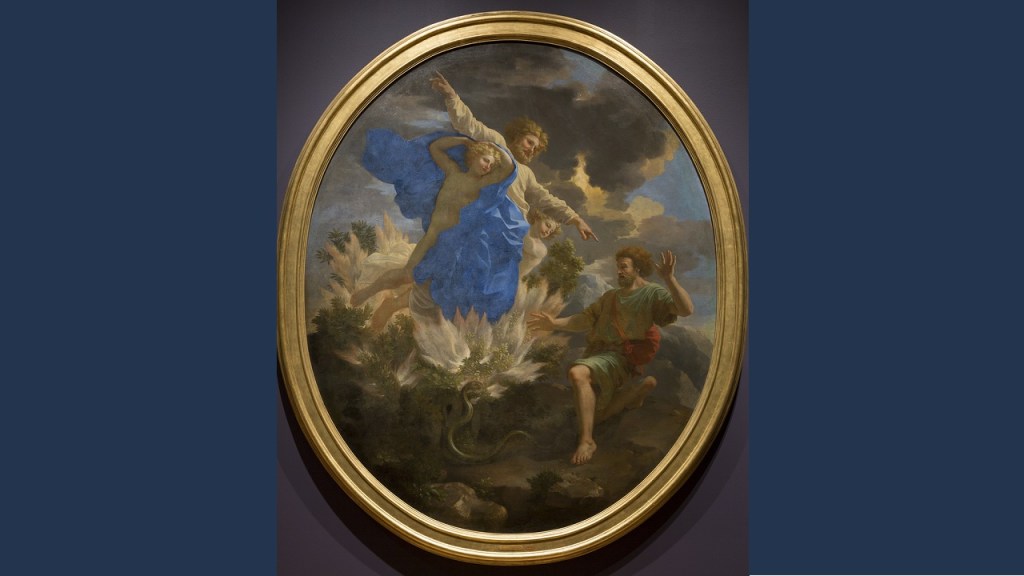
Exodus 3:5-8 “‘Do not come any closer,’ God said. ‘Take off your sandals, for the place where you are standing is holy ground.’ Then he said, ‘I am the God of your fathers, the God of Abraham, the God of Isaac, and the God of Jacob.’ At this, Moses hid his face, because he was afraid to look at God. The LORD said, ‘I have indeed seen the misery of my people in Egypt. I have heard them crying out because of their slave drivers, and I am concerned about their suffering. So I have come down to rescue them from the hand of the Egyptians and to bring them up out of that land into a good and spacious land, a land flowing with milk and honey–the home of the Canaanites, Hittites, Amorites, Perizzites, Hivites and Jebusites.’”

When the Lord met Moses at the burning bush, he did not need to go into a lengthy discussion of what it means that he is holy. Standing in the presence of God’s holiness, Moses was immediately aware of the greatness of God, and how vastly inferior and unworthy Moses was by comparison.

Do we still get the point? People from other cultures and other nations sometimes accuse Americans of a “greasy familiarity” with people we have just met. We tend to treat everyone like our old pal. We immediately assume that we are on a first name basis. Some may even take offense at formality. I know a young man raised in the deep south who was scolded by a young waitress when he called her “ma’am,” “You don’t have to call me ‘ma’am.’ I’m not your mother.”

What is a matter of culture or taste in our earthly relationships could be deadly in our relationship with God. We cannot live our spiritual lives as though we have yanked God off his throne or climbed up to take a seat next to him without serious danger to our souls. Unless we understand that God is infinitely far above us, we will not pay him the respect and honor he is due.

But to think that this is all there is to know about the Lord would be as dangerous as not knowing anything about him at all. The Lord was concerned about Israel. Even though they had lived in Egypt for more than 400 years, he had not lost track of them. He saw their misery as slaves. He had also been listening to their prayers. He was truly concerned about what they were suffering.

That is why he had come to rescue them. More than putting an end to their slavery, he was going to give them an abundant new land that would bless them with their every earthly need.

Such deliverance was possible only because the Lord is incredibly gracious and loving. What had these people ever done for him? If you know their history, you know that their ancestors generally behaved like naughty children. They tested God at every turn. But the Lord remained concerned. More literally, he “felt their pain.” Because he loved them so much he had come to rescue these helpless sinners.

Don’t we need to be reassured of his grace? Our suffering does not need to last hundreds of years before we begin to question his care. Some tragedy can reduce us to helpless, fearful creatures in a matter of minutes. At times of deep loss, C.S. Lewis once said, the danger is not that we stop believing in God at all, but that we come to believe such dreadful things about him, “So this is what God’s really like. Deceive yourself no longer.” We need to be assured that he forgives our sins, that he “feels our pain,” that he comes to help, as much Moses did.

This meeting between God and Moses even relates to our own need for grace and deliverance thousands of years later. This is an important link in the chain of events that led to Jesus’ life, death, and resurrection in the land of promise. If the nation of Israel doesn’t survive Egypt’s attempted genocide and move to the land along the southeastern Mediterranean, then Jesus doesn’t come and die on a cross outside Jerusalem. Then we don’t have a Savior. Then we face God’s holy judgment alone.

But we have a gracious God who comes down to rescue his people. And he is bringing us up to a better land of promise, a heavenly one.

Our Peace

Ephesians 2:13-16 “But now in Christ, you who once were far away have been brought near through the blood of Christ. For he himself is our peace, who has made the two one and has destroyed the barrier, the dividing wall of hostility, by abolishing in his flesh the law with its commandments and regulations. His purpose was to create in himself one new man out of the two, thus making peace, and in this one body to reconcile both of them to God through the cross, by which he put to death their hostility.”

Being a member of a Christian church isn’t like shopping for something you want at Walmart or going to the theater to watch a movie. We may do these things our whole lives without personally knowing the people at the cash register.

Being part of the church involves us in its own set of human relationships. Paul points us to that relationship here. It is based on our shared peace with God, a peace only Christ can establish for us. 

At one time there was no peace, no real peace, for the people to whom Paul wrote the book of Ephesians.  The non-Jews, or Gentiles, had been “far away.” They were far away from God and from his people. They had a nasty attitude toward Jews, feelings which the Jews returned. This arose from what Paul calls “the barrier, the dividing wall of hostility.”

Its source was the Law which God had given to the Jews on Mount Sinai. The Lord had intended it to keep the Jews a separate nation. He wanted to spare them the idolatry of the nations around them. But it was never intended as an excuse for hatred between Jews and non-Jews. 

The Jews may have been God’s chosen people, but sometimes they became a little smug about the special covenant God had given them. The Gentiles mocked the moral principles God’s law represented and ridiculed the Israelites for keeping it. It seemed silly to deny themselves all the pleasures pious Israelites lived without. There was little peace in the relationship between Jews and Gentiles.

People still take sides on the issues raised by God’s law, though the divide falls less along ethnic lines. Knowing the Bible inside and out is a praiseworthy goal for Christians. God commands us to practice godly morals. Let those outside the church criticize faithful Christians for their faith and values. That does not excuse us for spiritual snobbery. Our same Biblical principles call for a life of humility and love. 

The source of the problem does not lie so much in the relationship with each other. It is the relationship with the Lord. That was the problem for the people to whom Paul wrote. Self-righteous Israelites had a hypocritical, “just-for-show” relationship with God. Self-absorbed, self-serving Gentiles despised the true God and flaunted it. They were far away from him. They had no real peace. 

Only Christ provides this peace, peace which makes us all the people of God. “His purpose was to create in himself one new man out of the two, thus making peace, and in this one body to reconcile both of them to God through the cross, by which he put to death their hostility.” Jesus makes peace by creating one new man out of the two. He takes us with our sins, our hostilities, and our factions, and makes us into one new people of God. That is where his cross fits into the equation. 

Jews and Gentiles, you and I, could not be God’s people on our own. But Jesus has reconciled us to God through the cross. At the cross Jesus stripped off the ugly sins that covered us and put them on himself. His blood washed away the filth and pollution of hateful, self-centered lives. He dressed us in his own righteous robes. At the cross the Father turns against Jesus with our sins, and he turns to us in love. Jesus reconciles us to God and provides the peace which makes us his people.

As one new people of God, Jesus has brought us peace with each other. That’s not a theological theory to ponder. It is a relationship, a living truth to put into practice.

Wisdom’s Invitation

Proverbs 9:3-6 “She (wisdom) has sent out her maids, and she calls from the highest point of the city.  ‘Let all who are simple come in here!’ she says to those who lack judgment. ‘Come, eat my food and drink the wine I have mixed. Leave your simple ways and you will live; walk in the way of understanding.'”

Wisdom is intent upon getting the news of her feast out. First, she has sent her maids to spread the news. Your pastor is one of those maids. As he preaches the wisdom of God’s word in his sermon or Bible class, the invitation is reaching you. As he makes hospital calls and evangelism visits, he is delivering the invitation to come to godly wisdom’s feast.

Maybe you will be one of wisdom’s maids. Maybe you can be the first to share Jesus with your friends.

Sometimes the invitation is delivered with no more effort than placing a Bible in someone’s hands.  While I was doing mission work in an inner city neighborhood years ago, I ran across a lady who came to know her Savior simply because someone had given her a Bible. She was too poor to own a radio or TV. She picked up her Bible just for something to read. Without any outside help, the Bible delivered the invitation so clearly that she, too, was brought to faith.

Are we in earnest about delivering this invitation, sharing true wisdom, talking about our Savior? Solomon says wisdom “calls from the highest point of the city.” In Bible times you couldn’t buy advertising on TV, radio, or social media. There was no Craigslist, Ebay, or online marketplace. If you wanted everyone to get a message as soon as possible, you had to pick the highest point and yell. A message delivered that way had to be important. The wisdom of proverbs, the salvation of the gospels, deserves every effort, every tool we can find to spread the good news we have.

Who are the intended recipients of the invitation wisdom works so hard to deliver?  “Let all who are simple come in here!’ she says to those who lack judgment.” They are simple. They lack judgment. They are a world full of people who don’t know and don’t care about what they are missing from the feast of godly Wisdom. Maybe they treasure luxurious cars, exciting vacations, sprawling estates, or classic art that years of hard work and careful investments can purchase. Some may be more interested in finding escape in a bottle or short-lived affair.  Many are content with a secure job and a stable family. The invitation goes out, but sadly, it often remains unopened and unappreciated.

We, too, may find ourselves among the simple. The invitation may bring us to the feast. When we get there are we eating our fill or only picking at our plates? God’s wisdom is there for the taking at church, in Bible class, or anytime we care to open our Bibles at home. Yet we lack an appetite. We are bored with the word. We struggle to see its relevance. When its relevance is undeniable, we find the application distasteful. We were hoping for nothing but candy and sweets, not a carefully planned and balanced meal.

Getting wisdom’s spiritual nourishment remains a matter of life or death.  “Leave your simple ways and you will live; walk in the way of understanding.” Leave your simple ways and you will live. Our earthly treasures can’t feed our souls. Self-righteous attempts to find our own way through life don’t lead to heaven. Come to wisdom. Trust in God. Receive Jesus and his grace, and you will live.

Wisdom’s Feast

Proverbs 9:1-2 “Wisdom has built her house; she has hewn out its seven pillars.  She has prepared her meat and mixed her wine; she has also set her table.” 

To help us grasp the value of wisdom, Solomon pictures it as a lady working hard to prepare a feast. He contrasts her careful preparations with the carelessness of lady Folly, described later in the chapter as undisciplined and without knowledge. This lady Wisdom is someone special. She has something special to offer.

But what makes this wisdom of Proverbs so special? What makes her any different from the wisdom we can find in the wise sayings of Confucius, Socrates, or the world’s other great philosophers? This wisdom is a spiritual wisdom. It is described in another verse of Proverbs this way, “The fear of the Lord is the beginning of wisdom, and knowledge of the Holy One is understanding.” True wisdom has a fear, a healthy respect, for the true God. It is knowledgeable about that God and the true way of salvation. This is a wisdom less concerned with the things that man does, more concerned with the things that God has done for man. 

Unfortunately, what godly wisdom has to offer is considered foolish by a foolish world.  For some it is just too easy. “You don’t get something for nothing. If I am going to get to heaven, I must have to pay something for it.” For others, the wisdom of God’s way of salvation is repulsive. They find the idea that the torture and execution of a Jewish rabbi thousands of years ago somehow satisfies an angry God’s dissatisfaction with me unappetizing, or just silly.

Whether people are willing to come or not, wisdom has prepared her feast. “Wisdom has built her house; she has hewn out its seven pillars.” The house wisdom has built to shelter her guests is no ordinary house.  It is built on seven pillars. You wouldn’t expect to see intricately carved stone pillars in front of a three-bedroom ranch house today. Pillars go into the construction of mansions.  It was the same way in Solomon’s time. A house built on pillars has plenty of room.

It is also notable that seven pillars are used for wisdom’s home. Not eight or six, but seven. The Lord often uses the number seven to signify completeness. In seven days creation was complete and God could rest. The leper Naaman washed himself in the Jordan river seven times and was completely healed. Other examples could be given, from Genesis to Revelation. The house of godly wisdom is built on seven pillars, suggesting it is complete and perfect in every way.

We can find this feast of godly wisdom in God’s word–the Bible. It is a book large enough to house all that God wanted to reveal to us.  It is the most widely translated, printed, and read book in history. A book without error or contradiction, we can rely on it with all our confidence. 

What is being served at this banquet which wisdom offers?  “She has prepared her meat and mixed her wine; she has also set her table.”  Her feast includes the finest foods. This is more than bread and milk. She offers succulent meats and fine wines, foods to make your mouth water.

Our Lord makes opportunities to gain godly Wisdom just as tantalizing.  The mixture of his message in song, word, and response at worship feeds us in such a way that we may say with David, “I rejoiced with those who said to me, let us go to the house of the Lord.” 

His word contains a rich variety of tasty food for the soul. Like an appetizer, the Law whets our appetite for true spiritual wisdom when it convicts us of sin and makes us hunger for forgiveness. The Gospel satisfies that hunger with a full course of God’s love as it reveals our Savior pouring out his blood on the cross and rising from the dead. Like desert, the Word makes our lives a little sweeter as it lights the path God wants us to follow and guides us through the dilemmas and decisions we face.

All of us—grade-schoolers, teenagers, singles, families, or seniors—find something tasty in God’s book. We will all find his wisdom applies to me!

Escaping Sin’s Trap

Genesis 3:4-6 “‘You will not surely die,’ the serpent said to the woman. ‘For God knows that when you eat of it your eyes will be opened, and you will be like God, knowing good and evil.’ When the woman saw that the fruit of the tree was good for food and pleasing to the eye, and also desirable for gaining wisdom, she took some and ate it. She also gave some to her husband who was with her, and he ate it.”

It is ironic that the Father of lies is accusing God of being the liar. If you look closely, he chooses the same words God used and twists and perverts them for his purposes, almost word for word. “You will surely die,” God said. “You will not surely die,” Satan contradicts. “When you eat of it you will surely die,” God warned. “When you eat of it your eyes will be opened,” Satan concludes. “God has been lying to you. You need to stop listening to that guy.”

It’s more than a denial of sin’s negative consequences. He actually created a whole list of positive promises–exciting new advantages if they will only break God’s command and eat the fruit. “Your eyes won’t close in death. They will be opened to a new life, new possibilities. Just imagine the great new things you will see.” “You don’t have to go through life as God’s slaves. You can be like him, his equals, living life on your own terms. Realize your potential!” “Right now you live in ignorance. You may know some things, but God’s way means you know less. You can have more! You can know good and evil.” Unfortunately, Adam and Eve were about to learn a hard lesson in why new, and free, and more aren’t always better.

New experiences, personal freedom, more than you had before–those are still common themes of the temptation. None of us has managed to avoid taking the bait. Every one of us has been caught in the trap. It’s why we look for a Savior from sin.

Giving in to temptation ends in sad results. Before anything else, sin changed Adam and Eve’s hearts. Before this, they viewed the forbidden tree through the lens of God’s word. Now Eve looks at the tree independent of God’s word. “This fruit looks like all the rest. It’s not poisonous or spoiled or too bitter or sour.” Trusting her own eyes, her own experience, her own research, her own investigation more than God’s word turned out to be a disastrous mistake. Faith in self is misplaced.

There are some who object today, “It doesn’t really matter what you believe. The important thing is how you live, what you do.” That is backwards! What we do is based on what we believe! Believe wrong and act wrong. Satan got it. God understands it. Adam and Eve found out too late:

That change of heart led to a change of behavior: Maybe this looks like a mild crime compared to the great atrocities committed throughout history. But don’t forget that Adam and Eve became the murderers of the whole human race and source of every misery.

Certainly their own circumstances were different now. “Then the eyes of both of them were opened, and they realized they were naked; so they sewed fig leaves together and made coverings for themselves.” Now that their eyes were opened, what did they see? They saw their shame. They saw their guilt. Something in them had died–a good conscience, pure hearts and minds, their ability to look at each other and see only the beauty and goodness God had created. That had been replaced by selfishness and perversion. They were desperate to cover themselves up, not parade and display the god-like qualities Satan promised.

You and I are not strangers to their shame. We desire to hide ourselves and what we have done. But something is different. We are not dressed in a fig leaf and running scared in some primeval garden. Why? We have been clothed in the sinlessness of Christ. He has dressed us in the love and perfection of his own sinless life. We have been cleansed by his blood and washed of our sins. We live a new life of faith, in full possession of eternal life to come. Jesus came to open sin’s trap and set us free. Jesus reversed this story and restored us to God’s paradise, when he, not the serpent, not Satan, was hung on a tree.

Avoiding the Trap

Genesis 3:1 “Now the serpent was more crafty than any of the wild animals the Lord God had made. He said to the woman, “Did God really say, ‘You must not eat from any tree in the garden’?”

Generally speaking, the devil knows enough not to try to bowl us over with a direct and open frontal assault: “I’m the devil. Do this. It’s a despicable sin. It’ll be fun!”

He comes in camouflage, “The serpent was more crafty…He said to the woman.” A snake is just a snake. They were no more able to talk in the Garden of Eden than they are today. This serpent was something more. It may seem strange to us that the devil chose to use a snake’s body for his conversation with Eve, but he had to choose some form. He couldn’t just be an invisible voice in the air, or a third human being when it was quite clear God had created only two. That would have raised suspicions even more than the strange fact this snake was talking. It provided just enough cover to set his tempting trap.

He is not going to show up on your doorstep in red suit and pointy tale, either. He works through agents, behind the scenes, in disguise–anything he can do to make you unaware of his presence, maybe hoping you doubt his very existence. There is no more effective spy or saboteur than the one nobody knows even exists.      

Nor does he raise the alarm in the way he starts the conversation. “Did God really say…?” He isn’t proposing any radical change. He isn’t proposing anything at all. He’s just asking a question…really. “Let’s have an innocent little talk about some details of God’s instructions. What’s this all about, anyway? Explain this to me.”

Often we are stepping into his trap even before we have considered doing something God forbids. All we have to do is engage the conversation. All we have to do is have an open mind to viewpoints that are not God’s own. Maybe we will walk back out of the trap unscathed, but Adam and Eve didn’t. The list of those who have been caught, like they did, looks like a census of the world’s population from creation to the present day.

Satan’s question softened up his victims by calling God’s goodness into question. “Did God really say you must not eat from any tree in the garden?” “If that’s the case, maybe he doesn’t really care about you. Maybe he’s just cruel, judgmental, and scary. Maybe he isn’t worth following at all.” There wasn’t yet an explicit call for Eve to change her actions. All of this was aimed at undercutting her faith–at undermining her trust in the Word of God.

Eve’s response is a good one at first: “The woman said to the serpent, ‘We may eat fruit from the trees in the garden, but God did say, ‘You must not eat fruit from the tree that is in the middle of the garden, and you must not touch it, or you will die.’” There are two thrusts to her reply. First, she reaffirms God’s goodness. “Look around. We are surrounded by trees from which we can eat. God has been more than generous.”

Then she spits God’s word and command back to the serpent. She shows there was no confusion about what God said: “Eat from this one tree, and you will die.”

Here is how God also provides our protection from temptation, both before and after we fall. First, faith lives and feeds on God’s goodness. Since the fall into sin we have more than the good way he provides for bodies. God feeds our faith on the promise that he loves us so much he has forgiven our sins. More than that, he loves us so much that he sacrificed his only Son pay the penalty our sins deserved to make that forgiveness possible. Sometimes it may not be so clear to us that God has richly given everything our bodies need. But the promise of forgiveness and the sacrifice he made to make it possible never changes. Rehearsing God’s message of love over and over again fortifies our faith. It strengthens us against temptation when it comes around again.

Trust in God’s loving grace then helps us to cling more tightly to everything God has revealed in his word. If my Lord loves me so much he was willing to die for me, would he feed me lies? Would he hurt me with his words? Never! This is our weapon against temptation’s powerful appeal.

Serve Only One

Matthew 6:24 “No one can serve two masters. Either he will hate the one and love the other, or he will be devoted to the one and despise the other. You cannot serve both God and money.”

Sometimes we try to play both sides, like the children of Israel in the Old Testament, who would go to the temple or synagogue on Saturday. They brought an offering, listened to God’s word, said their prayers, and performed their sacrifices.  But other days of the week they would sleep with the temple prostitutes at the temple of Baal, and in their homes they kept idols of household gods just to make sure they had covered their bases.

In the same way, showing up at church on Sunday is no proof that we have abandoned the worship of money to serve our true Master. Failing to come on Sundays may be a clear indication that we have abandoned the service of God for Mammon’s cult. But maybe we try to play both sides. A truer indication of our allegiance comes from the answer to the question, “Where do I find my real comfort and security?” Or put the question this way: When we have God, we still worry that we don’t have enough money. But when we have money, do we worry that we don’t have enough God?

We may try to serve both, but Jesus says we can’t do it–twice–in this short verse. That is “the problem.” That is because these two masters are opposed to each other. Hard work and a good education may equip us to make lots of money. But when we serve the Lord as our true Master, then he gets in the way of our service to money.

Faith in the grace and forgiveness of God changes us. It fills us with love and concern for other people. That might lead us to put ourselves at financial risk to help them. Faith in the grace and forgiveness of God fills us with the desire to see the gospel spread to others. That leads us to give money away for the cause. We actually lower our standard of living, put our retirements in jeopardy, and refuse promotions that would advance our careers at the expense of family and faith. Honesty gets in the way of the shrewd deal.

God’s truth exposes the passing, dying nature of all things earthly. We can spend and spend, but someday the house and car are worn out and beyond repair, the doctor can’t put our bodies back together again, and all we worked for is nothing. God ruins the illusion, dashes the hopes, and exposes the counterfeit heaven that Master Money tries to create for us. He exposes the materialistic cult as a fake.

When we are led to see that the Lord is our true Master, we are led to serve him as our true Master, too. Jesus uses four terms to describe our relationship with these masters: hate, despise, love, and be devoted. When we see that Master Money wants to rob us of security, and trade our true heaven for his crummy attempt at an earthly copy, we hate and despise him. We hate him for his lies and for his empty promises. We have no choice but to use him in this world. Maybe we find ourselves thinking more like Dolly Levi: “Money, pardon the expression, is like manure. It’s not worth a thing unless it’s spread around, encouraging young things to grow.” We might add that it just stinks when it sits in a pile as well. What good is it if we can’t use it up serving God and helping others?

When we see that God is the Master who served his slaves like a slave, who fulfilled their duties, and died their death and paid their debt; when we see that God is the Master whose grace transforms enemies into servants and servants into sons, we not only trust him implicitly, but also love him and become devoted to him. Dr. Becker used to say, “’To know him is to love him’ is more true of our Savior than of anyone else.” So the main object of our Christian faith and life is to know him, to truly know the grace of our Lord Jesus Christ. When we know how wide, and long, and high and deep is the love of Christ, we will know that in all things God works for the good of those who love him. Then we will serve the Master who served us first.

Not in Vain

1 Corinthians 15:58 “Therefore, my dear brothers, stand firm, Let nothing move you. Always give yourselves fully to the work of the Lord, because you know that your labor in the Lord is not in vain.”

Jesus’ resurrection guarantees us that the Lord we serve is immortal. More than that, it promises that he has made us immortal. If that is so, what can anyone one earth do to us? Kill us? And then what? We just come back to life later anyway. They haven’t done anything! Ridicule and persecute us? And what do we care? For our Friend we claim the Giver of life and the Destroyer of death. Do they know more than the One who made everything, who proved himself by dying and taking his life back again, and now rules all from heaven? Here at Jesus’ resurrection we have strength for all our trials. Here at Jesus’ resurrection we have the answer to all our skeptics, every crisis of faith. When they dig up Jesus’ dead body, we will be afraid. But since we know the tomb is empty, “…stand firm. Let nothing move you.” The one who puts his trust in him will never be put to shame.

Instead of fear, “Always give yourselves fully to the work of the Lord.” Isn’t that what the life of faith looks like in light of the resurrection? Martin Luther once said it this way, “Faith…makes us altogether different men, in heart and spirit and mind and powers, and it brings with it the Holy Spirit. Oh, it is a living, busy, active, mighty thing, this faith; and so it is impossible for it not to do good works incessantly. It does not ask whether there are good works to do, but before the question rises; it has already done them, and is always at the doing of them.”

Why live such an active life doing the work of the Lord? Because, when you see your life through the lense of Jesus’ resurrection, “…you know that your labor in the Lord is not in vain.” It may be a labor at times, that is true. The work may be hard. One old pastor once commented that the closest a pastor ever gets to knowing the pain of childbirth is in the pain of giving birth to his sermons. Of course, how would he know? He was a man. The point is, all our work for the Lord may be hard work–from preaching, to witnessing, to attending meetings, to paying for it all. Jesus’ earthly work was labor, too.        

But it is not in vain. It is never empty or useless, even if it seems hard or frustrating. The power that raised Christ from the dead, the power that someday will raise each one of us from the dead, stands behind it all. The victory is all on our side. Maybe the game keeps going because there is still time on the clock, but the score is infinitely out of reach for the other side. We have won. Our service to the Lord only helps to expand the count of souls who will share in our Savior’s victory.

Keep working hard, friends. Your living Lord and his empty tomb are proof that it is worth it.