Blessings in Truth and Love

2 John 1:3 “Grace, mercy, and peace from God the Father and from Jesus Christ, the Father’s Son, will be with us in truth and love.”

God’s blessings of grace, mercy, and peace come from God the Father and Jesus Christ. But John says that they are with us in truth and love. Let’s see how this little list of blessings is found in this special pair.

If you know a little about the books we call “Epistles” in the New Testament, you know that the writer usually begins by wishing grace and peace to the people he is addressing. This is also why so many pastors begin their sermons with this greeting. Grace and peace are two of the most fundamental blessings God’s people can have in their lives, and to them John adds mercy as a natural companion. Paul also adds it in his letters to Timothy, and Jude uses in the greeting to his short letter.

You can wake just about any lifelong Lutheran in the middle of the night and ask him to define what “grace” is, and he will tell you it is God’s “undeserved love.” It is the attitude God has when he looks at us in our rebellion and sin, and he chooses not to destroy us. Instead he saves us. He sends his Son. He dies in our place. He forgives all our sin. He sends someone with his word. He leads us to faith. He takes us to heaven. None of this is deserved. It is all a gift. If this is how God feels about you, if this is how he treats you, then there is nothing better you or I could ever have from now until eternity.

Mercy is similar, but it emphasizes that God’s love isn’t just a cold principle, an impersonal operating procedure. He feels for us. He genuinely cares. And this care extends far beyond a solution for our failed behavior. He looks down on our lives, and when he sees us in any pain of any kind, it moves him. When our hearts break, his heart breaks. When sickness or injury give us pain, it troubles him. If he were a human father with a human body, he would get a lump in his throat to see us in our pain. At all times he is filled with a real concern for what is going on in our lives.

If this is how God treats us, if this is how God feels about us, that naturally leads to peace. We live with the awareness, and the relief, that all is well between us and our Lord. My sin may be fresh; my pain may be immediate; but I live under my Lord’s grace and mercy, and that gives me peace.

I don’t think there is any trouble seeing the connection between this and love. As far as love goes, there could be no greater. But why the emphasis on “truth?” If there were ever characteristics of our God his enemies hated, none have ever been hated and attacked more than these. This is what all the cults, all the sects, all the false teachers ultimately want to deny.

“You want God to love you? You want him to accept you? You can’t make it so easy. You have to do something. You have to be better, different, than everybody else. You have to deserve it. You have to prove that you are sincere.” Maybe they get there by watering down his commands so far that anyone could keep them. Maybe they get there by trying to motivate you to live like some super saint.

But it’s all garbage. Grace, mercy, and peace are free. We need God’s truth, the promises of his word, to assure us again and again, because these blessings are contained in truth and love. They belong together.

The Truth About Loving the Church

2 John 1:1-2 “The elder, to the chosen lady and her children, whom I love in the truth–and not I only, but also all who know the truth–because of the truth, which lives in us and will be with us forever.”

As members of the Christian Church, Jesus has made us part of a family of faith. Like our human families, the individual members of our individual congregations don’t always treat each other right. But at their best, they are places where others regard us the way John describes here.

Our Lord often refers to his church on earth in feminine terms. At various times in the Old Testament God described his people as a virgin, a married woman, a mother, and even a widow.  Jesus calls himself our bridegroom and his church is the bride. Paul picks up this same picture. It seems that John is using a similar way of speaking here.

The term he uses, lady, doesn’t emphasize the special relationship with God. It emphasizes the relationship the church as a whole has with its individual members, whom John calls “her children.” In John’s day, “lady” wasn’t just a polite term of respect. It was a way of referring to the leading woman of the household, the one who wielded some authority in the family. The “lord” of the house was the man in charge. The “lady” was the woman in charge.

How did this humble, motley gathering of outcasts and misfits, simple people with perennial faults, wind up with such a title, “lady”? Well, from God’s point of view she is the “chosen” lady. This is the group, these are the people, that he set his heart on for reasons that are all his own. It’s not because we, the members of the church, had some special spiritual beauty that made us attractive. God chose his church anyway. And having chosen her he called her to faith, and washed her in Jesus’ blood, and clothed her in Jesus’ love. He made her the chosen lady as a matter of his grace and love.

The “Lord” is not the only one who loves “the chosen lady and her children.” John says of her, “…whom I love in the truth–and not I only, but also all who know the truth–because of the truth, which lives in us and will be with us.” John regards the church with love, and so does everyone else who knows the truth, and they all do this because of the truth. Let’s face it, the church as a whole hasn’t always given us reason to love it. Money scandals and sex scandals have shown her uglier side and filled a lot of people with disgust. On a more personal level, maybe some of you have been victims of church cliques or politics. How can we love an organization with faults like that?

The church isn’t a cold, faceless corporation. It is a body of people just like us. It’s the body that includes each of us. Our faults, my faults, are part of the church’s problem. God doesn’t treat people the way they deserve. He always treats us better. Forgiveness is the key to his love for us, and it will be the key to our love for the people he has gathered as his “chosen lady.”

Love itself, godly love, Christian love, is not a response to beauty or kindness or talent. It is a choice we make, a gift we bestow, on the object of our love. This love is the way things operate in God’s family, the chosen lady and her children. It determines how we are regarded, and the regard we ourselves have for others who are part of this body.

God’s Good Servant

Romans 13:4 “For he is God’s servant to do you good. But if you do wrong, be afraid, for he does not bear the sword for nothing. He is God’s servant, an agent of wrath to bring punishment on the wrongdoer.”

Paul says it twice here: “He is God’s servant.” That is not the same as saying, “He is a sincere believer,” or “he is a member of the church,” or even “he is a nice guy.” The Apostle Paul tried to convert the emperor Nero and a handful of other Roman governors and officials during his life. He had limited success, with governors on the islands of Cyprus and Malta turning to Christianity.

But one of the fascinating things about the way that God has ordered the world is the way all things, and all people, must serve him whether they intend to or not. The time at which Paul was writing is sometimes known in history as the “Pax Romana,” the “Roman Peace.” Because the Roman government was so powerful there was relatively little war going on, especially in the part of the empire where Paul was doing mission work. The Roman government had little interest in helping to spread Christianity. Sometimes it even got in the way. But if Paul had to dodge columns of soldiers and battles and sieges while he was trying to spread the gospel, he would have gotten a lot less missionary work done. The fact that the Roman government kept this all buttoned down meant that it was “God’s servant, to do you good.”

And while Paul ran into some corrupt local officials along the way, at least they still kept order and enforced the law where Paul went. If thieves and cutthroats were running all over the place, again, it would have been more difficult to get from place to place to preach the gospel. And if Paul’s own dissatisfaction with the government turned him into a scofflaw who ignored the laws he didn’t like, then he would have to put extra effort into avoiding encounters with law enforcement. That would mean less mission work done, not more.

There is no use for Christians to attract extra negative attention from a government that may already look at their message and work unfavorably. So even unbelieving, self-serving leaders at the national, state, or local level are God’s servant when they use the power of the sword, which is the power of deadly force in any form, to keep the peace. They generally make us more safe, and make it possible to get more gospel work done, when we submit to those who govern us, imperfect though they may be.

Compared to Christians in so many places around the world, we have it easy in the United States, and we have it good. I’m not saying we shouldn’t work to make it better if we can. Do your best in the election on November 5. But it is less of a stretch to see how the institutions and people in our own government, from those we elect to go to Washington, to the policeman who pulls us over because a tail light is out, are “God’s servant to do us good.”

To put it another way, consider the government under which we live a gift. Those he gives to keep us safe can do their job best when we are cooperating with them as much as we can. So remember his gifts for our bodies and our souls, and submit to those who govern us.

Free from Fear of Authority

Romans 13:3 “For rulers hold no terror for those who do right, but for those who do wrong. Do you want to be free from fear of the one in authority? Then do what is right and he will commend you.”

Government wasn’t always nice to Paul. On his first missionary journey city leaders in Antioch and Iconium were involved in plots to force him from their cities, even assassinate him. In the city of Philippi he was arrested for setting a girl free from an evil spirit, severely whipped, and thrown into jail. Back home in Israel, Roman governors kept Paul in prison for over two years even though they realized the charges against him were false. They did so as a political favor to the Jewish leaders. No one understood better than Paul that sometimes those who govern are corrupt.

Even so, Paul urged the people of his day to obey the government. We Christians have two reasons we can live free from fear of the one in authority. As believers in Jesus, we have the Ultimate Authority on our side. Do you remember when Jesus said, “Do not be afraid of those who kill the body but cannot kill the soul. Rather, be afraid of the One who can destroy both soul and body in hell”? The God we worship is infinitely more powerful than all.

Then Jesus turns around and promises, “Are not two sparrows sold for a penny? Yet not one of them will fall to the ground apart from the will of your Father. And even the very hairs of your head are all numbered. So don’t be afraid; you are worth more than many sparrows.”

At all times the God we call our Father has his loving eye on us. He knows how we are being treated. He has a plan to take care of us. He cares what happens to us. “You are worth more than many sparrows” is such an understatement. Our God valued us more than the life of his perfect, holy Son, and gave him up to save us. If we have done wrong, we may have a debt to pay to society. But we have no debt to pay to our God. In Jesus the whole debt was paid, and we are forgiven. So we don’t have to be afraid of anyone or anything, not even the authorities who govern us.

But Paul invites us to find another kind of freedom from fear. “Do what is right and he will commend you.” Submit to those who govern. We may not agree with every law they pass. The speed limit may seem too low on this road. The tax rate may seem too high on this income. These safety requirements may seem unreasonably burdensome for my business. We may question the wisdom of our leaders. But until they require us to actively commit some kind of sin, God’s word to us is, “Submit to the authority.” Obey the laws of the land in the place where you live. Live your lives free from fear of those who are in authority.

Of course, if the issue ever comes down to obey God or obey the authority, the choice for those who follow Jesus is clear. We obey God and face the consequences. Remember, Jesus said that the worst people can do is destroy our bodies. Our Father has already redeemed and rescued our souls. Nor is Paul forbidding us to use whatever influence we might have to get laws more friendly to our faith, or laws that better serve our neighbor. But for the sake of peace, that we might live our lives without fear, it is God’s will for us to submit to those who govern us.

Golden

Proverbs 30:5 “Every word of God is flawless.”

There is a picture behind the promise here. If you look at the inside rim of my wedding ring, there is tiny little print that says, among other things, “14 K.” “Fourteen karat gold” means that it is fourteen parts gold and 10 parts other metals. If it were “twenty-four karat gold,” then it would be pure gold, at least as pure as is humanly possible.

Before they could add the other metals to the gold in my wedding ring, they had to get the impurities out of it. It had to be refined in order to remove the other minerals in and around it. Chemicals and super-heated furnaces were used to purify the gold.

This is the picture behind the word “flawless.” God’s word is 24 karat pure truth. There are no impurities or additives. Do you see why this is important for you to know? I haven’t read all the other “holy” books of other religions, but from what I have read I know that the Bible is particularly careful to make this claim. God was anticipating the false criticism that was going to be leveled at his word. “The Bible is just a book written by men.” In other words, it is possible that it contains mistakes and errors just like any other human book. In fact, you wouldn’t make a statement like that if you didn’t think you already had found some there.

What does that do to our trust in the promises our Lord records for us here? Now it is up to us to figure out which promises we can trust and which ones are nothing but an illusion. And what is the standard by which we will judge–our own feelings? Our own opinions? Our limited experience? The findings of science and research? Only people who are grotesquely ignorant of the history of scientific investigation can believe that so-called “science” has given us consistently accurate explanations for why things are the way they are (not that they have gotten everything wrong). But each generation has to throw out large portions of the science of the generation before it and start over with new ideas about how to explain our world.

God hasn’t put us on such shaky ground with his promises. They are 24 karat gold for certainty. There is an empty tomb in Jerusalem to prove it. There are thousands of years of prophecies fulfilled in the life, death and resurrection of Jesus to make us sure. There is the power the gospel has had on our own hearts and faith that convinces us, “These words aren’t just a collection of nice thoughts about God,” but the real history of how he has intervened in our world, the real description of who he is and what he is like. Trust his promises, and you will know that every word is golden.

I No Longer Live

Galatians 2:17-20 “If while we seek to be justified in Christ, it becomes evident that we ourselves are sinners, does that mean that Christ promotes sin? Absolutely not! If I rebuild what I destroyed, I prove that I am a law-breaker. For through the law I died to the law that I might live for God. I have been crucified with Christ and I no longer live, but Christ lives in me.”

If God freely forgives our sins, if he justifies us without requiring us to keep the law as a condition of saving us, doesn’t that promote sin?

The same question occurred to Paul. But just because Jesus has forgiven us and God has said we are not guilty doesn’t make them responsible if we go out and sin again. We are the ones rebuilding sin in our lives. We are the lawbreakers. In practice, forgiveness has the opposite effect upon us. It is not only the answer for sins committed. It is the answer for not committing sins. “For through the law I died to the law so that I might live for God.”

Using God’s law alone to stop committing sin is an exercise in frustration. Some Christians believe you can use it like I use my daily planner. Every day I make a list of the things I hope to accomplish and check them off as I do them. When they are all checked off, I know I have accomplished my goal.

You can’t do that with the law of God. He requires more than the external acts. When you know the Ten Commandments well, you know they are just as concerned about your attitudes and motivations as behavior. The more I know the commandments, the more ways I can see that I am falling short. My check list keeps growing longer. So does the list of personal failures I can see. The Law shows me what to do. It never gives me the power to do it.

That is why Paul can say “through the law I died to the law.” The law does do something. But that something is not giving me faith, or life, or the power to stop sinning.

The law does me the favor of showing me how useless it is to prevent me from sinning. It makes me ever more aware how much I need my Lord, not just for sins I have committed, but also to stop committing sins. Only when I have died to the law can I live for God.

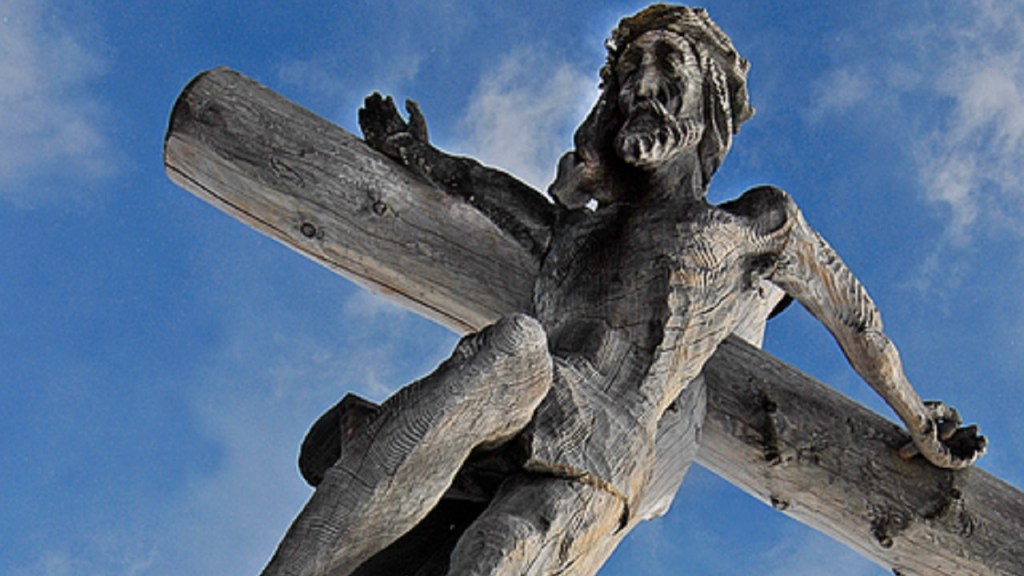
You see, God justifies us by faith. That means he takes our sins, forgives them, and so declares us his perfect, not-guilty children as a gift. That impacts our future as well as resolving our past. Paul continues, “I have been crucified with Christ and I no longer live, but Christ lives in me.” I have been crucified with Christ. Jesus death on the cross is my death. When Jesus died there, God counted that death for me. My sins are gone. My Father sees me only as his holy perfect child.

But he doesn’t leave me hanging on that cross, so to speak. I no longer live, but Christ lives in me. When Jesus takes away my sins, he also puts to death my old, sinful self and makes my heart his own home. He lives his life in each one of us. Any life that Jesus is living looks exactly the way God says we are: not guilty, free from sin.

So even though we don’t have the power to do what the law says, Jesus does. When Jesus makes our own hearts his home that means more than thinking of him a lot or loving him. It means that Jesus has a genuine presence in my heart and soul. And his life gives us power to stop committing sins and live a life of love. It isn’t dangerous for God to forgive our sins so freely. It is the only way he can make it less common in our lives.

Grief and Hope

1 Thessalonians 4:13 “Brothers, we do not want you to be ignorant about those who fall asleep, or to grieve like the rest of men, who have no hope. We believe that Jesus died and rose again and so we believe that God will bring with Jesus those who have fallen asleep in him.”

It is okay to cry. When someone we love dies, it is okay to cry. And it is okay not to. Grieving is not bad. It doesn’t spoil things. Paul does not say, “Do not grieve.” He is saying, “Don’t grieve like those who have no hope.”

But there are perfectly good reasons to grieve when we say goodbye to those we love. We all do it differently. For some it may mean a flood of tears. For others it may mean we become unusually quiet instead of our usual chatty self. There is no right or wrong way. It is okay to grieve our loss.

Even for the Christian, death is tinged with the sadness of sin. It’s a reminder. The Bible tells us that the wages of sin is death. Everyone who dies is a sinner who could not save himself. So God gave us a Savior. And for us who grieve, that makes all the difference. That gives us hope.

There are those who lose the one they love, and all they have is memories. All they have is a legacy. Maybe they have some vague idea about a “better place.” God gives us Jesus. Christians who die are not just asleep. They are asleep in Jesus. “We believe that Jesus died and rose again and so we believe that God will bring with Jesus those who have fallen asleep in him.”

Jesus knew about the sadness of death. At the funeral of Lazarus, Jesus was so overcome with emotion that he cried himself.

 But Jesus knew death even better than that. He experienced it. “We believe that Jesus died,” Paul writes. His body weakened. He struggled to breathe. His heart slowed, and finally stopped. He gave up his spirit.

All by itself, that fact doesn’t sound very hopeful. Paul assumes that we understand the relevance, the significance, for our hope. Since Paul doesn’t tell us this explicitly, let me give you some reminders. Jesus once told his disciples that he came to “give his life as a ransom for many.” Jesus knew that his death was a payment, a payment that would set his people free. In his letter to the Ephesians Paul says, “We have redemption through his blood, the forgiveness of our sins.” There is that idea of payment again, “redemption,” and death, “his blood.” And the freedom this all adds up to is the forgiveness of our sins.

Well, that’s hope, isn’t it–not a wobbly wish kind of hope, but a reason to be certain and optimistic about our future. God does not intend to hold our sins against us. He held them against Jesus, if you will, who paid all we owed with his own death on the cross. Jesus has set us free.

And then hope grows, “We believe that Jesus died and rose again.” Three days after Jesus died, he woke up! Death is not the end. In planning funerals, many family members have said to me, “Let’s make this a celebration of life.” Yes, let’s do that. And that celebration begins with the celebration of Jesus’ life, who left his tomb perfected and glorified three days after he died, and now lives and reigns in heaven forever and ever.

Jesus’ new life is the promise of our new life. “I am the resurrection and the life,” Jesus said, shortly before he brought Lazarus out of his tomb. “He that believes in me will live, even though the dies.”

Here is where hope reaches the top. “We believe that God will bring with Jesus those who have fallen asleep in him.” In the scenario Paul is describing here, Jesus decides to close the book on the history of this world before you and I die. And as he comes back to gather his own and judge the world, he brings those we have buried, and every other person who fell asleep in faith in Christ, with him. They will all be there at the resurrection. And so will we. And that body, will be restored to life imperishable, and incorruptible, fully fit for the eternity together that is waiting for us.

We Trusted in Him

Isaiah 25:9 “In that day they will say, ‘Surely this is our God; we trusted in him, and he saved us. This is the Lord, we trusted in him; let us rejoice in his salvation.’”

“We trusted in him.” There is a flavor of waiting in Isaiah’s words here. God’s people often wait for him to keep his promises, and waiting requires faith. Abraham waited 25 years for the Lord to keep his promise to give him and Sarah a son. That’s almost half my lifetime. The nation of Israel waited hundreds of years in Egypt for the Lord to set them free from their slavery. The whole history of our nation isn’t that long.

The Lord promised Isaiah he was going to swallow up death. That promise was going to wait another 700 years after Isaiah put it on paper. That’s thousands of years after he had first made the promise to Israel’s ancestors. Many people gave up on the promise across the centuries. A faithful few waited, and believed. Their faith was rewarded when our Lord Jesus came and destroyed death as God had promised.

Patience has never been a very strong human trait. We probably have less of it than our ancestors. We live in an age of instant gratification. We don’t save up until we can afford something. We buy it on credit and pay with interest. We don’t save for retirement. There’s too much we want today. We get antsy if the checkout line at Walmart isn’t moving fast enough. We complain if they don’t open up a new register after five minutes.  A professor of mine once noted that the thing that makes common sense so valuable is that it isn’t all that common. In a similar way we need to keep reminding people that “patience is a virtue,” because while it may be good to have, not many of us show it much of the time.

The Lord’s timetable may seem painfully slow to people with so little patience. Believe. His answers to our prayers seem like they will never come. Believe. We have been putting up with these morons, suffering through this situation, dealing with this pain for weeks, or months, or years now, and he promises he won’t let me be tempted beyond what I can bear. Believe. Jesus promised to return and make everything right and take us home almost 2000 years ago, and he still hasn’t showed up. Believe. The Lord kept his promise to destroy death and save us from sin thousands of years after he gave it. We can believe that he is good for every other promise on which we are waiting. In all of history he hasn’t missed one yet.

Imagine how your life could be different if you knew that you were going to live forever. O wait, you do know that. The Lord has destroyed death, just like he promised. “Let us rejoice and be glad in his salvation.”

Death Destroyed, Disgrace Removed

Isaiah 25:7-8 “On this mountain he will destroy the shroud that enfolds all peoples, the sheet that covers all nations; he will swallow up death forever. The Sovereign Lord will wipe away the tears from all faces; he will remove the disgrace of his people from all the earth.”

Isaiah lived and wrote his prophecies in Jerusalem. The city was built on the same mountain where 700 years later Jesus’ enemies put him on trial, condemned him to death, crucified him, and buried him. There he paid for the sins of the world. And when he rose from the dead three days later he accomplished what no doctor, no scientist, no researcher can ever do. He destroyed death. “Swallowed it up,” Isaiah says. He broke it, stomped all over it, and it will never work the way it used to work again.

He changed death from permanent condition to temporary condition. He reconstructed what was once the gateway to hell, making it the door to our true home in heaven. We have gotten used to calling his victory day “Easter,” but Isaiah is describing “The Feast of the Resurrection.” There is no bigger or better feast of God’s saving work for us to celebrate than the day the Lord destroys death.

This makes all the difference. It destroys “the sheet that covers all nations, the shroud that enfolds all peoples.” What terrorizes people more than death? Isn’t that why we are so concerned about healthcare, and we pay the doctors so much? Isn’t that why people all around the world weep and wail at their funerals? Death is like a dark sheet, this shroud of gloom that darkens life.

But then there is the truly Christian funeral. We still shed some tears as we say goodbye. But it is not despair. And underneath the tears there are often smiles, even a note of joy. Gathered with those we love we often find laughter as we remember those who have died. We consider where they have gone. We know our Lord Jesus Christ has destroyed death, and we can celebrate the new and perfect life they now enjoy.

Isaiah understood why death’s destruction gives us reason to feast and celebrate. “The Sovereign Lord will wipe away the tears from all faces; he will remove the disgrace of his people from all the earth.” The great disgrace of our race, the whole human family, is the death our sin has introduced into the world. It spoiled everything. We didn’t just infect ourselves with the disease. The whole planet is dying, and our own sins perpetuate the catastrophe.

But Jesus Christ has erased our sin by his death. Our Lord has destroyed death by his resurrection. He has removed our disgrace, and we celebrate as we wait for him to come and make everything new.