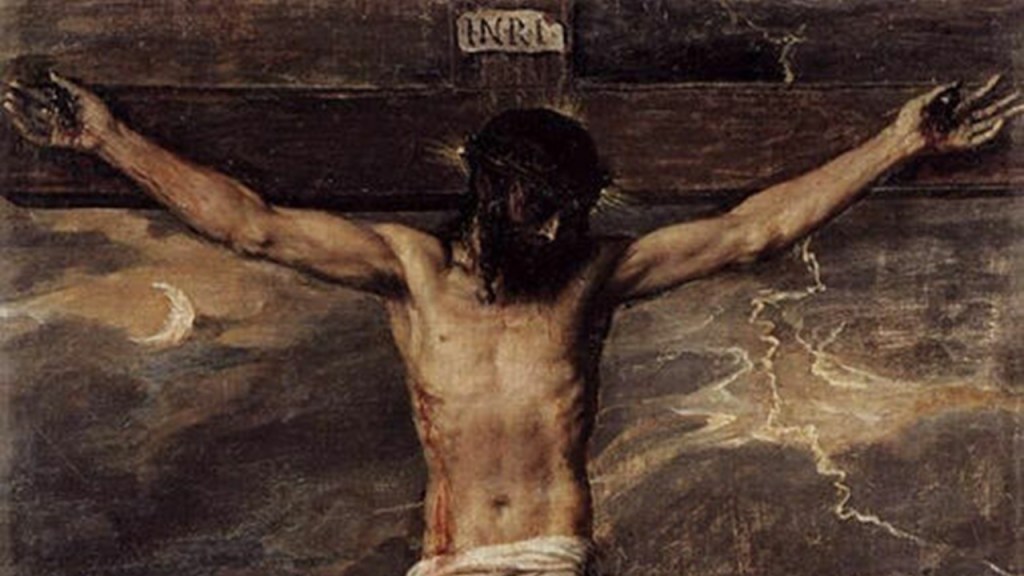
Worthy of Greater Honor

Hebrews 3:3-6 “Jesus has been found worthy of greater honor than Moses, just as the builder of a house has greater honor than the house itself. For every house is built by someone, but God is the builder of everything. Moses was faithful as a servant in all God’s house, testifying to what would be said in the future. But Christ is faithful as a son over God’s house. And we are his house, if we hold on to our courage and the hope of which we boast.”

The Lord has different metaphors to describe the relationship we have with him and each other. We are the flock, and he is our Shepherd. We are the family, and he is our Father. We are a body with its many parts, and Christ is the head. We are his nation, and Christ is our king.

Here the picture is of a house. Not all the parts of my house serve the same function. Some are more structural and some are more cosmetic. Some make the house sturdy. Others make it comfortable. Some parts are very visible, while others are hidden behind the walls–the plumbing, wiring, and such.

In God’s house, Moses was like a great support beam preventing a major portion from collapse. The Lord used Moses to preserve his plan to save the world. He saved the family that would give birth to the Savior from extinction. He led God’s people to the land where all God’s promises were to be kept. Moses wasn’t perfect, but he was faithful and deserving of the honored place he has in story of God’s people.

Still, Moses was one of those people himself. “Moses was faithful as a servant in all God’s house.” Jesus is the architect and the builder. “Christ is faithful as a son over God’s house.” Take away Moses and you have a house in need of repair. Take away Jesus and you have no house at all.

For the people to whom this letter was originally written, Moses was a consensus candidate for the Hebrew Hall of Fame. Everyone agreed his name belonged next to greats like Abraham, David, and Elijah, maybe even at the top of that list. His story should be told, his deeds recited, his memory passed on to the next generation.

But if that was true, Jesus deserved even more attention and honor, because Jesus and his mission were greater still. Without Jesus saving the world from sin and death, Moses’ work didn’t much matter.

For you and me, the question isn’t likely, “Who is greater, Moses or Jesus?” For us, it is hundreds of lesser lights, like the founding fathers of our nation, or some recent political superstar. We make idols out of athletes and entertainers, but a hundred years from now the music of Elvis, Michael Jackson, or Taylor Swift will seem quaint if it is remembered by anyone at all. Patrick Mahomes or LeBron James won’t be footnotes in a history book, and no one may even know what football or basketball are.

But Jesus will still be the one whose birthday is celebrated even by the people who don’t like him. The years will still be numbered by whether they took place before or after he was born. His faith will likely claim more followers in more places around the world than any other (and if you add those in heaven it will blow the rest away). He will still be the world’s only Redeemer from sin, and when the last day comes, he, and no other, will sit on the throne and judge the world for its deeds.

By faith, we are the house Jesus built, the house he owns and keeps. Give the owner his due.

The High Priest We Confess

Hebrews 3:1 “Fix your thoughts on Jesus, the apostle and high priest we confess.”

Later chapters of this letter to the Hebrews describe Jesus’ high priestly work in detail. Ordinarily, so long as you didn’t mind butchering animals for sacrifice, the position of high priest was highly desirable. People waged political campaigns and paid money to secure the position. You were a highly respected member of society. You were a powerful national leader. You were part of a religious tradition over a thousand years old and had access to parts of the temple where no one else could go.

But ordinarily, you weren’t asked to become one of the sacrifices you offered. You weren’t expected to die for the people you served. That was part of Jesus’ mission from the beginning. He came knowing full well it would cost him his life.

There are other religious leaders in history who were put to death for what they believed and taught. But none of them volunteered. It was not part of the plan from the beginning. Jesus came with the full knowledge he would die a violent death at the hands of the people he came to save.

More than that, he embraced that death as the substitute for the world that rejected him. He accepted that justice would be served on him for crimes and sins others had committed. Jesus knew that he was dying for you, and for me. He was faithful to that mission.

Are you paying attention? What’s the nicest thing anyone has ever done for you? What is the biggest sacrifice anyone has ever made for you? My father, a manager at a small midwestern company, worked a second job selling suits at JCPenny for twenty years so that I could attend a private Christian high school and college. As a nation we get regular reminders of the sacrifices our soldiers have made, sometimes giving up a limb, or even a life, so that we could be safe and enjoy our freedoms.

Thinking about such things isn’t supposed to put us on a guilt trip and manipulate us into a certain kind of behavior. But it does have the effect of nurturing our affection for family and country, bonding us more closely to those who have served and loved us.

No sacrifice or service comes close to matching what Jesus gave. Fix your thoughts on his faithful love, and see if you don’t find yourself closer to him day by day.

Faithful to His Mission

Hebrews 3:1-2 “Therefore, holy brothers, who share in the heavenly calling, fix your thoughts on Jesus, the apostle and high priest whom we confess. He was faithful to the one who appointed him, just as Moses was faithful in all God’s house.”

The Jewish Christians to whom this letter to the Hebrews was written faced many challenges to their faith. Their friends and neighbors were constantly lobbying them to give it up. They questioned Jesus’ identity. Was he really who he claimed to be? They denied Jesus’ distinctive mission. It seemed to some that you had all you ever needed in Moses and the Old Testament prophets. These Jewish Christians grew tired of the cross and burden that came along with following Jesus. Ridicule and persecution were no fun.

I think this context makes the book of Hebrews hugely relevant for us today. Some of my own friends have left the Christian faith. They were worn down by the constant messaging that Jesus doesn’t really matter, there’s nothing in Christianity you can’t find in other religions, nothing you couldn’t do with no religion at all. They grew tired of being considered odd, out-of-step with the norms and values of the world around them. Some have run into this spiritual buzz saw on American college campuses. Others experienced it working in the amoral climate of corporate America.

The problem is not with Jesus and the faith he founded. The problem is that we stop paying attention. Or, as the writer of Hebrews says, “…fix your thoughts on Jesus, the apostle and high priest whom we confess.” All the good reasons to fix our thoughts on Jesus can’t be condensed into six or seven sentences of one chapter of one Bible book. But here we have a start. One good reason to fix your thoughts on Jesus goes like this: “He was faithful to the one who appointed him, just as Moses was faithful in all God’s house.”

Jesus was faithful to his mission. “Okay. That’s nice. But other people have been faithful, too.” If we aren’t impressed, it’s because we haven’t been paying attention. God appointed Jesus to seek and save sinners. He had explicit orders to find the kind of people who seemed least likely to listen to him. I have heard people describe outstanding salesmen as the kind of people who could sell snow to Eskimos or sand to Arabs. Humanly speaking, the challenge before Jesus was greater still. He had to convince people who had taken a lifetime of abuse at the hands of religious people that his brand was going to be any different. And they wouldn’t be respected more by their critics. They just wouldn’t have their vices to comfort them.

On the other end of the spectrum, he had to convince people who were smug and content in their own version of holiness that he could give them a better holiness–if only they would throw their own holiness away and plead guilty to complete spiritual fraud and incompetence.

Who signs up for a project like that? Other founders of other world religions didn’t start out like this. But Jesus didn’t come to win a following. He came to change the world, including you and me. He deserves our attention, his life begs us to fix our thoughts on him, because he was faithful to his mission.

Miracles of Repentance and Grace

Jonah 3:4-5, 10 On the first day, Jonah started into the city. He proclaimed: ‘Forty more days and Nineveh will be overturned.’ The Ninevites believed God. They declared a fast, and all of them, from the greatest to the least, put on sackcloth… When God saw what they did, and how they turned from their evil ways, he had compassion and did not bring upon them the destruction he had threatened”

The message may sound harsh, but if the Lord’s only intent was to destroy the city, no need to send a prophet to warn them. Just let the catastrophe come. Shake the earth. Whip up the storm of the century. Send in the murdering hoards. Just because God did want to spare these people, Jonah had to preach like this.

That still has to happen if preaching is going to do any good. An old commentator was right to note: “A preacher must speak the truth frankly, and not sugar over it and deprive it of its power by ornaments and flattery. One must plainly say to sinners that they are hastening to destruction.”

That the Ninevites needed such a message, and Jonah had good reason to be afraid to deliver it, is more detail than the story in the Bible provides. From history we know that this was a scary people. They had made a name for themselves by their cruelty. On the battlefield they would make walls and towers out of the dead bodies of enemy soldiers. They liked to skin their enemies alive, or impale them alive on stakes and let them slowly die. After a battle they regularly enjoyed cutting body parts off of the local citizens–hands, feet, ears, noses, etc. When they weren’t at war, they entertained themselves at beer halls and brothels.

Those are the kind of people to whom Jonah preached. I suspect we would be just as frightened if God sent us to preach that kind of message in an ISIS camp or an Iranian mosque. You might wonder if you would get out alive. We might have more sympathy for Jonah’s initial response to God’s call: try to run away.

Then the first miracle happened. “The Ninevites believed God. They declared a fast, and all of them, from the greatest to the least, put on sackcloth.” How successful do you think your Christian preaching would be in an ISIS camp or a Taliban hideout? How many converts would you make if you preached Jonah’s way at the headquarters for the Freedom from Religion Foundation in Madison, WI, or in the sex clubs on Bourbon Street in New Orleans’ French Quarter?

Apparently, it might be all of them. The preaching of God’s word was so powerful that it turned the hearts of this wild and wicked city, a city with at least 120,000 people. And the repentance was real. Jesus comments in the book of Matthew, “The men of Nineveh will stand up at the judgment with this generation and condemn it, because they repented at Jonah’s preaching” (12:41).

Then the second miracle happened. God forgave them. “When God saw what they did, and how they turned from their evil ways, he had compassion and did not bring upon them the destruction he had threatened.” I say miracle, not because this is out of character for the Lord. By his own claim he is “the gracious and compassionate God, slow to anger, abounding in love, forgiving wickedness, rebellion and sin.” I say miracle because only supernatural love and patience can forgive a people like this.            

Today you and I proclaim God’s word to our world. Our fellow citizens may seem like run-of-the-mill sinners compared to the violent and sensuous people of Nineveh. They are less scary, but their need for grace is just as urgent. May God give us the courage to go, and then see his miracle one more time.

The God of Second Chances

Jonah 3:3 “Jonah obeyed the word of the Lord and went to Nineveh.”

There are a couple of things for us to take home from the prophet’s second chance. First, the Lord is far less interested in using people who are already prepared for his work as he is in developing people, transforming them, and making them ready for his work. Isn’t that what Jesus did with his disciples? They don’t look much like the cream of the crop through most of Jesus’ life. They are self-seeking, naive, judgmental, argumentative, sometimes border-line violent. Remember when John, the so-called “apostle of love,” suggested raining down fire and brimstone on a Samaritan village and burning everyone to death because they wouldn’t let them stay for the night? But these are the guys Jesus picked. And with three years of training, and a lot of help from the Holy Spirit, God used them to change the world. There is a line about the early church’s enemies in the book of Acts that highlights the disciples’ transformation: “When they saw the courage of Peter and John and realized that they were unschooled, ordinary men, they were astonished and they took note that these men had been with Jesus” (Acts 4:13).

So God’s second call of Jonah confronts us in two ways. We don’t get to pull excuses like, “But I’m not good at that” or “I don’t like to do that” when God needs something done. Maybe we aren’t very good at it. Maybe the Lord is going to use this to stretch us and grow us and make us something more than we used to be.

Also, we don’t get to criticize volunteers at church who may not be very good at what they are doing yet. Give them advice and help them, yes. Complain about them, no. Hey, at least they aren’t running away like Jonah did. Who do we think we are, to think that we can be more demanding and less forgiving than God? The Lord calls us to repent of attitudes like that.

The far greater take home from Jonah’s second chance, however, is to understand that God will be so gracious to you and me, too. He is the God of second chances, and thirds and fourths and five hundredths or more when necessary. It is not only his desire to forgive us when we fall–made clear in the extreme sacrifice of his own Son he was willing to make to purchase forgiveness for all our sins. He also knows that forgiven people make the best messengers of his forgiving grace. For them forgiveness isn’t a theory–something they read and studied about and can explain from the book. They have experienced it themselves. They know what it is, to borrow the words of Brennan Manning, to be “inconsistent, unsteady disciples whose cheese is falling off their cracker…poor, weak, sinful men and women with hereditary faults and limited talents…earthen vessels who shuffle along on feet of clay…the bent and bruised who feel their lives are a grave disappointment to God.”

And yet…and yet God loves them with an everlasting love and forgives them at every turn. These are his children, we are his children, and he will not give up on his own. More than that, he uses us, though we have given him no reason to trust us, to bring his grace to others, just because we have needed it so much ourselves. He is the God of second chances, for people like his prophet, Jonah, and shaky servants like you and me.

Extraordinary Measures

Jonah 3:1 “Then the word of the LORD came to Jonah a second time: ‘Go to the great city of Nineveh and proclaim to it the message I give you.’ Jonah obeyed the word of the LORD and went to Nineveh.”

Jonah ended up fish food the first time God sent him to preach in Nineveh. This second time was different. The Lord’s intervention with his prophet led to a better outcome.

God didn’t have to give Jonah this second chance. It’s not as though Jonah was his last option at the position of prophet. Hosea, Amos, and Joel are all biblical prophets who lived at the same time. They wrote books of the Bible. They bravely preached to people who didn’t want to hear their call to repentance. The Lord could have used any one of them to warn the city of Nineveh that God’s patience with them was about to run out.

But that’s not the way the Lord deals with the people he calls to serve him. If we want to get a job done, we generally try to find the best man or woman for it. We are mostly concerned with completing the task and doing it right. When my church built a new sanctuary, we interviewed three different consultants to help us run our stewardship campaign, a half dozen architects to design the building for us, and another five construction companies to erect the building. Everyone we talked to was reasonably competent and close in their bids. We wanted the best one. After all that we still ended up with windows that leaked at the very first rain.

The Lord is as concerned about growing and developing people as he is about getting a job done. Otherwise he would do it all himself. We all know about Jonah’s big fail the first time around. He didn’t merely do a poor job of preaching to Nineveh. He ran in the opposite direction. My wife manages restaurants for Pizza Hut. When she tries to hire someone, and they don’t come back after the first interview, she doesn’t hunt them down and drag them back into the store. If they don’t want to work for her she figures she is better off without them. It can be a headache to turn them into a good employee.

God, on the other hand, miraculously intervened in the weather, created a storm at sea, and nearly sank a ship and drowned an entire crew just to get Jonah thrown overboard. He sent some giant tuna (maybe it was a whale–the ancients didn’t classify animals the same way we do) to swallow Jonah and keep him alive for three days, giving the prophet some time to chill and think about the choices he was making. He had Jonah unceremoniously vomited back onto dry land after he had learned his lesson.

The Lord went to extraordinary measures to turn Jonah into the man he wanted for the job. He took extraordinary measures to free us from our sins. He still takes extraordinary measures to turn us into believers and use us in his church today. That is how grace works. It often is not efficient. It may seem to skip over the best qualified. But it overcomes our congenital resistance to God’s call and remakes us into the servants he seeks, obedient to his word.

Claimed

Mark 1:11 “And a voice came from heaven: ‘You are my Son, whom I love; with you I am well pleased.’”

The heavenly Father’s words about Jesus are loaded. In three short phrases he identifies Jesus for us, professes his love, and proclaims his perfection. First, Jesus’ identity: despite Jesus’ very human appearance, this incident leaves no doubt that Jesus is the Son of God who came from heaven to save the world. If you have ever worried to yourself, “What if Christianity is wrong? What if I am following the wrong religion and worshiping the wrong God?” here is the answer to your concerns. At this point in real history, God spoke from heaven to leave no doubt that Jesus is his unique and holy Son.

Then the Father professes that unconditional, unchanging relationship of love that has always existed between him and his Son. That love wasn’t based on Jesus’ performance or behavior. It freely flowed from the Father to the Son. The Son freely reflected that love back to the Father in the perfect way he lived. The Father could proudly proclaim about Jesus, “I am well-pleased.” Jesus was good like no person earth since Adam and Eve before the fall into sin.

Maybe we have come to expect this of our Savior. We aren’t overwhelmed by the Father’s confirmation of his perfection. If so, perhaps this will help with our perspective: Jesus came to live his entire earthly ministry as our substitute, in our place. He came to carry our sins and die for them.

But this is not only a negative thing. If Jesus came to take responsibility for all the negative things in our lives, he also came to offer us credit for all the good in his own. In other words, your Father in heaven is also speaking these words to you and about you today. This is how he has felt about you, ever since the day of your baptism. Listen to him saying this to you again.

“You are my Son.” You may not be the eternal, only-begotten Son of God, but by the faith the Father planted in you by word and water, you are his own child, a member of his own heavenly family. Do you know what that makes you? That makes you a very impressive person. It would be understandable if the rest of us were tempted to indulge in a little name-dropping, and mention to others that we happen to know you, since you are a member of the Royal Family.

“You are my Son, whom I love.” Do you remember the old children’s song, “God loves me dearly, grants me salvation, God loves me dearly, loves even me”? That little word “even” is a big word in that line. It says that we are aware of all the reasons why God shouldn’t love us anymore, and yet, God still loves even a rascal like me. You cannot imagine a sin so big that it would make God stop loving you. He has loved murderers and adulterers and swindlers and prostitutes and politicians and lawyers and accountants and even ministers. God loves you and God loves me, and our own baptisms are just one of many ways that he has told us so.

“With you I am well-pleased.” This is just too much. God finds a sense of satisfaction, and enjoyment, and pleasure in us like we do when we are eating our favorite food, perfectly prepared, or enjoying a favorite show, or game, or other pastime. Maybe it would be better to compare it to the rare times we spend together with dear, dear friends, and we have so much fun, and we can bear our hearts, and at the end we all conclude that we don’t do this nearly enough. We ought to get together more often. We are “well-pleased” at such times.

“With you I am well-pleased,” the Father says, as though we were the ones who had lived a perfect life free from a single sin, and because Jesus’ perfect life of love counts as our own, we have. Now we can see the wonder in the Father’s statement, because he is also bearing his heart for you and me.

Anointed

Mark 1:10 “As Jesus was coming up out of the water, he saw heaven being torn open and the Spirit descending on him like a dove.”

Jesus is the “Christ” which means “the anointed one.” You may remember that there were three jobs or “offices” that people in Old Testament times began by having oil poured over their heads: Prophet, Priest, and King. Jesus came to be the great fulfillment of all three, and his baptism is also his anointing. Now he was officially Israel’s Prophet, Israel’s Priest, and Israel’s King. The only difference is, as the Apostle Peter says in Acts 10, Jesus was anointed with the Holy Spirit instead of oil. He received a much higher anointing for a much higher task.

The Spirit brought with him the gift of power for his ministry. Immediately following Jesus’ baptism we hear that the Spirit led him into the wilderness to face the Devil in his temptation. Later we hear that he returned to Galilee in the power of the Spirit (Luke 4). It’s not as though Jesus had never possessed the Spirit’s presence before this, but at his baptism he received a special outpouring of the Spirit’s gifts and powers for the hard work ahead of him.

While we can see the importance of all this for his work, maybe it seems a little matter of fact to us. Then let’s not forget that Jesus’ baptism was a real baptism. What the Lord gave to John and Jesus, and to us through these words, is a little glimpse into the invisible goings on of the spiritual world.

Perhaps you have read some of the novels by Christian author Frank Peretti that attempt to describe what’s going on behind the scenes in the realm of angels and demons at the same time that people are struggling through various earthly trials and challenges. Peretti paints dramatic battles between the demons and the angels as they fight to influence human behavior. While the stories make exciting fiction, the demons are portrayed with too much strength and the angels with too little relative to each other. The angels in the stories even depend on human prayers to help them.

Here, however, God makes visible for a few moments what otherwise happens behind the scenes in our baptisms. If you could see a baptism the way that God sees it, then you would see the heavens torn open as God prepares to cross the boundary that separates us from him. You would see the Spirit come rushing down from heaven and piercing the chest of that little baby or that trembling adult as he makes his home in a new heart. You would see, with your own eyes, that this is a person in whom the Spirit of God now lives.

On the outside, our baptisms may look quite plain, but here the Spirit comes bearing such wonderful gifts. God not only lives with us. He lives in us by his Spirit. It may be true that to err is human, and that nobody’s perfect, and that will remain true our entire lives. But by our baptisms we are no longer mere men and women. With the power of God’s own Spirit working within us, there is real help and real hope for a changed life. The Spirit can open up our minds to comprehend God’s word. He can open up our hearts to reflect God’s love. He has opened up our lives to carry out the meaning and purpose that God always intended for us, because in our baptisms, the Spirit came bearing his gifts.

Jesus’ Burden

Mark 1:9 “At that time Jesus came from Nazareth in Galilee and was baptized by John in the Jordan.”

There it is. Jesus came. Jesus was baptized. Jesus got soaked.

In order to understand why this is so special, one of the great moments of all time, we need to ask the question, “Why?” “Why did Jesus go to be baptized?” The other gospel writers tell us that John the Baptist wondered the same thing. “I need to be baptized by you, and do you come to me?”

With his baptism, Jesus was formally beginning his public ministry, entering into his saving work as the Messiah. As you know, the work Jesus did to save us did not consist so much in training us as it did in replacing us. He came to be our substitute. He came to bear our sins, to make himself responsible for their guilt. That was not something which took place first at the cross, but something he bore for us throughout his ministry.

No doubt the sinless Son of God felt that load of sin and guilt weighing down on him very heavily. That is what made baptism such a fitting way to begin his ministry. John had earlier described his baptism as “a baptism of repentance for the forgiveness of sins.” With our sins on his shoulders, bearing down upon his soul, Jesus received this statement of sins forgiven, assuring him and us that the Father will not hold them against us.

Do you see the extraordinary nature of his love here? Maybe it will help us to take a few moments to consider what sort of burdens we are willing to bear for each other. We devote an enormous amount of time to trying to make our lives in this world as easy and comfortable as they can possibly be. We set our hearts on having certain things. We will work like mad to get them. In our better moments, we will break away from the all-important work of enjoying ourselves for a little while to help someone else. We may dig into our pockets and come up with a little cash for them. Maybe we can use some of our skills to help someone out. On rare occasions we might even open our homes to someone who is down and out.

But let them intrude too far into the happy little world we had created for ourselves and what happens? We get tired of the burden. We start to resent the neediness of those we help. Then we start to resent the people themselves. Almost inevitably, we draw the line. “No more!” To us, perhaps, it just seems fair. To God, it just looks selfish.

Now look at Jesus coming to be baptized by John, bearing the sins of the world. He loved you and me so much that he carried the burden of our sins every moment of his earthly ministry until finally it killed him. He went to sleep at night with our sins. He got up every morning with our sins. He died of our sins. When Jesus came to John to be baptized, he fully knew what he was getting into and what it was going to cost him. He did it only because in his love he knew it was the only way to save us.

If that does not make our jaws drop and our eyes widen, then, my friends, we have lost our sense of wonder! Our Savior shows us incomparable love when he comes bearing our sins.