A New Start

Luke 2:21 “On the eighth day, when it was time to circumcise him, he was named Jesus, the name the angel had given him before he had been conceived.”

Circumcision was God’s way of saying to a Jewish boy, “You belong to me.” Other nations practiced circumcision for other reasons. But God had said to Abraham, “Every male among you shall be circumcised. You are to undergo circumcision, and it will be the sign of the covenant between me and you” (Gen. 17). This covenant was God’s promise to have nations come from Abraham, to be his God and the God of his descendants, and to live in the land of Canaan.

To be truly circumcised, and to be part of God’s “deal” with Abraham and his family, required more than the outward procedure, the surgical removal of a little piece of skin. The Apostle Paul explained in his letter to the Romans, “A man is not a Jew if he is only one outwardly, nor is circumcision merely outward and physical. No, a man is a Jew if he is one inwardly; and circumcision is circumcision of the heart, by the Spirit, and not the written code” (Romans 2). The idea of “circumcision of the heart” is an idea Paul echoes from the prophet Jeremiah. What it says is that God gave the outward sign to help support faith, but without faith in the heart the outward sign did not make the God of Abraham your God all by itself. Circumcision could make a contribution to your faith. It could not serve as a substitute for faith.

The details God chose for this procedure were not arbitrary. They said something about the message he was trying to communicate. First, a piece of flesh had to be taken. Its removal was a reminder that there is something in our flesh that stands between us and a good relationship with God–namely our sin. It has to be removed for us to belong to God and for God to belong to us.

That piece of skin was taken where a man is involved in giving new life to a new generation. God was reminding them, and us, that sin is with us from the very first moments we exist. We may all commit sins of various sorts. But our real problem is with original sin, the sinful condition we have from our origins.

The second thing to note about circumcision was the timing. Jesus was circumcised “on the eighth day.” “Every male among you who is eight days old must be circumcised,” God told Abraham 2000 years earlier. “Eight” is a meaningful number. There are seven days in a week. God created the world in seven days. The eighth day is the first day of a new week. Eight is the number God uses when he wants to say, “There is new life here, a new creation.” When Jesus rose from the dead, you remember what day of the week that was? It was Sunday, the eighth day of the old week, the first day of the new week, the first day of his new life after death.

Unless you were an adult convert to Judaism, God commanded that baby boys be circumcised on the eighth day. It was his way of saying, “There is new life here. When I become your God, and you become my child, then you are a new creation.” Jesus was circumcised on the eighth day, too, not because he had any sin, but God was saying to all of us, “There is new life here. I am his God, and he is my child, and Jesus is truly, in every way, a new creation.”

So what does this have to do with us? In his circumcision, Jesus began his life of law-keeping. On this day he was circumcised. Thirty-two days later he would be presented in the temple with sacrifices. Going forward he would keep the Sabbath, and attend the Passover, and honor his parents, and fulfill the whole law of Moses. This set us free from our need to keep the whole thing ourselves. We begin this year, we live every day, as free people. We aren’t driven by the old threats that say, “Do this, or else…”

On this day Jesus spilled his first blood as our Savior. His circumcision anticipates and foreshadows the complete payment for our sins by his blood shed on the cross. Our entire sinful past, our entire sinful future for that matter, is washed away and disappears under the flood of grace pouring from his sacrifice on Calvary. Spiritually, it is always a fresh start for us.

I suspect that you begin your day with a little time in the bathroom–a shower, a bath, a shave, brushed teeth, and new, clean clothes for the day. You start fresh without yesterday’s dirt coming along.

Spiritually, that’s how we start every day as well. It’s a new beginning, because the blood of Jesus Christ cleanses us from all sins. That is all anticipated, promised if you will, in Jesus’ circumcision.

Where Jesus Squeezes In

Luke 2:6-7 “While they were there, the time came for the baby to be born, and she gave birth to her firstborn, a son. She wrapped him in cloths and placed him in a manger, because there was no room for them in the inn.”

Everyday there are people who want to worm their way into my life. I receive junk emails from people in other countries who claim that they want to send me millions of dollars. As friendly as their offers sound, I won’t be seeking a relationship with any of them.

I receive telemarketing calls and texts on my cell phone. Often it’s a recorded message telling me I have won something or making a credit card offer. I don’t press the number to talk to a live person or return the call.

Sales people visit my office with various proposals. They would like to do janitorial work, or building maintenance, or design our audio-visual system. Those are all legitimate services, and I don’t fault them for asking. But I know they don’t ask because they are deeply concerned about me or my church. They are mostly concerned about drumming up some business for themselves.

At Christmas, someone came who wanted to work his way into our lives. The things he promised could sound as outlandish as the junk emails promising millions for nothing. But he didn’t come to take advantage of our gullibility, or merely to drum up business for himself. He isn’t running a scam. He doesn’t practice a trade. He genuinely came to give, and to serve. One way I know this is that, when he came, he embraced a manger as his first bed. That is an astounding truth not just because of the lowliness of it all, but the enormity of the one who squeezed himself into that little space.

In the final scenes of the final book of C.S. Lewis’s Chronicles of Narnia, The Last Battle, the children who are the heroes of the series take refuge from a battle in a little shed or barn. On the outside it is just a little building. But when they go through the door, they find a whole new world on the inside. This shed is, if you will, bigger on the inside than it is on the outside. One of the children observes, ““In our world too, a stable once had something inside it that was bigger than our whole world.”

That, of course, is the scene in front of us at Christmas. A stable, and a manger, contained the eternal God who is bigger than the whole universe.

It all sounds a little claustrophobic, doesn’t it–to go from filling and exceeding the entire universe to living in a cramped little body in a cramped little box in a cramped little building? But that’s what a loving Savior does when he comes down. He isn’t merely willing to spend time with little people. He makes himself small–smaller, and poorer than the average soul. He came to be our servant, you see. So he embraces the humility of a manger, and later on a little cross of wood, and after that a cold, stone tomb, where for three days they sealed the lifeless body of the eternal God who fills all things.

He did it so that we, too, could be bigger on the inside than we are on the outside. He did it so that saving faith, and the infinite God, and endless love could live in our little hearts. He did it so that one day we could come up to the vast expanse of his home above, where he lives, and his love rules, forever.

At Christmas I am thankful that he found his way into my world, and into my heart.

He Comes to Humble Places for Humble People

Luke 2:4-6 “So Joseph also went up from the town of Nazareth in Galilee to Judea, to Bethlehem the town of David, because he belonged to the house and line of David. He went there to register with Mary, who was pledged to be married to him and was expecting a child.”

Neither Nazareth nor Bethlehem were the center of the world at the time. Rome was the center of power. Athens, Greece or Alexandria, Egypt were great centers of culture and learning. Even in Israel, Jerusalem was the beating heart of the nation.

Bethlehem was just a distant little suburb. Nazareth was an insignificant village in a disrespected province, a place where the people talked funny and did things backwards. You may remember when Jesus called a man named Philip to be his disciple, and Philip invited his friend Nathaniel to come and meet Jesus. “We have found the one Moses wrote about in the Law, and about whom the prophets also wrote–Jesus of Nazareth…” “Nazareth! Can anything good come from there?”

And yet, when Christ came down from heaven, he was conceived in one and born in the other. These were the two little towns he visited and considered his home–not the capital of the empire or the capital of his own country. It was here where the simple, ordinary people lived–shepherds and carpenters, innkeepers and maidens–that he grew up and learned his trade. He did not consider himself too proud, or too important, to make these people his people. And until the day he died it was mostly people like this who followed him and called him Lord.

Where do you come from? Where do you call home? I live in Norman, Oklahoma. It has a university. It fancies itself as a cultured, open-minded, inclusive place. Not so long ago it wasn’t very cultured, open-minded, or inclusive at all. Fifty years ago it was still a “sundown” town. People of color had to leave before the sun set or expect trouble. I don’t point this out to minimize the progress that has been made since then. I am simply saying that coming from this mid-sized Midwestern city isn’t going to impress people the way that residence in New York, Los Angeles, London, or Paris might.

My family doesn’t come from anywhere prestigious. My parents grew up in little farming towns in Minnesota. I remember the sign along the highway saying the population of my dad’s hometown was 300 when I was a little boy. Places like these are in the middle of the country. People on the east or west coast call this “flyover territory.” It’s their way of saying, “Not much going on in that part of the world.”

Most of us are ordinary people who get up in the morning and try to make a living. History will not remember our names, not even in a footnote.

And yet, Jesus did not consider himself too proud or too important to make people like us his people. He still comes down to us. He visits our little towns, too, not dressed in human skin and human clothes, but clothed in the gospel message that speaks his forgiveness and makes his home in our hearts.

He came to us in the hands that baptized us and the mouths that taught us to know him–a parent, a pastor, a Sunday School teacher, a friend. He comes down to us today, to visit the humble little church while we hear his word. He still visits our little towns, wherever they are, like he visited two little towns called Nazareth and Bethlehem, when he came down to save us.

God Moves the World for You

Luke 2:1-3 “In those days Caesar Augustus issued a decree that a census should be taken of the entire Roman world. (This was the first census that took place while Quirinius was governor of Syria). And everyone went to his own town to register.”

On the day that Jesus was born, Caesar Augustus was the most powerful man in the world. The Roman Empire was the world’s greatest superpower. The historians tell us that this census, which may also have included paying a tax (like you remember from the King James translation of these verses), was a huge innovation from the emperor. Nothing on this scale had ever been tried before. It continued to be done every fourteen years for the next two hundred years.

No doubt the emperor prided himself for his great new idea. It demonstrated his political genius, his competence to govern this vast collection of countries under his control. It reinforced the power and glory of Rome, the capital of the civilized world.

It wasn’t really the emperor’s idea. Seven hundred years earlier the God of Israel had made a promise through the prophet Micah. He announced that a new King, an eternal King, a universal King, a divine King, was going to come and deliver his people Israel and rule the world. He was going to be born in Bethlehem. God doesn’t take his promises lightly. Jesus could have been born anywhere, and he would still be the Savior, the King. But God said he would come from Bethlehem, and if that meant he had to move an empire to make it happen, so be it. In order for him to come down, God moved an emperor to issue the decree that moved an empire. The most powerful man in the most powerful nation had no choice but to submit to the will of God.

Sometimes I look at the world in which I live, and I doubt, or I forget. On the national and world scene, the people in power manage to make one mess of things after another. There may be a war on terrorism, but there certainly hasn’t been a victory. Injustices pile up. Social problems grow, too many to list here. Corruption infects everyone and everything.

Close to home, frustration is never far away. I can’t get ahead like I want. I can’t get work done like I want. I can’t control my own behavior like I want. And the question rises in my head, “Where is God in all of this?”

The answer is, “He is here, on Christmas day.” When Love came down that first Christmas, he didn’t magically repair all the suffering and dysfunction in the world. That’s not what he came for. He came as Love, not Control, not Judgment. But for his purposes, to redeem a lost world from sin, to rescue me from the death and hell I deserved, he came with all the power he needed.

People who are passionate about doing something for someone else sometimes say, “I would move heaven and earth to…” You fill in the blank: “to be with you,” “to get you back,” “to help you recover.” When God wanted to save you, he moved an entire empire to come down to you, so that Jesus could live and die as our Savior.

God’s Prescription for Anxiety

Philippians 4:6 “Do not be anxious about anything, but in everything, by prayer and petition, with thanksgiving, present your requests to God.”

Worry is a joy-killer. Don’t do it, ever, about anything, Paul warns. Sometimes we are inclined to defend our worry. It seems legitimate to us when the stakes are high or the danger is real. We worry when our hopes and dreams are dying. My brother wanted to be a fighter pilot. His vision wasn’t quite good enough to become a candidate. Then he thought he wanted to be a doctor. His academics just weren’t impressive enough to get accepted into medical school. Surely you would understand if he felt a little anxious about his future at that point. But don’t do it, Paul says. Don’t be anxious about anything.

Almost twenty years ago I got called out of the middle of a church meeting and told to go home because one of my children had collapsed and was unconscious. As I drove up to my home, there was the ambulance parked outside. That’s about a parent’s worst nightmare. You probably wouldn’t fault me if I felt a little anxious getting out of the car and going inside. Indeed, I was. But Paul’s words still stand. “Don’t be anxious about anything.”

Anxiety and joy find it impossible to coexist. When one comes, the other goes. And Paul insists that it is always time for joy, so anxiety has to go. That’s where the invitation to prayer comes in. “In everything, by prayer and petition, with thanksgiving, present your requests to God.”

Imagine that you had a supernatural friend who was inseparable. Wherever you went, he went. He was besides you at all times. More than that, this supernatural friend could fix anything. He was more than handy. My dad is handy, and he can fix just about anything structural or mechanical. He showed me how to do car repairs and body work. Where I was a little tentative about doing something that might damage the car, he would grab the tools and jump right in. He can sweat pipes, wire electrical boxes, tape and bed drywall, build cabinets, shingle a roof. He’s handy.

But this supernatural friend can fix anything. Lou Gehrig’s disease is usually considered a death sentence, but this guy can make it go away. The U.S. government says that student loan debt cannot be forgiven, but this guy can make it happen. If World War III were to break out today between the U.S. and Russia and China and ISIS, your supernatural friend cannot only end it tomorrow, he can turn all the warring parties into instant allies.

You already know that this supernatural friend is not imaginary. He is your Savior. Time and time again he has shown that for him the laws of physics are not laws. They are only suggestions. He evens turns death backwards into life. He has already taken the debt of all our sins, even the sins we have not yet committed in time, far more than we could ever repay in a thousand lifetimes or with a thousand deaths, and he has wiped our record clean by his death on a cross.

It is this friend who now says to you, “Do you have a problem? Just ask. I am here to help. I can make anything go away. Better yet, I can transform anything that seems bad into a blessing. And I mean anything. In many, if not most, cases, that is how I prefer to work.”

Isn’t that what Paul is promising here? Isn’t that invitation to prayer a reason for us to kick out anxiety and be filled with joy at any time? My friend Lois used to have a sign on her refrigerator that read, “Good morning. This is God. I will be handling all of your problems today. I will not need your help. So, have a good day.” Maybe you have seen that before. Give him your problems in prayer, and live your life in joy.

Joy Already, Always

Philippians 4:4-5 “Rejoice in the Lord always. I will say it again: Rejoice! Let your gentleness be evident to all. The Lord is near.”

Just because you are a Christian doesn’t mean that you like the way your world is going. You may be stuck in a job you don’t like. You may be unhappy with your family. You may be one of those people who don’t like the direction the country is heading. Many American Christians have felt under fire from our current culture’s proponents. More and more of our core moral beliefs are rejected by the society around us. Maybe that has you feeling embattled, too.

When we feel under stress or attack, our patience wears thin. The anger comes out. We aren’t ourselves. We are like the people in those Snicker’s commercials: you know, the ones who are hungry and are griping and snapping at the people around them. “You’re not yourself when you’re hungry,” the announcer tells us. We become whiney and pushy. We get aggressive.

The problem is, at those moments we become all too much ourselves. We let the purely natural, purely human “me” come out, and it’s no fun for us or anyone around us. In fact, it’s a joy-killer. And unlike the TV commercials, a few bites from a Snickers isn’t going to fix it.

“Gentleness,” treating everyone around us with dignity, being careful with them as though our relationship could be fragile and easily broken, often isn’t valued. We don’t want to be pushed around. We don’t want others to take advantage of us. Gentleness often doesn’t get me the immediate results I want.

It wasn’t really valued in the ancient world, either. The Greeks generally saw it as a sign of weakness. But Jesus maintained his gentleness through the criticisms of his ministry, and the injustice of his trials, and the cruelty of his crucifixion. His enemies were the ones shouting and tearing their clothes. They carried on like children throwing a tantrum. They never seem very happy in the story, even though they seem to be “winning.” But the author of Hebrews can say of Jesus, “Who, for the joy set before him endured the cross, scorning its shame, and sat down at the right hand of God.” Gentleness and joy go together. Crabbiness and aggression call for repentance.

No matter what’s happening to us now, the future gives us every reason for joy. “The Lord is near.” There is a phrase that has been used to defend certain social or foreign policies for several years now. “The right side of history.” It is politically charged, I know, and I don’t want to go into all the political ramifications here. I simply want to point out that you and I, as Christians, are the only ones who know how history actually turns out. We are definitely on the right side of history, because at the end of history, Jesus returns.

And when Jesus returns, he wins. Everything, everything, will wind up his way. And when Jesus wins, his people all win, too. “When these things begin to take place,” Jesus tells us near the end of Luke, “stand up and lift up your heads, because your redemption is drawing near.” Don’t be afraid. Don’t feel sad. Lift up your heads. Take this all in with joy. You are about to be delivered from earth to heaven.

Even more, Paul promises us that it’s near. We don’t have to soldier ahead much longer in a world we don’t like much or a life we don’t like much. Jesus’ return is just around the corner. Heaven’s joys are almost in our grasp. It’s so close we don’t have to wait to celebrate. Let the joy begin already. For God’s gentle people, it is time for joy, because the Lord is near.

When We Go to See the Prophet

Matthew 11:9-10 “Then what did you go out to see? A prophet? Yes, I tell you, and more than a prophet. This is the one about whom it is written: ‘I will send my messenger ahead of you, who will prepare the way before you.’”

We go to see a prophet. Sometimes people hear the word prophet and they think “fortune teller,” predictor of the future. It is true that some of God’s past prophets predicted future events. But telling the future was incidental to their main assignment.

God called John the Baptist, “my messenger.” It was clear whom John the Baptist served, and it wasn’t popular opinion or the highest bidder. His heart and his voice belonged to the Lord. If that drew a large crowd, then God be praised. If that offended people and drove some of them off, then God be praised. If that got the prophet arrested and killed, then God be praised. But John wasn’t going to change the Lord’s script just because someone didn’t like it.

John’s message and mission could be summarized with the words, “who will prepare the way before you.” This applied to John in a special way because he was the last of the Old Testament prophets. He appeared right before Jesus to prepare the nation spiritually to recognize and believe in their promised Savior.

But in a wider sense, this job description applies to every prophet, every preacher of God’s word, from the beginning until our own day. There are two main tasks in preparing people to receive Jesus as their Savior. First, the preacher has to convince us of our need. What do I need someone to save me for if I’m not in any trouble? What would you say to the lifeguard if you were swimming laps, in no distress, getting a great workout, when all of sudden the lifeguard wraps his arms around you and begins dragging you out of the pool? “Have you lost your mind? Leave me alone! Go back to your stand. I don’t need you.”

We never run out of need for Jesus to be our Savior. We can become fuzzy on what that need is. We go to the prophet, the preacher, to have our sins exposed like we go to the dentist to find the plaque between our teeth and the cavities that need to be filled, or the doctor to tell us why we haven’t been feeling so well. I need him to tell me what’s wrong with me.

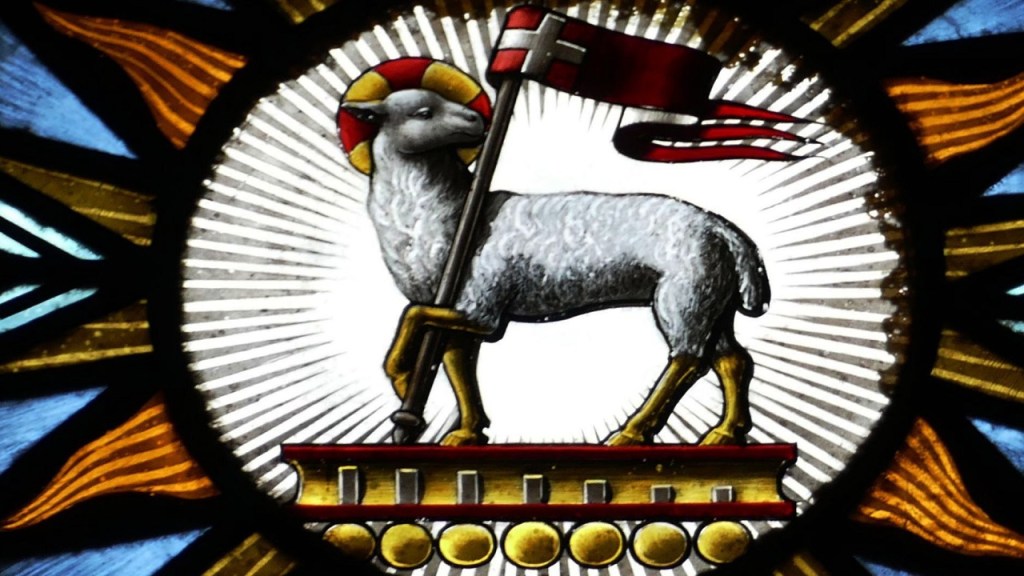
Then we go to see the prophet, the preacher, to present the Savior himself, to introduce us to Jesus all over again. This is the Lamb of God who takes away my sins. This is the perfect life that satisfies God’s demands for me to love and obey. This is the innocent death that serves the sentence for my sins and settles all my accounts with the Almighty. This is always where preaching is supposed to lead. Jesus’ saving love is the main event in preaching that deserves to be called “Christian.” For those who get themselves, and get Jesus, it is what they go to see.

A lot of people watch the Super Bowl just to see the commercials. The game itself? Not so much. There are other things we can go to see at church: musical performances, friends and family, meals and activities. Jesus reminds us to come and see him in the words of a preacher, a prophet, preparing his way.

Dressed for Success

Matthew 11: 8 What did you go out to see? A man dressed in fine clothes? No, those who wear fine clothes are in kings’ palaces.”

People don’t always attend events or watch presentations for their advertised purpose. I’ve seen people attend political rallies not to support candidates, but to heckle them. I know a young man who attended his friend’s church youth group because he thought the girls were pretty. A friend of mine in Dallas was a faithful watcher of one prominent televangelist, but he didn’t believe a word he said. He thought the melodramatic performance and outlandish claims were hilarious.

Jesus does a little digging with the motivations of his audience in these words. He knew that many, if not most of them, made the trip into the Judean wilderness to hear John the Baptist preach. Why did they go? What were they looking for?

Why do we go? What are we looking for? You see the guys on television: Rolex watch, gold cuff links, hundred dollar ties, thousand dollar suits. Their clothes are a badge of their success. For their adoring fans, this show of wealth is evidence that the preacher’s method works. Pray like he does, work like he does, and most important, step out in faith with a super-sized donation to his ministry, and God will reward that faith with earthly prosperity of your own.

Sometimes the preacher may be wearing camouflage on stage. Ripped jeans and a t-shirt make him look cool and relevant. Then he gets into his Porsche and drives home to his 5000 square foot house after church.

There is nothing wrong with wearing a nice suit or blue jeans and t-shirts. It is not wrong to drive a sports car or live in a big house. There is a problem with a man of God building his own little kingdom on earth.

Using the ministry to enrich oneself isn’t a strictly modern problem. Jesus is hinting at it here. Mercenary preachers tell people willing to pay what they want to hear. The Old Testament prophet Balaam was a “preacher for pay” and made quite a good living at it. The Apostle Paul warned his young friend Timothy about the kind of teachers “who think that godliness is a means to financial gain.” It’s not. 

These preachers may have the ear of the powerful and the respect of the masses, but one thing you can be sure of: your best interests aren’t what this kind of “successful preacher” has in mind. He is looking out for number one, and by that I don’t mean our Lord. That wasn’t John the Baptist, and it’s not what you or I should go to see, either.

The call to repentance isn’t only a message for preachers to preach. It is a message for them to take to heart and put into practice. The temptations of materialism affect clergy in the same way as everyone else.

The call to repentance invites us all not only to give up our greed and idolization of money. It directs us to put our trust in the One who gives us something better: the forgiveness of our sins. Jesus gives us God’s grace. He takes away the spiritual tatters we were wearing and dresses us in his own perfect righteousness. Clothed in his holy love, we are dressed for real success, and ready to take our place in the palace of our heavenly King.

Against the Wind

Matthew 11:7 “As John’s disciples were leaving, Jesus began to speak to the crowd about John: ‘What did you go out into the desert to see? A reed swayed by the wind?”

Jesus’ picture isn’t hard to get. You’ve seen grass bend in the direction of the blowing wind. The slipstream from every passing truck on the highway is enough to bend the grass and point it in the same direction as the traffic. One might expect a little more resistance from the reeds you see growing along the edge of a pond or lake. They are considerably fatter than a blade of grass. But they are also hollow. There is nothing inside. When the wind blows the reeds go with the flow. They bend with the breeze. The direction in which they lean changes as often as the breezes themselves.

Jesus knew that preachers can be like that, and often people like them. They go with the flow. They bend with the breeze, because they are empty and hollow on the inside. Every culture develops its own beliefs and values. Sometimes some of them happen to agree with God’s. Many of them do not. The people going out to John the Baptist struggled with ideas about right and wrong not so different than false ideas popular today. Some believed their strict moral values and pious lifestyle put them in a “most-favored” class with God. They used that idea to defend their harsh criticism of less perfect people and their choice not to associate with them.

First Century Jewish society was less confused and deceived about sex and marriage than Twenty-first Century America after the “sexual revolution” (or “rebellion”). But John still had to address lackadaisical attitudes about adultery with the king. Jesus found that even the religious conservatives had gone wishy-washy on divorce. Some people just assumed that one of the perks of power was the ability to put the squeeze on the little guy. Others could look at their excess, and their neighbor’s poverty, and see no connection. They drew no conclusions. They felt no obligation to help.

What’s a preacher to do? Both John and Jesus could have preached volumes about non-controversial issues on which all agreed. In his “Sermon on the Mount,” Jesus repeats the phrase “You have heard that it was said…” six times. Each time he follows with some non-controversial idea everyone could agree to: Don’t murder, don’t insult people, don’t cheat on your wife, don’t break your promises, don’t let bad people get away with bad behavior, love your friends. How nice.

If Jesus stopped there, we could all feel good about ourselves. He could have told some chicken-soup-for-the-soul stories about people being nice to each other, and everyone would go home with warm and fuzzy feelings. If he kept his mouth shut about our anger issues, porn, divorce, watching your mouth, and worry, no one would have felt a need to kill him. He could be popular with everyone.

John the Baptist, likewise, could have complimented the Pharisees about their righteous exterior instead of calling them a bunch of snakes. He could have winked at the king’s sexual escapades. He could have overlooked the soldiers’ abuse of power, and the general greed and hard-heartedness of his listeners. Then everyone could like him. He might have died a national hero instead of a wretched, lonely prisoner.

But is that what the people went to see–someone whose message bent whatever direction the winds of popular opinion were blowing? Is that what we expect from our preacher–someone who never steps on our toes, makes us feel uncomfortable, or calls us to be different than the culture around us?

We still need preachers who will stand against the prevailing winds. We need them not just because we have been bad and need a spiritual beating. We need them because only such preachers will lead us to the cross, where a beaten and bleeding Jesus dies for our sins. A sober, uncompromising message of God’s law still goes together with a liberating, unconditional promise of God’s grace. God’s winds blow in the direction of redemption and love. Listen to the preachers who push in that direction.