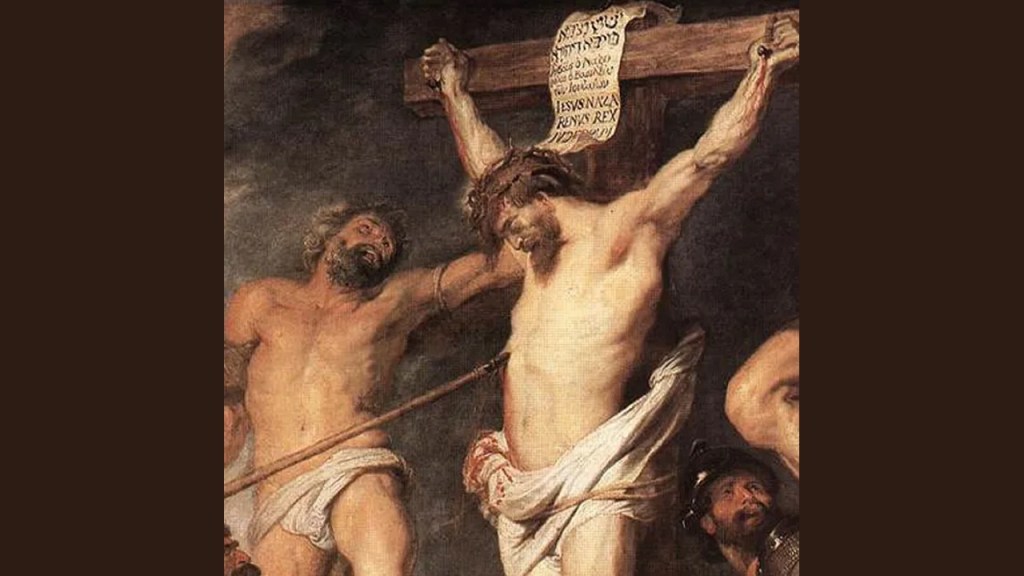
Friendly Wounds

Proverbs 27:6 “Wounds from a friend can be trusted, but an enemy multiplies kisses.”

Who is truly your friend?

We all look to our friends to support us when we are down, to back us up when we are in trouble, to understand us when no one else does. We want our friends to express their care and concern and build us up with their kind words.

But since genuine love always seeks our good, not necessarily our happiness, sometimes true friends also have to perform the unenviable task of telling us the truth–at least to the best of their ability to tell it. That means that some of the things they say will hurt.

Someone who is less concerned about our welfare but more interested in how we can be used isn’t so concerned to tell us the truth. Such people butter us up with nothing but good things to say. And you know why we slather things with butter—it’s only to improve the flavor before we sink our teeth in.

Living with the truth of Proverbs 27:6 requires a loving atmosphere in which we learn to accept such friendly wounds as well as inflict them. In order for such wounds to be truly friendly, they must also be limited to times when we genuinely have someone else’s welfare at heart. Wise King Solomon did not mean to open the door to arbitrary meanness. Other proverbs warn against spouting off every stray thought that happens to come to mind.

This is a practical lesson for life in a Christian congregation. There are likely to be more opinions than people, opinions that are passionately held. We do well to check ourselves as we respond to each other. Every viewpoint is welcome, but not every rebuttal we are tempted to make is suited for a public forum.

And not every contradictory viewpoint, no matter how strongly expressed, should be taken as a personal attack. We are friends, teammates, working toward a common goal. If a friend perceives some weakness in our thinking, his wound can be trusted, even if we still don’t share his point of view.

As Christians, we have already learned how to adopt this way of looking at the deepest wounds that come from our dearest friend—our God and Savior. His points of view are always correct, but they don’t always coincide with our own. God’s law has some painful things to say to me.

But he never says them just to hurt us. His wounds ultimately aim to heal. They cut less like a “stab in the back” and more like the skilled surgeon carefully removing the cancer.

And our God is no enemy when he multiplies his kisses. His words of love spoken in the form of forgiveness are always sincere, always friendly, and always spoken with our best interest in mind.

Spiritual Power Tools

1 Corinthians 12:7 “Now to each one the manifestation of the Spirit is given for the common good.”

People are attracted to things that have power. Like most little boys, I turned just about any branch or stick into a gun when I was playing with my friends. I didn’t actually want to kill anyone. But there is something fascinating about a device that has so much power. Cars, power tools, electronic devices, kitchen appliances–if it offers some sort of superhuman ability people will be interested.

The Christians to whom Paul was writing in Corinth were attracted to power. Supernatural language skills, miraculous healing abilities, prophetic knowledge of the future–these are ways the Spirit often showed himself in their lives when they came to faith in Jesus. The new believers in Corinth were eager to have such powers. They were not shy about putting their gifts on display when they had them.

But just like any powerful tool, it is necessary to know its proper use and purpose. Our spiritual gifts are a blessing to each of us, it is true. But God has given them to us so that we can use them to serve others.

Consider a carpenter’s tools. The carpenter may appreciate the way his tools make his work easier. He genuinely enjoys working with them, and it gives him pleasure to create things with them. From time to time he may even build something for himself. But the reason he has the tools is so that he can serve the people who seek his services. The cabinet he builds stands in someone else’s home housing their good china. Another man sits on the bench he put together. The tools are his, and he takes them home at the end of each day. But the people they serve are spread across all the homes and businesses where the carpenter has practiced his trade.

Serving the Lord with our gifts is satisfying to those who use them. I like preaching. I would be lying to you if I said I didn’t. But God didn’t give me my gift, humble as it is, primarily for me. I could still be his child, share his grace, and one day praise him in heaven without it. Whatever gifts I have been given to preach and teach God’s word are for the sake of the people who hear me. Whatever gifts God’s Spirit has given to you are meant to serve others as well.

When we think about our spiritual gifts this way–the special privilege to serve Jesus by using them as tools for serving others–the whole fascination with power fades away. In its place we find humble appreciation for yet another evidence of God’s love and grace in our lives. That’s as it should be for those who understand their spiritual gifts.

Gifted

1 Corinthians 12:4-6 “There are different kinds of gifts, but the same Spirit. There are different kinds of service, but the same Lord. There are different kinds of working, but the same God works all of them in all men.”

Paul looks at our spiritual gifts in three different ways to help us understand why God doesn’t give us all exactly the same thing. First, “There are different kinds of gifts.” The word gifts here is a Greek word, charismata, from which we get our word “charismatic.” It emphasizes that the gift is something God gives us for free.

Maybe that seems a little simple. Any gift that is truly a gift is free. But that reminds me that I really have nothing to complain about if my gift is different than someone else’s, or if their gift somehow seems more appealing. Also I have nothing to brag about if my gift seems better. They’re gifts, right? None of us earned them. We didn’t have them coming. We all have the big gift, which is Jesus. Anything beyond that is shear generosity and goodness on God’s part, and better than nothing at all. Would we really want to complain because God gave us something more?

Second, all of his gifts serve a purpose. They accomplish a task. They get something done. So Paul continues, “There are different kinds of service.” The Lord set up his world, and his church, to need many different things to get done. It makes sense then, doesn’t it, that he would distribute many different abilities to many different people? We can’t all be doing the same one thing all the time. Imagine a world with no garbage collectors. Imagine a church with no cleaners. Eew! Who would want to be a part of that?

So the Lord gives gifts that line up with all these many tasks that have to get done. Maybe like the Corinthians we would like to have some of the showier ones, the ones that seem more powerful or supernatural. But Paul tells them later that the Spirit’s power is just as much involved in making some people good teachers, administrators or simple helpers as he is involved in the miraculous ability to heal.

Finally, the Lord himself is active in all these gifts. “There are different kinds of working, but the same God works all of them in all men.” The word behind “working” and “works” is the word from which we get “energy.” Paul is saying that the Lord himself energizes his people to do all these different things. He is the one moving hearts and minds, and hands and mouths and feet. If God himself enters people, and then uses them to perform all these different functions, what is left for us but to accept that our gifts are different as the Lord himself sees fit to give them.

In doing it this way, perhaps we could say that God is giving us another gift: the gift to be individuals, the gift to be me. He hasn’t created an army of clones that came rolling off an assembly line, that all look and think and function the same. I am unique, and so are you. He redeemed us from our sins all the same. He loves us as his children all the same. But because he loves us, we aren’t all the same.

Jesus Is Lord

1 Corinthians 12:3 “No one can say, ‘Jesus is Lord,’ except by the Holy Spirit.”

I think it goes without saying that Paul is not talking about the ability to form these sounds with your mouth, the ability to pronounce the words “Jesus” and “is” and “Lord.” Any verbal person can do that.

He is talking about people who say these words and sincerely mean them for themselves. Having the Spirit is not about what you can do. It is not about how well you live. It shows itself in the sincere faith that recognizes Jesus as Lord, and claims Jesus as Lord. If a person can’t or doesn’t do that, then the Holy Spirit is not present, and the individual can have no spiritual gifts.

“Jesus is Lord” is a pregnant statement of faith. We hear the word “Lord,” and the first thing we may think about is “obedience.” It is true that those who recognize Jesus as their Lord intend to live under him and follow his rules. But it is more than that.

A “Lord” is a person with authority, someone who has power and control. With Jesus, this is true of our entire life experience. It applies to everything about our relationship with him. “Jesus is Lord” means that Jesus is my Rescuer. I did not have the power or resources to deal with my sins myself. I couldn’t keep myself from committing them. I had nothing with which I could pay for them, no way to make amends for my guilt. So my Lord Jesus came to the rescue. My King fought his way to my side. He endured the elements of a hostile world to get to me. He took the brunt of the attacks evil villains and enemies of my soul launched at him on the way.

And when he reached me, he died in my place to spare my life and set me free. He brought forgiveness for my sins and healing for my heart. He did it, not helpless me, because Jesus is my Lord, and he had the power to rescue me when I was powerless to help myself.

“Jesus is Lord” means that Jesus cares and provides for me. We are inclined to think about government and rulers as people who take money away from us. Complaints about taxes go all the way back to the “Robin Hood” legend. Farther than that, they go all the way back to ancient times. They even play a part in the story of Jesus and the people who surrounded him so many centuries ago.

But Jesus turns this all around. He is a different kind of Lord, a Ruler and King who gives his wealth away. He uses it to feed and clothe and care for the people he has claimed as his very own. Those who confess, “Jesus is Lord,” acknowledge this at every dinner prayer, as they bow their heads and ask Jesus to bless their food and thank him for giving it to them.

You see, “Jesus is Lord” is more than a statement of submission and obedience. It is the grateful appreciation of rescued people who are blessed by their gracious Master’s generosity every day. It is an understanding of Jesus that can only be worked by the Holy Spirit. It is the claim that he is my Lord, and by his grace that’s the way I want it to be.

Grace Makes Us Work Hard

1 Corinthians 15:10 “I worked harder than all of them–yet not I, but the grace of God that was with me.”

Serving God was no picnic for the Apostle Paul. It wasn’t for any of the men Jesus sent to make disciples out of the whole world. When Paul talks about working hard here, he is not talking about mere activity. The word he chooses for work highlights the unpleasant features of working. This is toil. This is labor. Work involves sweat, and sore muscles, and tired bodies.

In his next letter to the Christians in Corinth, Paul outlines some of the things he suffered. There were plots on his life and attempts to kill him. They took him to court. They flogged him. They stoned him. They beat him with rods. Traveling exposed him to heat and cold, and bandits and shipwrecks. At times he went without food or sleep. Life as a traveling missionary was hard.

Paul’s hard work and sacrifice put me to shame for my complaints about life as a Christian minister. Maybe my hip is a little sore after leaving flyers at a couple hundred homes. I don’t like it when someone is a rude to me at the door.

But in over thirty years of ministry no one has threatened my life or physically touched me. I have known some weeks with long working hours, especially around Christmas and Easter. Once in a while someone needs a pastor’s attention in the middle of the night. But for the most part meals and sleep have come on a regular schedule in my life.

God doesn’t ask us to go looking for hardships like Paul suffered in his gospel work. There is no virtue in enduring artificial or self-made sacrifices.

But grace has the power to make us ready if they come. Paul didn’t put up with the pain or unpleasantries because he felt guilty about his past. He wasn’t forced and driven to it under threat against his will. He didn’t do it because he was just such a swell guy.

Grace, the undeserved love of God in giving us his Son and forgiving our sins, was working in him, like it is working in us. Paul worked hard, “yet not I, but the grace of God that was with me.” Grace makes us different people, all of us. Whether ancient apostle or modern minister, whether steady church volunteer or simple person in the pew, God’s grace is taking everything we say and do and making it part of our Christian witness.

The better we know that grace, the harder we will work in service to the Lord who gave it to us.

Better Than I Deserve

1 Corinthians 15:8-10 “Last of all he (Jesus) appeared to me also, as to one abnormally born. For I am the least of the apostles and do not even deserve to be called an apostle, because I persecuted the church of God. But by the grace of God I am what I am.”

The word “Grace” means “undeserved love.” Do you have any idea how many times a day we hear the phrase, “You deserve,” linked to something someone is trying to sell us? And we agree, don’t we? We love it! Dentists promise the smile you deserve. Dating services offer the perfect match you deserve. Employment services help you get the job you deserve. Politicians promise you the tax relief you deserve, or the services and programs you deserve, or the safety you deserve, or the prosperity you deserve. Listen to the marketers, and you deserve a better salary, creamier chocolate, relief from your pain, and a good night’s sleep.

If we are obsessed with ourselves and convinced we deserve so much, what interest will anyone have in a love that is not deserved? How can we even understand that that is a real thing? There can be no appreciation for grace, no desire for God, and no grasp of the desperate spiritual condition that has sucked the life out of our souls.

Paul’s honest humility about himself is refreshing. Jesus “appeared to me as to one abnormally born.” Instead of a “preemie,” Paul was a “posty.” The due date for him to repent came and went, and nothing. Months stretched into years before Jesus literally knocked Paul off his horse on the way to Damascus in a blaze of light. The circumstances around Paul’s conversion were something of an embarrassment for him. They were a testimony to his stubborn pride.

The fact that it even happened was more than Paul deserved, “because I persecuted the church of God.” You would never hear the Apostle Paul say to God, “I just want what I deserve! Give me what I deserve!” What does the man deserve who oversaw the execution of another whose only crimes were giving food to widows and helping them see Jesus in the Scriptures? What does the man deserve who devoted his life to destroying people’s faith? “God had no good reason to pick me for his team,” Paul is saying. “I gave him nothing but reasons to destroy me.”

“But by the grace of God I am what I am.” Because Paul was aware of his shortcomings (the Lord had really given him no choice), he also understood God’s grace. Grace, undeserved love, meant “I am what I am.” And what was that?

Grace made Paul a justified person. For Jesus’ sake the Lord did not hold his sins against him. He treated him and regarded him like an innocent person, not a criminal. Grace had sent Paul’s sin to the cross for Jesus to pay in his place. Grace brought God’s forgiveness. Grace worked to free the apostle from the consequence for his sins.

Grace made Paul a believer. That whole, dramatic confrontation with Jesus on the road to Damascus may have been frightening in some ways, and confusing in others. But it was undeserved love at work, God’s seeking love leading Paul to know his Savior and claiming him as a dear son and member of his family.

Grace then made Paul a coworker with his Savior. The Lord employed him as a trusted servant in his mission. That was like handing the keys to the store to the thief who had ransacked it days before. But because God loved him, he trusted him to take this good news of new life to people all over the world.

Grace works the same way for us. The story of our opposition to God, conversion, and work for the gospel may not be filled with the same kind of drama Paul’s had. I know mine isn’t. Our own narcissistic tendencies may tempt us to defend and promote ourselves as people God should be only too happy to love. Our quiet Christian hypocrisies–practicing the same greed, sexual standards (or lack thereof), and meanness as everyone else–are often the number one thing standing between the lost and faith in the Savior.

It is time for us to end the charade. Like Paul, it is time for us to be aware, and frankly acknowledge, our sinful shortcomings. Grace still works for us: forgiving, converting, claiming, and transforming us into sons and citizens of heaven Jesus is not afraid to involve in bringing God’s grace to others.

This Is How Much God Loves You

John 3:16 “For God so loved the world that he gave his one and only Son, that whoever believes in him shall not perish but have everlasting life.”

So this is how much God loves you. He gave his one and only Son. A friend of mine once suggested that this wasn’t so hard for God the Father because Jesus was God and wouldn’t have to suffer so much, and God knew that Jesus would rise from the dead.

Don’t think there was anything easy about making this gift. Jesus was the only perfect Son who ever existed. He and his Father were knit together in a perfect bond of love that far surpasses the love between any human parent and child. There is no greater sacrifice any parent could ever make than to give up their one and only child for someone else, even for a little while. But for a sinful world, God says, “I am willing to make the trade.” For you, as part of that world, he says the same.

And when God gave Jesus up to mocking and whipping, and cross and death, there was no avoiding the full brunt of the experience. You may remember that the soldiers who carried out the deed offered Jesus something to drink to take the edge off his pain. But Jesus refused it, because he didn’t want the edge taken off. He was there on a mission, to carry and pay for the sins of the world.

At the cross Jesus was, so to speak, carrying every one of us on his back. As a result, it is as though our sin never existed. It has completely vanished, drowned and washed away in Jesus blood. We became as pure and as clean as the driven snow in God’s eyes. Remember, this is how much God loves you. He gave up his only Son, the Son he loved, to rescue us from sin and make us his very own.

Such a gift, you might think, could only be had for a high price. I mean, with the cleansing of our sins Jesus is presenting to us the cure for death. If the pharmaceutical companies could create such a product, how much would they charge for the drug that cures all death?

About twenty years ago my oldest son was diagnosed with non-Hodgkin’s lymphoma. A single IV bag of the chemical the nurses called “big red” cost $15,000. Curing cancer isn’t cheap.

But because God loves you so much, he doesn’t charge you anything for his gift. He gives it away for free to those who simply trust Jesus for it.

This faith we share in Jesus as our Savior is not something we have because we are so smart. It is itself his gift to you and me. “Faith comes from hearing the message,” Paul writes. God didn’t wait for us to figure him out, as if that were possible. He told us this wonderful story about how much he loves us. He showed us a bigger love, more faithful and committed and sacrificial and forgiving than any we had ever known. Knowing this love, how could we not put our trust in him?

This is how much God loves you: his Son, your faith, and never-ending life are all his gifts…for you and for our whole world.

Sharing Jesus’ Suffering

Romans 8:17 “Now if we are children, then we are heirs–heirs of God and co-heirs with Christ, if indeed we share in his sufferings in order that we may also share in his glory.”

If we are God’s children and heirs of heaven, why should we have to suffer? You know, if my dad owned the grocery store, I wouldn’t expect to go hungry anymore. If my dad owned the factory, I wouldn’t think it would be hard to find a job. If my dad ran the universe, wouldn’t you think my life would be a little easier?

But it’s not easy. We suffer. Whether we like to think about that or not, at least Paul is being real. He spoke from personal experience. He himself had been imprisoned, flogged, pelted with stones, and beaten by the enemies of the gospel. Hazards of his travel left him shipwrecked, cold, hungry, and sleepless at times. His concern for the churches made him no stranger to stress and heartache. He knew what it was like to suffer, and he knew that he wasn’t alone.

Our suffering as God’s children may take different forms, but it hasn’t gone away. I could name at least a half dozen men right now who worked for major corporations you would all recognize. Their careers were artificially limited, they ran into a glass ceiling of sorts, they weren’t allowed to rise as high as their skills could have taken them, because they refused to compromise their personal morals. They lived as God’s children and they suffered for it.

I could walk you through the membership list of my congregation. For each active family I could mention at least one serious tragedy they have endured, or one substantial burden they bear beyond the little irritations that afflict us all. They are God’s children, but they suffer, and that’s hard for us to understand.

Individually, why any of us suffer this particular way, or this much compared to everyone else, is information our Father hasn’t shared. But this much he has revealed: Our suffering helps us to realize how helpless our sin has made us. Over and over again it rehearses us in our utter dependence on our heavenly Father for all things. It leads us to repent of the pride that thinks, “I can do this all by myself,” whether that is achieving our own salvation, like the Pharisees who wanted nothing of Jesus’ message of forgiveness and grace; or achieving earthly success, like the laundry list of people past and present who think that their own talent and hard work are going to put food on the table and money in the bank.

In the twelfth chapter of his second letter to the Corinthians Paul says that God uses suffering to make us weak so that we won’t become conceited. But then something wonderful happens. We discover God’s sufficient grace. We find the love that justifies us and forgives our sins sustaining our faith. We experience his steady, quiet power resting on us and supplying our needs.

We are God’s children, who share our Savior’s suffering. But because we are God’s children, even our suffering will bless us in the end.

Heirs of God

Romans 8:16-17 “The Spirit himself testifies with our spirit that we are God’s children. Now if we are children, then we are heirs–heirs of God and coheirs with Christ, if indeed we share in his sufferings in order that we may also share in his glory.”

God’s sons are also his heirs. As good as it is to be God’s children now, there are better gifts waiting in our future. But like most heirs, we don’t know all the details about what is to come.

Are you an heir in someone’s last will and testament? As far as I know, I am included in the will of my earthly father. Right now, his estate involves a nice townhome overlooking a pond and a large park, investments of various sorts that currently support my parents in retirement, and the tools, vehicles, appliances, and furnishings he has collected over a lifetime. I suspect that about one fourth of what’s left when my parents die will be mine. I have some vague ideas about what that could include, but time can change things, and I don’t know the specifics of much of what they have or plan.

There is no doubt that you and I are included in the will of our heavenly Father. He has been very specific in promising us a piece of heaven, a resurrected and perfected body, and life that never ends. Still, he has chosen not to reveal many of the details of what these include.

But since we are heirs of God and coheirs alongside Christ, we can safely conclude that our inheritance will be 1) perfect. God is without fault and so are his gifts.

It will be 2) generous, even lavish. God has inexhaustible resources, and he desires to take care of us richly and lavishly.

Everything we find there will be 3) suited to us. He put a lot of time into making each one of us unique individuals with our own tastes and abilities. One of the wonders of his creation is the variety and originality he has displayed in making his people fit together like one body with its many parts. We can expect heaven to be personally tailored to each of us so that our uniqueness can finally reach its potential and purpose.

Fourthly (4) our inheritance will be wholesome and good. Sometimes people try to picture heaven as a place where their sinful desires can be indulged, like the suicide bombers who expect to satisfy their lust. But what God has prepared ennobles us, it lifts us higher, and it respects those who will share heaven with us.

This inheritance isn’t an exclusive gift for a few special saints who have lived distinguished lives. As believers in our Lord Jesus we are all God’s children, and we all share that sacred status that makes us heirs of God and coheirs with Christ.