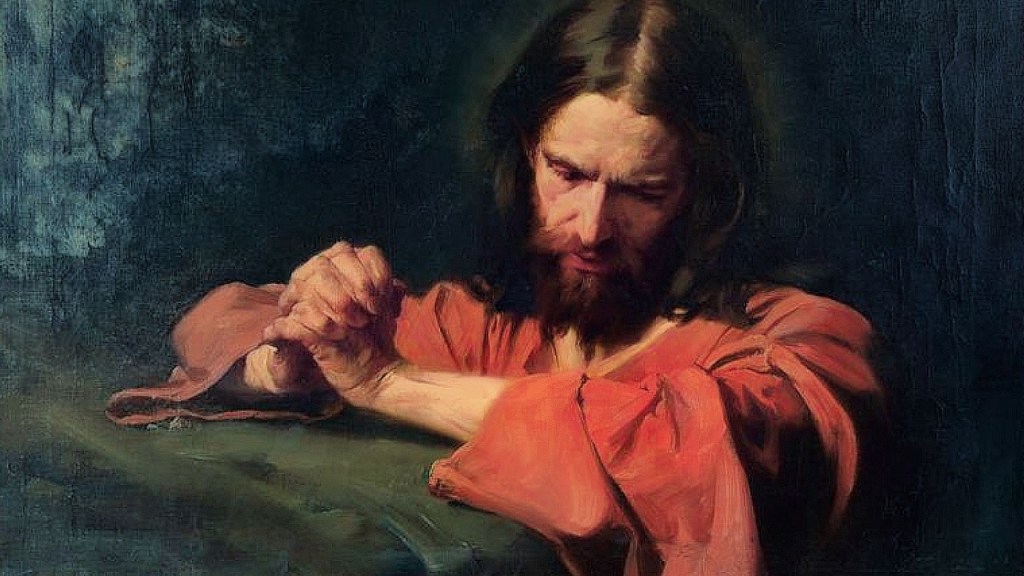
Revelation 3:8 “I know that you have little strength, yet you have kept my word and have not denied my name.”
Success for Jesus is more than a matter of numbers. Many years ago I heard a missions administrator remind the pastors at a conference that when the board is interested in the numbers of people with whom we share the gospel, and the numbers of people who join our churches, they aren’t just looking for an excuse to take pride in good statistics. Behind every number there is a person, a soul. Someone is hearing about his Savior and believing in him. That is a matter of great importance and a reason for great joy.
We can’t make people listen to us. We can only offer to tell them. And we can’t make people believe. We can only share the faith-giving message. The rest is up to Jesus.
What Jesus asks us to do, with his help, is keep his word. We can preserve the content of its message among us so that it can do its faith-giving work. We can believe it for ourselves. We can conform our lives to it and let it shape the way we live. We can do this in a world that considers us strange, or worse, for fussing so much about holding on to an ancient book and its archaic teachings.
In spite of their criticism or skepticism, it is just that book and those teachings where we have met our God. There we found his forgiving love. If we hold on to it, if we keep it, then we will be a successful church in spite of the challenging times in which we live.
I still like to watch It’s A Wonderful Life at Christmas time. George Bailey so struggled to measure his life’s success. Do you remember how the movie ends? In the front cover of a copy of Tom Sawyer, Clarence the angel has written George a note: “Remember no man is a failure who has friends.”
Friends may be a better measure of success than money. But only one friend can bring us spiritual success. He is the Savior whose gospel opens heaven’s door. His strength covers our weakness. Keep holding to his word.
Revelation 3:8 “I know that you have little strength, yet you have kept my word and have not denied my name.”
“Little strength” doesn’t sound positive. Was Jesus commenting on the numbers of people who belonged to this congregation? I know something about churches without very many people. I pastor a little mission church of about 50 people. Another pastor described how hard it can be for a start-up church to get past the “kook” stage. Until you have more than thirty people in worship, the whole thing feels a little “kooky” to the visitors. When you’re so small, they might not be inclined to come back.
Is Jesus talking about the congregation’s finances? Were they poor? I know something about churches that can’t support themselves. When my congregation began, it received over half of its operating funds from our denomination’s mission board. We were living on a kind of church welfare.
Ten years ago my wife and I visited Rome, Italy. We walked into churches that looked rather humble on the outside. But once through the door there was gold mosaic, marble statuary, and paintings by great artists that must have been worth millions of dollars. It seemed that every street corner had a church like this on it. Compared to that, we may think we have “little strength.”
Was Jesus referring to the condition of the people in the congregation? If we are honest, we must admit that we are spiritually broken. We have made messes of our lives. They must be grave disappointments to God in many ways. We are sin-sick. We are weak. We have little strength.
But as believers, we aren’t dead. There is a little life, a little strength in us. In the letter immediately preceding this one, the letter to the church in Sardis, Jesus had John write, “I know your deeds; you have a reputation of being alive, but you are dead.” “A little strength” is better than being dead. Where there is life, there is hope.
It is a matter of our Savior’s grace that he has preserved our faith and maintained a little strength among us. As long as we remember that this is our condition, it can even be a great blessing. We in our little churches aren’t the most impressive people in the world. We have nothing to boast about.
But do you remember what the Apostle Paul once said about the weakness he described as his “thorn in the flesh”? “Therefore I will boast all the more gladly about my weaknesses, so that Christ’s power may rest on me…for when I am weak, then I am strong.” If we will remember our weak position and continue to rely on our Savior for strength, there is no limit to the good things he can do for us. Isn’t that why Jesus told us, “If you have faith as small as a mustard seed, you can say to this mountain, ‘Move from here to there’ and it will move. Nothing will be impossible for you”?
Our faith may be so small, but the Savior we trust is so big, that even a little strength is reason for optimism in the churches we call home today.
Revelation 3:7 “These are the words of him who is holy and true, who holds the key of David. What he opens no one can shut, and what he shuts no one can open. I know your deeds. See, I have placed before you an open door that no one can shut.”
If people can’t even get into your building, if the doors are always closed and locked, how could your church be successful? There could be no ministry going on inside without letting people in. But you already sense that Jesus does not mean an “open door” in such a hyper-literal way.
He means more than a metaphorical “open door” to the people in your community, too. We want to be inviting, welcoming, engaged with the people who live around us, whether they are members or not. Their culture, their values, their morals may not be the same as ours, yet. But how is that going to change if we don’t make it possible for them to approach us, or if we aren’t willing take the initiative and approach them? Yet, this is not what Jesus means by an “open door,” either.
By “open door” Jesus means even something more than an opportunity to do mission work. The Apostle Paul uses the words “open door” in his letters to the Corinthians this way. But Jesus has something bigger, and more fundamental, in mind.
The words are an allusion to Isaiah 22. In that chapter God warns an unfaithful manager of the palace treasures who had been skimming money that he is going to remove him from his office. He will give it to a faithful man named Eliakim. Then Eliakim would hold the “key to the house of David.” With it came the power to open or shut access to its treasures.
This, then, is the meaning of the metaphor of the open door: Jesus had opened up to this congregation access to the full treasures of the gospel. Their sins were fully forgiven. Their salvation was free and complete. The door to heaven stood wide open in front of them, opened by Jesus himself by his death and resurrection. No one could shut it against them. Grace was theirs to live in now and forever. Grace was theirs to use, to handle, to share, to proclaim. They had this awesome power at their disposal. They could apply all they wanted to themselves and live in God’s love. They could distribute it to anyone without limits. The door was open and the gospel treasure was theirs.
This great open door was a great gift to that church in challenging times. These churches in Revelation lived under constant spiritual attack. The culture around them embraced a variety of sexual sins. It was materialistic. These sins were making inroads into the churches that neighbored the church in Philadelphia. The Christian faith suffered official government persecution from the Roman Empire. Former brothers and sisters in the faith, at that time people who declined to leave Judaism for Christ, joined in persecuting the Christian congregations. Put it together–an immoral culture, a hostile government, people of other faiths who rejected them–and it sounds eerily similar to the times in which you and I now live.
But they had the open door. The full treasure, the unconditional gospel was their secret weapon not just to survive, but to thrive.
Don’t despise the treasure. Our great temptation may be to yawn at the gospel of full and free forgiveness. We have heard it enough. We are bored with it already. Years ago a man told his pastor that coming to his church was like a man crawling through the desert in desperate search of water. He is just at the edge of death, when he peers over a sand dune, and there is a peaceful oasis with a beautiful pool of water. He gets up and goes tearing down that sand dune, jumps into the water, and in his joy he is splashing around and laughing at the great find he has made.
But all around him are people who have lived at that oasis their entire lives. They look at the man splashing in the pool and they think to themselves, “What? Are you nuts?”
Don’t be the people who take the oasis for granted. Don’t be the people who shrug their shoulders at the open door and full treasures of the gospel Jesus has set before them. Come and have your sins absolved. Come and hear the gospel preached. Come and receive your Savior’s supper for the forgiveness of your sins. Christ has set before us an open door to all the treasures of heaven. It is the one great possession of Christian churches in every age.
Ezekiel 36:27 “I will put my Spirit in you and move you to follow my decrees and be careful to keep my laws.”
We used to have cats at home. It was never our plan to have pets. We have four children, and our plans for them required most of our resources.
One day a female tabby showed up at our door. At first we tried to ignore it. But my children thought it was cute, and it kept hanging around. Pretty soon they started feeding it. Then they gave it a name. They called it “Precious.” That’s when I knew we suddenly owned a cat.
Still, it hadn’t made its way into our house. Not long after it showed up at our door, it disappeared again. Then the faint sound of little mews could be heard coming from under our pier and beam house. Precious had kittens. We managed to give away three to people we knew. We ended up keeping one. That’s how we became pet owners.
By now, of course, the cats had moved indoors. But that meant there had to be some changes. They couldn’t continue to live like strays if they were going to be part of our family. They couldn’t run around the neighborhood at will. They would have to learn to stay indoors and close to home. Their diet had to change. Baby birds and mice gave way to store-bought cat food. They had to have shots and take pills. Rabies and flees are unacceptable for pets, especially indoor ones. They had to be spayed. We didn’t want every tom cat in the neighborhood crying at our door, and we didn’t want more kittens. These were our plans, our conditions, for taking the cats in.
God doesn’t charge us for saving us from the world and making us his own. He gave us Jesus as a free gift. He gives us forgiveness. He gives us heaven. His grace is ours without cost.
But it is not without effect. Grace changes people. A man I brought into the church once confided in me that he was no longer able to enjoy a sinful habit he had once indulged rather freely. “Now I feel guilty if I do it. You ruined it for me,” he said. I told him, “You are welcome.”
Following God’s decrees and keeping his laws isn’t so much a condition for God to take us back as it is the result of God taking us back. “I will put my Spirit in you and move you,” he says. It isn’t just a matter of feeling guilty, either. When the Spirit is living in us, he genuinely changes our tastes. I never much cared for plain yogurt years ago. No sweetener, slightly sour–it just didn’t appeal to me. Then I was exposed to it more and more. I learned how much better it is for you than the sweetened stuff. Now I prefer it. But my taste for it didn’t change overnight.
Nor does our taste for keeping God’s law. Some things get in line more quickly. Some take longer. But the Lord doesn’t wait for us to change ourselves. He lives in us by his Spirit. He moves us toward the behavior he desires. Slowly but surely he is transforming us into the kind of people he wants to live with himself.
I have a devotional book on my shelf titled Just Like Jesus. The subtitle reminds us, “God loves you just the way you are, but he refuses to leave you that way.” Ezekiel says the same thing. God makes us different people. That’s true of how we live, as it is of who we have become.
Ezekiel 36:26 “I will give you a new heart and put a new spirit in you; I will remove from you your heart of stone and give you a heart of flesh.”
God has always intended to make us genuinely different people. That change is real only if it takes place on the inside. A new heart and a new spirit aren’t mere matters of outward behavior. They are the result of the transformation of our very selves.
Have you ever spent a considerable amount of time living or working in a different culture? In small ways you adjust certain behaviors, but that doesn’t mean you have changed who you are. When I did cross-cultural mission work in the poverty-stricken inner city neighborhoods of Milwaukee, I learned you had to be very careful about any physical contact with minors, even the most innocent kind of touch. For many of them, almost all physical contact has been either violent or sexual in nature. But that didn’t change the way I played with my own children. When I was working with our sister churches in Scandinavia, I learned that you take off your shoes at the door, much like they do in Japan. But I still walk around my own house with shoes on most of the time.
The Lord doesn’t bring us back to himself for a visit. He makes us his own forever. So he doesn’t ask us to accommodate a few quirky customs he has by adjusting our behavior for a little while. He makes us different people. He gives us a new heart and a new spirit. He leaves nothing that goes on inside of me untouched.
In our language and culture we tend to separate “mind” and “heart” and “will.” “Heart” has to do with what we feel and believe, not necessarily how we think. In Hebrew language and culture these are a package deal. The new heart involves how we feel, and how we think, and what we want. Right and wrong, good and bad, like or dislike, true or false–don’t expect any of it to be the same when the Lord is through working on you. He fully intends to remake us on the inside.
This is what happens when God calls us to faith. Notice that this is not a self-improvement project. “I will give you a new heart….I will remove from you your heart of stone and give you a heart of flesh,” the Lord says. I’m sure you have seen fossils before. They are amazing stone images of plants and creatures from the distant past produced by the forces of nature over long periods of time. But no one would mistake them for living versions of plants or animals. No one would expect them to be able to do the same things.
That’s like our hearts, the Lord says. Sure, our hearts may do an adequate job of pumping blood through our bodies. But when it comes to believing the right way, thinking the right way, wanting the right things, they are no more alive than a fossil. God has to come and cut the stone heart out of our chests and replace it with a heart of his own making that actually works.
Thankfully, in his grace, that is what he does. Through word and sacrament we get a heart transplant. The gospel changes us. God’s grace has made us spiritually alive.
Ezekiel 36:25 “I will sprinkle clean water on you, and you will be clean; I will cleanse you from all your impurities and from all your idols.”
The God of the Bible once chose a people for himself. It’s not that he ever desired some people not to belong to him. He was happy to have them all. But in general humanity kept running away. So he chose the family of Abraham, which became the nation of Israel. These people became his very own.
But they kept running away from him, too. After a thousand years of trying to work with them, he kicked them out of their homeland. He stopped treating them like his special people. This same prophet Ezekiel saw a vision in which the Lord picked up his presence and left the temple in Jerusalem. Then the Babylonians came and took the people away. For seventy years they lived in a foreign land.
Still, God had a plan to take his people back, and to take his people home. In order for him to take his people back, and have them live with him, some things had to change. His people needed to be cleansed. He promised through Ezekiel: “I will sprinkle clean water on you, and you will be clean.”
Don’t think that this cleansing was just a formality. Every human needs it desperately, no exceptions. We bring far more filth with our sins than the filthiest flee- or lice-infested stray dog or cat ever did. The Old Testament prophets and New Testament apostles both confront the peoples of their times with long laundry lists of common sins–not just sins common among the “heathen,” but things believers, Christians, struggle to do or let go.
Some of these we might categorize as sins against holiness. These are the kinds of sins in which we indulge our personal desires. We lose our self-control. We misuse God’s gifts like food, or drink, or sex.
Some of these we might categorize as sins against love. We care only for ourselves. We ignore our neighbor’s needs. We live selfishly in the way we use our time, our money, our talents.
At the root of our Lord’s concern are “all your idols.” Something or someone creeps into first place in our hearts ahead of God. In Ezekiel’s day, this was often literally gods of other religions. The cult of Baal and Asherah promised you fertile land and fertile animals, a more bountiful life, if only you would embrace unmarried sex. That wasn’t very hard to promote. The cult of Molech promised power and success if only you would sacrifice your own babies, your own sons and daughters, to death by burning them in the arms of the idol.
More or less these same gods, minus the religious trappings, still spook around in our own culture today. Anything can become our idol, a rival god. To the Lord, that is disgusting filth. In fact, the word Ezekiel uses for “idol” is related to a word that means “manure” in the Hebrew. The Lord may love us, but he is not content to have that filth in his home or around his person. If he is going to take us for himself, he needs to cleanse us.
So that is what he does. Notice the pronouns here. “I will sprinkle clean water on you…I will cleanse you from all your impurities.” He doesn’t say, “Go take a bath and come back.” He says, “I will do this.” The Lord is in the business of making his people clean and washing their sins away.
For Ezekiel’s original audience, sprinkling with water was something they knew from the temple. There was a sprinkling ceremony that purified the men who worked in the temple. Another sprinkling with water was used to cleanse people who had been in contact with dead bodies. All of this was a picture, a foreshadowing of a greater sprinkling and cleansing to come.
Referring to the blood of Jesus’ sacrifice, the author of Hebrews says in chapter 10, “Let us draw near to God with a sincere heart in full assurance of faith, having our hearts sprinkled to cleanse us from a guilty conscience and having our bodies washed with pure water” (vs. 22). When we come to faith, Jesus’ blood is sprinkled over us, so to speak. We receive the full cleansing of his sacrifice at the cross. We have been washed of our sins, and we don’t have to carry a guilty conscience around with us anymore.
Then there is the literal sprinkling of water at our baptisms. Baptism is always connected to Jesus’ death and resurrection. Baptismal water is always mixed with Jesus’ blood, spiritually speaking. That is why Ananias could say to Paul at his conversion, “Get up, be baptized, and wash your sins away” (Acts 22:16). In the waters of our baptisms God is saying, “I am cleansing you.” We are passive, but God is active, promising us the forgiveness of our sins.
God’s cleansing makes us a people acceptable to him, a people he welcomes into his own home.
Philippians 2:9-11 “Therefore God exalted him to the highest place and gave him the name that is above every name, that at the name of Jesus every knee should bow, in heaven and on earth and under the earth, and every tongue confess that Jesus Christ is Lord, to the glory of God the Father.”
Sometimes Christians complain that department stores are disrespecting Jesus if they substitute “Happy Holidays” for “Merry Christmas.” Of course Jesus is the reason for the season. Of course the stores are all too happy to make a buck off his birthday. But I don’t know that Jesus is particularly pleased when people who don’t even believe in him reference his title in their season’s greetings. He never made it his mission to become a seasonal slogan. If Christians want to defend his honor, they might start by being careful not to use his name as an exclamation point. Then let’s find the courage to go and tell someone who doesn’t know, why Jesus means so much to us.
In Paul’s world, just talking about Jesus in public could land you in prison. That’s where he was writing this letter to the Christians in Philippi. In our world, there are still over 50 countries where talking about him in public can get you arrested. Should that surprise us in a world that crucified him when he visited the first time?
Trends and statistics for Christians can be depressing. Every recent study indicates between 70 and 80 percent of young people raised in the church will leave it by age 30. Society at large tries to ignore Jesus or remove him from public life. It is easy to fear that Christianity is dying. Maybe the faith Jesus started is a failure after all.
Paul has two answers for our fears. “God exalted him to the highest place and gave him the name that is above every name.” You can’t take away the honor Jesus has already been given. Not only did God raise him from the dead. In response to his sacrifice for our sins, God has given him the highest position and most respected name of all. Jesus may have been executed when he was here. The people he left behind may struggle. But those who continue to trust in him need to know that they are playing on the winning team.
And when we reach the next life, where Jesus already enjoys these honors, no one will be able to deny his greatness: “That at the name of Jesus every knee should bow in heaven and on earth and under the earth, and every tongue confess that Jesus Christ is Lord to the glory of God the Father.” Note that Paul does not say that all these knees bowing to Jesus do so because they believe in him as his people. He is not predicting a mass conversion.
In the end even his enemies will have to acknowledge him. Jewish priests and Roman soldiers mocked the idea he was some sort of king while he hung on the cross. They will all bow down to him and call him Lord. Literally hundreds, maybe thousands, of people I have met have smiled and told me they aren’t interested in church or religion at the door. They will all bow down to him and call him Lord.
And we will be there, too–our faith confirmed, our doubts dismissed. But when we bow, we will bow as royal guests of the King, saved by his humble grace. For this, God the Father himself exalts him.
Exodus 3:7-8 “The Lord said, ‘I have indeed seen the misery of my people in Egypt. I have heard them crying out because of their slave drivers, and I am concerned about their suffering. So I have come down to rescue them from the hand of the Egyptians and to bring them up out of that land into a good and spacious land, a land flowing with milk and honey…”
The theologian’s term for God’s all-knowing ability is “omniscience.” No truth, no fact, no event ever escapes his notice.
The point of this talent is not that he could be the all-time winningest champion on Jeopardy, or that it qualifies him to teach the entire university curriculum. Those things may be true. “O Lord, you have searched me and you know me.” David writes in the 139th Psalm. “You know when I sit and when I rise; you perceive my thoughts from afar. You discern my going out and my lying down; you are familiar with all my ways.” The point is, the Lord is entirely familiar with the most intimate details of our lives. And he acquaints himself with them not because he wants to catch us, or shame us. He makes them his business because he is concerned to help us.
The Lord did not feel obligated to explain to Moses why he waited a couple of hundred years and several generations to do something about the suffering of his people. That doesn’t change the fact of his concern. Timing can be a complicated thing. Before you bake the bread, it’s wise to let the bread dough rise, even if you are hungry right now. Otherwise you might end up with an inedible brick.
Just because the Lord doesn’t explain to us why he waits to intervene in our suffering doesn’t mean he doesn’t have a perfectly good reason for waiting. In the meantime, if you want to know what he is really like, trust him when he says, “I have indeed seen the misery of my people…and I am concerned about their suffering.”
Then he reveals that he is the God who rescues us in his love. “So I have come down to rescue them from the hand of the Egyptians and to bring them up out of that land into a good and spacious land, a land flowing with milk and honey…” So begins the story of the greatest deliverance before the coming of Christ.
Israel was a slave nation: no army, no weapons, no organized leadership. Egypt was a superpower: an empire whose wealth, and technology, and military had no superiors. There was no way the little nation of sheep farmers turned brick layers was going to escape to freedom without divine intervention. It would take a miracle– at least a dozen of them before God was done.
But God did what he promised, because that is the kind of God he is. He comes down. He gets involved. He delivers his people even when it looks like all hope is lost. It makes it easier for everyone to see that the escape was not luck, a fluke, or a sudden surge of human ingenuity. It was God, the one whose loving concern leads him to deliver his people.
You could say that the whole Bible tells this story over and over again. The names and places change. The story is always the same. God’s people are trapped in misery, usually due to some foolishness of their own. The Lord intervenes to rescue them: from bad decisions, bad behavior, bad neighbors, bad family members, bad employers, bad leaders, bad empires, bad weather, bad health, even bad religion. It all culminates in the big one, the rescue of all rescues. He let his own Son be crucified to deliver us from our sins and free us from death. This rescue tells us, like no other, what God is really like.
Mark Paustian tells about the time he arrived at church early to set up for Sunday service and found a young woman waiting there. “I hope you don’t mind my being here,” she told him. “I don’t believe in God.” “Why don’t you tell me about the God you don’t believe in,” he offered. “Maybe I don’t believe in him either.”
She went on to describe a god who sits on his hands, does nothing about the pain in the world, invents arbitrary rules, and enjoys judging and killing people. “Guess what?” Pastor Paustian said. “I don’t believe in that God either.” Then he went on to describe the God of all power, who is still holy and just, but who might best be understood this way: He is the “God with skin on,” Jesus Christ. He is the God who made the very beam of wood that got too heavy for him when he had to carry it up the hill where they executed him.
He is the One who could do everything, hanging on the cross doing nothing. Just dying. For me. He is love in flesh and blood, alive again three days later, because he is concerned about his people.
Exodus 3:4-6 “When the Lord saw that he had gone over to look, God called to him from within the bush, ‘Moses! Moses!’ And Moses said, ‘Here I am.’ ‘Do not come any closer,’ God said. ‘Take off your sandals, for the place where you are standing is holy ground.’ Then he said, ‘I am the God of your father, the God of Abraham, the God of Isaac, and the God of Jacob.’ At this, Moses hid is face, because he was afraid to look at God.”
On the mountain Moses came face to face with the God who is holy. Ordinarily, Moses’ sandals kept his feet from being defiled by the dirty, dusty desert floor on which he ran his sheep. In God’s presence those same dirty sandals defiled the dust made holy by the presence of a God so pure, so distinct from the people he had made, that Moses was afraid to look at him.
At best, people conceive of gods who are larger-than-life versions of themselves. These homemade gods value what they value, crave what they crave, tolerate what they tolerate, and condemn what they condemn.
We sometimes laugh at the cartoonish gods of Greek and Roman mythology. They are greedy, lustful, envious, moody, petty, violent, conceited–larger-than-life versions of the people who worshiped them. I submit to you that those same gods, minus the cartoon images, have largely conquered and colonized the culture in which we live today. They have made deep inroads even into our Christian churches. That is why, in the name of god, people will defend perversions of every sort, stinginess, disregard for the poor, the slaughter of the innocent unborn, deceit, vulgarity, and worse. That is why the person who tells you to listen to the voice of god within is probably an idolater urging you to make a god who looks like yourself.
The holy God of Mount Horeb is not one of us. If you find it hard to look at him there is a reason for that. He is better than we are. No, that is an understatement. He is everything we are not. He is so utterly true and authentic that we shrink from his absolute honesty. He exposes me, the fraud I am. He sets the standard of right and wrong. He is the standard of right and wrong. He tolerates no deviation from it. He is the only being in the universe who has a right, a claim, to making everything about himself. He is God.
But in his holiness we find not absolute selfishness but absolute love. He lets nothing get in the way of giving his creatures exactly what they need, not even their own objections, not even his own pain and sacrifice. His burning desire to save his people moves him to come to their rescue. Moses was the man of the moment for his saving plan. Jesus is the greater Savior for all people, whose mission to rescue us from sin God was protecting by sending Moses to rescue Israel from Egypt.
“So this is what God is really like,” Moses must have thought as he stood barefoot in front of a fire that didn’t burn, and he hid his face. He is so holy, and yet he comes to us and stoops to save us. He is still so holy, and so zealous to come and save.