Meet God

Exodus 3:1-3 “Now Moses was tending the flock of Jethro his father-in-law, the priest of Midian, and he led the flock to the far side of the desert and came to Horeb, the mountain of God. There the angel of the Lord appeared to him in flames of fire from within a bush. Moses saw that though the bush was on fire it did not burn up. So Moses thought, ‘I will go over and see this strange sight–why the bush does not burn up.’”

The burning bush was not a magic trick. It was an introduction. God needed to introduce himself to Moses some way, and this is how he chose to do it.

Maybe his method seems strange. With Abraham, the Lord adopted a human form to come and visit him. With Jacob he appeared in a dream. Sometimes, it seems, he came as little more than a voice.

For Moses, he is this fire engulfing a mountain shrub, but the branches and twigs are not glowing red, then turning black and disintegrating into ash. The leaves were not curling and then disappearing in the heat. The miracle was an important part of God’s “How do you do?”

The fire that burns down your house or destroys 10,000 acres of forest is a powerful thing. We don’t play with fire because we know it is dangerous. That is the natural power of fire, and we respect it. A fire that can leave a perfectly combustible plant untouched, that can live in its branches without consuming its life, is more powerful still. It is the supernatural power of God, who is not limited by the laws that ordinarily govern the way the universe works. For him the laws of physics are only suggestions. God’s introduction to Moses, where he first meets him, was a way of reminding his future prophet and deliverer, “I am all-powerful. I can do the impossible.”

That was going to be important for Moses going forward. The Lord was going to ask Moses to take his life into his hands and confront one of the world’s most dangerous dictators. Imagine if he asked you to march into North Korean crazy-man Kim Jong Un’s office and demand that he let his people freely travel to the south. You might want to know that the Lord had some supernatural power up his sleeve, because nothing natural was going to bring you out alive. This burning bush was a start to build Moses’ confidence.

God’s almighty power is still a good starting point for knowing what he is like. Some people believe they meet God in the power or beauty of nature–storms, hurricanes, earthquakes; stately forests, tranquil lakes, mountain vistas, or gorgeous sunsets. None of these is God himself. They are only his fingerprint, only his craftsmanship. But you would be right to conclude that a power far higher than yourself stands behind the forces that make us feel so small.

Some people find it hard to believe in an almighty God in a world that seems so out of control, so plagued by catastrophe, cruelty, and suffering. These are not due to a lack of power but consequences of his love and respect for freedom. Sinful people brought these things into the world. You and I have to survive in such a place.

One God alone has the power to deal with the problems of sin and its effects: catastrophe, cruelty, and suffering. It would be foolish to face these without the only God who overcomes it all.

God’s Choice to Give You Life

James 1:18 “He chose to give us birth through the word of truth, that we might be a kind of firstfruits of all he created.”

God chose to make us alive spiritually. He gave us the new life of faith. Here’s a thought with Mother’s Day approaching: God giving us the new life of faith was like a mother giving birth. Who does all the work, all the sweat? Certainly not the baby. It gets squeezed, and pushed, but it’s not actively involved one way or another. No one gives the baby a high five after delivery and congratulates it: “Good job, junior! Nice arrival! You showed up well.” Mom is the one who gets all the hugs, all the kisses, all the credit, because she did all the work.

God chose to birth a spiritual life in us, and it involved its own kind of spiritual labor pains. James says God gave the gift of spiritual birth “through the word of truth.” And what word was that? What did that word say? It wasn’t a reasonable list of evidences for the existence of God. It wasn’t an abstract discussion of the nature and characteristics of God.

It was the word that showed you his love. It is the word that revealed that in order to save you, God traded his home in heaven for the slums of earth. He traded his glory and power for a weak human body, and he became the man named Jesus. He traded his holiness for your sin. He traded his life for your death. He traded his respect and praise for your shame and punishment. He traded his throne for a cross, and a stone slab in a cold tomb. He sweated and suffered and died over all this labor and sacrifice to save you and me, because that’s how much he loves you and me.

This word, this news, this love was the one thing powerful enough to land on the cold, barren planet that was my heart. Where there was no atmosphere, no sunshine, no water–none of the requirements for life spiritually speaking–this was the one thing that could miraculously establish the spiritual life of faith where no life had ever existed before.

Why? Just for the pride of being able to say he could do the impossible? No, “that we might be a kind of firstfruits of all he created.” You know what firstfruits are? They are the first part of the harvest, the first thing to come off the trees or out of the field. They aren’t only first in time, but God generally considered them first in quality and first in desirability. In the Old Testament he required that the people of Israel give him the firstfruits of their harvests in recognition of the fact that he had supplied the harvest in the first place.

In the New Testament God doesn’t want fruits or grains. He wants you to be his own. You are the one thing he desires. You are the one thing he regards above everything else he has made. You are the one thing he values more than anything in the world.

You want to know that God loves you, and that he has only your good in mind, when your life is up and down, and you see suffering you can’t explain? This is where you look, where he has made himself clear. Not at all the hard to interpret experiences of life in a complex and broken world that frankly is too big and too lost for our puny brains to comprehend. This is where you look. God’s proof lies in the gift of our new life and all the loving sacrifices he gave to make it happen.

Good and Perfect

James 1:16-17 “Don’t be deceived, my dear brothers. Every good and perfect gift is from above, coming down from the Father of the heavenly lights, who does not change like shifting shadows.”

God knows how to give only one kind of gift to his people. James has two words to describe it: good and perfect. “Good” does not necessarily mean “pleasant.” It means wholesome, helpful, beneficial.

I run for exercise. This is good. It is rarely pleasant, at least not exclusively so. Sure, I enjoy fresh air and sunshine and scenery, and at first even the invigoration of my body in motion. But some days it is really cold, and the wind stings my cheeks, maybe blows down my collar and chills me. Some days it is really hot, and the sunshine beats on me, and the humidity presses all around. It feels like I’m carrying a hundred extra pounds in the heat, and the sweat stings my eyes. A couple miles down the road my lungs may burn no matter what kind of day it is, and my knees may ache a little, and I just want to be done. But do you know what? The benefit for my heart, and my health, and my mind is always the same. It is good.

So God doles out experiences, situations, the content of our lives, and James tells us everything that comes from him is a gift, and a good one at that. Sometimes this is obvious. Friends, family, love, a little feast to celebrate some happy milestone, new things to make our lives a little easier–we practically feel God smiling on us.

Sometimes this seems impossible to believe. An illness you will carry to your grave, people who break your heart, persecution for what you believe– we don’t see that these serve any good purpose, so it is hard to see how James can call them “good” or classify them as gifts.

But that is what he does. And he says even more. “Every good and perfect gift is from above…” As is so often the case, there is more than one Greek word for “perfect.” The one James uses here emphasizes that God’s gifts are “complete.” He gives you the whole package, just the way it is supposed to be.

Maybe you have bought something that required assembly before, and what you got was good so far as it goes. But there were parts missing. It couldn’t work right because of the missing parts. The life content God is giving you has no parts missing. They are all there in every situation, doing what they are supposed to do. As his gifts, they are perfect, even if that is hard for us to see.

And that is mostly hard for us to see. I could give you a hundred stories at this point that attempt to find God’s good and perfect gifts in situations that seemed to have evil written all over them. Christian author and editor Marshall Shelley once wrote about the short life of his little girl who was born with much of her brain having failed to develop. She lingered through various health problems for about two years. On the last day of her life, he writes about the procession of people who visited her hospital room and confessed the impact that this wordless, sightless little girl had had upon their spiritual lives–people learning to deal with their own loss, wanting to reconcile broken relationships, and especially moved to renew their relationship with God. “I sat there amazed,” he writes. “In the presence of a dying child, a child who couldn’t speak, we had a small revival–people confessing sins and drawing nearer to God.”

Our God knows something about “good” and “perfect” not adding up to “pleasant” or “easy.” Jesus is his ultimate gift. Much of his earthly life and ministry were difficult. Everything about his trials, crucifixion, and death were painful. But from this sacrifice God brought us the greatest good, the greatest gift of all—our salvation from sin and death. He invites us to trust that every other gift is good and perfect as well, no matter how hard that might be to see.

Never Know-It-Alls

1 Corinthians 13:9-12 “For we know in part, and we prophesy in part, but when perfection comes, the imperfect disappears. When I was a child, I talked like a child, I thought like a child, I reasoned like a child. When I became a man, I put childish ways behind me. Now we see but a poor reflection as in a mirror; then we shall see face to face. Now I know in part; then I shall know fully, even as I am fully known.”

This is not an evaluation that my pride likes to hear. Though in theory we may admit that we don’t know everything, in practice we tend to forget it. We easily fall into making sweeping generalizations and drawing universal conclusions based upon the relatively thin slice of knowledge even the smartest of us possesses. Isn’t that why so much of so-called “modern science” is in such a mess?

Even our Bible knowledge is only partial knowledge of God and his will. It may be accurate knowledge. It may be useful knowledge. It may be saving knowledge. But it isn’t everything there is, only what God has chosen to reveal.

And don’t we struggle to comprehend the most fundamental truths God has revealed–Father, Son and Holy Spirit as One God; God becoming a man in the person of Jesus Christ; God’s promises of daily bread and protection when so much human experience seems to contradict them? “Oh, the depths of the riches of the wisdom and knowledge of God! How unsearchable his judgments, and his paths beyond tracing out!”

In its present, incomplete form this knowledge, too, is passing away. It is not like the greater knowledge of heaven to follow. Because this is hard for us to get, Paul supplies three illustrations to help us. First, “When I was a child, I talked like a child, I thought like a child, I reasoned like a child. When I became a man, I put childish ways behind me.” Many of the things we knew as children were not false. They were just profoundly incomplete. That fragmentary information of our childhood isn’t always very useful for the way we view things and behave as an adult.

As a child I knew that my toys were my toys. Believe me, I knew the word “mine” well. As an adult, I still know what it means that something is mine. But I also know what it means to be a husband, a father, a friend, a neighbor, and a citizen. The concept of “mine” has gone through some profound changes, just as our present knowledge of God will become something greater and different in the life to come.

Second, “Now we see but a poor reflection as in a mirror; then we shall see face to face.” Ancient mirrors were usually fuzzy compared to our own. Even when their clarity rivaled those we use, the image was still indirect and incomplete. Depth perception can be difficult to determine in a mirror. What’s the little phrase printed on the side-view mirror of your car, “Objects in the mirror are closer than they appear”?  Peripheral vision is limited in a mirror. The picture it reflects is only so big. That’s why, after you check your car’s side view mirror, you still have to look in the blind spot or risk an accident. So our face to face view of God will clear up the fuzzy, hard to judge, and limited view we presently possess.

Third, “Now I know in part; then I shall know fully, even as I am fully known.” I may think I know myself, but I don’t know me anything like my Lord does. I know almost nothing of my own life between 11 o’clock last night and 6:30 this morning. I don’t know what disease might be lurking deep within my body. I know I have hair, but I have no idea how many. I know my tastes in food or music, but I don’t know why mine are not exactly like everyone else’s. But my Lord knows all these things.

Can we even begin to fathom what it will be like to know the Lord so completely and so intimately as he now knows each of us? Doesn’t that point to a difference between what we know now, and what we will know then, that is so vast as to demand that our present knowledge will pass away, and give way to something unimaginably greater and better? And doesn’t that help us to regard our current spiritual gifts with a proper sense of humility?

Perhaps your spiritual resume isn’t filled with fantastic abilities and impressive knowledge. But in his grace, in his forgiveness, in his Son, God has loved you. He has poured that love into your hearts. And that love will go with you, both his and yours, into eternity, long ages after what we think we know has passed away.

Secure In His Care

Ezekiel 34:28-31“They will live in safety, and no one will make them afraid. I will provide for them a land renowned for its crops, and they will no longer be victims of famine in the land or bear the scorn of the nations. Then they will know that I, the Lord their God, am with them, and that they, the house of Israel, are my people, declares the Sovereign Lord. You my sheep, the sheep of my pasture, are people, and I am your God, declares the Sovereign Lord.”

Let me share with you part of a remarkable e-mail I once received: “My name is Mr. Abdul Wade, the Auditor General of Standard Chartered Bank and Security Company, Medina, Dakar, Senegal (West Africa). There is a consignment containing the sum of 12 million, five hundred thousand United States Dollars. The said box was deposited by Mr. Mark Francis Roderick, an American who died on Sept. 11, 2001 in a plane crash. Going by the usual rules governing our operation, the box shall be handed over to the relevant government authorities as an unclaimed deposit. Details shall be made available to you as soon as I hear from you. Please kindly send me (your contact information). At the conclusion of the transaction you will be given 25% of the total fund. I shall furnish you with all the necessary information you need in this transaction.”

Apparently if I had helped the man get the money into the hands of the proper authorities, I would pocket a little over 3 million dollars! All my money problems would have been solved!

But you already recognize that this is something known as a “Nigerian Bank Scam.” The only person who would make any money from this deal is Mr. Abdul Wade (if that is his real name). The offer is, as they say, “too good to be true.”

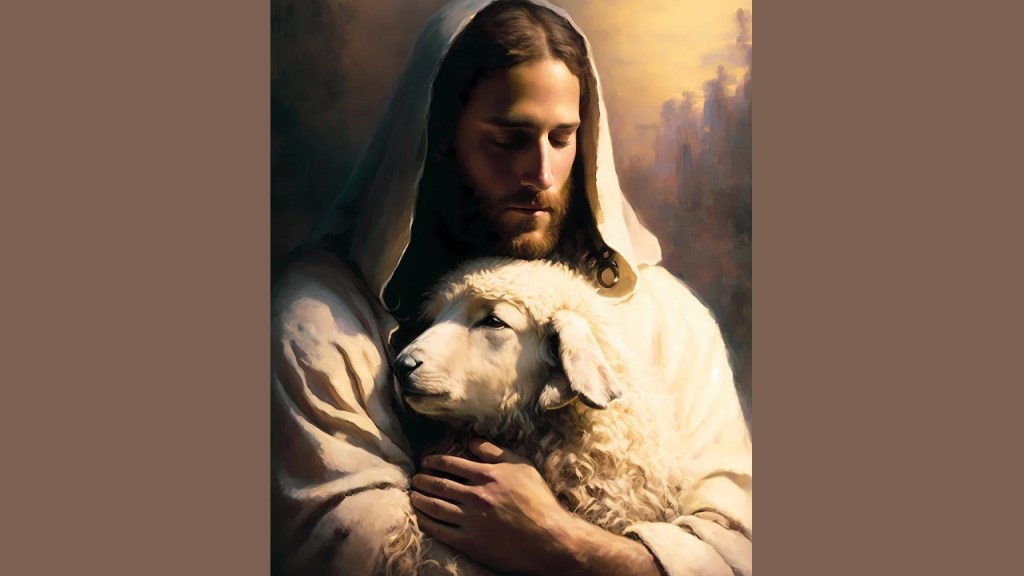
Do God’s promises ever seem that way to you–too good to be true? Through Ezekiel God promised Israel a very special relationship with him. They would be his people, his sheep. He would be their God, be with them, and care for them like a shepherd. They could be sure they would have enough to live on. They could live in safety, because he claimed them as his own.

Today you and I are his people, the people God claims as his own. Like Old Testament Israel, we can take this promise for ourselves. Do you see why that is so important for us, that he claims us so? In war, it may be good to have mercenary soldiers on your side because it adds to your troop strength. But mercenaries can present a problem. There is only so much one will do for pay. Mercenaries have been known to flee the field of battle because they are willing to fight for money, but they aren’t willing to die for it.

But when men are fighting to protect their own children, their own families, their own communities, their own people–there you have a soldier faithful to the very end. Our God is not a mercenary we have hired to protect us. We are his family. He claims us as his sheep, his children, even his bride. He joined our family as a real human being. He died to save our family and spare our lives. He lives to assure us we live in safety, and all the more so when we finally reach the family home.

If something looks too good to be true, it probably is–except for the promises of God. Because he claims us, we can be sure of his providence, protection, and care. We are his sheep, and we can live securely.

The Lord Is My Portion

Lamentations 3:24 “I say to myself, ‘The Lord is my portion; therefore I will wait for him.’”

“Portion” is an important Old Testament word for understanding God’s loving relationship with his people. When forty years of wandering in the desert were over, and Joshua finally brought the people into the land we know as Israel, each family received its own piece of land. This was that family’s “portion,” a kind of gift and inheritance from God. Your house, your yard, your farm were to be constant reminders that you had a place in the Lord’s extended family.

One tribe didn’t receive the same kind of “portion” as everyone else. The families from the tribe of Levi received much less land. They got scattered towns and villages all across the country. But God had chosen them as temple workers. Every one of them had a job to do in supporting the worship and sacrifices. Because they had been given this special connection with his work and worship, the Lord told them that he himself was their “portion.” They had something more direct than a piece of property to remind them of their place in God’s family. More than anyone else they were immersed in the system of worship that kept God’s love and promises in front of their eyes. In the message communicated in the preaching and sacrifices, the Lord was giving them himself. He was their “portion.”

Of course, the other people also went to the temple. They heard the preaching and participated in the sacrifices, if not as much. The idea grew that God gave himself to the people of this nation in a special way, that he was the “portion” for all of them. For Jeremiah, remembering “the Lord is my portion” was an important reason for hope.

This is no less true for us. By describing himself as our portion, the Lord shows us that he is a self-giving God. He makes himself a “self-gift” to us. That finds its ultimate fulfillment in Jesus. In telling the story of Jesus’ birth, the gospel writer Matthew reminds us that Jesus is “Immanuel,” which means “God with us.” God was giving himself to us when Jesus came to earth. During his ministry Jesus taught his disciples about the reason he came. “The Son of Man did not come to be served, but to serve, and to give his life as a ransom for many.” He came to give us himself as the ransom that sets us free. He kept that promise months later when he let himself be arrested without cause, refused to defend himself at his trial, and allowed himself to be falsely convicted and crucified. His death on the cross, and all the many spiritual blessings flowing from it–forgiveness of sins, reconciliation with God, power for faith and a new life, admission to heaven, life that never ends– this is our portion. In Jesus God is giving us his very self.

Now Jesus promises to be with us always. He is here, even if we can’t see him. The Lord is my portion. He gives his people the Holy Spirit and he lives in our hearts by faith. The Lord is my portion. He comes to me in his word, he spends time with me when I receive his body and blood in his Supper. The Lord is my portion.

Someday he will welcome me into heaven. He will wipe the very last tear from my eyes with his own hands. He will sit me at his table, and we will feast forever and ever. The Lord will be my portion forever and ever.

The God Jeremiah worshiped, the God we know as Jesus, give us more than property, money, health, family, friends, a life to enjoy. He says, “Here. I am yours.” He gives himself. That is the chief part, the great blessing, of the portion he has given us.

Because of the Lord’s Great Love…

Lamentations 22-23 “Because of the Lord’s great love we are not consumed, for his compassions never fail. They are new every morning; great is your faithfulness.”

Let’s talk for a few minutes about “the Lord’s great love.” Many, if not most, Christians are familiar with a distinctive kind of love described in the New Testament. The Greek word “agápe” often refers to God’s unconditional love: love not based on some attractiveness, some worthiness, in the person God loves. The Lord loves us because he chooses to love us, and our behavior cannot make him stop.

The Old Testament has its own word to describe unique characteristics of the Lord’s love for us. It is the word behind “great love” here, “chesed.” It brings together two things: God’s faithfulness and God’s mercy.

The Lord loves his people faithfully. Human love is like a roller coaster ride. It gets pushed all around by all the competing emotions we have going on inside us. How many books and movies don’t make use of that to keep the story interesting? It may make for good entertainment, but it doesn’t make for very happy experiences. Hearts get broken. People get mistreated, even abused. Human love is chaotic and unreliable.

 The Lord’s love is faithful. He doesn’t have good days and bad days. He is never confused about how he feels about us. He is the unchanging God. You remember that when the Lord revealed himself to Moses at the burning bush on Mt. Sinai, he referred to himself as the “I am.” He is never, “I was.” He is never the “I will be.” That would mean change. He is always, has always, and will always be the same as he is right now. And that applies to his love for us.

Our circumstances may change. They change every day. Our behavior may change. One day we are full of passion and zeal for God. We make all kinds of resolutions for improvement. We are going to be the parent, spouse, sibling, employee, Christian servant, godly role model we always said we would.

But we are like the weather. Give it a few minutes. It will change. We wake up on the wrong side of bed one day. We have a few things go the wrong way. People cross us and stick a pin in our balloon full of good intentions, and out come the claws. The stress and mistreatment put us on the warpath. Get out of the way before I run you over, and curse God for letting my day, or letting my life, be ruined!

Remember, Jeremiah says. Remember that you, that we, are not consumed. We have just poked our Lord in the eye. We have practically begged him, dared him, to come and dish out some pain and hurt. We have given him reason to throw in the towel and give up on us altogether. That’s not what happens. Why? “Because of the Lord’s great love we are not consumed.” “His compassions never fail.” “Great is your faithfulness.”

I said that chesed brings together two things. One of them is this absolute faithfulness of God’s love. The other is his compassion. When we pray at the dinner table, “O give thanks to the Lord for he is good, for his mercy endures forever,” that word “mercy” is chesed.

This says that God is moved to do something about our misery. Feeding us when we are hungry is just one small example. Practically the whole history of the nation of Israel before Jesus was God looking down from heaven at the misery of his people and being moved to action. He delivered them from slavery in Egypt. He brought them food and water in the desert. He rescued them from invading nations time after time. He kept the people who went into exile in Jeremiah’s day together as a nation, and seventy years later he brought them home. They were not consumed. They were spared as a result of the Lord’s compassion.

This compassion isn’t limited to nationwide events of historical significance. Your personal misery moves him, too. He may allow it. He may even initiate it. That doesn’t mean he likes it. As soon as it has served its purpose, he wants to remove it. He is not a sadistic God. He is compassionate and merciful. Together with his faithfulness, he gives us what we need to survive each day.

His Testimony in Our Hearts

1 John 5:10 “Anyone who believes in the Son of God has this testimony in his heart. Anyone who does not believe God has made him out to be a liar, because he has not believed the testimony God has given about his Son.”

Every moment of a Christian’s existence his faith is under attack. The attack is unrelenting and takes many forms. It is such a constant feature of our existence that sometimes we hardly notice it. But from time to time something happens to make us feel the attack again. We become deeply aware of how hard it is to hold on to our faith.

This is a major side-story of the Easter account. Is it possible to believe that Jesus rose from the dead? Just hours after it happened Jesus’ enemies were spreading rumors about his disciples stealing the body. They paid good money to make sure that their version of the events got air time around Jerusalem.

Jesus’ own disciples didn’t find it any easier to believe he was alive again. Ten of them refused to believe the women when they came back with the first report from the empty tomb. Thomas held out a week longer in spite of the growing number of witnesses who had seen Jesus alive.

Since then many others have kept up the attack. One thousand four hundred years ago the Prophet Muhammad decreed that Jesus was never crucified, so of course he never rose from the dead. For hundreds of years many so-called “Christian” academics have offered alternative explanations for Jesus’ empty tomb. The women, they say, went to the wrong tomb that first Easter morning. Or, Jesus didn’t actually die on the cross. He only passed out. Or, the disciples and the women never saw an empty tomb or a living Jesus. They all experienced a mass hallucination, a corporate vision, that Jesus was alive. One genius with university credentials suggests that Jesus’ body was eaten by wild dogs.

The onslaught against faith isn’t limited to Jesus’ resurrection, or even the Bible’s claims of supernatural events. People also make moral objections to Christian teachings. Isn’t spanking violence against children? Doesn’t respect for authority contribute to injustice and neglect of the poor? Isn’t traditional marriage teaching unfair, even mean, to those with same-sex attractions?

God’s word addresses human skepticism and speculation. That is not only because it is more reliable, complete, and accurate. It is especially because it is more powerful. The good news about God’s Son does more than offer of grace. It is the gift of grace. It does more that invite us to believe. It grants, it plants that faith deep within our hearts.

I have read many stories I loved because they excited me, moved me, even inspired me to change. Sometimes they play my emotions like a cheap violin. None of them are like the testimony God has given about the life and love of his Son. This has embraced me, possessed me, and now inhabits my heart and soul in a way that has made, and is still making me, a different man.

That is why John can say, “Anyone who believes in the Son of God has this testimony in his heart.” I don’t understand everything God demands or promises. I may still struggle to agree with it all. There are certainly things I would do differently if I were God. But I can’t shake the inner conviction that says, “Jesus is your Savior, and God’s word is true. Trust him. Follow him.” It is not my own inner voice. That voice often contradicts and corrects that testimony. God’s testimony exposes my inner rebel and puts him down. Even more, it invites me, it leads me, to the certainty that I live in a perpetual state of forgiveness. Love is always where my Lord stands with me. His way is good, if not always easy or pleasant, and he won’t steer me wrong. Listen. Believe.

This is the part that sometimes makes giving my testimony of faith to others frustrating. John also describes the skeptic who does not believe: “…(He) has made (God) out to be a liar, because he has not believed the testimony God has given about his Son.” “Prove it!” the skeptic says. “Prove that Jesus lived, died, or rose. Prove he said this or that. Prove his demands. Prove that he saves.”

I would love to. I have only the story, the word, the testimony God has given. The skeptic thinks it is all a lie. But it has conquered my heart, and I know that all of it, all of it, is true. I can only repeat the testimony God has given. I can’t make you believe. That’s the sum of the matter.

Our faith is always under attack. But God has given us his word to defend it, to feed it, and to make it live and flourish. Listen like the little children. Believe like them, and keep your heart of faith.

God’s Testimony Is Greater

1 John 5:9 “We accept man’s testimony, but God’s testimony is greater because it is the testimony of God which he has given about his Son.”

A friend of mine once asked me to buy into an investment that promised to multiply your money by seven to ten times in just five years. He couldn’t tell me exactly how the investment worked. Part of it involved bank accounts in the Cayman Islands. I even went with him to a presentation by a man who helped create this “investment.” The place was packed. Many of the people accepted the testimony of the man selling the investment and gave him their money. I kept mine. They lost theirs. Greed is a powerful influence to get people to believe something.

It has become common to hear about the release of some person falsely convicted from prison. At their trials experts testified about the evidence, and juries believed them. Witnesses testified about things they had heard or seen, and juries believed them. Lawyers led the jury along carefully guided logical paths. We accept man’s testimony. Now, however, DNA evidence often shows that the experts and all the witnesses were mistaken.

Even science doesn’t offer the certainty people often believe it does. I have nothing against science. Often it is the best information we have. But it doesn’t always get things right. Scientists were once convinced that heat passed from warmer things to cooler things in a mysterious vapor called caloric fluid. That theory has been discredited. Good medical science once believed that you could cure a fever by letting blood out of a person. Our nation’s first president died that way. “But science is better today,” we may believe. I wouldn’t be too sure. It’s still done by fallible humans.

For all their faults, we tend to accept man’s testimony, John says. It doesn’t take a great deal of thought or faith to reach John’s next conclusion, then. “But God’s testimony is greater, because it is the testimony of God, which he has given about his Son.” Ironically, some people want to discount God’s testimony in favor of human ideas about some subject or other. This makes no sense.

Many years ago my friend Marty’s dad disassembled an old mechanical adding machine just to satisfy his curiosity about how it worked. I looked into his workshop. Spread all across the workbench and the floor were parts of this machine. Who do you suppose would be in a better position to tell you how that machine worked: the inventor, who imagined it and built the prototype, or my friend’s dad, who tried to figure it out by taking it apart? Wouldn’t you go to the inventor?

God is the Inventor of everything. As the Inventor he knows more on every subject than fallible humans. All they can do is study what God has made, sometimes trying to take it apart. His testimony is always greater, always to be preferred.

On no topic is that more true than the testimony he has given us about his Son. This is the subject nearest and dearest to his heart. He may have created the world, but he did not give us a science book to explain it to us. God invented social institutions like family and government. He provided no detailed instruction manual for their operation. All these get passing references in the testimony he does give us. It would be foolish to ignore that. But the theme, the focus, the point of the testimony he has given us is his Son, the one he sent to save us.

This is the topic God spoke about for thousands of years to patriarchs, deliverers, kings, and prophets. It wasn’t all dumped on one man at once. You need not worry it is nothing more than one man’s personal fantasy. As generations rolled along the Lord revealed a little bit more, then a little bit more. He expanded the knowledge base, built on what had already been revealed, always supporting, never contradicting, what had come before.

Finally, God’s Son arrived to save us. His Father sent angels to announce his birth. He sent his Spirit to empower his ministry. On at least two occasions his own voice announced from heaven that Jesus was his Son. He confirmed Jesus’ ministry with an outbreak of miracles unlike anything the world has seen before or since. In the end he let his Son be captured, convicted, and crucified. By his blood he fulfilled all of the old promises, satisfied the demands of justice for the world’s crimes, freed us all from debt we owed for our sins, and redeemed us as God’s own sons and daughters. We are reconciled and restored to a dear place in God’s own family. By raising Jesus from the dead God has given us proof of this. He has placed his approval on all that Jesus said and did.

            So important is this testimony God has given about his Son, he had it written down in four separate accounts…four separate accounts! He further explained these in twenty-three books and letters. We call them the New Testament, the last quarter of our Bible. “Jesus love me, this I know, for the Bible tells me so,” our children sing. “We accept man’s testimony, but God’s testimony is greater, because it is the testimony of God, which he has given about his Son,” is the way that John says it here. Our Lord has spoken it from heaven, sent it by his Spirit, embodied it in Jesus’ life and death, and recorded it on the pages of Scripture. It convinces me of his grace and love.