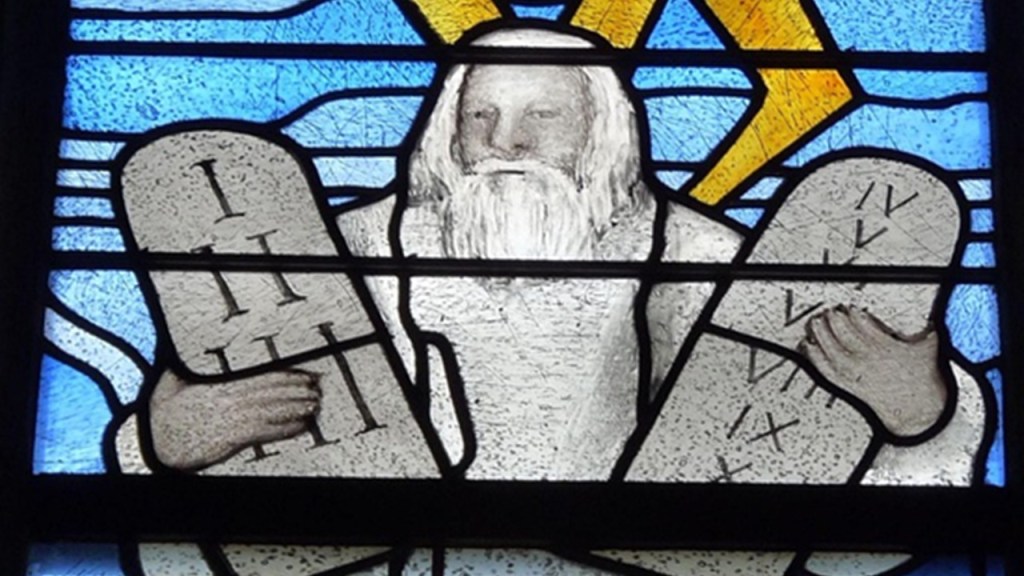
God’s “Work”

John 6: 28-29 “Then they asked him, ‘What must we do to do the works God requires?’ Jesus answered, ‘The work of God is this: to believe in the one he has sent.’”

Notice that Jesus’ answer does not line up directly with their question. “Okay, Jesus,” the crowd was saying to him. “We would like to live forever, if that is what you have come to give us. Eternal life sounds good. Tell us what to do. Give us a list. Be our guide. Show us the way.”

The idea that the path back to God and into heaven is a path paved with good deeds and human effort is a foundation stone of fallen human thinking. Essentially, every world religion outside of Christianity adopts this as its core idea. The Judaism of Jesus’ day was infested with it. Even Christians find the concept hard to resist.

This naturally leads to the idea that if Jesus is the Savior, then he is primarily here to show us what to do. His purpose is to show us what to do to make God happy with us again. Again, we Christians easily become infected with this approach. When my wife and I lived in Dallas, a date night often included a couple hours at the flagship store for a chain called Half-Price Books. It has as much square footage as any Walmart Supercenter. When we went, I always made my way over to the Christian book section. There were a few bookcases devoted to what we might call “theology.” But the section that went on for row after row, literally thousands of books? That was called “Christian living.” Much of it might just as well have been titled, “Works Righteousness.”

The futility of this approach was once illustrated by a friend of mine: “You have crashed your car, and you are lying in the driver’s seat unconscious and bleeding, strapped in by your seat belt. The vehicle is on fire and about to explode. Suddenly Jesus comes running down to the car, opens the passenger door, sits next to you, buckles himself in and says, ‘This is how you get out.’ Then he unbuckles his seatbelt, opens his door, and runs away.” That’s no Savior. That’s not even a role model that’s of any use. But that’s essentially what this crowd, and a host of people today, were coming to him for.

So they get the question wrong. And Jesus confronts it like this: “The work of God (note the singular ‘work,’ not the plural ‘works’) is this: to believe in the one he has sent.” It’s not the many things you do. It is the one thing God works in you: faith in Jesus, the Savior he has sent. Jesus was leading them away from a “work-righteous” path to salvation. He was inviting them to trust in him for the things he could do for them: pay for their sins, reconcile them to God, overcome death, and promise eternal life.

Faith isn’t a good work. It is a good gift, worked by the God who sent Jesus to save our souls.

He Comes to Rescue, Not to Improve

John 6:24-27 “Once the crowd realized that neither Jesus nor his disciples were there, they got into the boats and went to Capernaum in search of Jesus. When they found him on the other side of the lake, they asked him, ‘Rabbi, when did you get here?’ Jesus answered, “I tell you the truth, you are looking for me, not because you saw miraculous signs but because you ate the loaves and had your fill. Do not work for food that spoils, but for food that endures to eternal life, which the Son of Man will give you. On him God the Father has placed his seal of approval.’”

A day earlier, Jesus miraculously fed 5000 people with five small loaves of bread and a couple of fish. He wasted no time confronting the motives of those who went looking for him after he and his disciples crossed the Sea of Galilee and went to Capernaum. Did you notice how he threw their question away and went right after their motivations for looking for him? “When did you get here? Well, that isn’t a very interesting topic. It’s not even what they really care about. Let’s not waste time with small talk or chit chat. These people have a spiritual problem and it’s killing their souls.”

That spiritual problem was the worldly reasons they had for coming to Jesus: “You are looking for me, not because you saw miraculous signs but because you ate the loaves and had your fill.” The miracle should have been a spiritual wake up call. All of Jesus’ miracles should have been. They did more than bend the laws of nature. They delivered a message. “This man Jesus is someone worth paying attention to. We should be listening to him and believe what he is teaching. He is obviously more than just another slick salesman trying to get our business. His miracles tell us God the Father has places his seal of approval on him.”

But Jesus understood their real reason for tracking him down. “You ate the loaves and had your fill.” Free food! Think of what we could save on the grocery bill. Free medicine! Think of how healthy we could be, how good we could feel, having this guy around. Free climate control! Think of how much safer we could be having Jesus to put the brakes on dangerous storms around here.

There is nothing wrong with wanting to eat, or having health care, or wanting you and your family to be safe. But Jesus did not come to establish the world’s most successful farm or fairly-priced grocery store chain. He founded no hospitals or clinics, nor did he even visit one himself, so far as we know. After settling down two storms on the Sea of Galilee he never shared with anyone the secret to his meteorological genius. Years later his star missionary Paul reported that he had suffered shipwreck three times.

A not-so-small industry wants to promote Jesus as the secret to a better life now, a higher standard of living, a virtual utopia of ways to improve our lives in this world. That is not merely misinterpreting the man. It is the sin of worldliness, and it threatens to blind us to his real purpose. “Do not work for food that spoils, but for food that endures to eternal life.”

Jesus has come to rescue us from life in this world, not to improve it, not to attach us to it more firmly. He came to bring us the grace and mercy of God that guarantees a better life to come. His goal is to get us out of here. His words to this crowd confront our worldly reasons for coming to him.

The Crown of Righteousness

2 Timothy 4:8 “Now there is in store for me the crown of righteousness, which the Lord, the righteous Judge, will award to me on that day–and not only to me, but also to all who have longed for his appearing.”

The Bible speaks of two kinds of crowns. One is the kind of crown a king wears. It is a symbol of his power and authority. It is usually made of precious metals and crusted with jewels. Jesus wears that kind of crown in heaven. But that is not what Paul is talking about here.

When athletes win a championship or finish first in their event, we give them medals or trophies. The ancients gave them a crown of twigs and leaves. It wasn’t so much a sign of power as a sign of success. That is the kind of crown Paul is talking about here, the kind you might get when you win a race, or perhaps a battle. It’s the crown that says, “You made it! You win!”

The one we get in heaven is made of righteousness. All our life in this world we have had to make do with a borrowed righteousness. Jesus has lent us his. We aren’t righteous because we have stopped sinning, but because Jesus has covered our sins with his blood and dressed us in his own life of love. Today God sees us wrapped and hidden in him. Even when good things come out in my life, it is his life living in me that makes it happen.

But when we get to the finish line, just like Paul, God will say to us, “Here. Have a righteousness of your own. From now on the love you live will be love you produce yourself. The struggle is over. The celebration has begun.” Our crown, the evidence that we live as the victors, will be the righteousness that permeates everything we are and experience. It is the never ending future that will make our Christian life complete.

The Good Fight

2 Timothy 4:7 “I have fought the good fight, I have finished the race, I have kept the faith.”

Don’t misunderstand Paul’s assertions here. He isn’t putting his confidence in himself or boasting about his virtues. He fought the good fight, and it was a fight. You know how he resisted Jesus as a young man. If ever there was an arrogant so-and-so, full of all the wrong kind of self-confidence, it was this same man Paul. Jesus finally had to knock him off his horse in a blaze of light and glory to get his attention, and to show him that in all his self-satisfaction with his own goodness he was just as evil as the most violent or sensuous sinner. “Chief of sinners” he learned to call himself. The fight ended with Paul becoming Jesus’ servant and taking the gospel’s battle for souls to others, fighting inch by inch to reclaim this world of sinners for the Savior who had died to save them all.

We are locked in a fight, a battle for our souls and the souls of others as well. We may share Paul’s weakness for a high opinion of ourselves that doesn’t have much use for a Savior. It’s no secret we Christians have developed a reputation for being a little too pleased with our own goodness. I can’t say the accusation lacks evidence. I think you understand how poisonous to faith such a high regard for self can be.

But there is a ditch on the other side of that road, too. We may be equally as drawn to scratching every itch and satisfying every craving, like the world around us that never met a perverted pleasure it didn’t like. Statistics regarding pornography, premarital sex, and drug and alcohol use make it hard to distinguish Christians from anyone else. These aren’t harmless pastimes. Peter says they wage war on our souls.

Thank God we don’t fight the good fight alone. At the beginning, we don’t fight it at all. Like he did for Paul, Jesus fights to make us his own. He breaks into our lives with his grace. He leads us to the cross where he strips us of our sin and dresses us in his righteousness. He woos and wins our hearts to his side in the struggle between good and evil, heaven and hell. Then he goes with us, he never sends us alone, to fight against temptation and contend to save others, too.   

The picture that follows is similar. “I have finished the race.” First a hard contest, a great struggle, and then a good end. But it all ends this way: “I have kept the faith.” Paul reached the end of his life knowing the truth about Jesus and continuing to trust in it. He not only reached the end, but at the end he still had all he needed to enter the life to come. May Jesus bring us in faith to the end of that race as well.

Running Out Soon…

2 Timothy 4:6 “For I am already being poured out like a drink offering, and the time has come for my departure.”

Paul’s Second Letter to Timothy has been described as his last will and testament. In a story we know from the end of the book of Acts, Paul had spent two earlier years in prison waiting for a hearing before Nero, the emperor. Paul was released after that stint in prison. Now, five or six years later, Paul was in prison again. After a full and complete life’s journey, this was his last stop.

These words describe his quickly passing final days. Do you understand the picture he paints? When we think about sacrifices and offerings in Bible times, we tend to think about animal sacrifices. You bring a sheep or a calf to the temple. The priests kill it, dress it, and heave it up on an altar with a real fire to cook it.

But not every sacrifice was a blood sacrifice. The Lord also commanded offerings of grain and bread, and oil and wine. The so-called “drink offerings” of wine were poured out in the temple. The whole thing, from a quart to a half gallon, was poured out on the ground. You can picture it, can’t you, the blood red liquid sluicing out of a jar or pitcher, the wide stream narrowing at the end until the last of it leaves the container and falls to the ground? It takes just a few moments and it’s done. And once poured to the ground it is gone and can’t be reclaimed. Any puddle quickly soaks in and disappears.

So Paul pictures his life: going, going, gone. It all passes rather quickly, you can’t stop it, and you can’t get it back. It’s not necessarily a pessimistic picture, but it is a realistic one. It’s a truth with which we all have to come to terms. Our life in this world is pouring out on the ground, it won’t last forever (not this one; not here), and we can’t get it back. What will we do with it in the brief span before its gone?

Too many people treat their time like it is an inexhaustible resource. There will always be tomorrow. It matters little how they fill their time today. We waste our time on mindless distractions, scrolling to the next Facebook post on our phones or clicking on the next YouTube video.

We think we are using it more seriously, that we are adding more value to our lives, when we invest our time to better the quality and comfort of our existence here. We work hard so that we can upgrade our homes, or our cars. We travel to places our parents or grandparents never did. We have things past generations could never even have imagined.

But when the last of our lives comes spilling out of the jar and soaks into the ground, what is the use of all this? Can we trade our possessions or experiences for a place in the life to come? Do they help anyone else get there? Do they make any difference at all in the long view of eternity? “Do not love the world, neither the things that are of the world,” the Apostle John once wrote. “If anyone loves the world, the love of the Father is not in him. For everything in the world–the cravings of sinful man, the lust of his eyes, and the boasting of what he has and does–comes not from the Father but from the world. The world and its desires pass away…”

You and I have not come to the end yet today. The jar is tipped, the juice is flowing, and the end will come soon enough, maybe sooner than we think. But today we live. Today we can repent of the useless ways we have filled our time and the useless stuff that has filled our lives. Today we can put our faith in God’s grace and receive his pardon. Today, the present, we can concern ourselves with what happens when the last drops of this life disappear, like Paul, so that we can be confident that our departure leads somewhere better—not an empty end, but a new life full of promise.

Gracious Presence, Generous Supply

Exodus 16:9-15 “Then Moses told Aaron, ‘Say to the entire Israelite community, Come before the Lord, for he has heard your grumbling.’ While Aaron was speaking to the whole Israelite community, they looked toward the desert, and there was the glory of the Lord appearing in the cloud. The Lord said to Moses, ‘I have heard the grumbling of the Israelites. Tell them, ‘At twilight you will eat meat, and in the morning you will be filled with bread. Then you will know that I am the Lord your God.’ That evening quail came and covered the camp, and in the morning there was a layer of dew around the camp. When the dew was gone, thin flakes like frost on the ground appeared on the desert floor. When the Israelites saw it, they said to each other, ‘What is it?’ For they did not know what it was. Moses said to them, ‘It is the bread the Lord has given you to eat.”

You might miss the first evidence of God’s grace in the story. As he promised, God’s glory appeared to the nation from the cloud that led the people through the desert. This “glory of the Lord” was a very visible sign God gave to let the people know that he was with them and on their side. When it appears in the Bible, it is always an indication that good things are about to happen for the people of God. It appeared to seal the covenant of grace with Abraham, was involved in the burning bush to send Moses as the nation’s deliverer, kept the people safe at the Red Sea in the pillar of fire before they crossed to safety on dry ground. It would descend on their worship tent and live in the Holy of holies when they set it up later on, and in the Most Holy Place of Solomon’s temple after that. It was the glory of the Lord that lighted up the fields outside of Bethlehem just before the angel told them a Savior had been born to them, who is Christ the Lord.

So here the glory of the Lord appears as a promise of God’s presence and intention to take care of his people’s every need. Perhaps more than it spoke to them of the food that was about to miraculously drop from heaven, it was a sign of God’s forgiveness. He was not holding their grumbling against them. He was going to return their complaints and accusations with kindness.

For us God’s glory doesn’t appear in a bright flash of light or otherworldly glow. Paul wrote the Corinthians that God has given us “the light of the knowledge of the glory of God in the face of Christ.” God’s glory appears to us in Jesus, the Light of the World. As often as we sin, Jesus reminds us that the Lord has not abandoned us. He clothed himself in human flesh, joined us in our world, and lived and died as our substitute to fully satisfy the demands of justice for our sin. Jesus showed up, and that meant good things, the greatest things, happened for the people of God. He is the ultimate demonstration of God’s grace.

After this show of God’s grace with the appearance of God’s glory, his grace is clear to see the generosity that followed: the quail and the manna.

Have you ever gone hunting? I don’t hunt much anymore, but when I did I missed my target more often than I hit it. With my current skill set, if I had to hunt to eat, my family and I would be hungry.

The Lord didn’t leave his gift of meat to chance. Quail covered the camp. You basically just had to go outside and grab one. The Lord did everything but deliver the birds cooked and boxed like Colonel Sanders.

Have you ever raised a vegetable garden? You have to till, and plant, and weed, and water, and cultivate, and pick to cook and eat. The process takes months. Maybe you get a crop. Maybe the rabbits or insects get it before you do.

The Lord didn’t expect his people to figure out desert gardening. Six days a week the thin, white flakes of manna appeared on the ground, ready to eat. This happened over 12,000 times for the next forty years. It was always there, always fresh, always just outside their doors. The only way you could go hungry would be if you were too lazy to bend over and pick some up.

Our food may not come so easy. But it comes in greater variety and abundance. In our country we throw away 150,000 tons of food every day, enough to feed one meal to every American every day. You can buy fresh corn on the cob or just picked strawberries in the dead of winter. Maybe it isn’t raining down from heaven. But our bounty is still a demonstration of God’s grace, a generous answer to our prayer for daily bread.

            Let’s remember to be grateful for the riches we have received.

Bread from Heaven

Exodus 16:4-5 “Then the Lord said to Moses, ‘I will rain down bread from heaven for you. The people are to go out each day and gather enough for that day. In this way I will test them and see whether they will follow my instructions. On the sixth day they are to prepare what they bring in, and that is to be twice as much as they gather on the other days.’”

The Lord didn’t fire the nation of Israel as his chosen people after grumbled about a lack of food. In spite of their less than grateful attitude, he promised to feed them better. Their bread would literally rain down from heaven in the form of the manna they ate for the next forty years.

But their complaint had exposed a problem. They didn’t trust him properly. They didn’t politely ask for help. They accused him of trying to kill them. So he wove a test of their trust into the gift of bread from heaven. Five days a week they had to gather just enough food for that day: no hoarding, no bulk storage, just as much as you need. He wanted them to trust he was sending them food tomorrow.

One day a week they were to gather enough for two days, so that they could take a day off on the Sabbath. Though the food appeared for six days, they had to trust him when he said there would be nothing to pick up on the seventh. He was teaching them to depend on him, and trust his word, and recognize his generosity, instead of complaining when they didn’t get their way.

We don’t live under the same system exactly. The Lord doesn’t rain supernatural food down from heaven on us. He just provides us a standard of living those people in the desert couldn’t even dream was possible. The wealthiest Pharaoh of Egypt never lived in a house as comfortable as mine or rode in a chariot as fast as mine.

But our abundance also comes with a test, doesn’t it? God asks us to share. He asks us to live at a lower standard of living than we might afford voluntarily, so that we can help send missionaries around the world, send aid and relief to people who have suffered some natural catastrophe, and make sure people are clothed and fed who aren’t able to get these things themselves for some reason.

He asks us to trust we won’t miss what we give away, and that he will keep giving us what we need, and even more. Then we might even learn to appreciate how much we have compared to so many, because we can see how God has rained our bread and every other good thing down from heaven on people who complain too much about what they have.

He asks us to trust his promise, “He who did not spare his own Son, but gave him up for us all–how will he not also, along with him, graciously give us all things?” (Romans 8:32). He has rained down on us the Bread of Life in the person of Jesus Christ. We can trust our daily bread will follow.

Not As Poor As We Think

Exodus 16:1-3 “In the desert the whole community grumbled against Moses and Aaron. The Israelites said to them, ‘If only we had died by the Lord’s hand in Egypt! There we sat around pots of meat and ate all the food we wanted, but you have brought us out into this desert to starve this entire assembly to death.”

Are you familiar with the difference between absolute poverty and relative poverty? Absolute poverty is a standard used by such organizations as the United Nations and the World Bank. It measures the inability of people to obtain such basic needs for survival as food, shelter, safe drinking water, sanitation, and education. It is difficult to measure and can change from country to country. Currently it averages about $1.90 a day, or $700 per year. In 2011 14% of the world’s population lived in this kind of poverty. In 1981 43% of the population suffered absolute poverty. In 1820 almost 95% of all people lived in this condition. Very few Americans qualify to be categorized this way.

Relative poverty is something quite different. It is not about having the things you need to survive. It is about how you compare to others in your community or country. One measure says that if you earn less than 60% of the median household income where you live, you are in relative poverty. A person in relative poverty may feel poor even though they may be in no immediate danger of lacking life’s barest necessities.

After Israel left Egypt, the entire nation of Israel was struggling with a kind of relative poverty. They had experienced a profound change in their standard of living, and they weren’t very happy about it. The people complained about the lack of food in the desert, but it was largely an exaggeration. This was a nation of sheep-herders. There was milk, and cheese, and lamb-chops if they wanted. Relative to their life in Egypt, their diet had to change. The variety of meats must have suffered. You couldn’t go fishing in the Nile river. There were no stores selling flour for making bread out in the wilderness. You or I might have complained about the menu, too. But they weren’t going to starve to death soon. Theirs was a “relative” poverty, relative to the way they had eaten in Egypt. It wasn’t absolute.

That’s not to say this wasn’t a legitimate problem that needed to be addressed. A nation of two million people consumes a lot of food. Eventually they might deplete their flocks and herds. A number of years ago the Quartermaster General of the U.S. Army estimated that two freight trains, each a mile long, would be needed each day to transport enough food to feed a community this large in the desert. No doubt they needed someone to work on logistics.

The bigger problem was the defeatist attitude, the criticism, the sense of entitlement, and the accusation contained in their complaint. This wasn’t an existence worse than death, and the Lord was not trying to kill them, no matter how unhappy they were with their desert rations. They sound child-like, don’t they–like the kid in the check-out line accusing mom or dad of not loving them because they won’t buy the brat a Snickers bar?

They look a little like us when we can’t appreciate the car we drive because a newer model came out that looks a little sexier or can parallel park itself. Then you see a video-clip of an entire family of six desperately clinging to one motor scooter to get somewhere in Pakistan. We feel bad that our TV isn’t 85 diagonal inches and Ultra HD while over a billion people worldwide still live without electricity.

Our own sense of envy, entitlement, and discontent can turn us against the Lord who hasn’t done anything for us except to give us our very lives, save us from sin and hell, provide everything we have, and promise us eternal joys in heaven. Why worry about whether we can afford a house when we already own a piece of heavenly paradise? Don’t forget the riches of salvation. Don’t let lean times turn us against the Giver of all.

A Spiritual Working Vacation?

Mark 6:32-34 “So they went away by themselves in a boat to a solitary place. But many who saw them leaving recognized them and ran on foot from all the towns and got there ahead of them. When Jesus landed and saw a large crowd, he had compassion on them, because they were like sheep without a shepherd. So he began teaching them many things.”

Sometimes it seems like a vacation isn’t complete until something spoils it. Twenty-five years ago our family took a 17 day trek across the southwestern United States. We went through three rented trailers, scorching heat, lost children, fevers and parasites along the way. We saw a lot of things. We did a lot of things. We did not get a lot of rest.

Jesus did not announce his getaway with the disciples as a “working vacation.” But when he saw the large crowds, he wasted little time letting it turn into one. His reasons for doing so were clear: “…he had compassion on them, because they were like sheep without a shepherd.” It wasn’t so much their physical injuries and diseases. It was their spiritually lost condition that motivated his sense of urgency.

I have never shepherded literal sheep. But I have worked on a farm with livestock. When cows or pigs broke through a fence and got out, we dropped everything else we were doing. Getting them back in suddenly became the only project anyone was working on. Every hand was needed to get them corralled and safely back inside their pens.

Several times each week neighbors on our subdivision’s social media page report dogs or cats that have gotten loose and are wandering the neighborhood. This becomes that family’s focus of attention until Fido or Fluffy are safely home. There is an urgency when our four-legged friends are in sudden need of attention from their caretakers.

So Jesus was moved by the plight of these people who were wandering spiritually. They had no leaders to confront their sin-sickness. They weren’t being fed a regular diet of God’s forgiving love. They got nothing but do-it-yourself religion, endless lists of advice about how to live your life. That drove them further and further away from the safety of God’s arms and into the wilderness of confusion and despair. Jesus wasted no time turning his vacation with the disciples into a working vacation, because souls were at stake, and the work of caring for them is important no matter how much rest you need.

His compassion for us is no less. His desire for us to know our sins and their all-sufficient solution at the cross is no less urgent to him. His method for addressing our need remains the same as it was for the crowds that met him as he got out of the boat: “So he began teaching them many things.” In his word he teaches us the grace and love that calls our souls home and keeps them safe in his care.

Doesn’t he also teach us something about loving and caring for souls ourselves? Doing God’s work doesn’t wait until it is convenient. Often it will be inconvenient. It will intrude on our time. It will upset our priorities. It will spoil our plans. But the people for whom Christ bled and died are worth it. These are matters of heaven or hell for the people we serve. The work is important, no matter how much we may also need some rest.

We may feel a tension between our need for spiritual rest and our need to do God’s work. Perhaps we wonder how to resolve the temptation. Don’t do it. Both things are true. Both are God’s word. Both of them need to stand. Don’t find the balance. Just live the life. Trust Jesus to give you all the work you can handle and all the rest that you need.