Peace Rules!

Colossians 3:15 “Let the peace of Christ rule in your hearts, since as members of one body you were called to peace.”

A variety of ways exist to establish and maintain the peace. It may sound contradictory, but sometimes peace requires war. If some nation or group won’t leave their neighbors alone, you might have to send in troops to keep the peace. We may even refer to soldiers as “peace-keepers.”

When people inside a nation can’t get along with each other, sometimes those that govern must rule with an iron hand. In other cases, peace is maintained by getting everyone to come to the table and compromise. Rarely, peace may be bought and paid for with bribery.

All of those roads to peace deal with peace on the outside, between nation and nation or man and man. The peace of Christ is different. It deals with changes on the inside. First, Jesus changed our spiritual circumstances. We were not God’s friends. We didn’t like his rules. Even after we become Christians we still struggle with some of the boundaries he has set.

None of this made God happy, either. “The wrath of God is being revealed from heaven against all the godlessness and wickedness of men,” Paul writes the Romans as he jumps into the main body of his letter. There was no peace between the ruler of heaven and the citizens of the earth.

God didn’t send in an army, call out the police, negotiate a new set of rules, or try to buy better behavior. He introduced the world to his Son. Jesus didn’t resent the rules his heavenly Father had set. He loved them and followed every detail. He was doing more than setting a good example. He was offering our heavenly Father the perfect love and selfless service he demanded on our behalf.

Then Jesus released us from the consequences of our lawbreaking. He didn’t leave us to figure out a solution for ourselves. He gave up his life for ours. He paid all our debt in the currency of his own blood. He took our place on the cross. Jesus left his Father with nothing more to hold against us. He secured forgiveness for a world at war with its Maker. He established peace in God’s heart toward men.

Then he went to work on our hearts. “Let the peace of Christ rule in your hearts, since as members of one body you were called to peace.”

Cliff was mad at God for the kind of life that he has been dealt. His wife abandoned him for no good reason. Then she managed to take almost everything they built up together in divorce court. He lost a job he loved in another state. Then he was stuck with work he didn’t love so much. He didn’t become an atheist, but he’s sure someone is out to get him.

What if Cliff were convinced that God is on his side all the time? The truth is that God doesn’t live with a more-or-less constant grudge against him. Like all of us, he has been forgiven. God hasn’t singled him out for bad treatment. When God came to live as one of us on earth, Jesus suffered every bit as much as Cliff, and then so much more. He did it just because he loved him so much and wanted to save him, not hurt him.

However his life may go here on earth, it is just a drop in the bucket compared to eternity. Jesus holds out the promise of eternal pleasures, basking in God’s light and love in heaven. What if Cliff’s heart was convinced of this?

What if our hearts were convinced of this? Then we would have peace, wouldn’t we? Then we would interpret everything that happens to us differently. Suffering is a form of fellowship with Jesus. It is evidence of a loving Father’s helpful discipline. Losses are God’s way of making sure we hold on to earthly things loosely. They keep us from trading the real heaven for a counterfeit one. Death is God’s way of evacuating us from a dangerous and evil world to take us to a safe and holy one.

When we believe, when we know, when we remember that God is always on our side as a loving and forgiving Father, then we believe, then we know, then we remember that everything is working for our good. All is well in my life. We have peace, the peace of Christ that rules in our hearts.

Enemies

Genesis 3:15 “And I will put enmity between you and the woman, and between your offspring and hers.”

The Lord had some business to take care of, some issues to address, with his human caretakers in the Garden of Eden after their fall into sin. His first order of business was to create some new enemies. “Friends” may not be the right word for what happened between Eve and the devil. “Friendship” suggests a mutual concern. That is foreign to the devil’s thinking. Maybe we could say that they became allies in their rebellion. Adam and Eve had joined the wrong team, but not because anyone on that side was looking out for each other. It was every man, woman, and demon for himself.

“Enemies” fits exactly the relationship God came to establish between the first humans and the devil. The devil is a liar and a murderer. There is no middle ground to take here. You either support the devil in leading people to rebel against the only true God to their own damnation, or you fight him. God said, “I am going to make this woman (and by association, also her husband) your enemy.” That means God led Adam and Eve to repent, to have a change of heart.

God’s work of creating new enemies didn’t stop with them. He extended his promise to put enmity “between your (the devil’s) offspring and hers.” It’s frightening to think that the devil could have offspring. When God created spirits, he did not give them the ability to reproduce. But this is one of the terrible effects of the fall into sin. The devil could now increase his following, make more creatures who lived and thought like him. By nature, every human gets their start in unbelief.

But God keeps making enemies of the devil out of the devil’s offspring–sons and daughters who share the faith of Adam and Eve, not just their genes. We are those offspring. Like our first parents, God has led us to see our sin and repent of it. He has forgiven our sin and filled us with faith. He has made us enemies of the devil by converting us into the friends of God.

This description of the relationships in terms of “enmity,” or hostility, explains a lot about how we Christians experience life. First, it explains our struggle with ourselves. Spiritually, none of us have roots to be proud of. Our roots have their beginning in the spot we had on the wrong team. And those roots run deep. They are like the weeds you try to pull up in your lawn or garden. You get the top of the root. But the bottom is still stuck in the soil, producing weeds.

That’s why it is so hard for us, even now, to repent. We haven’t completely lost our taste for the devil’s point of view. In some ways he doesn’t seem so much like the enemy.

Second, this explains why we Christians get so much hatred from the world. Jesus once prayed, “I have given them your word, and the world has hated them for it.” Because God has filled us with faith and love, we do not hate the individuals on the unbelieving side. We pray, we witness, we work for them to receive the same conversion we received. But for those who will not convert, all our prayer, witness and work is regarded as an insult or attack. There is enmity, hostility toward us.

By turning people into the devil’s enemies, the Lord is doing more than waging a war. He is showing grace. “I will put enmity…” he says. He does all the work. He doesn’t wait for Adam and Eve to come crawling back to him. He goes looking for them. He doesn’t wait for them to apologize or make amends. You know the story, what came before God’s pronouncements. Adam and Eve weren’t repenting. They were hiding. They were defending themselves. They were blaming others. They do everything but repent.

So God steps in to fix this himself. He acts unilaterally. He could have wiped them out and started over. He could have shut the whole creation experiment down and lived in solitude throughout eternity. Instead, he changes them. He speaks to them here, and those words change them. They change their way of thinking about sin, about the devil, and most importantly, their way of thinking about God. They no longer run away to hide in fear. They trust him and know him as their loving Savior. Their story is also our story, for we are their offspring, and God has made us his friends by making us enemies of the devil.

Change Our Worship Needs

Matthew 15:8 “These people honor me with their lips, but their hearts are far from me.”

The sainted John Jeske used to point out the beauty and pitfalls of our ability to do things by rote. When you put your shoes on this morning, you might have tied them while talking to your spouse or your children, or listening to the radio, and never even thought about what you were doing. This ability is a wonderful feature of the way God created us. When we do the same thing over and over again, eventually we can do it without even thinking about it. It becomes automatic. It frees our mind up for other, more important things.

That’s wonderful until it comes to our worship. Then this “automatic pilot” feature doesn’t serve us so well. We find ourselves mumbling through the Lord’s Prayer or the Apostle’s Creed or the Confession of Sins on Sunday morning automatically. We don’t even think about them. We become guilty of what Jesus warned about: “These people honor me with their lips, but their hearts are far from me.”

What is the problem here?

We might be tempted to blame God for making us this way, but we know that it is wrong to accuse God of evil. God is good to us, and his gifts are good. We are the ones who sometimes misuse them.

People often blame the repetition that takes place in our worship. Maybe if we didn’t always use the same old order and the same old forms, we wouldn’t fall into the trap of not thinking about what we are saying.

But is the problem really with using the Lord’s Prayer? Aren’t these words that Jesus taught us to use in our prayers? And is there really something wrong with the Apostles Creed? Doesn’t it simply summarize the main truths of our Christian faith and confess the Gospel of salvation?

The words of Jesus’ warning place the blame where it belongs–on the human heart. When we come to worship genuinely sorry for our sins, convicted of offending God, convinced that we need Jesus, then these words will not seem boring or lifeless, no matter how many times we have used them. The words of our worship rites and rituals preach God’s grace, which is the antidote for death. And people desperate for the antidote to death are glad to hear them.

We can even learn to appreciate the repetition. C.S. Lewis once said that worship is a little like dancing. It helps to know the order, the form well to really enjoy it, to concentrate on the content without distraction. “As long as you notice, and have to count, the steps, you are not dancing, but only learning to dance.” Likewise, in worship, as long as you are always thinking about what is coming next, trying to figure out the tune, concentrating on saying the words right, you aren’t worshiping so much as you are learning how to use these words to worship.

From time to time there will be change in worship forms. God continues to bless his church with people who have the skills to write music and words that proclaim forgiveness and eternal life.  Even J.S. Bach, even David and the other psalmists, were introducing something new to worship when they first put pen to paper. But the real change in worship needs to come from our own hearts, and the Gospel of a God who died and rose to save us can lead us to “regard it as holy and gladly hear and learn it.”

Wedded Bliss Without End

Revelation 19:9 “Then an angel said to me, ‘Write: Blessed are those who are invited to the wedding supper of the Lamb!’ and he added, ‘These are the true words of God.’”

I’ve never been to a wedding that didn’t have some issue force a change of plans. I once attended a wedding at which the bride and groom didn’t show up until almost two hours after the ceremony was supposed to begin, and then they had to send someone back to the hotel to get the service folders they had forgotten. My sister’s wedding reception was interrupted by tornado sirens. Half an hour later the power went out and never came back on for the rest of the night. My wife’s bridesmaids got crossways with each other while they were getting dressed for our service. Later, when we walked into the reception hall, we found a teal blue cake with white trim, not the white cake with blue trim we had ordered. Even more stress can be had leading up to the big day.

The heavenly wedding to which we are invited is completely stress free. We will experience nothing but blessing. You may know that the Greek word behind the word “blessing” basically means “happy.” The wedding supper of the Lamb, and everything that follows, is a life of uninterrupted, completely satisfying happiness.

The Bible is admittedly short on the positive details, most likely because the things we will find there are so much better than anything we have experienced here that there is nothing to compare it to. It’s like trying to capture the Grand Canyon on a four-inch by six-inch snapshot. We know that all the negatives will be absent: crying or pain, death or danger, thirst or hunger, sin or sadness. We will live with an enormous, extended family in faithful love, and the Savior who loves us most will be our personal friend and companion for life without end. “Blessed are those who are invited to the wedding supper of the Lamb.”

How can we be sure? “These are the true words of God.” The God who promised to send you a Savior and did, the God who promised to sacrifice his Son for you and did, the God who promised to raise his Son from the dead and did, is the God who promises you blessings at the wedding supper of the Lamb. Your blessings are guaranteed by his own word.

An invitation to a wedding is always a privilege. Someone has placed you in his or her list of most- favored friends or relatives. But we aren’t mere guests at this wedding. We are the bride. This is our big day. And our marriage to Christ is better than a traditional wedding, a destination wedding, a celebrity wedding, or even a royal wedding. It’s a heavenly wedding, and this happy marriage will never end.

Your Forever Wedding Dress

Revelation 19:6-8 “Then I heard what sounded like a great multitude, like the roar of rushing waters and like loud peals of thunder, shouting: Hallelujah! For our Lord God Almighty reigns. Let us rejoice and be glad and give him glory! For the wedding of the Lamb has come, and his bride has made herself ready. Fine linen, bright and clean, was given her to wear.’ (Fine linen stands for the righteous acts of the saints.)”

When my wife and I got married, I was asked for input about a number of things. “Do you like these invitations? What do you want the organist to play for the processional and recessional? What kind of food should we serve at the reception?” As groom, I got no say about the wedding dress (not that I was asking). That was one hundred percent my wife’s choice. The same was true for my daughter’s wedding. She picked out the dress all by herself. My son-in-law was not consulted.

How different for the heavenly wedding planned for us! In this case the bride does not choose her dress. She takes what she is given. The groom, of all people, is the one who has picked it out. More than that, he has put the entire thing together himself, stitch by stitch. It’s made of the costliest fabric. It’s so white that it shines. Not even the tiniest stain mars the perfection of its fine tailoring.

As with most things in the Book of Revelation, this dress is a picture, a symbol. It isn’t a particularly difficult one for us to figure out, but because of its importance, John interprets the symbol for us: “Fine linen stands for the righteous acts of the saints.” Unfortunately, the NIV translation hasn’t interpreted John’s words very well. Rather than “righteous acts” of the saints, it is better to stick with the rendering we find in the King James Version, or Luther’s German: “…the righteousness of the saints.” After all, we have just heard that this isn’t a dress the bride has made for herself. It has been given to her by her groom. The only righteous acts involved in the making of this dress have been the righteous acts of Jesus. Moment by moment, day by day, he stitched a perfect life together with each new act of kindness, each new expression of love. He put the crowning finishes on this outfit with his innocent death for our sins and triumphant resurrection from the dead.

Then he presents this to us as our righteousness. You have already been fitted for the wardrobe provided by God’s Son. Paul writes the Galatians, “All of you who have been baptized into Christ have clothed yourself with Christ” (3:27).

Unlike most wedding dresses, this is an outfit that’s good for every day. A regular wedding dress looks a little out of place at a backyard barbecue, or the birthday party for your next door neighbor’s six year old, or your company’s weekly sales meeting. But Jesus dresses you in his righteousness every day, not just the big day we finally see him face to face. Wear it ten thousand times beforehand, and it will still be perfect for the wedding feast of the Lamb.

Inspired Worship

Revelation 19:6-7 “Then I heard what sounded like a great multitude, like the roar of rushing waters and like loud peals of thunder, shouting: Hallelujah! For our Lord God Almighty reigns. Let us rejoice and be glad and give him glory!”

I will admit that I can struggle to be as excited about attending worship as I should be, and I am a pastor. I don’t think that I’m the only one. There are days when I look out at a congregation of “worshipers” and see glazed or wandering eyes; or people reading the bulletin, text messages, even a novel during the middle of the service! I hear singing so faint, so lacking in enthusiasm, that I can practically hear the people thinking, “Why are you making me sing this draggy hymn? Why do you make us sing at all?”

More and more people choose to attend only once or twice a month, or only on major holidays. Believe me, I’m happy to have them when we can get them. But doesn’t it reveal something about the value we place on worship, our enthusiasm for what happens here? I realize that things like work schedule or health can get in the way, but most of us wouldn’t be quite so casual about attending a child’s birthday party, or making sure we were sitting in front of the TV when our favorite team is playing.

There is no such struggle with enthusiasm for worship in Revelation 19, or in the rest of the book, for that matter. The attendance is beyond count, beyond number. The voices are so loud that John compares them to the roar of waterfalls or the deafening boom of thunder. Have you ever been in a large congregation with a thousand or more attending the service, with everyone singing at the top of their lungs? The sheer force of all those voices will give you goose bumps. Or have you ever been at a sporting event with tens of thousands of cheering fans? When the home team makes a great play or scores, the rising tide of all those voices lifts you out of your seat, quickens your pulse, and pumps your adrenalin. The experience of the sound itself is an emotional experience.

All that volume would be just a whisper compared to the great multitude worshiping at the wedding feast of the Lamb. What is it that fires their enthusiasm? “For our Lord God Almighty reigns. Let us rejoice and be glad and give him glory!” This is worship inspired by God’s reign, by God’s rule. God’s ruling, of course, is nothing new. Three thousand years ago the psalmists celebrated God’s ruling power. “The Lord reigns” are the first three words of Psalms 93, 97, and 99 and are sprinkled liberally around the rest of the book. “All power in heaven and on earth has been given to me,” Jesus promised his disciples shortly before he ascended into heaven. We have reason to worship God for his power and rule now, just like we will in his kingdom to come.

So why don’t we? God’s reign over the universe isn’t so clear for us to see, is it. We still live in a world where the streets are paved with asphalt, not with gold. Somehow God’s reign in our world coexists with things like terrorism, COVID, injustice, and starvation. Yes, God reigns, but that doesn’t prevent racial tensions in our cities, or child sex-trafficking in Bangkok, or the mess we refer to as Washington D.C. Yes, God reigns, but his rule over our own lives involves tests of our faith, humbling of our pride, discipline for our unruly hearts that is neither pleasant nor easy to understand. We may be as inclined to question God’s rule as worship him for it.

All of that disappears in the other-worldly worship to which our Lord invites us. There is no more opposition to God’s reign in heaven, including the opposition that is lurking within our own souls. God not only rules, but he rules unchallenged, he rules victorious. He has restored utter peace, utter safety, utter order and goodness. There we will find a world that works. Our worship will be inspired by his perfect rule. But even now we can begin warming up for our place in that choir, because you know that you are invited.

God Calls Unlikely Servants

Acts 13:2-3 “While they were worshiping the Lord and fasting, the Holy Spirit said, ‘Set apart for me Barnabas and Saul for the work to which I have called them.’ So after they had fasted and prayed, they placed their hands on them and sent them off.”

How did the five men who served as prophets and teachers for the church in Antioch, and the two newly-minted world missionaries, get to serve the church this way? They didn’t merely push themselves on the church. They didn’t have a warm-feeling about the ministry in their hearts one day, an inner urge to start preaching, and then hang out a shingle and start a church. These guys weren’t just people blessed with the gift of gab, extroverts with silver tongues who knew how to work a crowd.

They were called, and that call came through the church. Barnabas was sent to Antioch through the Apostles in Jerusalem. Barnabas later found Paul and made him part of the ministry team. When the Spirit decided to reassign these men, he didn’t secretly speak to their hearts. He spoke to the whole church while they were worshiping. Paul and Barnabas were a Spirit-selected team.

Have you ever noticed that the Spirit makes what we might consider odd selections? Look at Jesus choosing fishermen to be his disciples. Have you ever watched an episode of Deadliest Catch or Babe Winkleman’s Good Fishing and thought to yourself, “Now there are some men who ought to be pastors and missionaries”?

Jesus later rounds out his group with people like Matthew, the occupation-government collaborator, and Simon, the anti-government terrorist. Would you think to yourself, “That’s just the kind of men the church needs working side by side”? If Jonah was dead set against going to Nineveh, why didn’t the Lord find someone else? Would your employer chase you down like that if you quit and went on a cruise?

One could wonder about the choice of Barnabas and Saul as well. One of the five men on the church staff in Antioch was named Lucius. That is a Gentile name. He was born in Cyrene, North Africa, outside of Israel. If this new mission was going to Gentiles, might it make sense to have a Gentile on the team? Manaen, another man on the list, grew up with King Herod the tetrarch. He had political ties. Perhaps he had some understanding of how things worked with the people in power. Might that not come in handy when traveling around the empire?

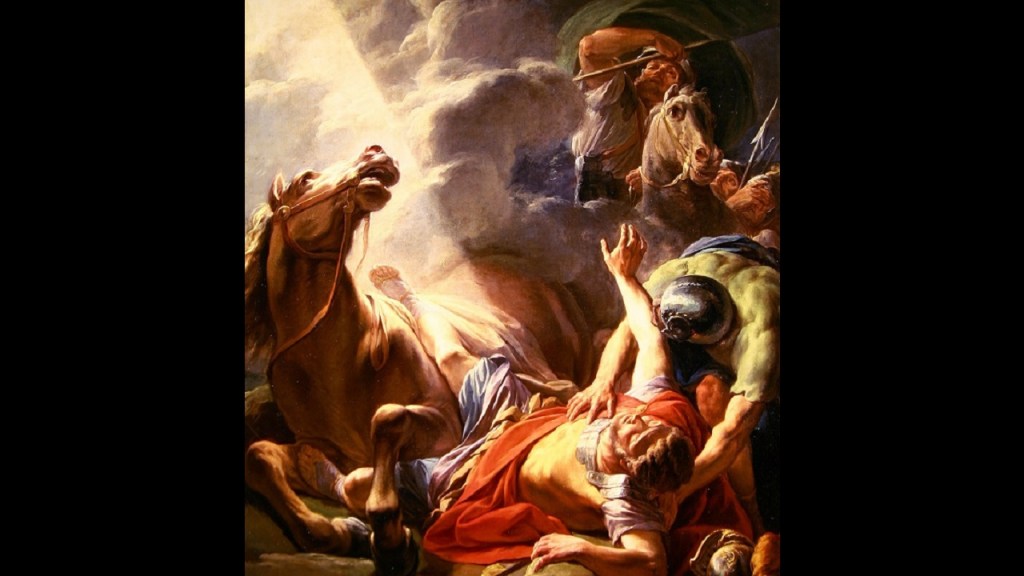
Instead, the Spirit selects the congregation’s senior pastor and a discredited former rabbi who had spent years trying to destroy the same faith he now embraced. The Spirit-selected team might not appear the obvious choice. But I think you know something about this man named Saul, who later became the Apostle Paul. His ministry started riots, divided synagogues and cities, and generally disturbed the peace wherever he went. But no one in the first hundred years of Christianity did more to introduce the world to Jesus than he did. The Spirit-selected team was perfect for God’s mission plan, which is just what we should expect.

What’s the take away for you and me? The Spirit has called the man who serves as your pastor. We need to trust that the Spirit has his own reasons, and these may not be based solely, or even mostly, on his background or talents. It has everything to do with the message he shares, because the good news that Jesus’ has secured our full and free forgiveness and life eternal by his life, death and resurrection is still the power of God for the salvation of everyone who believes.

Preaching and Teaching

Acts 13:1 “In the church at Antioch there were prophets and teachers: Barnabas, Simeon called Niger, Lucius of Cyrene, Manaen (who had been brought up with Herod the Tetrarch) and Saul.”

God had staffed this congregation in Antioch to make it a church well-prepared for his mission. Luke tells us that they had prophets and teachers. It’s possible that some of the men in the list that follows were prophets, and others were teachers. It is possible that all five were a little of both. But it is certain the members of the church in Antioch received God’s word in two different ways, or “styles” if you will. Sometimes their leaders preached to them. Sometimes they taught. Christians needs both.

You see, a “prophet” was more than a divinely approved fortune teller. He was a preacher. When you read the Old Testament prophets, from time to time they talk about the future. But mostly they preach to God’s people, like your pastors preach to you. They tell it like it is. They announce the good news.

That kind of delivery method has fallen out of favor with many people. They don’t want to be “told.” They want to be taught. There is a time and a place for teaching. But preaching isn’t meant to cram your head full of new information for a quiz later. It is telling the truth. It is reporting God’s news.

If you are a Christian, there are times you want to be preached to, whether you realize it or not. When you wind up in the hospital, you don’t want a teacher to bring you a Bible class. You don’t want white boards, diagrams, and a time line comparing the ancient kings of Judah with those of Israel. You are facing your mortality! The only “little” surgery is one someone else is having. You may or may not be a bundle of anxieties, doubts, and fears. But you want someone to tell you God still loves you! He isn’t punishing you here, because all your sins went to the cross with Jesus. He has all the power in the world to see you through. Whether your time in the hospital ends with you going home, or going home, you win! If you are a Christian, you already know all of that, but your faith longs to hear someone say it with confidence and authority. You want preaching, because it drives your faith deep and makes it strong. The church in Antioch had prophets, preachers, who were doing just that.

Teaching expands your understanding of God’s word and enhances the usefulness of your faith. Compare your faith to a house. Preaching cures the concrete foundation, making it harder and harder. It drives the piers and pilings of that foundation down to the bedrock, and then drills them deeper and deeper into the bedrock.

But all of that strength for just a one room shack? Teaching adds rooms. It increases the functionality. You get a decent door and a decent entryway, because we need to sort out what comes in and what stays out. You get a fireplace to keep things warm, a kitchen because the occupants need to be fed, good bedrooms for rest. A large living space can host others, and a large workshop is a place from which to serve them. The more the house grows, the better it functions, the more it can do.

It’s the same for a Christian. A well-prepared believer listens to preaching and teaching. He doesn’t pick and choose.

Why is this important? From the beginning the church in Antioch was a church with a heart for evangelism– the kind of people who knew that everyone needed to know Jesus, regardless of who they were or what they looked like. The Lord was about to ask these people to give up their senior pastor, the first pastor they ever had in Barnabas. With him would go arguably the best teacher Christianity has ever had in the person of Saul, later known as Paul. We don’t hear even a hint of objection from this church. They fast and they pray and they send the men off. They had been well-prepared for God’s plan.

God wants your faith to be strong and deep, because who knows what challenges are going to be coming. He wants your faith to possess an ever-expanding collection of Bible knowledge and understanding so that you will have the words to say and know the right things to do when you get the opportunity to witness and serve. God’s plan for us involves preaching and teaching so that we can be well-prepared.

Claimed

Mark 1:11 “And a voice came from heaven: ‘You are my Son, whom I love; with you I am well pleased.’”

In case we couldn’t figure it out from all that we see Jesus do during his ministry, here the heavenly Father comes right out and says it: “You are my Son.” Jesus is the very Son of God. But this also tells us more. God is claiming Jesus as his very own here.

When we claim something as our own, when we say, “This one’s mine,” that can have a selfish connotation. It can mean we are unwilling to share.

But it can also mean that something, or someone, is dear to us. It means so much to us we would never let it go. Remember this scene out of the movie “Toy Story”? Woody the cowboy, and Buzz Lightyear the astronaut, are Andy’s favorite toys. To show this, Andy has written his name on the bottom of their feet. Woody and Buzz belong to him, and he treasures them like no other toys he owns.

When Jesus was baptized, and God called down from heaven, “You are my Son…” he was claiming him as his own. Wrapped up in that claim was already a heaping helping of the words that followed, “whom I love; with you I am well pleased.” The Father had every reason to claim and to love this Son of his. Jesus, and only Jesus, perfectly pleased our Father in heaven with everything he did. He followed God’s will uncomplaining through a life with few comforts, a life filled with persecution, leading to an excruciating death on a cross. All this he did just so that he could give that love, that perfection, and that payment for sin away to you and me. As Jesus sets out on his earthly ministry, God professes his love for him. He proclaims Jesus’ own perfection, for all of us to hear. So, we can see and know him as our Savior sent from heaven.

Then, how can we not notice something else God is saying about our baptisms? We may not hear heavenly voices, but if we could, we would hear God claiming us as his own, professing his love for you and me. We may not be sons in the same way that Jesus was and is, but in our baptisms he adopts us as his children by faith. He is perfectly pleased with us as Jesus purifies us from every sin.

And so, heaven has opened to us, not only to show us our Savior, but to show us what a difference the simple application of water in God’s name has made in our lives. Now heaven is truly open, not only to show us, but to receive us.