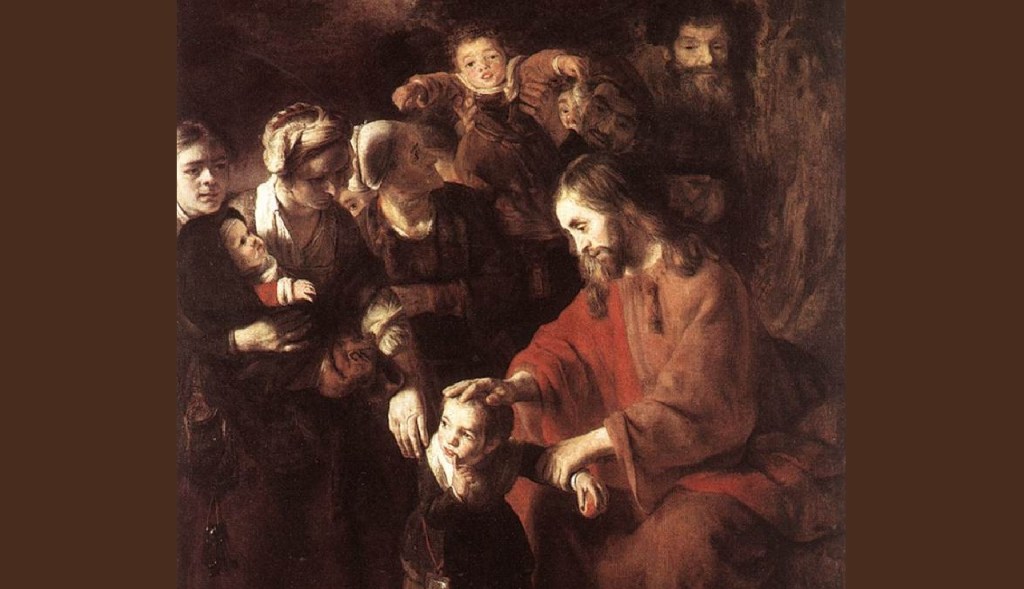
Amazing Faith

Luke 7:6-10 “So Jesus went with them. He was not far from the house when the centurion sent friends to say to him: ‘Lord, don’t trouble yourself, for I do not deserve to have you come under my roof. That is why I did not even consider myself worthy to come to you. But say the word, and my servant will be healed. For I myself am a man under authority, with soldiers under me. I tell this one, ‘Go,’ and he goes; and that one, ‘Come,’ and he comes. I say to my servant, ‘Do this,’ and he does it.’ When Jesus heard this, he was amazed at him, and turning to the crowd following him he said, ‘I tell you, I have not found such great faith even in Israel.’ Then the men who had been sent returned to the house and found the servant well.”

There was no doubt in the mind of this Roman centurion that Jesus could take care of his problem. But that faith was not based upon some worthiness he found in himself. He did not expect Jesus to help him because he was a prestigious Roman soldier who had done such great things. At no point does he believe that he can impress Jesus into helping him. That may work with people sometimes. My brother once worked as a parking valet at a popular Minneapolis restaurant. One night a star player for the Twins baseball team wanted to park his car right in front of the restaurant. When my brother told him to move it, he replied, “Don’t you know who I am? I’m…” For us to try to impress Jesus into doing something special for us would be more like saying, “Don’t you know who I am? I’m the parking valet!” Only the difference between us would be infinitely greater.

The centurion does not find his assurance in who he is. He is all humility. As a Gentile, he even seems to realize that coming into his home would make Jesus ceremonially unclean. Before Jesus he is no longer the impressive Roman soldier. He is merely a powerless, lowly sinner in need of Jesus’ help.

He finds his assurance in what Jesus says! “But say the word, and my servant will be healed.” More literally, he says, “Speak with the word, and my servant will be healed.” Some people think that Jesus’ word is just information. It can inform. It can educate. But after that, it’s all up to you.

This man knew better. Jesus’ word is full of power and authority. When the centurion spoke to the soldiers and servants under him, they had no will to resist. They had to do what he said. If Jesus, as God, speaks to the forces of nature under him, they have no will to resist. They have to do what he ways. That power of God’s word is one of the very first lessons of the Bible, isn’t it? “And God said, ‘Let there be light,’ and there was light.” If Jesus spoke the word, the servant was sure to be healed.

Does that kind of assurance amaze you? Jesus thought so. “When Jesus heard this, he was amazed at him, and turning to the crowd following him he said, ‘I tell you, I have not found such great faith, even in Israel.’” Think of the assurances we would have, if only we believed his word: We wouldn’t be weighed down by our guilt, because Jesus has promised, “Son, be of good cheer, your sins are forgiven.” We wouldn’t be afraid of death, because Jesus has promised, “I am the resurrection and the life.” We wouldn’t worry about having enough, because Jesus has promised, “Seek first the kingdom of God… and all these things will be given to you as well.” We wouldn’t worry about our children, for Jesus has promised, “Their angels in heaven always see the face of my Father in heaven.” We wouldn’t worry about our troubles, because Jesus has promised, “In this world you will have much trouble. But take heart! I have overcome the world.”

Like the centurion, we have every reason to believe that if Jesus says it, it must be so. If we listen to Jesus’ promises, he will give us such an amazing faith as well!

Love Across the Lines

Luke 7:1-6“When Jesus had finished saying all this in the hearing of the people, he entered Capernaum. There a centurion’s servant, whom his master valued highly, was sick and about to die. The centurion heard of Jesus and sent some elders of the Jews to him, asking him to come and heal his servant. When they came to Jesus, they pleaded earnestly with him, ‘This man deserves to have you do this, because he loves our nation and has built our synagogue.’ So Jesus went with them.”

Ordinarily a wide gulf of class and status would have separated these two men. The Centurion was not only a citizen of Rome, the greatest world power of its time. He was also a highly regarded officer in the army. The Greek historian Polybius tells us that only the best men in the army were selected for this position.

His servant was really his slave. He had no money, no rights, no influence. Still, a great affection had developed between them. The Centurion urgently seeks a cure for his servant’s disease. The “high value” placed on him was more than a matter of losing a good worker. In verse 7, “my servant” might more literally be translated “my child,” or even “my son.” The Centurion genuinely loved this servant who was ill.

Apparently this was not an exceptional episode in his life. Listen to the words of the Jewish elders the man sent to Jesus. If you were a Gentile, and especially a Roman Gentile, it was difficult, if not impossible, to win the respect and friendship of the Jewish people. All Gentiles were unclean, but the Romans were the evil empire. Still, this Centurion had come to know the true God and love his people. He built them a synagogue out of his own pocketbook. Long before public opinion frowned on ethnic slurs and prejudices, this man was loving people who looked and sounded different from him, even at great financial cost to himself.

There is something appealing about that kind of selfless, big-hearted love, isn’t there? It won’t win you heaven. It won’t make you rich. But it can make for faithful friends. Like George Bailey in It’s a Wonderful Life, years of selfless love and sacrifice for others may seem to get us behind in the race for success. But when our great time of need comes, our investment of love is returned with interest. Isn’t that what happened to the Centurion here?

Why, then, don’t we find it more appealing? It is sad when we shrink back from offering our love to people because they are racially, culturally, economically, educationally, or even hygienically different. Years ago two families visited my church on the same Sunday. One of them fit the middle class mold. By their poor dress and appearance, it was obvious the other family did not. Later a member of the evangelism committee admitted it was hard to offer the poor family the same warm and loving welcome as the first family. Why should it make a difference? Do we find it hard to love across such artificial divides?

Why was the Centurion different? His love did not exist all by itself. It was the product of his amazing faith. Luke tells us that he “heard of Jesus.” Note that he had not witnessed Jesus’ miracles personally. He simply heard about Jesus. But what he heard, combined with what he knew of God’s promises, produced genuine faith, as Jesus points out later.

What we have heard of Jesus and his promises has the same effect on us. Jesus’ love has come to us across the very real divide of our sin. He has removed our sin with his life and death. He does not treat us like outsiders or second class citizens or unwanted pests. He embraces us brothers and sisters and full family members of God!

Such love begets faith. That in turn begets love in us for others. Later in Luke’s gospel Jesus states that when we are forgiven much, then we love much. It was faith in a loving and forgiving God that turned a hardened Roman soldier into a man of great love. The more we hear of Jesus’ love, the greater our faith will grow, and the more we will live a life of love.

Don’t Be Afraid

Matthew 10:28-31 “Do not be afraid of those who kill the body but cannot kill the soul. Rather, be afraid of the One who can destroy both soul and body in hell. Are not two sparrows sold for a penny? Yet not one of them will fall to the ground apart from the will of your Father. And even the very hairs of your head are all numbered. So don’t be afraid; you are worth more than many sparrows.”

At first, these words might sound scary. If you are hearing Jesus correctly, you would be right to conclude that he is telling us there is such a place as hell, and that God sends people there, body and soul, to be punished. That’s an unpopular truth today. Some try to associate it with an Old Testament God of vengefulness. But no one in the Bible talks about hell more than Jesus does. No other prophet or apostle even comes close. Almost everything we know about the place comes straight from Jesus’ lips.

We would be wrong to conclude that Jesus is trying to scare us here. In the context, God is not our enemy but our friend. The enemy is the world of people who are trying to silence the gospel. Jesus wants us to remember that the real power is on our side. What’s the most that other people can do to you–kill you? And send you to heaven? They can’t touch your soul. No, the real power is on our side with the God whose message we are trying to share.

He intends to protect us. “Are not two sparrows sold for a penny? Yet not one of them will fall to the ground apart from the will of your Father. And even the very hairs of your head are all numbered. So don’t be afraid; you are worth more than many sparrows.” Jesus’ pictures offer two reasons we can take God’s promised protection to heart. First, our Father in heaven is intimately aware of everything that happens on earth. I once found a dead bird in our shrubs while I was trimming them. Apparently it had flown into one of our windows and broken its neck. It took me a few days to discover it on my own property. Jesus is telling us here that God, who is running the entire universe while looking after billions of stars and planets, who is running the whole earth while looking after billions of people and animals, was personally aware of this event the moment it happened.

He even has a number for every hair on your head. So don’t be afraid that he has lost track of you, or that he has stopped keeping tabs on the minute details of your life. That includes the heat you or I might take for sharing his word.

Second, our Father in heaven values us dearly. “So don’t be afraid. You are worth more than many sparrows.” No one knew that better than Jesus did. He was standing there as the one his Father was willing to give up to have us. Almost anyone could figure out that we are worth more than a bunch of birds. That God treasures us enough to give up the life of his Son–that Jesus had to come and tell us. If he loves us that much, he certainly intends to protect us. So don’t be afraid to follow where Jesus leads, believe the things he tells us, or say what you need to say.

Shout It from The Rooftops

Matthew 10:26-27 “So do not be afraid of them. There is nothing concealed that will not be disclosed, or hidden that will not be made known. What I tell you in the dark, speak in the daylight; what is whispered in your ear, proclaim from the roofs.”

Preaching, teaching, speaking, telling the gospel out loud and publicly has been God’s plan from the beginning. He did not send Jesus to start a secret society. Sometimes the gospel is described in the New Testament as a “mystery,” but that is not because God tried to keep people from hearing about it. It is because the world valued the message so little that God had to go to extraordinary lengths to keep the message alive and get people to listen.

Even the people of Israel, whom the Lord rescued from Egypt with many miracles and to whom he revealed his promises through many prophets, wanted as little to do with the good news as they could manage. They tried to follow every false and foreign god they could find. They put the prophets to death. They lost whole sections of Scripture for generations.

But God kept the message alive until Jesus came. Then Jesus sent his disciples to the rest of the world so that he could disclose it and make it known to us today. He didn’t do it so that we would sit on it and keep it our own little secret. “What I tell you in the dark, speak in the daylight; what is whispered in your ear, proclaim from the roofs.”

What did Jesus tell his disciples “in the dark”? What has he “whispered” in our ears? Part of the training to be one of Jesus’ “Twelve” took place as they watched Jesus preach to the masses and perform his healing miracles. But much of their training also took place in private. When Jesus asked the Twelve who they thought he was, and Peter answered that he was the Christ, the Son of the Living God, that was a private time of instruction. Jesus warned them not to tell anyone else…yet. That preaching would wait until after his resurrection.

You received part of your training and instruction in the dark and quiet of your homes and churches. Did your mom read a Bible story and pray with you before she tucked you into bed at night? Did you sit in Sunday School classrooms with just a few others–maybe four, or eight, or a dozen students like Jesus had? How big was your confirmation class? There were just four in mine, and we met in the church basement. Some of you who took the class as adults might have been one-on-one with the pastor.

What did you hear in those dark and quiet places? Was it secret handshakes, mysterious rituals, and strange words to mumble under your breath? No, it was the best good news there has ever been! It was God’s own promise that he does not hold your sins against you–not a one of them. Instead he sent his one and only Son to bear the guilt of all our sins, give his life in payment for them on a cross, and rise again three days later as victor over sin and giver of life that never ends.

He did it freely. He did not and does not require that we bring him something–not a single dollar, not a one-time favor, a minute of our own sweat or effort–in order to receive the gift.

He did it completely. He did not exclude crimes of a certain size or greater consequence. He did not leave scattered petty sins for us to clean up ourselves. Jesus did it all, and he did it for free.

That is a great thing to say! Shout it from the rooftops! Tell your neighbors. Work it into your conversation with the person buckled into the seat next to you on the airplane. Post it on your Facebook page. Make it part of your email signature. Instead of small talk in the waiting room, make it big talk about Jesus. Wherever you can find an opening, let your Savior be known. His words deserve to be shared.

Knowing Our Place

Matthew 10:24-25 “A student is not above his teacher, nor a servant above his master. It is enough for the student to be like his teacher, and the servant like his master. If the head of the house has been called Beelzebub, how much more the members of his household!”

You know who is who in the illustration, don’t you? We are the student or servant, and Jesus is the teacher or master. And that is the way it will always be. In many cases, a good student can rise to become the equal of his former teachers. In some cases, he may even rise above them. On a few occasions I have taught classes in which men who were once my teachers were now my students.

That will never happen with Jesus. He loves us. He is supremely interested in us. But he will never ask us to educate him. He is not interested in receiving our advice. Until the end of the world, and throughout all eternity, we will be his children, always students, always servants. We may rise, and mature, and grow in our faith, but we will never be Jesus’ master or teacher.

“Of course,” we may think. “I don’t expect to put myself above Jesus. I would never try to make myself his master or teacher.” But don’t our prayers sometimes suggest we do? “Here is what you are doing wrong in my life, Jesus. Here is the problem with the way you are running the world. And here is what you can do to fix it.” Then what have we made ourselves? We have presumed to put ourselves above him. We make ourselves his master or teacher. He is pleased when we go to him for help. He wants us to tell him how we feel, to ask him for what is good and right. But he isn’t going to sit for a lecture. We sin when we take that tone with him.

If we remember our place, then we won’t expect to receive different treatment than he received. And by “different” we mean better. “If the head of the house has been called Beelzebub, how much more the members of his household!” They called Jesus a devil for preaching the gospel of grace and forgiveness. They said that the mercy he showed to the sick and the hurting came from Satan himself. Why should the gospel sound better to people when it comes from our mouths instead? Are we better preachers than he was?

Why should love and kindness look better when it comes from our hands than when it came from his hand? Do we do more for people than he did? I am tempted to complain when people make fun of me. Even worse, they say I am evil for talking and living like a student and servant of Jesus. It makes me afraid to open my mouth anymore. That’s exactly what they want. They want to shut us up.

On the day Jesus spoke these words, maybe the Twelve had similar fears. But a few years later they had learned to see this in a different way. In Acts chapter 5, after spending a night in jail and being whipped for preaching the gospel, “…the apostles left the Sanhedrin rejoicing because they had been counted worthy of suffering disgrace for the Name. Day after day, in the temple courts and from house to house, they never stopped teaching and proclaiming the good news that Jesus is the Christ.”

No need to fear, you see. When we are abused and mistreated like Jesus was, that is a good sign. We are becoming like our master and teacher. Not only has he saved us, forgiven all our sins, rescued us from hell, secured our place in heaven, and done it all for free. His gospel is showing itself in our lives by changing us. He has made us bold to speak. We know our message is on track, we must be doing something right, when we are being treated like Jesus was.

The Persecuted

Matthew 5:10 “Blessed are those who are persecuted because of righteousness, for theirs is the kingdom of heaven.”

“Bullying” has become a fashionable target for social activists. Jesus would be against it, too. But he wants his people to be prepared for it.

In these words he has a particular kind of bullying in mind, the kind that comes because we want to live a Christian life and believe Christian beliefs. In order to make sure we understand the connection to our faith, he explains further, “Blessed are you when people insult you, persecute you, and falsely say all kinds of evil against you because of me.” He isn’t saying we need to go looking for this kind of treatment. He isn’t suggesting we should make a campaign to stop it. He is saying that we can expect it, and that we are blessed in spite of it, if we are seeking to follow him.

Why blessed? Two reasons– one: “…because great is your reward in heaven.” How people treat you here doesn’t change how God will treat you there. The same good gifts are waiting for us just the same. There is no use changing our faith to stop the persecution when heaven is waiting with Christian faith, and lost without it.

Two, this kind of treatment puts us in good company: “…for in the same way they persecuted the prophets who were before you.” People criticizing our beliefs, mocking our lifestyle, even calling them evil is a pretty good sign that we are on the right track. Abel, Noah, Joseph, Moses, David, Elijah, Isaiah, Jeremiah, Ezekiel, John the Baptist, Jesus, and his disciples all got the same kind of treatment. It is an honor and blessing to share their faith and its consequences for Jesus’ sake. Today it may be persecution. Tomorrow it will be heaven.

Peacemakers

Matthew 5:9 “Blessed are the peacemakers, for they will be called sons of God.”

Once we were at war with God. We were his enemies. We had no interest in making peace with him. We were content to live and fight on the other side.

Then God himself came and made peace. He reconciled us to himself. He repaired the relationship. He sacrificed his own Son to do so. That is the best thing that has ever happened to you and me.

Spiritually, it makes sense that people who have experienced such peace would look at the relationships they have with the people around them, or the relationships of other people in general, and want to make peace. They see the value. They have experienced the relief. They know the blessing.

And this shows that they are becoming like their Father, from whom they learned this concern. The Lord once described King David as “a man after my own heart.” Jesus’ declaration of blessing here is similar. I know of no higher compliment than to be called “sons of God.”

They Will See God

Matthew 5:8 “Blessed are the pure in heart, for they will see God.”

The pure in heart haven’t achieved absolute holiness in their lives. They haven’t stopped sinning altogether. The Bible is clear that that doesn’t happen this side of heaven.

Their sins have been washed away in the cleansing waters of their baptisms, however, waters powered by Jesus’ death and resurrection to pay for their sins. The pure in heart have been converted, they have come to faith, and in that faith there is a new innocence, a new simplicity, a new honesty that acknowledges our sin and keeps going back to God for forgiveness.

These people, Jesus says, are blessed to see God. You realize that this blessing is something of an acquired taste. “Well whoopty-doo,” far too many people would say. “It’s not like that’s what I’ve been dying to see.”

Many years ago my family found a box with letters my grandmother had received from a man she almost married years before she married my grandfather. It was World War I, and the man was fighting somewhere in France. The letters were filled with the longing of two hearts desperate to see each other but forced to be apart. Do you feel the same longing to see this man, or my grandmother for that matter? Of course not. You’re not in love with them.

Only those with hearts purified by God’s grace consider it a blessing to see God, because only they want to see God. You can’t believe that you were a sinner, destined for hell and an eternity of misery away from God, with no way of changing your situation; and that then purely out of his grace God sacrificed the only Son he had to save you from your sins, make you his own child by faith, and give you heaven as a free gift; you can’t come to believe that and not at the same time come to love the One who showed you such love. As the sainted Dr. Becker used to say, “To know him is to love him” is more true of our Savior than anyone who ever lived.

And those who love Jesus know that it is a blessing when he promises, “They will see God.”

Mercy Leads to Mercy

Matthew 5:7 “Blessed are the merciful, for they will be shown mercy.”

The blessed have compassion, empathy. They have known spiritual pain and poverty. They have received God’s blessed solutions. And so, their hearts are full of mercy for others.

It is such a feature of being blessed that Jesus will see it as the primary way to describe them on Judgment Day: “Come, you who are blessed by my Father,” he will say, “take your inheritance, the kingdom prepared for you since the creation of the world.” Why? “For I was hungry and you gave me something to eat, I was thirsty and you gave me something to drink, I was a stranger and you invited me in, I needed clothes and you clothed me, I was sick and you looked after me, I was in prison, and you came to visit me.”

Being so merciful can be expensive. It can mean sacrifice. It means parting with your time, your energy, and your money.

But it is connected to a blessing. “They will be shown mercy.” God still sees your misery. It pains him. When Jesus saw Mary and Martha’s grief after their brother Lazarus died, it even moved him to tears and he intervened with a miracle.

God’s mercy doesn’t always lead to a miracle. But the Father above who loves you still intends to relieve your pain before it becomes too much. He may change your circumstances here. He may change your address to a heavenly one, where “there is no more death or mourning or crying or pain.” Either way, your misery prompts his mercy and ends in his blessing.