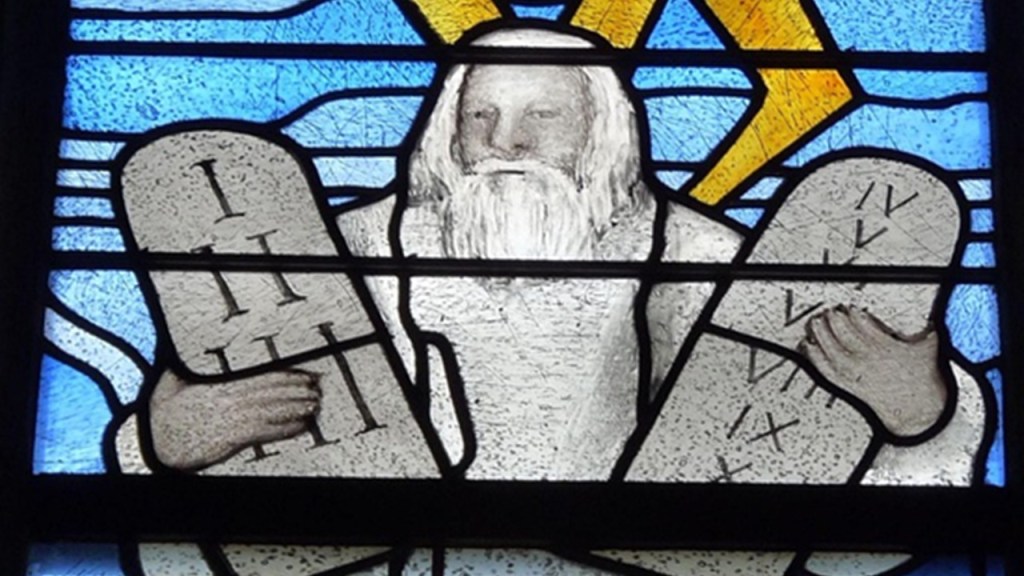
His Word Stands Forever

Isaiah 40:6-8 “A voice says, ‘Cry out.’ And I said, ‘What shall I cry?’ ‘All men are like grass, and all their glory is like the flowers of the field. The grass withers and the flowers fall, because the breath of the Lord blows on them. Surely the people are grass. The grass withers and the flowers fall, but the word of our God stands forever.’”

We don’t naturally go looking for the kind of comfort that will last forever. Our world is full of counterfeit comforts, short-lived comforts, and you and I have probably tried most of them.

There is Southern Comfort, and other similar mind-altering comforts that come in a bottle, or in a pill, or in a syringe. They may make us forget our hardships for a little while, but they can’t make them go away. They usually end up creating more of them than we had before.

There is the comfort that comes from being comfortable, from having all the money we need, all the things that we want, all the prestige and success we have worked so hard to build. The problem is that when we look for our comforts here, we never seem to have enough to be truly comfortable.

We may try to surround ourselves with comforters of various sorts, people who can give us a feeling of safety and security. We strive to build the perfect family. We work hard to elect the right leaders. We look up to heroes and role models who show us the way.

The problem is that “all men are like grass.” Even the good ones may serve well in their time, but death overtakes us all. “And all their glory,” all the best things that their lives have produced, “is like the flowers of the field.” Human accomplishments rarely outlive the lives of the people who performed them.

My great-grandfather and grandfather spent their lifetimes building up a family farm. They worked on it until the day they died. Then one day the bank came and finagled it away.

The history of the world is littered with heroes whose life’s work benefits absolutely no one today, other than to make a great story. You can be sure the day will come when fathers of our own country, whose ideas and sacrifice we still benefit from hundreds of years later, will be added to the list of those whose glory has faded, whose flowers have fallen, and no one will benefit from their work other than a few interested historians.

But the word of the Lord, and the promise of comfort that it brings, will never end up on that list. “The grass withers and the flowers fall, but the word of our God stands forever.” The life’s work of Jesus Christ is no less relevant today than it was 2000 years ago. The power of his gospel to touch our hearts and bring us faith is no less effective today than when he first issued the Great Commission. The forgiveness of sins his gospel promises is no less valid and no less certain than when those comforting words first fell on the ears of his disciples in the towns and villages of Galilee. It is an absolutely sure message.

God’s comfort may not be immediately obvious to us in the stable at Christmas. It is even harder to see hanging on the cross. That is why so many artists have doctored the picture with halos and glowing skin. But we don’t need such special effects to see salvation in the manger. All we need to see is the comforting and certain message of forgiveness connected to that Savior, and know his word stands forever.

The Law Is Good, But…

1 Timothy 1:8-9 “We know that the law is good if a man uses it properly. We also know that the law is not made for the righteous…”

Few people would argue with the statement, “The law is good.” The word Paul uses for “good” describes something that works the way it is supposed to. If you buy a car and it turns out to be reliable–you are not constantly bringing it in to have something fixed or adjusted or replaced–then you have purchased a “good” one. God’s law is good because he made it and it serves his purpose. It does what he wants it to do… “if a man uses it properly.”

But using it properly, keeping it in its place, letting it serve its purpose, is just the problem. Each winter, it seems, you hear of someone who is trying to heat their house by leaving the gas stove on. You can make a house warm that way, but you can also burn the house down or asphyxiate everyone inside. Sometimes you can use a pliers to turn bolt or a nut, but you can also end up stripping all the corners and making it impossible to turn anymore. So it is that many people want to reach for the law when it’s not the right tool for the job, as Paul goes on to explain.

“We also know that law is not made for the righteous…” You don’t need to make rules for people who are already doing the right thing. What would be the purpose for that? Laying down a law on those who are already good might only change their happiness to do what is right into fear. Am I in trouble? Have I failed to live up to my responsibilities? Now behaving is all about guilt and pressure.

When God called us to faith in Jesus, he forgave all our sins. He declared us righteous. He sees us as holy people, perfect saints. We still commit sins, but by God’s forgiveness they don’t count against us anymore. We are free from them. As Jesus once said, “If the Son sets you free, you will be free indeed.”

In God’s eyes, then, all Christians are “righteous,” good people. This also worked a change in us. As good people we want to do what is good. There is a new man living in me who sees things God’s way. He loves God and he loves everyone else and he is eager to show this love all the time in all he does.

It is a mistake to think that this new man can live on a diet of nothing but God’s law. “The law is not made for the righteous.”  Even when the rules are preached gently, with a sense of humor, with all kinds of practical reasons why they should be kept, eventually they pile up and weigh us down, and the load becomes crushing. Happiness is replaced by fear, confidence and faith by doubt and uncertainty. Am I doing enough? The law is not made for good men. It is the wrong tool for feeding the faith of God’s children.

What is its purpose then? “We also know that the law is not made for the righteous but for lawbreakers and rebels, the ungodly and sinful, the unholy and irreligious; for those who kill their fathers or mothers, for murderers, for adulterers and perverts, for slave traders and liars and perjurers–and for whatever else is contrary to the sound doctrine that conforms to the glorious gospel of the blessed God, which he entrusted to me.” In this list Paul gives specific examples of people who are devoid of religion, the violent, the sexually immoral, the greedy, the dishonest, and anyone who opposes good Christian teaching.

Note that the law does not prevent any of these sins from existing. In our culture wars, those who claim, “You can’t legislate morality,” are correct. No law has ever eliminated a crime, though it may help to keep it in check to some degree.

But that does not mean that the law has no purpose. Regardless of which sins our nation’s laws choose to address, God’s law still enables us to identify sin and confront it. Only when people know their sins can they repent of them and receive God’s forgiveness. This is God’s purpose for his law: to prepare people to receive his grace. Since we still have a sinful nature that sins every day, we need still need his law to convict us of our sins and fill us with a hunger for grace. But faith lives on the gospel.

The law is good, but God’s forgiving grace is the right tool for maintaining faith.

A Better School – A Better Teacher

John 7:15 “The Jews were amazed and asked, ‘How did this man (Jesus) get such learning without having studied?’”

The question of the Jewish leaders does not suggest that Jesus was illiterate. Like most Jewish boys of his time, he had likely attended a synagogue school where he learned how to read.

But Jesus had never studied in one of the rabbinical schools. These were something like our seminaries. You may remember that the Apostle Paul studied in the school of the well-known rabbi Gamaliel. But Jesus had no college level degree in theology. He was a tradesman, a carpenter by training, who had a brilliant grasp of the Scriptures. His teaching did not come from what he had learned in a classroom.

Likewise, the test of true teachers of God’s word is not about the school they attended or the number of degrees they have earned. These may not be bad things. We don’t want ignorant or lazy preachers and teachers who have not worked at learning Scripture and prepared themselves for serving God’s people. Continuing study is a healthy thing for one’s ministry. But theology degrees from prestigious institutions do not necessarily make a better teacher of God’s word. Many things that could be learned from some theological schools would be serious problems today. In spiritual things, academia has often produced a skepticism that gets in the way of knowing God’s word.

Jesus himself prayed, “I thank you Father, Lord of heaven and earth, because you have hidden these things from the wise and learned and revealed them to little children” (Matthew 11:25). Paul made this observation to the Corinthians, “Where is the wise man? Where is the scholar? Where is the philosopher of this age? Has not God made foolish the wisdom of the world? For since in the wisdom of God the world through its wisdom did not know him, God was pleased through the foolishness of what was preached to save those who believe” (1 Cor. 1:20-21). In the test of the true teacher, the right answer to the question, “Where does his teaching come from?” is not, “From some respected school.”

Where, then? “Jesus answered, ‘My teaching is not my own. It comes from him who sent me’” (John 7:16). With these words Jesus does not deny that he agreed with his own teaching, believed it, and claimed it for himself. He is talking about the source. His teachings were not new teachings he made up independently during his earthly ministry. Truth is never something new, though it may have been forgotten and rediscovered. Truth has a long history behind it. In fact, truth is eternal.

We live in an age that idolizes the new and the trendy. Christians also suffer from this disease. When people make some preacher or teacher popular, because, “Here’s something we haven’t heard before,” we can be too quick to jump on the bandwagon. Has he dusted off some Biblical teaching that has been neglected for too long? Then feel free to follow. But is his teaching some creative new idea spun out of his own imagination? Through Jeremiah God complained about the prophets who “dream their own dreams.” That is the wrong answer to “Where does his teaching come from?” in the test of the true teacher.

Instead, it needs to come “from him who sent me.” Jesus was a true teacher because his teachings agreed with those of his heavenly Father, the one who created the world. His words lined up with God’s revelation to the Patriarchs, and Moses, and the Prophets. Jesus’ claim that his teachings come from the one who sent him was not a claim that defied contradiction because there was no way to investigate it. Everyone present knew the way to check it out: compare Jesus’ teaching with the Scriptures.

When testing to see if someone is a true teacher, “From God through his Holy Scriptures” is still the best answer to the question, “Where does his teaching come from?”

Jesus Works His Way Down

Isaiah 11:1 “A shoot will come up from the stump of Jesse; from his roots a Branch will bear fruit.”

Jesse, as you probably know, was the father of King David. David began a royal dynasty in Israel that provided kings for 350 years. But over the years the proud family tree David established fell into decline. Many of the kings abused their power. Many ruled selfishly instead, not in the interest of God’s people. Some became idolaters and even used their position to lead God’s people into idolatry.

That is what led to God’s judgment upon the nation and the royal family. First he tore the nation in two by civil war. Later he let foreign nations invade. Eventually the capital city was burned to the ground and the best and brightest people taken into exile. Only a handful returned 70 years later.

All that was left of the proud tree David started was a stump. When Jesus was born, there had been no kings in the family for more than half a millennium. There was nothing to suggest this family would ever produce a person of influence again.

The surprising thing about Jesus’ background is not his family’s slide into obscurity or his now humble roots. History is full of stories of peasants and paupers who rose to become great leaders. Think of the stories we learned about Abraham Lincoln in grade school. He grew up in a log cabin. He was schooled by his mother at home. His early life didn’t include the kind of grooming some have had to prepare them for national leadership. Yet he rose to become one of the most influential presidents our nation has ever had. That career path is not unique. We could multiply stories of inventors and explorers and businessmen and statesmen and churchmen who rose from obscurity to change the world.

What stumps us about Jesus’ background, at least from a worldly point of view, is that he had a choice. While others worked their way up, Jesus was, in a very real sense, working his way down. From heaven he oversaw the events that led to his family’s fall from power. He guided the history that went into his being born in a stable instead of a palace, that went into growing up learning carpentry instead of statecraft.  Other great men of history may have appreciated the lessons they learned from having humble beginnings. I doubt that they would have chosen such circumstances for themselves. Jesus chose to leave his heavenly throne, and to remove his family’s earthly throne, before he became the new shoot on Jesse’s humble family tree.

Would you? Isn’t our life so often about bettering our position? Don’t we pour ourselves into making our lives easier? Doesn’t so much of what we do revolve around making things as comfortable for ourselves as we can? And doesn’t this so often lead us to a rather selfish approach to life in which we attempt to make ourselves the center of our universe and the god of our own little world?

But though Jesus truly is God, he came to serve. He came to save us from the sinful life and selfish little universe we try to construct for ourselves. And in order to do that he had to become one of us and die in our place. His humble background helped assure that nothing would obstruct his mission. Earthly power and riches never got in the way of people killing him. It also helps assure us there is no one so low or so obscure they are beneath Jesus’ saving work. Jesus was common and ordinary and human, just like you, and just like me. And so we are qualified to be the common and ordinary human beings he came to rescue and make his own.

Isn’t that what rivets our eyes on Christ as we prepare to celebrate his birth? Jesus’ humble background is not just a great human interest story for the 10 o’clock news. It is the story of unfathomable love willing to give up every earthly advantage, and eventually life itself, to set a world of sinners free. He chose this humility, because he chose to make us his family. We are the fruit produced by this lowly branch.

Time to Wake Up

Romans 13:11 “Do this, understanding the present time. The hour has come for you to wake up from your slumber, because our salvation is nearer now than when we first believed. The night is nearly over; the day is almost here.”

The Bible often uses slumber or sleep as a metaphor for unbelief. Other times “sleep” is a picture of death. I think it’s clear that Paul is writing this letter to members of a Christian church, so he assumes that they are spiritually awake by faith. And obviously he wouldn’t write a book of the Bible to dead people. “Slumber” has to refer to something else.

Sometimes we Christians let our faith become lukewarm. We have very little fire in our belly for loving our neighbor or reaching the lost. Our prayers lack fervency and grow fewer and farther between. We aren’t much concerned about getting to know God better. We still go to church or Bible study, but mostly as a matter of habit. We don’t feel a particular need or desire to be there. Seeing the church grow produces no particular joy. Its struggles arouse no sense of alarm. We could always go somewhere else, or do something else, on Sunday.

Our problem is distraction. We have become too concerned with purely earthly circumstances. We pour our energy into having the things we want, achieving the lifestyle and experiences we desire. Not all of them are bad, maybe not most of them. They are simply items on our bucket lists. We want to check to check them off before we die.

What if you never earn that degree for which you study, or land the job on which you set your heart? What if your career goes nowhere? What if you never find love or raise a family? What if you never build the house you planned to make your home, or your retirement doesn’t turn out the way you dreamed?

All of these things may occupy a legitimate part of our time and attention. They are good and wholesome in and of themselves. But if they leave no place for God; if they move into a place ahead of God, we need Paul’s words to confront us. “The hour has come for you to wake up from your slumber.” Spiritually, we are asleep. That makes us useless for more important things.

At the present time, this presents two concerns: “our salvation is nearer now than when we first believed. The night is nearly over; the day is almost here.” Many speak about “salvation” happening when we come to faith. Sometimes it refers to Jesus and his saving life and death. Simeon used the word this way when he took the baby Jesus in his arms: “…my eyes have seen your salvation which you have prepared in the sight of all people” (Luke 2:30-31).

In this passage, Paul uses salvation to refer to God’s final rescue. God brings salvation when he puts a final end to all his enemies and takes us away to heaven’s safety.

That is nearer every day. “The night is nearly over, the day is almost here.” Jesus could return at any time. Our lives in this world could end at any time. Our days here are limited. There are people I know personally whose salvation is doubtful at best. The clock is running out on our time to win them.

The second concern regards our own faith. Physically, I would like to die in my sleep–no long, painful struggle; just drift off to sleep and never wake up. Spiritually, that would be a catastrophe. What if our casual neglect of word and worship, prayer and service, love and witness slowly bled our faith dry until there wasn’t any left? What if we got to the point where we felt no twinge of guilt over our sins, no urge to fight temptation, no comfort in God’s grace, no relief in forgiveness? We need to understand the present time. We need to wake up now, before we lose what little faith we have.

I No Longer Live

Galatians 2:17-20 “If while we seek to be justified in Christ, it becomes evident that we ourselves are sinners, does that mean that Christ promotes sin? Absolutely not! If I rebuild what I destroyed, I prove that I am a law-breaker. For through the law I died to the law that I might live for God. I have been crucified with Christ and I no longer live, but Christ lives in me.”

If God freely forgives our sins, if he justifies us without requiring us to keep the law as a condition of saving us, doesn’t that promote sin?

The same question occurred to Paul. But just because Jesus has forgiven us and God has said we are not guilty doesn’t make them responsible if we go out and sin again. We are the ones rebuilding sin in our lives. We are the lawbreakers. In practice, forgiveness has the opposite effect upon us. It is not only the answer for sins committed. It is the answer for not committing sins. “For through the law I died to the law so that I might live for God.”

Using God’s law alone to stop committing sin is an exercise in frustration. Some Christians believe you can use it like I use my daily planner. Every day I make a list of the things I hope to accomplish and check them off as I do them. When they are all checked off, I know I have accomplished my goal.

You can’t do that with the law of God. He requires more than the external acts. When you know the Ten Commandments well, you know they are just as concerned about your attitudes and motivations as behavior. The more I know the commandments, the more ways I can see that I am falling short. My check list keeps growing longer. So does the list of personal failures I can see. The Law shows me what to do. It never gives me the power to do it.

That is why Paul can say “through the law I died to the law.” The law does do something. But that something is not giving me faith, or life, or the power to stop sinning.

The law does me the favor of showing me how useless it is to prevent me from sinning. It makes me ever more aware how much I need my Lord, not just for sins I have committed, but also to stop committing sins. Only when I have died to the law can I live for God.

You see, God justifies us by faith. That means he takes our sins, forgives them, and so declares us his perfect, not-guilty children as a gift. That impacts our future as well as resolving our past. Paul continues, “I have been crucified with Christ and I no longer live, but Christ lives in me.” I have been crucified with Christ. Jesus death on the cross is my death. When Jesus died there, God counted that death for me. My sins are gone. My Father sees me only as his holy perfect child.

But he doesn’t leave me hanging on that cross, so to speak. I no longer live, but Christ lives in me. When Jesus takes away my sins, he also puts to death my old, sinful self and makes my heart his own home. He lives his life in each one of us. Any life that Jesus is living looks exactly the way God says we are: not guilty, free from sin.

So even though we don’t have the power to do what the law says, Jesus does. When Jesus makes our own hearts his home that means more than thinking of him a lot or loving him. It means that Jesus has a genuine presence in my heart and soul. And his life gives us power to stop committing sins and live a life of love. It isn’t dangerous for God to forgive our sins so freely. It is the only way he can make it less common in our lives.

Life Seen Through Two Different Lenses

Philippians 3:18 “For, as I have often told you before and now say again even with tears, many live as enemies of the cross of Christ.”

Our worldview is the set of beliefs through which we interpret and understand reality. For the Christian, nothing influences our worldview more than the cross of Jesus Christ. The cross tells me that I’m a sinner. More than that, I am so lost and helpless in my sin that there is nothing I can do to make it up to God. Nothing I can do will win his approval or restore our broken relationship.

This sin infects everything I do so thoroughly that it taints all my behavior. I have an inbred selfishness so much a part of me that I am generally unaware of its place in my thinking and choosing. The same goes for everyone else as well.

The cross is God’s radical solution for this problem. If I could somehow pay for my own sins, if I could fix myself, I wouldn’t need the cross. But since I can’t, Jesus volunteered to die in my place. He fixed the broken relationship between me and God.

When God miraculously convinced me this was true, it changed me. My inbred sin and selfishness did not disappear. But now they have to compete with a new set of values and desires. These push me toward the same kind of love and sacrifice Jesus showed on the cross.

That’s quite a set of glasses through which to view ourselves, earth’s other residents, and our reality. It explains why social problems like war, poverty, crime, and prejudice don’t go away. You can become an activist and try to fight these social ills, but we will always have them. Jesus said so.

It explains why religious people, even sincere Christians, often behave as badly as everyone else. That’s not to say we defend the bad behavior. But we shouldn’t be shocked when it happens. It is the reason that faithful Christianity isn’t afraid to expose sin, and confront sin, or even use the word sin. Pretending it isn’t there only encourages more of it.

Most of all, the cross is the reason that faithful Christianity has more to say about forgiveness than anything else. The church is not the place where good people become better people. It is the place where deeply flawed and broken people find the forgiveness that makes them children of God and citizens of heaven.

Another worldview exists. Many live as enemies of the cross of Christ. They have no time for such ideas about the human condition. They don’t care about Jesus’ standards of right and wrong. They see no need to be rescued, and aren’t interested in being forgiven, thank you. “Their god is their stomach.” Do they have an appetite? Well, then that is just a natural urge, no matter what it is. Don’t say it’s a perversion. Don’t say it hurts others to satisfy the desire. Their god is my stomach. They worship at the altar of their appetites.

“Their glory is in their shame.” It’s not enough for people to live this way in secret. They take pride in their shame and parade it around for all to see. Some men brag about their sexual conquests. Businessmen and women boast about the gullible people they took advantage of. Crowds take to the streets defending things as rights and choices that ought to make us blush with shame.

“Their mind is on earthly things,” not the cross of Christ. Note again, the issue is not that we are better. Paul, who wrote these things, referred to himself as the chief of sinners. I have my own mountain of impurity, greed, and sinful self-indulgences of which to be ashamed.

But by God’s grace I can now see it for the trash heap it is instead of praising it as a monument to my worth. It is a matter of God’s grace when he lets your sin look like sin to you. More than that, it is his grace when he lets a cross on which a man was tortured to death look like love, forgiveness, life, and salvation. When we see life from heaven’s vantage point, it completely changes our worldview.

Don’t Let Money Change You

1 Timothy 6:17 “Command those who are rich in this present world not to be arrogant nor to put their hope in wealth, which is so uncertain, but to put their hope in God, who richly provides us with everything for our enjoyment.”

Some people are not changed very much by their wealth. You may know that billionaire investor Warren Buffet is among the wealthiest people in the world. Yet he lives in a $250,000 house. He drives a Cadillac, it’s true, but we all know that the label doesn’t communicate the same luxury it once did, and Buffet will keep driving the same car for 10 years before he trades it in on a new one. Money may be the root of all kinds of evil, but it doesn’t spoil everyone.

Then there are the train wrecks. Child stars on television evolve into brats. Money and fame corrupt them. By the time they reach young adulthood they are so arrogant and in love with themselves that they have respect for no one else. They are rude. They act inappropriately in public. Many lottery winners go so crazy with spending that tens of millions of dollars disappear in no time. In the end they are poorer than before they hit the jackpot.

The corrupting power of money is nothing new. Earlier in this chapter Paul had warned Timothy, “People who want to get rich fall into temptation and a trap and into many foolish and harmful desires that plunge men into ruin and destruction.” Some, however, get to be rich rather innocently. Maybe they were born into it. Maybe it was the side-effect of hard work and ingenuity. Still, they need Paul’s warning.

The first thing the wealthy need to hear is, “Don’t let your wealth make you arrogant.” It may make you different, but it doesn’t make you better or more important than anyone else. The Greek word behind “arrogant” refers to an attitude of extremely high regard for oneself that the Greeks actually considered a virtue. They highly valued assertiveness, strong self-confidence. They wanted the brash self-promoter. They didn’t see much use in humility or gentleness. To them those were signs of weakness.

We don’t have to be that wealthy to be affected by the temptation to arrogance. Comedian Dave Barry once noted that the person who is nice to you, but is not nice to the waiter at the restaurant, is not a nice person. When we notice a little economic class distinction between ourselves and the people who serve us, somehow we get a big head.

A second temptation may change us for the worse. Paul warns the rich not “to put their hope in wealth, which is so uncertain…” It is a godly thing to use our money wisely. It makes sense to spend less than we make, to have something in savings, to invest for retirement. You can keep it in the bank, or invest it in the stock market, or bury it in the back yard if that makes you feel better.

But wealth is always uncertain. Banks fail, stock markets crash, and a sink hole could open up in the middle of the back yard and swallow the secret stash of cash in a single gulp. The point is that wealth makes a fine tool, but it makes a terrible god. No matter how careful you are, you can’t count on it to be there when you need it.

We all know that feeling of security when you have something left over at the end of the month, or your savings has grown a bit, or the latest statement for your retirement account reveals it is worth much more. And we all know that panicked feeling, maybe only slightly, when it looks like you are a little short for the month, or the stock market drops 500 points a couple of days in a row. “Don’t let your wealth change you,” Paul would say. “Don’t let it convince you that it is going to take care of you.”            

Or, as he teaches us here, “Command those who are rich…to put their hope in God, who richly provides us with everything for our enjoyment.” The place to put our hope is in God. Is that so hard to understand? He has richly provided us with our lives. He has richly provided us with a Savior. He has richly provided us with the forgiveness of our sins. He has richly provided us with faith. He has richly provided us with everlasting life. And if he has provided us with all that, why should we not trust him to provide us with the little things we need to live each day? A word to the wealthy: Don’t let your wealth change you–how you see yourself, your neighbor, or your Lord.

Go! Preach! Do!

Matthew 9:35 “Jesus went through all the towns and villages, teaching in their synagogues, preaching the good news of the kingdom, and healing every disease and sickness.”

There is something to learn from the first two words we run into: “Jesus went.” Sometimes pastors, churches, and those who serve follow an approach that might better be described as “Let them come.” Let’s sequester ourselves in our safe, comfortable building, put out a sign, do a little advertising, and hope that people come to us.

That’s not to imply that we are against people coming to us. We want them to come to our church, our programs, our activities. But the New Testament approach to ministry puts a big emphasis on the word “go.” Go and make disciples of all nations. Go into all the world and preach the good news to all creation. Go out…into the streets and alleys…to the roads and country lanes (Luke 14:21,23).

This is not the time to play it safe, to sit on our hands, to stay inside and lazily let the world go by. Jesus sends us to our friends and family members, our neighbors and coworkers, those who are already Christian but are off wandering in their faith, and those who have never been Christians and need to know Jesus before it’s too late. Christian ministry happens here, in this building, it is true. But it needs to happen out there, where the people are, too. That’s how Jesus worked. “Jesus went.”

Where Jesus went, he had something to say, “teaching in their synagogues, preaching the good news of the kingdom.” This was his work. This is the church’s work. The church without a message ceases to live and act as the church. It has forgotten its purpose. Teaching and preaching is always first.

If all the Christian churches were to disappear, there would still be people and organizations to feed the hungry, dig wells in third world countries, show up to help after natural catastrophes, help people pay their electric bills, and do all the charitable things that churches often do. But the fire department is not going to preach sermons. Local businesses are not going to organize Sunday schools. The mayor and city council aren’t going to go door to door on city time trying to teach people the way of salvation. That’s not what they’re there for. If the church won’t preach and teach the gospel, it loses the one activity that makes it what it is, the reason that Jesus leaves us here.

The message is the same one Jesus preached, “the good news of the kingdom.” It always comes back to this. We can teach people about right and wrong, too. Jesus did. We can tell them what it means to be a godly father or mother, son or daughter, husband or wife, employer or employee, citizen or soldier or public servant. The Bible teaches good stuff about all those things.

But no one can do those things right all the time. None of that information by itself ever saved anyone. The good news is that the King has returned to the world he made. Even though it was a world of rebels, he has put down the rebellion. He didn’t do it by slaughtering all the opposition. He has convinced many of the rebels to defect to his side. He invites them all to come over. He laid down his life to secure their pardons, and made it safe to join his forces. He doesn’t rule by fear or force (though the opposition often thinks that’s the way it is). His great sacrificial love makes his subjects willing. It gives them new hearts. It fills them with new freedoms. They serve out of gratefulness for the love that rescued them from their sins and led them from death to life.

Preaching this good news, teaching it, taking it to streets and homes and anyplace we can get an audience–that’s the work of Christian ministry. And people who love their neighbor’s souls enough to do this for them will also love their neighbor’s bodies enough to bring a little relief from life’s discomforts when they can–like Jesus “healing every disease and sickness.” Preaching the gospel and showing people love: that’s what Christians go to do.