
Not Your Ordinary King

kings-3

Jeremiah 23:5-6 “’The days are coming,’ declares the Lord, ‘when I will raise up to David a righteous Branch, a King who will reign wisely and do what is just and right in the land.’ In his days Judah will be saved and Israel will live in safety. This is the name by which he will be called: The Lord our Righteousness.’”

If you live in England today, the word may make you think of a very rich but very dysfunctional family. If you lived in the American colonies in the 1700’s, it might bring words like “tyranny” to mind. For many Christians, applying the word to Christ makes them think first of obedience. The word I am speaking of is “King.” When the word is used in the Bible, however, the emphasis is generally a different one. As Jeremiah uses the word here, the emphasis is on the things that the King will do for you.

Israel never had another earthly king after the one who lived in Jeremiah’s time. Even after they returned from their captivity in Babylon, they were always under the control of some other nation. To this very day they have not had another king.

But Jesus came with a kingdom which is not of this world.  Jesus is a King who served. In every way he did what is just and right in the land. As a child, we are told, he was obedient to his parents. When tempted by Satan to take the easy way out, and be recognized as king without all the suffering (if only he would worship the devil), he resisted the temptation. Every time he dealt with people he treated them with love. Every time. When dealing with the hardened or the self-righteous, he exposed their sin. When dealing with the sorry, the humbled, and the despairing, he promised forgiveness and offered them mercy.

Jesus’ interest was not a claim of righteousness for himself. Jeremiah calls him, “The Lord Our Righteousness.” His whole, perfect, loving, merciful, righteous life was lived just so that he could give this life to us, as our own righteousness. Then he gave that life up for us, because ours had not been righteous. In every way our lives appear righteous to God, not because of anything we have done, but because Jesus is the Lord our Righteousness.

And so, “In his day Judah will be saved and Israel will live in safety.” Jesus has saved his people. He did not save us from heart disease or old age or domestic terrorism or a bad economy. He saved our lives. He saved our souls, and he gave his own life to do it. Today we are still saved by this King, and we know his care in the eternal safety he provides.

If you are a pop music fan, the word may make you think of Elvis. But if you are a believer in Jesus Christ, then the word reminds us of the life and sacrifice that saves us. It reminds us how hard our God works for us as our wise and righteous King.
Look Closely

nativity-close

John 12:44 “Then Jesus cried out, ‘When a man believes in me, he does not believe in me only, but in the one who sent me. When he looks at me, he sees the one who sent me.’”

God hasn’t told us everything about himself. There are questions the theologians have tried to figure out for years, but for many the best answer is to say, “God hasn’t told us.” We don’t know why God permitted the fall into sin. We don’t know why some people are saved and not others. We believe in the Trinity, but we still must admit we don’t know how God can be one God and three distinct persons all at the same time.

We do know that what can be known about God can be learned by getting to know Jesus. Jesus says that when you believe in him, you are believing in God himself. When you look at him, you are looking at your God. That makes the faith we confess unique among all the religions of the world. Islam, Buddhism, Hinduism–they all have their holy books. But none of the writers of those books claim to be God. And none of those books tell you about the life of God working and living among us.

As much as Christians need and love our holy book, God has given us more than just a holy book. He has given us a person. He has become a human person, and he lived here with us so that we could know him and what he is like. Doesn’t it make it so much warmer, to get to know a person than merely to get to know an idea? Would you rather hear and read about abstract concepts and theoretical principles, or would you rather follow the real life story of a flesh and blood person and see everything he has to say in action? It may be interesting to read someone’s comments on an artist’s work. But if I knew the artist wanted to live with me, let me read his autobiography, even send me personal letters describing himself, I would prefer this more personal and intimate connection. This is one of the blessings of believing in Jesus. We are at the same time getting to know the true God and what he is like.

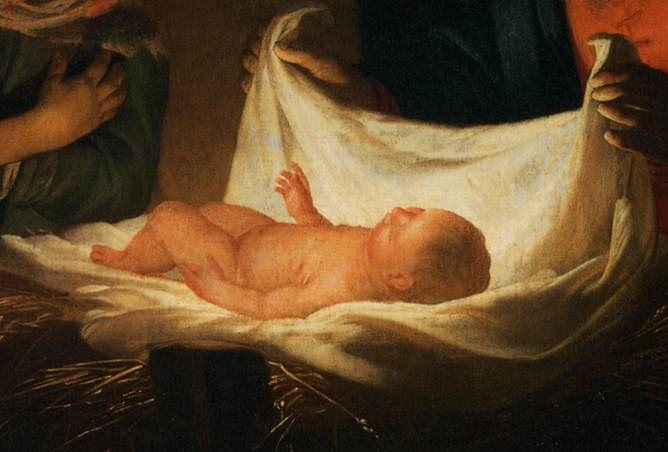
Soon we will be peeking into a manger to see a baby just born. What we see is more than cute, or sad and nearly tragic. It is holy. It is divine. It is God in all his love, giving up everything to come and rescue us.

Mercy Won’t Wait

lot-flees

Genesis 19:16 “When Lot hesitated, the men grasped his hand and the hands of his wife and his two daughters and led them safely out of the city, for the Lord was merciful to them.”

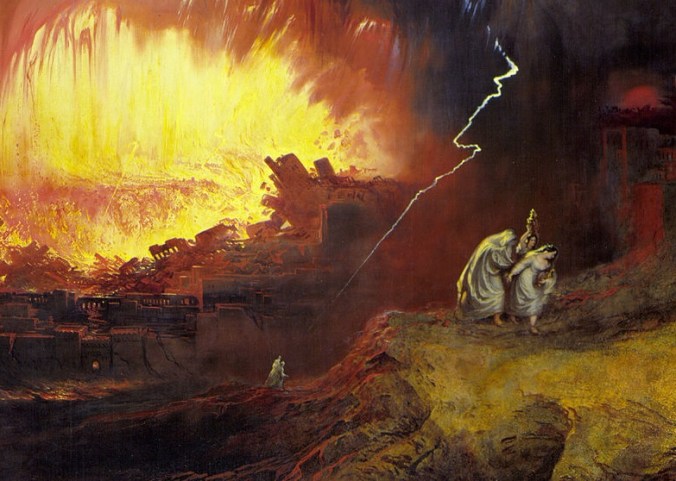
In his mercy the Lord sent angels to lead Lot and his family out of the doomed city of Sodom. Lot himself was in no hurry to go. What did this city have to offer once it had been reduced to a giant ash tray? Lot’s hesitation reveals the spell our worldly comforts cast over our hearts. Even when we know that holding on to them will be fatal, whether physically or spiritually, we can hardly let them go.

I have heard people speak critically of smokers who can’t give up their cigarettes even when emphysema or lung cancer is robbing them of life. But do we realize how we have become addicted to our homes, or careers, or hobbies, or vices in a similar way? Like people who rush back into burning homes to rescue heirlooms they can’t bear to lose, we turn our priorities so upside down that we cling to our worldly obsessions while hell’s flames are licking at our souls. We are less different than Lot than we might like to think.

In spite of our hesitation to let go and flee, God is serious about his mercy. He does not wait for us to respond to him before he goes to work on our behalf. Instead of waiting for Lot to figure things out on his own and start making better decisions, the angels simply took him and his family members by the hand and led them to safety outside the city. When they finally had their attention they sent them on their way, “Flee for your lives! Don’t look back, and don’t stop anywhere in the plain! Flee to the mountains or you will be swept away!”

The proactive mercy of God is not unique to God’s mercy on Lot. Long ago Paul promised, “At just the right time, while we were still powerless, Christ died for the ungodly…God demonstrates his own love for us in this: While we were still sinners, Christ died for us.” Our Lord did not wait for us to come to him for a solution to the sins that were destroying us. Before we even existed mercy led him to send his Son to pay for our sins and set us free.

That same urgent mercy of our God continues in our lives today. I wasn’t looking for him when my parents brought me to baptism in February of 1965. But the pastor’s hands brought me mercy in my grandmother’s living room anyway, in waters that washed away my sins, brought me the gift of the Spirit, and made me God’s child by faith. Maybe you have similar stories to tell. One evening an evangelist showed up at your home uninvited. Before the night was over you knew Jesus as your Savior from sin. You came to church just to hear a friend sing or play. You intended nothing more than showing them this courtesy. But before you went home that day God’s mercy had taken you, not by the hand but by the heart. It led you to safety in Jesus’ waiting arms.

God’s mercy is still waiting to take us by the heart and lead us to safety every time the church doors are open. Just because we have become believers does not mean the danger has disappeared. Lot was a believer, too, surrounded by the wickedness of Sodom. Our situation is no less perilous. We can easily become so comfortable with our sinful surroundings that we forget what’s so wrong about sin and why God’s mercy is such an urgent need. But God is serious about his mercy, and his message of sin and grace still provides our way of escape. As people who have come to know that mercy personally, don’t hesitate to flee to safety.

His Light Marks the Spot

christmas-lights

Isaiah 49:6 “I will make you a light for the Gentiles, that you may bring my salvation to the ends of the earth.”

I believe my neighborhood is a safer place at night this time of year. Most of the year the sidewalks are fairly dark–there aren’t many street lights in our subdivision. Now the whole place is lit up with colored and flashing lights, even flood lights in some yards. Unfortunately, many of my neighbors may not know why they are putting up all these lights, other than the fact that Christmas is coming. For some, lights are just the way that people celebrate the season.

Lights, as you know, are part of our Christian tradition.  Our churches light extra candles on Advent wreaths.  Some have candle light services on Christmas Eve. The symbolism behind it all, even the lights that line houses and shopping malls, originally goes back to Jesus own words, “I am the Light of the World.” At Christmas we celebrate how that Light first came into our world.

Lights serve several different purposes. We usually think of the purpose they serve in our homes and buildings.  They make it possible for us to see at night. It is easy to see how Jesus served as this kind of light. Where the darkness of sin and unbelief made it impossible to see the truth, Jesus shed light on God’s word. He made it possible for people to see the truth about salvation.

In times past there has been another common use for lights less common for most of us today. They served as a beacon or marker. They marked a spot so that people could find it, like a lighthouse marks the shore line, or runway lights show where the runway is.  Such lights guide us by showing our destination and drawing us to it.

Jesus came to be this kind of light, too. He marked the spot where people could find their heavenly Father. Isaiah’s words seem to have this in view: “I will make you a light for the Gentiles, that you may bring my salvation to the ends of the earth.”

Becoming such a light was costly. Isaiah 53 describes him as one who was despised. By Good Friday, it seemed as if the whole nation had turned against him. Even the Father turned away from the pitiful sight of Jesus hanging on a cross and hated him for the sins he was made to carry. His death was not a pleasant sight. But it was necessary.

Even as the last little flame of life in him flickered and failed, the Light of the world was blazing away, making God’s grace and forgiveness clear to see. His death may have been very humble, but it shows all the world the glory of God’s love.  It’s light says, “This is where you find God’s grace. This is where you find your true home.”

Today Jesus lives, and his light is lifted up for the whole world to see. May every Christmas candle and bulb be a beacon marking the time, place, and events where God once saved us, and the other-worldly destination Jesus has made our home.