Face to Face

Sun rays

Revelation 22:4-5 “They will see his face, and his name will be on their foreheads. There will be no more night. They will not need the light of a lamp or the light of the sun, for the Lord God will give them light. And they will reign for ever and ever.”

Do you remember how Moses once asked to see God’s face, and God told him “…no man may see me and live”? Do you remember how practically everyone who saw God or his angels in visions was terrified? The great gulf between his holiness and our sinfulness is why the relationship must be carried on by faith rather than sight at this time. It is almost like a long distance relationship between two pen pals. They write, but never see each other. That is how we relate to God, at least on our part. He has written to us in his word. We never see him. The words that connect us lead us to care about each other deeply. But now, there is always that distance, at least for us who cannot see him.

One of the many blessings of living at home with God is the end of that distance. He will live life with us, and we will see him face to face. Writing is great when you can’t see the one you love. I once lived for the next letter from my wife to appear in my mailbox. Hearing a live voice over the phone is even better. But only being together, in the same place, where you can see or touch, as well as read or hear, makes the relationship complete. Only seeing each other face to face allows you to connect and communicate in the way you long to do. That is waiting for us in God’s home, and it may be the very greatest blessing of them all.

Since God and the Lamb will live life with us face to face, we will forever live in their light. “There will be no more night. They will not need the light of a lamp or the light of the sun, for the Lord God will give them light.” What will it be like to live in such unending light? Will we sleep in heaven, but sleep in spite of the persistent light? It is also described as a place of perfect rest. You certainly can’t ask God to turn it down. That light is part of who he is.

Will we be so changed that sleep itself is no longer necessary? One thing is certain: no multicolored sunrise or sunset, no glorious view of the sun’s rays shining through a hole in the clouds, no warm glow of a fire, no dazzling display of fireworks, no light we can conceive of here will be as beautiful to see, or warming to soak in, as the light that shines from God’s face when he lives life with his people.

You have heard the saying, “A man’s home is his castle.” In our own home, each one of us rules. Ironically, in God’s home, each of us rules as well. “They will reign forever and ever.” When you look at the life God gives in his presence, ruling is an apt description of how we live. We will live like kings, in the presence of the King, because we are home with God, and live with him face to face.

God rules. We serve.

throne

Revelation 22:3 “The throne of God and of the Lamb will be in the city, and his servants will serve him.”

What does God do when he lives with his people? What is that relationship in the heavenly city God makes his home? He rules, and his people serve. Does that seem like a letdown for heaven–even a bait and switch? Our sinful nature chafes at the idea of chasing around doing what God wants. We want freedom. We want to do what we want. We want the otherworldly luxury resort and spa to pamper us the way we always imagined heaven. God rules and we serve? Maybe we find ourselves thinking like the devil in Milton’s Paradise Lost, “Better to rule in hell than to serve in heaven,” (even though the devil doesn’t actually rule in hell).

All of this misunderstands how God rules, and what it means for us to serve him. God’s rule doesn’t make us do all the unpleasant, menial tasks so that he can sit back and take it easy. This is the God who did everything to save us. He left heaven and became a man for us. He kept the law perfectly and died for sins and defeated death for us. This is the God whose power gives all things life and keeps all things going. He needs no help from us. His rule runs the universe to take care of our needs. His rule will run heaven for the same reasons.

Where his rule touches our behavior, it has less to do with getting his needs met. It has more to do with how we treat each other. As a father, you might say that I also “rule” my children. But I am not so interested in having them do my work for me. I am interested in teaching them how to take care of themselves someday, and how to get along with each other and other people. That is why I tell them to do certain chores, or behave in certain ways. God’s rule has us behaving in ways that show we respect him for his great love to us. It leads us to care for each other. In heaven, that won’t seem like any burden.

Let’s also not be so naive as to think that heaven would be a place we can enjoy if all we did was lay around, stuff our faces, and try to keep entertained. Doesn’t that lifestyle leave so many people feeling bored and unfulfilled in this world? Heaven will be perfect pleasure, but everlasting laziness and selfishness are not fun. God created human beings to have a sense of purpose. In order to be fulfilled, we need a way to serve. That is why the Lord will give us interesting, satisfying work to do. He will make use of the gifts that make each one of us unique. We will know, in a way we never fully realize here, that we are important, that there is a reason for us to exist. When God lives life with his people, he rules and we serve. We wouldn’t want it any other way.

Abundance

fruit tree

Revelation 22:2-3 “On each side of the river stood the tree of life, bearing twelve crops of fruit, yielding its fruit every month. And the leaves of the tree are for the healing of the nations.”

Do you remember what Jesus said his ministry was supposed to accomplish for us in John 10, the chapter in which he describes himself as the Good Shepherd? “I have come that they may have life, and have it to the full.” Or, as the King James translated it, “I am come that they might have life, and that they might have it more abundantly.”

That full and abundant life does not mean earthly wealth and health. Jesus also tells us that following him in this world will mean bearing a cross, seeing our relationships strained and families divided, enduring much trouble: in short, losing our lives for him.

At the same time we do know the blessings of living in his promises by faith: the relief of having our guilt lifted from us, the peace of knowing God will give us our daily bread, the joy of growing in a life of love for others. All of this is a foretaste of the full and abundant life to come.

The life with God in heaven is the full banquet, not merely a foretaste. The life he gives his people there is abundant in every way. The tree of life keeps producing its life-giving fruit, 12 crops a year. There is no need to ration food, no scrimping, no difficulty getting by. The Lord provides plenty of everything for all. John’s Greek in this verse also suggests the fruit may be a different kind each month. God’s bounty is not boring sameness, but endless variety.

And all of it never ends. The River of Life keeps flowing. The Tree of Life keeps bearing. The people who live in God’s home keep on living, forever. The curses the Lord pronounced on Adam and Eve in the garden of Eden– pain in childbirth, strained marriages, tiring, frustrating work, and death– are no more. All have been healed, and God’s abundance continues without end.

Unpolluted

drink river

Revelation 22:1-2 “Then the angel showed me the river of the water of life, as clear as crystal, flowing from the throne of God of the Lamb down the middle of the great street of the city.”

John paints a picture for us here. That is how the book of Revelation is presented, in symbols and pictures. The very first verse of the book tells us that God “sent and signified it by his angel unto his servant John.” In this book God wants to tell us about things and events that are real, but he uses signs and symbols to do so. It’s not always easy to know when we are looking at symbol, or when he is talking about the reality behind it. So it is when the Lord describes “the river of the water of life” in heaven.

There is no reason to think that heaven couldn’t have a river like the one John sees in his vision. But the real message is to be found in the way in which the river is described. This is the river of the water of life. Our life in heaven with God fills us with happy anticipation because there he is giving life to his people. Note how the waters of this river of life are described: “clear as crystal.” These life giving waters are pure and unpolluted. That is profoundly different from the life we know now.

Our sins pollute life as we know it. That is no small problem. We act as though our sins will make little difference in our lives. Often we think they will actually make an improvement. Why do we lie instead of taking responsibility for a mistake? Because we think that life will be a little better if we don’t have to take the heat. Why do we pepper our speech with curses and vulgarities when there are perfectly wholesome words we can use? Because we think that we will sound a little stronger, and people will take us a little more seriously, if we do.

Truth is, sin is a deadly pollution to our lives. It never delivers the better life it promises. You know how lies can snowball and trap you. You know that gutter language makes us out to be little more than bullies, or incapable of intelligent thought. In the end we lose more respect than we gain with our obscenities. But those consequences are small compared to the real poison of sin. “The wages of sin is death.”

If sin and death go together, so do purity and life. Already now Jesus has forgiven our sins by his perfect life and innocent death on the cross. Our polluted stream of life has been purified. How does Paul say it? “Christ loved the church, and gave himself up for her to make her holy, cleansing her by the washing with water through the word, and to present her to himself as a radiant church without any stain, or wrinkle, or blemish, but holy and blameless.” Though we may continue to pollute our lives with sin, God’s grace and forgiveness keeps on filtering the deadly poison away. He declares us holy and righteous through faith, and that gives us life.

In heaven, the pollution has stopped altogether. The water of life that God gives us is “clear as crystal.” Where there is no sin, there is no death. Where there is life, real life, there is holiness. Purity will no longer be an unattainable goal. It will be an inseparable and unending part of the life that God gives us. Its waters will leave us eternally refreshed, eternally clean–forever free of the embarrassment, shame, guilt, and fear that spoil our lives and the death that ends it. God’s home is a blessed place, because the life he gives to his people is unpolluted, like the river in John’s vision.

Swallowed Up In Victory

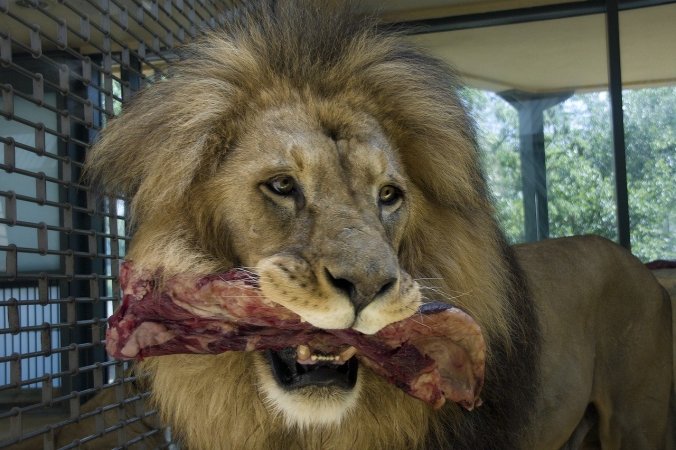
Lion Eats

1 Corinthians 15: 54-57 “When the perishable has been clothed with the imperishable, and the mortal with immortality, then the saying that is written will come true, ‘Death is swallowed up in victory.’ Where, O Death, is your victory? Where, O Death, is your sting?” The sting of death is sin, and the power of sin is the law. But thanks be to God! He gives us the victory through our Lord Jesus Christ”

Paul pictures death completely devoured. It is as if a hungry animal swallowed it whole and didn’t leave a trace.

Isn’t that an interesting twist? In other places the Bible pictures death as the hungry animal. It eats and eats and never has enough. “There are three things that are never satisfied, four that never say, ‘Enough!’: the grave, the barren womb, the land, which is never satisfied with water, and fire, which never says, ‘Enough!’” (Proverbs 30:15-16). The grave never stops consuming. There are never so many dead people that death can’t take anymore. Isaiah says something similar: “Therefore the grave enlarges its appetite and opens its mouth without limit; into it will descend their nobles and masses…” (Isaiah 5:14). Far from being satisfied, death seems to get hungrier and hungrier.

Jesus’ resurrection turns the tables. Death itself is swallowed up. “‘Where, O Death, is your victory? Where, O Death, is your sting?’ The sting of death is sin, and the power of sin is the law. But thanks be to God! He gives us the victory through our Lord Jesus Christ.”

Death has lost its stinger. Sin was the venom that poisoned us. Sin injected death into our lives. The reason sin was so potent was the way that it reacts with the law. God wrote the law on our hearts and in his word. When sin came into contact with the law, there was a violent reaction. We were turned into rebels and lawbreakers. We were turned against God. That leads to death.

But by his death on the cross, our Savior has taken all sin away. The stinger has been removed. When Jesus crushed the serpent’s head, he broke his venomous fangs as well. Death is on the losing side in this contest, and its hunger for us will never be satisfied. Jesus assures our victory.  These lives and these bodies are not ones death will get to keep.

In the Twinkling of an Eye

Eye Twinkle

1 Corinthians 15:51-52 “Listen, I tell you a mystery: We will not all sleep, but we will all be changed—in a flash, in the twinkling of an eye, at the last trumpet. For the trumpet will sound, the dead will be raised imperishable, and we will be changed.”

Paul grabs our attention by telling us that he is going to tell us a “mystery.” This does not mean that we are about to hear a “whodunit.” Nor is his point particularly hard to understand (though there may be things about it we find hard to fathom). Paul is telling us that what follows has to do with the Gospel. This is information about God and his work which can’t be learned from our consciences or from looking at his creation. God must reveal his mysteries to us. This good news about the resurrection is “inside information,” so to speak. It’s not that God wants to keep it a secret from everyone. Rather, it is something people know only after they have heard the word. We are privileged to know something that not everyone is aware of!

This is that good news: we are all going to be changed on the last day when Jesus comes again, “in a flash, in the twinkling of an eye, at the last trumpet.” We won’t suffer a long, drawn out process of purification, like the purgatory some believe in. The Lord doesn’t make you go through a miniature version of hell to make you ready for heaven.

Instead, he brings us instant relief from the waiting process we endure right now. Each day we are painfully aware of the fight with our own sin. Each new day the battle begins as soon as we roll out of bed. We face a new army of temptations, waiting to ambush us. Each day life in a sinful world makes our lives miserable. We go from heartache to heartache, illness to illness, anxiety to anxiety, fear to fear, disappointment to disappointment.

But because Jesus lives, God promises that we will all be changed in an instant. Whether we are dead or alive will make no difference. “For the trumpet will sound, and the dead will be raised imperishable, and we will be changed.” If we are among those whose souls already resting in heaven, whose bodies long ago crumbled into plant food and potting soil, our bodies will change and live again quick as you can wink your eye. If we are still alive on that day, God will miraculously transform our bodies even while we are wearing them.

What will this mean for us? Paul says that we will be imperishable. Jesus death on the cross has purified us and made us free from sin. We aren’t subject to sin’s effects anymore. Even now, our bodies are decaying as we live. Sin is like the rot or decay that makes foods spoil. “One bad apple spoils the bunch.” The rot or decay spreads until none of them are any good. So our bodies also sag, our hair turns colors, our joints wear out, our vision dims, our memory fails—and not only because these things are natural. These are symptoms of sin. The rot, the decay, the spoiling spreads until finally it takes us in death. No amount of artificial preservative can stop it.

That is all going to change. God will remake us imperishable. He will change us so that we can’t spoil anymore. Imagine an existence in which you are always “fresh.” You’ll never wake up in the morning with bags under your eyes because the kids were up all night or the big presentation in the morning gave you fits. Your back won’t ache because you overdid it the day before. Your head won’t pound because you just can’t shake this cold or flu.

All these symptoms of the big decay will be gone. In the resurrection, we will be instantly fresh and new, because God will raise us imperishable.

Risen to Reign

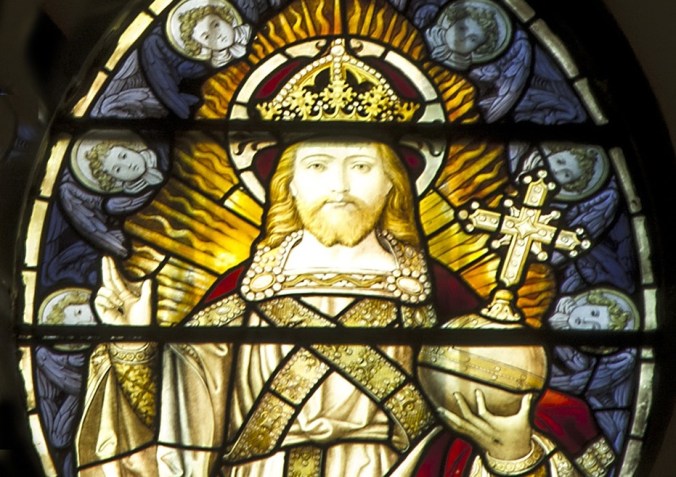
Christ Reigns

1 Corinthians 15:23-26 “But each in his own turn: Christ, the firstfruits; then, when he comes, those who belong to him. Then the end will come, when he hands over the kingdom to God the Father after he has destroyed all dominion, authority and power. For he must reign until he has put all his enemies under his feet. The last enemy to be destroyed is death.”

When Jesus rose from the dead, he did not retire to some tropical resort to sit under the palm trees and sip piña coladas. As we confess in the creed, he sits at the right hand of the Father. Paul indicates that Jesus is up and running God’s kingdom, gathering and defending his own, dealing with the remaining pockets of opposition, getting it ready to present to his Father perfect and peaceful, when both Father and Son can sit on their thrones and enjoy the fruits of their labors.

Sometimes it seems as though the clean-up operation isn’t going well. The spiritual enemies of the Church– the dominions, authorities, and powers Paul mentions– appear to be holding their own, even winning. False religions grow faster than Christianity. Christians are executed for their faith– tens of thousands per year. Basic Biblical teachings and morals are denied and contradicted inside some churches, endangering the faith of millions. Circumstances in our own lives– disease, financial strain, broken relationships, unrelenting temptations– can lead us to the edge of losing our faith. If Jesus is ruling, why doesn’t he just make it all stop? Why doesn’t he take control and end all the foolishness by force?

Then we remember that the operative word in Jesus’ rule has never been “force” or “power” but “love.” Jesus does not win followers at gun point. It is love, the love that carried our sins for us and died for them, that changes hearts and wins them to his side. In his love he has chosen to make dear souls in every generation his own. His love never fails to capture them. In order to build the kingdom he wants, then, love leads him to let this world go on until the full number of his people have been gathered.

Under his loving direction, even the dirty work of his enemies turns against them. When his people suffer, this becomes the opportunity for powerful testimonies of faith and intense expressions of Christian love. In this way he lovingly strengthens the faithful and draws them closer to himself. He even attracts defectors from the enemy side, like the man Paul who wrote these words in 1 Corinthians.

When Jesus’ love has snatched from Satan every soul he knows as his own, then his kingdom will be complete. Then the end will come. “The last enemy to be destroyed is death.” This promises more than the last body succumbing to death. What we know as death will no longer exist, and we will see what Jesus already promises us now: our victory is secure.

The world in which we live has been given a renewed awareness of the immanence and seriousness of death. An invisible virus has exposed how much we fear it. Jesus’ resurrection takes the sting out of that fear. Jesus reigns, and death itself will soon meet its end.

In Christ Alone

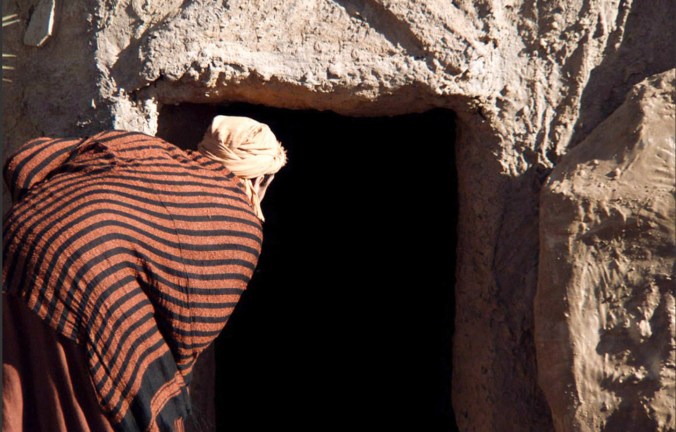
Empty Tomb

1 Corinthians 15:21-22 “For since death came through a man, the resurrection of the dead also comes through a man. For as in Adam all die, so in Christ all will be made alive.”

It’s amazing how much trouble one person can cause. I can’t help thinking of the character Kevin McCallister from the Home Alone movies, an eight-year-old who single-handedly ruins his family’s holiday vacations and foils the plans of a team of thieves.

His mischief is nothing compared to the mischief our ancestor Adam created when he fell into the first sin. The effects of that one misstep spread far beyond his immediate family to every member of every family ever since. He didn’t mess up a few days of happy diversion. He destroyed our lives–all of them. His one sin was far worse than any weapon of mass destruction the world has known. In Adam all of us became sinners. It’s our inheritance, our share of the family “fortune” we receive from him. In Adam, we all die.

But Christ undoes the damage. He restores our future all by himself. So often it takes one person to break something, but many to fix it. One might think that would be especially true with death, the greatest human catastrophe of all time. How many world religions don’t believe that every individual has to solve the problem of sin and death all on his own?

Not so with Christ. “The resurrection of the dead comes also through a man.” “In Christ all will be made alive.” All by himself, Jesus has restored our future. He has obliterated our sins. He makes us look as though we have never committed a single one.  He has reversed the effects of death. Instead of the end of life, it is the gateway to life the way it was originally supposed to be. He has created for us a new life, an existence on the other side of death, where there is no more sin, where perfect love permeates all our human relationships, where we walk with God by sight, not just by faith as we do now.

That new life is truly “to be made alive.” All problems, pain, and poverty will be gone. These bodies will function properly all the time. Everything will be back the way it was supposed to be. Our future has been restored, because Christ, and Christ alone, has cleaned up our past.

Not a Sideshow

fair

Luke 23:8-9 “When Herod saw Jesus, he was greatly pleased, because for a long time he had been wanting to see him. From what he had heard about him, he hoped to see him perform some miracle. He plied him with many questions, but Jesus gave him no answer.”

If our text ended after the first sentence, we might think, “How wonderful! Finally a leader who appreciated how important it is to get to know Jesus.” Herod had wanted to see him for a long time. In fact, “greatly pleased” is a rather mild way of translating his reaction. Herod was overjoyed. What a wonderful thing, it might seem, the lone bright spot in this darkest day in Jesus’ life.

Can we imagine that such a desire to see Jesus would ever be anything but good? If we were to run into someone who so desperately wanted us to introduce him to our Savior, could there possibly be a downside to this? Herod reveals that the human heart is so twisted that even the desire to see and know Jesus can be evidence of evil, not good.

What did Herod want from him? “From what he had heard about him, he hoped to see him perform some miracle.” Here is the Redeemer of the World standing in front of Herod, and what is he thinking? “I’ve got Harry Houdini here.” He wanted to see a miracle, not because he was in desperate need of mercy. He wanted nothing more than a magic trick to entertain him, a pleasant diversion from the pressures of palace life.

When Jesus refuses to perform, Herod doesn’t give up. “He plied him with many questions, but Jesus gave him no answer.” Think of the opportunity! What wouldn’t you give for an hour with Jesus, or just 10 minutes, to ask him your questions? But Herod’s questions were not theological or spiritual questions. “Come on Jesus, won’t you do just one? Just how did you make that bread feed so many? What’s your secret? Do it again.”

Herod’s reasons for seeking Jesus still appeal to some. God can and does work miracles in the lives of his people. That does not make them suitable as the center of attention in Christian worship. Where Christians conduct their worship with less spectacle, are they still tempted to value worship time because of its ability to entertain us for a little while? Do we have irreverent reasons for the time we seek with him?

Jesus answer to irreverence is powerful. “Jesus gave him no answer.” Jesus would not answer Herod or perform for him. How easy it would have been to do one quick trick and put an end to the humiliation. How easily he could have revealed his power, and put Herod and everyone else in his court in their place.

But for us, Jesus’ silence is golden. He displays his perfect love, even for Herod, by not giving in to his childish desires. He will not reinforce or confirm this kooky king in his sin. He treats him with silent respect, even when that respect is not returned.

Jesus silently bears this one more burden, this lack of respect, as part of carrying the guilt for our sins. He doesn’t do the trick and get himself freed. He endures the humiliation as another step toward the crucifixion and death that shows his true value and dignity—Deliverer from sin and death. He does so that we might be acknowledged as sons of God, and recognized in the only court and by the only King that really matters–his own Father in heaven.