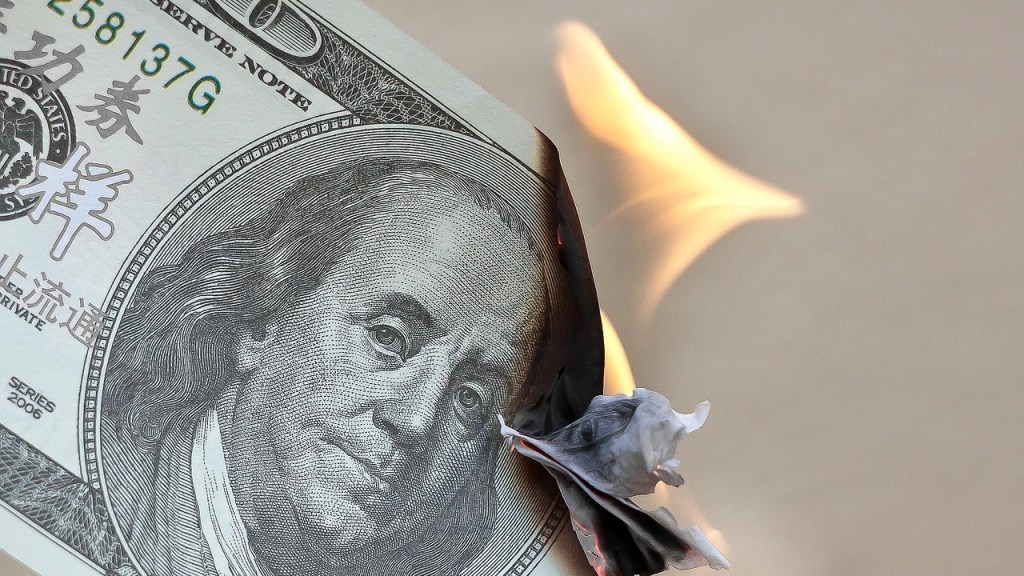
Ecclesiastes 5:13-14 “There is a sickening tragedy I have seen under the sun: wealth kept by its owner to his harm. That wealth was lost in a bad venture, so when he fathered a son, he was empty-handed.”
Some people are bent on becoming famous. Then they find out what a drag it is to have no privacy, to be hounded by photographers and fans every moment of your life. Some people are obsessed with becoming rich. Then they find out that wealth comes with its own set of problems.
It’s not that money itself is bad. It’s just a thing, a tool, and a useful one at that. But there is danger as well. You have heard some of the stories about lottery winners and their problems. Seventy percent of the winners will be broke and bankrupt in just a few years. Hopefully, that’s the worst they will suffer. David Edwards won $27 million in 2001 in the Powerball drawing. The money bought him an expensive home, race horses, a Lear Jet, and his own businesses. It also made it possible to afford an expensive drug habit. Cocaine, pills, and heroine drained his finances. He ended living up in a storage unit surrounded by human feces before he died at the age of 58. But that’s not so bad. Many lottery winners had family members plot to murder them, a few successfully.
We don’t know the specifics about the harm that came to the man Solomon describes here. We do know “that wealth was lost in a bad venture, so when he fathered a son, he was empty-handed.” That is the tragedy of losing it all from the one perspective. It’s not just being unable to enjoy luxuries. It’s a matter of being unable to provide for yourself and your family. All that money he once had can’t help him now.
So here’s the question. We see the tragedy of losing it all. How do we react? Maybe we are just conceited enough to think, “If I got all that money, I would be different. I wouldn’t waste it on luxuries and mindless pleasure. I wouldn’t let it change me and affect my relationships. I would be more careful about how and where and with whom I invested it.” Perhaps.
But can we keep it from changing the people around us? Ever watched the movie Crazy Rich Asians? Male lead character Nick Young has kept his family’s billions a secret from his girlfriend Rachel Chu because he knows the money changes the way people around him treat him. He has been fighting with this his whole life, and it plays a big role in the headaches and heartaches that make up the plot of the story going forward.
We are inclined to forget that we are broken people living in a broken world. So Solomon does us the favor of reminding us just how bad it is. “As he came from this mother’s womb, so he will go again, naked as he came; he will take nothing for his efforts that he can carry in his hands. This too is a sickening tragedy: exactly as he comes, so he will go. What does the one gain who struggles for the wind? What is more, he eats in darkness all his days, with much frustration, sickness, and anger” (vs. 14-15).
Go ahead, and live life more altruistically. Save the world from climate change, right all the wrongs, correct all the injustices, remove all the inequalities. It will make no difference in the long run.
Or, if that is not your style, defend the Constitution of the United States and all the amendments that go with it, preserve the American dream, uphold our traditions. It’s not going to last. “What does one gain who struggles for the wind?”
We are living in the ruins of a once perfect world. We can only prop up the crumbling walls and patch the leaking roof so long before it all comes tumbling down. We and our wealth and our life’s work, whatever it is, all come to an end. It is the wages of sin, the curse God placed on us and this place. While we run around desperately trying to keep everything from collapsing, life is hard. “He eats in darkness all his days, with much frustration, sickness, and anger.” Then it all ends, we die and the world is destroyed.
People who recognize the futility of the world in which we live are ripe for God’s solution: grace for our own spiritual failures here, and a new life in a new world after death, “treasures in heaven, where moth and rust do not destroy, and where thieves do not break in and steal” (Matthew 6:20). Our fate is not so bleak as we feared.

