What Do You Want From Me?

Father-Son

Matthew 21:28-32 “What do you think? There was a man who had two sons. He went to the first and said, `Son, go and work today in the vineyard.’ `I will not,’ he answered, but later he changed his mind and went. Then the father went to the other son and said the same thing. He answered, `I will, sir,’ but he did not go. Which of the two did what his father wanted?” “The first,” they answered. Jesus said to them, “I tell you the truth, the tax collectors and the prostitutes are entering the kingdom of God ahead of you. For John came to you to show you the way of righteousness, and you did not believe him, but the tax collectors and the prostitutes did. And even after you saw this, you did not repent and believe him.”

“What do you want from me?”

Wives say it to husbands. Husbands say it to wives. Children say it to their parents. Employees may say it to their employers.

It is an expression of frustration.  “What do you want from me?” is a way of saying, “I think that I am already doing my share, and I don’t understand what your expectations are. Tell me what you expect so that I know what to do. And don’t expect more from me than I can do.”

“What do you want from me?” is also a question that imperfect human beings may ask of a holy God, and a question that Jesus answers in the parable of the two sons.

Two sons are asked by their father to do the same thing. One says he won’t, but changes his mind and goes to work. One says he will, but never does anything.

Neither of these two sons did exactly what their father wanted. Undoubtedly the father wanted them to be willing to obey him right away, to agree to go to work, and then to put their money where there mouth is–to go out and get to work.

Jesus’ parable reflects life in a less than perfect world. Sinful people resist God at first. Law and Gospel can lead them to experience a change of heart worked by God’s love and forgiveness, and to strive to serve God as a way of demonstrating such a change of heart. We call that “repentance.”

Some people say things which seem to indicate their hearts are already with God. They talk about their relationship with him all the time. The find a way to mention “Jesus” with every breath. There are so many ways in which they say they are eager to serve him.

But nothing ever gets done, and nothing ever changes. The problem is not so much with what they do (or fail to do). That is only a symptom. In spite of all their talk, their actions reveal a heart problem. They do not love God, they do not trust him, and all their worthless words are just a cover up.

All are sinners. None are perfect. No one pleases God with his own life. “Which of the two did what his father wanted?” Jesus asks concerning the two sons. Applying the parable we might ask, “What does God want from me?”

The answer is found in the example of the first son. God asks for only that which he himself gives. Repentance is his work, not ours. After his love has changed our hearts and minds, we, too, will go and work. But unless that heart has first been changed, even the “good” works we appear to be doing are no service offered to God. The problem with the lives of the Pharisees of Jesus’ day was not a lack of “religious” work. They were very busy. Their problem was that all their “service” did not truly serve the Father, because the heart from which it came did not love him.

You and I daily hear God’s call to love him and love others, and we daily say “I will not” to his commands. Harsh words, lazy indifference to the needs of others, impure thoughts, self-gratifying priorities, and our personal list of favorite sins are all ways in which we refuse to go and work in his vineyard with love. Repent. Our God is a Father who freely forgives and always loves. Believe. God’s love for us in Christ will change our hearts and change our minds. Then we will go and serve.
Uncommon Humility

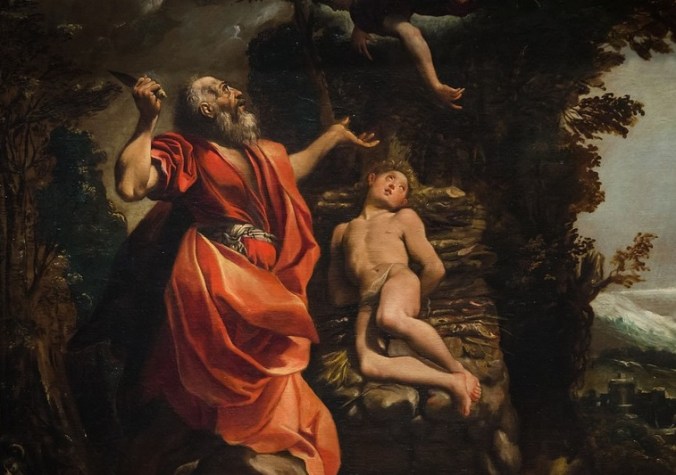
Isaac

Genesis 22:9-10 “He bound his son Isaac and laid him on the altar, on top of the wood. Then he reached out his hand and took the knife to slay his son.”

Someone once said, “You can tell how much of a servant you are becoming by how you react when people treat you like one.”  Jesus reflected a similar sentiment when he said to his disciples in Luke 17, “So you also, when you have done everything you were told to do, should say, ‘We are unworthy servants; we have only done our duty.’”

That sort of thinking goes against the grain of a world obsessed with self-promotion. We attach great importance to being number one. We aspire to fame and glory. Athletes like LeBron James or Peyton Manning make more money off their fame than they do from working at the “jobs” which gave them that fame in the first place.

That’s not to say that all fame or profit from fame is evil. But our desire to stand in the limelight and receive the praise of the world often discourages us from carrying out the more humble tasks the Lord asks us to fulfill.

Look at the humble role which very nearly became Isaac’s last. In Genesis 22 we read that God asked Abraham to sacrifice his only son Isaac as a test of faith. We generally focus the great faith that made Abraham willing to obey the Lord in this account. At no point do we read of any hesitation or complaint from Abraham. He faithfully obeys God’s command and take the steps to end the life of his only son.

But what about Isaac himself? Early in the episode he had realized something was unusual about this little “retreat” he and his father were taking for worship and sacrifice. “’Father…The fire and the wood are here,’ Isaac said, ‘but where is the lamb for the burnt offering?’” (Gen. 22:7).

Yet even when the altar had been built, the wood arranged, and the time had come for Abraham to place Isaac on the altar, we hear of no struggle or complaint from young Isaac.

What humble obedience on Isaac’s part! In humility he accepted that his role in life might be simply to die so that the faith of another man might be tested and found true! In humility this young man was ready to pass up not just fame, fortune, and glory, but life’s simpler rewards of adulthood, family, and career.

With his humble submission to God’s plan, Isaac also experienced God’s deliverance. The ram the Lord substituted for the boy’s life at the end was a powerful picture of God’s grace. He is the God who spares the lives of his people by providing a substitute. The whole incident anticipates the Substitute God offered on the cross to spare the world.

Isaac’s humility demonstrates the attitude we need if we are going to follow Paul’s encouragement, “Offer your bodies as living sacrifices, holy and pleasing to God” (Romans 12:1). The self-sacrificing roles the Lord gives us to perform lack the kind of prestige and respect which attract worldly fame. Pride and self-concern are our enemies in completing our humble tasks.

Our Savior was himself a man of humility and self-sacrifice. We find forgiveness for our pride, and the faith which makes us humble, in knowing that he did not consider equality with God something he had to hold on to, but “he humbled himself and became obedient to death–even death on a cross!”  (Philippians 2:8).

Now let our attitude be the same.

Honor in Service

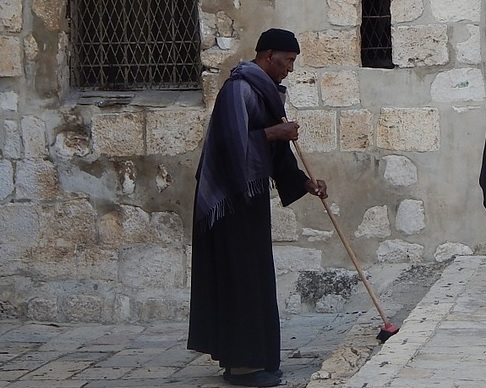
Sweeping

Isaiah 56: 6-7a “And to foreigners who bind themselves to the Lord to serve him, to love the name of the Lord, and to worship him, all who keep the Sabbath without desecrating it and who hold fast to my covenant–these I will bring to my holy mountain and give them joy in my house of prayer.”

Serving the Lord of heaven and earth isn’t dull, boring drudgery.  It isn’t the everyday, go-through-the-motions work of someone who simply wants to make a living or get the job done.  Isaiah’s words suggest several reasons why this is true.

First, the word translated “serve” doesn’t speak of any ordinary kind of service.  The task itself might not look different than work other people are doing, but this service takes on honor and privilege because of whom you are serving. I know many people who worked as cooks in a restaurant.  Many young people get their start at earning a paycheck by flipping hamburgers a few hours a week.  It’s usually not considered a glamorous job. I also have a relative who cooked meals for a living, but he did his cooking at the White House in Washington D.C. That job is considered very prestigious, all because of the people he served.

Janitors clean buildings all over the world. But Christians who clean their churches, clean their homes, or clean to make a living serve their Lord with this humble task. Teachers teach the “three Rs” to their students in thousands of languages in schools around the globe. But whether God’s faithful people are teaching Bible stories to their Sunday school classes, or algebra to a room full of bored teenagers, their efforts serve the One whose saving work is recorded on the sacred pages, and whose genius invented the math that orders our world. It is an honor to serve the one and only God, the Maker of all things, and the Savior of all the world, no matter the kind of activity that is involved.

A second special feature of this service is the force behind it.  Isaiah speaks of “foreigners who bind themselves to the Lord to serve him, to love the name of the Lord, and to worship him.” For believers, service to God is a labor of love.  What else could it be when we know how he first served and loved us?  Professor Siegbert Becker once wrote, “It is impossible to see ourselves as sinners deserving eternal damnation in hell and then to come to the conviction that the suffering and dying Christ has procured full and free forgiveness for us by taking our guilt upon himself and by giving his own righteousness to us as a free gift of his love, it is impossible to come to that conviction without coming to love him who gave himself into death that we might have everlasting life….To know him is to love him is more applicable to our Savior than to anyone else.” Love for the Lord who loves us sets a believer’s work and service apart.

To the prophet Isaiah’s original audience, perhaps the most shocking thing about the service mentioned was the people performing it. They were “foreigners,” Gentiles, non-Jews. These were not members of God’s chosen nation.

But they were people the Lord had chosen nonetheless. It turns out that good news about a God who dies to rescue lost souls, forgives sins, and gives his gifts for free works on human hearts regardless of race, culture, or nationality. It worked on our hearts, too. We have been given a place in God’s “house of prayer.”

May we find joy in serving him there.

Always Growing

Plant on Rock

Mark 4:26 He also said, “This is what the kingdom of God is like. A man scatters seed on the ground. 27 Night and day, whether he sleeps or gets up, the seed sprouts and grows, though he does not know how. 28 All by itself the soil produces grain– first the stalk, then the head, then the full kernel in the head. 29 As soon as the grain is ripe, he puts the sickle to it, because the harvest has come.” 30 Again he said, “What shall we say the kingdom of God is like, or what parable shall we use to describe it? 31 It is like a mustard seed, which is the smallest seed you plant in the ground. 32 Yet when planted, it grows and becomes the largest of all garden plants, with such big branches that the birds of the air can perch in its shade.”

Sometimes growth is hard to see. When the grandparents haven’t seen your children for almost a year, they so often comment, “My, how your children have grown!” When you have been looking at them every day, you hardly notice the difference… until you have them stand against that closet door where you mark their height each year. Then you see that, indeed, each one is one or two inches taller than last time you measured.

The growth of God’s Kingdom is also hard to see. Our churches grow slowly. Visitors don’t come forward the first Sunday they attend and join. It’s a long process through classes. Even when they do join, faith is a matter of the heart, and we can’t actually see what’s going on inside. The same is true of our longtime members. Faith produces its fruits, but it is hard to gauge how much growth in faith has taken place in any individual at any given point in time.

Still, Jesus promises that his Kingdom grows. Faith still comes from hearing the message. His word does not return to him empty, but accomplishes what he desires and achieves the purpose for which he sent it. Even when the Church is experiencing its darkest days, and it seems as though the Kingdom may be on the brink of extinction, God’s Kingdom is growing. It always gets bigger. It never gets smaller, ever.

To understand the real size of God’s Kingdom, we must remember that every child of God who has received the big promotion, and has been transferred from earth to heaven, hasn’t been taken from the Kingdom. They have been made permanent members. The ranks of heaven keep swelling. That is all that they do. No child of God who ever makes it to heaven ever finds his way back out again. God’s Kingdom grows.

To understand the real size of God’s Kingdom, we must remember that the Kingdom isn’t limited to our little local congregation, or our little denomination, our little nation. We don’t see the explosive growth of God’s Kingdom taking place in sub-Saharan Africa, Asia, or Latin America. It is estimated that by 2050 only one Christian in five will be a non-Latino white. God’s Kingdom grows.

We are not alone. Nor are our numbers dwindling, though they may be moving. We may not be able to see it, but we believe in the incessant growth of God’s kingdom until Jesus comes.

A Holiday for the Soul

Vacation

Deuteronomy 5:12-14 “Observe the Sabbath day by keeping it holy, as the Lord your God has commanded you. Six days you shall labor and do all your work, but the seventh day is a Sabbath to the Lord your God. On it you shall not do any work…”

We don’t hear as much about this commandment as some of the others. With so much attention given to what God says about sex or what God says about the taking of life, the third commandment doesn’t get much press. It is worth noting, however, that before the Lord gave us those commandments that govern our relationship with each other, he gave us three commandments that deal with our relationship with him. “Remember the Sabbath Day” is one of them. If more attention were given to keeping this one, then breaking those others wouldn’t be so much of a problem. Let’s take a closer look at just what he is prescribing for us.

Understanding what God was asking of his Old Testament people here is easy. Six days of the week could be spent climbing the corporate ladder, or ploughing the back forty, or doing whatever else it took to pay the bills and put food on the table. But one day a week the work had to stop, and that was Saturday, the seventh day, the Sabbath day. The word Sabbath itself means rest or stopping, and that is exactly what happened on that day. The people rested, just as God prescribed.

That rest wasn’t relief for spinning heads and aching backs alone. This was a day of rest for the soul. The Lord wanted the day to be kept holy. This was a day to be a Sabbath to the Lord. On Saturday ancient Israelites were to direct their attention to God and his gracious gifts for them.

It’s no secret that New Testament Christians don’t use Saturdays the same way today. When Jesus came he fulfilled the Sabbath law for us. The Saturday part of the Sabbath law, the seventh day command, was part of God’s ceremonial law. It was in the same class with commands God gave forbidding people to eat pork or shellfish, or requiring people to offer doves and lambs as sacrifices. The Apostle Paul makes that clear when he says in Colossians 2, “Therefore do not let anyone judge you by what you eat or drink, or with regard to a religious festival, a New Moon celebration or a Sabbath day. These are a shadow of things that were to come; the reality, however, is found in Christ.” All these things guided the lives of God’s people for a while. They helped prepare them for the coming Savior. They helped them look forward to Jesus’ day. But once Jesus arrived, they had served their purpose. People were not to be judged by whether they observed these laws, these shadows. The important thing is believing in the One to whom they were all pointing: Jesus Christ. God no longer requires that we make the seventh day our day of rest.

But that does not mean that the Lord threw out the whole concept behind the Sabbath Day. Jesus once reminded his disciples and the Pharisees, “The Sabbath was made for man, not man for the Sabbath.” The Sabbath served people. It made sure they paid attention to their Lord, and that was something they needed.

Your God still prescribes plenty of rest for you today, plenty of time spent with him. It just isn’t limited to a single day. Jesus invites us, “Come unto ME all you who are weary and burdened, and I will give you rest.” He says in another place, in John 6, “Whoever comes to me I will never drive away.” We still find relief from the sickness of sin, from consciences aching with guilt, in the spiritual rest only the Lord can provide.

Jesus gives you the freedom, and the opportunity, to find that rest in his word any time you open your Bible and begin to read. But there remains no better place to find this rest than gathered with God’s people to hear God’s grace preached, and to taste and touch it in Jesus’ Supper. Find your holy day, your “holiday,” of rest at church this week.

Power in True Unity

Hands United

1 Corinthians 1:10 “I appeal to you, brothers, in the name of our Lord Jesus Christ, that all of you agree with one another so that there may be no divisions among you and that you may be perfectly united in mind and thought.”

To the best of my knowledge, the Lord God Almighty does not favor a particular decorating style. He doesn’t have a favorite color. He doesn’t care what kind of food we serve at church dinners. It doesn’t make any difference to him if people start worshiping him at 8 or 8:30 in the morning on Sunday, or if it is 10:30 or 11. He is equally pleased with a hymn written 5 years ago or a hymn written 500 years ago (as long as neither one says anything false or misleading about him).

But I know of churches that have blown themselves up about just these kinds of issues. This is not the place to pick up your marbles and go home. Here is where we can all “agree to disagree,” and then let it go. If we hold out for our own way too long, and whine and complain and keep people stirred up about the issue after the decision is made, we will only get in the way of the gospel work the Lord wants his church to do.

But how about the church’s response to incest? What about the idea that Jesus didn’t really leave his grave on the Sunday after he was crucified, and none of us are ever going to leave our graves, either? Those were a couple of the issues in Corinth. Can we really leave people with the idea that one person’s idea is just as good as another’s on these issues? Disagreements on the kind of behavior God has clearly commanded in his word, or the things God has done to save us from our sins, truly divide heart from heart and soul from soul. When God’s word has spoken on an issue, there is only one way to preserve the unity, only one path to true unity: agreement based on God’s word.

That’s not hard to understand, is it? Paul isn’t suggesting something that seems weird, is he? If we agree, then we get rid of divisions, and “you may be perfectly united in mind and thought.” Isn’t that where we expect unity to happen? Real unity takes place when you share the same way of thinking. If you are looking for a mate, you don’t look for someone who thinks the opposite as you do on all the things you consider important, all the goals and purposes you have for the future. Opposites may attract in some ways, but not opposites on what’s important in life or what you expect out of the relationship. That’s a recipe for disaster. Marriage is the union of one man and one woman. Better have the important things in common if you want to stay united.

A united church that speaks Christ’s message with one heart and one voice, not all sorts of little competing messages and ideas, gives a powerful testimony to a world that desperately needs the gospel. For hundreds of years so-called “scholars” in Christian universities and seminaries have been picking away at the biblical account of Jesus’ life. “Virgins don’t give birth,” they say. “Water doesn’t change into wine,” at least not without a lot of grape juice added and a few months to ferment. “Dead bodies don’t come back to life and leave their graves,” except in zombie movies. “Modern, scientific people understand that miracles aren’t real,” they say. They think their words of human wisdom give Christianity a boost. In reality they are only emptying the cross of Christ of its power.

Do you know the most powerful story I ever heard? It’s the one about the father whose son rejected him and ran away from home with half of the inheritance. Or maybe it’s the one about the Shepherd who was willing to fight to save his sheep from the wolves. Or maybe it’s the one about the King who prepared a wedding feast for his son, but none of the people he invited were willing to come.

And the father didn’t just write his son off and turn his back on him. He waited for him to come home with open arms. And the Shepherd didn’t turn and run when the fight became dangerous for him. He laid down his own life to save his sheep. And the King didn’t come in wrath and fury to destroy the people on his guest list. He didn’t cancel the feast. He found others and invited anyone who would come. You know that these aren’t just stories. They are retellings of the true story, the history, of the God who so loved a lost and rebellious world that he didn’t destroy it. He sent his one and only Son to die on a cross to save it. He died on a cross to save me. Let’s all agree with what God has revealed, starting with his saving love. Then we will agree with each other, and the cross of Christ will show its power.

Better than Hand-made

Roof

2 Corinthians 5:1 “Now we know that if the earthly tent we live in is destroyed, we have a building from God, an eternal house in heaven, not built by hands.”

Tents are temporary shelters. Our family used its last tent for less than 50 evenings over a 10-year span. It’s not much use now. Along the way we had to replace polls, and zippers stopped working, and one seam looked like it could give way at any time.

Is the comparison with our earthly home hard to see? I don’t mean to complain about the generous accommodations God has given us. We are far better fed and sheltered than we deserve. But our lives in this world rarely feel deeply secure. We are no strangers to pain and discomfort. The world can be a cold place. It turns its back on us and leaves us helpless and alone. Relationships go bad. People just don’t care. It can also be a hot place. Problems and pressures press in around us. The “heat” we feel may be meeting the bills, the demands of our employers and deadlines at our work, people who persecute us, or fighting off temptation. Our earthly accommodations can become mighty uncomfortable.

Like a tent, our home in this world is temporary. It is constantly falling apart all around us all the time. My house needs maintenance. My car needs maintenance. Even my lawn is hard to keep alive. And to Paul’s point, my body needs more and more maintenance as it putters and sputters towards total collapse.

As a result, Paul said, “…while we are in this tent, we groan and are burdened.” It’s hard. But why should our lives here be this way? We made our world this way with our sin. Every little body ache, family frustration, or office emergency is a reminder that we ourselves are sinners living in a world cursed by sin.

That is why we are longing to take the last step to a better home. “… we have a building from God, an eternal house in heaven, not built by hands.” Paul describes our heavenly home as a house, a real building. It has all the climate-controlled comforts we desire. When we get there, we will at last know the feeling of safety and security we have always longed to have.

Because it is a solid structure, it isn’t falling apart all around us. It is eternal. Then Paul reveals something that may seem strange to us. The home we are longing for is better because it is “not built by hands.” It is not hand-made. All my life I have been accustomed to thinking that “hand-made” is the best. Hand-made automobiles, hand-made furniture, or hand-made clothing is the highest quality and far better than that stuff made by machine.

Handmade salvation, and handmade heaven, would be an unqualified disaster. Human hands make a mess of these things. But salvation comes with the hands of our Lord Jesus pinned to a cross. When those hands go limp and the life drains from his body, our sin drains away with his life. All is settled between us and heaven there.

Our house in heaven is better than hand-made. It is crafted by the power and perfect precision of God. It is untouched by sin, and untouched by sinners. It is an eternal home, the last one we will ever need.

The Cure for Fear

Fear

1 John 4:18 “There is no fear in love. But perfect love drives out fear, because fear has to do with punishment. The one who fears is not made perfect in love.”

What kinds of things make you afraid? Maybe it’s a medical condition. My son’s cancer created a number of different fears for our family many years ago. Since I hit 50 my body doesn’t work like it used to. That suggest some fears for what the future holds. Maybe it has to do with finances. Few things create fear and anxiety like not being able to pay all the bills. Crime, the weather, relationships, various kinds of critters–all of these have produced fears in us at one time or another.

Why? Doesn’t God love us? John points out, “…fear has to do with punishment.” So much of our fear stems from the idea that God is paying us back for something. Maybe we have something specific in mind. Maybe we can’t think of what we could possibly have done to deserve this kind of treatment. Either way, the idea of punishment is in the background. Maybe we feel that he is actively working against us. Scarier still, maybe we fear that he has simply forsaken us and left us all alone.

Is that true? Would God really treat his children that way? Remember, God is love. There is no fear in love. God’s perfect love for us drives out fear. The reason we struggle with fear is that we have not been made perfect in this love God has for us. We struggle to believe and grasp who he is and what he has promised. This is why we can’t hear about the forgiveness of sins too often. This why we need to spend time in his gospel every day. This is why we need to receive his Supper when we can. When our minds and hearts are constantly barraged with messages of love from God, that builds faith. That drives our fears away. That allows us to look at life from an entirely different point of view, because we are convinced that God loves us.

Consider this, just by way of illustration. If your doctor prescribed some wretched-tasting medicine; if he scheduled an appointment to cut you open in surgery; would you perceive that as a sign that he was mad at you? Of course not! You know that he is in a helping profession. He is trying to make you better, not hurt you. “Love” might seem a little strong to apply to your doctor’s concern for you, but at least you believe he cares.

Isn’t God’s love sometimes like that? He is not punishing us with the things we fear. They may taste bitter, but even when they cut and burn, his love is still active. Better yet, then his love is especially active, helping us and caring for us. Surround yourself with God’s words of love–listen to them, study them, and take them to heart– and you will find that it frees us from fear.

The Gifts We Share

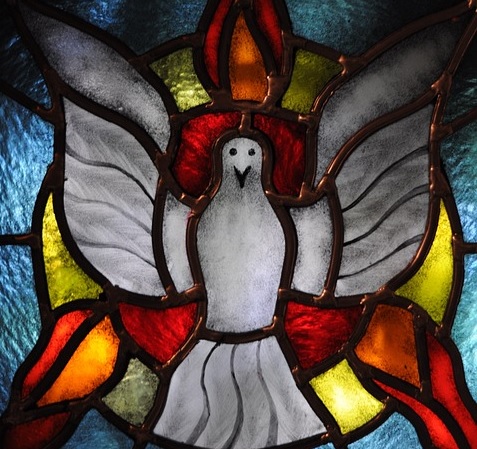
Spirit - Stained Glass

2 Corinthians 13:14 “May the grace of the Lord Jesus Christ, and the love of God, and the fellowship of the Holy Spirit be with you all.”

We use the word fellowship in many different ways–everything from the informal fun and friendship we enjoy with our friends to the formal ties of cooperation between church bodies. The Greek word Paul uses refers to something shared.  We possess certain gifts and blessings together, and we use and enjoy them in common. The fellowship of the Holy Spirit speaks of  sharing in God himself, his family, and his gifts.

Sharing does not come naturally. Think of how often our parents had to reinforce the idea with us when we were children. We saw siblings or playmates as rivals for the things we wanted for ourselves. That self-interest hasn’t disappeared in adulthood, has it. We don’t like to be lonely, but there are times we would choose isolation over sharing life and gifts with others. Alone with our stuff we might be miserable, but at least no one else is using up or wearing out the little treasures we are guarding so carefully. Never mind the greater treasure we are missing in the love and joy of life spent together.

The “stuff” God wants to share, and the time he wants to spend with us don’t even look attractive at first. Grace, forgiveness, holiness, even heaven–these features of life with him are “acquired tastes.” His word must worm its way into our hearts so that we acquire the taste and desire the gifts he wants to share.

But the Lord is intent on living in fellowship with us. By his grace Jesus has taken away all our sins. By his love the Father has claimed us as his own children. By calling us to faith, the Holy Spirit has made each one of us sharers in these holy gifts and more. God himself now shares us and all our life. He is ever with us. At no time is he absent from our lives. We share in him and all he is and has. We even share in the family business, and he has given us a part in spreading this grace, love, and fellowship to others.

I know a place where we will always be able to find this fellowship of the Holy Spirit. Each time we share in God’s word at church, or at home, the Spirit is there with his fellowship. Each time we share in the Lord’s Supper, Jesus is with us personally, bodily. At the communion table, God is with us, with his fellowship. As we gather with those who share our faith, God’s Spirit continues to share his gifts and strengthen the ties that bind us to himself and to the whole church on earth and in heaven.

This holy gift, this blessed promise, is often the last thing we hear when our worship ends. Take it with you. It is yours to enjoy.