Death in Tatters

shreds

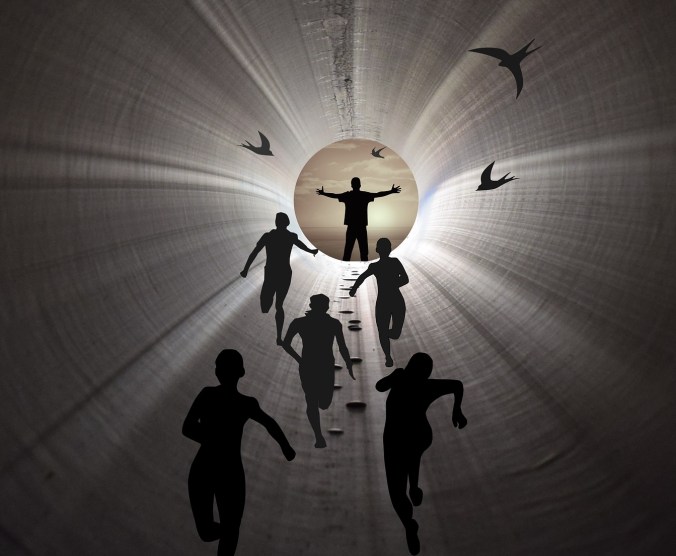
Isaiah 25:7-8a “On this mountain he will destroy the shroud that enfolds all peoples, the sheet that covers all nations; he will swallow up death forever.”

Facebook founder Mark Zuckerberg and his wife announced that they were donating three billion dollars to try to end all diseases in our lifetime. In his last state of the union address, President Obama appointed Vice President Biden to a task force to try to cure cancer. They want to double the speed of our progress against the disease.

The desire to wipe out leading causes of death is not a new one. In the past, great progress has been made in controlling or eradicating certain diseases. Smallpox, which killed between 300 and 500 million people during the 20th Century, today exists only in a few laboratory samples. Bubonic Plague, or “the Black Death,” killed nearly 100 million people during the 1300’s. That’s almost one fourth of the entire world population. As many as 2000 people around the world may still get the plague in any given year, but now it is treatable with antibiotics.

Just about the time we get a handle on one disease, it seems a new one appears on the scene. Ebola, West Nile Virus, Zika, AIDS–these have all become big concerns during my lifetime. The problem with mankind’s war on death is that we never get to the root of the problem. It’s not a disease, or bad genes, or untamed forces of nature, or unhealthy habits and practices. “Sin entered the world through one man, and death through sin. And in this way death came upon all men, because all sinned.” “The soul who sins is the one who will die.” “The wages of sin is death.” This is simply beyond the skill of modern science. It is beyond the reach of all human efforts, even religious ones. Only one person, one Being, can do anything about it.

And he has. Isaiah lived and wrote his prophecies in Jerusalem, the city built on the same mountain where 700 years later Jesus was put on trial, condemned to death, crucified, and buried. There he paid for the sins of the world. And when he rose from the dead three days later he accomplished what no doctor, no scientist, no researcher can ever do. He destroyed death. “Swallowed it up,” Isaiah says. He broke it and stomped all over it, and it will never work the way it used to work again. He changed it from permanent condition to temporary condition. He reconstructed what was once the gateway to hell, making it the door to our true home in heaven.

This makes all the difference. Christ destroys “the sheet that covers all nations, the shroud that enfolds all peoples.” Death is like a dark sheet, this shroud of gloom that darkens life. Jesus tore that sheet to shreds, and now the light comes pouring through. Consider the truly Christian funeral. We still shed some tears as we say goodbye. But it is not despair. Underneath the tears there are often smiles, even a note of joy. Gathered with those we love we often find laughter. As we remember those who have died, we consider where they have gone. We celebrate the new and perfect life they have in heaven. Death is in tatters, and Christ has set God’s people free.


Grace Calls for a Feast

Feast

Isaiah 25:6 “On this mountain the LORD Almighty will prepare a feast of rich food for all peoples, a banquet of aged wine–the best of meats and the finest of wines.”

When my wife and I got married, we fed dinner to over 150 people. When my children graduated from high school we fed 25 or 30 of our friends and family as well. My high school had an annual banquet to celebrate the academic and athletic accomplishments of the student body. Food is something we often use to celebrate milestones, achievements, and happy events. We have learned this from our God. When the Lord created a worship schedule for his Old Testament people, he created feast days. The Passover, the great celebration of Israel’s deliverance from Egypt, was the “Passover Feast.” Later in the year they had the “Feast of Pentecost” to celebrate the giving of the Law on Mt. Sinai, and the “Feast of Tabernacles” to remember their forty-year journey through the wilderness.

When God came to earth as a man, Jesus continued to show us that our Lord likes to celebrate with food. Jesus never got wild or out of control, but he was always open to attending a dinner party. He attended the wedding of his friends at Cana, a banquet with tax-collectors and sinners that Matthew threw in his honor, and even dinner at the homes of some of the Pharisees, who didn’t particularly like him. A few even accused him of being a drunkard and a glutton because he ate and drank so freely with people during his earthly ministry.

It shouldn’t surprise us, then, that when the early Christians started to put together their worship schedule to celebrate the things Jesus did to save us, feasting was something they had in mind. Usually we simply call it Christmas when we celebrate Jesus’ birth. But the more formal name for this in the church calendar is “The Feast of the Nativity.” Sometimes even less significant events were thought of as “feasts.” Maybe you never thought about the meaning or significance of these words from a song you hear around Christmas: “Good King Wenceslaus went out, on the Feast of Stephen.” The day the church set aside to remember the first New Testament Christian to give his life for Jesus was described as a Feast day.

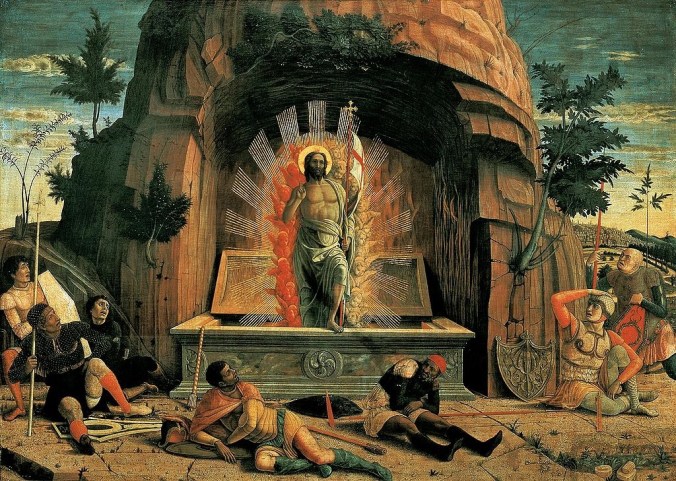
So the Lord is announcing a new feast here in Isaiah. It anticipates Jesus’ empty tomb. It celebrates God’s victory over death, and our resurrection from the dead. Isn’t that an unquestionably happy thought? And doesn’t this whole idea of feasting teach us something about the faith we believe? Somehow we Christians have managed to give people the idea that this faith is a sour, gloomy religion. The main thing about being Christian, we seem to communicate, is that we should feel bad about ourselves, and give things up, and not enjoy life very much.

It is true that God wants us to repent of our sins, and we have plenty of sins of which to repent. But the main thing about sin is that God forgives it! We are free, and he doesn’t ask us to pay a thing. I don’t deny that our Lord warns us not to cling too tightly to this world and the parts of it that give us pleasure. But it still pleases him when his children enjoy his gifts with thankful hearts. And as our senses fade and fail, and he takes away our ability to enjoy one thing or another, he does so only because he is going to give us better things, vastly better things, immeasurably better things, in the future home he has prepared for us. There is a happy tone, something to celebrate, in grace and heaven.

So get out the good china, splurge on your favorite delicacies, raise a glass in thankfulness for God’s saving love. A sour, gloomy life simply doesn’t fit.

Something Worth Saying

Sandals

Mark 6:12-13 “If any place will not welcome you or listen to you, shake the dust off your feet when you leave as a testimony against them.’ They went out and preached that people should repent. They drove out many demons and anointed many sick people with oil and healed them.”

There are two things we learn about the message Jesus sends his disciples to preach. First, The message includes a word of warning. When the disciples were rejected, Jesus did not want them to quietly leave town. They were to go through this ritual of shaking the dust off their feet. It was a vivid way of saying, “You are due for God’s judgment, and there is nothing in common between you and the people of God, not even the dust we are shaking from our feet.”

That doesn’t sound like a sure-fire way to win friends and influence people. But Jesus didn’t tell them to say this to be mean. Loving people means telling them the truth, especially when their lives are in danger. Telling people that they are headed for hell is not the same thing as wanting them to go there, any more than telling people that they are sick is the same thing as wanting them to be unhealthy. People need to know for their own good.

We still deliver that warning as a part of our witness for Jesus. The threat of hell is an indispensable tool in our evangelism toolbox. It may go against every advertising rule and publicity principle in the book. “The customer is always right,” we are told. People don’t want to be told that they are bad. People want to hear something positive that can help them right now. But you can be sure that on Judgment Day people won’t want to be on Jesus’ bad side, either. Jesus gives us a word of warning, a message of law, as part of what we need to be his witnesses.

Secondly, the disciples “went out and preached that people should repent.” Mark sums up their message in that one word, “repent.” That is not merely a repeat of what we have just said. To repent is to have a change of mind. To repent is to make a 180 degree turn. It includes the turn away from sin, but it also includes the alternative: the turn to Jesus and his free forgiveness. I don’t believe that the disciples’ message was all doom and gloom, fire and brimstone. They also preached the sweet love of Jesus. They didn’t preach despair and hopelessness. They preached faith and new life in the mercy of God that loved them so much he sent them a Savior.

In other words, we have something positive to say. To call the message about Jesus the “gospel,” the “good news,” is almost an understatement. Though people may be naturally inclined to reject it, we are offering to those to whom we witness the greatest alternative, the greatest opportunity, of all time: complete freedom from all responsibility for every sin–no exceptions; instant access to the most powerful being in the universe; 24/7 service and support for every earthly need, problem, or danger; the cure for death; the title and deed to a piece of prime real-estate in heaven–all for free, all at no cost to the customer. You don’t even have to pay sales tax. In the gospel, Jesus has given us everything we need to make the message sound appealing. When we are speaking the gospel, we have something worth saying, and hearing.

The Great Escape

Escape

1 Corinthians 15:51-53 – “Listen, I tell you a mystery. We will not all sleep, but we will all be changed—in a flash, in the twinkling of an eye, at the last trumpet. For the trumpet will sound, the dead will be raised imperishable, and we will be changed.

Talking about his stories of fantasy worlds, J.R.R. Tolkien once said, “I do not accept the tone of scorn or pity with which “Escape” is now so often used. Why should a man be scorned if, finding himself in prison, he tries to get out and go home? Or if, when he cannot do so, he thinks and talks about other topics than jails and prison-walls? The world outside has not become less real because the prisoner cannot see it.”

We are like people in prison living in a world corrupted by our own sin and that of others. We fight with “this body of sin” in which we live. We conduct a never-ending battle to bring our thoughts and passions under control. We struggle to purify our motives and love others unconditionally—even those who irritate us to no end. Isn’t that like living in a jail of sorts? We are the prisoners of frustrated labors. We are trapped in weakening and failing bodies. We are captives in an ever more hateful world around us. Is it wrong to long for the escape that Jesus died to procure for us, the paradise he promised the penitent thief on the cross next to him? This is not some Tolkienesque fantasy world. It is a heavenly country, no less real just because we prisoners can’t see it.

Even now we find relief in the forgiveness of our sins. By faith we find a foretaste of heavenly peace and joy in knowing God’s grace and love. But Jesus has always intended to give us something more. Paul promises real change in these words from 1 Corinthians. Whether we have gone to feed the flowers long ago, or whether we are still on our way to the grave when Jesus returns, we will be instantly changed.

Paul calls us “imperishable.” The compost pile behind my garage reminds me what it means to be perishable. The moldy oranges, brown bananas, wilted lettuce and fermenting grass clippings may be perishing much faster than this body of mine, but our bodies are in the same process. They just don’t decay so fast. Graying and thinning hair, weakening eyes, dislocated or arthritic joints remind us that we are perishing, too.

The perishable will clothe itself with the imperishable. Jesus’ resurrection promises health and strength unaffected by age. Pain will disappear because it no longer serves a purpose. Terms like weary, fatigued, exhausted won’t have any use. Our resurrected and transformed bodies will be the perpetual motion machine, 100% efficient, incapable of suffering wear and tear.

The mortal will clothe itself with immortality. Death will follow its mother, Sin, into oblivion. And it will take its right hand man Fear along with it. We will finally know the settled security we so desire, but which always manages to escape our grasp in this place. Never again will we feel the emptiness of separation because someone we love has been permanently removed beyond all reach or contact. We will live, and life will be pure joy. That life will be all there is.

Jesus’ resurrection promises the great escape: a real change from what we know now. That promise helps make it possible to cope with the present life we live. We, too, are “longing for a better country, a heavenly one” (Hebrews 11:16). Our citizenship is in heaven. And we need not be ashamed to find our hope and comfort there.

Jesus’ Guided Tour of the Old Testament

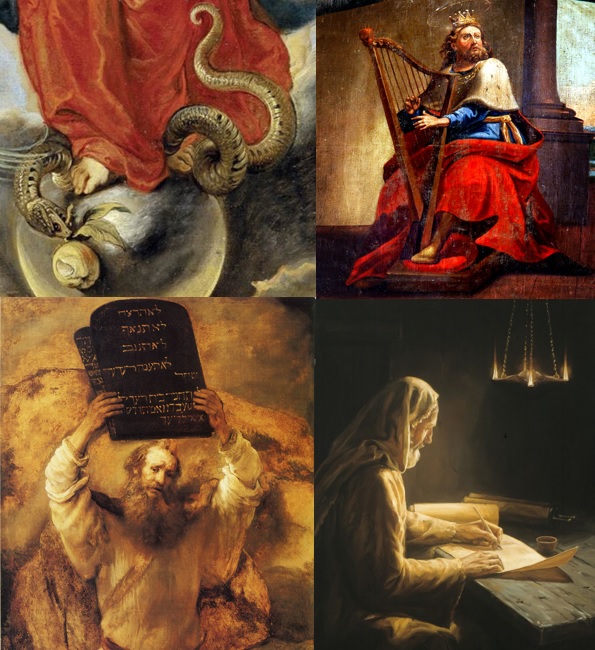
OT Prophets

Luke 24:27 “Beginning with Moses and all the prophets he explained to them what was said in all the Scriptures concerning himself.”

I have often wished that Luke preserved this sermon Jesus preached to a couple of depressed disciples Easter evening. I wish he had written it down for us to read.

But then, Luke didn’t have to. It is already written across the pages of the Old Testament. Jesus was simply taking these men on a tour through the words recorded there. He expected that they were clear enough for any honest disciple to understand them, if he just bothered to read them.

Jesus began with Moses. No doubt that means he began with the very first gospel promise in Genesis 3:15. “I will put enmity between you and the woman, and between your offspring and hers. He will crush your head, and you will strike his heal.” The words were directed against Satan on the day the human race fell. Jesus is the offspring of the woman who would suffer when Satan struck him. It would be painful–heal pain can be crippling. But Jesus is the one who would do the crushing.

From there he likely went on to the promises to Abraham, Isaac, and Jacob; Moses’ promise of a future prophet like himself; the many Psalms of David that describe Jesus’ person and work; the suffering servant in Isaiah 53; the many descriptions of Holy Week in the Prophet Zechariah.

Isaiah’s 53rd chapter probably deserves special mention. Did you know that this chapter is no longer read in Jewish synagogues today? Some people call it “The Forbidden Chapter.” How can you miss the references to Jesus’ suffering, “He was despised and rejected by men, a man of sorrows, and familiar with suffering;” his willing death, “he was led like a lamb to the slaughter, and as a sheep before his shearers is silent, so he did not open his mouth;” the substitutionary purpose of his death, paying the penalty for our own sins, “But he was pierced for our transgressions, he was crushed for our iniquities;” and finally, his resurrection to life, “though the Lord makes his life a guilt offering, he will see his offspring and prolong his days, and the will of the Lord will prosper in his hand. After the suffering of his soul, he will see the light of life and be satisfied”?

So Jesus opened the eyes of these men. In doing so he turned their lives upside down. All their old hopes and dreams were crushed. But in their place they found a God and Savior who loved them beyond imagination. Every sin was forgiven. Every demand and requirement of God was fulfilled. Their relationship with God was fully reconciled. The journey back to God’s good graces was complete. Life would never end. Heaven was guaranteed. No wonder they asked each other after they recognized Jesus at the end of the evening and he disappeared, “Were not our hearts burning within us while he talked with us on the road and opened the Scriptures to us?”

Do you know what happens when God opens our eyes and we see our risen Lord in his word? We trade the garbage we have created with our lives, and the garbage we have planned for our lives, for real treasure. Then we see that the impressive education, and perfect family, and successful career, and healthy life and happy retirement aren’t all that important. Whether I travel the world, or develop a stellar reputation, or build great wealth doesn’t really matter. To borrow a phrase from Paul, “I consider everything a loss compared to the surpassing greatness of knowing Christ Jesus my Lord, for whose sake I have lost all things. I consider them rubbish that I may gain Christ and be found in him” (Philippians 3:8-9). To borrow a picture from C.S. Lewis, we stop acting like the little children at the beach playing in the trash, fascinated by the broken pieces of glass, when God has placed before us the golden sands and magnificent ocean of his grace in the kingdom of the Son he loves. Open our eyes, Risen Lord! Let us see you in your word.

Don’t Be a Fool

fool

Luke 24:25-26 “He said to them, ‘How foolish you are, and slow of heart to believe all that the prophets have spoken! Did not the Christ have to suffer these things and then enter his glory?”

Foolish, slow–these are not compliments or terms of endearment. The Greek behind “foolish” suggests mostly empty space between their ears. “Hello! Any brain cells in there?” Jesus is suggesting that they suffer from a lack of knowledge, even though they don’t suffer from a lack of instruction, or a lack of experience. “Why don’t you guys get it?”

Is Jesus’ being unreasonable in expecting these men to know better? Is the way he addresses them mean? No, sometimes you have to let a person see his fault in plain words. It is not the time to worry about wounding a fragile self-esteem. Admittedly, sometimes people don’t understand because they just haven’t been taught. For some a concept may be too difficult to grasp. That’s not the case here. These two were underachieving. They were grasping less than they were capable of.

As exhibit A, Jesus points out that they turned a blind eye to all the prophets had written about his sufferings and his resurrection. Jesus often referred to these prophecies during his ministry. Why hadn’t they listened and paid attention? As exhibit B he could have referred to the many times he himself told them, “I am going to suffer, die, and rise.” After all, his enemies got it. They asked for a guard at his tomb because they remembered Jesus saying he would rise in three days. Was it asking too much for the men who loved and trusted him to take his words seriously?

Sometimes we don’t see, because we don’t want to. During my college years I tutored high school students in Algebra and Latin. Sometimes I believe they didn’t understand because they didn’t want to. Algebra and Latin can be hard, I know. But not everything is hard to get. With some of these students, if they were to “get” the concepts they claimed were confusing, then they would have to do the work themselves going forward. They would have to do the assignments without someone walking them through it. So long as they could say, “I don’t get it,” they could lean on someone else to do the thinking for them.

Jesus’ disciples didn’t get that the Christ first had to suffer, and then enter his glory, in part, because they didn’t want to. If they understood it and believed it, that meant big changes to their plans and behavior. It meant Jesus wouldn’t be the deliverer to set their country free and make it great again. More than that, it meant that the grand future of success, riches, and power they were planning for themselves wasn’t going to happen. To follow Jesus means to go where he goes: first suffering, then glory. I am sorry if that is a disappointing conclusion. But it is why we need the risen Lord to open our eyes and overcome our foolish hearts, so slow to believe.

This has application to every time we approach the word of God. We come to a passage in the Bible, and we say that it is hard to understand because we don’t want to believe it. The words are simple. A five-year-old could tell you what they are saying. But if we believe them, then we are going to have to change. We are going to have to admit something about ourselves, or about our God. It may say wonderful things about him, but not so much about you and me. The world will hate us and reject us for believing it. So we say these words don’t make sense to us. Or we say that it is just someone’s interpretation.

Don’t let the gospel become one of those things. People have been denying the plain meaning of Jesus’ cross and empty tomb since the time of the apostles. But Isaiah could explain Jesus’ cross seven hundred years before it happened. “He was pierced for our transgressions, he was crushed for our iniquities; the punishment that brought us peace was upon him, and by his wounds we are healed. We all, like sheep have gone astray, each of us has turned to his own way; and the Lord has laid on him the iniquity of us all” (53:5-6).

People who say Jesus’ body didn’t literally leave the tomb (because people don’t rise from the dead) think they are “modern” and “smart.” They are neither. “If Christ has not been raised, your faith is futile; you are still in your sins” (1 Corinthians 15:17).

The truth is so much better, and it isn’t hard to understand. “But Christ has indeed been raised from the dead, the firstfruits of those who have fallen asleep” (1 Corinthians 15:20). Jesus’ return to life is “firstfruits.” It is the promise that other resurrections will follow his—our resurrections. That is the smart thing to believe.

God give us wisdom to do so.

No Reason to Fear

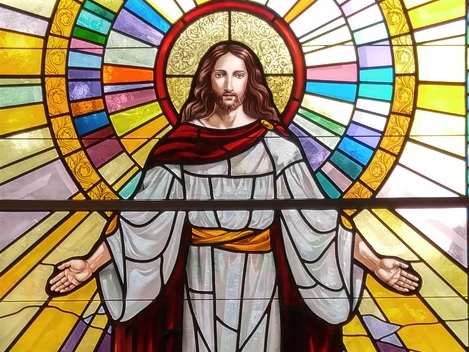
Jesus Glory 2

Revelation 1:17-18 “When I saw him, I fell at his feet as though dead. Then he placed his right hand on me and said: ‘Do not be afraid. I am the First and the Last. I am the Living One; I was dead, and now look, I am alive forever and ever! And I hold the keys of death and Hades.’”

Does anything about these words strike you as ironic? Jesus tells John not to be afraid. We understand the reason for this from so many other encounters between men and heavenly beings in Scripture. John has glimpsed Jesus’ heavenly majesty. Its light unavoidably fixes his attention on his own sinful inadequacies and shortcomings. A heart-pounding terror seizes him as the contrast between him and Christ reminds him of the hell he deserves.

So Jesus tells John not to be afraid, and then he lists the reasons why. That is what strikes me as ironic. Reason One: “I am the First and the Last.” Doesn’t that highlight the magnificence, the unboundedness, the limitless greatness of Jesus even more? Doesn’t that emphasize how small and insignificant John is by comparison? Doesn’t that inspire the small, shrinking feeling you get when you look into the expanse of a star-filled sky, only magnified a thousand times over?

Reason Two: “I was dead, and now look, I am alive.” How many scary books and movies are about the dead coming back to life! We have ghosts, and mummies, and Frankenstein, and Jason, and Freddy Krueger.

Reason Three: “I hold the keys of death and Hades.” Jesus is more than an ancient being unlimited by the passage of time who has come back from the dead. He also has the power to open or close hell to you. Doesn’t that sound scary? As Jesus’ reasons not to be afraid progress, to an outsider it might be difficult to see the progress.

Only in Jesus’ mouth could these words make it better for John…or for us. Only in Jesus’ mouth are these concepts tinged with love and loaded with peace. Jesus is the First and the Last, the eternal God who does not change, without beginning or end. He will not go away. That applies to his grace as much as to his power. Jesus may look awesome, even foreboding, in John’s vision, but he is still who he has always been. He is still, and always will be, the one who came into the world not to condemn it, but to save it. He is still, and always will be, the one who takes pleasure in the death of no one, but that they would repent and live. In addition to all the other ways in which he is magnificent, there is this magnificent monotony of being a God who saves–from Eden to Judgment Day, from First to Last.

Jesus was dead and is alive again because he died our death for sin. He doesn’t live as some freak of nature or undead zombie. He lives as proof that sin has been stripped of its power to tear our bodies and souls apart, only to allow them back together later for an eternity of corruption and misery. He lives as proof that no matter what your best life now might look like, it isn’t worth comparing to the one that waits on the other side of death.

Jesus holds the key. This ancient being, unlimited by the passage of time, has come back from the dead to close hell for you and me. By the forgiveness of sins he has opened heaven. The keys to eternal life are safe in his hands.

Jesus’ resurrection means that we don’t have to be afraid. We don’t have to be afraid of him. We don’t have to be afraid of the present. We don’t have to be afraid of the future. We don’t have to be afraid if he is eternal, alive, or holding the key to our future. And he is.

Know the Power

Resurrection Power

Philippians 3:10 “I want to know Christ, and the power of his resurrection…”

Jesus’ resurrection involves power. Of course, there must be immeasurable power, indescribable power, unearthly power to bring a man back to life after he has been dead for three days. But the power of Jesus’ resurrection does not work only on Jesus. It works on us, too. It’s why Paul wanted to know Christ.

The power of Jesus’ resurrection is the power that makes us spiritually alive. A dead Christ inspires no faith. It can inspire fear. That’s the effect it had on Jesus’ disciples. They locked themselves behind closed doors because they were afraid they would be the next to go, the next to be arrested and executed. It can inspire grief, depression, hopelessness. Poor Mary Magdalene weeps alone at Jesus’ tomb. She is beside herself because not only is her Friend and Master dead. Now they have desecrated his tomb and taken his body away, and she has no proper place to mourn her loss.

At most, maybe a dead Christ can inspire curiosity. I once visited Rome, and I visited the Vatican. There you can see the mummified remains of four popes on display, each one kept under a glass case inviting the stares and the photographs of millions of visitors every year. I was curious to see the centuries-old bodies, too. But my interest was like the interest a person takes in the sideshow at the circus. It is true that during their lives these were some of the wealthiest, most influential, most powerful people on earth. But their dried and shriveled remains inspired no desire to know them, to trust them, or to follow them anymore.

Without a living Christ, this is what we are left with in this world: Fear of our own death and the sin for which we have to answer ourselves; grief, depression, and hopelessness; a life filled with losses beyond our understanding or control; and the occasional curious sideshow to distract us from the misery we live today, and the misery we fear will follow.

A Christ who takes my place under God’s judgment, dies on a cross for my crimes, and then walks out of his grave alive three days later with all the power and promise of heaven–that invades my soul and takes over my heart! Here is someone who invites more than my admiration or imitation. This is a man who deserves my complete trust and utter dedication. More than deserves it, he creates it. With his gospel the living Christ inserts faith right through my ears and eyes. He plants it deep inside my mind and heart. I want to know Christ because his resurrection has the power to make me spiritually alive. It fills me with faith, and from that faith flows a new life full of love, and hope, and joy.

First Things First

Gambling Christ Clothes

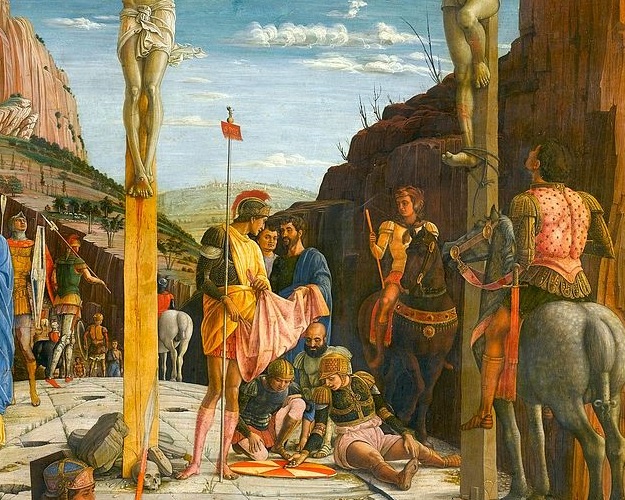
Jesus said, “Father, forgive them, for they do not know what they are doing.” And they divided up his clothes by casting lots. (Luke 23:34 NIV)

First things first. What is Good Friday about? It is not a day for us to well up in self-righteous anger at the horrible Jewish leaders who plotted Jesus’ death or the cowardly Roman governor who would not prevent it or the cruel Roman soldiers who enjoyed executing Jesus far too much. It is not a day for us to take in a tear-jerker story and find relief in the cleansing properties of a good cry. It is not a day for us to suffer for our sins alongside Jesus, as though we could share the burden by acting unusually somber and dwelling on our guilt for a long time.

Jesus first words from the cross set the tone for this day. They unveil the meaning of this gruesome execution outside the walls of Jerusalem. “Father, forgive them, for they do not know what they are doing.” The pain, the cross, the death are all about one thing: forgiveness. It is the main theme of Christianity–not goodness, or success, or sacrifice, but forgiveness. Here, Jesus applies to his executioners the very thing that he was dying to give them: forgiveness.

Not that they were asking for it. What do they do just before Christ’s gracious prayer for them? To what is Jesus responding? Certainly not an apology. They have just fastened his body to two pieces of lumber in a grotesque and exaggerated version of the procedure we use to pin a calendar to the wall. They have pierced his hands and his feet, not with the sharp and precise cuts of a surgeon’s knife, nor the sterilized needle used for body piercings, nor the 10 penny nails a carpenter uses to join two-by-fours. They have taken dirty, rusty iron spikes large enough to keep an adult human being fastened to upright pieces of lumber without his flesh tearing through the nails and his body falling to the ground. They have driven them through his hands and feet with a hammer. This inspires Jesus to say, “Father, forgive them.”

And what do Jesus’ gracious words produce in them? Repentance? Regret? No, as Jesus is forgiving them, they are adding insult to injury. They take his last earthly possessions, his clothing, and use them as the prize in a game of chance. They cast lots for his clothing. Still, Jesus’ forgiveness stands. It’s what this day is about. It’s why he let them nail him to this cross in the first place.

First things first. Good Friday, the crucifixion and death of Jesus Christ, is about forgiveness. Our sins crucified Jesus, just as surely as the hands of those soldiers. We cannot always, or even usually, plead ignorance. Still, Jesus pleads for our forgiveness. On the cross he pays for our forgiveness. And though we may add insult to injury by sinning again, Jesus’ prayer remains the same. “Father, forgive them, for they do not know what they are doing.”