Only Good Gifts

snake-on-stones

Matthew 7:9-11 “Which of you, if his son asks for bread, will give him a stone? Or if he asks for a fish will give him a snake? If you, then, though you are evil, know how to give good gifts to your children, how much more will your Father in heaven give good gifts to those who ask him!”

What do we call a parent who gives his child everything he asks for? A weak parent, perhaps even a bad parent, but probably not a good parent. It can be tempting to give in to their less sensible requests just to stop the whining and begging. Maybe you have agonized a little over whether your child was old enough to safely own the jack knife or rifle he has been asking for, or whether it was a good idea to get your children the Play Station or X-Box console they wanted, as though they needed even more encouragement to sit in front of the TV. For a good parent a good gift is always something that is wholesome and beneficial, never something that is dangerous or harmful.

Jesus reminds us that our heavenly Father is a good parent. He promises that he gives us only good gifts, even if that is not immediately apparent to us.

“Which of you, if his son asks for bread, will give him a stone?” Remember Jesus’ first temptation in the wilderness? Satan tempted Jesus to turn stones into bread. But Jesus was trusting the Father in heaven to take care of his needs. If God in heaven knew that Jesus needed bread, he wouldn’t have given him worthless stones and expected him to somehow make do. If the Father had provided no food at that particular moment, Jesus had to trust that the Father knew what he was doing.

And a father certainly wouldn’t give his children something dangerous, like a snake. The danger wasn’t merely snake bite. Snakes were an unclean animal. Some Texans I’ve known have a taste for rattlesnake, but for an Old Testament Jewish person this was forbidden. Eating a snake made you ceremonially unclean and hurt your relationship with God in Jesus’ day. No loving father would purposely do that to his child.

Aren’t we sometimes suspicious that this is exactly what our Father does, however? We pray and pray about something, but it seems as if nothing happens. Worse yet, we get just the opposite of what we asked for. Instead of relief our life seems to get harder. It seems as if God is answering our prayers with the spiritual equivalents of stones and snakes.

We need to hear and trust Jesus concluding promise, “If you, then, though you are evil, know how to give good gifts to your children, how much more will your Father in heaven give good gifts to those who ask him!” In order to understand Jesus’ promise, we need to understand what he means by “good.” As is so often the case, the Greek language has several words for “good.” Here it doesn’t mean “pretty,” or “pleasant,” or “pricey,” or “just what you asked for.” Here the word refers to something which is useful or beneficial. It is actually going to help you in the long run. It’s just like when your parents used to tell you, “Take this. It’s good for you.” And you knew that meant it wasn’t pretty or pleasant, and it was almost never just what you asked for. But true to their promise, it was good for you–it did benefit you in some way or other.

Our heavenly Father answers prayer in a similar way. The only gifts he knows how to give are good gifts. Sometimes they are very enjoyable. Sometimes we get what we asked for, because we have asked for exactly what we need. But because God gives us only good gifts, he doesn’t give us things that will harm us, even when we ask for them.

Since God promises to give us only good gifts, can’t we pray to him with such confidence? We know every answer he gives to us will bless us. Sometimes people say, “Be careful what you pray for. You just might get it.” I have heard people refer to prayer as “dangerous.” And it’s true that God’s answers to our prayers can take some unexpected twists and turns. But that should not discourage our prayers. Jesus promises that everything our Father in heaven gives us is good. In his saving life, death, and resurrection, Jesus himself is the promise that everything the Father gives us is good. We can let ‘er rip, and pour out our requests non-stop, with a child’s confidence in his father’s help. No matter how our Father answers our prayers, we only stand to gain.

(Picture By Ltshears - Own work, CC BY-SA 3.0, 
https://commons.wikimedia.org/w/index.php?curid=29533674)
It’s A Miracle

transfiguration

“And we have the word of the prophets made more certain, and you will do well to pay attention to it, as to a light shining in a dark place, until the day dawns and the morning star rises in your hearts.” (2 Peter 1:19)

Someone once asked me whether or not I believed the age of miracles was over. In the Bible, accounts of miracles tend to be bunched together around a few historical characters: Moses, Elijah, Jesus, and the Apostles. But I don’t know if there ever was an “age of miracles.” God’s power has always been at work in the lives of his people. From time to time he still works in our world in ways that can’t be explained naturally.

The miraculous is an indispensable part of Christianity. Just think about how much of the Christmas account describes things miraculous, or what would be left of it without them. But our faith does not depend on being eye witnesses of miracles. We have something better in the word. We have “the word of the prophets made more certain.” All by itself, God’s word has always been 100 percent reliable. There has never been a problem with God’s word.

But there has been a problem with me. You and I might not be like those who consider the Bible a collection of myths. We don’t dismiss miraculous events as fantasies. But we still have subtle ways of showing our lack of trust. Even Christians mistrust God’s law. The Bible clearly forbids sex outside of marriage. That didn’t prevent unmarried Christians I know from claiming they prayed to God about it, and insisting that in their case God was making an exception. Jesus equates hatred with murder. Yet many Christians try to justify hateful feelings because they believe their situation is somehow unique or exceptional. I have heard adult Christians propose that “he started it” was a valid reason to treat someone else unkindly.

Sometimes we just don’t think God’s word is sufficient for our faith, or enough to convert someone else, and we yearn for a visible demonstration of God’s power. But what does Jesus say about that sort of thing? “A wicked and adulterous generation asks for a sign.” In such ways we demonstrate our own lack of trust in God’s word.

Peter shores up our flagging faith when he promises, “We have the word of the prophets made more certain.” Is it just a coincidence that the events surrounding Jesus’ birth, and life, and death, and resurrection fulfill so many prophecies made hundreds and even thousands of years before he lived? We read the prophecies of Moses, or David, or Isaiah. We find that these are not vague generalities like your horoscope that might fit the lives of dozens of people you know. They describe exactly the specific places and events and circumstances in Jesus’ life. They demonstrate a reliability which has never failed.

It’s no wonder that Peter encourages, “…you will do well to pay attention to it, as to a light shining in a dark place, until the day dawns and the morning star rises in your hearts.” Why listen to the Word’s witness? The words of Scripture are so much more than just “God’s Little Instruction Book” or “Chicken Soup for the Soul.” A simple message like, “Jesus so loves you that he died for your every sin. Dear Child of God, your sins are all forgiven,” are filled with the miraculous power of God. When people hear them, a little miracle takes place in human hearts. A bright beacon of faith, and hope, and love begins to shine where there was only uncertainty, and despair, and loneliness before.

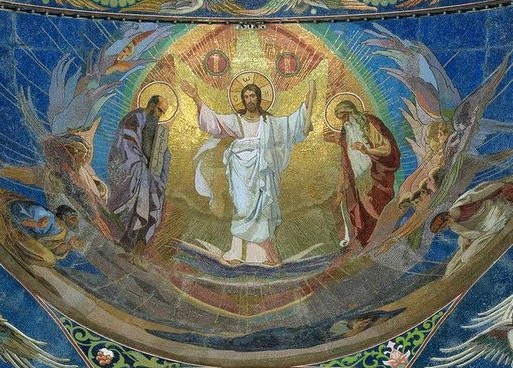
We don’t need to see the events of the first Christmas, or Jesus’ death and resurrection, or his shining in all his glory on the mountain (the event Peter is referencing in this context). When we listen to the Word’s witness, Jesus himself lives and shines in our hearts. By faith he is closer to us than he ever was to those who saw his physical body but never put their faith in him. His word makes me so sure that he loves me, so sure that he forgives me, so sure that now I belong just to him, that my hearts is filled with faith.

That is all the miracle we will ever need.

God’s Top Secret

https://upload.wikimedia.org/wikipedia/commons/e/e0/TopSecretFile.jpg

1 Corinthians 2:6-13 “We do, however, speak a message of wisdom among the mature, but not the wisdom of this age or of the rulers of this age, who are coming to nothing. No, we speak of God’s secret wisdom, a wisdom that has been hidden and that God destined for our glory before time began.”

The earth is flat and the moon is made of green cheese. Autumn leaves turn colors because little fairies come out at night and paint them orange and yellow while we are sleeping. Breaking a mirror will give you seven years of bad luck. If I told you that I believe all these things, you would probably think that I was making a joke. If I insisted, you might think that I had finally cracked. If everything else about me seemed normal, you might consider me a fool.

I don’t believe that the earth is flat, the moon is made of green cheese, fairies paint the leaves, or breaking mirrors negatively affects your future. But I know that some of the Bible truths we believe sound just about as strange to much of the world around us. Christian faith leads some to wonder if we have taken leave of our senses.

God’s wisdom and the world’s wisdom often part ways with each other because God’s wisdom is hidden from this age in which we now live. The difference between these two kinds of “wisdom” is not a simple matter of two alternative paths. Jesus Christ–the Way, the Truth, and the Life, the narrow door and the narrow path–is the only way to the Father and eternal life. That is God’s wisdom. The general equality of all world religions is the world’s wisdom, or worse, the generic, empty “spirituality” more and more people are adopting. These lead neither to God nor to life. To quote Paul’s words here, “they are coming to nothing.”

But they are packaged and marketed to you and me in a way that make them hard to resist. They keep wearing away at our resistance. The spin is that if you adopt the world’s wisdom, you will be more popular, you will have more fun, you must be more intelligent, you are more just or fair. If you reject the world’s wisdom in favor of God’s, you are an extremist, intolerant, someone who thinks you are better than others, or just plain ignorant. It’s a great marketing campaign, maybe the best that ever was. You feel its tug, don’t you.

In contrast, Paul’s “message of wisdom” is talking about the gospel, God’s “secret wisdom.” The Lord of glory was crucified for us. Look at the facts of Jesus’ life. If God didn’t intervene in human history, who would have known about this person named Jesus who lived and died in the obscurity of Roman occupied Israel? When Jesus was born, who would have known unless God sent angels to tell the shepherds, “Today in the city of David a Savior has been born to you. He is Christ the Lord.” When Jesus died on the cross, who really believed they were crucifying the “Lord of glory”? Even his disciples seemed to have given up on the idea. When Jesus rose again, it took the intervention of angels again to convince the women that the body was alive, not stolen. And the disciples didn’t believe until Jesus began appearing to them himself. Without God’s own intervention, this all would have remained God’s little secret.

More than these historical facts, God’s secret wisdom includes the meaning of Jesus’ life, death and resurrection. His secret wisdom is the thing God was doing for us. God entered our world as one of us, paid for all our sins by his own death, freely forgave every sin and set us free from them, made life and immortality our own as his gift. Who would have guessed that? Grace is the operative word for our relationship with God. It is our confidence of his love, our hope that we will live with him. It is not “obedience,” or “purpose,” or “effort,” or “sincerity,” or “passion.” It is grace, God’s gift-love, that has been hidden from the ages, including our own.

One commentator has noted, “No heathen people ever conceived a god who would actually take care of those who placed their reliance on him.” They live in fear, not faith. They have to work their magic and pay their dues to keep their gods happy and themselves safe. A God who freely loves them as a Father, and freely forgives? That’s our message, Paul says. That’s God’s wisdom. By giving us the gospel and leading you to faith, God has let you in on this secret.

It’s not a secret that he wants us to keep.

Jesus Has You Covered

robes

Revelation 3:17-18 “You do not realize that you are wretched, pitiful, poor, blind,and naked. I counsel you to buy from me gold refined in the fire, so you can become rich; and white clothes to wear, so you can cover your shameful nakedness.”

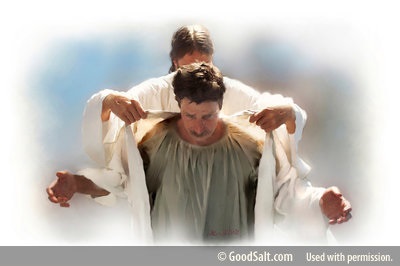
The term “wardrobe malfunction” was coined after an unfortunate incident during the halftime show at a Superbowl about a dozen years ago. Sometimes our clothing fails us. Spiritually, we suffer from more than just a little “wardrobe malfunction.” Without Jesus, we are “naked.” It’s worse than not getting all zipped or buttoned up after a trip to the restroom. God sees right through us into all our secret thoughts and private moments. All we do or think is exposed to him.There is nothing covering our sin.

Jesus doesn’t leer at us or mock us in our nakedness. He offers “white clothes to wear, so that you can cover your shameful nakedness.” This pictures a facet of God’s saving love in the gospel that we don’t give so much attention. We tend to think first of the cross, and Jesus paying for our sins, and rightly so. But he gives us more.

Maybe someone has stolen the credit you deserved for something you did. Has anyone ever given you the credit for something good you didn’t do? Since the creation of the world there has been only one holy, spotless life of pure love and goodness, and that is the life Jesus lived during his thirty-three years with us here. Now he says, “Let’s see how that life looks on you.” He doesn’t offer us a cheap knock-off made in China; or a pattern, some material, and a sewing machine so that we can make our own. He goes to his closet, and he dresses us up in his own perfection. He covers the story of our failings, our weak moments, our meltdowns and angry outbursts, our cold-heartedness and loveless hypocrisy, with his perfect patience, his good-hearted kindness and mercy to everyone he met, his courage and integrity, his consistent honesty and his uncomplaining sacrifice. He gives us the credit for his life and his love.

“Oh look,” he says, “It’s a perfect fit! Why don’t you keep it, and whenever my Father sees you, he will say we look like twins.” Jesus’ righteousness is the last and only thing we will ever need to wear.

The King Has Come

d-day

Luke 10:8 “When you enter a town and are welcomed, eat what is set before you. 9 Heal the sick who are there and tell them, ‘The kingdom of God is near you.’

When C.S. Lewis wrote his book Mere Christianity, he entitled the chapter on Jesus entry into our world “The Invasion.” He described our existence in this world as living in “enemy occupied territory.” No doubt Lewis chose his terminology from his experience of living in England through two World Wars. In fact, he wrote this in the middle of World War II.

The things which Lewis’s phrases suggest about our world and its control are accurate from a Scriptural point of view. When Satan offered Jesus all the kingdoms of this world in exchange for his worship, he claimed, “I will give you all their authority and splendor, for it has been given to me, and I can give it to anyone I want to” (Luke 4:6). This may well have been more than baseless bragging. Jesus calls the devil the “prince of this world” three times in the gospel of John. Paul refers to him as the “ruler of the kingdom of the air, the spirit who is now at work in those who are disobedient” in Ephesians 2. The author of Hebrews tells us that Jesus came to “destroy him who holds the power of death—that is, the devil—and free those who all their lives were held in slavery by their fear of death” (Heb. 2:15).

While our Lord is the rightful ruler of this world and all who live in it, ever since Satan led our first parents into rebellion this has become “enemy occupied territory.” To this day the enemy’s kingdom dominates this world’s inhabitants.

To those who know what it is like to be held in slavery by their fear of death, to those who have experienced the oppression of having sin as your master, to those who long to be free of the dominion of their own sinful nature, the message of “the kingdom of God is near” is good news. The invasion has taken place. When Jesus says that the kingdom of God is near, he doesn’t mean that it is coming soon. He means that it is here. God is inviting us to live under his rule right now. Jesus has come to liberate us from sin, and the fear of death, and the control of Satan, and the dominion of our own sinful nature. God has given us the privilege living under his rule of love, where his yoke is easy and his burden is light, where he comes not so much to be served as to serve, where he rescues us from every evil attack and brings us safely to his heavenly kingdom.

Yes, “The kingdom of God is near” is good news: good news for us now as we live under grace, and good news for our service to that kingdom. We can be confident that our labor in the Lord is not in vain.

A Promise You Can Count On

political-signs

Joshua 6:20 “When the trumpets sounded, the people shouted, and at the sound of the trumpet, when the people gave a loud shout, the wall collapsed; so every man charged straight in, and they took the city.”

Perhaps nothing undercuts our faith in people more than promises that are made but not kept. Politicians are feeding us heaping helpings of promises in these months leading up to a presidential election. Past experience tells us they won’t all be kept. Even if your candidate wins, you will probably be disappointed by some of the promises that get broken.

That is never an issue with our Lord. He keeps his promises. Just ask Joshua and the people he led in taking the city of Jericho. The walls miraculously fell down, just like the Lord had promised.

As strange as God’s plan sounded, it worked. But that is always the way with God’s plans, isn’t it. Years later Joshua told these same people, “You know with all your heart and soul that not one of all the good promises the Lord your God gave you has failed. Every promise has been fulfilled; not one has failed.” He may ask us to believe and do some strange things, but he keeps his promises. He never lets us down.

With each promise kept the Lord had built the faith of his people. He turned them from a nation of sheep farmers and desert wanderers into an army of believers who followed his lead and triumphed in his power.

Today, you and I live with even more promises kept than they did. Right there at Jericho over 3000 years ago he was keeping a promise to you and me, too. It’s a promise that means the difference between heaven and hell. Do you know what it is? Less than 20 miles from Jericho is a little town called Bethlehem, the place where Jesus would be born. Just about 15 miles away was the place where he would suffer and die to pay for the sins of the world. The fall of Jericho was the first step in making this the Land of Promise, the homeland of Jesus, another step in God’s plan to save the world. The promise of Jesus was kept because God kept his promise at Jericho.

That’s a promise on which we can build our faith. That’s the promise that makes us his modern day army of believers. Trust his word, follow his lead, and triumph in his power.

Faith and Reason

graduation

Joshua 6:3-5 “March around the city once with all the armed men. Do this for six days. Have seven priests carry seven trumpets of rams horns in front of the ark. On the seventh day, march around the city seven times with the priests blowing the trumpets. When you hear them sound a long blast on the trumpets, have all the people give a loud shout; then the wall of the city will collapse and the people will go up, every man straight in.”

A faith that has any value needs to have the proper object. It needs to rest on a suitable foundation. Our puny little minds are not a proper object for our faith. Our puny little ideas are not a suitable foundation. That is why, when the Lord builds his people’s faith, he doesn’t limit himself to limited human reason.

Take, for example, this plan he gave Joshua to conquer Jericho. Does that sound like a reasonable plan for attacking the city? It seems to start out right, with the army marching around the city. Surrounding the city is good. But then you bring in the clergy, and some brass band, and some church furniture, and you never do anything more than yell. What was Israel– the big, bad wolf, and they were going to huff, and to puff, and to blow the house down? Where are the catapults, and the grappling hooks, and the ladders, and the battering rams? Does God’s plan seem sensible?

Not to faithless human reason. Not if human power had to bring the walls down. But that is the problem with our human reason, isn’t it. It wants to judge God’s promises and plans as though he were a man, bound by human limitations. World-wide floods that cover all the mountains, ninety-year old women giving birth, large bodies of water splitting in two, bread miraculously appearing on the ground every morning, the entire planet standing still for a day without a sunset, water turned into wine, blind people seeing again, dead people raised to life, water that washes away sin–all promises of God that seem a little foolish to human reason.

Your reason and my reason are not exempt from questioning God. “God will not let you be tempted beyond what you can bear.” “Seek first his kingdom, and his righteousness, and all these things will be given to you as well.” “Wives, submit to your husbands.” “Love your enemies.” “Turn the other cheek.” “In all things, God works for the good of those who love him.” Every one of these is a word of God. Have you ever thought one or more seemed a little unreasonable? Question God in these things, demand that he be reasonable by human standards, and how long will we believe that a Holy God can love sinners, or that one man could die for the sins of the world?

In order to exercise our faith and free us from our addiction to our own “wisdom;” in order to convince us that we have a real God, a supernatural God, unbounded by the laws of nature, he defies reason. He asks us to believe and do what seems foolish. He reaches out his hand, and he says, “Trust me, and I will deliver you. Your enemy’s walls will fall down for no apparent reason. Your sins will disappear with no effort of your own. Your life will be given back to you, even after you have died. Become like little children, and believe what I tell you is true.” You see, he’s not building an army of scholars, who can figure it all out for themselves. He’s building an army of believers, who trust his every word.

(Picture By Jesús Sáez - C:\Users\JESUS\Desktop, GFDL, 
https://commons.wikimedia.org/w/index.php?curid=15546956)

Faith Loves Assertions

exclamation

Joshua 6:2 “Then the Lord said to Joshua, ‘See, I have delivered Jericho into your hands, along with its king and its fighting men.’”

Nothing builds the faith of God’s people faster or stronger than his promises. And when God gives his promises, he makes them as assertions. Look again at his promise to Joshua.  Is there any trace of uncertainty in the Lord’s words? He talks to him as though the battle were already over, and Jericho was already defeated. “I have delivered Jericho,” past tense, mission accomplished, even though all the work is still to come. In the mouth of anyone else that would seem presumptuous, almost arrogant. “Don’t count your chickens before they are hatched,” we say. That’s exactly what the Lord seems to do.

He can get away with it because he is the Lord, after all. He is the only being in the universe with absolute control over the future and absolute power to accomplish whatever he wants.  Whenever I start a project, it seems that there are always little surprises for which I wasn’t prepared. I’ll be working on the car, and I find that there’s a tool I don’t have, or there’s a bolt I can’t reach, or I’ll get the part on and off and find that it didn’t actually solve the problem. Those little unplanned contingencies never happen to the all seeing, all knowing, all powerful God. “Does he speak and then not act? Does he promise and not fulfill?” the prophet Balaam once asked. And the answer is, of course, “No. What he says, what he promises, he never fails to do.”

Although it is something of an acquired taste, faith loves it when the Lord talks to us this way, when he talks in certainties, not possibilities. Possibilities can inspire our curiosity, our interest, even a deep sense of longing and desire. But certainties inspire our confidence, our trust, our peace and relief. In short, these assertions inspire our faith.

And that’s how you want God’s word preached  to you. You want assertions, certainties. You don’t want me to tell you that there’s a chance God loves you, like I’m the weatherman, and God’s love is some unstable air mass. You want, “I am convinced that neither death nor life, neither angels nor demons, neither the present nor the future nor any powers, neither height nor depth nor anything in all creation will be able to separate us from the love of God that is in Christ Jesus our Lord.” You don’t want potential or conditional forgiveness. You want, “God was in Christ, reconciling the world to himself, not counting men’s sins against them.” You don’t want a pretty good possibility that you could be considered God’s child. You want, “How great is the love the Father has lavished on us, that we should be called the children of God. And that is what we are.” The Lord didn’t tell Joshua that the odds were in favor of him taking the city. “I have delivered Jericho into your hands.” The Lord makes assertions, certainties, iron-clad guarantees, because they raise our faith, and he is building an army of believers.

True Treasure

treasure

Revelation 3:17-18 (revisited) “You say, ‘I am rich; I have acquired wealth and to not need a thing.’ But you do not realize that you are wretched, pitiful, poor, blind and naked. I counsel you to buy from me gold refined in the fire, so you can become rich…”

Did you ever see The Family Man? Nicholas Cage plays Jack, a single, wealthy Wall Street Executive. He lives in an expensive apartment. He drives luxury sports cars. He wears pricey clothes. He believes he is living the dream life . On Christmas Eve he talks a would-be thief out of murdering the clerk at a convenience store. Outside the store the thief asks him if he is missing anything, and Jack tells him he has everything he needs. It turns out the thief is some kind of angel in disguise. He gives Jack a months-long “glimpse” of the life he could have had if he had married his college sweetheart. It’s a middle-class existence without all the perks of wealth, but it is filled with the love of family and friends. Over time he learns what he has been missing. He comes to see the misery in his lonely, unfulfilled life as the wealthy executive.

Jesus wanted the Laodiceans, he wants us, to see that a life with plenty of stuff, but without Christ, leaves us “wretched, pitiful, poor.” There are huge gaps in our lives. Something truly valuable is missing. We are spiritually “poor.” We have no great goodness to be proud of. We have no great works by which we can impress God. An honest look at our lives shows how much of what we do is driven by selfishness. We may talk about love and charity and kindness, but just watch what happens when someone crosses us. Our spiritual wallets are empty. Like Martin Luther said in his dying words: “We are all beggars, this is true.”

If we are so spiritually poor, how can we “buy” anything from Jesus? The answer is, “We can’t.” We are taking the point of his illustration too far if we think he wants us to make him an offer. The things that come from Jesus come only as gifts. But he is the source from whom we can obtain the things we need.

Jesus urges us to buy “gold refined in the fire.” We don’t need more literal gold, of course. His whole point is that that stuff can’t really give us what we need. But in just about every culture throughout time, gold has been a sign and measure of real wealth. God’s grace is the gold standard for all true spiritual wealth. Jesus’ sacrifice at the cross, the blood he spilled to save us, buys us what nothing else can: full forgiveness for all our sin. It settles our entire debt with God–pays the whole thing off. It leaves no moral demand God has of us unsatisfied. It bails us out of the hell that was destined to be our prison, and it secures first class accommodations in heaven. Here is an item for your portfolio that will never lose its value. Here is “stock” that never has a down year.

We live in times of economic uncertainty, but haven’t we always? Should I invest in the stock market, commodities like gold and silver, real estate, or try to start my own business? Should I just put my money in the bank, or keep it hidden in my mattress or a hole in the back yard? Jesus doesn’t answer questions like that. But he does tell us where to invest our attention, where to put our trust for a blessed present and secure future. “Buy” what he is “selling.” Stock up on grace and forgiveness, faith and love. The return is greater than we could ever imagine.

(Photo By Theodore Scott - Flickr: Look At That Booty, CC BY 2.0, 
https://commons.wikimedia.org/w/index.php?curid=22019309)