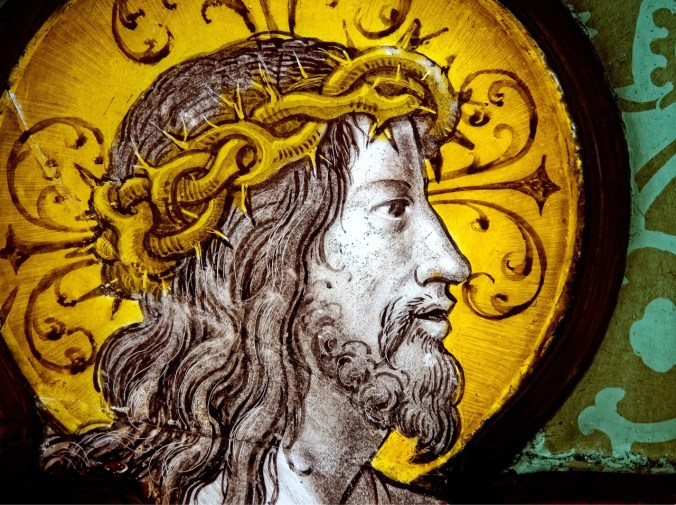
A Life-changing Experience

yogi

Colossians 3:1-3 “Since, then you have been raised with Christ, set your hearts on things above, where Christ is seated at the right hand of God. Set your mind on things above, not on earthly things. For you died, and your life is now hidden with Christ in God.”

Baseball great Yogi Berra was the master of the obvious statement. He is the man credited with coining the phrase, “It ain’t over till it’s over.” Obviously. Here are some of his other quips like that: “You can observe a lot just by watching.” “If you can’t imitate him, don’t copy him.” “A nickel isn’t worth a dime today.” “The other teams could make trouble for us if they win.”

Here’s one he didn’t say, but it fits in the same category. “Death can be a life-changing experience.” Obviously. Yet many Christians fail to appreciate just how true this is for them: even now every believer has died with Christ and has been raised with him. Paul points out what a difference that makes for our lives in these words from Colossians chapter 3:

“Since, then, you have been raised with Christ, set your hearts on things above, where Christ is seated at the right hand of God. Set your minds on things above, not on earthly things.”

Set your minds on things above. Heaven is where our focus belongs. It is more than a distraction. Setting our hearts and minds on things above is no mere escape, like a trip to the movies to get my mind off life for awhile.

“For you died, and your life is now hidden with Christ in God.” We died? How? When? We died with Jesus when he went to the cross as our substitute. Our worldly obsessions, our selfish cravings, our moral failures–all of them were nailed to the cross when Jesus died. No need to dig that corpse up and keep looking at it.

But there is so much more than a death here. “…your life is now hidden with Christ in God. When Christ, who is your life appears, then you also will appear with him in glory.” Jesus is not just our death. He’s our life! We rose with him. He is still our substitute now at God’s right hand in heaven. When God wants to see what you look like to him, then, he doesn’t have to go searching here on earth. He can turn to his Son, seated in glory at his right hand. There he sees us as glorious, perfect creatures, because our lives are hidden with Christ in God.

It makes a difference where we set our minds. What happens when a child grows up in an abusive home, and over and over again he is told that he is stupid and worthless? Over time he begins to believe it. Then he even begins to act that way. It becomes his identity. It becomes how he sees himself, and that has an effect upon everything else in his life.

Now, what happens when all of a Christian’s focus is on his existence here in this world? He is constantly confronted with his own frequent moral failures. His life is full of disappointments and troubles. Relationships are messed up. Career goals don’t pan out. His body is subject to sickness and decay. Death is inevitable. If that is all the input we receive, or if that dominates, won’t we see ourselves as dying failures and act accordingly?

But that is not the truth! That life died with Christ at the cross, and our real life is hidden with Christ in God. Although we can’t see it now, God assures us that we really look like Jesus in all his glory. That is our true identity. That is who we really are. Because of the forgiveness of sins we are holy saints. We are children of God. We are creatures of heaven.

See your life above, hidden with Christ, where you are seated with him at God’s right hand in glory. Then you can live like those who died and rose, who died to sin with Christ and rose with him to heavenly life.

Blind But Now I See

blind-man

Revelation 3:17-18 “You say, ‘I am rich; I have acquired great wealth and do not need a thing.’ But you do not realize that you are wretched, pitiful, poor, blind and naked. I counsel you to buy from me gold refined in the fire so you can become rich; and white clothes to wear, so you can cover your shameful nakedness; and salve to put on your eyes, so you can see.”

About five years ago, a Hungarian art historian named Gergely Barki was watching the 1999 movie Stuart Little with his daughter when something in the movie caught his attention. In several scenes he could see a painting over the family fireplace that looked like a long lost masterpiece by Hungarian artist Robert Bereny. It had last been seen in public in 1928. The appearance of the painting in the movie sent Barki on an investigation. It turns out that the set designer had seen the painting in an antique shop in Pasadena, California and bought it for five hundred dollars. During production of the film she decided to use the painting as a prop. After the movie was made, she returned the painting to her apartment, and for 10 years there it hung, no one knowing its real value or identity until Barki noticed it while watching the movie. The painting recently sold at auction for $300,000.

Who knows how many people passed the painting up while it hung in the antique shop, how many people on the movie set looked at it and handled it without realizing what it was? Who knows how many millions of people watched the movie Stuart Little over the next 10 years without thinking twice about a painting hanging in the background? It took one man with specially trained eyes to see what no one else was able to see.

Jesus turns Christians into people with specially trained eyes to be able to see what no one else can see.

Without Jesus, we are “blind.” Like so many people who saw that painting, we don’t even see our own reality. And because we don’t see our spiritual poverty, we don’t see the dangers that go along with it. This world, this life, this “stuff” we have now isn’t all there is. It’s all just a tiny fraction of our existence, just a brief moment in the eternity we will live. Jesus warns us that that eternity could be very, very bad if we keep stumbling along in our spiritual blindness.

In his letter to the church in Laodicea, Jesus offered “salve to put on your eyes, so that you can see.” In order to see God’s way, to see what God sees, we need more than functioning eyeballs. We need “eyes of faith.” In the movie The Matrix, the hero Neo is offered two pills. If he takes the blue pill, the illusionary world in which he lives stays the same. He still can’t see beyond the illusion. If he takes the red pill, his eyes are open to see what’s really happening. He comes out of the computer generated dream that he and humanity have been living in, and he sees what’s really going on.

In his Word, particularly the gospel, Jesus offers us the salve that fixes our vision, the “red pill” that lets us see reality, if you will. It is more than the ability to identify right and wrong correctly. It is the ability to see that you are freely loved, freely forgiven, and infinitely, personally valued and treasured by the God who made you. Trust that this is true, and the world becomes a different place, you become a different person, and you will discover a different treasure now that Jesus has opened your eyes to see.

(Picture By Andrey Mironov – Own work, CC BY-SA 4.0, https://commons.wikimedia.org/w/index.php?curid=30520270)

Reason To Be Thankful

Sunlight

Colossians 1:3-5 “We always thank God, the Father of our Lord Jesus Christ, when we pray for you, because we have heard of your faith in Christ Jesus and of the love you have for all the saints–the faith and love that spring from the hope that is stored up for you in heaven…”

One great obstacle stands between me and a more thankful heart: Discontent, dissatisfaction with what I have, who I am, and what I can do.

No matter where we are in life, we don’t have, we can’t do, everything we would like. Our discontent makes it hard to be filled with a sense of thankfulness.

The solution is to look for our contentment someplace else, like Paul does here: “We always thank God, the Father of our Lord Jesus Christ, when we pray for you, because we have heard of your faith in Christ Jesus and of the love you have for all the saints.” There is one great place to find the contentment that makes us thankful people. That is in the faith and love that come from God.

The faith and love that make us thankful people have a source: “…the faith and love that spring from the hope that is stored up for you in heaven and that you have already heard about in the word of truth, the gospel…” Oh. I guess hope stored up in heaven sounds like good news…someday. Maybe we feel a little like the boy who was hoping for some great new toy or gadget from his favorite uncle on his birthday. Instead he gets a savings bond that doesn’t mature for five years. Whoopee.

But wait. God’s good news is far superior to the good news people think they want. It is something to be excited about right now. What if Jesus died on the cross, rose from the dead, and forgave all our sins so that we could win the lottery? What if God’s Son left heaven, became a man, and surrendered himself to be executed by his enemies so that we could have fun, fun, fun? Now do we have a reason to be thankful? Now do we have good news we can be happy to believe?

What is going to happen to all those things? When I was a little boy, I had a large collection of Tonka Toys. Do you remember Tonka Toys– steel trucks, bulldozers, and cranes that were almost indestructible? I had my own miniature construction company in the sandbox. Then a neighbor friend discovered that if the rocks you drop on them are big enough, they really will bend and break. My collection ended up a pile of twisted metal. It was a sad loss, but a good lesson for life: Even the strongest and most certain things don’t last forever.

Except God’s gifts in the gospel. Because heaven is a gift of God’s love, the result of Jesus’ work not our own, it is stored up for us. It is being kept and prepared for us where no one can destroy it or take it away. It is certain.

When you have a good day now, when you have a string of successes, you sometimes wonder how long it’s going to last.Today I feel good, but the migraines will return. Today sales are up, but another slow period is inevitable. Today my manager is in a good mood, but tomorrow, or next week, he will be back to his cranky self.

But in heaven, our very last bad day will be behind us. Every tomorrow will only be better and brighter. Faith feeds on a promise like that. It grows from such a gospel. And where there is faith, love can’t be far away. Now there is something to thank God for.

(Picture By Roberto Ferrari from Campogalliano (Modena), Italy – Raggio di luce, CC BY-SA 2.0, https://commons.wikimedia.org/w/index.php?curid=26291424)

Courage To Act

Goliath

1 Samuel 17:42-51 “You come against me with sword and spear and javelin, but I come against you in the name of the Lord Almighty, the God of the armies of Israel, whom you have defied.”

Is it a sin to be afraid? Sometimes fear can be a healthy thing. About 15 years ago a man was fooling around with his children at the edge of the Grand Canyon. He saw a ledge just below the part of the rim where he was walking, pretended like he was losing his balance, and then intended to jump down and land on that ledge. Instead he missed the ledge and fell to his death. A healthy fear of the danger would have served him.

The difference between courage and cowardice is not the presence or absence of fear. Fear is appropriate where there is danger. The difference between courage and cowardice is the will or resolve to do the right thing in the face of fear and danger. And Christian courage is always the product of faith in the God who saves his people. That is what distinguished the future king David from so many of his countrymen when threatened by the giant Goliath.

David wasn’t throwing trash talk at Goliath. He knew the truth. He was absolutely convinced of the reality and power of our God. The God of the armies of Israel was the one who destroyed the chariots of Egypt and brought down the walls of Jericho without Israel having to fire a single shot or swing a single sword. This God could flick Goliath away like a fly with his fingers. He was as real and as present for David as any person sitting in the same room with you at this moment.

The God of the armies of Israel is the same God whose love and power have delivered us in way that makes all of this look tiny. Today we know him by the name Jesus. He has defeated giants such as the devil and all his demons. He canceled every one of our sins and destroyed death itself. In those battles we didn’t have to lift even a finger, for Jesus did it all for us by giving up his life for at the cross and taking his life back again in his resurrection.

This same Jesus is still present when we take the sword of the Spirit, which is the Word of God, out of its sheath and put it to use. Confronting sin and overcoming unbelief is not about our power. It’s not about our cleverness, our powers of persuasion, our skills in debate. It is about the power of Jesus Christ working in his word.

There is a time for the child of God to retreat when under attack. When the temptations that appeal to the lusts of our own sinful natures lure us, God’s word to us is “Flee!” That’s not the time to engage the temptation to see how long we can hang in there before we finally give in. That would be foolish, not faithful.

But David was facing an entirely different kind of situation here. The Giant Goliath had insulted God. He had called into question God’s power and grace. God’s reputation as the Deliverer of his people was at stake. And when God’s reputation suffers, so does the faith of his people. The real issue here was not the physical battle between an impetuous teenager and a godless giant. It was the spiritual attack on the hearts of God’s people. An entire army stood behind David. But their faith had been compromised by Goliath’s size and threats. That’s why they were behind David, not out meeting the challenge themselves. That meant that more than lives were at stake this day. Their very souls were in danger.

For that kind of battle you can’t get started fast enough. David ran to meet the giant. There is an appropriate sense of urgency for us to get going, to engage our spiritual battle with the world for the hearts of neighbors who don’t know Jesus or church members who are losing their grip on him. For this the signal is never “Flee!” but “Charge!” when we are acting on faith, not fear.

Certain We Are God’s Children

Father-Newborn

1 John 5:1 “Everyone who believes that Jesus is the Christ is born of God, and everyone who loves the father loves his children as well.”

Christians are people of faith. By ‘faith’ we don’t mean ‘optimistic wishfulness,’ or ‘the anticipation of possible success,’ or even ‘educated guesses,’ or ‘informed opinions.’ Christian faith is about certainties. The things which we believe are things of which we have become convinced, no less than I am convinced that I am alive, or that this chair in which I am sitting is made of wood, or that the grass outside is green.

This makes us… odd. To some who don’t share our faith we will seem backwards and naive because the things we believe are things we have never “seen” and cannot prove in the ordinary way. To some we will seem arrogant, because in being so certain about the teachings of our faith, we are discounting and denying the things that they believe.

One of these certainties we have by faith is the fact that we are God’s children, spiritually born into God’s own family. How do we know? What makes us so sure? I can think of  reasons that might give us doubts. Usually children resemble their parents in some way. If you looked at my four children, and you knew only my wife, you might think of the old Sesame Street song: “One of these things is not like the others, one of these things just doesn’t belong. Can you tell which thing is not like the others, by the time I finish my song?” One of my children gets his looks more from me, I believe. I leave it to those who know our family to decide which is which.

If we are born of God, do we look like him? Does our behavior suggest a family resemblance? Does it distinguish us from everyone else? We have to admit that many times it is hard to tell any difference based on how we act.

We worry about money, health, and safety just like people who don’t know God as their kind and loving Father in heaven. We don’t live every moment in absolute peace about the way in which he will provide and protect. Our lifestyles can be just as self-indulgent as those who don’t believe Jesus is anything special.

So how do we know? How do we know that God has given us birth, that we are his children? John says, “Everyone who believes that Jesus is the Christ is born of God.” It doesn’t start with behavior. It starts with faith. We believe that Jesus is the Christ. For us he is not merely “Interesting Historical Figure,” “Founder of a Famous Religion,” “First-Century Philosopher,” “Mesmerizing Middle-Eastern Mystic.” Jesus is the Christ, our God and Savior. Everything we celebrate about Jesus’ death on the cross and his resurrection from the dead, we believe. We believe it as something far more than a sad and tragic miscarriage of justice followed by a miraculous return to life. This death is God’s own payment for our sins. We are forgiven, freed from guilt, liberated from the debt in which we were trapped. This living and glorified God-man, this empty grave, is a preview of our own bright future. Like Jesus our bodies are going to be revived and glorified. We will leave our tombs behind us, and live and walk with God in a land where there is no more death, or mourning, or crying, or pain, for the old order of things has passed away, and God has made everything new.

This message, this promise, is the womb in which our faith is formed, the means by which the miracle of spiritual birth takes place. It is the power by which we believe that Jesus is the Christ. Person after person has fallen under its spell–sinners and skeptics, doubters and deniers: fully armed and ready to debunk the Christian story, but in the end, won by his love, and confessing Jesus Christ as Lord. That faith, born of those truths, is how we know that God has given us birth, that we are the children of God.

Our God Is Near Us

Pillar of Fire

Deuteronomy 4:7 “What other nation is so great as to have their gods near them the way the Lord our God is near us whenever we pray to him?”

Life was not easy for Old Testament Israel, a nation of shepherds. For most of them, their entire life was a forty year camping trip in a desert. Imagine going camping with the entire population of metropolitan areas like Portland, Oregon; Orlando, Florida; San Antonio, Texas; Pittsburgh, Pennsylvania; Las Vegas, Nevada; or Cincinnati, Ohio! Then remember that everyone wasn’t merely taking a dog or a cat, but entire flocks of sheep and goats. These people weren’t living in RV’s but tents, and there were no water or electric hookups, no bathhouse in the campground. Life was not easy.

But Moses helped them to see the clear advantages of being people who belonged to God. First, Moses says, look at your God. Look at how real he is, and how closely he is involved in your life. The oldest people listening to him were in their late teens when God dropped ten miraculous plagues on Egypt, and then made a dry path through the middle of the Red Sea so that they could escape. They saw enough food and water for 2 million people miraculously appear in the desert. They heard God’s voice from Mt. Sinai. They followed the pillar that looked like it was made of cloud during the day and fire at night. Other nations had gods who kept their distance from their people, acted like spoiled children, and occasionally did magic tricks once upon a time in a land far, far away. Israel’s God lived among them and saved them over and over again. Which faith made sense to follow?

We serve and follow that same God. Now maybe we are tempted to think, “Our God doesn’t seem so near or so real today. We haven’t seen miracles like Israel saw.” Perhaps. But has he really grown fuzzy and distant? With Jesus, we have more, not less. We don’t have a mysterious voice thundering from a mountain, or an unapproachable pillar of fire out in a desert. We have God with flesh and bones, a man like us who laughs, and loves, and listens. He isn’t just present in our world. He is a member of our family, a distant relative connected to your very own family tree. It’s true, it’s been two thousand years since he came here to live and die to save us. But he lives again. There is an empty tomb just outside the old city of Jerusalem that says it’s so. We have the eyewitness reports of hundreds recorded by a half dozen or so recorders.

And he still shows up. We hear him speaking, not with one mouth, but with thousands. We hear his voice in the voice of our pastors confronting our sins and proclaiming forgiveness full and free. He has left us with hundreds and thousands of pages of his love letters to us–more than dead words on a page, but living and active words, words in which he himself is living by his Spirit, words full of life and of power. He still meets with us right here personally, bodily, really during those precious moments when we stand before his altar and receive the Supper by which he whispers to our hearts, just to you, “I am here. All is forgiven. All is peace. All the blessings of my cross are your very own.” He doesn’t hide himself in a tent or a temple. The same Jesus who walked the streets of Jerusalem now lives in your own body, in your own heart by faith–not as a happy memory or a collection of historical truths, but as a person who has moved in and made this place his home.

“Still,” we might think, “I would like to see the power. I would like to see the miracles.” Open your eyes, my friends! On the one hand, if you aren’t in imminent danger of death because some enemy army is hunting you down; if you aren’t in imminent danger of starvation for a lack of food, no miracle is required. That’s a good thing, right? Do you suppose God’s power isn’t involved in making your life so safe? And if you still want more, get to know some of the sober stories from your contemporaries on the front lines of God’s battles today. I am not thinking so much of the person who threw their crutches away after attending a tent revival. Talk to the missionaries and evangelists who see the gospel making disciples for Jesus out of the most unlikely candidates, humanly speaking. Is there a greater miracle than a story about a Jewish man who died as a criminal 2000 years ago winning the heart of a hardened atheist or converting devout followers of other gods in some place where the Bible isn’t even available in their own language?

The answer to Moses’ question is easy: “There is none.” No other people is so privileged to have a god like ours who lives with us and gets his own hands dirty in our lives. That was true for God’s chosen nation over three thousand years ago. It is still true for you and me, his “chosen people…a holy nation” (1 Peter 2:9) spread across the earth today.

Religious or Spiritual?

Religion-Spiritual

James 1:27 “Religion that God our Father accepts as pure and faultless is this: to look after orphans and widows in their distress and to keep oneself from being polluted by the world.”

Religion is out. “Spirituality” is in. More than one family has excused themselves from my invitation to attend worship this way: “We’re just not very religious people, but we are spiritual.”

Movie stars claim to be spiritual. The Christian Science website is “spirituality.com.” Christian colleges are appointing chairs of the “spiritual theology” department. A book I like about Lutheranism is titled The Spirituality of the Cross.

But what does it mean to be spiritual? Tom Schaefer wrote a scathing commentary on modern spirituality for the Wichita, KS Eagle, several years ago. He sets it up as a lampoon of “Who Wants to Be a Millionaire.” This game show is called “Who Wants to Be a Spiritual Person.” The contestant describes himself this way. “I’m a businessman who’s never quite found a religion that suits me. Besides, Sunday is my golfing day. I’m looking for a ready made, easy-to-follow spirituality that doesn’t make too many taxing demands and fits with my lifestyle.”

Christian writer Eugene Peterson sees the same thing infecting Christians. Spirituality has little to do with repenting of sins, receiving forgiveness, believing the gospel, and serving my neighbor. It has much to do with getting more out of life. It’s all about me. “With Christ, you are better, stronger, more likeable, you enjoy some ecstasy.”

If that is spirituality, maybe religion deserves a second look. The Apostle James uses a word for religion that deals with the external practice of your faith. The kind of religious practice our heavenly Father desires reflects two of the great concerns in the commandments: a life of unselfish love for our neighbor, and an unselfish life of personal purity before God. Looking after widows and orphans is a practical example of the first. Keeping oneself from being polluted by the world is a general exhortation to the latter.

We Christians tend to emphasize one to the exclusion of the other. Some of us immerse ourselves in lives of good works. We are “activists.” Raising funds for a food bank or shelter, volunteering at an inner city youth center, building homes for the poor, mission trips to third world countries-this stands in line with concern for widows and orphans. But do we excuse ourselves for satisfying every sinful craving? Ignoring personal purity, neglecting the practice of self control, is another kind of selfishness. Real spiritual harm comes from being polluted by the world.

Conservative Christians may have more trouble in the other direction. We still believe and preach what God has to say about sex and marriage. We talk about materialism and greed, though it has a greater hold on us than we like to admit. But we excuse ourselves for overlooking the plight of the less fortunate. We forget that Jesus does not summarize the commandments by saying “Be good.” He summarizes them by saying, “Love.” Go find someone to whom you can show your love. God has put us here to help the widows, and the orphans, and anyone else who needs what we can give.

Jesus lived both sides of this style of religion. No one’s life was ever purer. He was tempted in every way just as we are, yet was without sin. He loved the widow of Nain and all the needy people who came to him for healing or help. He looked after an entire world of spiritual beggars when he gave his life to remove our debt of sin.

That was not merely a great example of pure and faultless religion. That is the redemption that sets us free from our less than pure, and fault-filled, religion. That is the reason that God accepts you and me as pure and faultless.

Whether we call it “religion” or “spirituality” or “sanctification” or  simply “Christian life,” let’s live our lives for him who lived this way for us.

First Picture: By Andreas Praefcke – Own work (own photograph), CC BY 3.0, https://commons.wikimedia.org/w/index.php?curid=14635674
Second Picture:By Tom Corser http://www.tomcorser.com, CC BY-SA 2.0 uk, https://commons.wikimedia.org/w/index.php?curid=312971


The Power of Love

Green Power Button for Computer

Romans 1:16 “I am not ashamed of the gospel, because it is the power of God for the salvation of everyone who believes.”

The word “power” conjures up distinctive pictures and feelings. Friends once took me to an Indy Car race at Texas Motor Speedway. The scream of the engines was so loud that I could feel the sound pushing on me. Together with the speed of the cars, the power in those machines was tangible.

When I was 10 years old I attended a Lutheran camp along the Whitewater River in southeastern Minnesota. The last night of the camp it rained so hard, so fast, and so much that the river went from a bubbling and gurgling stream about 4 feet deep to a roaring monster many feet over its banks. The roar of the water rushing past the cabin on highest ground to which we retreated, the sight of the river tossing around the picnic tables and propane tank, left all of us campers feeling rather small and weak next to the power of the river that had invaded our camp.

The gospel is the power God uses for our salvation. Our Lord has other powers for other things he has done. There is the power by which he spoke and an entire universe suddenly burst into existence. There is that power by which he killed the first-born of the Egyptians and divided the waters of the Red Sea. There is the power by which he changed water into wine, calmed storms, and gave life back to dead people. There is that power by which someday he will destroy this present world with fire and bring an end to the universe as we know it.

In all these things the working of God’s power is dramatic and awe-inspiring. It works with an irresistible, nearly violent force that overwhelms and overruns any obstacle in its path. It is a power which leads people to tremble in fear.

But the Gospel is the power by which God carries Jesus’ saving work into our hearts and makes it our own by faith. There is something quiet and hidden about the way in which it works. Our Lord does not cut and slash, push and shove, thunder and threaten to plant this faith within us. It is rather the gentle, winsome movements of the Holy Spirit in his Word, at our baptisms, and in his supper. It woos and wins its way into our hearts and works the miracle of faith. There is a power at work here, to be sure. It is a miraculous power that accomplishes what no forces of nature, no weapons, no laws-of-physics-bending supernatural strength can: it turns doubt and denial to belief, changes fear into trust, and rebellion into faith. But it does so in ways so quiet, so subtle, so appealing, so filled with love that we are often unaware that it is happening, even when it is happening to us.

Maybe you know the words from the last verse of the Christmas hymn Where Shepherds Lately Knelt, words that describe the gentle, faith-building power of the gospel:

Can I, will I forget how Love was born, and burned

Its way into my heart, unasked, unforced, unearned.

Jesus’ love finds its way into our hearts unasked. We were not looking for him, but he came looking for us, uninvited, and found his way in. Yet that power works unforced. He did not violate us. He did not smash the door to our hearts down and take us hostage like a terrorist breaking into a room full of people. His miraculous love unlocked and opened the door, making our unwilling hearts willing. And he does all this for us unearned. He doesn’t wait for us to become worthy before he comes to us in his gospel. He comes to us just because he has chosen to love us, and he desires nothing more than our salvation.

Many have celebrated the “power of love.” I know of at least three pop songs by that title (Sung by Huey Lewis, Celine Dion, and Frankie Goes to Hollywood). In the Disney cartoon The Sword in the Stone, Merlin the magician tells a young King Arthur that love may be the most powerful thing in all the world. Of course, they are all talking about romantic love. The gospel brings us a love far more powerful:  God’s forgiving love, love the Holy Spirit brings to us wrapped in the words of Jesus’ story.

Take heart!

Courage - Bear

John 16:33 “In this world you will have trouble. But take heart! I have overcome the world.”

“Take heart,” would be a useless command, or a cruel taunt, if Jesus had nothing more to say. Does it help to tell a weak person, “Be strong”? Does it help to tell a sick person, “Be well”? Does it help to tell a hungry person, “Be full”? Only if you have strength, and health, and food to give them. Jesus has “heart” to give us–the courage and faith that come from knowing that he has overcome the world.

Jesus has conquered sin and death. What more can the world do to me? Accuse me? Condemn me? By what standards? If it uses its own twisted standards, where goodness and purity become evil, and its filth and perversion become virtues, Jesus has already settled that. He is the Way, the Truth, and the Life. We gladly plead guilty to breaking the sinful world’s code of belief and behavior. Even if we do, we are still innocent in the eyes of Christ.

But what if the world discovers our real sins, and its self-righteous charge is, “You’re no better than me. You’ve broken the same commandments of God. You are guilty”? Though we are not proud to say so, the answer is, “It’s true! It’s true!” But Jesus has overcome the world, and by the grace of God I can say with the Apostle Paul, “Who will bring any charge against those whom God has chosen? It is God who justifies. Who is he that condemns? Christ Jesus who died–more than that, was raised to life–is at the right hand of God and is also interceding for us.”

No, really then, what can the world do to me? Kill me–and in doing so complete my escape from this prison in which we live and hurry me to the end of my journey home to heaven? Thank you! Thank you for this gift! You have given me the one thing I have longed for since the moment Jesus claimed me for his very own–to see him with my own eyes and live with him in his loving presence forever.

If the world can’t accuse me, and it can’t destroy me, then what is left? Torment me while I am here? Bestow on me the same honor it once bestowed on my Lord as it fills my life with misery? Then it will drive me deeper into his Word, and deeper into his love, to survive. It will drive me closer and closer to my Savior and make me more and more like him. It will strengthen my faith and hope, because “suffering produces perseverance; perseverance, character; and character, hope. And hope does not disappoint us, because God has poured out his love into our hearts by the Holy Spirit.” That’s not so bad, now, is it? In the end, it still ends in glory. Since Jesus has overcome, “our light and momentary troubles are achieving for us an eternal glory that far outweighs them all.”

By bringing us troubles, by making us suffer, the world has done all it can do. In spite of our troubles, Jesus has overcome, and so will we. Take heart!