He Gives Us All Things

Father-Daughter

“If God is for us, who can be against us? He who did not spare his own Son, but gave him up for us all–how will he not also, along with him, graciously give us all things?”  (Romans 8:31-32)

Do you dote on your children? What won’t parents sacrifice to give their children the best? Look at the time parents give up to shuttle their children from soccer practice to dance rehearsals to piano lessons, and then to games and recitals. I know parents who have paid tens of thousands of dollars every year to send their children to the grade school of their choice. Then there are the toys and electronic gadgets and outings to amusement parks we lavish on them. There is little we spare to benefit our children.

Jesus once observed that we do this even though we are basically selfish and evil. “Who of you, if your son asks for bread will give him a stone, or if he asks for a fish, will give him a snake? If you then, though you are evil, know how to give good gifts to your children…” Generally speaking, we want to look out for number one. But when it comes to our children, we are willing to put ourselves second to give them what is best, even into adulthood. There is little we would spare to help our children.

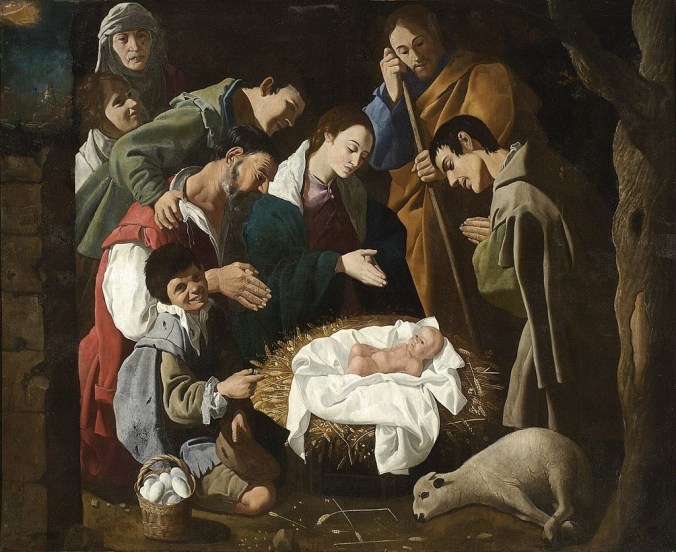
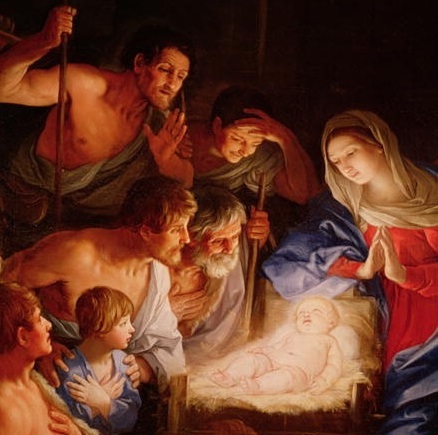
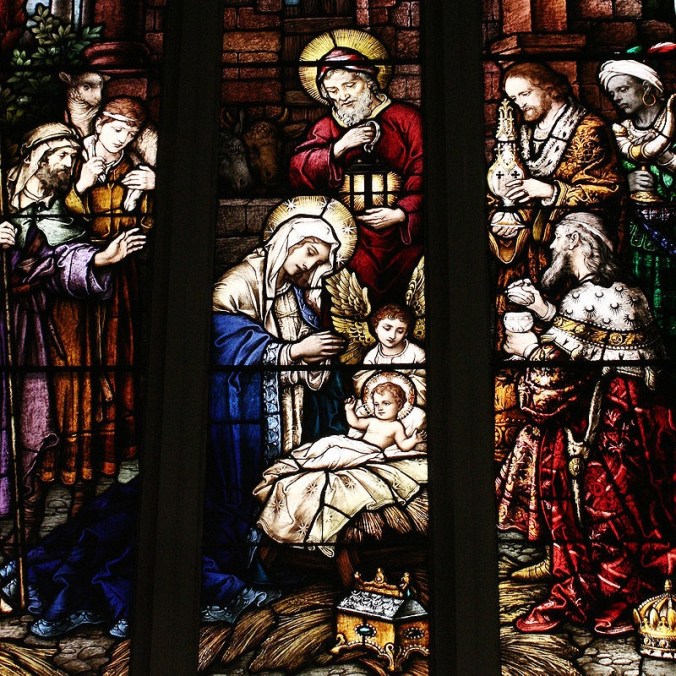
How dearly God must love us, then, to spare his Son no evil, to spare not even his own Son’s life, to save us and make us his own! What heavenly advantage did the Father not strip away from Jesus when he sent him into this world? He replaced a glorious throne with a stinking stable and a prickly hay manger. He concealed unlimited power under a weak and vulnerable infant’s body. He replaced endless worship from the angels with death threats and ridicule and betrayal and denial and condemnation by creatures not worthy to grovel at his feet.

But all of that pales in comparison to making his holy Son dirty with our sins, and letting him agonize in our hell, and making him a corpse with our death. When we consider just how far the Father went in not sparing his own Son, it almost makes Cinderella’s wicked stepmother look kind by comparison. But God is no wicked stepfather. The difference lies in this perfect Son’s willingness, even eagerness, to go along with his Father’s plan.

Why? Why would the Father do that to his only Son? “He who did not spare his own Son, but gave him up for us all…” He gave him up for us all. He did not spare his own Son because in the infinite depth of his love he was not willing to lose us. He so valued us, so desired to have us back, that there was no limit to the price he would pay. And there was no greater price he could have paid than the one he did pay. He did not spare his own Son, but gave him up for us all.

This isn’t mere abstract theology to be pondered theoretically, a hobby for those who find that kind of thing interesting, a theology that has little impact on our hearts or lives. Christmas changes everything. Good Friday changes everything. Easter changes everything. “He who did not spare his own Son, but gave him up for us all– how will he not also, along with him, graciously give us all things?” God gives us all things. In poverty we are still rich. Terminal diseases are no longer terminal. Even when they bring us to death, that is no longer our termination. God denies us nothing that will truly serve us. He gives us all things.

We may think our expectations of God are too high. Actually, they are too low. We are ready to settle for a few cheap trinkets when God wants to give us real treasures. The gift of God’s Son brings true treasure into focus. In Jesus our Lord has given us all things.

He Gives You Words

Courtroom

“But make up your mind not to worry beforehand how you will defend yourselves. For I will give you words and wisdom that none of your adversaries will be able to resist or contradict.” (Luke 21:14-15)

I’m not a particularly quick wit. Sometimes I think of a great snappy comeback to something someone has said to me. Unfortunately I think of it hours or even days later. All I can do then is hope I get a chance to use it in the future, and that I still remember it when the chance comes.

Jesus words here are for those times when the faith of the disciple is put on trial, when we are called upon to defend his message and our convictions in front of those who just want to shut us up. The immediate context suggests a court of law or a religious tribunal of some sort. Maybe we can stretch the intent of Jesus’ promise to other times the gospel is being challenged and we are called upon to defend it, even in more intimate settings.

Jesus’ words don’t rule out preparation when our turn comes to defend the gospel. But they do point out a temptation that is all too easy for us to fall into. We put too much of the burden for the message we speak upon ourselves. We fall into the mindset that what is really important when it is our turn to speak is how clever we are, how carefully we have crafted our words, how engaging our delivery, how powerful our illustrations.

That’s not to say that the gospel doesn’t deserve our best efforts make it clear and to hold the attention of the people who might be listening. There is nothing wrong with engaging delivery or powerful illustrations. But Jesus hasn’t called us to invent a message. He has given us a message to proclaim. He has called us to tell the truth. It is also possible for too many of our words to obscure the message rather than making it more clear.

Worship guru Robert Webber tells this story of a seminary student doing some fill in preaching: “ I once heard a young guest preacher preach an exegetical sermon on the holiness of God (Isaiah 6:1-6). No illustrations, no gimmicks. Not even polished. The people rushed him. The thirst for God’s Word watered a barren land.”

The temptation to confuse our own words for the gospel is a serious one. It jeopardizes souls. But Jesus has also given us words and wisdom. We have the word which is useful for teaching, rebuking, correcting, and training in righteousness. We have the word that does not return to God empty, but accomplishes what he desires and achieves the purpose for which he sent it. We have Jesus, the Mediator of a new covenant, whose blood speaks a better word than the blood of Abel. That blood speaks the forgiveness of our sins. We have the word of the prophets made more certain, and like those to whom Peter once wrote, we do well to pay attention to it as to a light shining in a dark place. Jesus has given us the words of salvation by grace through faith.

August Pieper once encouraged: “Not as a salesman buys his wares in order to sell them again, but as a bee sucks honey from blossoms so as to nourish itself at the same time, so we by our studying ought to draw the gospel out of the Scriptures in order to save ourselves and those who hear us.”

Don’t Forget His Benefits

Tent

Praise the LORD, O my soul, and forget not all his benefits– (Psalm 103:2 NIV)

Both the hottest and the coldest nights I have ever experienced have come from time spent in a tent. On a campout near Lake Texoma in late October, temperatures one night dropped into the upper thirties. I had a light sleeping bag rated for fifty degrees. You can’t literally freeze to death when the temperature stays above freezing, but I thought I was freezing that night.

Ten years later my family took a camping trip across the southwest United States in late July. Our first night we camped near Carlsbad Caverns in the Chihuahua Desert. I don’t believe the temperature that night ever dropped below 90 degrees. There was no hint of a breeze. My sleeping bag was soaked with sweat when I peeled my body away from it in the morning.

Fortunately, I don’t live in a tent. I live in a climate controlled house that rarely gets hotter than 78 degrees or cooler than 68 degrees. This is one of the benefits provided to me by my ministry. At one time I lived in a house owned by the church. Now they pay me enough to afford a house of my own.

Serving in the ministry hasn’t always been so nice. Moses played a much bigger part in God’s plan to save the world than I have. He lived in a tent in the Sinai desert. It had no thermostat. Nighttime temperatures in January can fall below 40 degrees. Daytime temperatures in the summer regularly top 100. Moses’ “parsonage” was a tent for the better part of 40 years. Granted, he spent his first 40 years in a palace (it had no thermostats, either), but once Moses entered the ministry it was tenting all the way. It wasn’t so comfortable to serve in the ministry in Moses’ day.

I have knocked on thousands of doors and canvassed thousands of homes. Occasionally someone is cross with me for ringing the bell. Often no one answers the door. Certainly no one has made any threats. Sometimes I have been offered something to drink or thanked for my work. “I’m glad someone is trying to reach this neighborhood with the gospel,” they say.

The Apostle Paul, by contrast, generally had to leave town after a few weeks due to threats against his life. You know the catalog of hardships he recounts in 2 Corinthians 11: “Five times I received from the Jews the forty lashes minus one. Three times I was beaten with rods, once I was stoned, I spent a night and a day in the open sea, I have been constantly on the move. I have been in danger from rivers, in danger from bandits, in danger from my own countrymen, in danger from the Gentiles; in danger in the city, in danger in the country, in danger at sea; and in danger from false brothers” (24-26). I share the observation of one Christian writer: “Where the Apostle Paul went, they usually started a riot. Where I go they usually serve tea.”

I’m not saying that my ministry has been easy. But I have never hidden in a cave and waited for ravens to bring me food. I have never been declared an outlaw by the emperor and had a price put on my head. Compared to much of the world’s population, and to many gospel servants of the past, serving in the public ministry has provided me a decent standard of living and a relatively comfortable life.

Still, I catch myself thinking about my ministry in terms of the sacrifice I have made to do this work. I catch myself envying old friends and classmates who can live in nicer homes, drive newer cars, and spend their evenings at home with their families. I catch myself overlooking the many blessings, even earthly blessings, God has given to me in connection with the work I do as a pastor.

“Forget not all his benefits.” Like the people before me whose ministries weren’t so soft and easy, I share in the very first benefit that fills the psalmists mouth with praise: “…who forgives all your sins.” As a minister, the forgiveness of sins is woven into all my work all day long. As I prepare to preach a sermon,or work to reconcile a marriage, or lead a member of the neighborhood to the foot of the cross for the very first time, or give communion to a shut-in, the forgiveness of sins is constantly in front of me. It is there to feed my own soul, too. I am like the cook in the kitchen sampling the stew before it is served. I get a little taste of God’s grace every time I serve it to others.My envy, my failure to notice the countless ways in which the Lord has made my life comfortable and pleasant, my complaining–these and every other sin find forgiveness every day from the God who actually did sacrifice benefits and comforts and even his life on a cross to make forgiveness possible for me.

Do you ever envy others and feel as though you have been given less? Do you notice the sacrifices you make in your life more than the benefits the Lord has given you to enjoy? Look again. The Lord has dished up a large helping of pardon and peace for all of us to enjoy. It is never farther away than the Bible waiting on the shelf to be opened. It is available every Sunday in the words of the man talking behind the pulpit, and from the hands of the man serving Christ’s body and blood at the altar.

Forget not all his benefits. He is taking better care of our daily needs than we regularly stop to notice. There is no greater benefit than the grace that forgives our sins each day.

Where God Lives

temple


“Do you not know that you are God’s temple and that God’s Spirit dwells in you? If anyone destroys God’s temple, God will destroy him. For God’s temple is holy, and you are that temple.”

Have you ever watched little children indulge in shameless self-promotion with each other? They are adept at the game of “one-upmanship” from an early age. As they boast back and forth about their abilities and accomplishments, their boasts quickly progress from stretching the truth, to pure fiction, to ridiculous exaggerations: “I can eat 10 cookies. I can eat a whole box of cookies. I can eat a whole case of cookies.” You’ve seen it before. You probably indulged in it when you were little.

The insecurity that leads us to want to impress others this way doesn’t leave us when we grow up. Adults may be more careful not to stretch the truth about themselves to the point that it becomes unbelievable, but our thirst for attention, recognition, and superiority can foster some nasty rivalries and lead to divisive behavior. When we are insecure about our own value and identity, we are tempted to find those things at the expense of others. Our Lord does not tolerate it when his own people trash his house–not the buildings where we gather to worship him, but the gathered people in whose hearts he has chosen to live by faith.

“…for God’s temple is holy, and you are that temple.” This is an impressive statement. And this is not boasting or exaggeration. This truly makes us important. We sinful human beings can receive no higher honor than to have the almighty God cleanse us of our sins to make us holy, and then live in our hearts himself. There is no more prestigious position to hold than that your own body is God’s home. There is no promotion, no “up” from there. The Christians in Corinth to whom Paul was writing all had this in common. As a group, God had made them his home.

So he lives in and among us today. It puts how we treat each other in a whole new light when we remember that the people sitting around me, the people taking the opposite side of an issue at a church meeting, the people who always seem to rub me the wrong way, are together the holy of  holies  where God himself is living by his Spirit. It puts how we value ourselves in a whole new light when we realize that God’s house is not just a place I go on Sundays. It’s who I am. It’s who we are. God lives in us, and that makes everything else we are tempted to use to feel good about ourselves seem insignificant.

All Things Are Yours

Earth

“So then, no more boasting about men! All things are yours, whether Paul or Apollos or Cephas or the world or life or death or the present or the future– all are yours, and you are of Christ, and Christ is of God.” (1 Corinthians 3:21-23)

It’s no secret that our world tends to associate a person’s value and importance with their wealth. Who gets their names in the magazines and the newspapers? Unless you do something criminal, it’s the wealthy. Who gets elected to positions of power? Did you know that almost every member of the United States Senate is a millionaire? Who gets asked to endorse products before a television audience, or who gets invited to spend a night at the White House? Not many poor people that I can think of.

If wealth and importance go together, then you and I must be some of the most important people on earth! We own everything! Paul said it twice, “All things are yours.” That doesn’t mean that everything is our personal property. Rather, we are the children of the one to whom everything really does belong, and he has promised that he makes everything in this world serve you and me. There is no object, no person, no event that isn’t in our service as Christians in some way or another. In all things, God is working for you.

To help us understand, Paul gives us a representative list. Paul, Apollos, and Cephas (that’s the Apostle Peter) were three great leaders of the church. They were the common property of them all. The members of the church in Corinth had been dividing themselves into cliques that claimed to follow one of these men or another. But that wasn’t right. Each of these men belonged to everyone. And though they were leaders in the Church, God used them to serve the Church. He is still using them to serve the Church today through their words preserved for us on Scripture’s pages.

Life, no matter how bad, how painful, or how hard it gets, is here to serve us. Even at its worst it teaches us not to cling too tightly to this world. It forces us to throw ourselves on God’s grace in faith. Death, in spite of how much we fear it, in spite of how much we pay to avoid it, is here to serve us. Jesus’ resurrection makes it the door to heaven, and what could be a greater blessing than that?

Maybe time seems like it’s outside of our control. It is slipping away from us, running faster and faster. But in God’s loving providence even the uncertain future, which so often fills us with worry, is under our domain. It has to serve us, because we ourselves are the personal property of Jesus Christ, the Son of God.

And so, like the rich and important people of this world, we have all these servants running around taking care of us. We can know that we are valuable, not because of some trumped up little boasts or wobbly supports for our pride we made up ourselves. No, our value comes from the God who gave his Son for us, made his home in us, revealed his wisdom to us, and uses all the wealth of his world to take care of us. We Christians hold all these treasures in common, gifts we have because God has treasured us all of us in common.

Love That Never Gets Old

iPhone

“Dear friends, I am not writing you a new command but an old one, which you have had since the beginning. This old command is the message you have heard. Yet I am writing you a new command; it’s truth is seen in him and in you, because the darkness is passing and the true light is already shining.” (1 John 2:7-8)

We bought my wife  a cell phone on eBay a few months ago. It’s an Iphone 5, which was the model before the 5c and the 5s, which was the model before the 6, which was the model before the 6s. The 5 came out in late 2012 and was replaced by the 5c and 5s in late 2013. That is over two years ago now, which is something like a billion in technology years. Despite being an ancient artifact from Silicon Valley, one you half expect an archeologist had to dig out of the California desert, the phone was listed on eBay as “new.” And sure enough, it arrived in the original box, still shrink-wrapped, with no evidence any human had ever touched it since the day it first went into that box in China.

New doesn’t always mean “new in time.” New can also mean “new in quality.” That’s what John is trying to say here when he says about the old command, “Yet I am writing a new command.” Love has not lost any of its luster. It hasn’t lost any of its power either. Each time we put it into practice, it is as powerful and lovely to look at as if we just pulled it out of a shrink-wrapped box.

“Its truth is seen in him,” John writes–that is, in Jesus. If we want to understand Christian love, there is no better place to look than Jesus. Later in this book John will write, “This is love, not that we loved God, but that he loved us and sent his Son as an atoning sacrifice for our sins.” What do you call it when the people God created, the most gifted and privileged of all his creatures, completely turn against him and abandon him; and though he has the power to do so, God doesn’t wipe them out and start over? No, he promises to rescue them. For millennium after millennium he holds out his hands to them and invites them to come home. One day he comes and he takes their shape. He actually adopts the same sickened and weakened material they had made of the bodies he once gave them. He lives in the garbage dump they had made of the perfect planet he once fashioned as their home. For thirty years he served them. When they were sick he healed them. When they were hungry he fed them. When they criticized him and attacked him, he sat down to teach them. Finally, he shouldered the guilt for all their violence, and all their selfishness, and all their lack of self-control, and he suffered hell on a cross to make it all go away, like none of it had ever happened. He forgave them. What do you call that? That’s love. It’s not the attraction of a man for a woman. It’s not the camaraderie between close friends. It’s love freely given, just because Jesus chooses to love us.

That all happened two thousand years ago, but it is still as perfect and as shiny as that iPhone 5 in the shrink-wrapped box. It’s lovely to look at. It’s powerful to take in and consider. It’s new. And here’s how its useful: John says love’s truth is seen in him. There is something here that is hard to deny, isn’t there? There is something here that is just right, and winsome, and convincing, and magnetic, pulling us in. You know, you can debate with people about all sorts of spiritual trivia. You can try to answer all their objections to what the Bible says on a thousand different topics. But in the end, this is what is going to win them: the triumph of love, the truth we see as love emerges from the life and death of Jesus.

(Photo By Aitor Perez Serena – Own work, GFDL, https://commons.wikimedia.org/w/index.php?curid=24501797)

Loved Before Time

Clocks - time

(God) has saved us and called us to a holy life–not because of anything we have done but because of his own purpose and grace. This grace was given us in Christ Jesus before the beginning of time, (2 Timothy 1:9 NIV)

You may remember a grassroots campaign urging “Random Acts of Kindness.” One of the things that made that campaign so striking, so fresh and exciting, is that a random act of kindness, giving things to people who have had no chance to do anything for us, is so rare. It still is.

On the backside of our giving, our gifts so often come with strings attached. They expect or demand some kind of response. Haven’t you felt awkward receiving a gift from someone because you wondered what he wanted from you? Or maybe you have received a gift and felt guilty, because you hadn’t gotten anything for the gift’s giver, and now you felt like you should go out and get him something. We live in this world of “what’s in it for me” or “what’s it going to cost me” because our sinful, selfish nature can’t see the sense, or even the possibility, of anything being truly “free.” And that’s a serious problem, because in eternity there are only two places that we can go, and only one of them has an admission price we pay ourselves, and it isn’t heaven.

But the undeserved love of God is truly a gift. He laid down no conditions before he gave us this grace. Indeed, we gave him no reason to want to make this gift to us. We weren’t able. His gift of grace is truly free. And once we have received it, he does not demand a response, as though grace were charged to our Visa, and we were going to pay it off over time. Grace does not demand a response, but it does invite one. We can even say that it inspires a response, that it compels a response, because the free gift of grace changes all who receive it. It fills them with love that freely gives, just as we have received.

Perhaps the gift nature of God’s grace is clearer to see when Paul says, “This grace was given us in Christ Jesus before the beginning of time.” Don’t misunderstand Paul’s words. He is not saying that God’s grace was given to us at some point before creation. There were not millions or billions of years before creation, and then one day God woke up and decided, “I’m going to create me a world, and when it goes wrong, I’m going to redeem it. And when I do, I’m going to save Joe.”

No, in eternity there is no time, no progressing from one moment to the next in the same way we think of it. God always was. And as long as there has been God, his grace has been given to you. There was no “day before” grace. God’s grace–to you personally– is eternal, just like God himself is eternal. It is unchangeable as God himself. You can’t get anything less demanding of something in you, anything more “free,” than that.

Can you put a value on a gift like that? The old Motown song sings, “Money can’t buy you love.” And when it comes to God’s love, neither can good works, personal sacrifice, or anything else we can think to give. God has always loved you just because he chooses to love you. You can not turn this love off, you cannot make it stop, any more than you can change God himself.

(Picture by By LetsgomusicStyle – Own work, CC BY-SA 3.0, https://commons.wikimedia.org/w/index.php?curid=27330732)

Remember Your Creator, before…

Funeral

Ecclesiastes 12:1, 6-7

“Remember your Creator in the days of your youth, before the days of trouble come and the years approach when you will say, ‘I find no pleasure in them…’

Remember him–before the silver cord is severed, or the golden bowl is broken; before the pitcher is shattered at the spring, or the wheel broken at the well, and the dust returns to the ground it came from, and the spirit returns to God who gave it.”

In Christianity for Modern Pagans, a commentary on Blaise Pascal’s meditative Pensees, Peter Kreeft notes a connection Pascal made between our realization that death might come at any moment and the way that we live our lives:

“Our life in the world must vary according to these different assumptions:

  1. If it is certain that we shall always be here…
  2. If it is uncertain whether we shall always be here or not…
  3. If it is certain that we shall not always be here, but if we are sure of being here for a long time…
  4. If it is certain we shall not be here for a long time, and uncertain whether we shall be here even one hour.

This last assumption is ours.”

You might say that each assumption is progressively closer to truth.

The imminence of death has the ability to bring us back to our senses. Dr. Johnson, the famous English writer of the 1700s, observed, “I know of no thought that so wonderfully clarifies the mind as the thought that I shall hang tomorrow morning.” When the doctor gives you only so much time to live, or you are otherwise faced with your mortality, priorities become somehow easier to put in order.

Kreeft says this about Pascal’s words: “Suddenly you stop filling up the boob tube of your consciousness with trivia. Death turns your habitual perspective upside down–that is, really right side up. Tiny things like economics, and technology, and politics, no longer loom large, and enormous things like religion and morality, no longer seem thin and far away.”

We might add enormous things like the gospel, and immortality.

As he brings his book to a close, the writer of Ecclesiastes emphatically and poetically impresses the nearness of death on us and importance of using the time we now have to know God’s grace. The fact that we all die stands behind the author’s conclusion that everything is meaningless, or vanity. Knowing the God who created us, who redeemed us from our sin, and who will receive our spirits when our bodies return to the dust is the solution to the problem.

Kreeft concludes, “In a word, death removes ‘vanity.” Well, almost right. Death makes clear the problem. Jesus’ promise, “I am the resurrection and the life. He who believes in me will live, even though he dies; and whoever lives and believes in me will never die” removes vanity. Not only does the resurrection promise that death is not our end, it gives meaning and motivation to the life we live right now.

That was the Apostle Paul’s conclusion: “Therefore…,” in light of the certainty that Jesus rose and so will we, “…stand firm. Let nothing move you. Always give yourselves fully to the work of the Lord, because you know that your labor in the Lord is not in vain” (1 Cor. 15:58).

Two Kinds of Wisdom

Owls

James 3:13-18

Who is wise and understanding among you? Let him show it by his good life, by deeds done in the humility that comes from wisdom. 14 But if you harbor bitter envy and selfish ambition in your hearts, do not boast about it or deny the truth. 15 Such “wisdom” does not come down from heaven but is earthly, unspiritual, of the devil. 16 For where you have envy and selfish ambition, there you find disorder and every evil practice. 17 But the wisdom that comes from heaven is first of all pure; then peace-loving, considerate, submissive, full of mercy and good fruit, impartial and sincere. 18 Peacemakers who sow in peace raise a harvest of righteousness.

I grew up in a family where everyone (except maybe my dad) felt a pathological need to be right. One way this showed itself at our house was the location of the World Book Encyclopedias. (Encyclopedias are books where people found answers to things before Google). We kept them within reach of the kitchen table, because often while we were eating supper we would get into an argument about some bit of trivia, and we would reach for the encyclopedias to settle the argument.

There is nothing wrong with being knowledgeable. Scripture praises things like knowledge, understanding, and wisdom. The book of Proverbs is devoted to it. But not all wisdom and knowledge are the same. Not all wisdom and knowledge are good.

The Apostle James distinguishes wisdom from wisdom by its product. God’s wisdom, the kind that comes from heaven, produces a good life and humble deeds. It turns out people who are pure, peace-loving, considerate, submissive, full of mercy, impartial, and sincere. The other kind, which James says is earthly, unspiritual, and of the devil  produces bitter envy, selfish ambition, disorder, and every evil practice.

Can we tell the two apart before we start dealing with their consequences? Law enforcement officers who specialize in crimes involving counterfeit money say that the best way to recognize a counterfeit is not to study counterfeits. It is to become as familiar as you can with the real thing. Then the counterfeits will stick out like a sore thumb. More important than studying the devil’s counterfeit wisdom is becoming familiar with God’s true wisdom. Too much interest in the occult tends to draw people in to it. Better to be familiar with true worship and true religion, and the occult will be obvious enough when we see it.

For true wisdom we need to read and know the Scriptures more and more. But even true knowledge about God and his word can be used in a way that produces “envy and selfish ambition, where you find disorder and every evil practice.” Paul once warned his friends in Corinth,, “Knowledge puffs up, but love builds up. The man who thinks he knows something does not yet know as he ought to know.” Knowledge, even Bible knowledge, without love makes us proud. Without love taking and forming and applying all our knowledge, it can never be “the wisdom that comes from heaven.”

Love happens where faith happens. The best way to recognize true wisdom is to know and trust the one who is wisdom itself. Again, Paul tells the Corinthians, “Christ Jesus…has become for us wisdom from God–that is our righteousness, holiness and redemption.” The man hanging on the cross may look foolish to the world, but his perfect life wraps me in a righteousness that all my genius and cleverness would never have thought of. All my brilliant plans to achieve holiness would have had me bathing myself in so much spiritual mud, but his blood simply and purely cleanses my dirty record and makes my heart look pristine. There is no clever business model we could follow to pay off the debt of sin we owed and restore our credit with God, but Christ has made himself our payment, and “in him we have redemption through his blood, the forgiveness of sins.”

God’s love to us in Jesus makes us wise. Wisdom in practice looks just like that love.

Left photo by CC BY-SA 3.0, https://commons.wikimedia.org/w/index.php?curid=227127