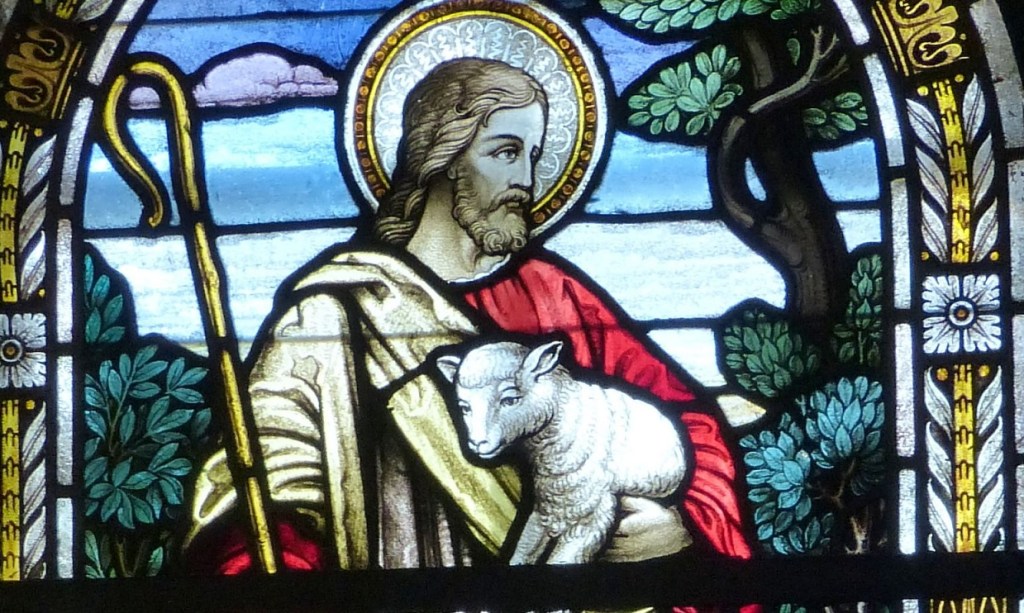
A Shepherd’s Care

Ezekiel 34:11-12 “For this is what the Sovereign Lord says: I myself will search for my sheep and look after them. As a shepherd looks after his scattered flock when he is with them, so will I look after my sheep. I will rescue them from all the places where they were scattered on the day of clouds and gloom.”

 Ezekiel was writing to people who already knew the sting of God’s discipline. Many of them were sitting in exile in Babylon because they had rebelled against God. The Assyrians had taken others away a hundred years earlier. Still others would run away to Egypt before God’s chastising work was done. The nation of Israel had become a scattered flock.

They weren’t scattered primarily because they were living all around the Middle East. Long before the Lord had done any of this, they had already become a scattered flock. They scattered away from the Lord to serve gods like Baal, Molech, and Ashtoreth. They scattered away as they served gods like money, sex, and the easy life.

And yet, God promised to rescue them, to gather them, to bring them home. “I will bring them out from the nations and gather them from the countries, and I will bring them into their own land” (vs.13). He didn’t just bring them back to the land of Israel. He brought them home to himself, brought them back in faith. When they came home, they were a humble, a thankful people. They rebuilt the temple and worshiped God again. They had not been gathered back together with just each other. They Lord rescued them for himself. He brought them back as his own children by faith.

Why? Why should the Lord want them? What did he find desire-able about these people? Nothing but his own love, his own grace, led him to rescue them and bring them home. That is the striking thing about our Good Shepherd’s care. He rescues his people for no good reason other than his own love.

Doesn’t that touch the heart? Doesn’t it fill us with thanks for such tender care? It’s no different with us. Why should he seek us? What is there about us that he should set his heart upon us, rescue us, make us his own, and bring us home to him in faith? The Prophet Isaiah’s words still apply to you and me, “We are all like an unclean thing, and all our righteous acts are like filthy rags.”

If we were fabulously wealthy and brought with us some rare treasure, it might be understandable that he seeks us. But we have nothing. All we have is on loan from him already. If we had at least been obedient children, we would merit his efforts to have us. But we are like an unclean thing–dead, decaying, leprous, untouchable. Even the best we can muster, our righteous acts, are sin-tainted: to God they are like rags–not even fit to keep for wiping up the dirt and grime, because these rags are thoroughly filthy already

Yet he seeks us. He does so passionately. He rescues us, and there is no price that he would not pay to do so. Jesus pictures God’s seeking you and me like the woman who turns her whole house upside down just to find the one precious gold coin which she had lost, and then how he rejoices and celebrates when he has found us. He also speaks of the shepherd who leaves the flock behind to find the one lost sheep, and when he finds it, he doesn’t drive it home scolding it all the way. No, he picks it up and gently carries it, and after all his efforts he is simply overjoyed to have it again.

All our lives, our Good Shepherd has been using his powers to arrange everything that happens just so that you could hear the gospel and come to faith, just so he could rescue you and make you his own. Before our lifetimes he threw his own body between us and the hell we deserved. He gave his life in place of ours to guarantee that our sins would not be our end. Jesus is our Lord. Jesus is our Good Shepherd, and his care is clearest for us to see in this: He rescues his people.


Where Love Rules

Colossians 1:13-14 “For he has rescued us from the dominion of darkness and brought us into the kingdom of the Son he loves, in whom we have redemption, the forgiveness of sins.”

“Familiarity breeds contempt.” Over time we can become so familiar with something that we no longer appreciate what we have. It is good for us to go back, as Paul does here, and remember where we used to be.

God has rescued us from the dominion of darkness. The spiritual darkness in which we live before we come to faith is a witch’s brew of ignorance and evil. We lust for a freedom without love or responsibility. In it people insist on the right to murder their unborn children, to try out sexual partners like a person in a shoe store trying on shoes, to neglect their children and their families while they pursue what they think life is really all about: making money and getting promotions.

The darkness leads people to pursue “feel-good” or “do-it-yourself” religions. They go looking for God in stone crystals or the alignment of the stars, in their own feelings and ideas, or in what they consider their own “goodness.” If there is one thing it does not want me to see, it is this: That I do not just HAVE a problem. In my sin, I AM my own worst problem, and Jesus is the solution.

This darkness is not merely an alternative worldview, a set of more-or-less benign ideas about the meaning of life, then. It is a dominion, a dark power, a devious and dangerous force which controls its miserable victims. It holds them in its clutches and is always seeking to spread its deadly shadow over others. By our very nature its values, entertainments, delights, and promises appeal to you and me. We must constantly fight to beat back the dark shadow of its dominion. For following it our world has reaped violence and abuse of all kinds, incurable diseases, broken homes, divided families, and all the draining heartache that accompanies these things. In the end it brings the eternal wrath of God.

What makes God’s rescue from this dominion of darkness all the more amazing is that by nature you and I would have been happy to stay. It is not as if we were begging God to come and rescue us. But now that we are out, we can see why Jesus deserves first place in our lives. We can see the Kingdom of which he has now made us a part.

Paul promises, he “has brought us into the kingdom of the Son he loves…” The bold and beautiful difference between this kingdom and the dominion of darkness makes itself clear in the phrase, “the Son he loves.” There is never any mention of love between Satan and the demons in their dominion of darkness. Whatever binds them together, it is not love.

But love is the identifying mark of everything in our new home. The heavenly Father who loved us enough to rescue us loves his Son. The Son himself loves us far beyond emotions, feelings, and well-wishing. He is the one “in whom we have redemption, the forgiveness of sins.” The word redemption reminds us that Jesus’ paid an awful price to give us a place in his kingdom. He paid our admission, he purchased our place, by dying on the cross as our substitute. He secured the forgiveness, the pardon, that leads God to accept us as citizens in his own kingdom.

This, then, is our role, our place, in the kingdom of the Son God loves. It is not to be driven to service like a slave. It is not to be bribed or deceived like gullible constituents blindly following some smooth-talking politician. God has brought us here to be loved. Jesus rules us now by making us the objects of his love. The more familiar we become with that love, the more it moves us not to contempt, but to thankful living for the one who loved us, and gave himself for us.  

We Belong to The Day

1 Thessalonians 5:6-8 “So then, let us not be like others, who are asleep, but let us be alert and self-controlled. For those who sleep, sleep at night, and those who get drunk, get drunk at night. But since we belong to the day, let us be self-controlled, putting on faith and love as a breastplate, and the hope of salvation as a helmet.”

When people are without Jesus and his light, it is night time for them. They are in darkness. They are spiritually asleep, totally unaware of the love and goodness God has for them. Or, they are spiritually drunk. In the darkness they don’t realize the shame of their sin, and they feel it’s okay to indulge themselves.

Don’t be like that, Paul says. We belong to the day. We know Christ. We know his love. We trust him and trust his word. We know that sin hurts. We know that God’s commands take care of us. It’s not that we have to keep them to earn his favor and save ourselves. We have “seen the light,” and faith in Jesus leads us to want a different kind of life.

My wife, used to subscribe to a newsletter called The Tightwad Gazette. It was published by a lady who developed all kinds of ways for living on a small budget. Then she started sharing her ideas with others. Over the years she made a small fortune selling her newsletter and books, and appearing on talk shows. When asked if she would stop living so frugally and pinching her pennies now that the money was flowing in, her reply was “No. After learning to live the smart way, why would I want to go back to living the stupid way.” It’s not just a matter of making ends meet any more. It’s a smarter way to live.

As sons of light, we are still tempted by sin. We still stumble and fall. But the light of faith, the light of Christ in us, produces a different kind of life. It changes our view, so that we want to live the smart way, the godly way–not because we have to, not to save ourselves, but because it is better.

And so, “…let us be…self-controlled.” We show that we are the kind of people ready for the day of the Lord when we are not carried away by every desire, every urge, every hunger, every appetite, every emotion that we feel.

And put on “faith and love as a breastplate, and the hope of salvation as a helmet.” A breastplate covers the heart. God wants to cover our hearts, to protect them from falling away and losing his gifts. He tells us to put on faith and the love which it produces to keep this from happening. But how do we put on faith? “Faith comes from hearing the message, and the message is heard through the word of Christ,” Paul tells us in Romans 10:17. This is why hearing God’s word regularly, even daily, and attending worship is so important for our Christian life.

A helmet covers the head. God wants to cover our minds so that we don’t forget the real point of Jesus’ work for us. He tells us to put on the hope of salvation. Sometimes people say that Christians are so heavenly minded that they are no earthly good. God is more concerned that that we not become so earthly minded that we are no heavenly good.

Keep looking to the future, ponder the wonder and the joy of the heavenly home God has prepared for you. This hope, together with faith and love, will keep you prepared for the new day the Lord is bringing.

The Sun of Righteousness Rises

Malachi 4:2 “But for you who revere my name, the sun of righteousness will rise with healing in its wings. And you will go out and leap like calves released from the stall.”

We often think of Judgment Day as the last day. As literal “days” go, this is true. But it is not just the end of things. It is also the dawn of a new day for us. In many ways, our real life is just beginning. For the first time we will begin to experience life as God originally intended.

That is because the sun which appears in the sky to begin this day is the “Sun of Righteousness.” Isn’t that a fitting picture of our Savior? Through the eyes of prophecy Malachi could see him 400 years before he was born, thousands of years before his final return. Like the sun, Jesus is the light of the world. He makes it possible for us to see–to see the truth about our sin and God’s forgiveness. He brings the warmth and the life of God’s love to all upon whom he shines.

Jesus shines this way because he is the Sun of Righteousness. Jesus is not just righteous in himself. He is our righteousness, too. On that last day, God will see us differently than he does the arrogant and the evil doers. It’s not because we have avoided all mischief. God will declare us righteous, not guilty, because of the righteousness which we have borrowed. Jesus’ own righteousness shines down on us. It casts a new light on our lives. With his innocent death Jesus canceled the guilt of our sins. With his perfect life he achieved a record of flawless love he now lends to us. His righteousness will spare us from God’s fire on the last day.

And so, when the Sun of Righteousness rises at the dawn of this new day, he brings healing in his wings. This day will finally set things right. It will make our lives the way they were meant to be. Now we struggle with sin. “For what I do is not the good I want to do; no, the evil I do not want to do–this I keep on doing…What a wretched man I am,” Paul says in Romans 7. We all know the struggle. But the Sun of Righteousness will erase every last trace of sin. That struggle will be over. Our souls will be healed.

Now creation is subjected to frustration. Nothing works the way it is supposed to. But then it “will be liberated from its bondage to decay and brought into the glorious freedom of the children of God” (Rom. 8). No longer will the home in which we live work against us at every turn.

Now we see but a poor reflection. Our understanding of God and his ways is dim and filled with questions. Then we shall see him face to face. We shall know fully, even as we are fully known.

No wonder this day will fill us with unbridled joy! “And you will go out and leap like calves released from the stall.” Having worked most of my summers in high school and college on a farm, this is a scene I have witnessed too many times. It is great fun for the calf to run around half crazy, its legs kicking in the air, its tail flopping up and down, its whole back end hopping back and forth. It’s nothing but extra work for the farmer who has to chase him down.

But what a fitting picture for the joy of our salvation. In the Old Testament, the picture behind salvation was not only one of God removing his people from danger. It also suggested the safe place to which he takes them–a wide open space, where they are no longer cornered or caged. Danger is so far away it can’t even be seen. Those delivered are free to stretch out and move around in safety.

After spending our whole lives caged up in this world, constantly enduring attacks, hemmed in by sin, cornered by pain and trouble, at long last God will pick us up and set us back down where we are safe and free. Our joy will be a little like those calves who have escaped from their cages, except that our escape will never end.

I have known several people who became entangled in our nation’s legal system. For a time, their day in court became the focus of their lives. Now you and I are waiting for our day in God’s court. It is the day on which the Lord will finish his great project in this world’s history. For us the verdict is already in–not guilty. For us this will be a day of joy and healing. An eternity of freedom is waiting when that day finally comes.

A Fiery Day Is Coming

Malachi 4:1 “’Surely the day is coming; it will burn like a furnace. All the arrogant and every evildoer will be stubble, and that day that is coming will set them on fire,’ says the Lord almighty. ‘Not a root or a branch will be left to them.’”

When God describes the punishment that waits for his enemies on and after Judgment Day, there are many unpleasant scenes into which he paints the unbelieving. Perhaps no feature of the day is more consistent throughout Scriptures than the description of burning. Everywhere this day is described as a day in which God’s enemies will face burning and fire.

Malachi also describes what a horrible destruction that fire will bring upon those people. “Not a root or a branch will be left to them.” When a fire sweeps through a forest, at least the roots of the trees escape. They are underground. But no part of those who suffer this fire will escape. The destruction will be complete.

That’s not to say that they will be completely annihilated. When something is destroyed, it doesn’t cease to exist. It changes form. The material which is “destroyed” still exists as a pile of rubble. Wood which is burned still exists as a pile of ashes. Those who suffer God’s punishment on Judgment Day may not be what they were in this life, but they won’t cease to exist. Their punishment never ends.

Do you see why it is important for us to take this warning to heart? Malachi calls those who suffer such a day of burning “the arrogant and every evildoer.” We may be inclined to exclude ourselves from such a description. After all, we are the sort of folk who attend church regularly. We live an outwardly decent life. We bring our tithes. We volunteer our time. We know our Bibles. We stand up for the truth. We speak our faith. We have the pure gospel.

All of this is good. But it also has a way of becoming a source of false pride. We can begin to believe that we really are superior people. Our own arrogance becomes harder to see because it hides under such a lovely religious veneer.

That’s what happened to the Pharisees of Jesus’ day. “My, what a fine person I am becoming,” they thought. God wants us to be eager to hear his word and zealous to serve him. But he has no time for those whose religion is all about me and what I have become, who add spiritual blindness to their spiritual rebellion, by putting their hope in themselves. For such people there is a day of burning.

Yet, in the burning Malachi announces we also find a word of comfort. The prophet was speaking to people who knew only too well what it meant to be victims. Some had cried out, “It is futile to serve God. What did we gain by carrying out his requirements and going about like mourners before the Lord Almighty? But now we call the arrogant blessed. Certainly the evildoers prosper, and even those who challenge God escape” (Micah 3:14-15).

Sound familiar? We have all suffered injustice at some time. It may look like people of this world can sin without restraint. They never seem to pay for it. Their consciences don’t even bother them. They sleep like babies. They get everything they want.

At the same time no one seems to be poorer, more miserable, or unhappier than we Christians. We know what King David meant when he prayed in the psalms, “How long, O Lord? Will you forget me forever? How long will you hide your face from me? How long must I…have sorrow in my heart? How long will my enemy triumph over me?” (Psalm 13:1-2).

On our part, we need to be careful that we don’t turn away from God and share the fate of the wicked. Nor does God doesn’t want us to be vindictive. He does he want us to wish eternal suffering on anyone. We prefer their conversion and salvation above all things.

But here God also promises the day is coming when we will be vindicated. He saved us once long ago when Jesus shouldered our sins and carried them to the cross. He rescued us from sin and delivered us from death. The Day of Judgment is also a day of salvation. God promises to rescue us from the wicked and their fate: “And you will again see the distinction between the righteous and the wicked, between those who serve God and those who do not” (Malachi 3:18).

A fiery day is coming. We’ve been given fair warning. Let’s listen seriously and be prepared.

Missing My Post?

Readers of my blog,

In their infinite wisdom, it appears that Facebook has decided to suppress the distribution of my devotion for Monday, November 2, due to the fact that it makes heavy mention of an important upcoming event in our nation on Tuesday, November 3. Owing to their deep devotion to civic duty and generally high moral standards, they don’t want to promote things that might unduly influence said event.

If you are a regular reader of my devotional blog Bits of Bread, and usually access it by the links I post on the Grace Lutheran Church Facebook page and my personal Facebook page, and these have not showed up in your newsfeed, you may go to http://www.bitsofbread.org, and you will find my devotion posted there.

If you have clicked to this post from Facebook, scroll to the green link with the leftward arrow below, and it will take you back to the devotion I originally posted for this day. I hesitate to mention it by name lest I upset the sensibilities of Facebook’s thoughtful censors.

If you have come to my page by directly entering its URL into your web browser, then you should see my original post for this day below this one.

Thanks for reading. Have a blessed week!

Peace in Christ,

Pastor John Vieths

Go Vote. But…

Psalm 146:3-10 “3 Do not put your trust in princes, in mortal men, who cannot save. 4 When their spirit departs, they return to the ground; on that very day their plans come to nothing. 5 Blessed is he whose help is the God of Jacob, whose hope is in the LORD his God, 6 the Maker of heaven and earth, the sea, and everything in them– the LORD, who remains faithful forever. 7 He upholds the cause of the oppressed and gives food to the hungry. The LORD sets prisoners free, 8 the LORD gives sight to the blind, the LORD lifts up those who are bowed down, the LORD loves the righteous. 9 The LORD watches over the alien and sustains the fatherless and the widow, but he frustrates the ways of the wicked. 10 The LORD reigns forever, your God, O Zion, for all generations.”

I believe that every presidential election in which I have participated has been billed as “the most important election ever,” or “the most important election of our lifetimes.” Perhaps. It is possible that the importance of each election has grown progressively for nearly four decades. I wouldn’t expect the candidates to tell us, “This election isn’t really that important. You may want to stay home and do something else instead.” They need their supporters to come to the polls.

This year’s election has been no exception for the urgency with which it is promoted. While I am not sure how to measure “most important election ever,” this one may be inducing more hand-wringing than any I have seen. Political pundits on both sides warn that if we choose the wrong man, our nation is doomed. The republic will come to an end. All we hold dear will disappear. We will descend into anarchy, economic collapse, totalitarianism, environmental catastrophe, maybe even civil war. Many of my friends on social media seem convinced that this is true, judging by the things they post. It doesn’t matter whether they lean left or lean right. We need to pick the right candidate to avert catastrophe.

Humanly speaking, our political situation may be as dire as some say. This election may affect our future like none before. Even if not so much is riding on the outcome, we should all fulfill our duty as citizens to go to the polls and participate in the process. Because of the political system in which we live, the individual citizen wields this governing power and the responsibility that goes with it. Over 90 years ago Professor J.P. Meyer wrote in a seminary journal:

“Ours is a government of the people by the people, a government based on the consent of the governed. Again we must bear in mind that it is God who has ordained this government, it is God who placed us under this government and asks us to be subject for His sake.  This involves that we Christians of America have special duties to perform in this country from which Christians in (some) other countries may be absolved.  We must concern ourselves with the public welfare, we must give attention to the problems confronting our government, we must study the men seeking office, and cast our vote for the men and measures that we consider best…” (Theologische Quartalschrift, July 1928).

As a matter of civic and moral duty, go vote. But…

The words of Psalm 146 provide a sensible balance and some calming perspective to the hysteria surrounding our election. The ultimate government of the world in which we live does not lie in the hands of the people we elect to lead us. A survey of kings and emperors, prime ministers and presidents, across the ages reveals deeply flawed humans fumbling and bumbling through the solemn responsibility they had been given. They misused and abused their power. They inflicted pain on their people. They made serious misjudgments.

There are no exceptions to this rule. No exceptions. The greatest and godliest leaders and kings of Scripture all committed glaring failures of leadership. The stories of Abraham, Moses, David, Solomon, Hezekiah, and others all expose their obvious shortcomings. Choose the best candidate you can. But don’t be surprised when he lets you down. “Do not put your trust in princes, in mortal men, who cannot save.”

Thankfully, our human leaders are not all we have. “Blessed is he whose help is the God of Jacob, whose hope is in the LORD his God.” No matter who wins this election, or any election to come, the LORD God still sits on his throne. His power remains unchallenged and uncontested, “the Maker of heaven and earth, the sea, and everything in them…” He still runs history according to his plan. A nation or leader will succeed or fail as it suits his purposes.

This God runs this history not to enrich himself at others’ expense. Look at the list of those who served and saved by his administration: “…the oppressed…the hungry…prisoners…the blind…those who are bowed down…the righteous…the alien…the fatherless and the widow.” These aren’t mere campaign promises. This is the record of his rule spanning thousands of years. This selfless public service reaches its climax at the cross of Jesus Christ, where our true King died to free us from sin, spare us from hell, and deliver us from death.

So, go and vote. Make your best choice. But remember, “The LORD reigns forever, your God, O Zion, for all generations.”

There Is No Difference

Romans 3:19-20, 22-24 “Now we know that whatever the law says, it says to those who are under the law, so that every mouth may be silenced and the whole world held accountable to God. Therefore no one will be declared righteous in his sight be observing the law; rather, through the law we become conscious of sin…There is no difference, for all have sinned and fall short of the glory of God, and are justified freely by his grace through the redemption that came by Christ Jesus.”

Notice how many times Paul uses the word “all,” or words that are all inclusive. EVERY mouth, the WHOLE world, NO one. In each case he is making it clear that the law condemns us all. Let me start at the end. “through the law we become conscious of sin.” That’s not the way people like to use God’s law. Throughout time people have tried to use it to work their way to heaven. Others have wanted to use it to defend themselves. Still others see nothing more than the secret to a full and happy life there.

It’s true. God’s law does show the way to heaven, but only if you keep it perfectly. God’s law is a law of love, and he gave it to protect us and guide us. But as long as we are sinners, every time we look at his law, God’s finger is pointing at us and saying, “You did it.” “You don’t do what you’re told.” “You don’t love me with your whole heart.” “You neglect my word.” “You use other people instead of loving them.” “Your heart is full of lust, hatred, greed, resentment, doubt, and unbelief.” Through the law we become conscious of sin.

That is not merely academic, theoretical information. God’s law doesn’t teach about sin as religious concept. It burns. It nags. It cuts and it tears and it hurts. It makes us so conscious, so aware of sin that it gives no peace.

It gets worse. “There is no difference, for all have sinned and fall short of the glory of God.” There may be no harder words for us to hear in all of Scripture. “There is no difference.” There is no difference between us and the most disgusting sinner we can imagine. There’s no difference between us and the pedophile. There is no difference between us and the corrupt politician enriching himself at the expense of the people he is supposed to serve. There is no difference between us and the overt racist proudly intimidating and abusing others because their skin is a few shades darker.  

How can Paul say that? “All have sinned and fall short of the glory of God.” Apart from Christ, God looks at each individual in the world and he always sees the same thing: Rebellious, self-centered ego-maniacs trying to become little gods in their home-made heavens. As one Christian writer observed, “Sin, in the Biblical view of it, is never merely something gone wrong with man, but the whole man gone wrong.”

But there is more to this story: “There is no difference, for all have sinned and fall short of the glory of God, and are justified freely by his grace through the redemption that came by Christ Jesus.” Paul piles on the good news, the relief, the comfort, the freedom in just a few words. He promises that ALL are justified. That’s a word which should be easy for us to understand. It’s a court room term. When God justifies us, he is the judge, and he hands down a not guilty verdict. He declares us innocent. It didn’t cost us some million-dollar dream team of lawyers to be set free. It didn’t cost us a nickel. We are justified freely. We don’t have to pay our debt to society. We don’t have to report to the parole officer. We don’t have to put in hours of community service. God declares us not guilty for free.

How is this possible? “Through the redemption that came by Christ Jesus.” Jesus paid it all. He served the sentence we deserved with his death on the cross. We all share the same deed for it–Jesus’ own perfect sacrifice.

Equality is a value about which many people obsess today. The foundational Christian truths Paul shares in these verses have a leveling effect on all humanity. All are equally sinners under God’s law. All are equally justified by his grace. We all have reason to thank God for the gift that sets us free.

Not That We Loved God…

1 John 4:9-10 “This is how God showed his love among us: He sent his one and only Son into the world that we might live through him. This is love, not that we loved God, but that he loved us and sent his Son as an atoning sacrifice for our sins.”

Blind men don’t make good seekers. When an entire world of spiritually blind men gropes around looking for God, they think they find him in wood and stone, or perhaps in careers and bank accounts. Most deceiving of all, they imagine they have found him in the experiences, emotions and thoughts of their own hearts.

You can’t find God’s love in those places. That is why God didn’t leave us to go roaming around his creation looking for him. He doesn’t ask us to search for him in our own hearts. Do you want to know God? He doesn’t expect you to find him. You never would. He demonstrates his love by coming to us and living with us himself in the person of Jesus Christ. Jesus was truly Immanuel–God with us. The better we know Jesus, the better we know God, and the better we know his love.

Don’t misunderstand the Apostle’s message here. Jesus is a great example of how to live a life of love, but that is not the point in these verses. Jesus is first and foremost the way in which God has shown his love to us. Let us love one another, yes, but that doesn’t happen until we understand his love for us. “This is love: not that we loved God, but that he loved us and sent his Son as an atoning sacrifice for our sins.”

In his Son Jesus Christ, our God has so loved us that he has given up his own life as a sacrifice, a payment, for our sins, so that we might be forgiven. That is love, not just to imitate, but to appreciate and to appropriate–love that has made you its object, love that claims you as God’s very own.

Does this help us understand why your pastor continues to urge on you the forgiveness of sins and the cross of Jesus Christ from the pulpit week in and week out? God’s “I forgive you” is his “I love you.” We preach it so that you will have the faith to live forever, but also because it gives you the love to live right now.

Perhaps you remember the sinful woman who came to anoint Jesus’ feet with her tears at the house of Simon the Pharisee. Simon sneered that Jesus would tolerate this from such a sinful woman. Jesus understood Simon’s thoughts, so he told Simon a parable. Two men owed their master a debt. One owed a very large sum, the other a relatively small sum. The master forgave them both. “Now,” Jesus said, “Which one will love his master more?” “I suppose the one who had the bigger debt,” Simon replied.

Jesus applied this to the woman’s love for him. Why did she love Jesus so much? Because she had been forgiven much. But the one who has been forgiven little, loves little.

Like that woman, as we grow in understanding the size of our debt in sin, as we see God demonstrate the greater size of his forgiveness, we will overflow with love–not just love for Jesus, but love for one another, too.